



















Comet 3I/ATLAS Returns: Astronomer Photographs it after Perihelion
Nov 4, 2025
Soumyadeep Mukherjee
Soumyadeep Mukherjee is an award-winning astrophotographer from India. He has a doctorate degree in Linguistics. His work extends to the sub-genres of nightscape, deep sky, solar, lunar and optical phenomenon photography. He is also a photography educator and has conducted numerous workshops. His works have appeared in over 40 books & magazines including Astronomy, BBC Sky at Night, Sky & Telescope among others, and in various websites including National Geographic, NASA, Forbes. He was the first Indian to win “Astronomy Photographer of the Year” award in a major category.
Share:

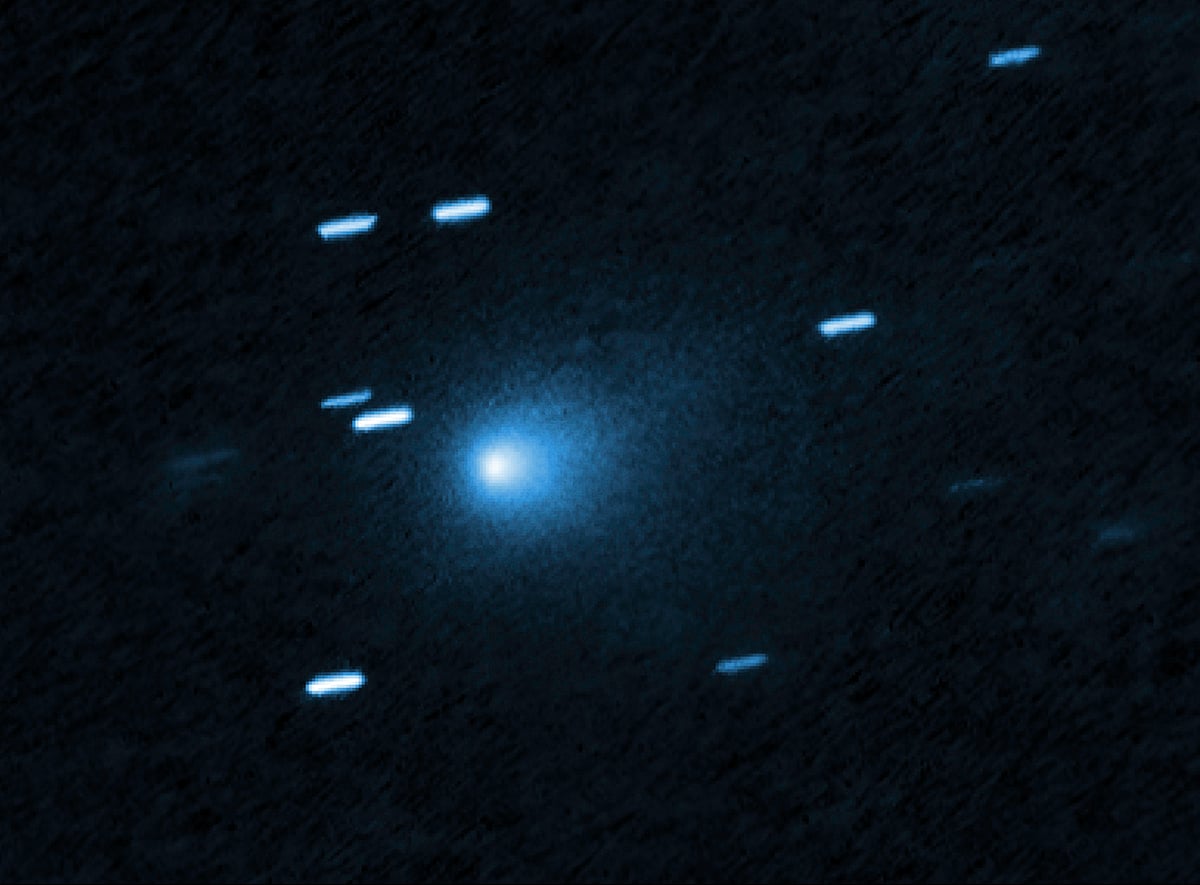
Comet 3I/ATLAS, a rare interstellar visitor, has reappeared after passing behind the Sun. Astronomer Qicheng Zhang of Lowell Observatory captured the first optical image using the 4.3-meter Discovery Telescope in Arizona. His photograph marks the comet’s first confirmed sighting since perihelion on October 29, 2025.
3I/ATLAS is an interstellar visitor, a traveler from another star system that has drifted through ours for a brief, precious moment. This makes it one of the rarest types of objects ever observed in astronomy. Only two other such bodies, 1I/ʻOumuamua and 2I/Borisov, have ever been confirmed.
Discovery of a stranger from the stars
3I/ATLAS was first detected on July 1, 2025, by the Asteroid Terrestrial-impact Last Alert System (ATLAS), a NASA-funded survey designed to spot potentially hazardous objects. But from the beginning, this one looked different. As soon as astronomers measured its path, they noticed something odd: its orbit wasn’t closed. It followed a hyperbolic trajectory, meaning it wasn’t bound to the Sun’s gravity. In other words, it had come from outside the Solar System and would eventually leave again.
NASA’s Jet Propulsion Laboratory (JPL) confirmed this using its Small-Body Database, which tracks orbits and velocities of known comets. According to JPL’s calculations, 3I/ATLAS moves at roughly 210,000 kilometers per hour, or about 130,000 miles per hour, far faster than any normal comet. Its speed and direction confirm an interstellar origin.
This finding placed it in an elite group. ʻOumuamua, discovered in 2017, was the first interstellar object ever found, followed by Borisov in 2019. Both generated enormous scientific excitement. With 3I/ATLAS, astronomers had a third chance to study the types of material other planetary systems produce and how such material behaves when exposed to our Sun.
A close pass by the Sun
Every comet has a closest approach to the Sun, called perihelion. For 3I/ATLAS, that moment arrived on October 29, 2025, when it came to about 1.4 astronomical units (roughly 210 million kilometers) from the Sun.
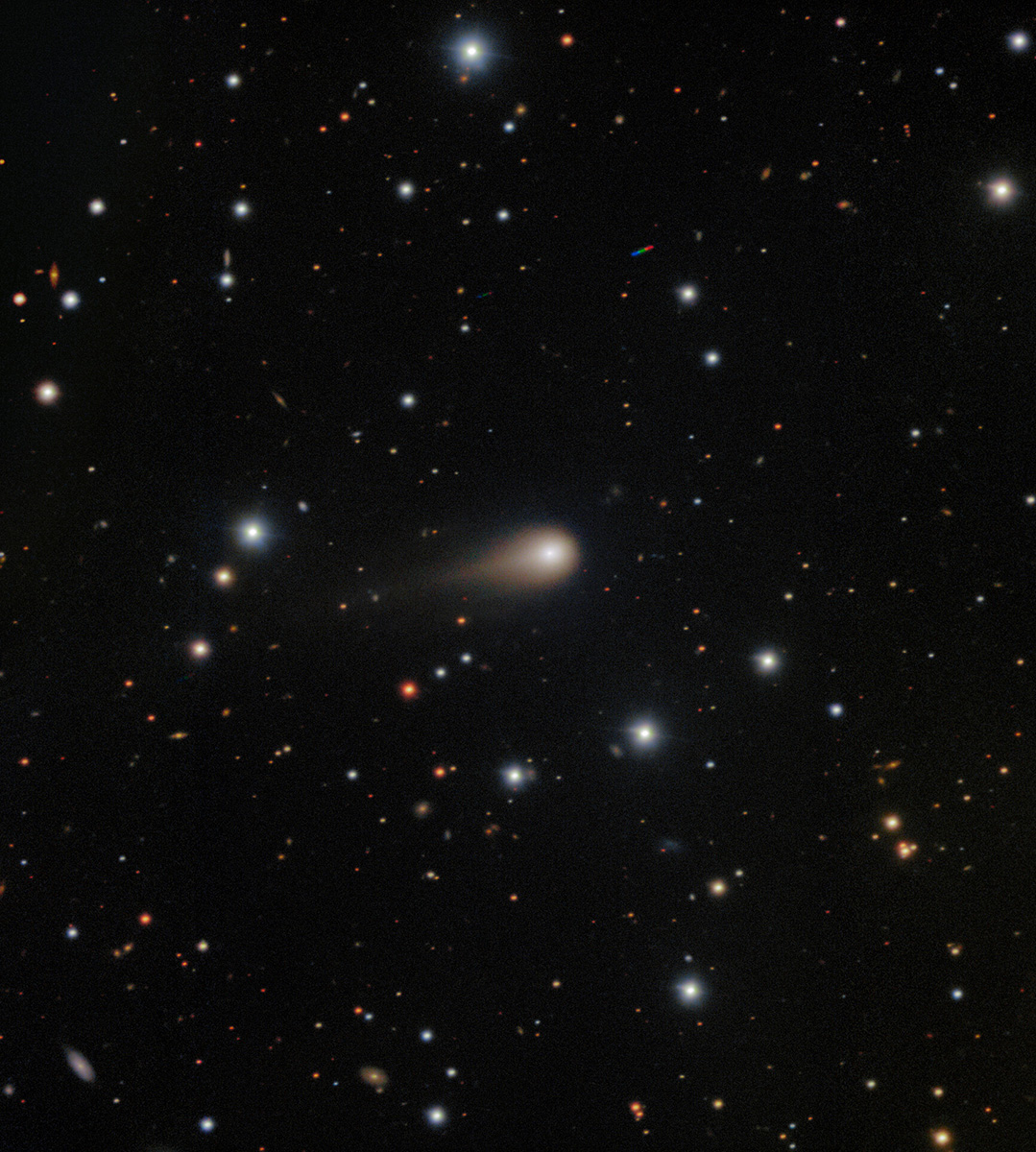
Around perihelion, comets often become active as sunlight warms their surface, releasing gas and dust. Observers using large telescopes reported that 3I/ATLAS brightened sharply in the days before this encounter. Its coma, the diffuse cloud of gas around the nucleus, expanded, and the object took on a bluish tint in some images.
That color shift hints at strong gas emission, particularly from ionized molecules such as carbon monoxide or cyanogen. These gases fluoresce in sunlight, producing the blue hue. For an interstellar comet, such behavior is crucial evidence: it tells astronomers the object carries volatile compounds similar to those found in comets that formed in our own solar system.
Emerging from the Sun’s glare
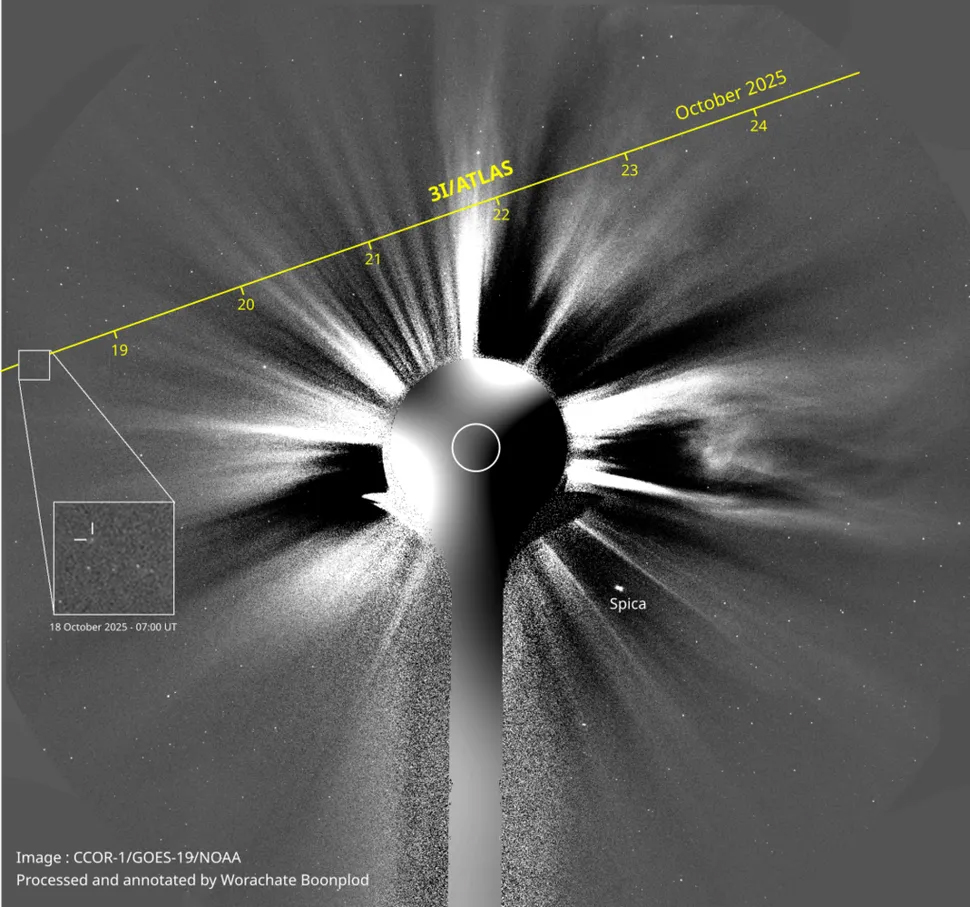
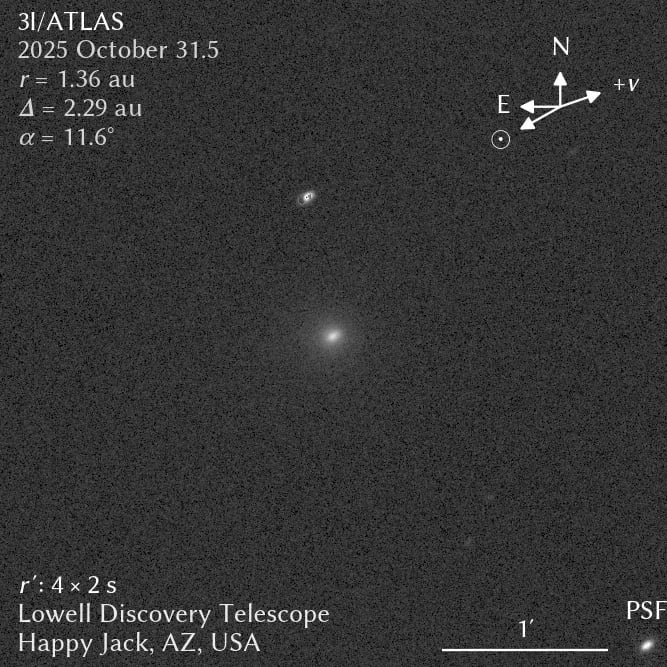
After rounding the Sun, 3I/ATLAS slipped into the bright glare of daylight and became unobservable for several weeks. Then, in early November, it emerged again into the dawn sky. Astronomer Qicheng Zhang from Lowell Observatory in Arizona captured the first confirmed post-perihelion image using the 4.3-meter Lowell Discovery Telescope. His photo, shared publicly, shows a faint white smear low above the eastern horizon.
The image was taken when the comet stood about 16 degrees from the Sun and just 5 degrees above the horizon, making it extremely difficult to observe. Zhang noted that even large telescopes struggled with the bright twilight sky. Yet his image confirmed that 3I/ATLAS had survived perihelion and was still active.
For amateur observers, the comet remains very faint, invisible to the naked eye, and challenging even through telescopes. But its reappearance opens a new observing window as the angular distance from the Sun slowly increases.
The road ahead for 3I/ATLAS
In the coming weeks, 3I/ATLAS will drift higher from the Sun’s glare, moving steadily toward darker skies. As it travels outward, its brightness will gradually fade, but scientists hope to keep tracking it for as long as possible.
Large telescopes like Gemini North, VLT, and Subaru may continue to obtain spectra and high-resolution images. Researchers will monitor its gas emissions and look for sudden changes that might indicate fragmentation or outbursts. Any such events would reveal more about its internal structure and the physics of interstellar comets.
Eventually, 3I/ATLAS will recede from our view and head back into interstellar space. Its trajectory ensures it will never return. But during its short passage, it leaves behind a valuable trail of data, light curves, spectra, and images that will keep scientists busy for years.
Further readings
Right from the discovery of the interstellar comet 3I/ATLAS, DIYP has published several articles on its photographs and features. Here is the list of articles:
- A New Visitor from the Stars: Comet 3I/ATLAS
- Gemini North Photographs the Interstellar Comet 3I/ATLAS
- Hubble’s Sharpest Portrait of a Visitor from the Stars: Comet 3I/ATLAS
- JWST Reveals the Secrets of Interstellar Comet 3I/ATLAS in New Images
- SPHEREx Maps the Carbon Dioxide Breath of Interstellar Comet 3I/ATLAS
- Gemini South Photographs Anti-Solar Tail of 3I/ATLAS
- Interstellar Comet 3I/ATLAS: Gemini South Images Reveal a Growing Tail
- Interstellar Comet 3I/ATLAS through Many Eyes: All Images so Far
- A Faint Smudge from Mars: Did Perseverance Really Capture Interstellar Comet 3I/ATLAS?
- ESA’s Mars Orbiter Capture “Closest Yet” View of Interstellar Comet 3I/ATLAS
Clear skies!
See more from DIYPhotography.net on Google
Add DIYPhotography.net as a trusted source. This makes
our stories more likely to appear in your Google Search results.
 Add as a preferred source on Google

Soumyadeep Mukherjee
Soumyadeep Mukherjee is an award-winning astrophotographer from India. He has a doctorate degree in Linguistics. His work extends to the sub-genres of nightscape, deep sky, solar, lunar and optical phenomenon photography. He is also a photography educator and has conducted numerous workshops. His works have appeared in over 40 books & magazines including Astronomy, BBC Sky at Night, Sky & Telescope among others, and in various websites including National Geographic, NASA, Forbes. He was the first Indian to win “Astronomy Photographer of the Year” award in a major category.


Join the Discussion
DIYP Comment Policy
Be nice, be on-topic, no personal information or flames.