


















The Most Interesting Facts About Photography You Need to Know
Jun 30, 2026
Alysa Gavilan
Alysa Gavilan has spent years exploring photography through photojournalism and street scenes. She enjoys working with both film and mirrorless cameras, and her fascination with the craft has grown over the decades. Inspired by Vivian Maier, she is drawn to capturing everyday moments that often go unnoticed.
Share:
Photography is something most of us do every day, yet few people know the incredible stories behind it. From cameras the size of a room to images captured billions of miles from Earth, photography has shaped science, history, journalism, and popular culture in remarkable ways.
Many of today’s digital features also have roots stretching back more than a century. If you’ve ever wondered about the history and evolution of photography, these fascinating facts reveal just how extraordinary the medium really is.
1. The First Self-Portrait Was Taken in 1839
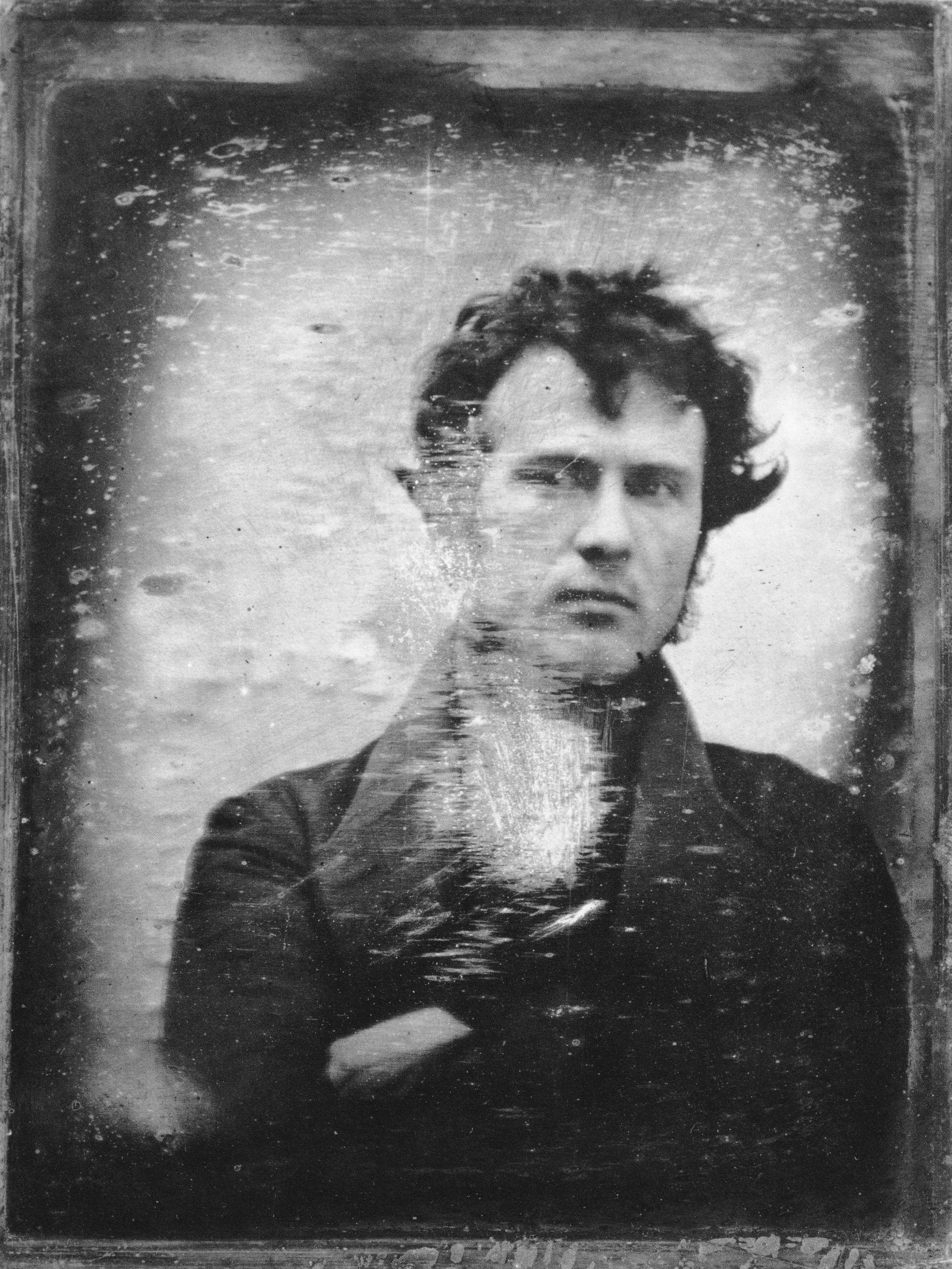
Long before smartphones, the world’s first selfie was created by American photographer Robert Cornelius.
In 1839, Cornelius removed the lens cap from his camera, ran into the frame, sat perfectly still for several minutes, then covered the lens again.
The resulting portrait is widely recognized as the earliest photographic self-portrait ever made.
2. The First Photograph With a Person Happened by Chance
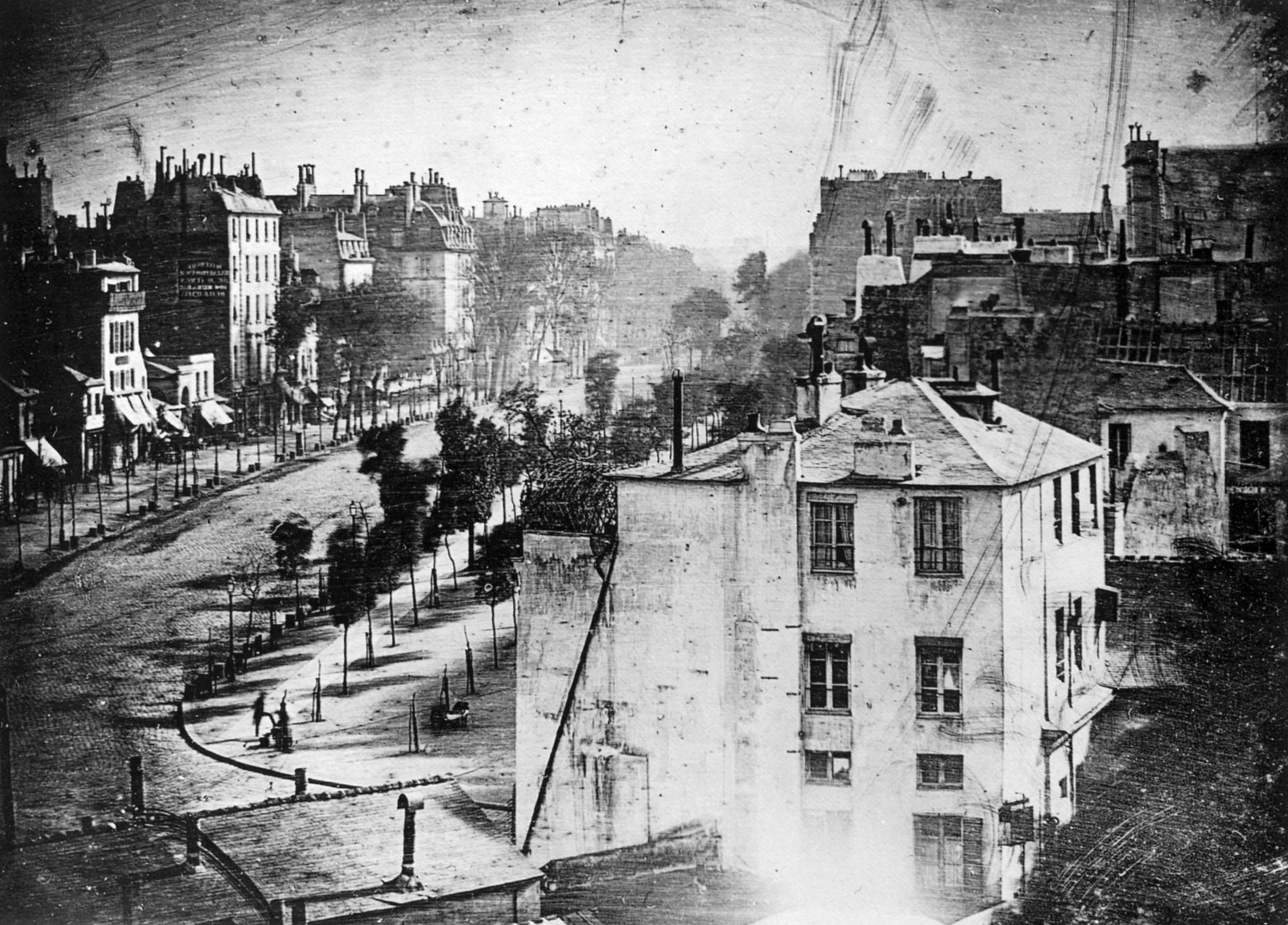
One of photography’s most famous milestones was entirely accidental.
In 1838, Louis Daguerre photographed a busy boulevard in Paris. Because exposures lasted several minutes, every moving pedestrian disappeared from the image. Only one man remained visible because he had stopped long enough to have his boots polished.
He became the first known person ever captured in a photograph.
3. The First Digital Camera Weighed About Eight Pounds
Digital photography began with a surprisingly bulky prototype.
In 1975, Steven Sasson built the first digital camera while working at Kodak. The camera weighed roughly eight pounds, captured images at just 0.01 megapixels, and needed 23 seconds to record a single black and white photo onto a cassette tape.
Today, even budget smartphones outperform it by an enormous margin.

4. The Most Expensive Photograph Ever Sold Brought in More Than $12 Million
Photography can be as valuable as any painting. In 2022, Man Ray’s iconic Le Violon d’Ingres sold for $12.4 million at auction, making it the most expensive photograph ever sold.
The sale demonstrated that photography has become one of the world’s most valuable forms of fine art.
5. The Largest Camera Ever Built Was the Size of a House
Early photographers sometimes thought very big.
Around 1900, the Chicago & Alton Railroad commissioned a camera measuring approximately 42 feet long to photograph one of its locomotives.
The camera produced an enormous glass negative measuring about eight by four and a half feet.

6. NASA Photographed Earth From Nearly Four Billion Miles Away
One of the most famous photographs ever taken shows Earth as a tiny dot floating in space.
Captured by Voyager 1 in 1990, the famous Pale Blue Dot image was taken from approximately 3.7 billion miles away.
The photograph remains one of the most powerful reminders of Earth’s place in the universe.
7. Some Cameras Can Record Trillions of Frames Per Second
Scientists have pushed photography far beyond everyday cameras.
Researchers at the California Institute of Technology have developed ultra high speed imaging systems capable of recording light itself moving through space.
These specialized cameras can capture events occurring in trillionths of a second and are used for scientific research rather than conventional photography.
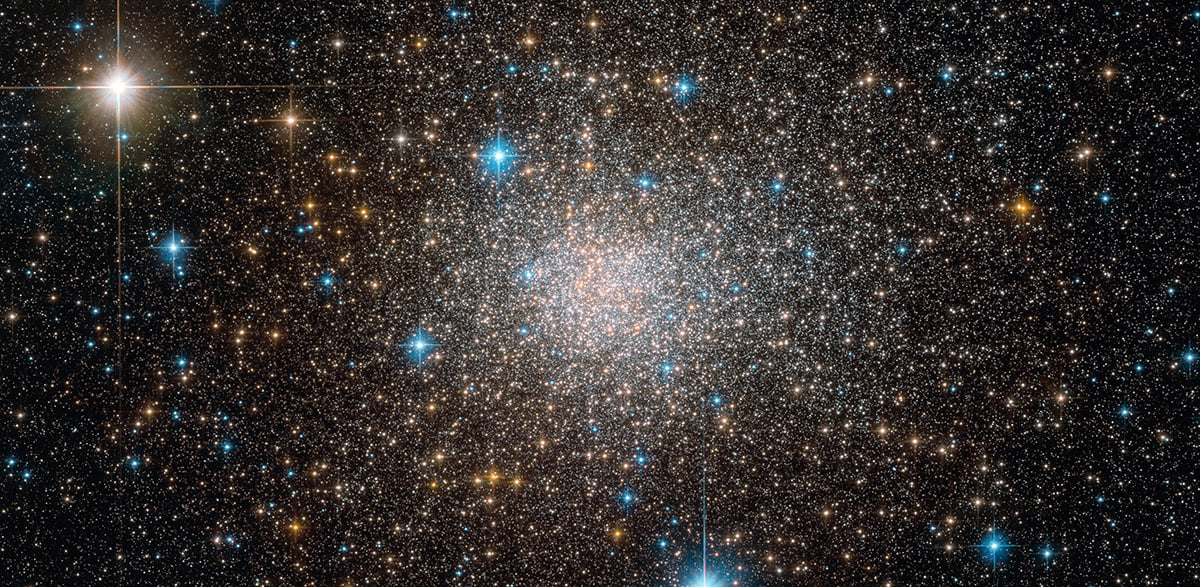
8. Hubble Has Captured More Than 1.6 Million Images
Space photography has transformed astronomy.
Since its launch in 1990, the Hubble Space Telescope has recorded more than 1.7 million observations, leading to over 21,000 scientific papers.
Its images have revealed distant galaxies, stellar nurseries, and some of the universe’s most recognizable cosmic landscapes.
9. Camera Sensors Don’t Actually See Color
Your digital camera doesn’t capture color in the way most people imagine.
A camera sensor records only the intensity of incoming light. Color is reconstructed afterward using a color filter array, most commonly the Bayer filter, along with sophisticated image processing.
This is one reason different camera brands produce distinct color signatures even under identical lighting conditions.
10. Some Modern Camera Lenses Contain More Than 20 Glass Elements
Professional lenses are far more complex than they appear.
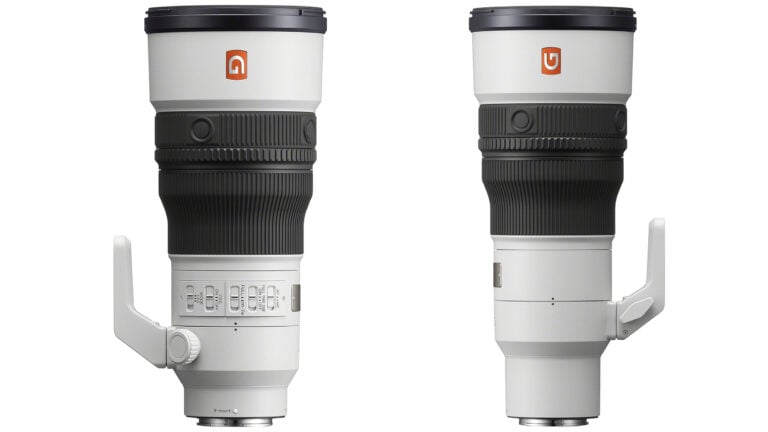
Many high end zoom lenses contain more than 20 precisely engineered glass elements made from specialized materials including fluorite and extra low dispersion glass.
These components help reduce distortion, chromatic aberration, flare, and other optical imperfections while maintaining sharpness throughout the zoom range.

Why These Photography Facts Still Matter
Photography has evolved from hours long exposures on metal plates to AI powered cameras that fit in a pocket. Yet its purpose remains remarkably consistent: documenting the world, preserving memories, advancing science, and telling stories that words alone cannot.
Understanding these milestones helps explain why photography remains one of the most influential inventions in history. Every image you take today builds on nearly two centuries of innovation, experimentation, and creativity.
The next time you press the shutter button, remember that you’re using technology shaped by inventors, artists, scientists, and journalists whose discoveries changed the way we see the world. Which of these photography facts surprised you the most?
See more from DIYPhotography.net on Google
Add DIYPhotography.net as a trusted source. This makes
our stories more likely to appear in your Google Search results.
 Add as a preferred source on Google

Alysa Gavilan
Alysa Gavilan has spent years exploring photography through photojournalism and street scenes. She enjoys working with both film and mirrorless cameras, and her fascination with the craft has grown over the decades. Inspired by Vivian Maier, she is drawn to capturing everyday moments that often go unnoticed.
Related Posts
 Completely Useless and Extremely Interesting Photography Facts You Didn’t Know You Needed
 Photographing the President: an overview and interesting facts about all presidential photographers
 Fascinating Facts You Should Know About History of Photography
 Are these five most BS portrait photography facts?
Join the Discussion
DIYP Comment Policy
Be nice, be on-topic, no personal information or flames.
One response to “The Most Interesting Facts About Photography You Need to Know”
Daguerre’s photo of the shoe cleaner has stayed stuck in my mind since I first saw it in a photo book. It feels like a slow Sunday afternoon in my hometown, and that feeling it gave me when I saw it has stayed with me for decades now. <3