

























A Symmetrical Division: Images of Earth at Equinox from 36,000 Km Away
Sep 27, 2025
Soumyadeep Mukherjee
Soumyadeep Mukherjee is an award-winning astrophotographer from India. He has a doctorate degree in Linguistics. His work extends to the sub-genres of nightscape, deep sky, solar, lunar and optical phenomenon photography. He is also a photography educator and has conducted numerous workshops. His works have appeared in over 40 books & magazines including Astronomy, BBC Sky at Night, Sky & Telescope among others, and in various websites including National Geographic, NASA, Forbes. He was the first Indian to win “Astronomy Photographer of the Year” award in a major category.
Share:

Twice each year, Earth reaches a special balance point in its orbit. The Sun crosses directly over the equator, and daylight is distributed almost evenly across the globe. These are the equinoxes, and they mark the turning of the seasons. From the ground, the equinox may seem like any other day, but from space it creates one of the clearest, most symmetrical views of our planet.
In 2025, EUMETSAT’s newest operational satellite, Meteosat-12, captured both the spring and the autumn equinox in crisp detail. The images, taken in March and September, offer a striking reminder of Earth’s geometry and the precision of modern space-based observation.
What the equinox shows from space
The word “equinox” comes from the Latin aequus (equal) and nox (night). Around 20 March and 22–23 September each year, the length of day and night becomes almost equal across the planet. At these times, Earth’s axis is not tilted toward or away from the Sun. Instead, the Sun appears directly above the equator.
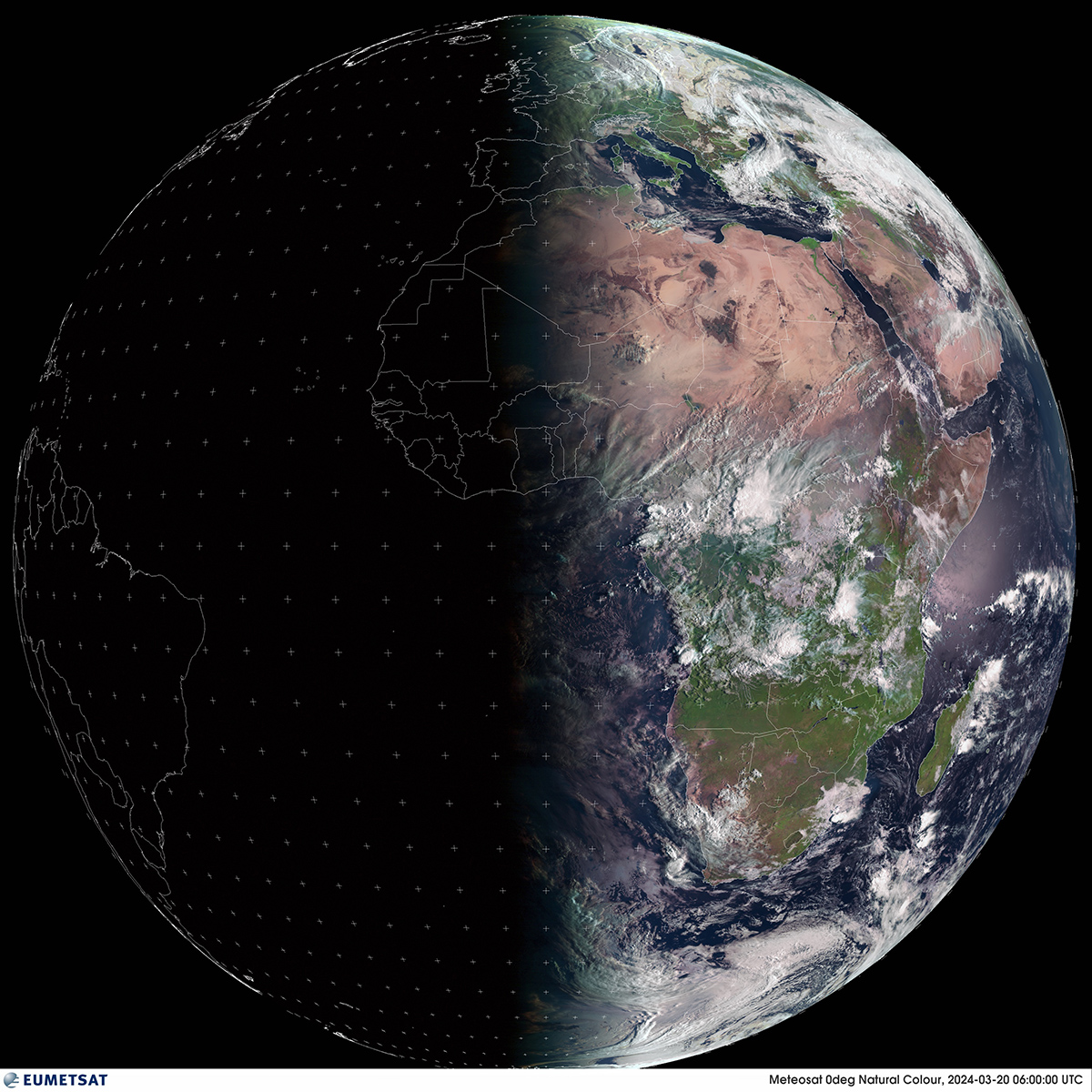
From space, this produces an unmistakable geometry. The line separating day from night, the terminator, runs almost perfectly from the North Pole to the South Pole. On other days of the year, the terminator appears slanted because one hemisphere leans toward the Sun while the other leans away. During the equinox, however, that line straightens, dividing the planet into two nearly equal halves of light and darkness. This visual simplicity is what makes equinox images so striking.
Meteosat-12: Europe’s new geostationary sentry
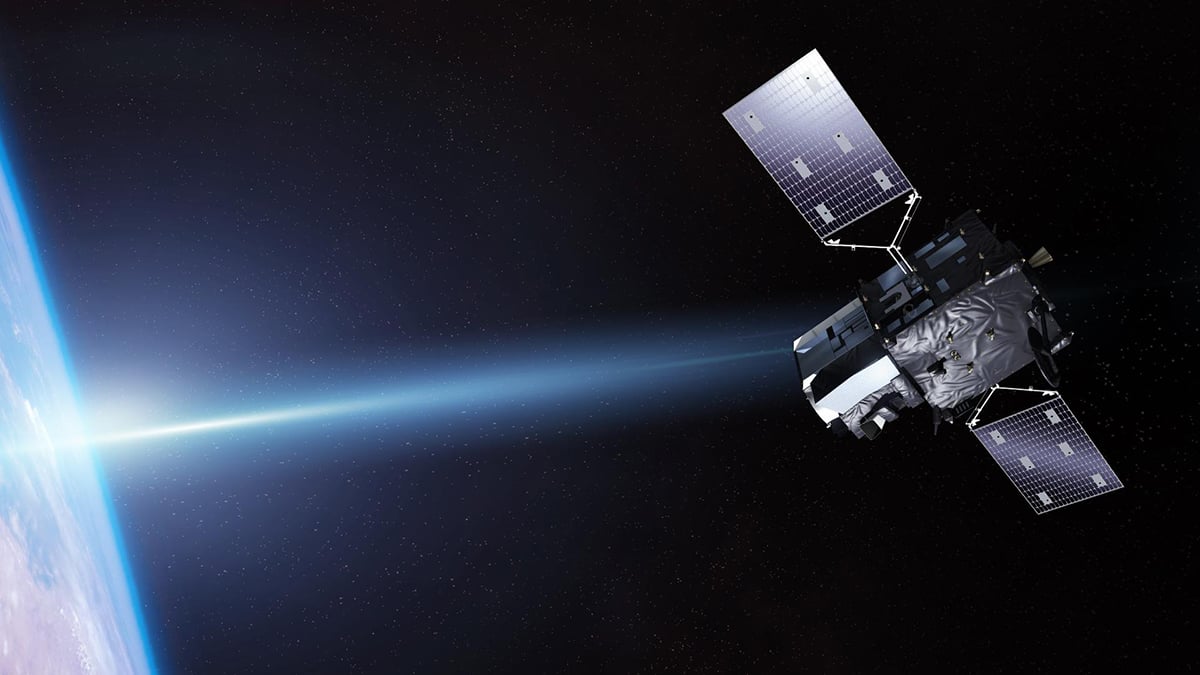
Meteosat-12 is part of the Meteosat Third Generation (MTG) programme, operated by EUMETSAT in partnership with the European Space Agency. The MTG series is designed to continue Europe’s long history of geostationary weather observation. Meteosat-12 was the first of this new generation to reach operational status, taking over its prime service duties in 2025.
Like its predecessors, Meteosat-12 sits in geostationary orbit, about 36,000 kilometres above Earth. From this altitude, it circles the planet once every 24 hours, remaining fixed above the same point on the equator. This allows it to provide constant coverage of Europe, Africa, and surrounding regions.
The satellite carries the Flexible Combined Imager (FCI), its primary instrument. The FCI is a powerful sensor capable of capturing images in multiple spectral bands, from visible light to thermal infrared. These bands allow scientists to observe cloud systems, land features, and atmospheric conditions with remarkable clarity. For operational weather forecasting, the FCI delivers rapid updates and high-resolution views that improve both short-term forecasts and long-term climate monitoring.
The March equinox: A symmetrical dawn
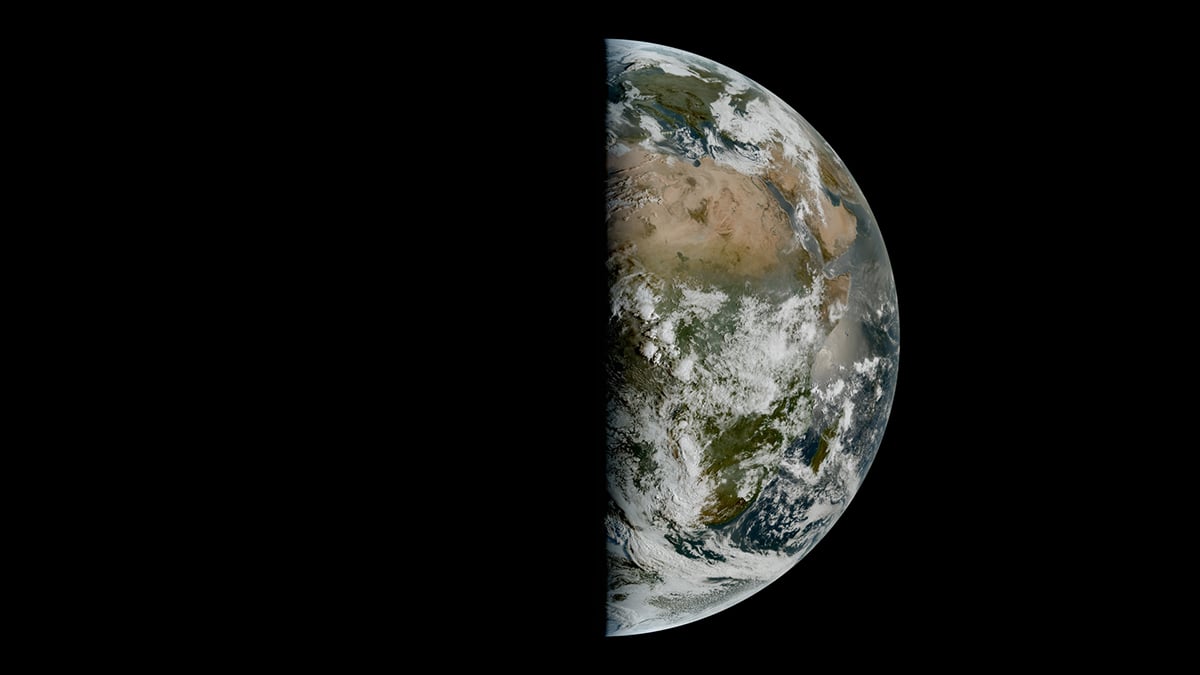
On 20 March 2025, EUMETSAT released Meteosat-12’s image of the spring equinox. Captured in the early hours of the morning, the photograph shows Earth neatly divided between day and night. The terminator cuts down the globe in a straight line, running close to both poles. The image highlights the geometry of the equinox and the dynamic weather systems visible across the continents and oceans.
Large cloud patterns are illuminated on the day side, while the night side shows the gradual shading into darkness. The image is striking for its symmetry, a perfect demonstration of the equinox from a perspective that no ground-based observer could ever see.
September 2025: Symmetry once more
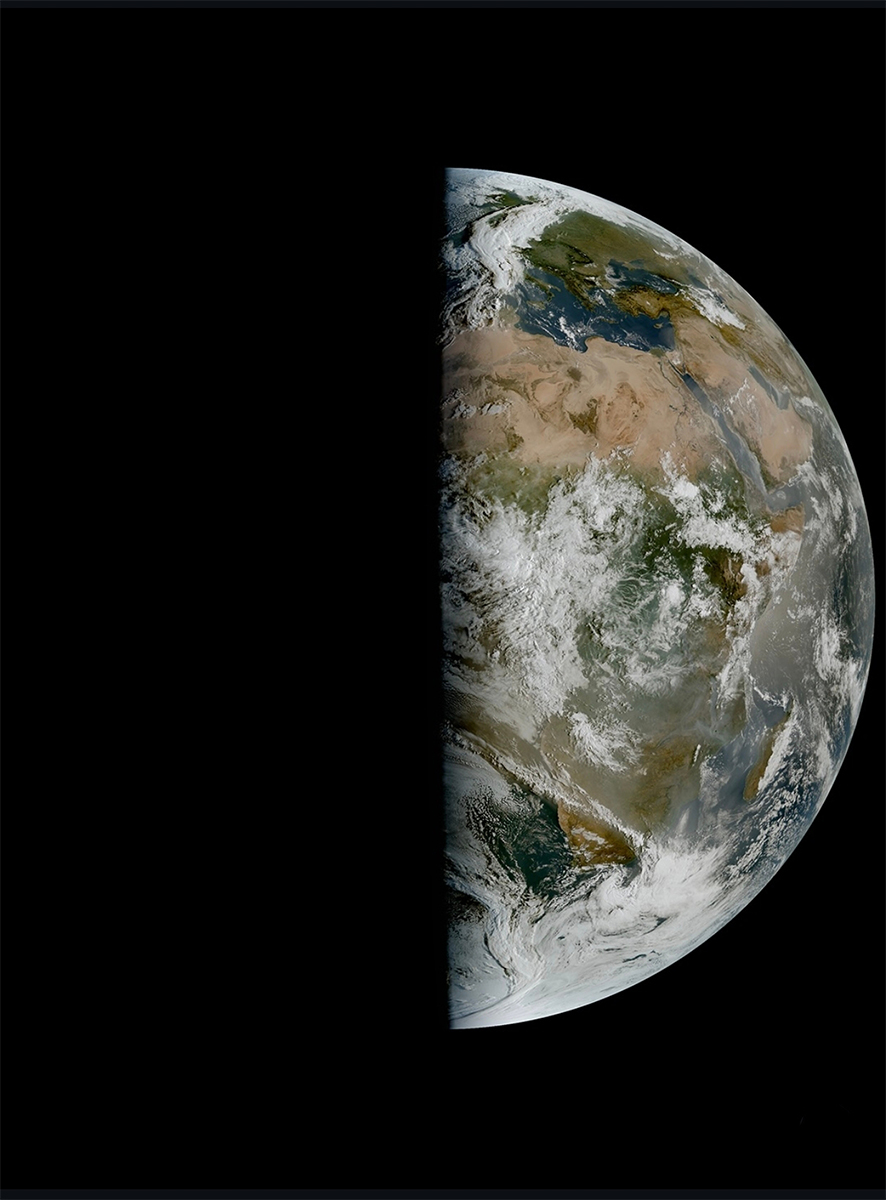
Six months later, the same satellite recorded another equinox. Around 22–23 September 2025, the Sun again crossed the equator, this time moving southward to mark the start of the Northern Hemisphere’s autumn. Meteosat-12 was there to capture the moment.
Although both images appear similar at first glance, they also reveal distinct seasonal changes. In March, the Northern Hemisphere is transitioning into spring, marked by shifting cloud belts and weather systems that signal the end of winter. By September, the same hemisphere is entering autumn, with a different pattern of storms and circulation. Comparing the two images allows scientists to observe how global weather responds to Earth’s tilt and orbit.
A clear view from geostationary orbit
Although the equinox is described as a moment of “equal day and night,” the reality is more complicated. Atmospheric refraction bends sunlight, allowing the Sun to be visible slightly before it rises and after it sets. The finite size of the Sun’s disk adds another small correction. These effects mean that even at the equinox, day is a little longer than night.
Together, the March and September 2025 equinox images form a pair of seasonal bookends. They show Earth from the same orbital perspective, at the same orbital condition, but with the planet’s hemispheres entering opposite parts of the seasonal cycle. This symmetry makes them valuable for science and education.
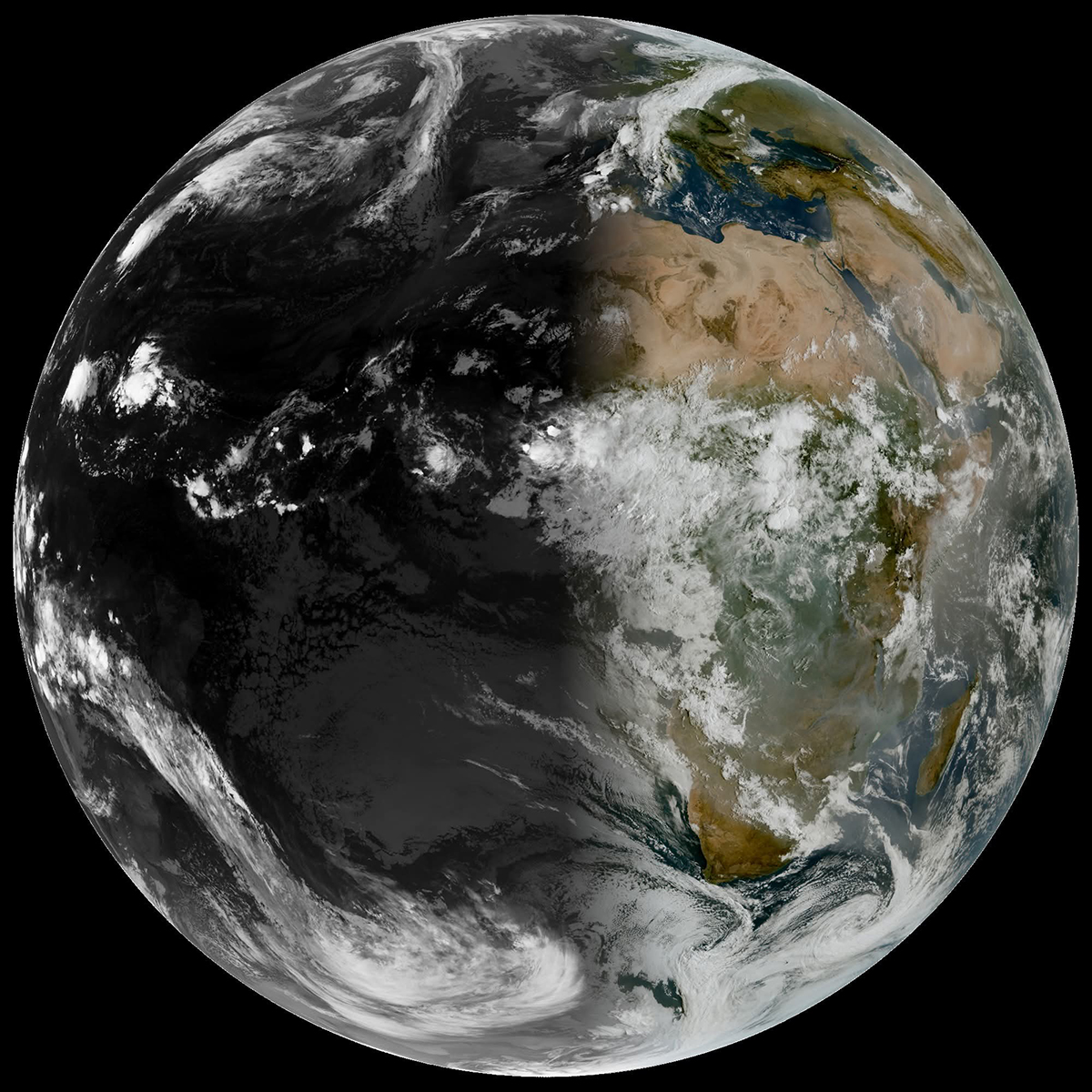
From 36,000 kilometres away, Meteosat-12 gave us a perspective that no observer on the ground could achieve. The terminator’s straight line, the symmetry of light and darkness, and the seasonal contrasts all combine to show how much can be learned from a single well-timed observation.
Clear skies!
See more from DIYPhotography.net on Google
Add DIYPhotography.net as a trusted source. This makes
our stories more likely to appear in your Google Search results.
 Add as a preferred source on Google

Soumyadeep Mukherjee
Soumyadeep Mukherjee is an award-winning astrophotographer from India. He has a doctorate degree in Linguistics. His work extends to the sub-genres of nightscape, deep sky, solar, lunar and optical phenomenon photography. He is also a photography educator and has conducted numerous workshops. His works have appeared in over 40 books & magazines including Astronomy, BBC Sky at Night, Sky & Telescope among others, and in various websites including National Geographic, NASA, Forbes. He was the first Indian to win “Astronomy Photographer of the Year” award in a major category.
Related Posts
 This camera’s shutter speed goes up to 1/1,000,000,000,000 of a second
 The photographer behind the most symmetrical architectural photos in the world
 NASA asteroid probe OSIRIS-REx photographed the Earth & Moon from 71 million miles away
 “Earth Restored” shows astronauts’ photos of the Earth as you’ve never seen them before
Join the Discussion
DIYP Comment Policy
Be nice, be on-topic, no personal information or flames.