






















JWST and Hubble Discover a Relic from the Milky Way’s Formation
Jun 29, 2026
Soumyadeep Mukherjee
Soumyadeep Mukherjee is an award-winning astrophotographer from India. He has a doctorate degree in Linguistics. His work extends to the sub-genres of nightscape, deep sky, solar, lunar and optical phenomenon photography. He is also a photography educator and has conducted numerous workshops. His works have appeared in over 40 books & magazines including Astronomy, BBC Sky at Night, Sky & Telescope among others, and in various websites including National Geographic, NASA, Forbes. He was the first Indian to win “Astronomy Photographer of the Year” award in a major category.
Share:
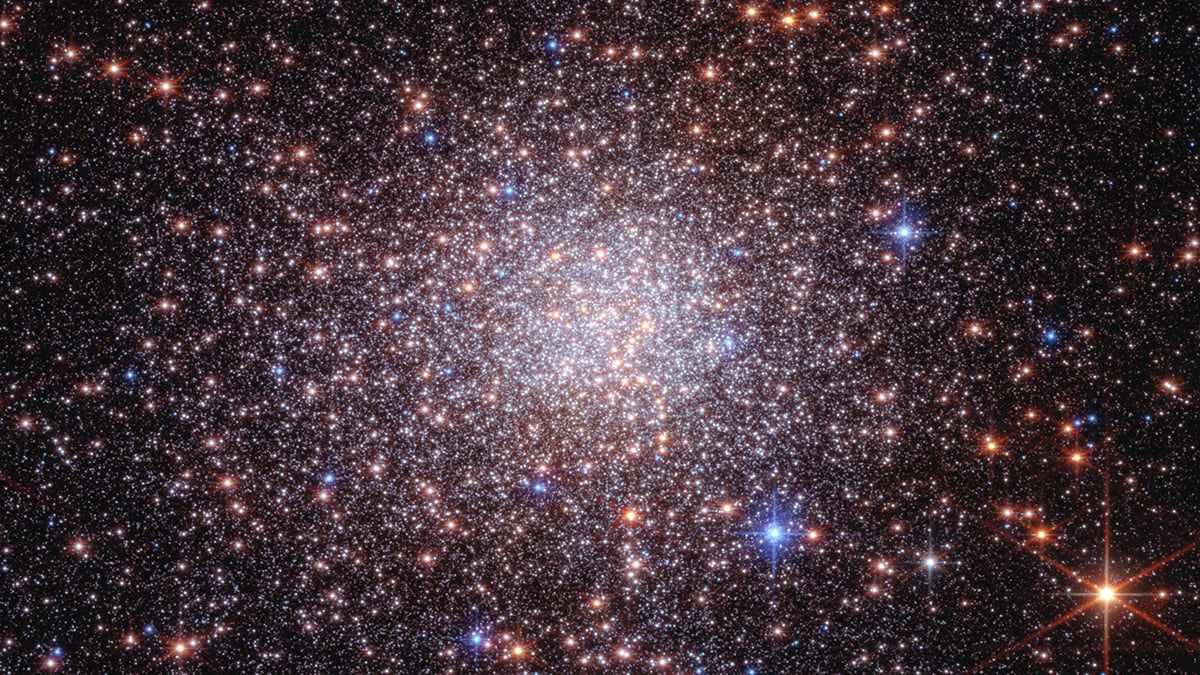
The formation of the Milky Way remains one of the most challenging problems in modern astronomy. The central bulge of the Milky Way contains some of its oldest stars and preserves valuable evidence from that period. Unfortunately, dense clouds of interstellar dust obscure this region, making it difficult for visible-light telescopes to study its stellar population in detail.
An example has now emerged from the Galactic bulge. With observations from NASA‘s James Webb Space Telescope and the Hubble Space Telescope, an international team of astronomers has shown that Terzan 5 is not an ordinary globular cluster. It is one of the ancient stellar systems that helped assemble the Milky Way more than 12 billion years ago. The discovery introduces Terzan 5 as a rare bulge fossil fragment, preserving evidence from a period when our Galaxy was still taking shape.
Terzan 5: An old mystery
Astronomers discovered Terzan 5 in 1968 while surveying the dense stellar fields near the Galactic centre. Because it appeared as a compact collection of old stars, researchers classified it as a globular cluster. At the time, that interpretation seemed entirely reasonable. Hundreds of globular clusters orbit the Milky Way, and most of them formed during the earliest stages of the Galaxy’s evolution.
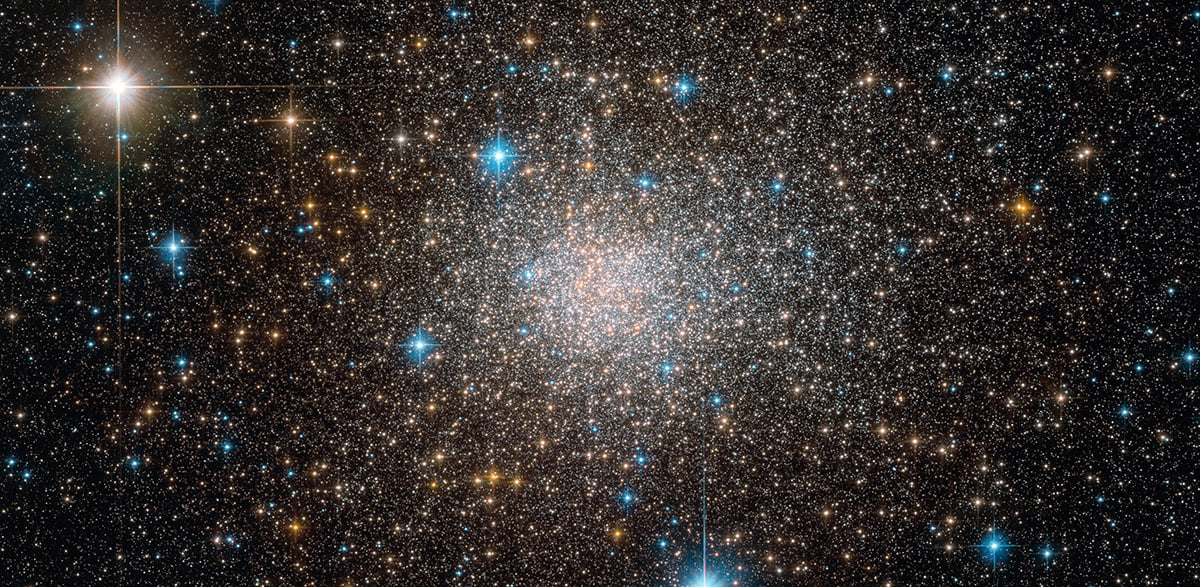
Globular clusters usually follow a remarkably simple evolutionary path. They produce almost all of their stars during a single episode of star formation. Once stellar winds and supernova explosions expel the remaining gas, star formation ends permanently. The cluster then evolves for billions of years. As a result, most globular clusters contain stars with nearly identical ages and similar chemical compositions.
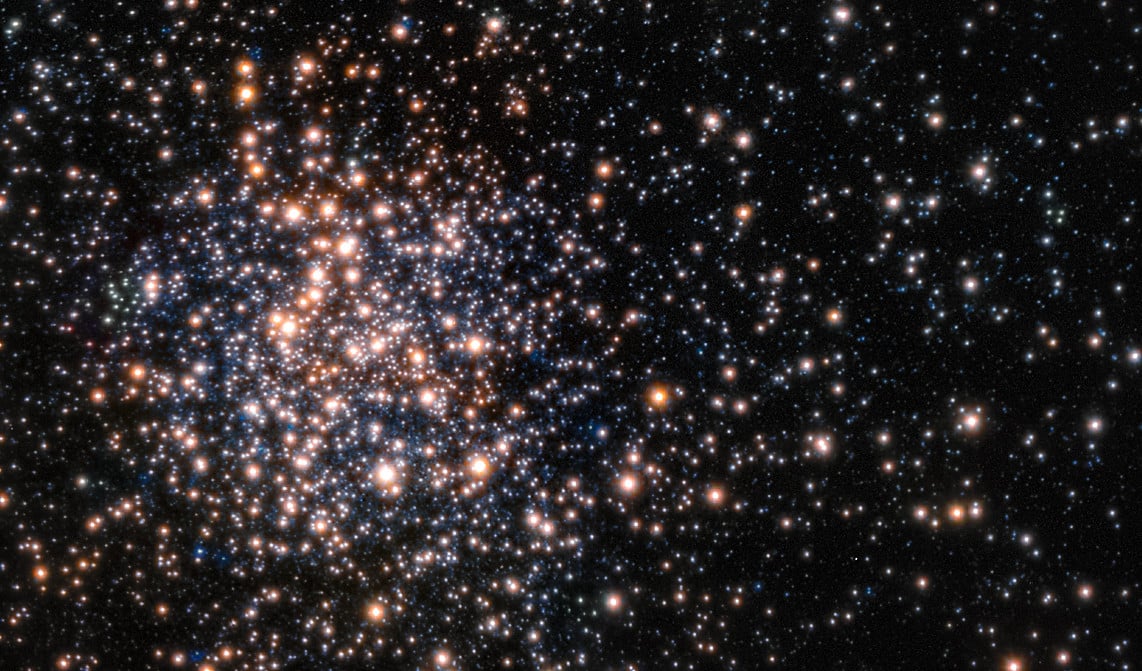
Terzan 5, however, is different. The observations hinted that Terzan 5 must have experienced a much more complex history. Researchers, however, lacked the evidence needed to explain exactly what had happened.
JWST and Hubble’s observations
The mystery finally began to unravel after astronomers combined observations from two of NASA‘s most powerful space observatories. The James Webb Space Telescope played the first role. JWST observes the universe mainly in infrared wavelengths, allowing it to detect light that passes through dense clouds of interstellar dust. This capability makes the telescope particularly effective for studying the Galactic bulge, where visible-light observations often fail.
JWST produced exceptionally detailed images of Terzan 5. It detected thousands of stars hidden behind the dust and measured their brightness with unprecedented accuracy. These observations provided the clearest view ever obtained of the stellar population inside the system.
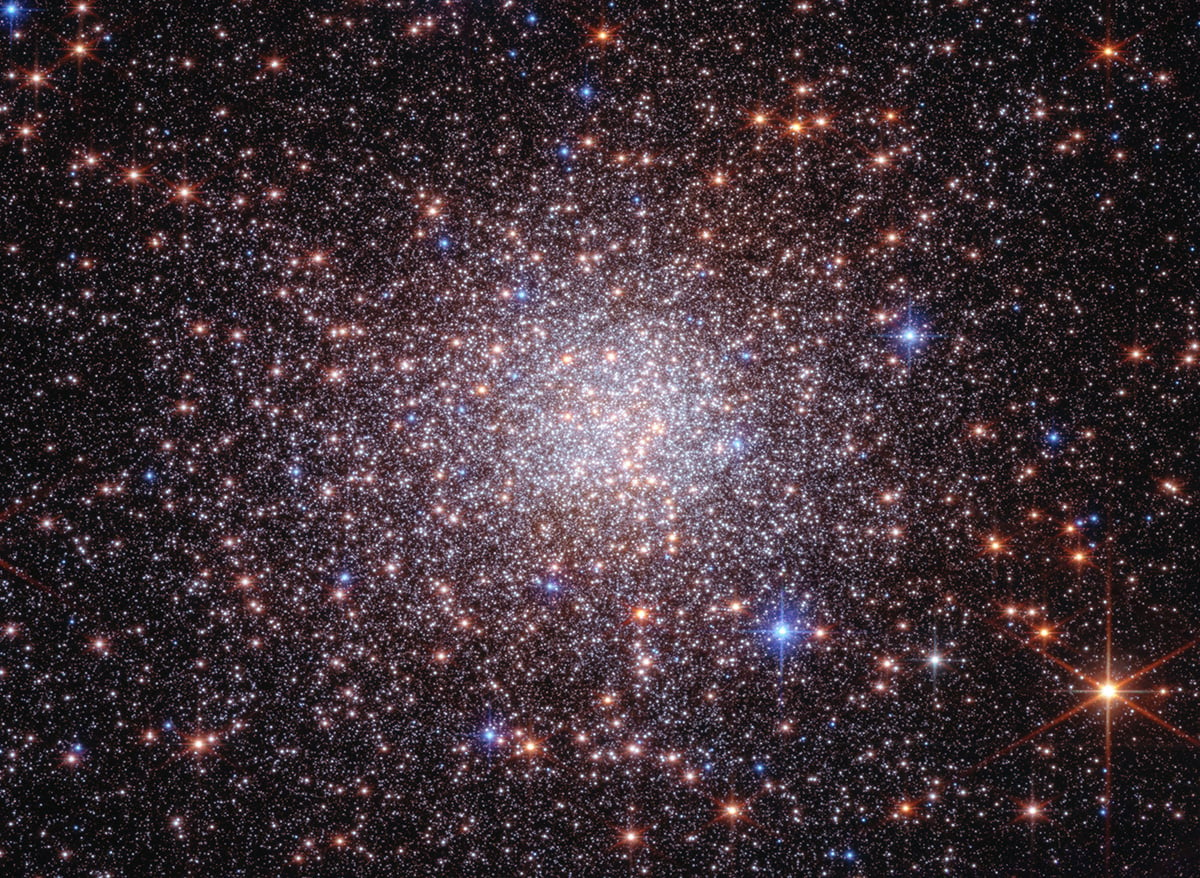
For more than a decade, Hubble repeatedly observed the same region of the sky. Those observations allowed astronomers to measure the tiny movements of individual stars across the sky, known as proper motions. Although these motions are extremely small, they provide a reliable way to distinguish stars that move together from those that simply happen to lie along the same line of sight.
The stars revealed an unexpected history
Once astronomers isolated the stars belonging to Terzan 5, they began reconstructing its evolutionary history. The researchers identified four separate generations of stars. The oldest population formed approximately 12.5 billion years ago, placing it among the earliest stellar systems in the Milky Way. Three additional populations formed roughly 4.7 billion, 3.8 billion, and 2.5 billion years ago.
The oldest stars contain relatively small amounts of heavy elements because they formed when the universe itself was still young. Younger stars show progressively higher concentrations of those elements. Each new generation inherited material enriched by earlier generations of massive stars.
Massive stars forged heavier elements inside their cores through nuclear fusion. They later scattered those elements into the surrounding space through stellar winds and supernova explosions. The enriched gas then collapsed again, producing another generation of stars with a different chemical signature. This process was repeated several times inside Terzan 5.
A “bulge fossil fragment”
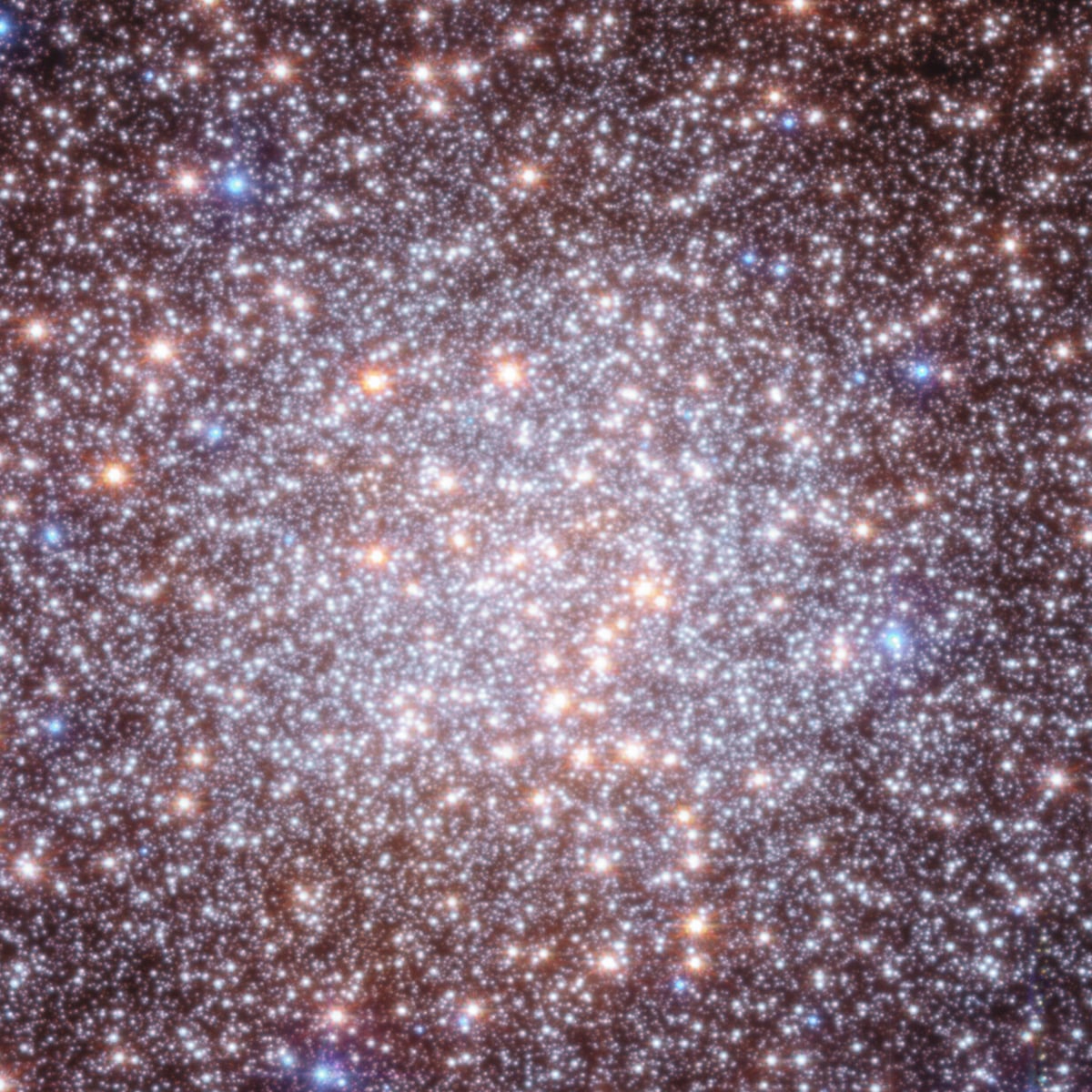
The unusual stellar populations inside Terzan 5 answered one question but raised another. If the object is not a globular cluster, then what is it? Astronomers believe that the Milky Way did not form in a single event. During the first billion years after the Big Bang, enormous clouds of gas collapsed under gravity and produced massive stellar systems. These systems interacted with one another, merged repeatedly, and gradually assembled the Galaxy’s central bulge.
Collisions between these young stellar systems mixed their stars and gas. Over time, their individual identities disappeared as they became part of the growing Milky Way. After billions of years of mergers, very little evidence of those original building blocks was expected to survive. Terzan 5 appears to be one of the rare exceptions.
Instead of disappearing completely, it managed to preserve much of its original structure. It’s stars still record a long history of chemical enrichment and repeated star formation. Those characteristics match what astronomers expect from one of the massive stellar fragments that helped build the Galactic bulge. Researchers now classify Terzan 5 as a bulge fossil fragment.
Clear skies!
See more from DIYPhotography.net on Google
Add DIYPhotography.net as a trusted source. This makes
our stories more likely to appear in your Google Search results.
 Add as a preferred source on Google

Soumyadeep Mukherjee
Soumyadeep Mukherjee is an award-winning astrophotographer from India. He has a doctorate degree in Linguistics. His work extends to the sub-genres of nightscape, deep sky, solar, lunar and optical phenomenon photography. He is also a photography educator and has conducted numerous workshops. His works have appeared in over 40 books & magazines including Astronomy, BBC Sky at Night, Sky & Telescope among others, and in various websites including National Geographic, NASA, Forbes. He was the first Indian to win “Astronomy Photographer of the Year” award in a major category.
Related Posts
 How to Find Photography Locations: 8 Smart Ways to Discover Better Places to Shoot
 New ESO Image of GAL316 Reveals a Limit to Star Formation in the Milky Way
 Hubble’s New Portrait of Galaxy NGC 4571 Reveals Active Star Formation
 A Neighbouring Vista of Stellar Birth: Hubble Captures Active Star Formation
Join the Discussion
DIYP Comment Policy
Be nice, be on-topic, no personal information or flames.