

















NASA Shares Eight New Images of Interstellar Comet 3I/ATLAS
Nov 19, 2025
Soumyadeep Mukherjee
Soumyadeep Mukherjee is an award-winning astrophotographer from India. He has a doctorate degree in Linguistics. His work extends to the sub-genres of nightscape, deep sky, solar, lunar and optical phenomenon photography. He is also a photography educator and has conducted numerous workshops. His works have appeared in over 40 books & magazines including Astronomy, BBC Sky at Night, Sky & Telescope among others, and in various websites including National Geographic, NASA, Forbes. He was the first Indian to win “Astronomy Photographer of the Year” award in a major category.
Share:
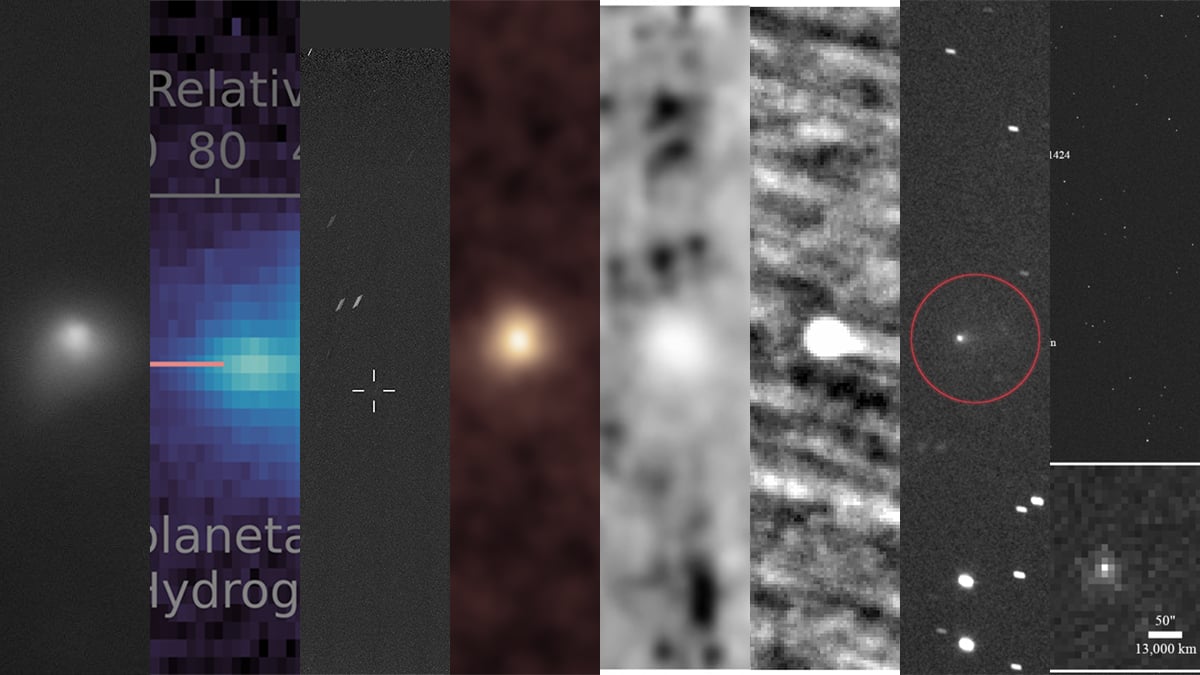
Interstellar objects are rare. But when visiting, they seem to challenge every assumption about how icy bodies form around distant stars. NASA’s newly released eight-image set of Comet 3I/ATLAS is an example. It shows how a single object, arriving from deep space, can activate a global network of spacecraft. Each image tells a different part of the story. The eight new images come from missions scattered across space, from Mars orbit to deep-space trajectories.
This is only the third confirmed interstellar object and the second interstellar comet ever observed. Its path is hyperbolic, which means it came from outside the solar system and will leave again forever. NASA confirms that the comet reached speeds of roughly 153,000 mph as it swung around the Sun.
A comet that arrived unannounced
When astronomers first noticed 3I/ATLAS, the trajectory stood out immediately. The orbit did not loop back toward the Sun. Instead, it opened outward, pointing to origins far beyond the Kuiper Belt. NASA later confirmed that the shape of the orbit could only be explained by an interstellar arrival.
The comet will make its closest approach to Earth in December 2025, at around 1.8 AU, or nearly 170 million miles. That is a comfortable distance, yet close enough for spacecraft to track its behavior with surprising detail. Even now, the comet is already active, shedding dust and producing gas that forms a growing coma and tail. And because the comet formed around another star, every particle it releases carries information about a different planetary system.
NASA’s approach to observing 3I/ATLAS was simple: use every active spacecraft that can see it. Each spacecraft supplies a different angle and a different kind of data. The result is a layered, multi-perspective record of the comet’s evolution. NASA calls it viewing the comet through “multiple lenses.”
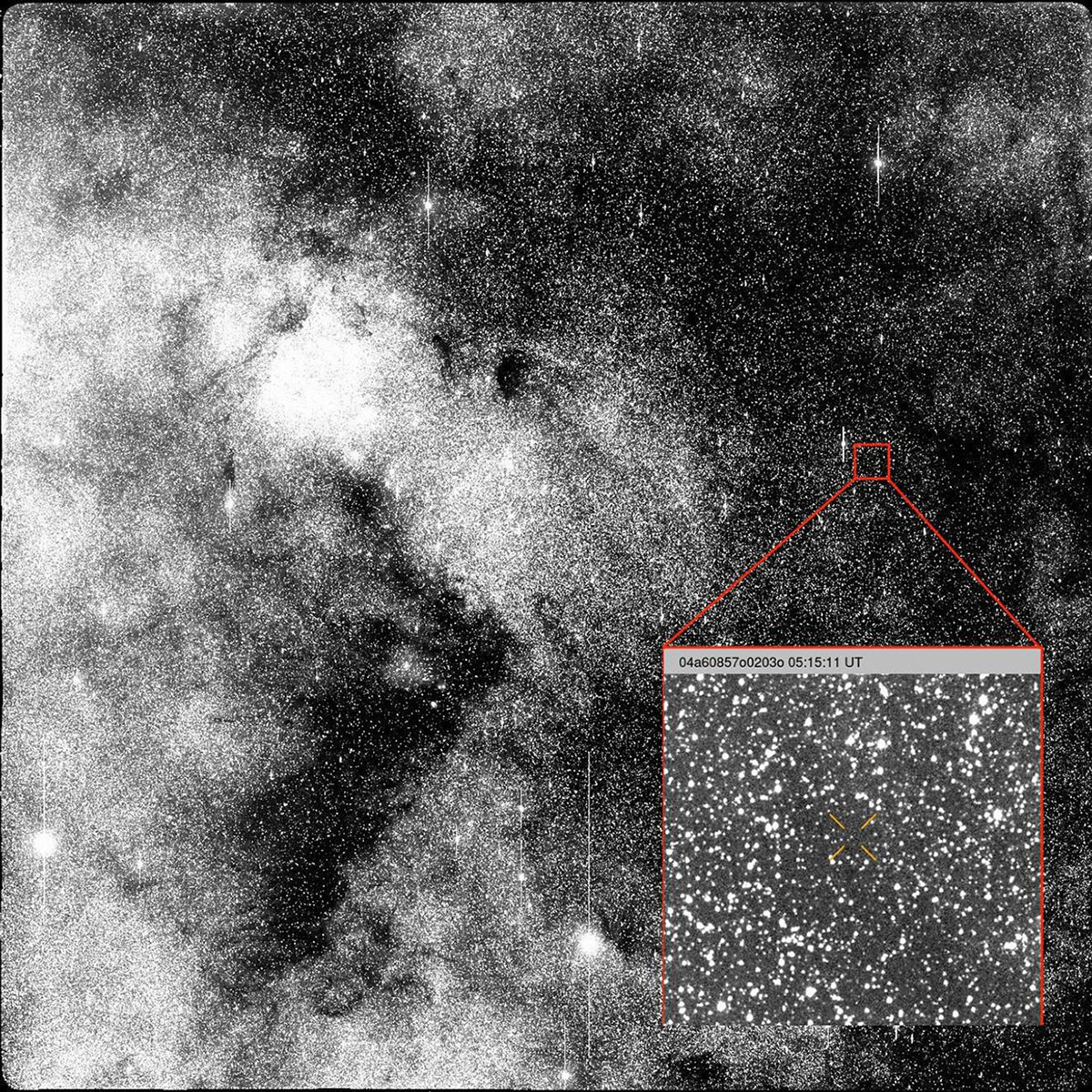
MRO shows the comet’s inner structures from Mars orbit
The Mars Reconnaissance Orbiter captured one of the sharpest views of the comet from Mars orbit. Its telescopic camera shows the inner coma with more detail than most Earth-based angles can provide. From this vantage point, scientists can track subtle dust jets and study how material escapes the comet’s surface.
Mars sits at a different angle relative to the Sun compared to Earth. That geometry gives MRO a chance to see structures that are invisible or compressed from our viewpoint. These details help refine estimates of the comet’s rotation and dust production.
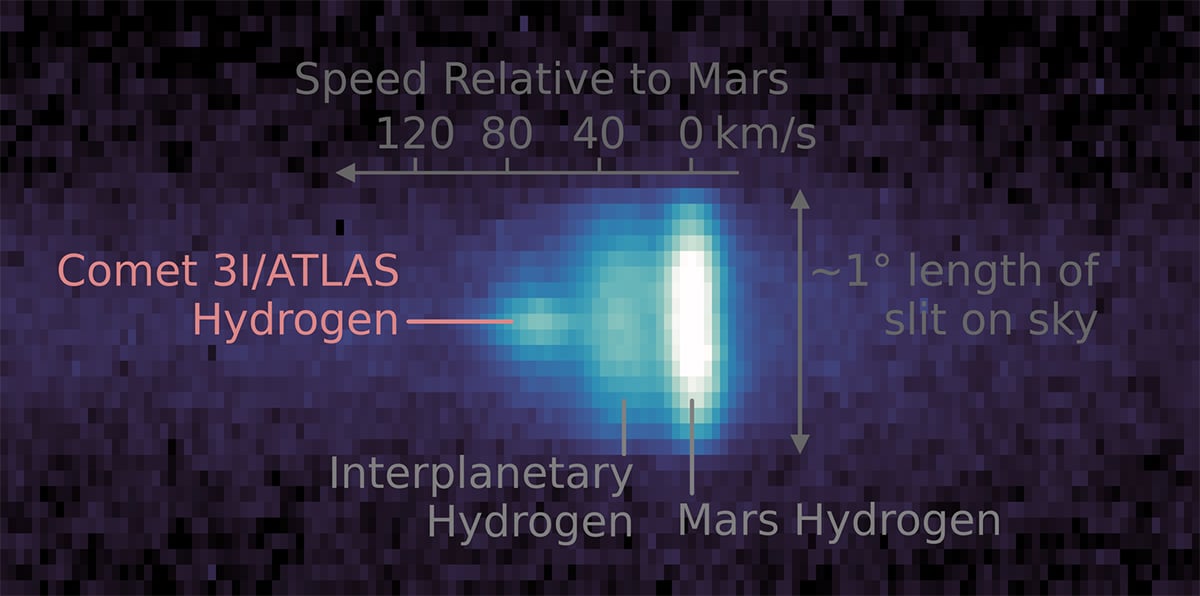
MAVEN detects hydrogen spreading from the comet
Next comes the MAVEN observation, captured in ultraviolet light. MAVEN detects hydrogen, a product of water molecules breaking apart under sunlight. Its images show a large, extended hydrogen cloud surrounding the comet.
This is a strong sign of water activity. It also informs researchers about the comet’s rate of gas release and how sunlight affects it. UV measurements like this extend far beyond the visible coma and reveal the amount of material the comet actually produces on a large scale.
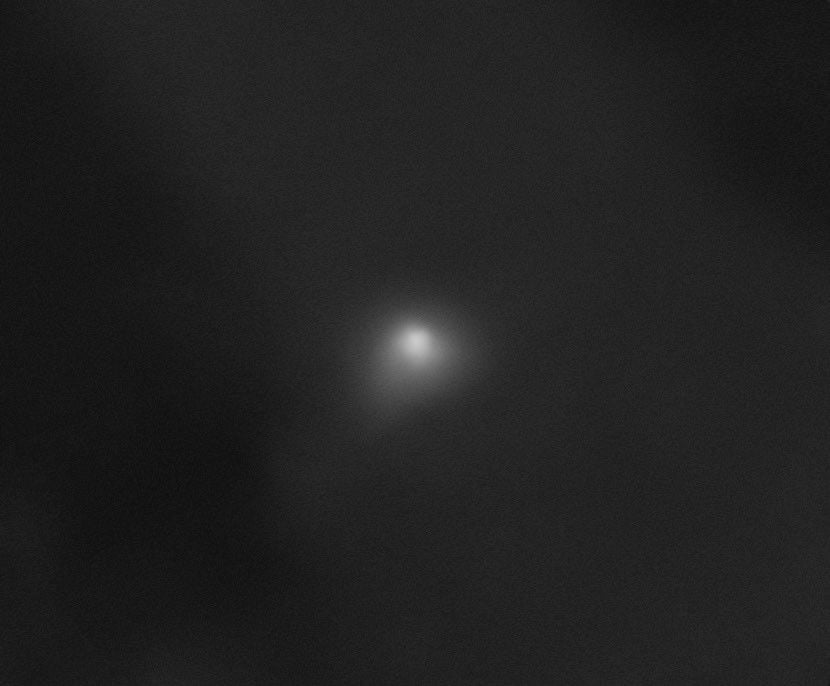
Perseverance spots the comet from Jezero crater
NASA’s Perseverance rover captured a faint arc of the comet from the surface of Mars. It is not a dramatic photograph, but it is a rare view. A rover rarely looks for comets, yet this angle confirms that even a ground-based platform on another planet can contribute to interplanetary observations.
The image also links surface and orbital observations, providing a ground truth reference that helps calibrate brightness and position measurements.
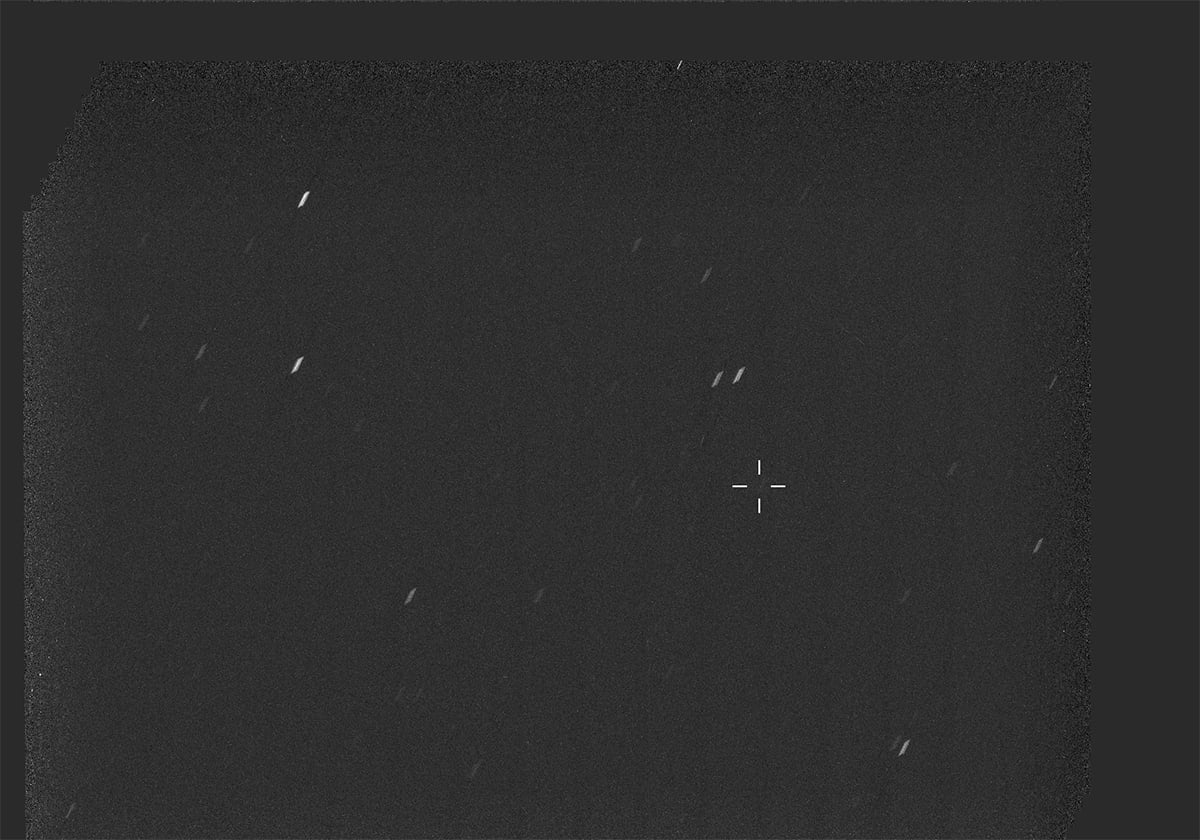
SOHO tracks the comet near the Sun, where Earth cannot see
The SOHO mission observed the comet when it was too close to the Sun for Earth-based telescopes to track. Its coronagraph blocks direct sunlight, allowing the comet’s dust tail to appear clearly.
This region near the Sun is blind to astronomers on the ground. Without SOHO, that part of the comet’s journey would remain undocumented. These images show how the comet brightens, how the tail stretches out, and how dust reacts to intense solar radiation.
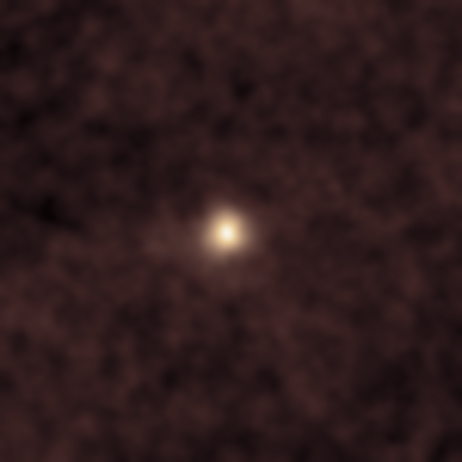
STEREO-A captures the growing dust tail from a different angle
The STEREO-A spacecraft offers a viewpoint separate from Earth. Its images show the early formation of the comet’s dust tail and the direction in which dust is moving.
This angle helps confirm how dust grains respond to solar wind and radiation pressure. The shape of the tail also hints at the comet’s rotation and the orientation of its active regions.
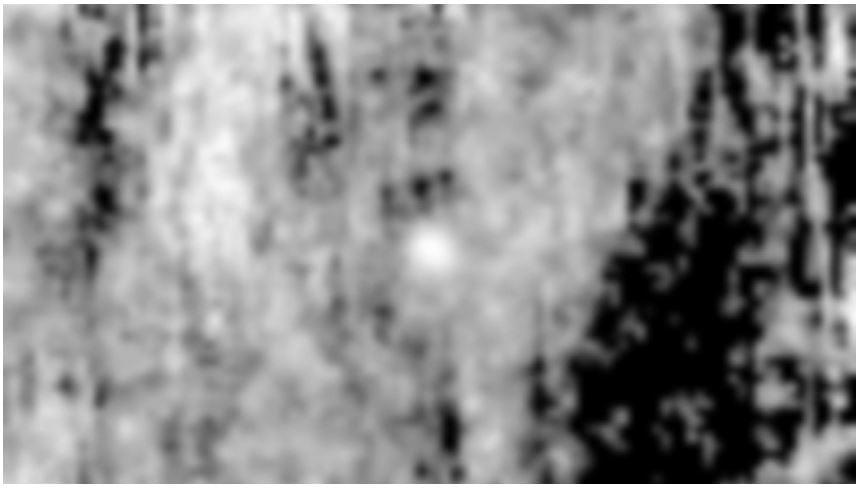
PUNCH detects the comet’s faint plasma tail
The PUNCH mission, designed to study solar wind structures, recorded the comet’s plasma tail. Plasma tails form when charged particles flow away from the comet under the influence of the solar wind.
These tails are often faint and hard to observe, but PUNCH is optimized for exactly this kind of detection. Its views show a long, narrow structure that stretches across space and responds directly to the Sun’s magnetic environment.
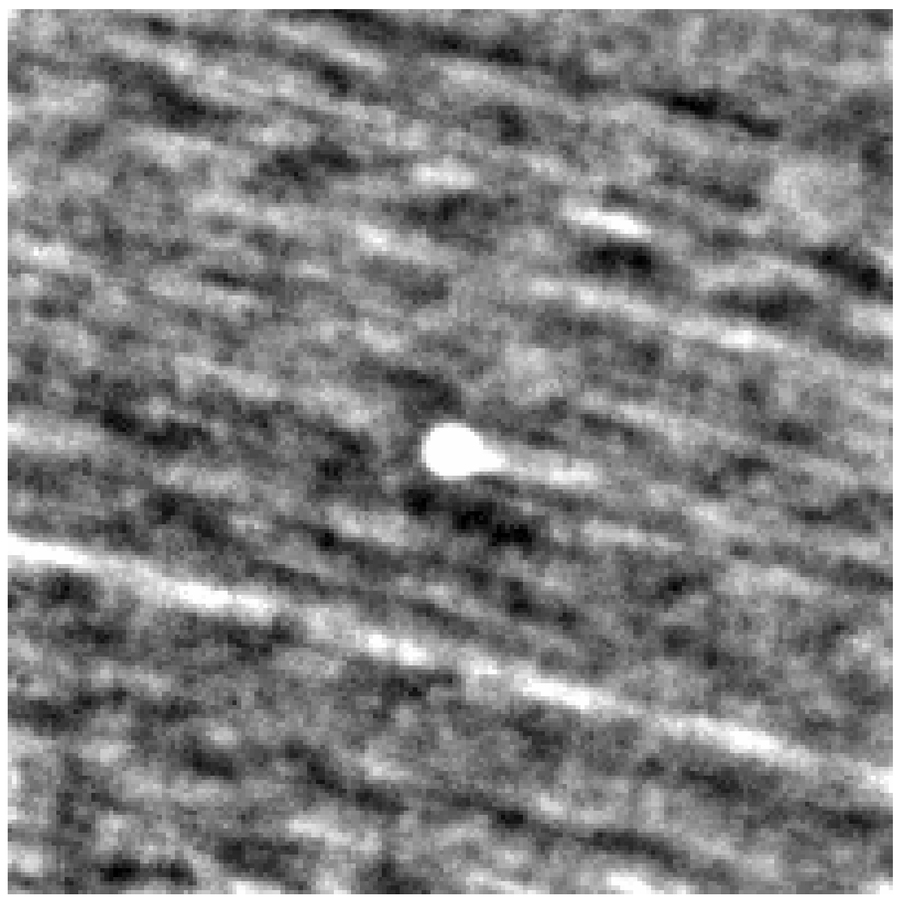
Lucy observes the comet from its deep-space route
The Lucy spacecraft, currently heading toward the Jupiter Trojans, added another angle from deep space. Lucy’s distance from Earth provides a long baseline, allowing scientists to measure how the comet shifts against background stars.
These geometric differences help refine the comet’s computed path. With an object moving this fast, small improvements in trajectory models make a big difference.
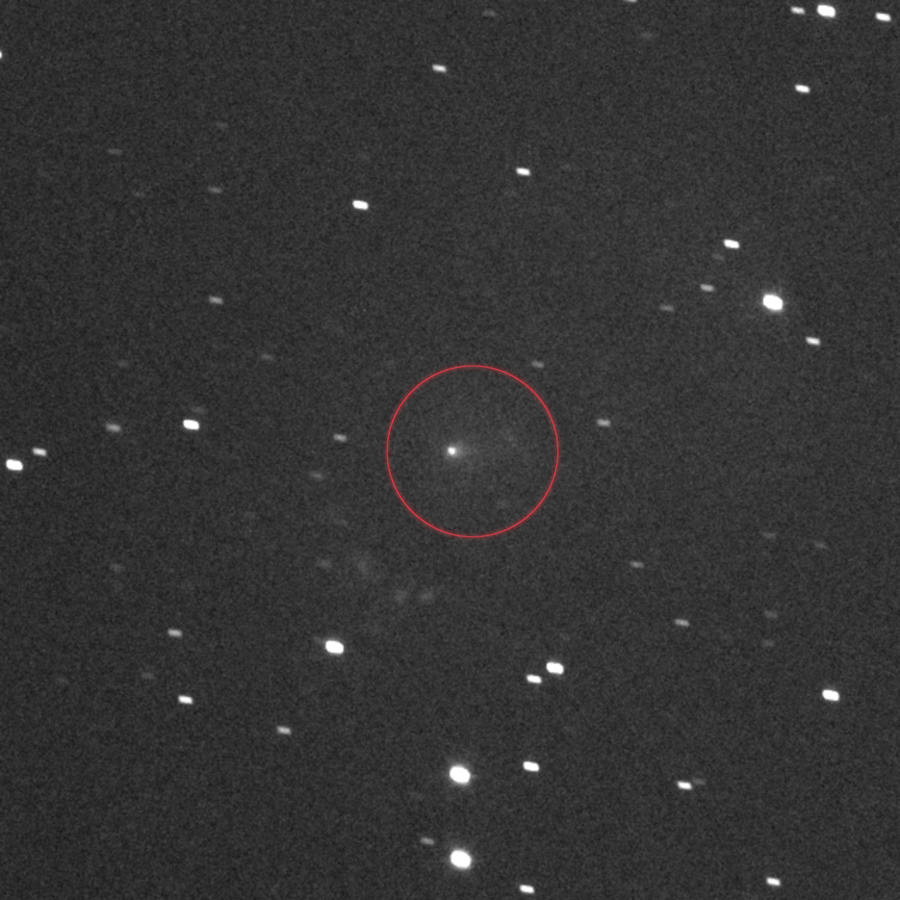
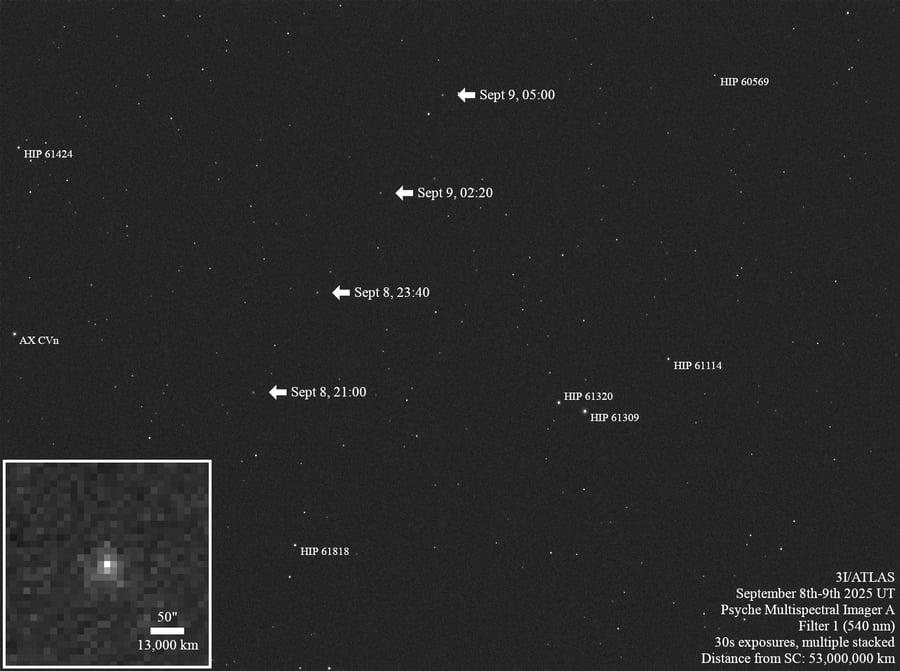
Psyche provides a second deep-space confirmation
The Psyche spacecraft, on its way to the metal asteroid Psyche, also captured the comet. Its images support Lucy’s observations and provide another reference point from deep space.
Two deep-space perspectives gave scientists a triangulation effect. That helps compare dust brightness, coma shape, and tail structure across a large spatial baseline.
A short window before it leaves forever
3I/ATLAS will remain observable through 2026. After that, it will drift out of range and continue its journey back into interstellar space. NASA will keep collecting data until the comet becomes too faint to track. Every observation adds one more piece to the puzzle of what interstellar comets look like and how they behave near a new star.
The eight new images form the clearest record so far. They capture a visitor that will not pass this way again, offering scientists a rare chance to study the building blocks of another planetary system, without leaving our own.
Further readings
Right from the discovery of the interstellar comet 3I/ATLAS, DIYP has published several articles on its photographs and features. Here is the list of articles:
- A New Visitor from the Stars: Comet 3I/ATLAS
- Gemini North Photographs the Interstellar Comet 3I/ATLAS
- Hubble’s Sharpest Portrait of a Visitor from the Stars: Comet 3I/ATLAS
- JWST Reveals the Secrets of Interstellar Comet 3I/ATLAS in New Images
- SPHEREx Maps the Carbon Dioxide Breath of Interstellar Comet 3I/ATLAS
- Gemini South Photographs Anti-Solar Tail of 3I/ATLAS
- Interstellar Comet 3I/ATLAS: Gemini South Images Reveal a Growing Tail
- Interstellar Comet 3I/ATLAS through Many Eyes: All Images so Far
- A Faint Smudge from Mars: Did Perseverance Really Capture Interstellar Comet 3I/ATLAS?
- ESA’s Mars Orbiter Capture “Closest Yet” View of Interstellar Comet 3I/ATLAS
- Comet 3I/ATLAS Returns: Astronomer Photographs it after Perihelion
- Tianwen-1’s Surprise Close-Up: China’s Mars Orbiter Images Interstellar Comet 3I/ATLAS
- Interstellar Comet 3I/ATLAS Returns to View with a Growing Ion Tail
Clear skies!
See more from DIYPhotography.net on Google
Add DIYPhotography.net as a trusted source. This makes
our stories more likely to appear in your Google Search results.
 Add as a preferred source on Google

Soumyadeep Mukherjee
Soumyadeep Mukherjee is an award-winning astrophotographer from India. He has a doctorate degree in Linguistics. His work extends to the sub-genres of nightscape, deep sky, solar, lunar and optical phenomenon photography. He is also a photography educator and has conducted numerous workshops. His works have appeared in over 40 books & magazines including Astronomy, BBC Sky at Night, Sky & Telescope among others, and in various websites including National Geographic, NASA, Forbes. He was the first Indian to win “Astronomy Photographer of the Year” award in a major category.


Join the Discussion
DIYP Comment Policy
Be nice, be on-topic, no personal information or flames.