
























Four-Year Timelapse of a Star Reveals a Planetary System in Motion
Jun 3, 2026
Soumyadeep Mukherjee
Soumyadeep Mukherjee is an award-winning astrophotographer from India. He has a doctorate degree in Linguistics. His work extends to the sub-genres of nightscape, deep sky, solar, lunar and optical phenomenon photography. He is also a photography educator and has conducted numerous workshops. His works have appeared in over 40 books & magazines including Astronomy, BBC Sky at Night, Sky & Telescope among others, and in various websites including National Geographic, NASA, Forbes. He was the first Indian to win “Astronomy Photographer of the Year” award in a major category.
Share:
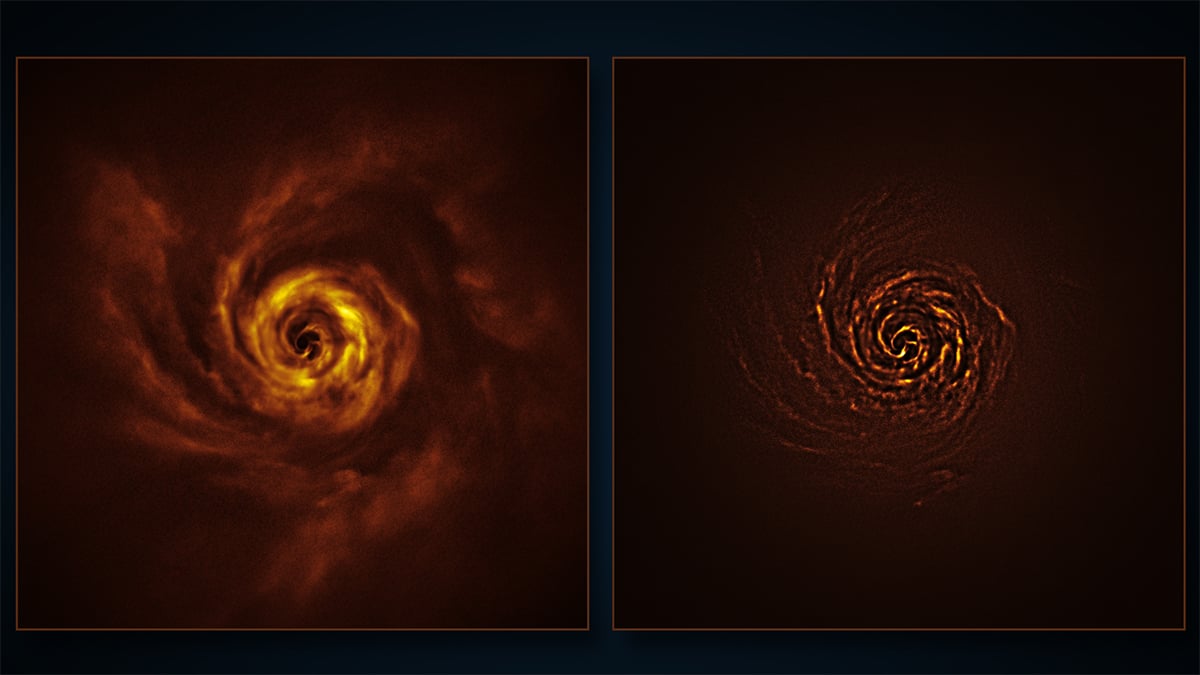
Protoplanetary disks provide astronomers with the best opportunity to study the earliest stages of planet formation. These disks consist of gas and dust left over from the star-formation process, and they serve as the reservoirs from which planetary systems emerge. Over the past two decades, advances in high-contrast imaging have revealed that many of these disks contain rings, gaps, spirals, and other complex structures. Because planet formation unfolds over millions of years, most observations still capture only a moment in time.
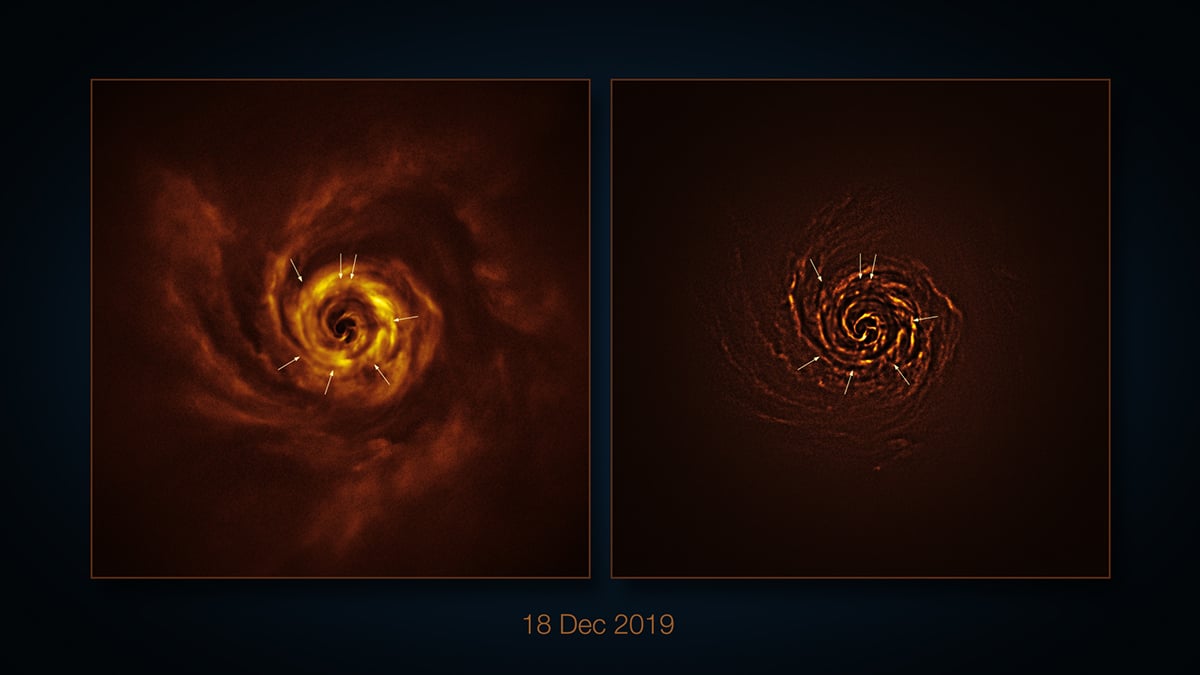
A new timelapse released by the European Southern Observatory (ESO) offers a new look at that dynamism. Using observations collected over four years with the SPHERE instrument on the Very Large Telescope (VLT), astronomers created a timelapse sequence of the protoplanetary disk surrounding the young star AB Aurigae. The resulting animation reveals moving shadows, evolving structures, and subtle changes across the disk.
AB Aurigae: A young star
Located roughly 520 light-years away in the constellation Auriga, AB Aurigae is a relatively young star with an estimated age of only a few million years. In astronomical terms, that makes it a newborn. By comparison, our Sun is approximately 4.6 billion years old.
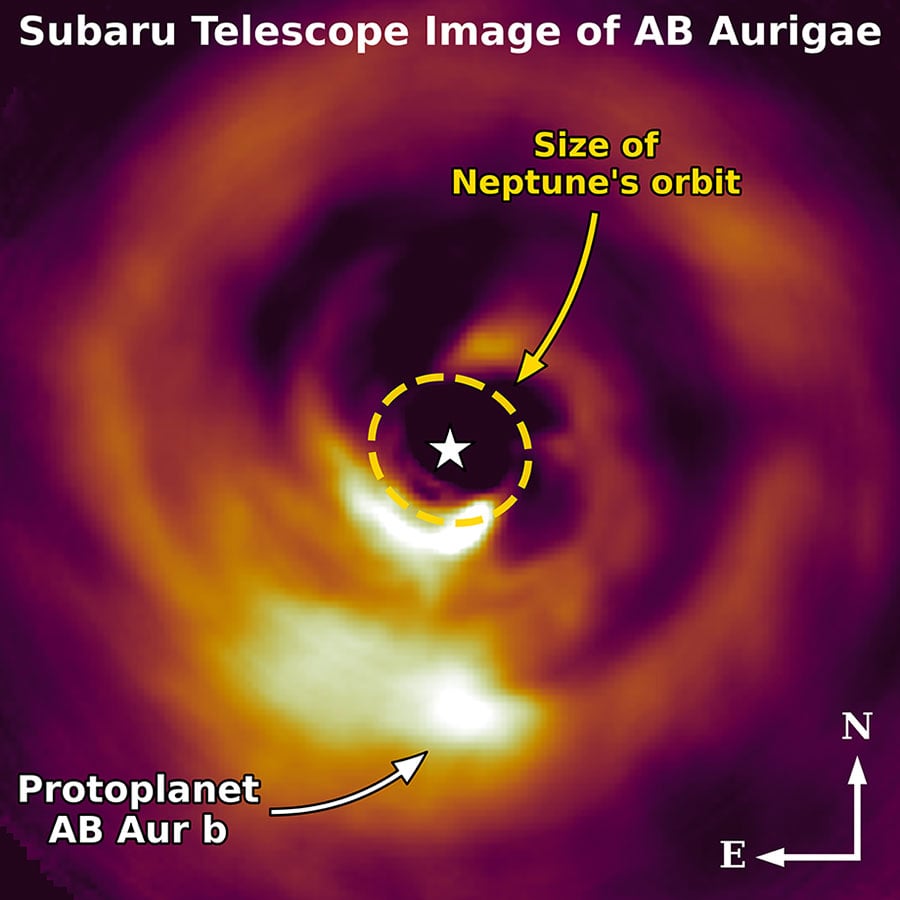
AB Aurigae belongs to a category known as Herbig Ae stars. These stars have masses greater than the Sun and remain surrounded by substantial amounts of gas and dust. Because they are still young, their circumstellar disks retain many of the ingredients necessary to form planets, moons, asteroids, and comets.
Astronomers began studying AB Aurigae decades ago because its disk appeared unusually rich in structure. Early observations suggested that the system was not smooth and uniform. The disk displayed asymmetries and irregular patterns that hinted at ongoing activity. As imaging technology improved, researchers uncovered increasingly complex features.
Consequently, AB Aurigae became a prime target for some of the world’s most powerful observatories. Scientists recognized that the system could provide valuable insight into how young planets interact with the material around them. The disk’s size and brightness also made it easier to study than many other planet-forming systems.
A four-year observing campaign by ESO
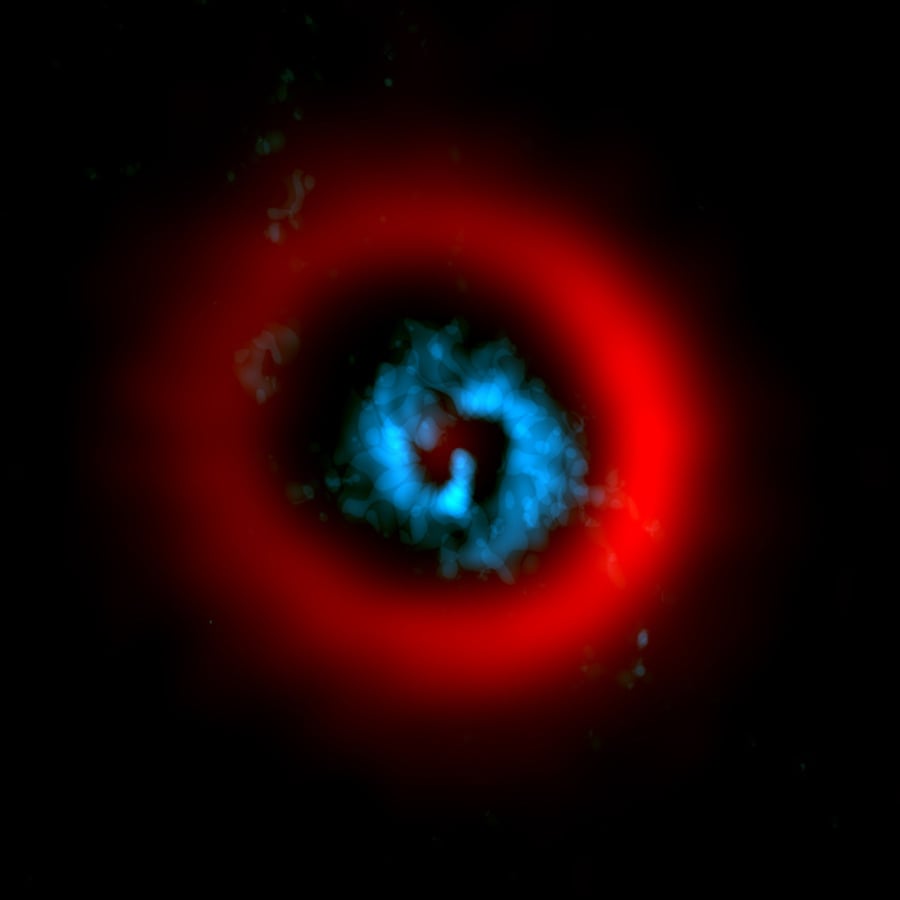
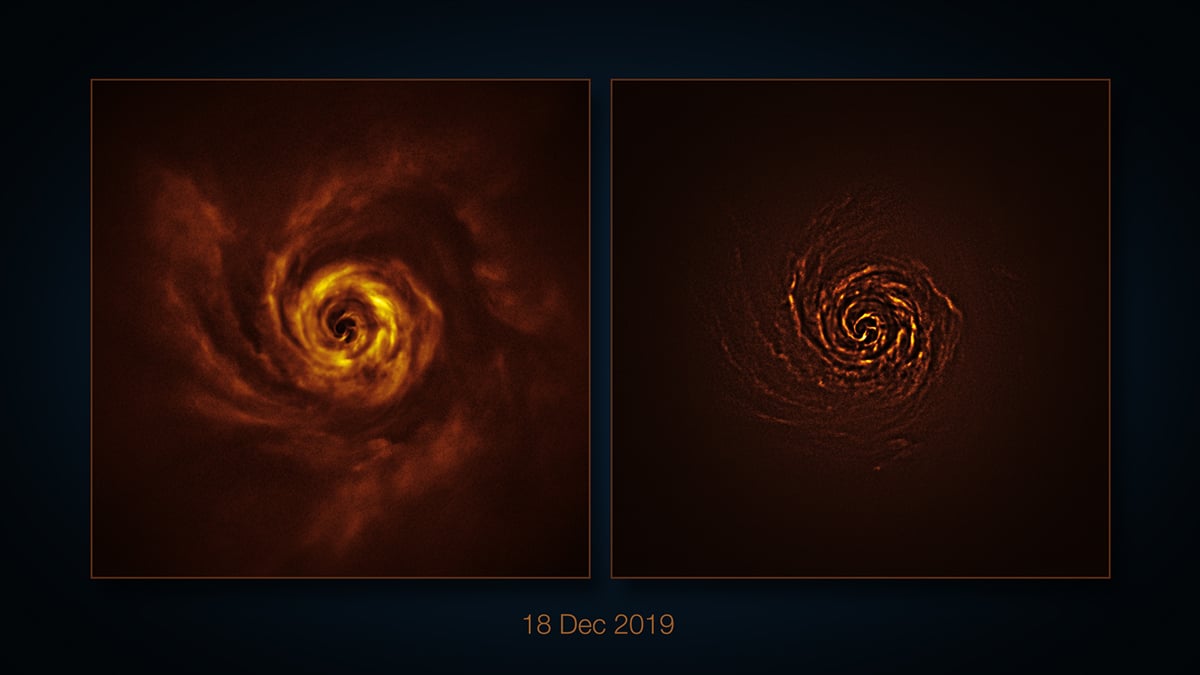
Although individual images of AB Aurigae have appeared in scientific publications for years, the newly released ESO timelapse shows us a new story. It combines observations obtained between 2019 and 2023 and presents them in chronological sequence. Once the images are viewed together, subtle changes become much easier to recognize.
The most prominent feature involves a series of dark shadows that move across the disk over time. These shadows sweep through the surrounding material and gradually shift position from one observation to the next. Their movement immediately signals that the system is far from static.
In addition, variations appear within some of the disk’s brighter structures. Spiral features change their appearance slightly, while illuminated regions shift in response to changing patterns of starlight. Although the changes occur slowly, they become unmistakable when several years of observations are compressed into a short video.
Hidden structures near the star
One of the most intriguing aspects of the new timelapse involves the origin of the moving shadows. According to ESO, astronomers believe that these dark features likely originate much closer to the central star than the outer disk regions where they become visible. Dense concentrations of dust or warped structures within the inner disk may block portions of the star‘s light. As those structures orbit AB Aurigae, they cast shadows across the surrounding material.
The phenomenon resembles the movement of a shadow across a landscape as an object passes in front of a light source. However, the scale involved in AB Aurigae is vastly larger. The shadows extend across distances that would encompass many times the size of our Solar System.
These shadows provide researchers with an indirect method for studying regions that remain difficult to observe directly. The innermost portions of a protoplanetary disk lie extremely close to the star. Even sophisticated instruments struggle to resolve those areas because of the star’s overwhelming brightness.
Making the observations possible with SPHERE
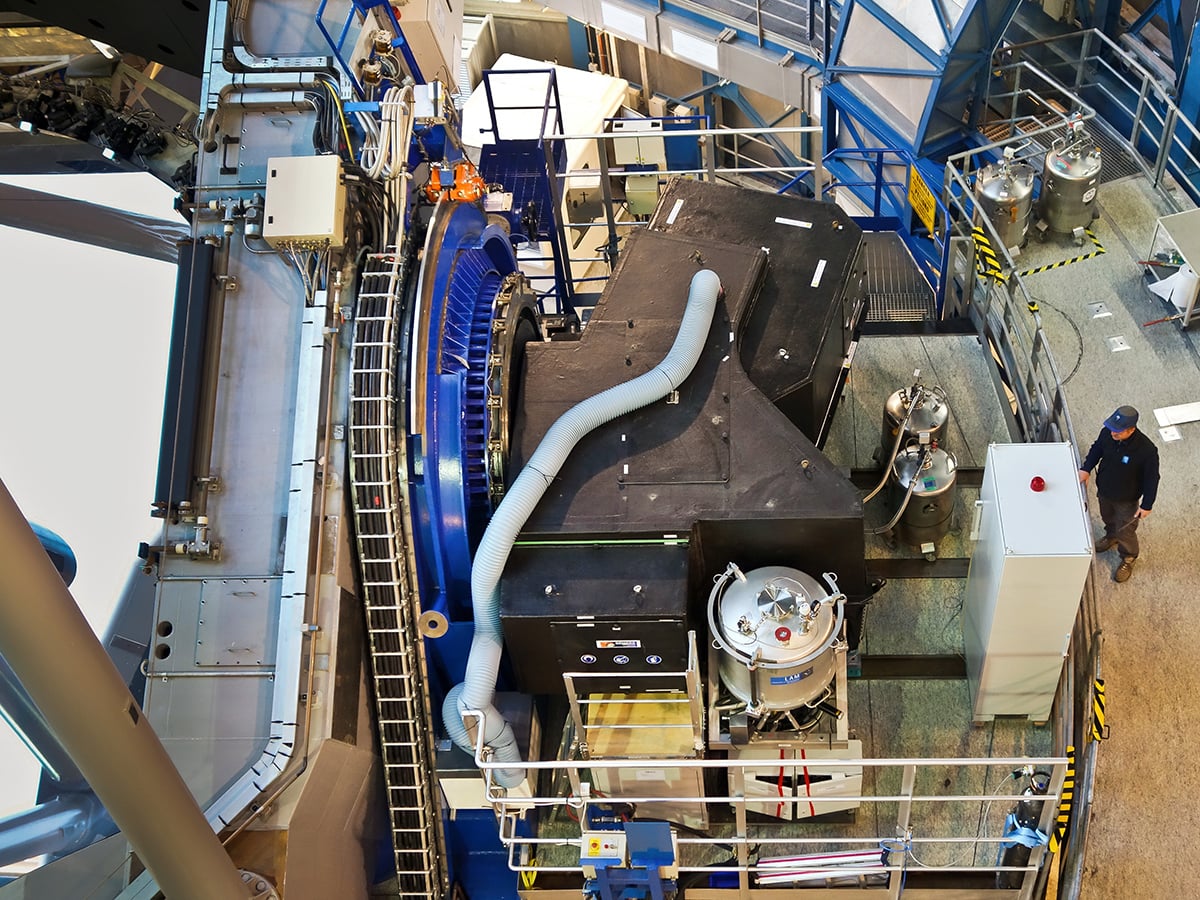
The observations were obtained using SPHERE, the Spectro-Polarimetric High-contrast Exoplanet REsearch instrument installed on ESO’s Very Large Telescope at Paranal Observatory in northern Chile. SPHERE was designed to study exoplanets and circumstellar disks located close to bright stars.
The instrument employs advanced adaptive optics systems that compensate for atmospheric turbulence in real time. Earth‘s atmosphere continuously distorts incoming starlight, causing images to blur. Adaptive optics corrects these distortions hundreds of times each second, producing significantly sharper views.
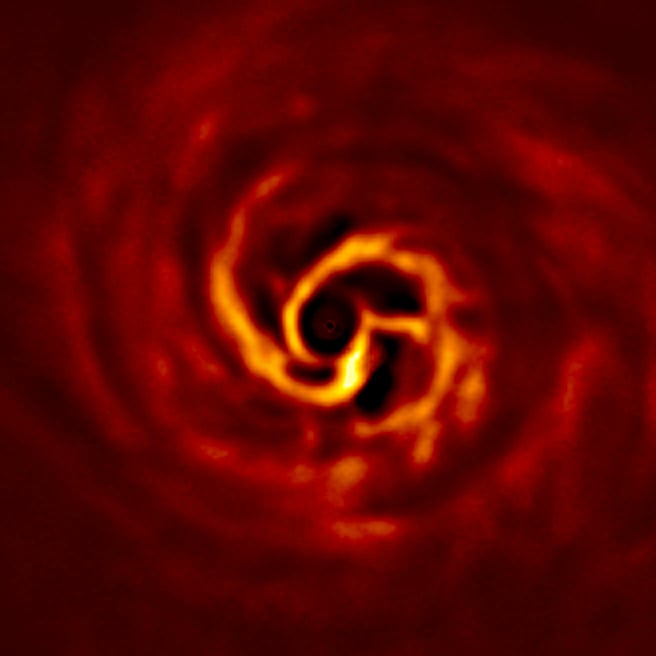
SPHERE also uses coronagraphs to suppress much of the star’s light. By reducing the glare, astronomers can detect faint structures located nearby. This capability has transformed the study of protoplanetary disks and directly imaged exoplanets.
Over the years, SPHERE has revealed extraordinary detail in numerous young stellar systems. The instrument has exposed rings carved into disks, dust concentrations trapped by planetary interactions, and complex spiral structures shaped by gravitational forces.
Clear skies!
See more from DIYPhotography.net on Google
Add DIYPhotography.net as a trusted source. This makes
our stories more likely to appear in your Google Search results.
 Add as a preferred source on Google

Soumyadeep Mukherjee
Soumyadeep Mukherjee is an award-winning astrophotographer from India. He has a doctorate degree in Linguistics. His work extends to the sub-genres of nightscape, deep sky, solar, lunar and optical phenomenon photography. He is also a photography educator and has conducted numerous workshops. His works have appeared in over 40 books & magazines including Astronomy, BBC Sky at Night, Sky & Telescope among others, and in various websites including National Geographic, NASA, Forbes. He was the first Indian to win “Astronomy Photographer of the Year” award in a major category.
Related Posts
 Build an advanced DIY motion control slider for timelapse and stop motion animation
 Chandra’s 25-Year Time-Lapse Reveals Kepler’s Supernova Remnant in Motion
 Solar Orbiter Reveals the Sun’s Polar Magnetic Field in Motion for the First Time
 Hubble Captures Star Formation in Motion: Inside Lupus 3 and NGC 1333
Join the Discussion
DIYP Comment Policy
Be nice, be on-topic, no personal information or flames.