




















JWST’s Cosmic Lenses: How the Universe Reveals Itself through Gravity
Oct 3, 2025
Soumyadeep Mukherjee
Soumyadeep Mukherjee is an award-winning astrophotographer from India. He has a doctorate degree in Linguistics. His work extends to the sub-genres of nightscape, deep sky, solar, lunar and optical phenomenon photography. He is also a photography educator and has conducted numerous workshops. His works have appeared in over 40 books & magazines including Astronomy, BBC Sky at Night, Sky & Telescope among others, and in various websites including National Geographic, NASA, Forbes. He was the first Indian to win “Astronomy Photographer of the Year” award in a major category.
Share:
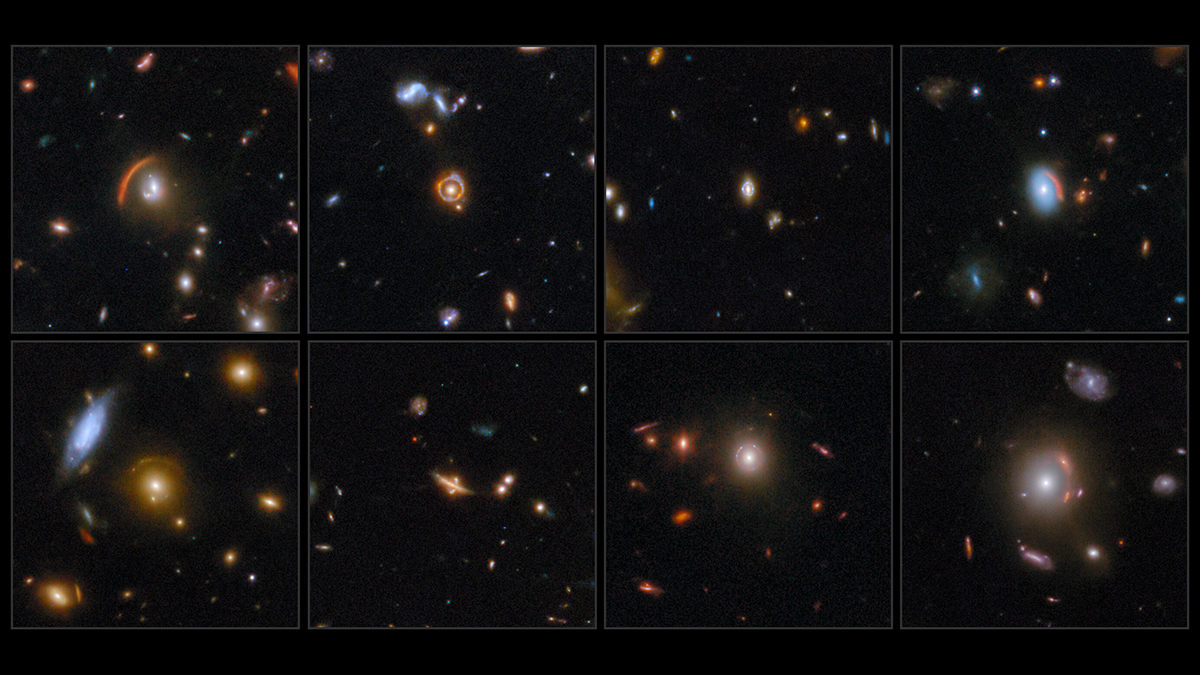
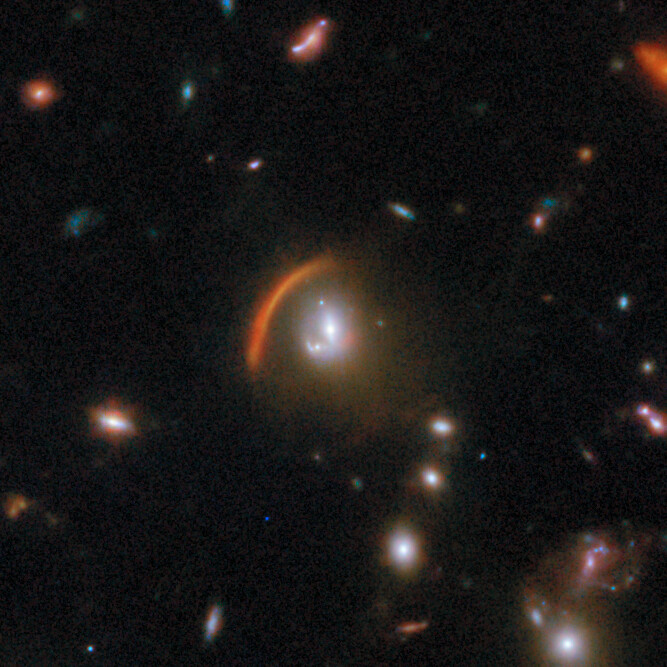
When the James Webb Space Telescope was launched, scientists knew it would change astronomy. Its large mirror and infrared vision promised new views of the early universe. Now, those promises are being fulfilled. The latest release from JWST shows eight examples of gravitational lensing from the COSMOS-Web survey. These images are evidence of how gravity bends light across cosmic distances. They are also powerful tools for studying galaxies, dark matter, and the history of the universe.
Gravitational lensing made clear
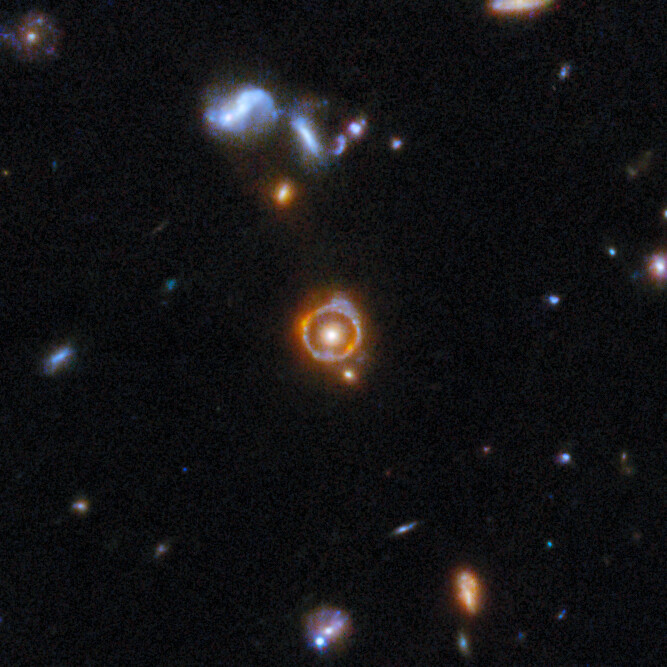
Gravitational lensing happens when a massive object sits between us and a distant galaxy. The gravity of the closer object bends light coming from the galaxy behind it. That light is stretched, magnified, and sometimes multiplied. The result is arcs, loops, or even complete rings of light. These are called Einstein rings, after the physicist who first predicted the effect.
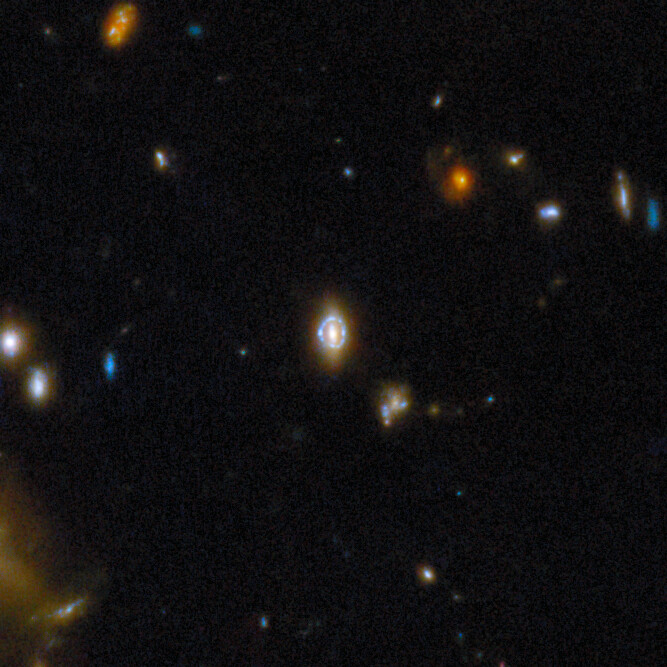
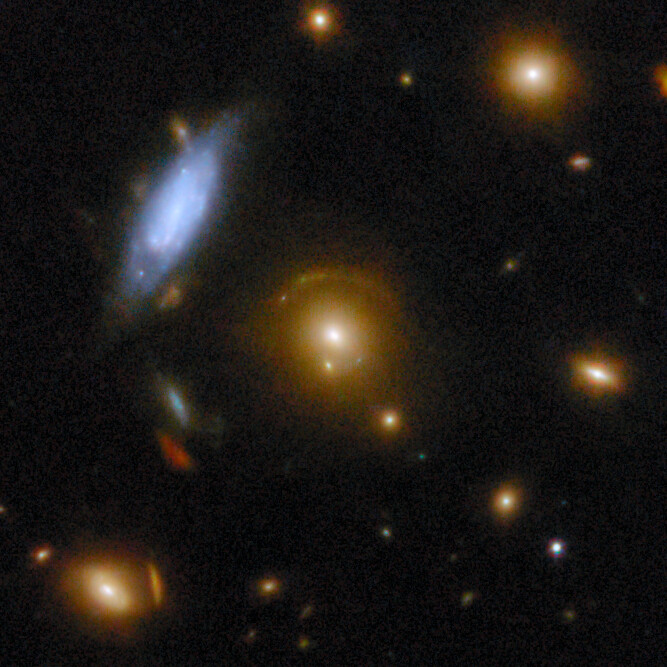
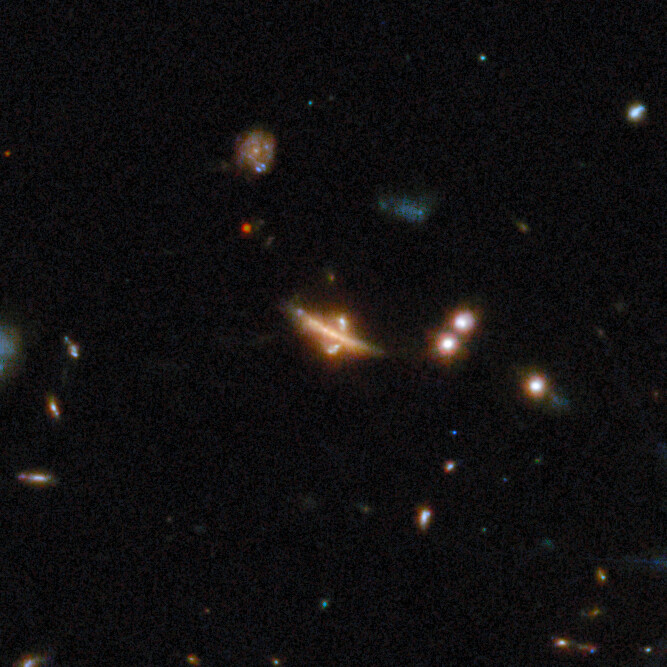
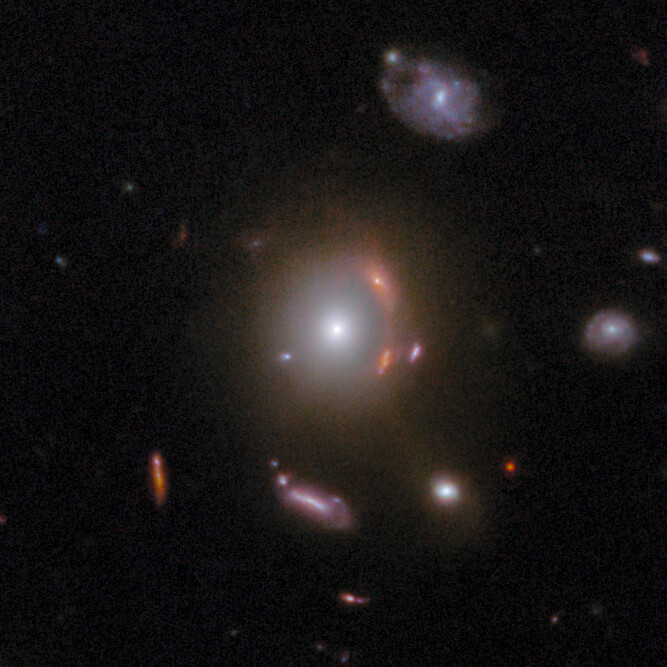
In the JWST images, the lensing is easy to see. The foreground galaxies look sharp and compact. Around them, faint arcs form distorted shapes. These are the distant galaxies, seen as they were billions of years ago. Their light has taken most of cosmic history to reach us. Without the bending of gravity, many of them would be too faint to detect. JWST captures them in detail, showing how lensing turns nature into a giant telescope.

The role of COSMOS-Web
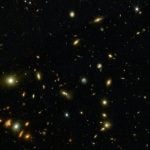
The COSMOS-Web survey is one of the largest projects assigned to JWST. It covers a large patch of sky, wide enough to find rare objects but deep enough to reveal fine detail. It aims to understand how galaxies formed and changed over time. By observing in the infrared, it looks past dust and into earlier epochs of the universe.
Within this survey, astronomers noticed many lensing candidates. A team examined more than 42,000 galaxies and identified hundreds that show clear lensing features. The eight highlighted in the latest images are the most striking. They stand out as textbook examples of strong lensing. But they also represent a much larger catalog that will support years of follow-up work.
Importance of gravitational lensing
Strong gravitational lenses serve several scientific purposes. First, they magnify very distant galaxies. This allows astronomers to study galaxies that would otherwise remain invisible. The magnification brings out details of star formation, structure, and chemical makeup.
Second, lenses reveal the mass of the objects doing the bending. Light follows the pull of gravity, so the shape and size of the arcs depend on the total mass in the foreground galaxy. That mass includes both visible stars and the invisible dark matter that makes up most of the galaxy’s weight. By modeling the lensing, scientists can map dark matter directly.
Third, large samples of lenses help refine models of the universe itself. They allow precise measurements of cosmic distances and test predictions of how galaxies cluster and evolve. The COSMOS-Web discoveries add hundreds of new systems to the list. Each system is another laboratory for testing gravity and cosmology.
JWST’s advantage over earlier telescopes
The Hubble Space Telescope revealed many lenses in past surveys. Yet JWST offers distinct advantages. Its mirror is larger, so it gathers more light. Its instruments operate in the infrared, which is critical for seeing very distant galaxies whose light is stretched by cosmic expansion. Many of these galaxies lie at redshifts that push their light beyond Hubble’s reach.
JWST also provides sharper imaging in the infrared. That sharpness helps distinguish faint arcs from the foreground galaxies. It lets astronomers build cleaner catalogs with less confusion. When combined with the wide area covered by COSMOS-Web, the result is a dataset unmatched in both size and depth.
The COSMOS-Web lens survey
The dedicated effort to search for lenses in this dataset is known as the COSMOS-Web Lens Survey, or COWLS. Researchers carried out detailed inspections of the survey images. They used a combination of human checks and automated tools. In the end, they flagged more than 400 strong candidates.
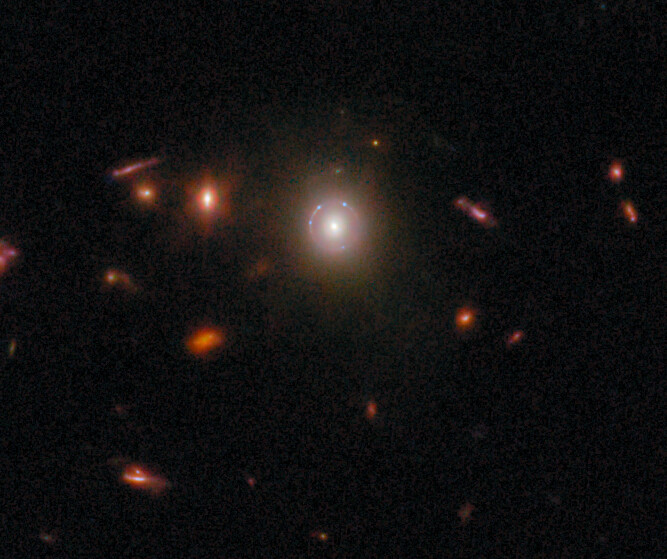
The eight featured in ESA’s collage are the most visually clear. They include partial arcs, near-complete rings, and elongated smears of distant galaxies. Some systems may even show multiple background galaxies lensed by the same foreground object. These complex cases are especially valuable because they allow tighter constraints on mass models.
The next step is spectroscopic follow-up. Measuring the redshift of both the lensing galaxy and the lensed source provides the distances needed for precise modeling. With that data, astronomers can calculate exactly how much mass is required to produce the observed bending. That calculation will map the distribution of dark matter in the lensing galaxy.
Discoveries to come
The COSMOS-Web lens catalog will fuel many research projects. Some will focus on the lensed galaxies themselves. These galaxies often come from the early universe, close to the time when the first stars and galaxies were forming. Lensing boosts their brightness enough to allow detailed studies. Scientists can analyze their star formation, structure, and the buildup of heavy elements.
Other projects will study the lenses. By comparing observed arcs with models, researchers can test how much dark matter clumps on small scales. This helps distinguish between different theories of dark matter. The precise measurements also tie into cosmology, including the expansion rate of the universe.
Clear skies!
See more from DIYPhotography.net on Google
Add DIYPhotography.net as a trusted source. This makes
our stories more likely to appear in your Google Search results.
 Add as a preferred source on Google

Soumyadeep Mukherjee
Soumyadeep Mukherjee is an award-winning astrophotographer from India. He has a doctorate degree in Linguistics. His work extends to the sub-genres of nightscape, deep sky, solar, lunar and optical phenomenon photography. He is also a photography educator and has conducted numerous workshops. His works have appeared in over 40 books & magazines including Astronomy, BBC Sky at Night, Sky & Telescope among others, and in various websites including National Geographic, NASA, Forbes. He was the first Indian to win “Astronomy Photographer of the Year” award in a major category.
Join the Discussion
DIYP Comment Policy
Be nice, be on-topic, no personal information or flames.