











Here are ten predictions about the future of photography
Aug 21, 2017
Dunja Đuđić Kalinin
Dunja Djudjic is a multi-talented artist based in Novi Sad, Serbia. With 15 years of experience as a photographer, she specializes in capturing the beauty of nature, travel, concerts, and fine art. In addition to her photography, Dunja also expresses her creativity through writing, embroidery, and jewelry making.
Share:

Photography has changed immensely over the years, and in the 21st century, the change seems to be faster than ever before. The team behind COOPH has created an interesting video where they suggest ten predictions about the future of photography. With the development this fast and versatile, we can probably expect a lot of dramatic changes in both near and far future.
1. Stronger sensors
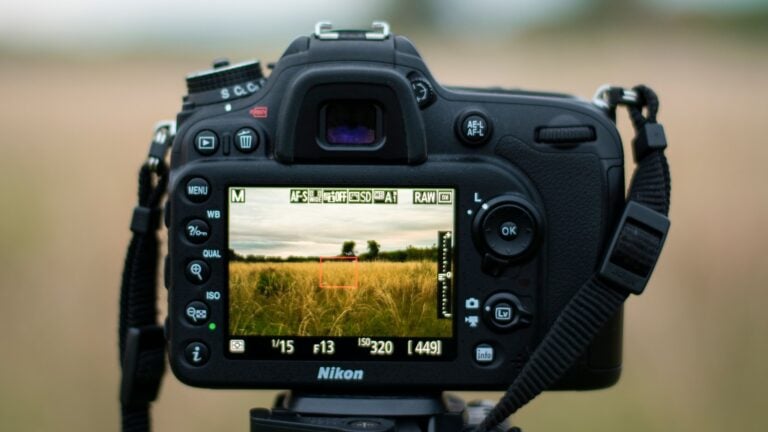
The sensors are getting improved, and in the future, they can only become stronger. Some of the predictions are that they’ll have the resolution of hundreds of megapixels. The ISO values will increase too, so the cameras will be able to “see in the dark” without harsh noise. The development of the curved sensor can also improve the quality of the images in future.
2. Smaller cameras
With the mirrorless system and smartphones, the smaller cameras are already here. Dr. Hajamiri of California Institute of Technology claims that he is developing a camera without moving parts. No lenses and no mirrors. It would be completely flat, and potentially flexible to control the field of view. Sounds like science fiction to me, but who knows.
3. More photojournalism
The cameras have become more available to everyone, so everyone can capture their surroundings. This could lead to greater storytelling, maybe even to revolution.
4. Closer integration
As technology evolves, we integrate it more into our daily lives. Things like VR goggles have seemed like science-fiction when I was a kid, and now they’re a real thing. Not to mention the DJI Goggles that also let you interact with the drone. Sony is even developing a contact lens with an integrated camera. So who knows, in the distant future, we may actually have some sort of implants with cameras (I may be going too far, but my imagination has gone wild now).
5. Intelligent cameras
One day, we may be able to control the camera remotely through sensory input. Mimi Zou of Royal College of Art in London is credited with the design concept for the world’s first biometric sensing camera. The lens would be capable of reading the user’s eye movement – you blink twice to take a photo or squint to zoom.
Similarly, we may also have a gadget that will measure brain activity and automatically shoot photos when we see something we like.
6. More versatile lenses
In the future, we may find the solution to the bulky lenses. Perhaps in the future, the cameras will come with multiple integrated lenses. Judging from the Light L16, this isn’t impossible, and it’s not far in the future.
7. Alternative energy solution
Battery life and performances are constantly improving. In the future, they may use solar panels for charging. Or, to go even further, maybe we’ll have completely new power sources.
8. New formats
Before digital cameras appeared, printing the photos was the way to display them. Now we mainly store and display photos in a digital format. In the future, new formats could appear. We could project them as holograms, which may not be so far in the future at all. And maybe we’ll store them inside an astro droid. ;)
9. Smarter software
As cameras develop, the software will follow along. We already have lots of software that do almost all the work for you: colorization, editing, transferring style of other photo and what not. I’m a little concerned about the sentence “how long will it be before the humans are taken out of the creative process altogether?” Will it still be a “creative process” if humans aren’t involved? But I guess that’s a whole new topic.
10. Return of the vintage
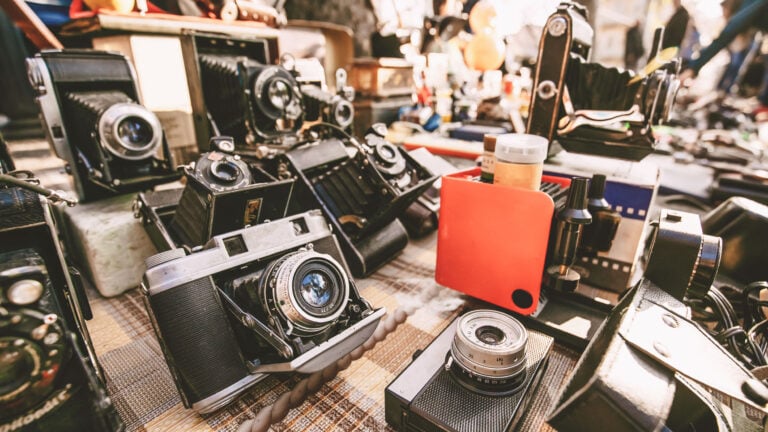
Vintage cameras and processes return into fashion after a while. Well, in the future, DSLR could become vintage collectibles. Although, we in Serbia will still have Nikon D60 sold in camera stores at the full price.
These were some of the predictions for the future of photography. Of course, we can’t clearly know everything that the future holds, but some of these predictions seem pretty realistic and close. What are your predictions for the future of photography? And asa photographer, what would you like to see and own in the future?
[10 Predictions for the Future of Photography | COOPH]

Dunja Đuđić Kalinin
Dunja Djudjic is a multi-talented artist based in Novi Sad, Serbia. With 15 years of experience as a photographer, she specializes in capturing the beauty of nature, travel, concerts, and fine art. In addition to her photography, Dunja also expresses her creativity through writing, embroidery, and jewelry making.


Join the Discussion
DIYP Comment Policy
Be nice, be on-topic, no personal information or flames.
18 responses to “Here are ten predictions about the future of photography”
powerful smartphone camera
Good one :)
I’m guessing there is no future for photography. The governments of the world will ban it for two reasons. One, they don’t want “people” to record their actions. Two, Islam isn’t to keen on it and we sure as shit don’t want to offend anyone.
Go see a doctor. Or get educated.
Henri Lindenhof How wonderfully accepting of an opinion different from yours. Thank you so much for your opinion of my health and education level. I hope you have a terrible day and die in a most painful way.
Love you too.
Not many of these 10 have a market, even at a very low price point.
Hope it is a camera per session, without the useless video features that I don’t ever use.. Call me old school hehe.
Missing the most important one: the replacement of the camera by the smartphone for 99% of the people.
Nope, not correct, maybe about 60% of the people, still plenty that will continue to use a real camera over a crappy little smart phone camera.
If you are clueless about it don’t comment. In 2016, 98.4% of the cameras sold were in smartphones already. If anything, by 99% figure is very low.
Source: https://petapixel.com/2017/03/03/latest-camera-sales-chart-reveals-death-compact-camera/
Mirrorless and those small cameras then smartphone
This seems written by a 12 year old… :(
Considering how many good (even stunning) photos are now taken with smartphone cameras, which nobody predicted even a few years ago, those predictions useless.
Oh come on… the elephant in the room? The demise of the flapper, otherwise known as the DSLR. And for those who argue that the DSLR format is superior and therefore will remain, you are completely right. It just won’t make sense to have a mirror bouncing around inside.
Computational photography is the future. It’s going to disrupt the market in about 5 years.
Sadness.. . Where algorithms will replace talent, instant editing will replace all skill. And the “art” will be completely replaced by technology with the exception of a few dinosaurs that won’t give up our cameras
Like any other technology, it’s going to be size. We’ll see the smartphone camera taking on more “traditional” camera capabilities-larger sensor, higher ISO range, improved digital zoom. We may see “user settings” on smartphones like we do with traditional cameras (if not already).
In the meantime, traditional cameras will go the way of mirrorless/micro 4/3 technology: smaller, lighter; and compatibility with wi-fi. We’ll see the bulky DSLR around for the moment, however it won’t last as long as the film SLR did.
Speaking of film, it will still be around and will have its following. I see a stronger growth in instant photography thanks to the Fuji Instax and the Impossible Project. We will see “niche” services like film suppliers and film labs that will exist as long as there is a market.
Then again, nothing is for certain when it comes to predicting the future.