




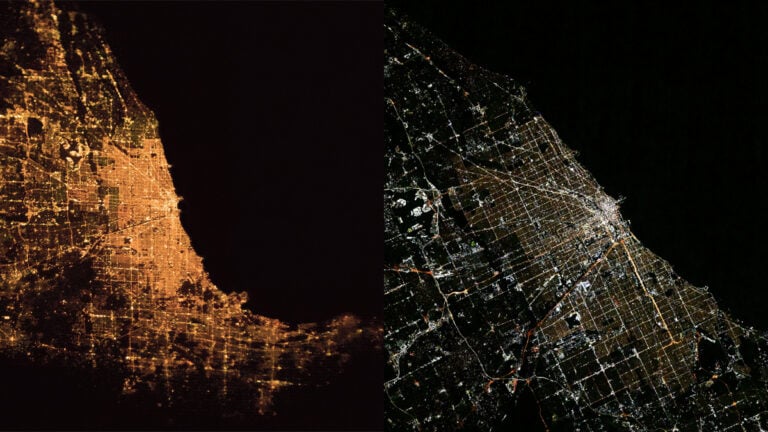
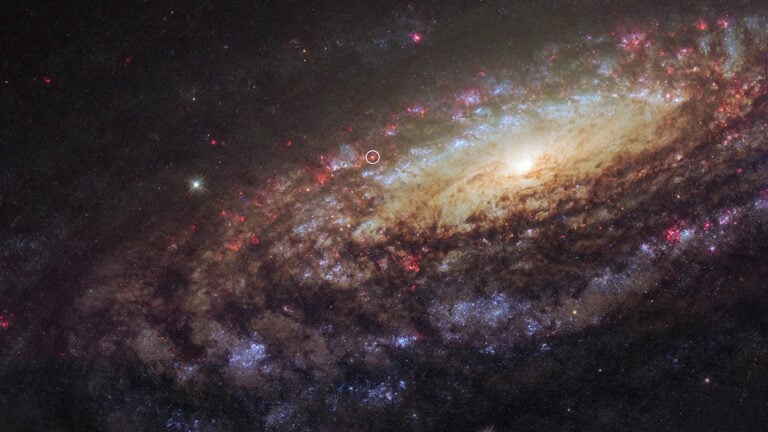
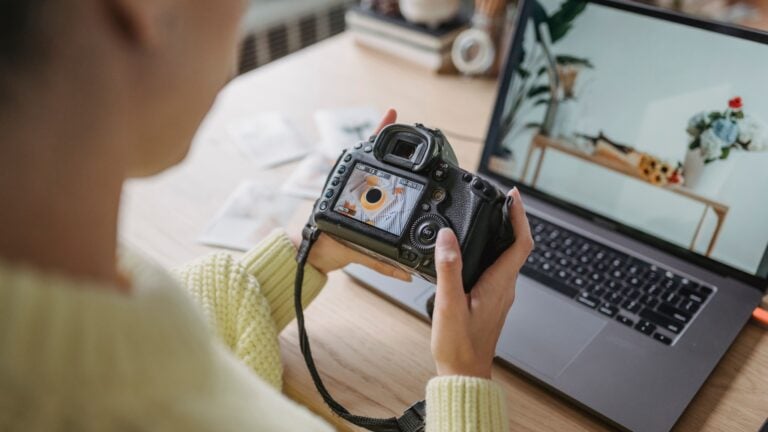













Here are sample photos from Light L16, the camera with 16 lenses
Aug 2, 2017
Dunja Đuđić Kalinin
Dunja Djudjic is a multi-talented artist based in Novi Sad, Serbia. With 15 years of experience as a photographer, she specializes in capturing the beauty of nature, travel, concerts, and fine art. In addition to her photography, Dunja also expresses her creativity through writing, embroidery, and jewelry making.
Share:

Two years ago, Light announced L16: a weird-looking camera that looks somewhat like smartphone, but captures DSLR-quality photos. It combines 16 lenses of three focal lengths to create 52 MP photos. If you were wondering what the photos captured with this strange device would look like – the answer is here. Light publishes the gallery of photos taken with the L16 camera. There are three high-res images, ranging from around 53 to as much as 81 MP. You can view them or download them, and they’ll give you a pretty detailed insight of the camera’s capabilities.
Upon the announcement, the L16 achieved significant success in funding and an “overwhelming demand.” The pre-ordered cameras are already shipping, and the company will receive new orders later this year. So, if you haven’t pre-ordered yours yet, it’s good to check out the sample shots and see if they’ve really fulfilled their promise of delivering DSLR-quality photos. Take a look at three sample images below, and for deeper analysis and some pixel peeping, you can download them in full resolution on Light’s website.


As DPReview points out and I can’t disagree, all three photos were taken in a pretty favorable lighting scenario. It would be great to see a few hi-res images taken in low-light or other tricky lighting situation, for more relevant results. Still, you can find some examples like this in this gallery (in lower resolution, though). There are also more photos in galleries here and here, to show off the camera’s capabilities. Although, most of them were taken in the daylight.
As for the high-res sample images, you can download them here in full resolution and zoom all the way in. What do you think?
[Light L16 sample images via DPReview; image courtesy: Light]
See more from DIYPhotography.net on Google
Add DIYPhotography.net as a trusted source. This makes
our stories more likely to appear in your Google Search results.
 Add as a preferred source on Google

Dunja Đuđić Kalinin
Dunja Djudjic is a multi-talented artist based in Novi Sad, Serbia. With 15 years of experience as a photographer, she specializes in capturing the beauty of nature, travel, concerts, and fine art. In addition to her photography, Dunja also expresses her creativity through writing, embroidery, and jewelry making.
Related Posts
 The $2,000 Light L16 Camera Rises from the Dead for $170, but There’s a Catch
 This website helps you compare lenses based on sample photos from Flickr
 Wide-angle lenses are not “landscape lenses” – All lenses are landscape lenses
 Here are full resolution sample photos from the EOS R5, R6 and Canon’s new RF lenses
Join the Discussion
DIYP Comment Policy
Be nice, be on-topic, no personal information or flames.
15 responses to “Here are sample photos from Light L16, the camera with 16 lenses”
the portrait looks great, the others are nice pictures but nothing special. as the article points out, it will be a good test when the low light and less favorable conditions images come out. some honest user reviews.
It’s certainly a fun looking camera. potentially great for travel.
Yep, we all look forward to macro photography shots, low-light shots, etc.
I still wonder how it will handle [multiple] “transparent” surfaces where there may be multiple “layers” to the image (reflections, windows, background, etc.), in terms of focus, bokeh, etc. How does one depth-map a 3D scene with multiple elements and then “compute” it consistent with what actual lens “glass” would show? If you choose the wrong “depth” for a pixel, then you’d naturally get the wrong bokeh out the other computational end?
Florian le portrait est clean non ?
It’s the flYPhone!
Too many pixel peepers! My analysis shows these images are very good… but Light admits they have things to improve. They’ll sell a lot and computational photography will be the next paradigm shift IMHO
Can’t wait for Gen 2. Hopefully with even higher resolution sensors, wider focal ranges, external memory options like SDXC cards, etc.
We’re only at the beginning with “L16” (Gen1). This is merely the “proof of concept” that shows the technology basically “works.”
Gen 2 will be improving upon the original, extending it, correcting perceived flaws, etc. Beyond that, I’d wager miniaturization, licensing to cell makers for integration, working on app integration, writing the algorithms into specialized hardware to increase energy efficiency and allow for in-camera real-time editing, then probably onward to fused 4K/8K+ video for cinema, maybe someday integrating “modulo” sensors and other high dynamic range technologies to further improve image quality?
Strictly hypothesizing about the future directions things might go… ;)
As all the lens cleaner companies stocks go up.
There is, of course, no way to actually access the lenses. There is a flat piece of Gorilla Glass protecting all the lenses and it’s theoretically both water & dust resistant (though exact specs on resistances are not yet available, I don’t believe?). Would think it should be relatively easy to keep clean with a reasonably good cleaning cloth…
If you look at the grass on the leftside just below the sea at 100%, there’s a very strange kind of patchy blur. Can;t quit figure out what’s happened there, looks a software issue to me.
Yeah… looks to me as if their algorithm is unable to differentiate between background and foreground. That stitching up is messed up in that grass area…
I don’t think it’s the stitching, per se, so much as the depth map’s presumed plane of focus resulting in the region having bokeh (blur) applied slightly incorrectly
Strictly a guess, though, from my amateur pixel peeping…
I could be wrong?
I suspect its down to the depth map algorithm not quite being perfect, yet. I suspect it will get better over time. Seem to recall them saying that depth mapping was a bit touchy, especially in regions of similar plane of focus, and/or with similar colors. It’s hard to figure out EXACTLY how deep the pixel(s) are. So, I’m guessing some are assigned to the wrong focal plane, currently, thus the bokeh is computed “off” from the adjacent region(s)? Strictly guessing. So, educated “best guess.”
Hopefully it’ll get better over time as they refine their fusion and depth mapping algorithms algorithms. And things that don’t fuse correctly or aren’t depth-mapped properly today can maybe be refused / re-mapped later, once the algorithm gets better and more consistent?
We’ll see…
Looks kind of smudgy when you really zoom in, like when you apply a little bit too much noise reduction in post. Overall though pretty impressive. This is a very small sample though without a lot of variation.
Eventually this kind of computational photography will lead to big changes in the industry, whether or not this is the camera that does it we’re yet to see. I’ll probably wait for v2.0 or 3.0…
I *think* some of the “smudginess” is down to the depth mapping algorithm being not *quite* perfect yet, especially in areas with large regions in the same or similar focal plane with similar colors. Which will probably get better over time as they continue to improve the algorithms in both camera firmware & desktop Lumen software.
I’m hopeful it’ll be better by the time pre-orders are done shipping… And/or will continue to improve over the lifetime of the unit. And the nice thing about the RAW files is, I believe, that they can be re-fused at any time using the latest version of the Lumen algorithms. So things that didn’t fuse well originally at release, might fuse better a few weeks or a few months, or a year down the road to give a better quality output? So goes the theory…
The results are “good enough” for those who want higher quality photos (at least in favorable conditions), light weight, and maximum convenience. I could see taking this cross country skiing or on vacation where I don’t want or need a separate camera. Sensor technology is improving quickly, and this camera/phone is just part of a growing trend.