



















Hope probe maps Mars’s night clouds for the first time
Aug 13, 2025
Soumyadeep Mukherjee
Soumyadeep Mukherjee is an award-winning astrophotographer from India. He has a doctorate degree in Linguistics. His work extends to the sub-genres of nightscape, deep sky, solar, lunar and optical phenomenon photography. He is also a photography educator and has conducted numerous workshops. His works have appeared in over 40 books & magazines including Astronomy, BBC Sky at Night, Sky & Telescope among others, and in various websites including National Geographic, NASA, Forbes. He was the first Indian to win “Astronomy Photographer of the Year” award in a major category.
Share:
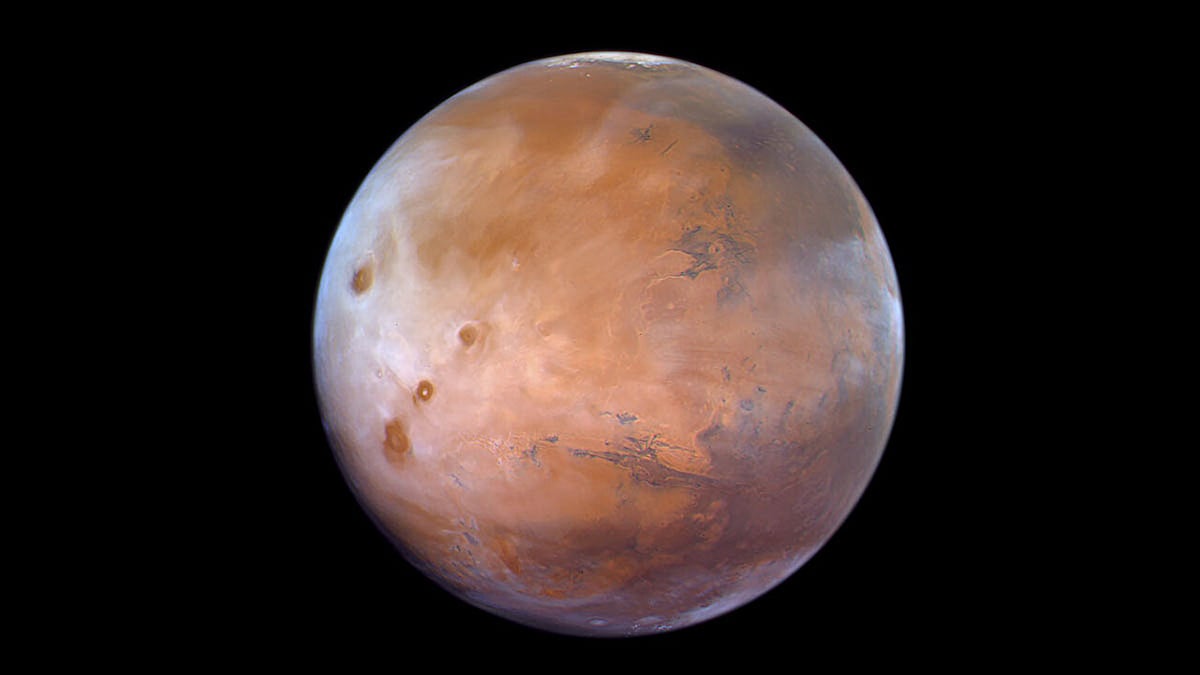
For decades, Mars watchers focused on the afternoon. Most orbiters crossed the planet at the same local time, so they kept seeing the same slice of the day. Clouds looked like an afternoon story, with mornings and nights poorly sampled. That picture has now changed. A new analysis of data from the United Arab Emirates’ Hope probe presents the first complete view of water-ice clouds across a full Martian day, including the night. This fills a major gap in our understanding of the Martian water cycle. The breakthrough was possible because Hope flies in a different orbit. The spacecraft traces a very wide ellipse around Mars, taking 55 hours to complete one lap. That geometry lets the instruments sample all longitudes and a broad range of local times during every few orbits. Over weeks, the mission builds a rolling, 24×7 weather picture of the planet. This was a core design choice from the start of the program.
The spacecraft and the instrument
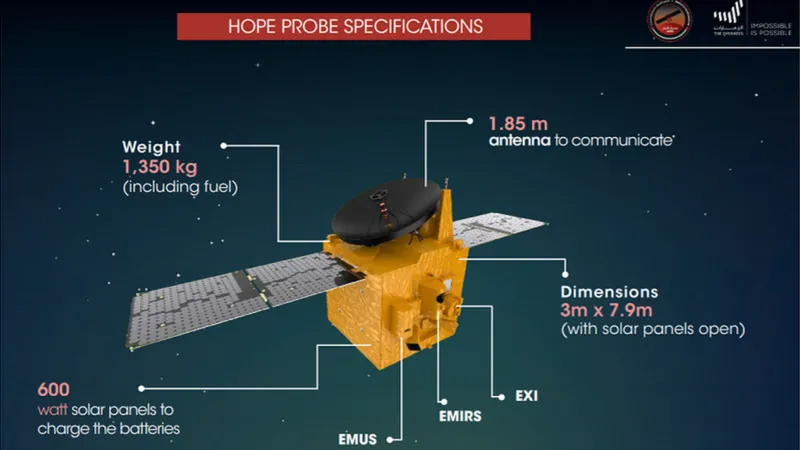
Hope entered Mars orbit on February 9, 2021, and began conducting global atmospheric surveys shortly thereafter. The mission was built to deliver context rather than close-ups. Its instruments examine the air from the lower atmosphere to the exosphere. The key sensor for cloud work is the Emirates Mars Infrared Spectrometer, or EMIRS. EMIRS observes Mars in thermal infrared light, retrieving the temperature structure and the amounts of dust, water vapor, and water-ice clouds. It was designed to study how energy moves through the lower atmosphere and how that energy varies by time of day and season.
EMIRS is an interferometric spectrometer with a scanning mirror that sweeps Mars as the spacecraft flies. The instrument’s job is simple to state and hard to do: measure the planet’s brightness at many infrared wavelengths and, from that spectrum, infer the atmosphere’s contents. Infrared signatures from tiny ice particles reveal the presence and thickness of high clouds. Thermal contrast between the surface and the air helps the retrieval. EMIRS was engineered for low noise and broad coverage, so it could map these signals globally and repeatedly.
Mars’ night clouds
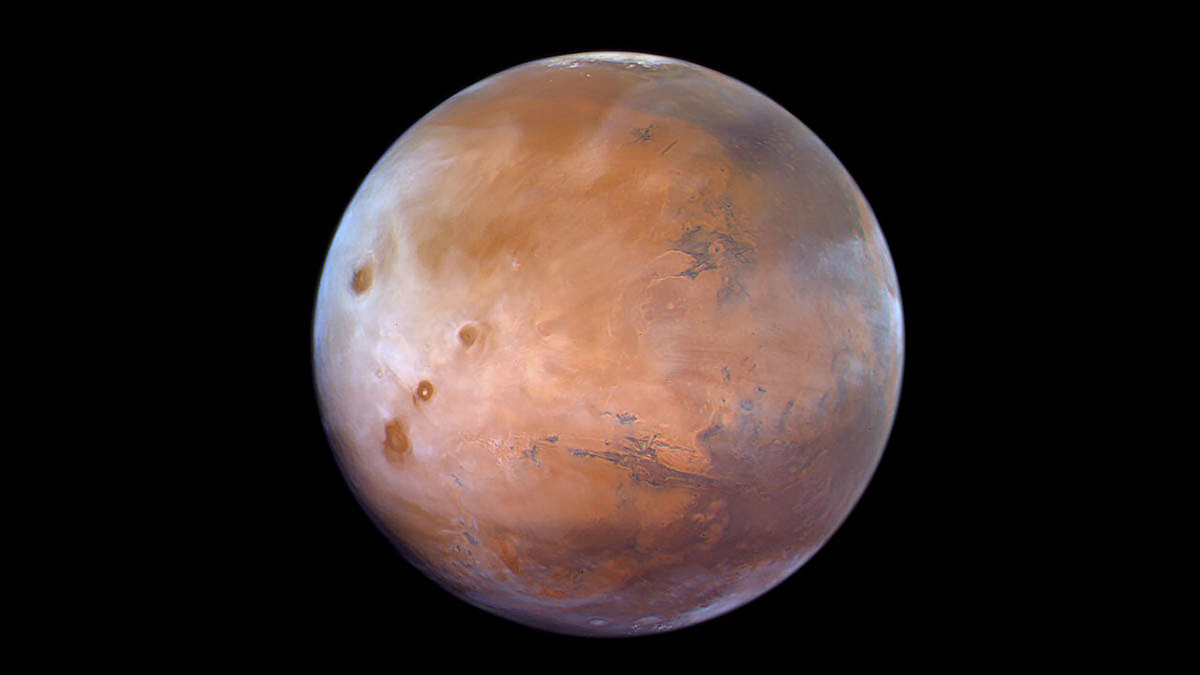
On average, water-ice clouds are thicker at night than during the day. The team derived cloud optical depth, a measure of how much light the cloud blocks, from EMIRS spectra and binned the results by local time. The nighttime enhancement appears consistently when data are grouped by season and latitude. This pattern confirms long-suspected behavior and pins it down with global coverage. Timing matters too. The study reports two peaks in cloudiness: one in the early morning and another in the evening. Around local noon, cloud optical depths dip, indicating a midday lull. The team links this rhythm to daily thermal forcing. As the surface cools after sunset, the atmosphere stabilizes and favors ice cloud formation. As the surface warms toward midday, mixing and heating thin or evaporate those clouds. The result is a regular day-night “breathing” of the cloud deck.
How EMIRS turns spectra into cloud thickness
Thermal infrared retrievals rely on physics. Ice particles absorb and emit at specific infrared wavelengths. EMIRS measures radiance across those wavelengths and, with a forward model, fits for the amount of ice and its vertical distribution. The key output for this paper is optical depth, often written as τ. A larger τ means a thicker or more opaque cloud. Because EMIRS also senses temperature profiles and dust, the algorithm can separate their effects from those of ice. That separation is vital when dust storms raise the background signal. The retrieval must handle different local times. At night, the surface cools and the thermal contrast shifts. The team updated the analysis to work across the full diurnal range, improving the accuracy of τ at dawn, dusk, and night. The results agree with independent constraints when they exist. Most importantly, they show internal consistency across seasons and latitudes.
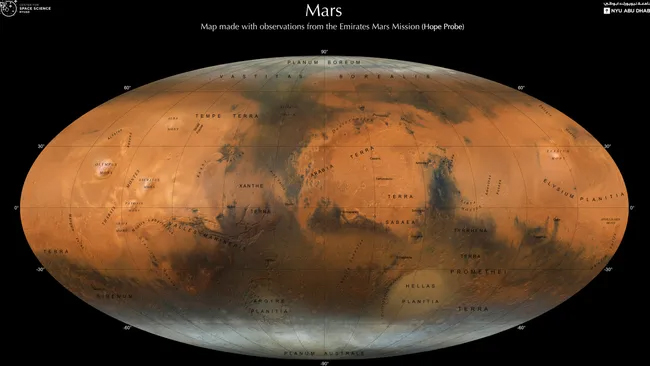
Global diurnal cloud climatology is a practical tool. In the future, lander and rover teams can plan observations and operations with better expectations for morning haze or evening cloud cover. Aerial concepts, such as helicopters or balloons, can choose flight windows that minimize icing risk or maximize thermal lift. Orbiters with cameras can anticipate when features will be obscured. All of these benefits come from knowing the daily rhythm, not just a single time of day.
Clear skies!
See more from DIYPhotography.net on Google
Add DIYPhotography.net as a trusted source. This makes
our stories more likely to appear in your Google Search results.
 Add as a preferred source on Google

Soumyadeep Mukherjee
Soumyadeep Mukherjee is an award-winning astrophotographer from India. He has a doctorate degree in Linguistics. His work extends to the sub-genres of nightscape, deep sky, solar, lunar and optical phenomenon photography. He is also a photography educator and has conducted numerous workshops. His works have appeared in over 40 books & magazines including Astronomy, BBC Sky at Night, Sky & Telescope among others, and in various websites including National Geographic, NASA, Forbes. He was the first Indian to win “Astronomy Photographer of the Year” award in a major category.
Related Posts
 The new AstrHori 28mm f/13 2x Probe macro lens is half the price of Laowa’s 24mm f/14 Macro Probe lens
 Most detailed images ever of Mars’ moon captured by ‘Hopeful’ space probe
 Counting Craters: Mars Express Reveals Mars’s Ancient Landscape
 Ash Creeps Across Mars: Mars Express Captures Decades of Surface Change
Join the Discussion
DIYP Comment Policy
Be nice, be on-topic, no personal information or flames.
One response to “Hope probe maps Mars’s night clouds for the first time”
Government space probes are not DIY photo projects.