

















Altair Sentinus AllSky Camera Dome Housing: A New Enclosure for Sky Monitoring
Feb 15, 2026
Soumyadeep Mukherjee
Soumyadeep Mukherjee is an award-winning astrophotographer from India. He has a doctorate degree in Linguistics. His work extends to the sub-genres of nightscape, deep sky, solar, lunar and optical phenomenon photography. He is also a photography educator and has conducted numerous workshops. His works have appeared in over 40 books & magazines including Astronomy, BBC Sky at Night, Sky & Telescope among others, and in various websites including National Geographic, NASA, Forbes. He was the first Indian to win “Astronomy Photographer of the Year” award in a major category.
Share:

All-sky imaging has become a standard tool in serious amateur astronomy. Observers now run permanent sky monitors to track clouds, capture meteors, and create long-term time-lapse records. As these systems move outdoors full-time, the enclosure becomes just as important as the camera itself. Altair Astro has responded to this growing need with the Sentinus AllSky Camera Dome Housing, a dedicated outdoor enclosure designed specifically for all-sky imaging workflows.
The Sentinus is not a camera, and it is not sold as a complete system. It provides the mechanical and environmental framework for building a reliable all-sky unit. Altair developed the housing through several design revisions and field-testing cycles before releasing the final version. The result is a compact but thoughtfully engineered enclosure that fits well into Raspberry Pi-based and other imaging setups.
An all-sky enclosure
Many amateur astronomers still rely on modified electrical boxes or improvised domes. Those solutions often work at first, but they tend to show weaknesses after long exposure to heat, UV light, and moisture. Altair designed the Sentinus to avoid those common problems and to simplify installation for permanent outdoor use.
The housing serves three main roles: It protects the camera and electronics from the weather. It maintains optical clarity through a dedicated dome. And, it provides structured mounting space for the control hardware that most all-sky systems require. Altair spent considerable effort refining the mechanical layout so users can install and service the system without frustration.
From the beginning, the company aimed this enclosure at users who plan to leave their all-sky cameras outdoors for months or years at a time. That focus shows clearly in the material choices and internal layout. The Sentinus enclosure uses UV-stable PETG plastic.
According to Altair Astro, the material underwent extended outdoor testing and remained stable through multiple seasonal cycles. That type of testing is important because all-sky systems rarely operate in controlled environments. They sit on rooftops, poles, and observatory walls where they face direct sunlight and temperature swings. PETG offers a good balance between strength and weather resistance. It handles moderate heat well and resists cracking better than many brittle plastics.
Optical dome and imaging considerations
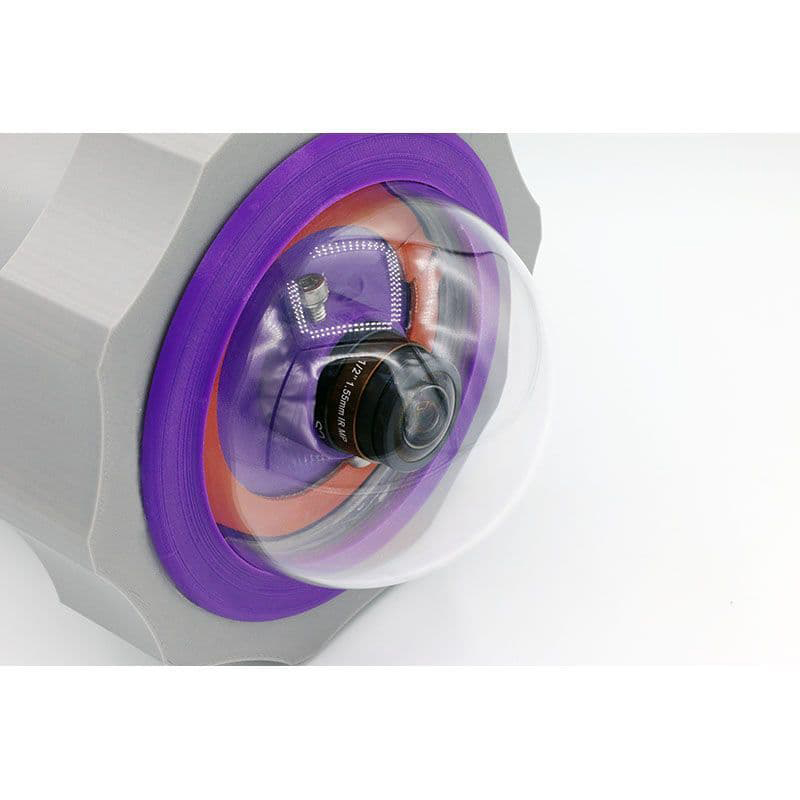
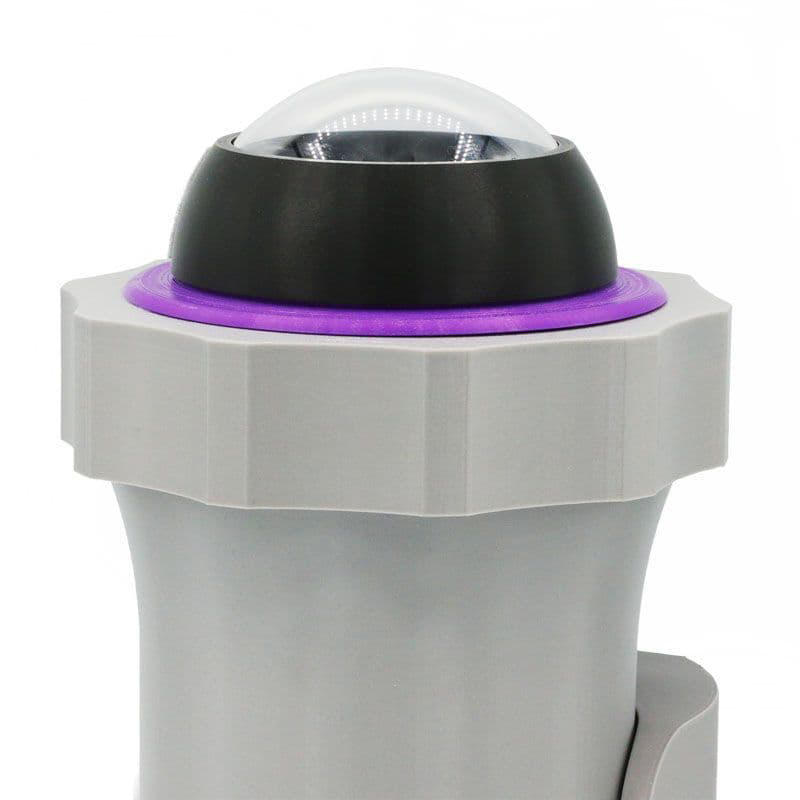
In any all-sky system, the dome determines the quality of the final sky image. Uneven or low-grade domes can introduce distortions, internal reflections, and gradual yellowing. Altair equips the Sentinus with a UV-resistant acrylic dome that aims to maintain clarity over extended outdoor use.
The company notes that the dome thickness is more uniform than many low-cost alternatives. Uniform thickness helps reduce refraction inconsistencies across the wide field. That becomes especially important when users run meteor detection software or perform sky brightness measurements.
The dome integrates cleanly into the upper housing. This reduces gaps and helps maintain a controlled internal environment. The smooth curvature also supports very wide lenses, including fisheye optics that approach full-sky coverage. For astrophotographers who plan long-term monitoring projects, dome stability often determines how frequently maintenance becomes necessary. A well-made dome can save significant effort over time.
Internal layout and mounting flexibility
One of the most practical aspects of the Sentinus design is its internal mounting system. Altair clearly expects users to pair the enclosure with small astronomy cameras and compact control computers. Inside the housing, a height-adjustable camera bracket allows the imaging sensor to sit at the correct position relative to the dome.
The bracket can be unclipped quickly when the user needs to remove or replace the camera. That feature may sound simple, but it becomes very valuable during rooftop servicing sessions. Fast access reduces the risk of accidental drops and shortens maintenance time.
Below the camera area, the enclosure includes a flat mounting plate sized for a Raspberry Pi or similar mini computer. Many all-sky workflows now rely on a small single-board computer running capture and upload software. By providing dedicated space for this hardware, Altair simplifies cable routing and keeps the installation tidy.
Users who prefer an external control computer can still route cables out of the base. The design does not force a single workflow. Instead, it supports several common configurations used in the amateur community.
Mounting hardware and field handling
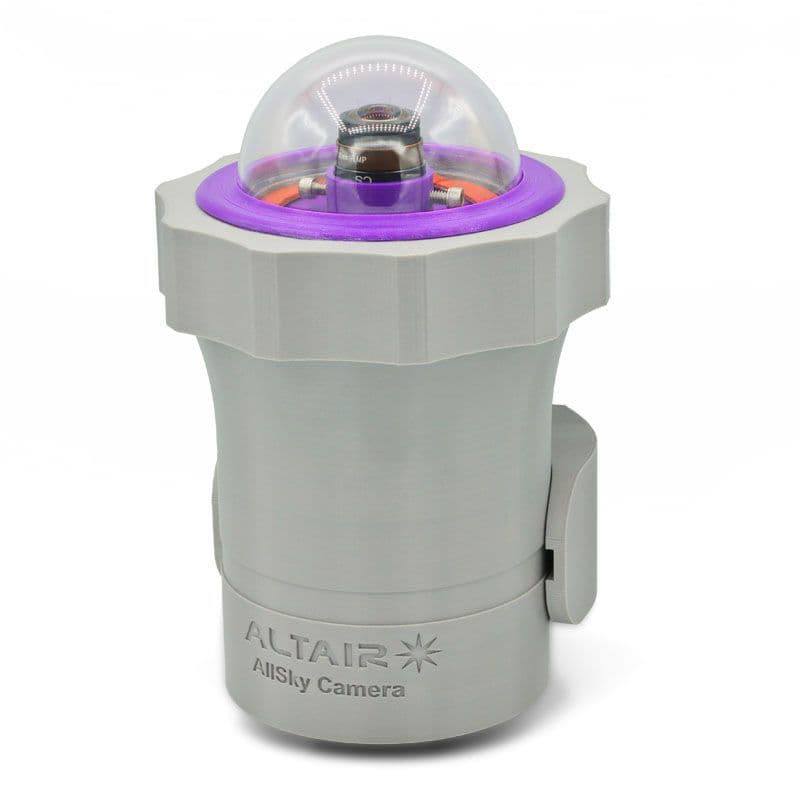
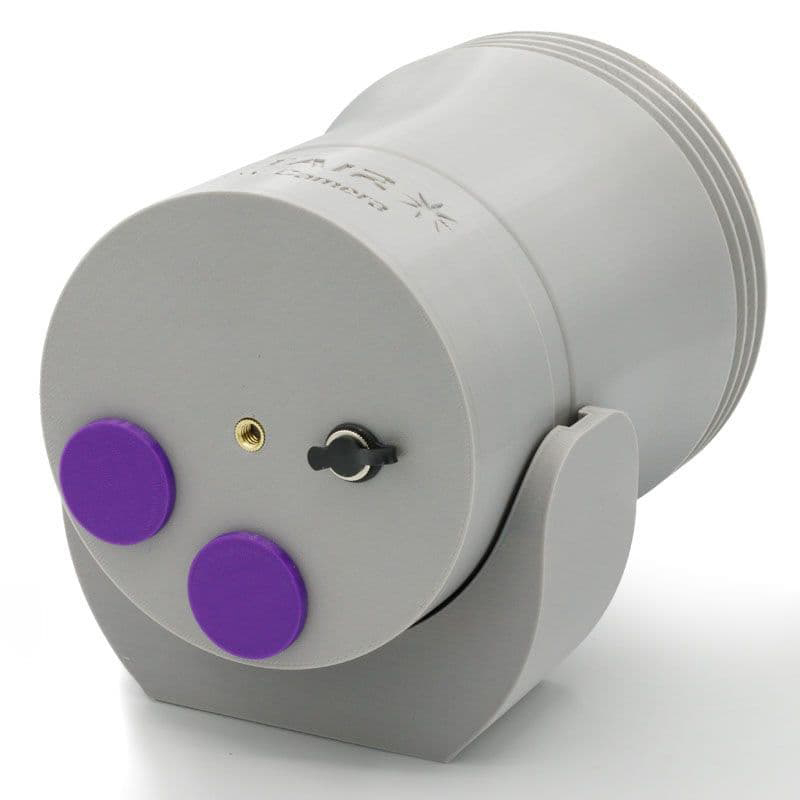
Altair ships the Sentinus with a dedicated wall bracket. The bracket allows the enclosure to be mounted using one hand, which improves safety when working on ladders or rooftops. Once in place, the housing can be secured firmly with screws.
There is also a recessed area for a cable tie to add another level of retention. While simple, this feature shows that the designers considered real-world installation scenarios. Many observers install all-sky cameras in awkward locations where secure handling becomes critical.
The enclosure can be opened without tools, which simplifies routine cleaning and inspection. All-sky domes require occasional wiping to remove dust and water marks. Quick access encourages proper maintenance.
Optional accessories for environmental control
Altair offers several accessories that expand the enclosure’s capabilities. One of the most relevant is the sealed silicone dew heater ring. Condensation is a common issue for all-sky systems, especially in humid climates. The heater helps keep the dome slightly warmer than the ambient air, which reduces moisture buildup.
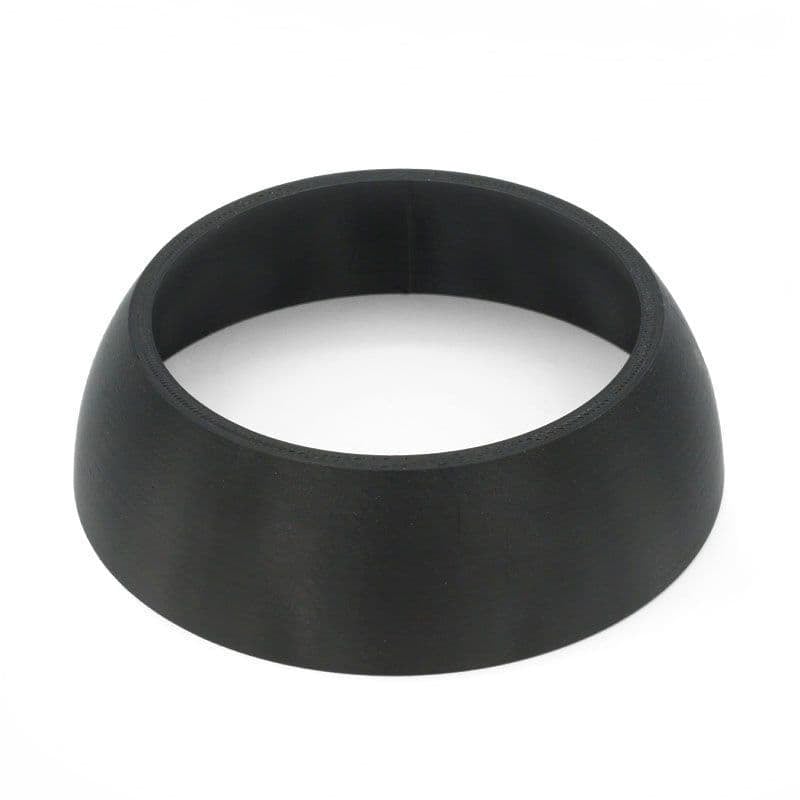
Another accessory is the street light shroud. This component helps block stray light entering from low angles near the horizon. In suburban locations with nearby lighting, the shroud may improve image contrast and reduce internal reflections.
Altair also offers a dedicated 180-degree C-mount lens designed for small CMOS sensors. While users can choose other optics, this lens forms part of a complete ecosystem for those who prefer a matched setup. These accessories allow the Sentinus platform to adapt to different observing environments.
Price and availability
The Altair Sentinus Allsky Camera Dome Housing is priced at $130 (for the housing only). With the optional street light shroud, it is priced at $147. With the optional dew heater ring, it is priced at $159. Finally, with both the optional accessories (street light shroud and dew heater ring), it is priced at $176. All of these variations are available for ordering via the official Altair website. The housing is available with three camera mounting options: Altair, ZWO, and Pi HQ camera.
The Sentinus arrives at a time when many amateur astronomers are expanding into permanent monitoring projects. Remote observatories, meteor networks, and automated weather-sky stations all depend on reliable outdoor enclosures. This housing fits into setups such as:
- continuous cloud monitoring for imaging rigs
- meteor detection stations
- long-term sky timelapse projects
- educational observatory installations
- remote site condition monitoring
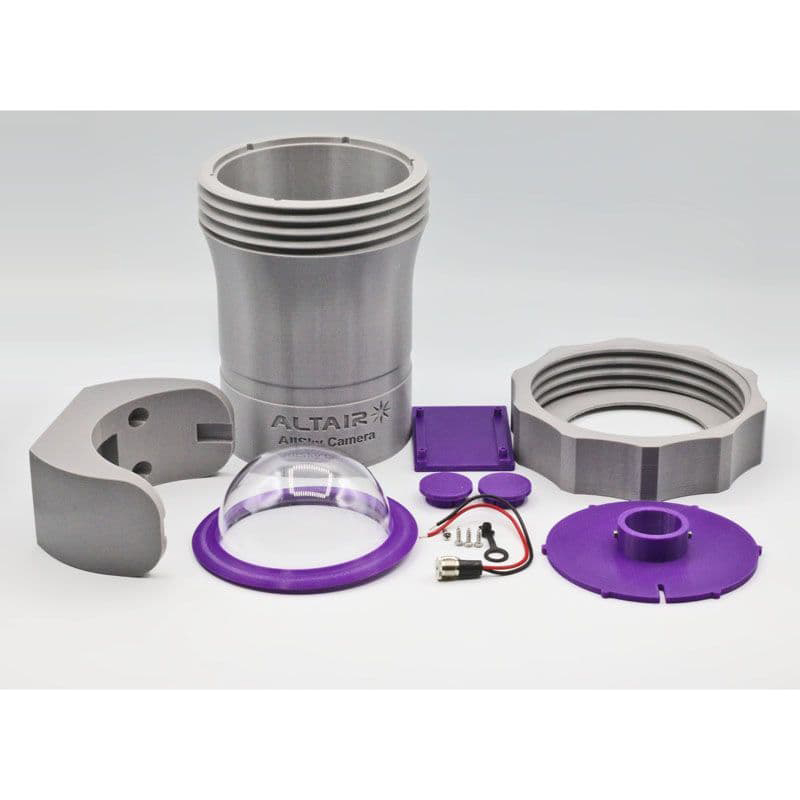
The design of the housing emphasizes durability, clean internal layout, and flexible installation. The accessory range supports humid or light-polluted locations. Most importantly, the Sentinus focuses on the mechanical and environmental side of all-sky imaging. By addressing common weak points such as cable routing, dome quality, and service access, it provides a stable platform for long-term projects.
Clear skies!
See more from DIYPhotography.net on Google
Add DIYPhotography.net as a trusted source. This makes
our stories more likely to appear in your Google Search results.
 Add as a preferred source on Google

Soumyadeep Mukherjee
Soumyadeep Mukherjee is an award-winning astrophotographer from India. He has a doctorate degree in Linguistics. His work extends to the sub-genres of nightscape, deep sky, solar, lunar and optical phenomenon photography. He is also a photography educator and has conducted numerous workshops. His works have appeared in over 40 books & magazines including Astronomy, BBC Sky at Night, Sky & Telescope among others, and in various websites including National Geographic, NASA, Forbes. He was the first Indian to win “Astronomy Photographer of the Year” award in a major category.


Join the Discussion
DIYP Comment Policy
Be nice, be on-topic, no personal information or flames.
2 responses to “Altair Sentinus AllSky Camera Dome Housing: A New Enclosure for Sky Monitoring”
do you happen to know the specification of the screws used to attach an Rpi to the baseplate?
they are not M2.5 (too small) nor M3 (too large)
any suggestions?
Hi Larry. According to the documentation from Altair, the mounting screws for the Raspberry Pi are included in the kit. But they do not disclose the screw type, and we do not have the information either. Normally, M2.5 screws are used. But now that you have already found them too small for mounting, it could well be a proprietary screw.