















Level Up Your Workflow with These AI Photo Editing Features
Oct 27, 2025
Alysa Gavilan
Alysa Gavilan has spent years exploring photography through photojournalism and street scenes. She enjoys working with both film and mirrorless cameras, and her fascination with the craft has grown over the decades. Inspired by Vivian Maier, she is drawn to capturing everyday moments that often go unnoticed.
Share:

When you open a modern photo editor, what you’re really stepping into is a studio that seems to read your mind. Photo editors with AI features have transformed the way you approach editing. You no longer have to spend hours masking skies, cleaning up distractions, or trying to achieve that elusive perfect lighting since the software now does much of the heavy lifting.
Having all these AI features can allow you to focus on your creative direction instead of technical chores. The best part is that these tools are only getting smarter. They’re also getting easier for you to use no matter your level of experience.
Let’s explore seven of today’s most popular editors and the top AI features that make them worth your attention.

Adobe Photoshop
Photoshop remains the giant of image editing, and in the past year, it has become an AI powerhouse. You can’t just brand its new generative tools as flashy additions since they’re genuinely useful for real work.
For example, the Generative Fill feature allows you to select any part of an image, type a simple instruction, and the software seamlessly creates what you’ve described. It can add missing elements, fix composition, or even extend the borders of an image with Generative Expand. You might take a cropped photo and suddenly find new space around your subject filled with believable scenery.
The Sky Replacement tool is another favorite. This feature automatically detects the sky and swaps it for one that better fits your mood. Photoshop doesn’t stop there. It also intelligently adjusts the scene’s lighting and tones to make it all look natural.
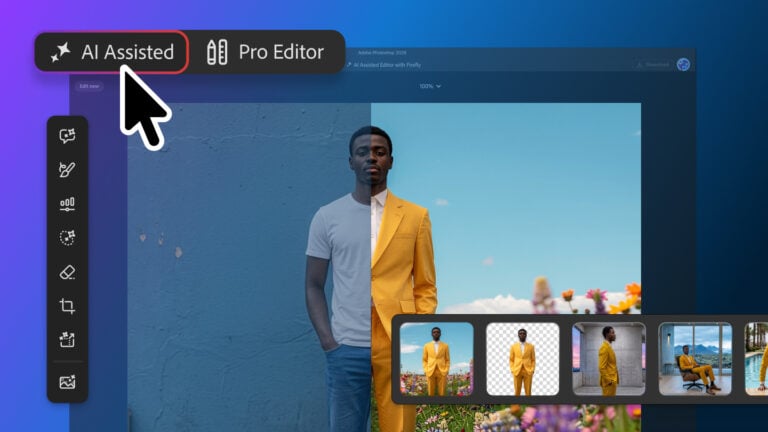
Then there’s the quick Remove Background feature, which identifies subjects and isolates them with remarkable precision, sparing you the pain of manual selection.
You could spend hours trying to achieve the same results by hand, but Photoshop now makes it feel effortless. For many photographers, these AI features mean faster workflows and more creative freedom.

Adobe Lightroom
If Photoshop is the sculptor’s chisel, Adobe Lightroom is the painter’s brush. It’s all about efficiency and tone for this software, especially when you’re managing hundreds or even thousands of photos.
The recent AI-driven additions to Lightroom have turned it into one of the smartest editing environments available. Generative Remove is perhaps the most striking upgrade. You simply paint over an unwanted object, and Lightroom uses its AI engine to reconstruct the missing area beautifully. You can use this when you want to remove a lamppost, a power line, or a stranger in the background. It’s surprisingly accurate and works even on complex textures like foliage or water.
Then there’s the AI Lens Blur feature, which lets you create stunning depth of field effects even if your original photo was taken on a basic lens. It calculates the scene’s depth and adds realistic blur that mimics the look of a fast prime lens. This is a game-changer if you shoot with compact cameras or older lenses that don’t offer wide apertures.
Lightroom also applies adaptive presets that adjust differently for each image. You can apply a “Portrait Glow” preset to a batch of portraits, and the AI will fine-tune each one individually instead of applying a cookie-cutter effect. That saves you hours of repetitive tweaking and gives your portfolio a consistent yet personalized finish.

Skylum Luminar Neo
Luminar Neo is built around AI from the ground up, which makes it a great choice for photographers who want results quickly without endless sliders and masks. It offers a mix of simplicity and sophistication.
The Sky AI tool, for example, automatically replaces skies while balancing light and reflections in a way that feels surprisingly realistic. The Relight AI feature analyzes the depth of your photo and lets you brighten or darken specific parts, giving you the power to correct uneven lighting or create a mood instantly.
Portrait photographers love the Skin AI and Body AI tools because they allow subtle enhancements that maintain a natural look. Skin AI smooths tones and removes minor imperfections without turning faces into plastic, while Body AI gently adjusts proportions in a respectful, believable way.
Structure AI, on the other hand, intelligently boosts contrast and detail without affecting skin or background blur, which means your images stay crisp where you want them and soft where you don’t.

Canva Magic Studio
Canva started out as a design tool, but its new Magic Studio features have turned it into a serious contender in the AI editing space. For creators who need to prepare visuals for clients, social media, or quick projects, its simplicity is its strength.
Magic Edit lets you select an area and describe what you’d like to appear there, and it generates the change instantly. You can use this feature if you’re dealing with a tree, a reflection, or a different color outfit. Magic Eraser works just as smoothly by removing these unwanted items without leaving awkward patches.
Magic Expand is Canva’s answer to content-aware fill, which allows you to extend your image and fill in missing surroundings naturally. It’s ideal when you need to adjust aspect ratios for different platforms or create extra background space for text.
Canva’s text-to-image option is also handy for generating complementary visuals or textures to pair with your photos. If you create online content, Canva gives you the speed to move from idea to publish-ready art in minutes. It’s the perfect combination of creativity and accessibility for everyday visual storytellers.

Pixlr
Pixlr is an excellent choice for photographers and designers who want AI convenience without installing heavy desktop software. It runs entirely in your browser yet feels like a professional editor.
The AI Background Removal tool isolates your subject with astonishing precision. You upload an image, click one button, and the background disappears cleanly.
Pixlr also features a strong Object Removal option that lets you erase unwanted parts of an image and fills the space naturally.
Another standout tool is Generative Expand, which works much like Photoshop’s but faster for quick edits. You can enlarge a canvas or fill empty areas around a subject, and the AI generates realistic extensions.
And since Pixlr is cloud-based, it’s perfect if you travel or switch between devices. You can start an edit on your laptop and finish on your tablet with no loss of quality or progress. It’s lightweight, reliable, and surprisingly advanced for a browser editor.
Capture One
Capture One has long been favored by professionals for its superb color management and tethering tools. Its new AI features make it even more appealing for those who want precision without complexity.
The AI Masking function automatically detects subjects, skies, backgrounds, and people, generating ready-to-use masks instantly. This allows you to apply targeted edits with zero manual brushing. You can darken a sky, brighten a face, or add clarity to just the subject, all in seconds.
Noise Reduction, meanwhile, has also been infused with AI intelligence. The tool analyzes your photo’s exposure and ISO data, cleaning noise more effectively while preserving fine details. It’s especially useful for low-light or night photography where traditional denoising can blur details.
Capture One’s Smart Adjustments feature reads the exposure and white balance across a series of shots and applies consistent corrections to keep your gallery uniform. If you’ve ever spent hours evening out tones between similar images, this feature feels like a lifesaver.

ON1 Photo RAW
ON1 Photo RAW has quietly become one of the most powerful all-in-one editors for photographers who like to control every aspect of their workflow. Its AI capabilities focus on enhancing image quality and reducing effort.
The NoNoise AI tool is among the best in its class, using deep learning to remove digital noise while preserving texture and sharpness. You can shoot at high ISO and still end up with clean, detailed results.
Another highlight is Sky Swap AI, which not only replaces the sky but also applies color grading to match the new atmosphere with your foreground. Portrait AI automatically detects faces, eyes, and skin, then applies realistic enhancements that respect natural proportions.
Super Select AI takes things further by letting you hover over parts of an image and instantly select specific objects or areas for isolated editing. It’s an incredibly intuitive way to retouch. You can also rely on Resize AI, which lets you upscale photos with stunning quality, turning small files into printable masterpieces.
Making the Most of AI in Your Editing
AI tools have become so capable that it’s tempting to let them do everything, but the real magic happens when you combine their speed with your artistic judgment. Photo editors with AI features are amplifying the creativity you already possess.
Use AI to get you close to the result, then refine it by hand to make it truly yours. When you let the software handle the tedious parts, you free up more energy for storytelling, mood, and composition.
Think about the type of work you do. If you edit landscapes, look for features like Sky Replacement or Relight AI. For portraits, tools such as Skin AI, adaptive presets, or AI Masking will save you the most time.
If your focus is content creation, Canva’s simplicity or Pixlr’s web-based access might fit better. The key is to find the editor that complements your workflow instead of fighting against it.
The available photo editors with AI features enable you to no longer have to choose between power and simplicity. The technology is here to support your process, not overshadow it. The next time you open your favorite photo editor, try one of its AI tools and see how much faster you reach the image you imagined. You might be surprised at how natural it feels and how much more time you’ll have to focus on what really matters: creating photographs that move people!
See more from DIYPhotography.net on Google
Add DIYPhotography.net as a trusted source. This makes
our stories more likely to appear in your Google Search results.
 Add as a preferred source on Google

Alysa Gavilan
Alysa Gavilan has spent years exploring photography through photojournalism and street scenes. She enjoys working with both film and mirrorless cameras, and her fascination with the craft has grown over the decades. Inspired by Vivian Maier, she is drawn to capturing everyday moments that often go unnoticed.
Related Posts
 This 3D printed motion control rig offers pro-level features at a DIY-level price
 Apple Catches Up in AI Photo Editing With New Photos App Features in iOS 27
 Aftershoot Promises to Speed Up Your Workflow With it’s Latest AI Editing Gamechanging Tool
 Use these 10 Lightroom features to speed up your workflow
Join the Discussion
DIYP Comment Policy
Be nice, be on-topic, no personal information or flames.