


















A Real Whodunit: Who Killed the Camera? The AI Did It!
Oct 27, 2025
David Prochnow
Our resident “how-to” project editor, David Prochnow, lives on the Gulf Coast of the United States in Ocean Springs, Mississippi. He brings his expertise at making our photography projects accessible to everyone, from a lengthy stint acting as the Contributing How-To Editor with Popular Science magazine. While you don’t have to actually build each of his projects, reading about these adventures will contribute to your continued overall appreciation of do-it-yourself photography. A collection of David’s best Popular Science projects can be found in the book, “The Big Book of Hacks,” Edited by Doug Cantor.
Share:

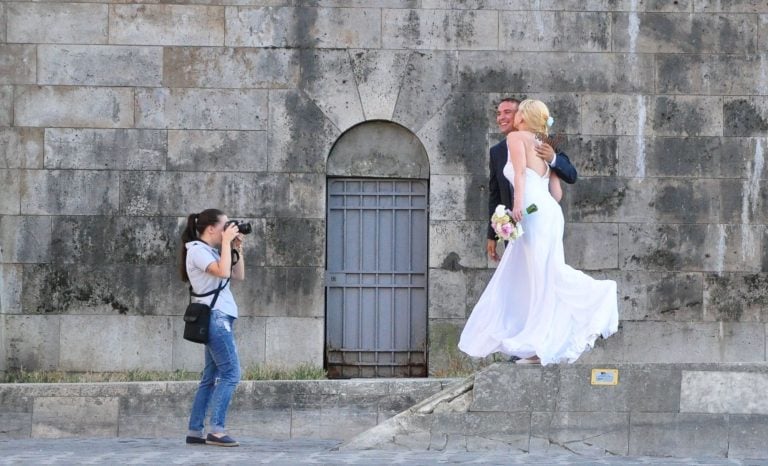
[Please note: all photographs in this article are fake AI-generated images.]
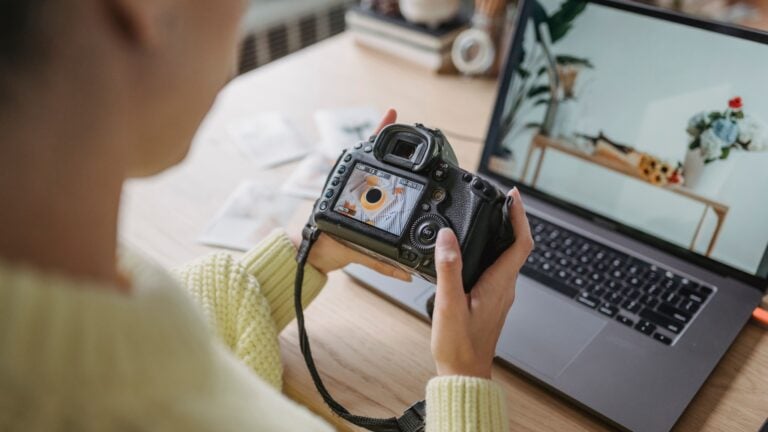
Dateline today-breaking news: the camera was found dead, today. The murder weapon? Artificial intelligence. The motive? Vanity, convenience, and a pathological need to make every sunset look exactly like it was painted by an over-caffeinated Bob Ross. That’s right — AI didn’t just steal your job; it’s also grabbed your vacation photos, too.

Remember when taking a photo required, err, you know, you taking a photo? You’d line up a shot, squint through a tiny viewfinder, and hope Aunt Martha’s eyes were open. Now, Aunt Martha has been vindicated. You click a button, and AI conjures a “photo” that never actually existed. Your cloudy day in Cleveland becomes a pastel sunset over Santorini. Your face? Smooth as marble, eyes twinkling like you’ve slept eight hours per night, every day of your life. Somewhere, a Canon DSLR is quietly weeping into its lens cap.
[Related Reading: Research: Fake Travel Photos Are Ruining Trips for 83% of Americans]
Say It Like you Photograph It
AI has transformed “photography” into “promptography.” You don’t need light or lenses anymore — just a few well-chosen words and a Wi-Fi connection. “Generate a photo of two babies eating pie” is faster (and cheaper) than having children. Sure, it’s fake. So are half the fake physiques on Instagram, but that hasn’t stopped anyone from posting them.

Of course, purists protest: “AI images aren’t real photos!” Fair point — but let’s be honest, neither was your filter-driven obsession with Snapchat from 2019. Photography has always evolved. We went from film to digital, from Polaroids to pixels, from “Say cheese!” to “Enhance my cheekbones, please!” AI is just the latest layover in photography’s long timeline — the one where your camera doesn’t just capture reality; it politely rewrites it.

Still, it’s not all doom and deepfakes. AI tools can rescue underexposed shots, open closed eyes, and remove that random guy who always photobombs your beach pictures. It’s like having a personal photo editor living inside your camera, minus the judgment. Alright, cameras may not be dead, exactly — but they’re definitely being managed by their younger, smarter, algorithmic cousin.

So no, AI hasn’t quite killed the camera. It’s more like the camera went through an aggressive “self-improvement” phase. It’s been plumped with Botox, buffed, and ready to make you look better than you do in reality. The age of photography isn’t over — it’s just been rebranded. The new motto? Why capture the world as it is when you can grab a whole boatload of viral views on Instagram?
Enjoy.
See more from DIYPhotography.net on Google
Add DIYPhotography.net as a trusted source. This makes
our stories more likely to appear in your Google Search results.
 Add as a preferred source on Google
Filed Under:
Tagged With:

David Prochnow
Our resident “how-to” project editor, David Prochnow, lives on the Gulf Coast of the United States in Ocean Springs, Mississippi. He brings his expertise at making our photography projects accessible to everyone, from a lengthy stint acting as the Contributing How-To Editor with Popular Science magazine. While you don’t have to actually build each of his projects, reading about these adventures will contribute to your continued overall appreciation of do-it-yourself photography. A collection of David’s best Popular Science projects can be found in the book, “The Big Book of Hacks,” Edited by Doug Cantor.



Join the Discussion
DIYP Comment Policy
Be nice, be on-topic, no personal information or flames.
2 responses to “A Real Whodunit: Who Killed the Camera? The AI Did It!”
Pro tip: Those superzoom point-and-shoots that were wildly popular a decade and a half ago have been given new life by AI image enhancement. Small and “unprofessional” enough to slip past concert security, but still with a zoom that can reach the stage. Shutter not fast enough? High ISOs adding too much grain? No problem – just backup your captures to Google Photos, and then grab your phone and use their AI editing to clean everything up. Final output is almost as good as if you were on the rail with a DSLR!
That, and quick memes – those are the only good uses for AI I’ve found so far (oh, and frame generation in video games, that’s useful too). So it’s not all bad…but we definitely need to be treading with more caution than we are, or things could get scary quickly.
That’s a fascinating question, and it’s at the heart of our discussion in “A Real Whodunit: Who Killed the Camera? The AI Did It!”. The article explores how AI isn’t necessarily ‘killing’ the camera, but rather transforming photography. We delve into how AI-powered features in smartphones and dedicated cameras are changing everything from image processing to user interaction, making photography more accessible and powerful. You can find more insights on this topic at https://nanabananapro.com.