
















Chandra and JWST Show a Ghost-Shaped Cloud Ahead of Halloween
Oct 30, 2026
Soumyadeep Mukherjee
Soumyadeep Mukherjee is an award-winning astrophotographer from India. He has a doctorate degree in Linguistics. His work extends to the sub-genres of nightscape, deep sky, solar, lunar and optical phenomenon photography. He is also a photography educator and has conducted numerous workshops. His works have appeared in over 40 books & magazines including Astronomy, BBC Sky at Night, Sky & Telescope among others, and in various websites including National Geographic, NASA, Forbes. He was the first Indian to win “Astronomy Photographer of the Year” award in a major category.
Share:
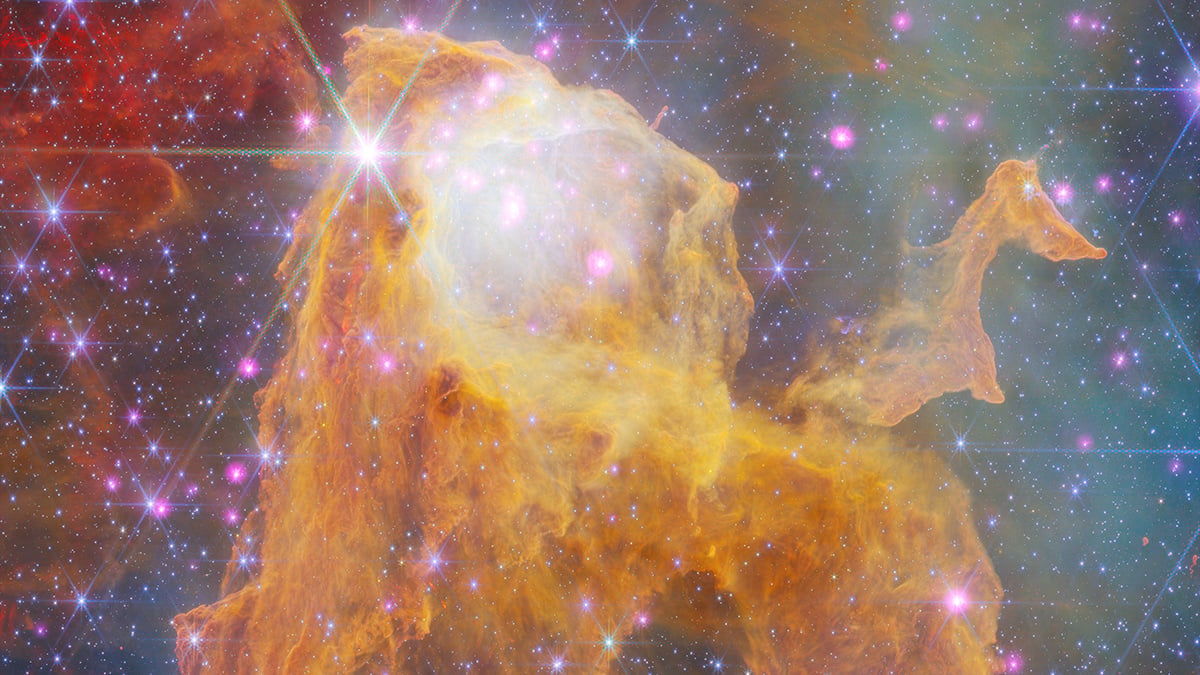
A cloud of gas and dust in the Carina Nebula has an unusual shape. Its rounded head and long, curved tail resemble a hooded figure, earning it the nickname “the Reaper.” A new image combines observations from the Chandra X-ray Observatory and the James Webb Space Telescope to show the cloud in its stellar surroundings.
The image combines X-ray, optical, and infrared observations. Each reveals different details, from energetic young stars to the surrounding gas and dust. The result gives astronomers a closer look at a small part of the Carina Nebula, one of the Milky Way’s major star-forming regions.
A ghost among the stars of Carina
The Reaper lies about 7,500 light-years from Earth, within the Carina Nebula. This vast region contains dense clouds of gas and dust, young stars, and some of the most massive stars in our Galaxy. Many of these stars produce intense radiation and powerful stellar winds. Their activity can change the appearance of nearby clouds over thousands of years or longer.
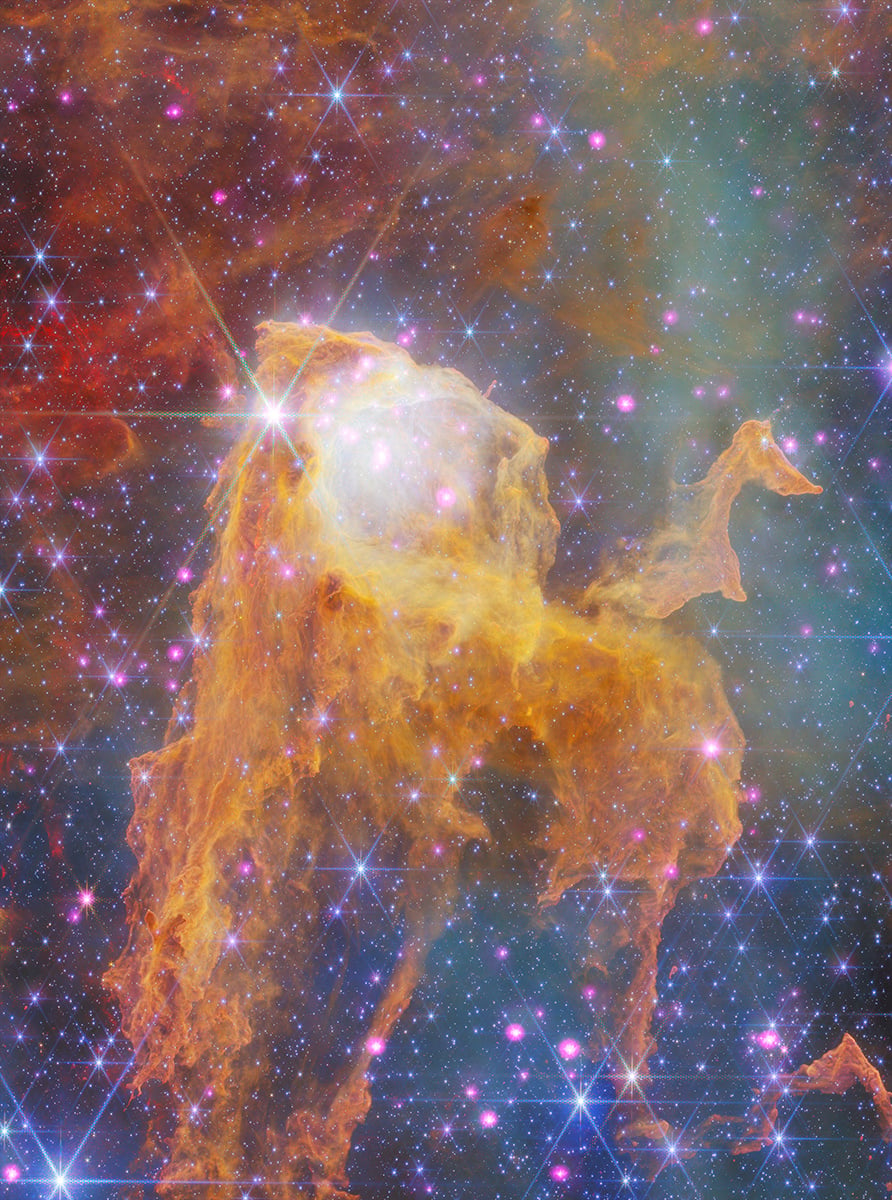
Astronomers classify structures like the Reaper as cometary globules. These clouds usually have a dense head and an extended tail, which gives them a resemblance to comets. The name describes their appearance rather than their origin. Unlike comets, which consist of material orbiting the Sun, cometary globules are clouds of interstellar gas and dust.
The Reaper’s broad head stands out against the surrounding field, while its tail stretches away from the denser material. The outline gives the cloud its ghost-like appearance. Yet the structure is enormous by terrestrial standards. The image covers about 4.3 arcminutes across the sky, corresponding to roughly 9.4 light-years at the cloud’s estimated distance.
Massive stars shaping the Reaper
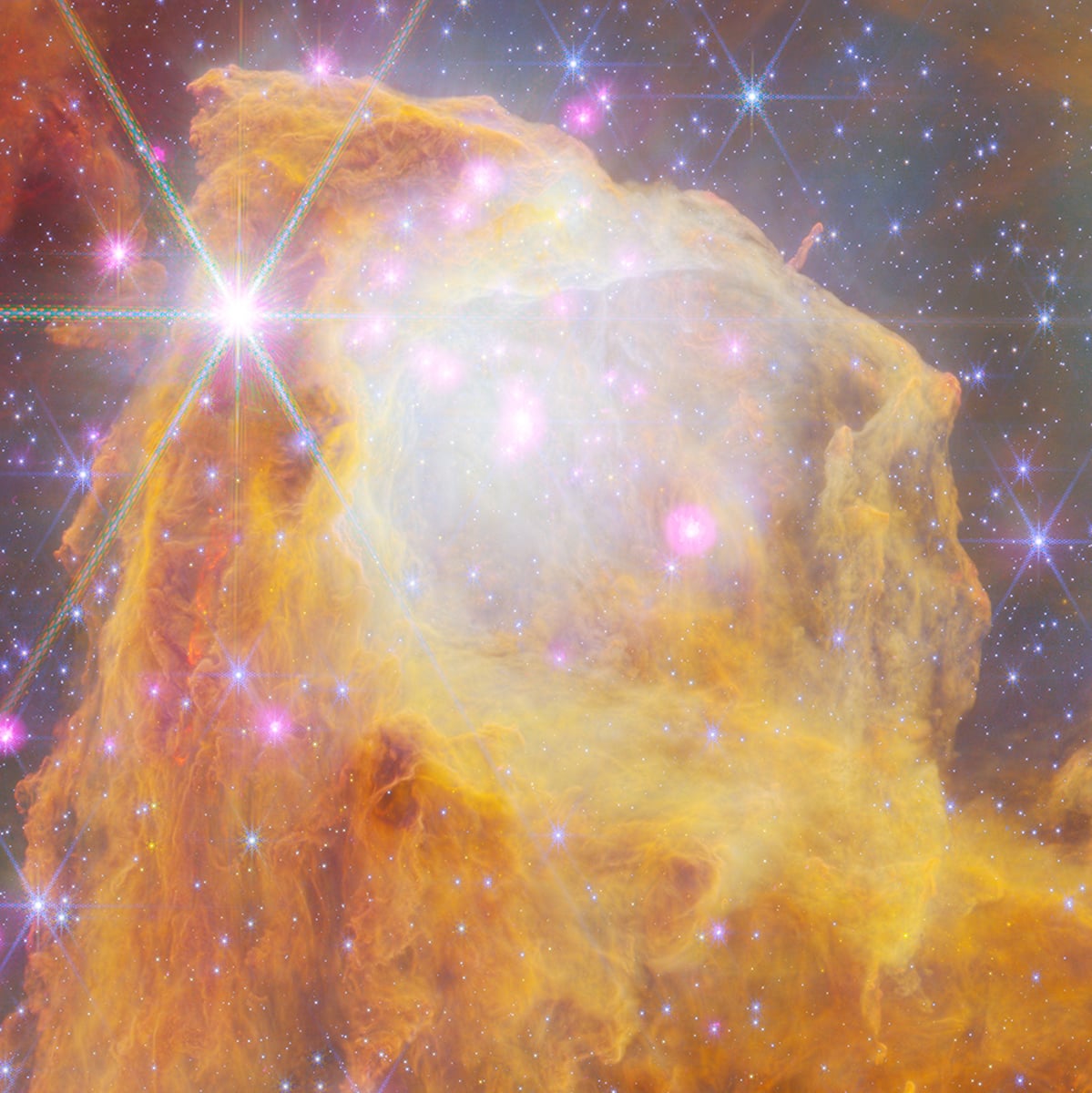
Massive stars influence their surroundings throughout their lives. They release intense ultraviolet radiation and drive powerful winds from their surfaces. When these forces reach a nearby cloud, they heat its outer layers and push gas away. The cloud can lose material unevenly, leaving denser regions behind.
The Chandra team points to radiation from massive stars elsewhere in the Carina Nebula as a possible explanation for the Reaper’s shape. Eta Carinae is among the potential sources. This well-known stellar system has undergone dramatic changes and expelled large amounts of material. Its intense energy output also affects the wider environment.
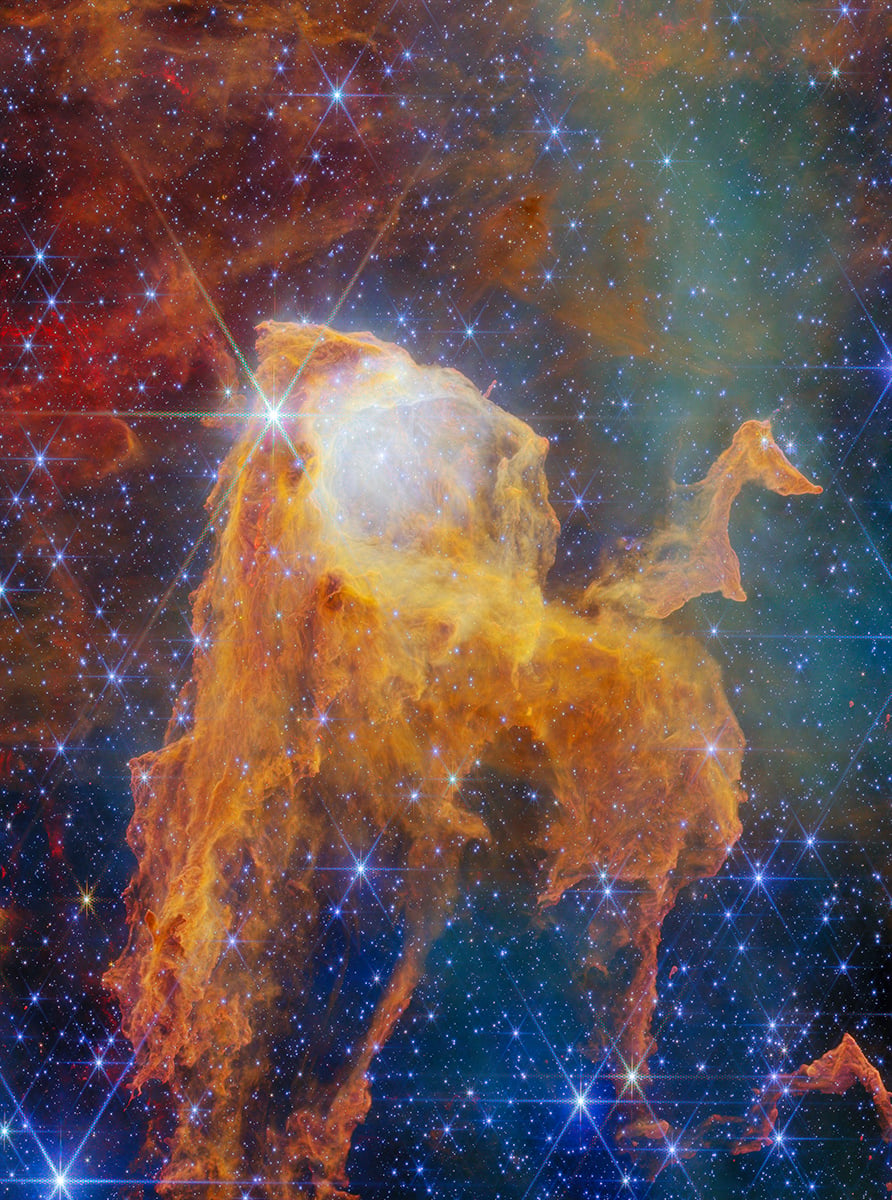
The process that shapes a cometary globule can be complex. Less dense gas may disperse quickly, while denser material resists erosion. Over time, this difference can leave a compact head and a stretched tail. Stellar winds may further alter the cloud by pushing gas through the surrounding region.
Two telescopes come together for the image
Chandra and James Webb observe different parts of the electromagnetic spectrum. Chandra detects X-rays, which can reveal energetic activity around young stars. James Webb observes infrared light, allowing astronomers to examine dusty environments and structures that optical observations may not show as well. Optical data from the Cerro Tololo Inter-American Observatory add another view of the region.
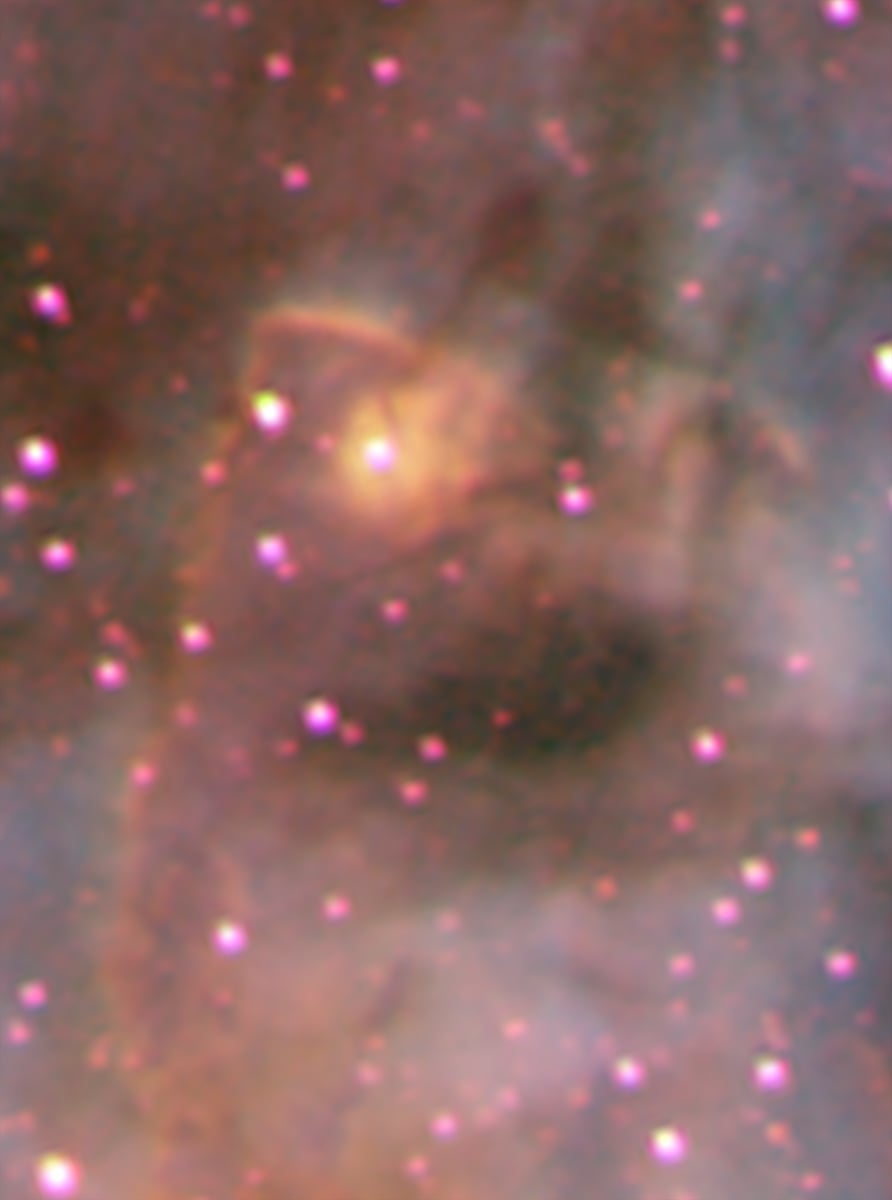
In the composite, Chandra’s X-ray data appear in magenta. These observations reveal young stars in the region, adding information about energetic sources within the stellar nursery. Young stars can emit substantial X-ray radiation as magnetic activity and other processes release energy around them.
James Webb contributes the infrared view, displayed in red, green, and blue. Its observations show the dusty cloud and its surroundings, while the optical data provide further detail across the field. The different datasets complement one another, allowing viewers to see the cloud’s structure alongside the young stars associated with the region.
Clear skies!
See more from DIYPhotography.net on Google
Add DIYPhotography.net as a trusted source. This makes
our stories more likely to appear in your Google Search results.
 Add as a preferred source on Google

Soumyadeep Mukherjee
Soumyadeep Mukherjee is an award-winning astrophotographer from India. He has a doctorate degree in Linguistics. His work extends to the sub-genres of nightscape, deep sky, solar, lunar and optical phenomenon photography. He is also a photography educator and has conducted numerous workshops. His works have appeared in over 40 books & magazines including Astronomy, BBC Sky at Night, Sky & Telescope among others, and in various websites including National Geographic, NASA, Forbes. He was the first Indian to win “Astronomy Photographer of the Year” award in a major category.



Join the Discussion
DIYP Comment Policy
Be nice, be on-topic, no personal information or flames.