



















James Webb Finds Evidence of a Star’s Final Hours Before It Exploded
Nov 23, 2026
Soumyadeep Mukherjee
Soumyadeep Mukherjee is an award-winning astrophotographer from India. He has a doctorate degree in Linguistics. His work extends to the sub-genres of nightscape, deep sky, solar, lunar and optical phenomenon photography. He is also a photography educator and has conducted numerous workshops. His works have appeared in over 40 books & magazines including Astronomy, BBC Sky at Night, Sky & Telescope among others, and in various websites including National Geographic, NASA, Forbes. He was the first Indian to win “Astronomy Photographer of the Year” award in a major category.
Share:
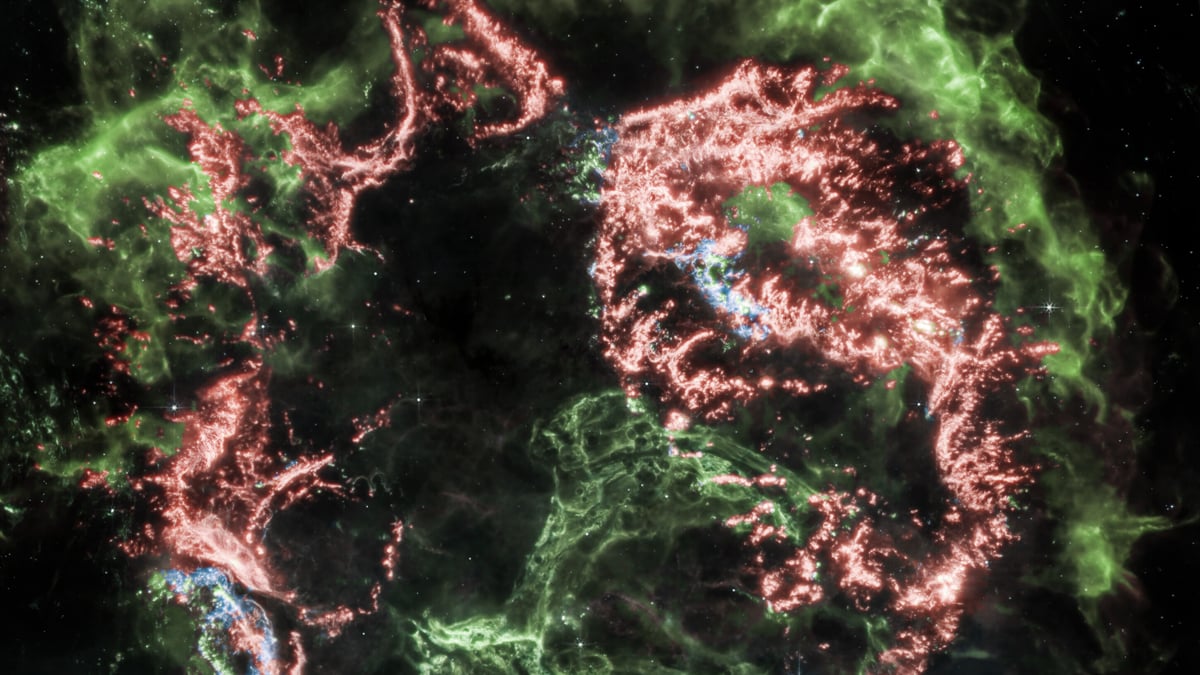
When a massive star explodes, its outer layers spread into space and its core collapses. The explosion leaves behind a growing cloud of gas, dust, and heavier elements. Astronomers can study this material to learn how the star evolved and what happened during its final stages. A new observation from NASA‘s James Webb Space Telescope has revealed clues about an event that may have taken place just hours before one such explosion.
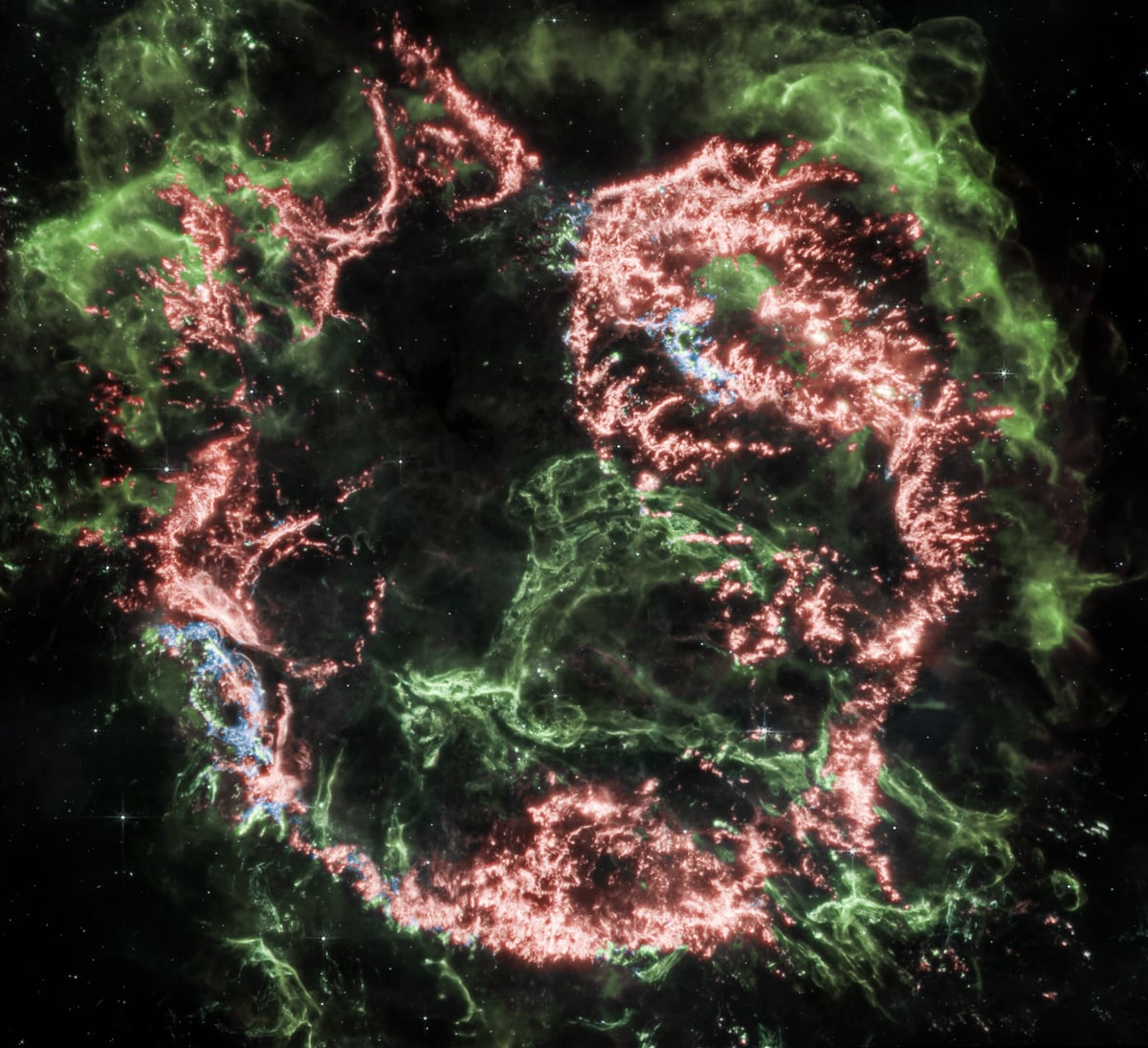
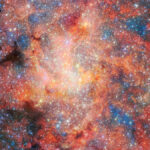
The telescope examined Cassiopeia A (Cas A), a supernova remnant about 11,000 light-years away. Its observations revealed different types of dust across the expanding debris. Each type carries information about the chemical composition of the material from which it formed.
Cassiopeia A preserves the history of an exploded star
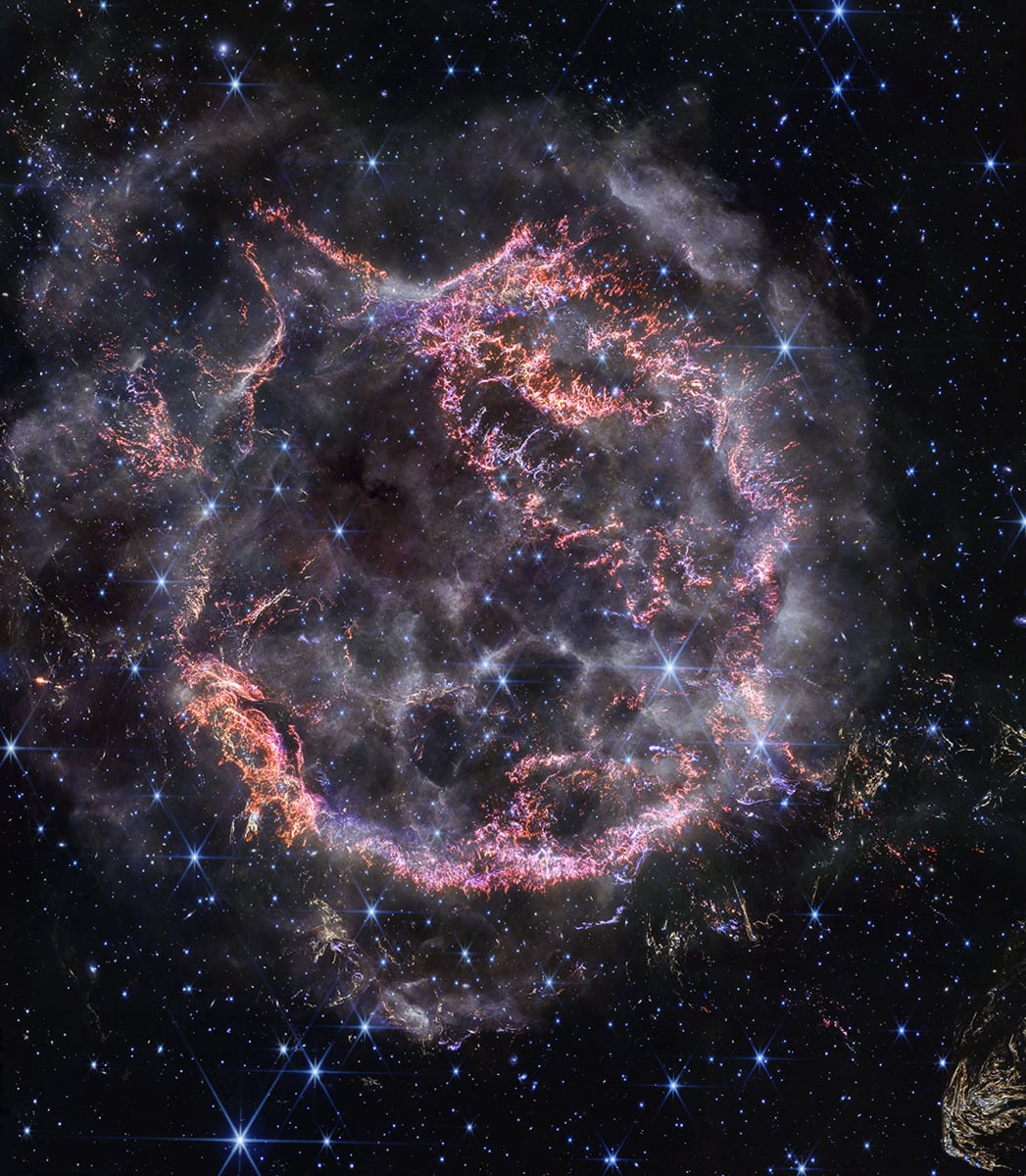
Cassiopeia A is one of the most extensively studied supernova remnants in the Milky Way. It lies in the constellation Cassiopeia, roughly 11,090 light-years from Earth. Astronomers estimate that its original star exploded around 350 years ago. Today, the expanding debris covers a region about 24 light-years across.
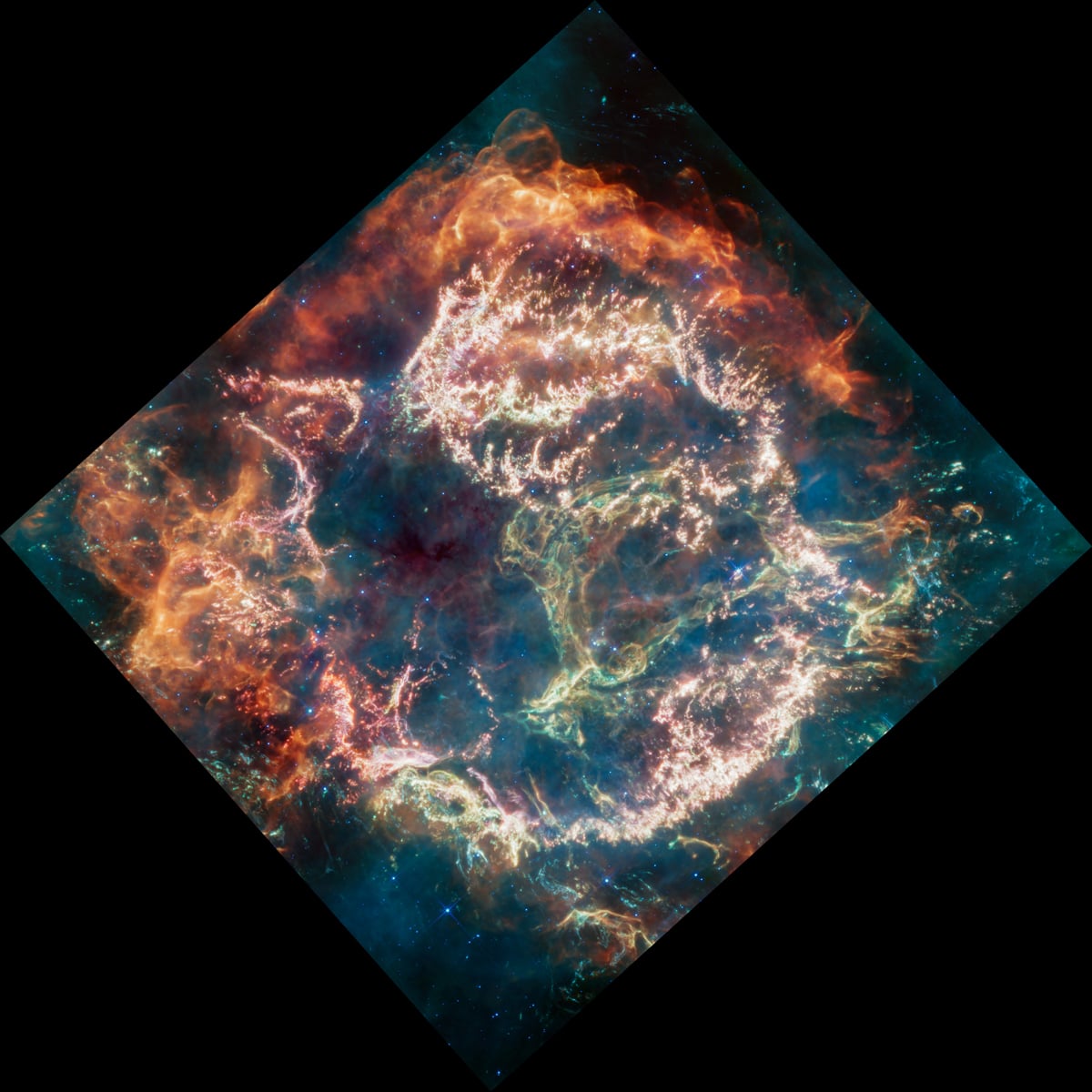
The remnant contains material from different parts of the original star. The explosion threw these elements into space, where they continued to expand and interact with their surroundings. Some of the material cooled enough to form dust grains. These grains eventually clumped together, forming structures James Webb could examine in infrared light.
Dust might seem like an unusual place to look for evidence of a star’s final moments. However, its chemical composition can reveal which elements were present when the grains formed. Different layers inside a massive star produce different elements. Their distribution within a supernova remnant can help astronomers reconstruct the star’s internal structure.
The layered structure of a star’s final years
The original star behind Cassiopeia A was much more massive than the Sun. Stars of this size follow a different evolutionary path from smaller stars. They consume their nuclear fuel much faster and develop increasingly complex internal structures as they age.
A massive star begins by fusing hydrogen into helium inside its core. This reaction releases energy and creates the outward pressure that balances the star’s gravity. Once the core runs low on hydrogen, it contracts and heats up. The higher temperature allows helium fusion to begin, producing heavier elements.
The star continues this process as it evolves. It can fuse helium into carbon and oxygen, then produce still heavier elements through later stages of nuclear burning. Each stage takes place under different temperature and pressure conditions. Eventually, the star develops several layers, with different elements undergoing nuclear reactions at different depths. Astronomers often compare this arrangement to the layers of an onion.
JWST finds different types of dust in Cassiopeia A
The team first used observations from NASA’s retired Spitzer Space Telescope to decide where James Webb should look. Spitzer had already mapped Cassiopeia A in infrared wavelengths. However, it could not resolve the smaller structures that the researchers needed to study. Its observations helped identify three regions for closer examination.
Two of these regions lie within the remnant’s reverse-shocked material. A supernova explosion sends debris outward at enormous speeds. As this material interacts with its surroundings, shock waves develop. One of these waves travels back through the expanding ejecta, heating the material as it moves inward.
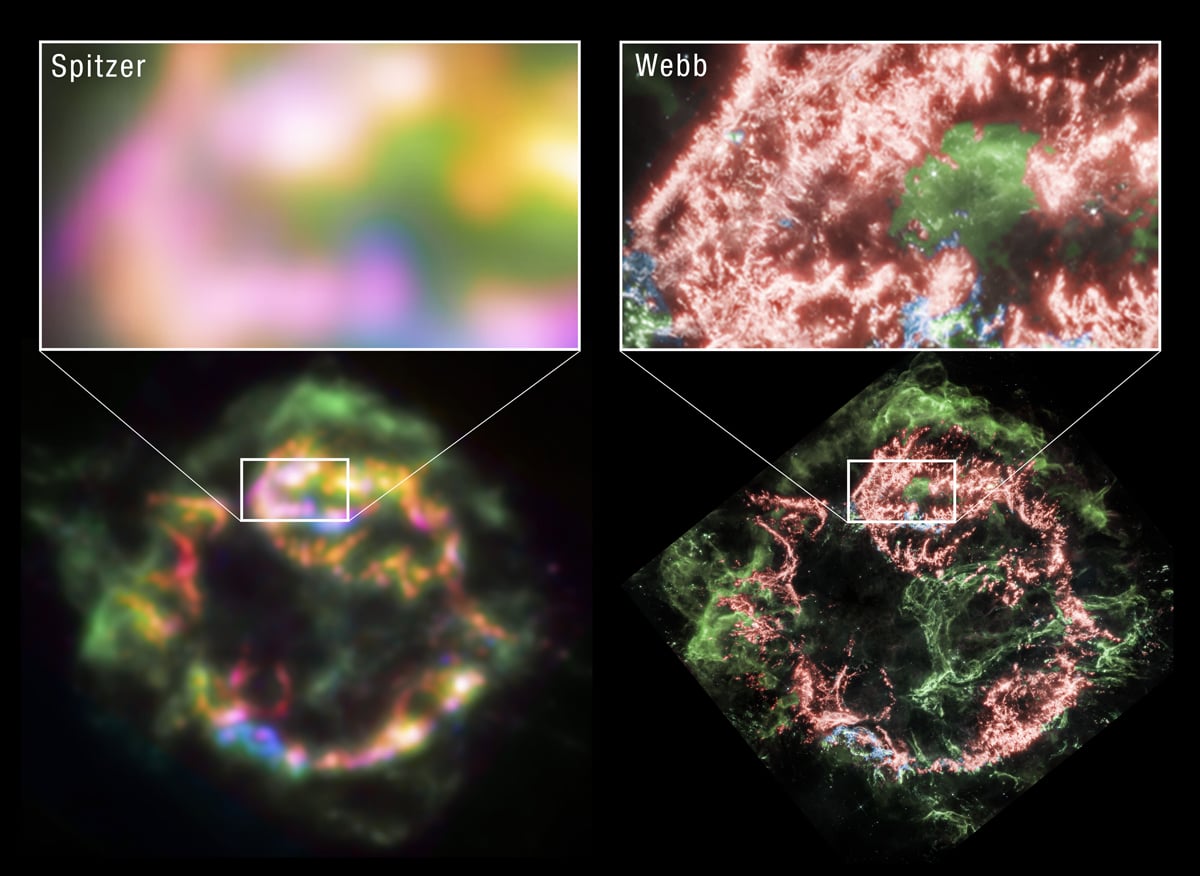
James Webb found different dust compositions in the two selected regions. One contained mostly silica dust, which consists of silicon and oxygen. The other contained predominantly carbon dust. These differences show that the two regions have distinct chemical compositions.
The third target was a structure known as the Green Monster. Webb had discovered this feature in earlier observations of Cassiopeia A. Its unusual appearance made it stand out from the surrounding material. The new observations revealed that it contains complex magnesium silicates.
Clear skies!
See more from DIYPhotography.net on Google
Add DIYPhotography.net as a trusted source. This makes
our stories more likely to appear in your Google Search results.
 Add as a preferred source on Google

Soumyadeep Mukherjee
Soumyadeep Mukherjee is an award-winning astrophotographer from India. He has a doctorate degree in Linguistics. His work extends to the sub-genres of nightscape, deep sky, solar, lunar and optical phenomenon photography. He is also a photography educator and has conducted numerous workshops. His works have appeared in over 40 books & magazines including Astronomy, BBC Sky at Night, Sky & Telescope among others, and in various websites including National Geographic, NASA, Forbes. He was the first Indian to win “Astronomy Photographer of the Year” award in a major category.

Join the Discussion
DIYP Comment Policy
Be nice, be on-topic, no personal information or flames.