
















Hubble Reveals a Collection of Gravitational Lenses Ahead of Roman’s Survey
Nov 15, 2026
Soumyadeep Mukherjee
Soumyadeep Mukherjee is an award-winning astrophotographer from India. He has a doctorate degree in Linguistics. His work extends to the sub-genres of nightscape, deep sky, solar, lunar and optical phenomenon photography. He is also a photography educator and has conducted numerous workshops. His works have appeared in over 40 books & magazines including Astronomy, BBC Sky at Night, Sky & Telescope among others, and in various websites including National Geographic, NASA, Forbes. He was the first Indian to win “Astronomy Photographer of the Year” award in a major category.
Share:
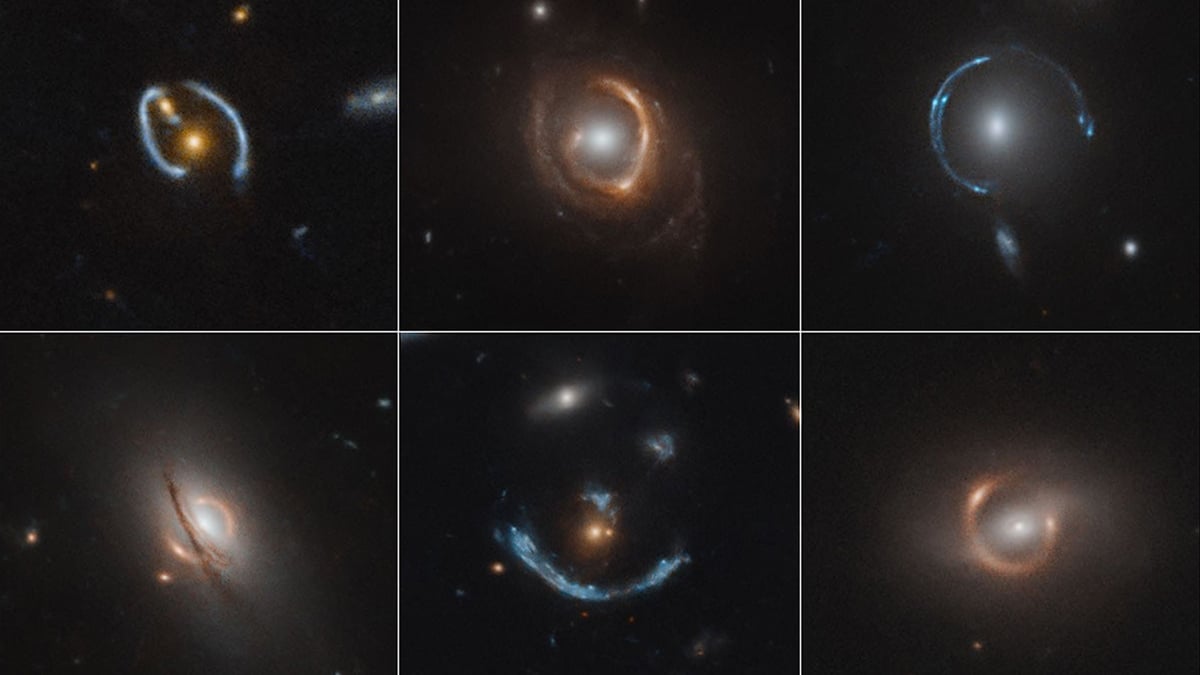
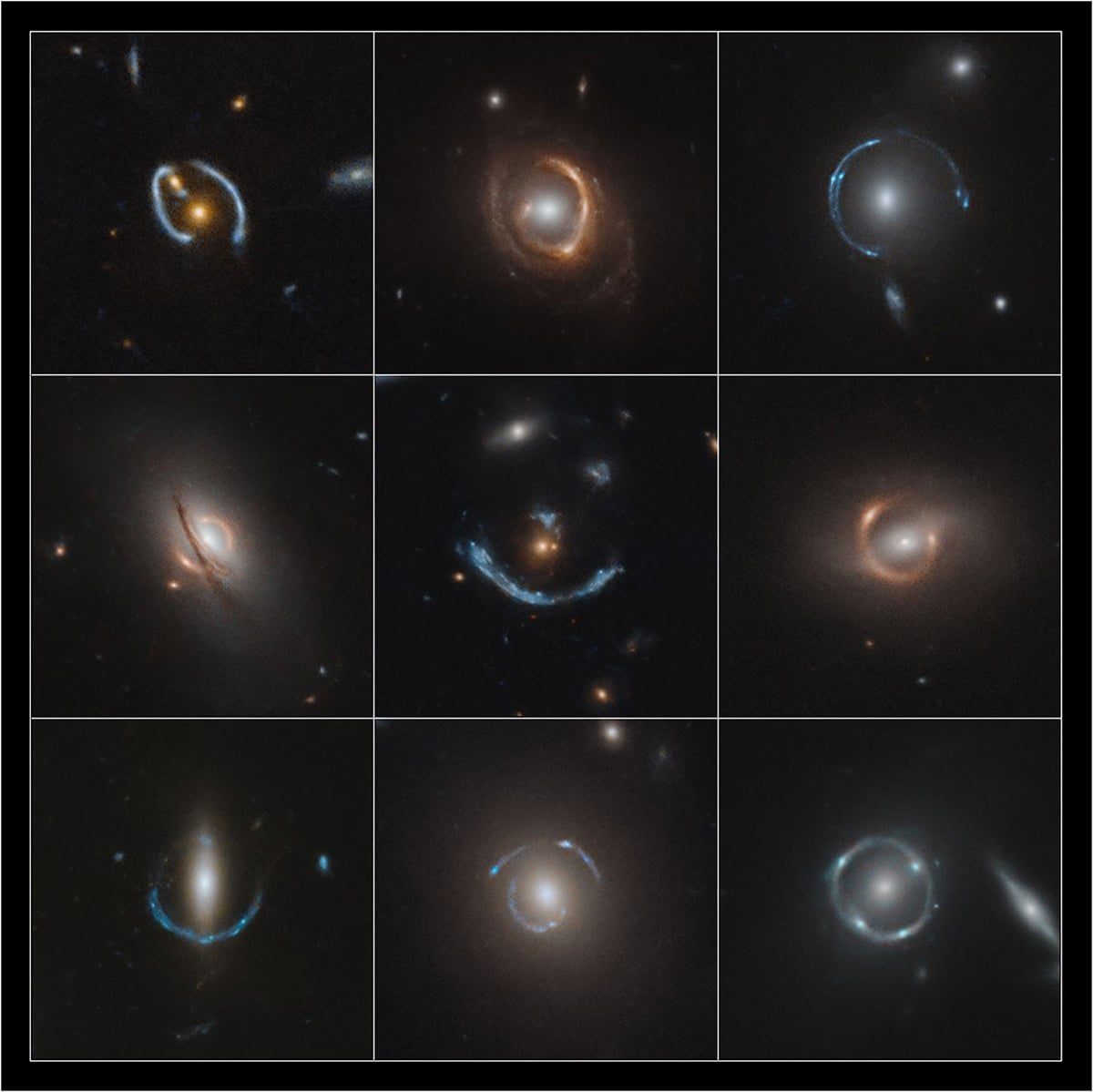
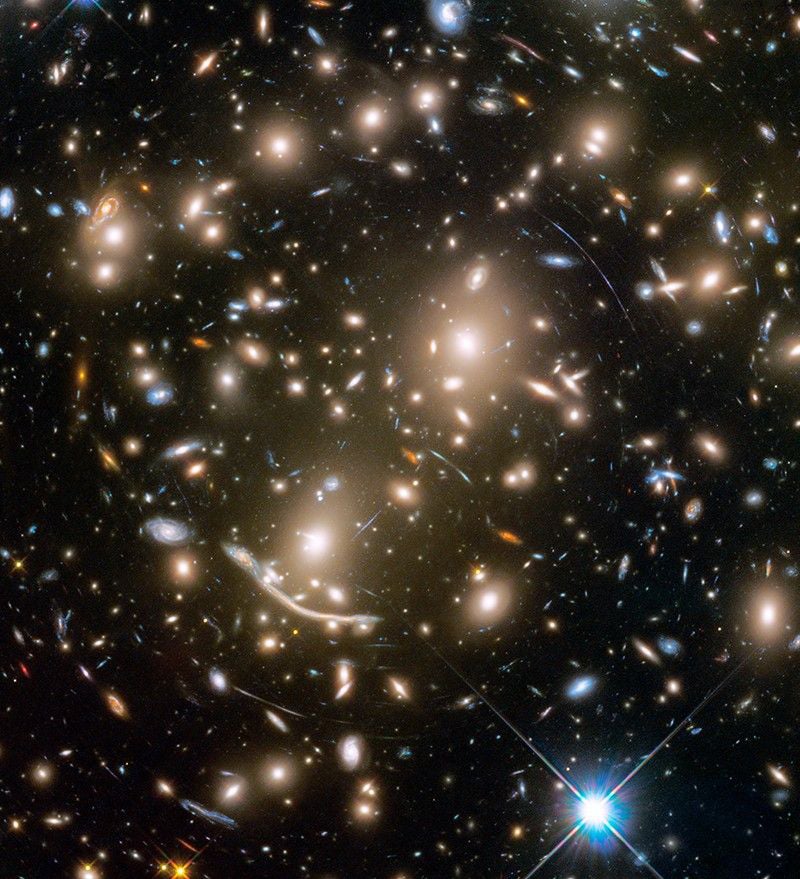
NASA‘s Hubble Space Telescope has captured a collection of galaxies that look very different from the familiar spiral and elliptical systems we see in astronomical images. Some appear as curved streaks surrounding other galaxies. Some of them show several copies of the same distant object. One forms an almost complete circle around a foreground galaxy.
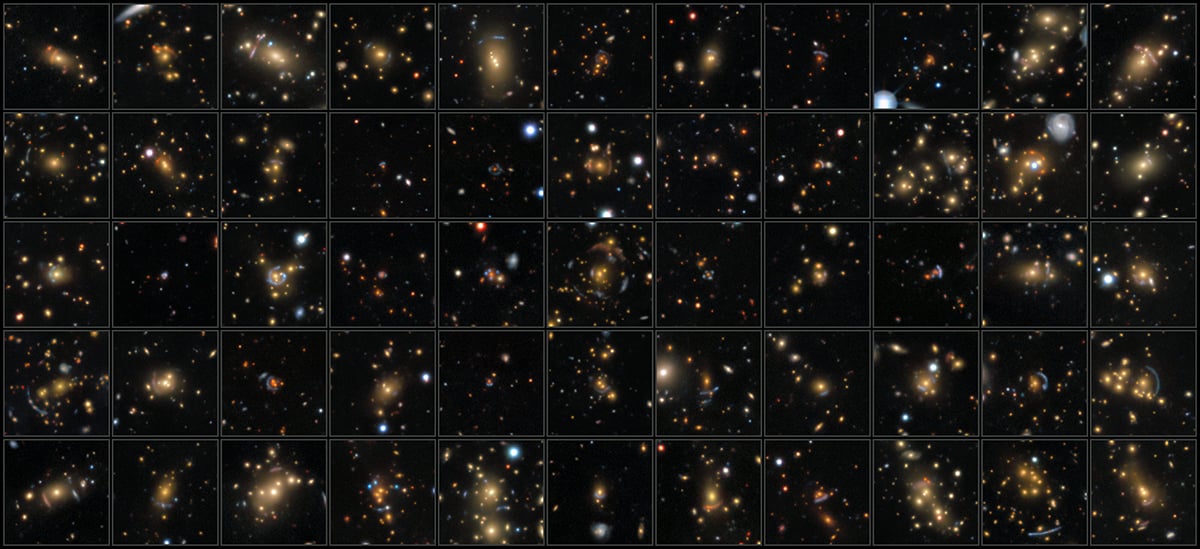
NASA has compiled these Hubble observations into a new collection ahead of scientific work with the Nancy Grace Roman Space Telescope. The images show the range of shapes that gravitational lenses can produce.
Why do distant galaxies appear as arcs and rings?
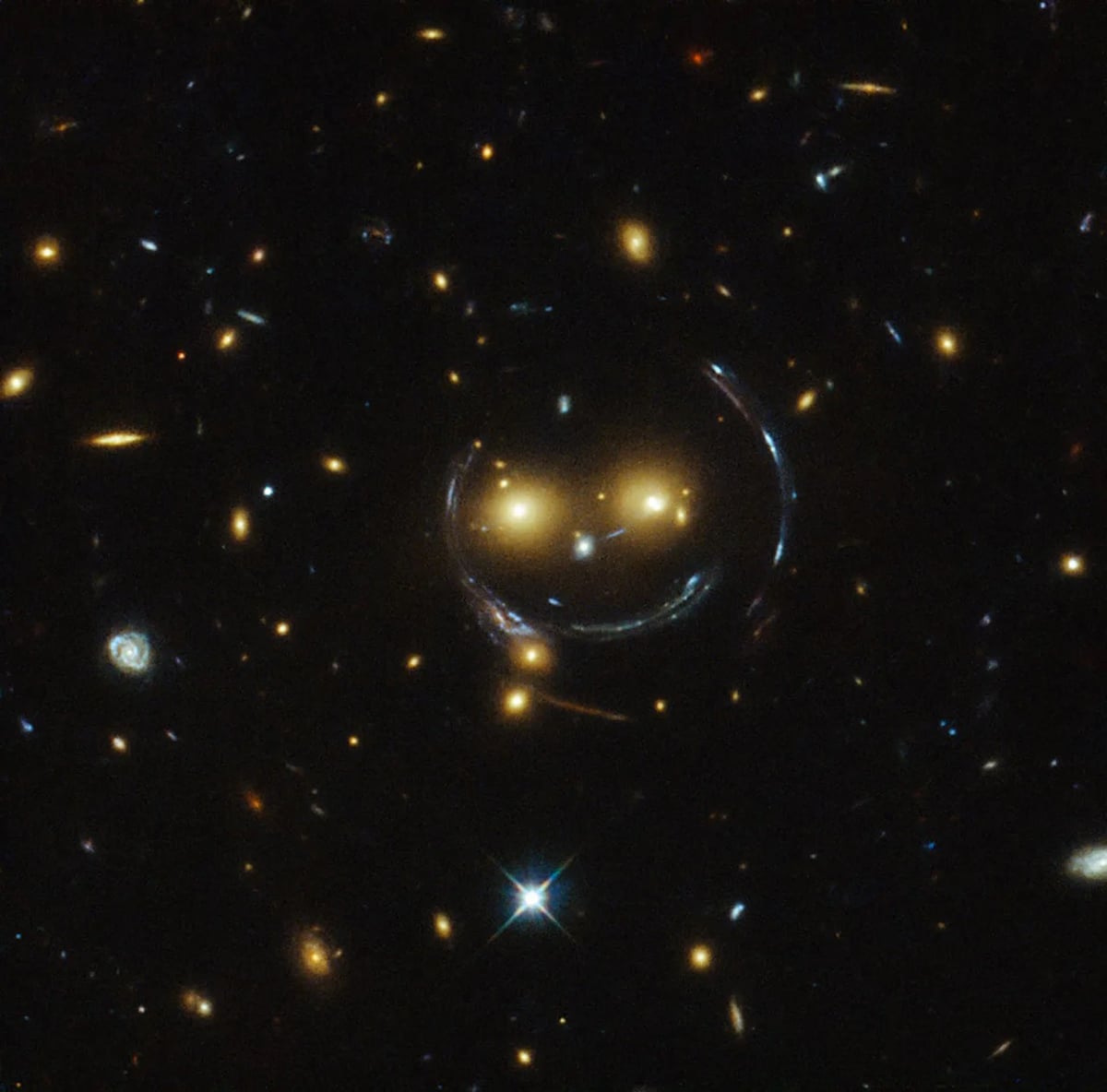
The strange shapes in Hubble’s images result from a simple arrangement. A distant galaxy sits almost behind a much closer galaxy from our point of view on Earth. Light from the background galaxy must pass through the gravitational field of the foreground object before reaching us. The foreground galaxy bends that light, changing the apparent shape and position of the more distant object.
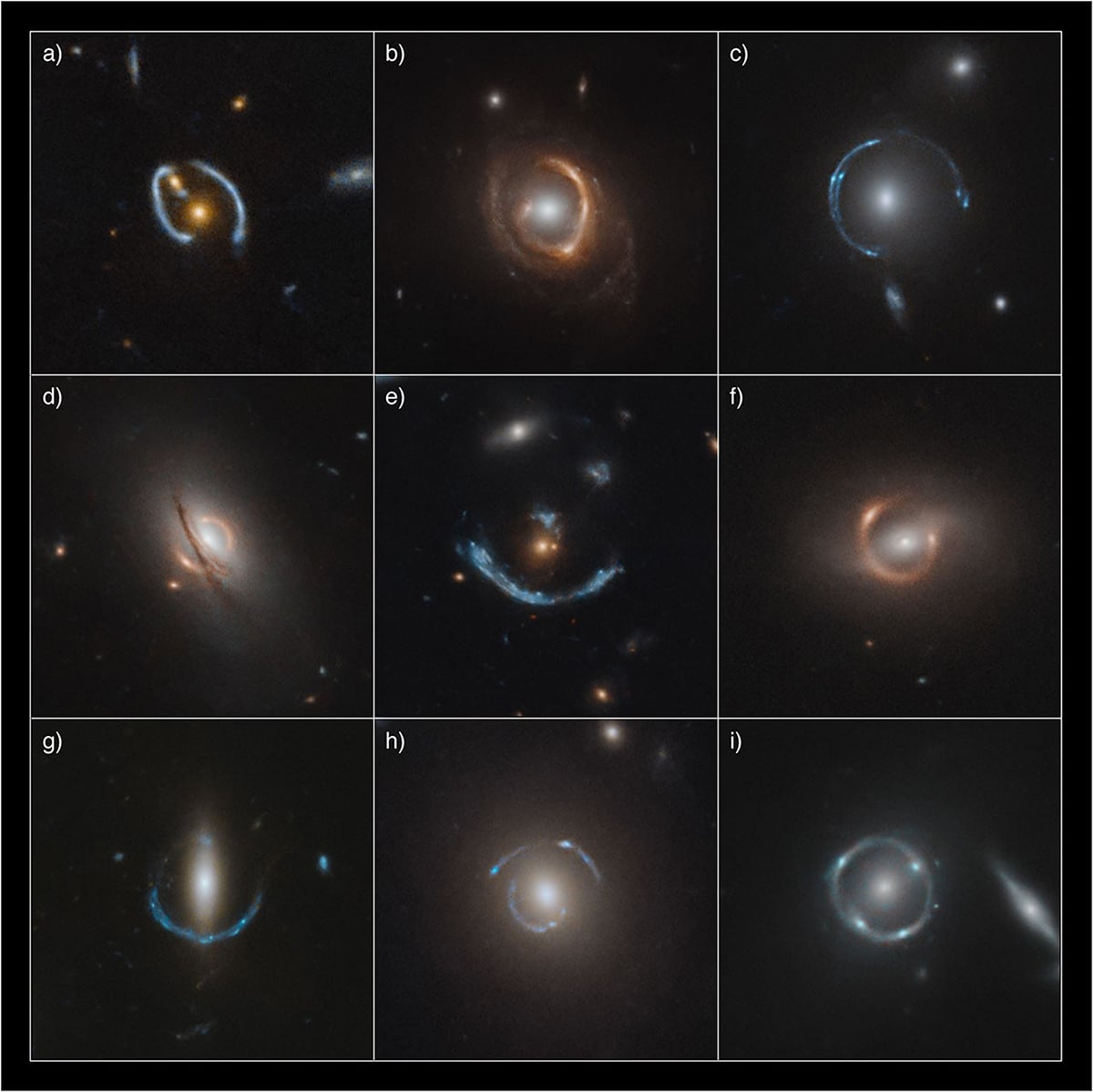
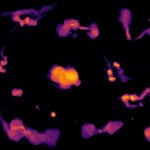
Hubble‘s new collection includes several examples of these configurations. Panel A shows an arc-counterarc arrangement, where the background galaxy appears as two separate arcs. A pair of foreground galaxies supplies the combined gravitational pull that bends the background light around them.
Panel F shows an Einstein ring. Here, the background galaxy almost completely encircles the foreground galaxy. Panel I contains a quadruply lensed system, where astronomers see four images of the same background galaxy around the lensing object. Panel C also shows a quadruply lensed galaxy. Its duplicated knots probably mark regions of strong star formation in the distant object.
Why does Roman need Hubble’s images
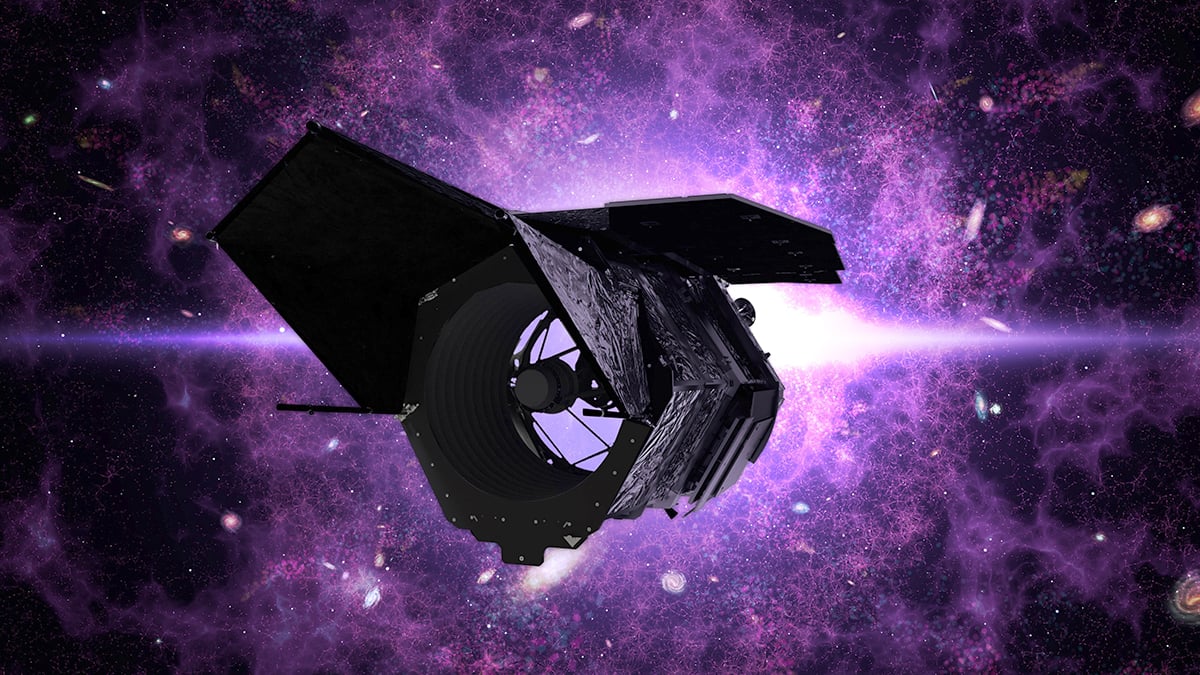
Hubble and Roman will see these objects with different observational strengths. Hubble provides sharp views of individual galaxies. Roman will survey much larger areas of the sky. Astronomers expect the two observatories to work together as they build a larger collection of gravitational lenses.
Hubble observes the universe mainly in visible and ultraviolet light, with some infrared coverage. Its high-resolution images allow researchers to examine fine details within individual gravitational arcs. They can study the shape of a background galaxy, distinguish its different features, and measure how the foreground galaxy has distorted its light.
Roman will observe mainly in infrared wavelengths, alongside some visible light. Its Wide Field Instrument will cover an area of the sky at least 100 times larger than Hubble’s field of view. It will retain comparable image sharpness while surveying much wider regions. This combination will allow Roman to find far more gravitational lenses than astronomers can examine individually with Hubble.
The distorted galaxy images could reveal Dark Matter
The distorted galaxies in this collection have a scientific value beyond their unusual appearance. Their shapes could help researchers investigate how dark matter is distributed inside galaxies. This invisible material accounts for much of the universe’s matter, but it does not emit or reflect light that telescopes can detect.
Astronomers study dark matter through its gravitational influence. In a gravitational lens, both ordinary matter and dark matter contribute to the total mass of the foreground galaxy. That combined mass bends the light from the background object. Researchers can examine the distortion to estimate how much matter the foreground galaxy contains.
Hubble’s images allow them to investigate even smaller changes in the arcs. A smooth distribution of mass should produce a particular pattern of distortion. Small concentrations of additional mass can alter that pattern, creating irregularities in the lensed image. Researchers want to find such imperfections and determine whether dark matter clumps caused them.
Clear skies!
See more from DIYPhotography.net on Google
Add DIYPhotography.net as a trusted source. This makes
our stories more likely to appear in your Google Search results.
 Add as a preferred source on Google

Soumyadeep Mukherjee
Soumyadeep Mukherjee is an award-winning astrophotographer from India. He has a doctorate degree in Linguistics. His work extends to the sub-genres of nightscape, deep sky, solar, lunar and optical phenomenon photography. He is also a photography educator and has conducted numerous workshops. His works have appeared in over 40 books & magazines including Astronomy, BBC Sky at Night, Sky & Telescope among others, and in various websites including National Geographic, NASA, Forbes. He was the first Indian to win “Astronomy Photographer of the Year” award in a major category.

Join the Discussion
DIYP Comment Policy
Be nice, be on-topic, no personal information or flames.