



















AI Finds 70 New Gravitational Lenses Hidden in DESI Sky Survey Images
Oct 9, 2026
Soumyadeep Mukherjee
Soumyadeep Mukherjee is an award-winning astrophotographer from India. He has a doctorate degree in Linguistics. His work extends to the sub-genres of nightscape, deep sky, solar, lunar and optical phenomenon photography. He is also a photography educator and has conducted numerous workshops. His works have appeared in over 40 books & magazines including Astronomy, BBC Sky at Night, Sky & Telescope among others, and in various websites including National Geographic, NASA, Forbes. He was the first Indian to win “Astronomy Photographer of the Year” award in a major category.
Share:
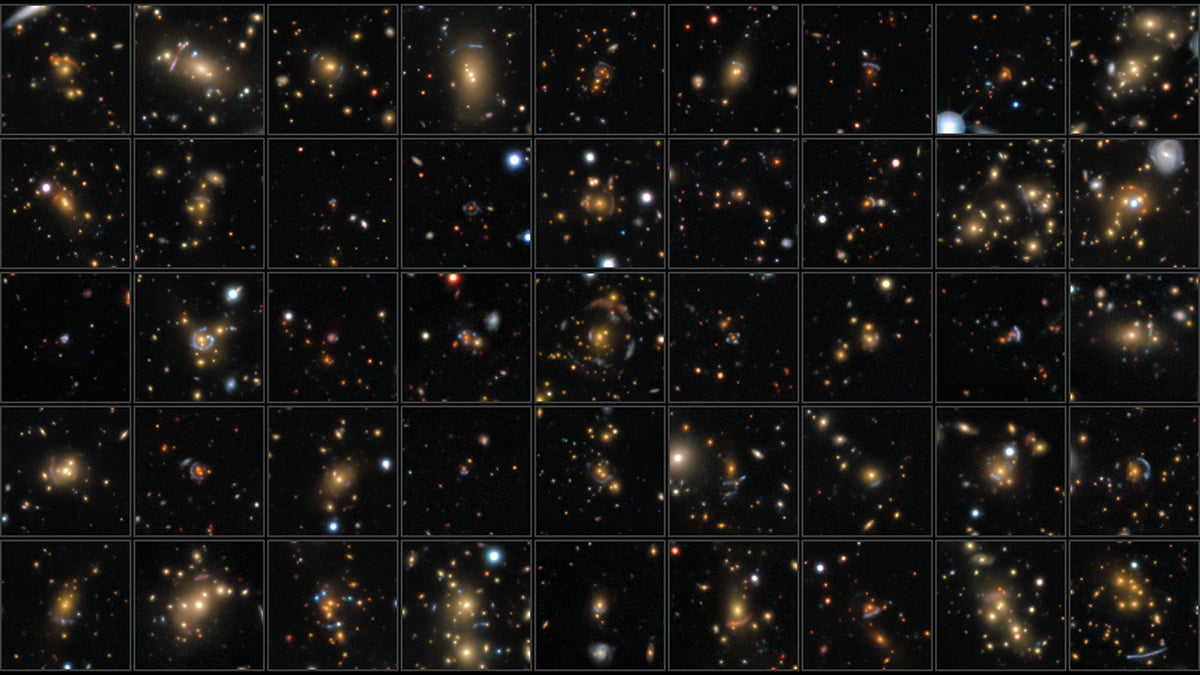
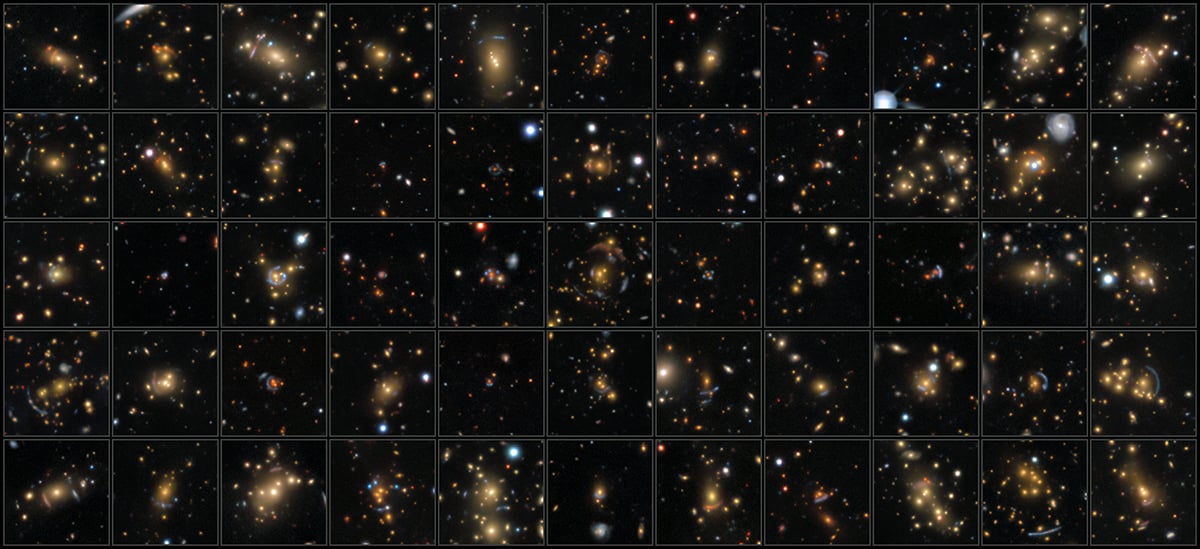
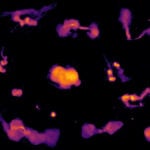
Artificial Intelligence in photography is not always bad, isn’t it? And as we move towards more “intelligent” AIs, we can see them doing very well. Now, astronomers have found 70 new gravitational lenses hidden in images from one of the largest sky surveys ever carried out. The discovery came from a search through the DESI Legacy Imaging Surveys, where researchers used artificial intelligence to identify galaxies showing signs of strong gravitational lensing.
The search began with 76 promising candidates. Researchers then examined the candidates in greater detail and confirmed 70 as genuine gravitational lenses. Each system contains a foreground galaxy whose gravity bends light from a much more distant galaxy behind it.
Gravity turns galaxies into cosmic lenses
Gravitational lensing happens when a massive object sits between Earth and a more distant source of light. The mass changes the path of light passing nearby, so the distant object can appear distorted from our viewpoint.
A galaxy provides enough mass to produce this effect on a much larger scale than most objects we see in the night sky. Its stars, gas, and dark matter all contribute to the gravitational field around it. When another galaxy lies behind it, the background galaxy’s light can travel along several curved paths toward Earth.
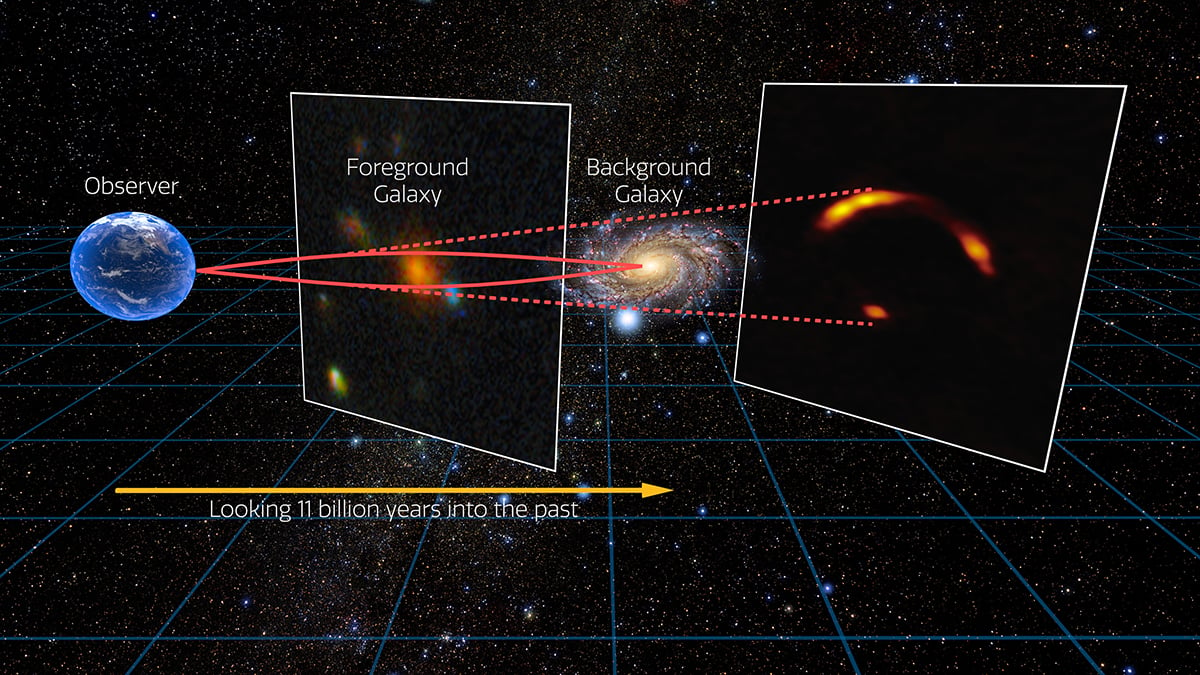
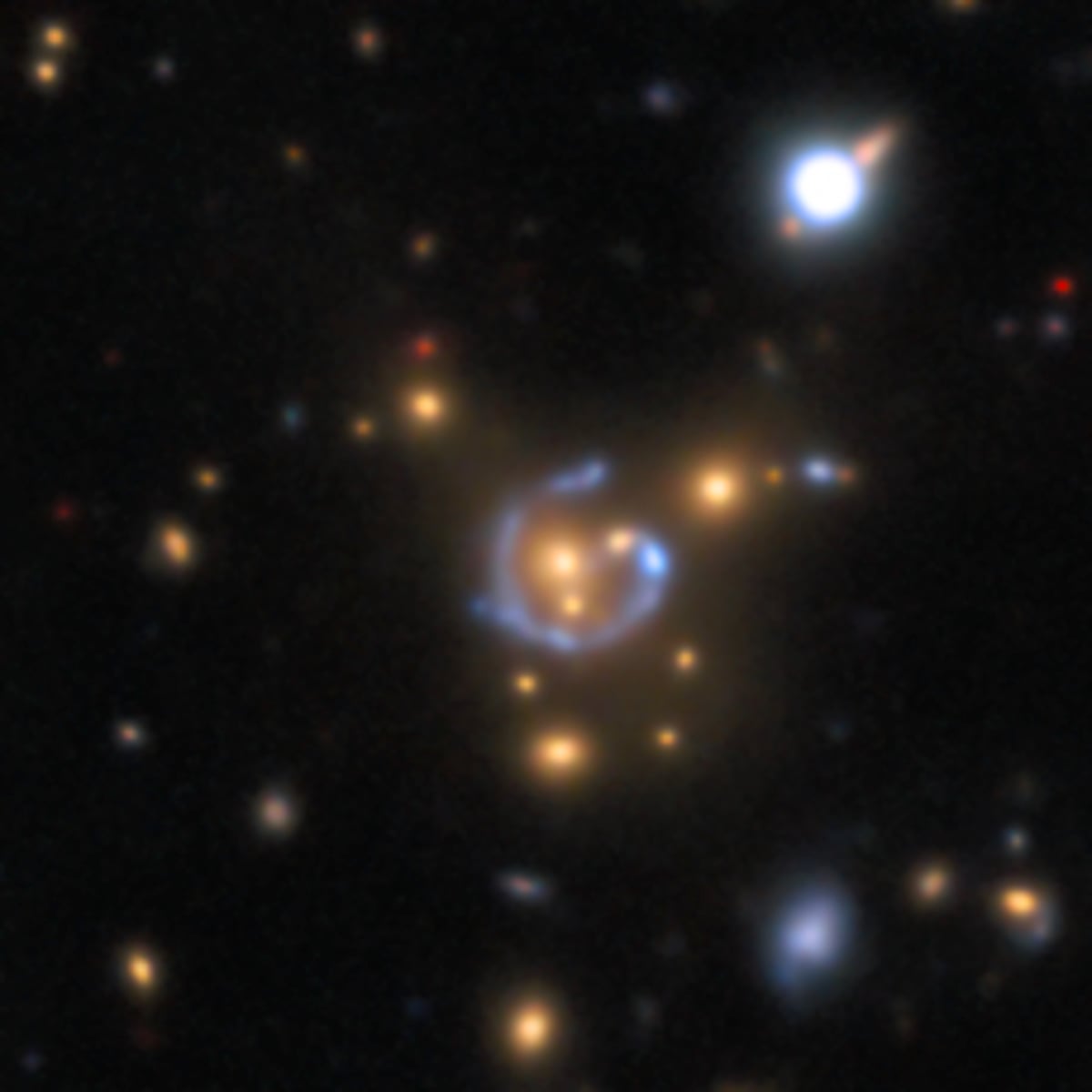
The resulting image depends on the alignment between the two galaxies. With a favorable alignment, astronomers can see several images of the same background galaxy. In other cases, the background galaxy appears as a long, curved arc around the foreground galaxy. A near-perfect alignment can produce a complete or almost complete ring of light, known as an Einstein ring.
The effect can also make the background galaxy appear brighter than it would without the lens. The foreground galaxy effectively magnifies the distant source as its gravity redirects the light toward Earth. Astronomers can use this magnification to study galaxies that would otherwise be extremely difficult to observe.
The images came from a huge survey of the sky
The DESI Legacy Imaging Surveys were created to provide the imaging needed for the Dark Energy Spectroscopic Instrument, or DESI. The project brought together observations from several telescopes and cameras to create a large, consistent map of the sky.
One of the most important instruments involved is the Dark Energy Camera, or DECam, mounted on the 4-metre Blanco Telescope at Cerro Tololo Inter-American Observatory in Chile. The Mayall z-band Legacy Survey used the 4-metre Mayall Telescope at Kitt Peak, while the Beijing-Arizona Sky Survey used the Bok Telescope.
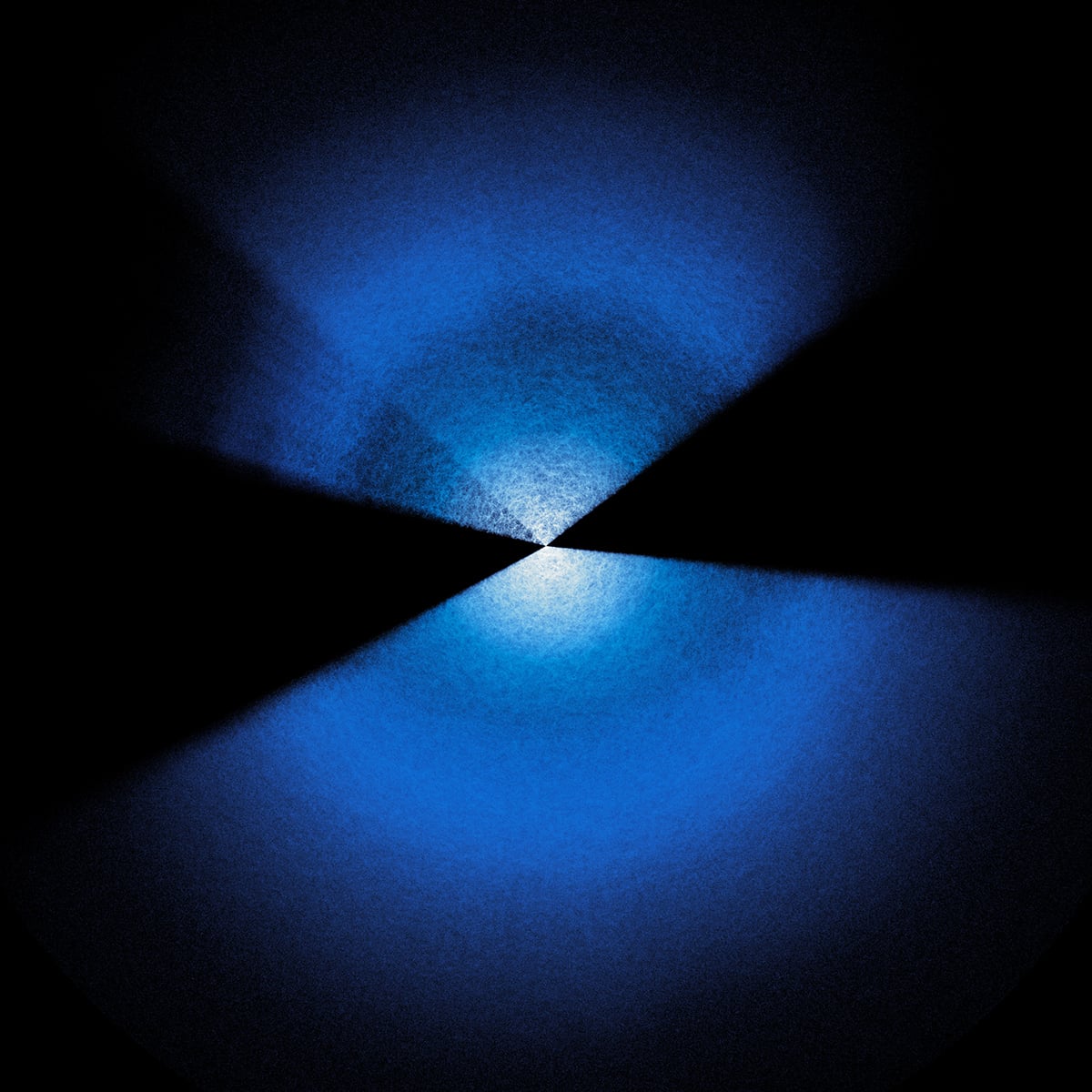
The surveys also incorporate infrared observations from NASA‘s Wide-field Infrared Survey Explorer, or WISE. Combining observations across different wavelengths gives astronomers more information about the objects in each part of the sky.
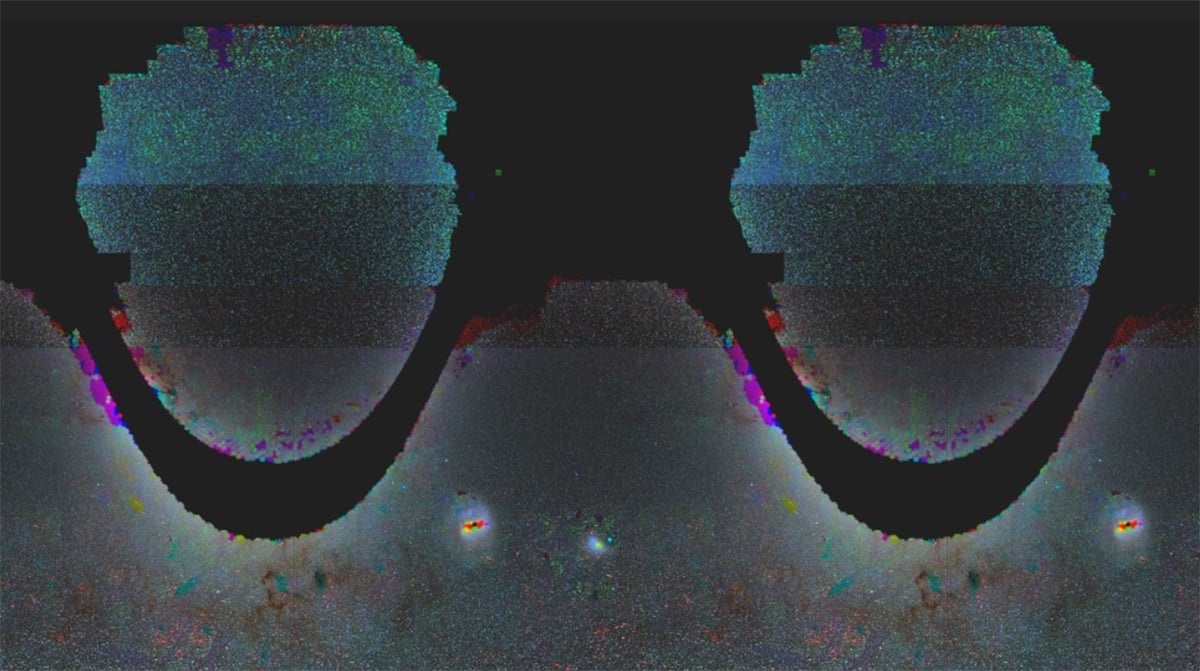
The scale of the project is difficult to appreciate from a single image. The latest two-dimensional map contains almost four billion celestial objects and 5.6 trillion pixels. More than 263,000 exposures went into the map, collected during 13 years of observations.
AI searched millions of images
The researchers trained a machine-learning system to recognize the appearance of strong gravitational lenses. The system used a residual neural network, a type of deep-learning model that can identify patterns in images.
The researchers gave it a very narrow job. It looked for image patterns that could indicate a gravitational lens. The system needed to pick out the small number of objects that showed the right combination of a foreground galaxy and surrounding distorted light.
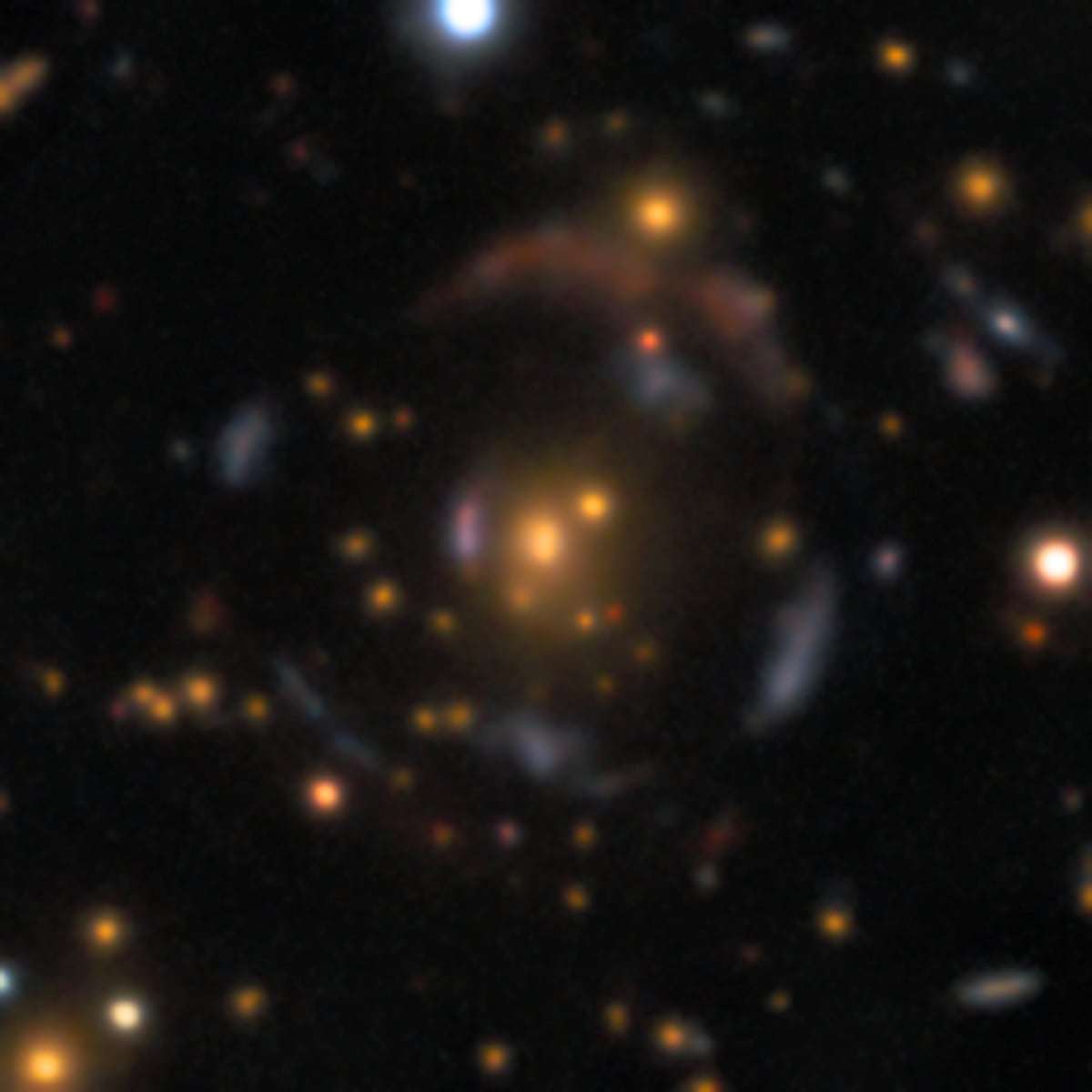
In one previous study, researchers used deep-learning models to examine about 20 million image cutouts from an earlier survey release. That search produced more than 1,200 strong-lens candidates.
The new search produced 76 candidates. Researchers then examined those objects and carried out further checks before accepting them as gravitational lenses. Seventy passed that process.
Clear skies!
See more from DIYPhotography.net on Google
Add DIYPhotography.net as a trusted source. This makes
our stories more likely to appear in your Google Search results.
 Add as a preferred source on Google

Soumyadeep Mukherjee
Soumyadeep Mukherjee is an award-winning astrophotographer from India. He has a doctorate degree in Linguistics. His work extends to the sub-genres of nightscape, deep sky, solar, lunar and optical phenomenon photography. He is also a photography educator and has conducted numerous workshops. His works have appeared in over 40 books & magazines including Astronomy, BBC Sky at Night, Sky & Telescope among others, and in various websites including National Geographic, NASA, Forbes. He was the first Indian to win “Astronomy Photographer of the Year” award in a major category.


Join the Discussion
DIYP Comment Policy
Be nice, be on-topic, no personal information or flames.