























Mars Express Captures a Mysterious 1,800 km-Long Cloud on Mars
Oct 10, 2026
Soumyadeep Mukherjee
Soumyadeep Mukherjee is an award-winning astrophotographer from India. He has a doctorate degree in Linguistics. His work extends to the sub-genres of nightscape, deep sky, solar, lunar and optical phenomenon photography. He is also a photography educator and has conducted numerous workshops. His works have appeared in over 40 books & magazines including Astronomy, BBC Sky at Night, Sky & Telescope among others, and in various websites including National Geographic, NASA, Forbes. He was the first Indian to win “Astronomy Photographer of the Year” award in a major category.
Share:
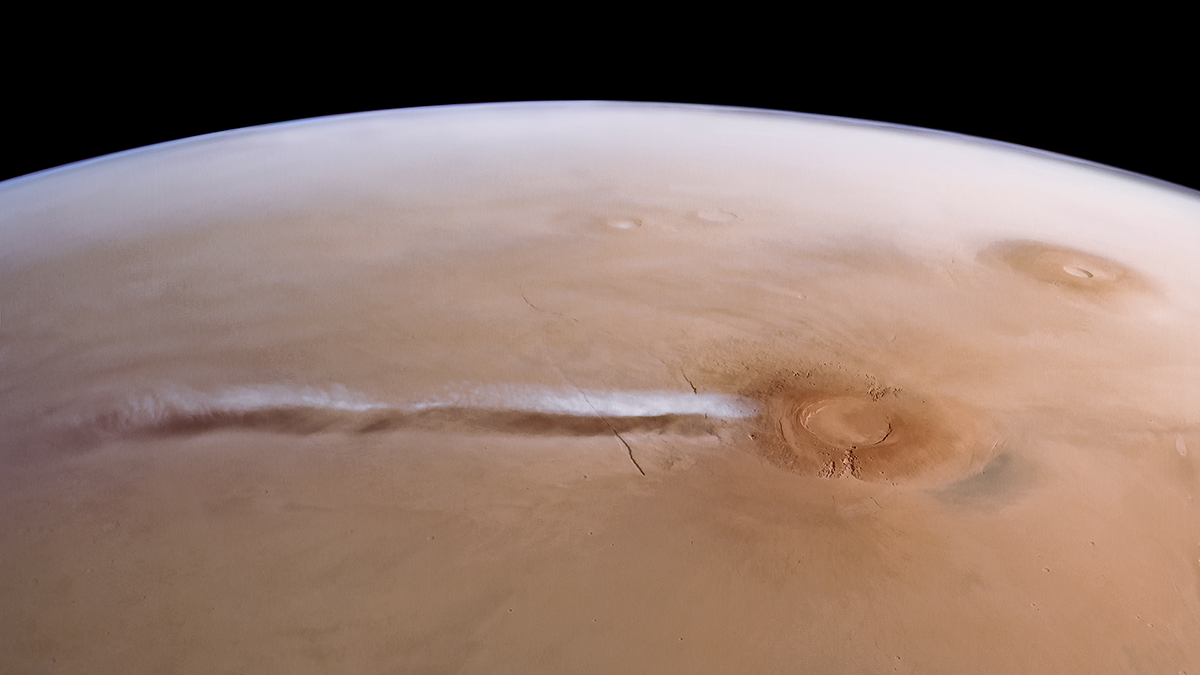
A long, narrow cloud forms near Arsia Mons on Mars during the morning and can stretch for nearly 1,800 kilometers. It appears during spring and summer in the planet’s southern hemisphere, then shrinks and disappears as the day progresses. New research using observations from the European Space Agency’s Mars Express spacecraft suggests that an unusual process may be responsible.
Known as the Arsia Mons Elongated Cloud (AMEC), the feature develops downwind of one of Mars’s largest volcanoes. Researchers have long suspected that the volcano’s influence on the atmosphere plays a major role in its formation. However, conventional weather models have struggled to reproduce the cloud’s rapid growth and enormous length.
The cloud grows and disappears within hours
Arsia Mons rises about 20 kilometers above the surrounding Martian terrain. Its broad slopes and enormous height influence the winds that cross the region. When air encounters the volcano, some of it rises over the mountain and flows downwind. Under suitable conditions, this movement produces the long cloud that Mars Express has observed.
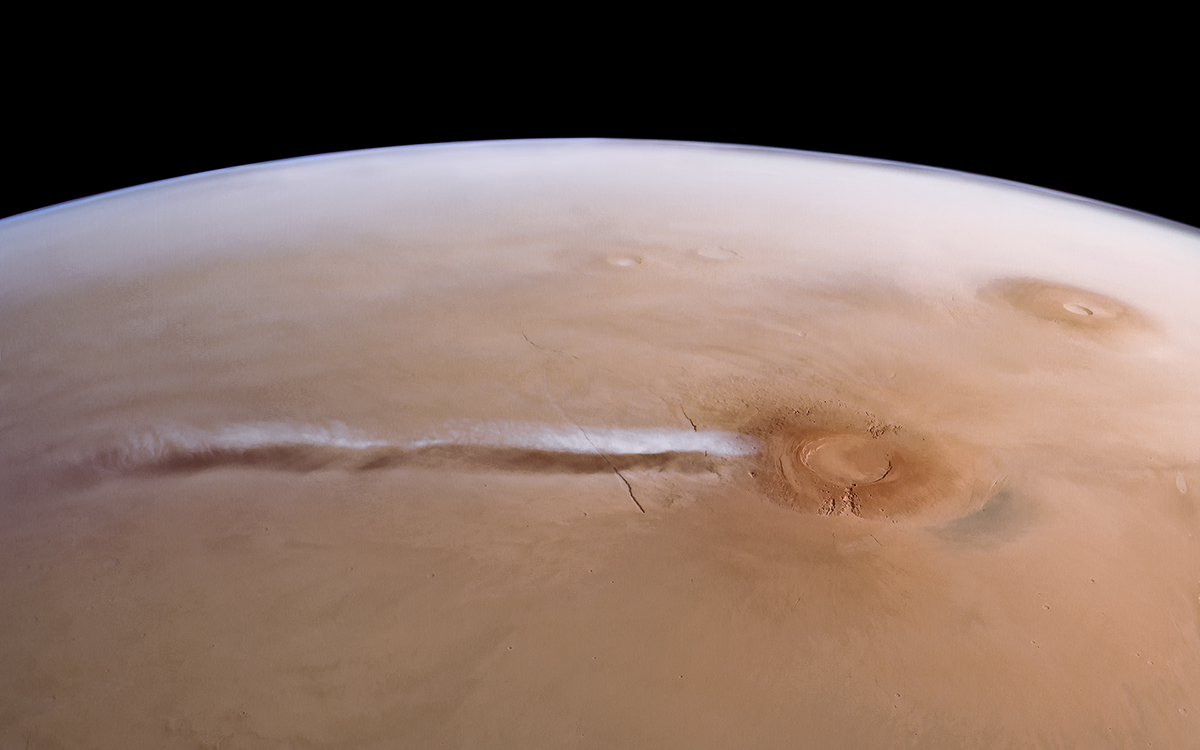
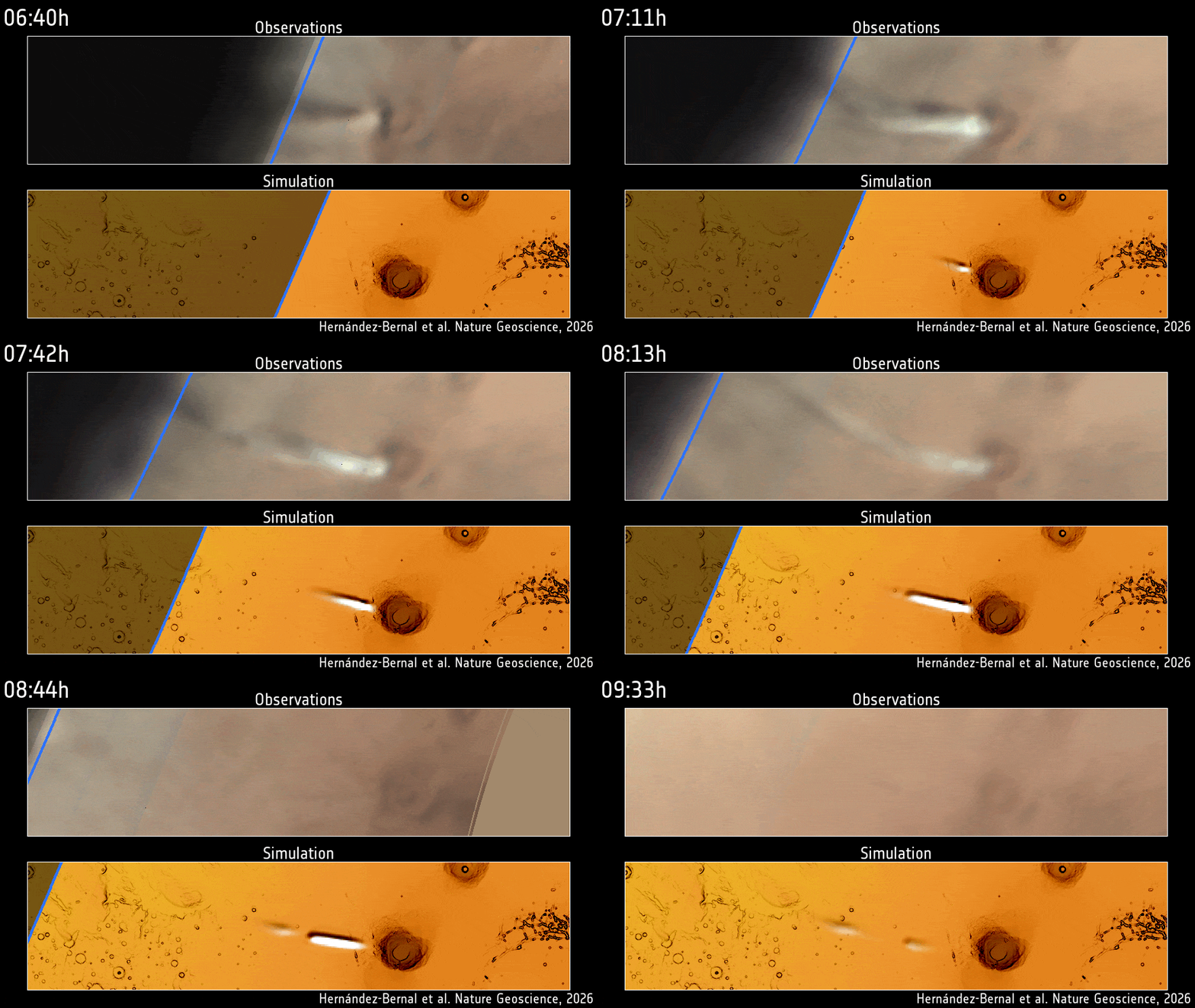
The cloud follows a regular daily cycle. It develops in the morning, grows rapidly, and gradually fades as the day progresses. Its appearance depends on the time of observation, so images taken only a few hours apart can show substantial differences. The cloud can reach about 1,800 kilometers long.
Mars Express first revealed the recurring cloud in 2018. Since then, its observations have helped scientists track the feature through different stages of its daily cycle. This record has given researchers a way to compare the cloud’s observed behaviour with computer simulations and test explanations for its formation.
Arsia Mons cools the air above Mars
The cloud-formation process begins when winds encounter Arsia Mons. Some air moves around the mountain, while other air rises over its slopes. Meteorologists call this orographic lifting. On Earth, the same process produces clouds around mountain ranges when rising air cools enough for water vapor to condense or freeze.
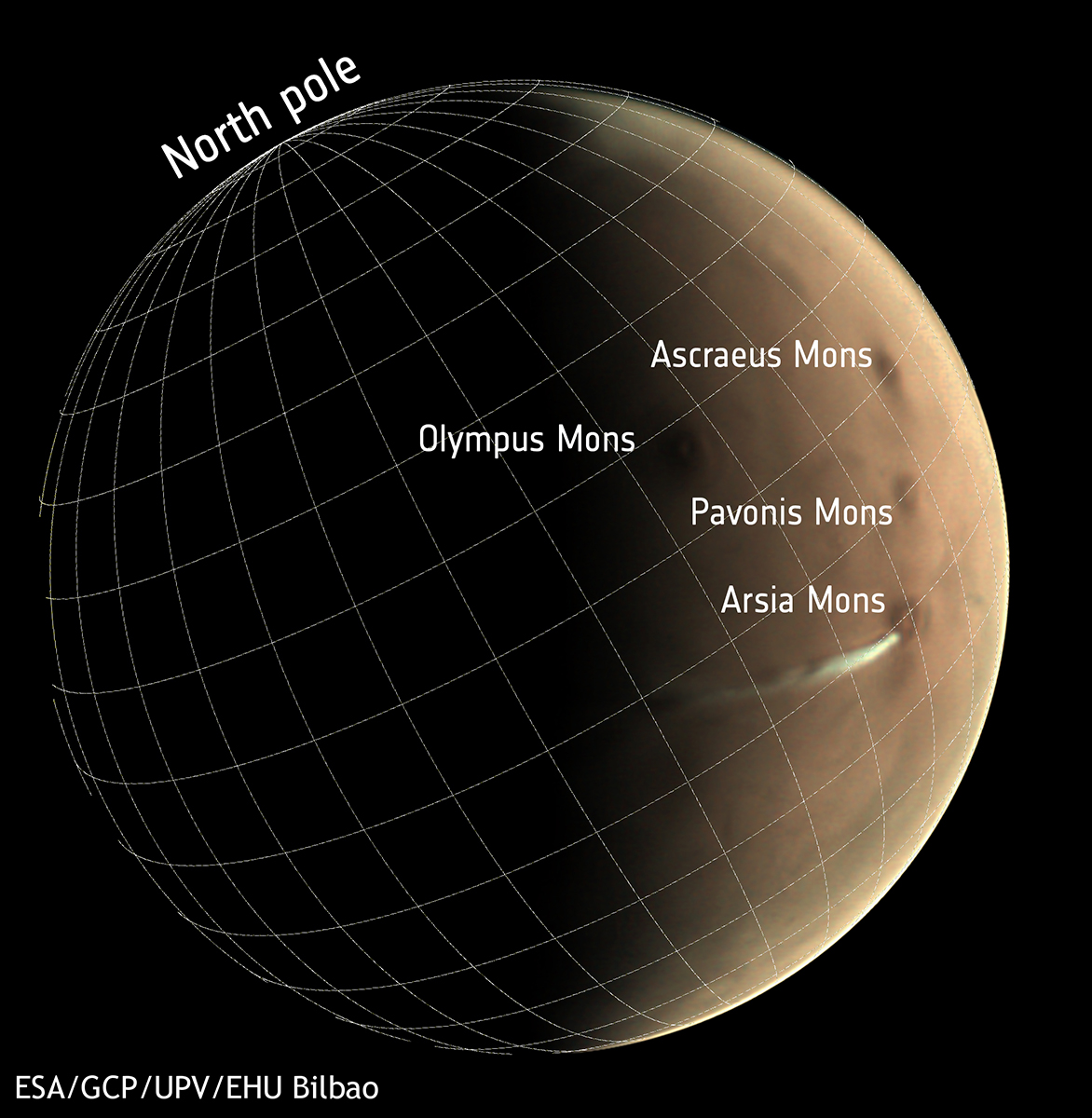
As air rises, atmospheric pressure falls. The air expands and cools, changing the conditions under which water vapour can exist. If the air contains enough moisture, ice particles can form. The underlying physics also applies to Mars, but its thin atmosphere creates conditions that differ considerably from those on Earth.
For the new study, researchers used a meteorological model to simulate air movement around Arsia Mons. Their calculations showed that atmospheric waves generated by the volcano can lift moist air several kilometers in a short period. During this rapid ascent, temperatures can fall by around 30°C in just 10 minutes.
Mars Express sees the cloud from orbit
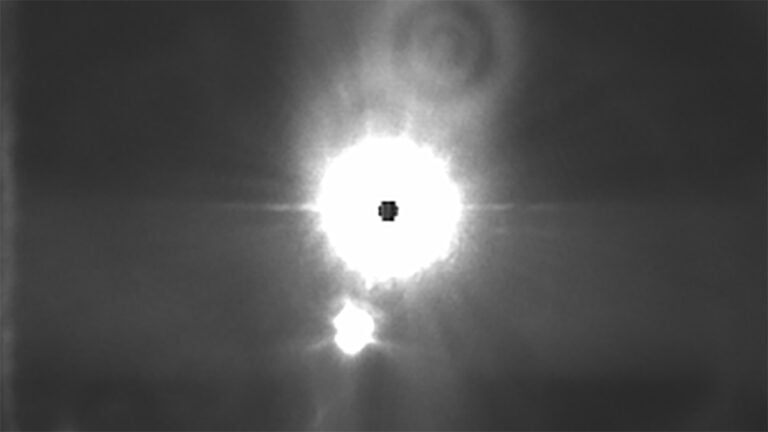
Mars Express carries several instruments that help scientists study the planet’s surface and atmosphere. The new research draws on observations from the Visual Monitoring Camera (VMC), the High Resolution Stereo Camera (HRSC) and the OMEGA imaging spectrometer.
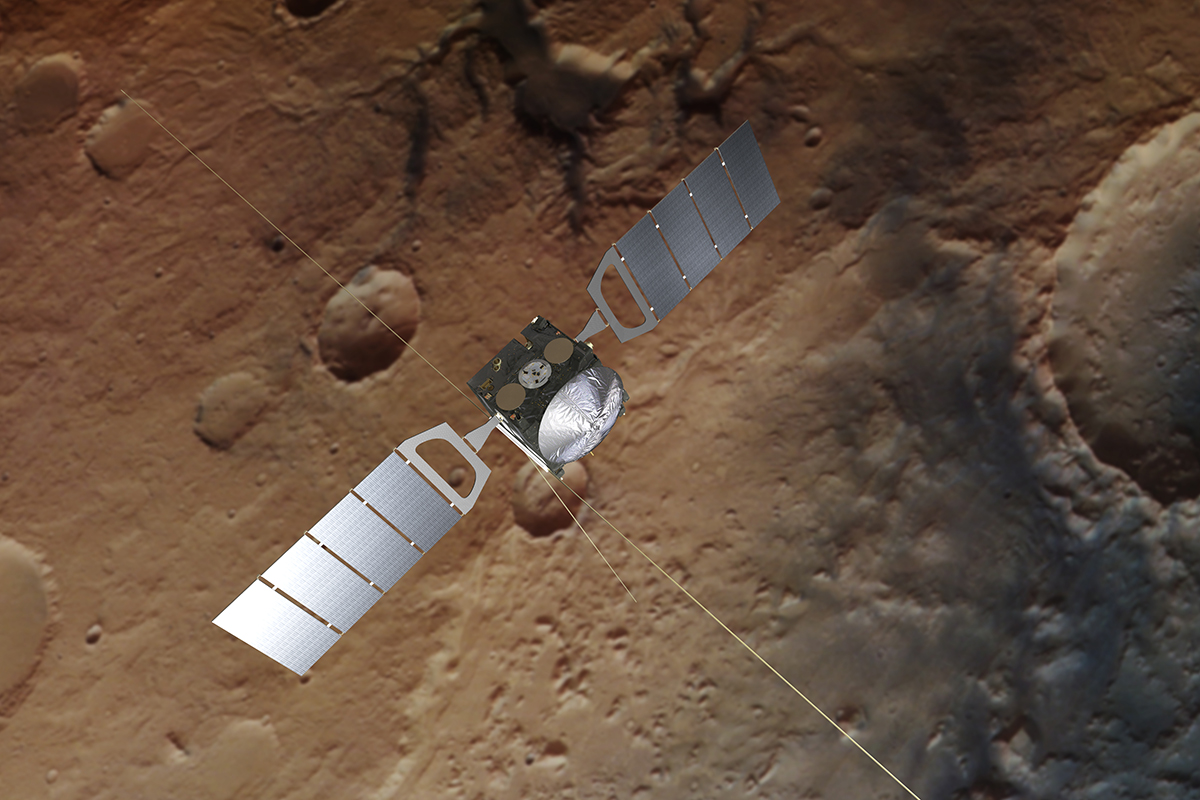
Mars Express can observe the planet during the morning, when the cloud develops, and track changes over periods of a few hours. These observations help researchers compare the cloud’s growth and disappearance with the atmospheric conditions predicted by their models.
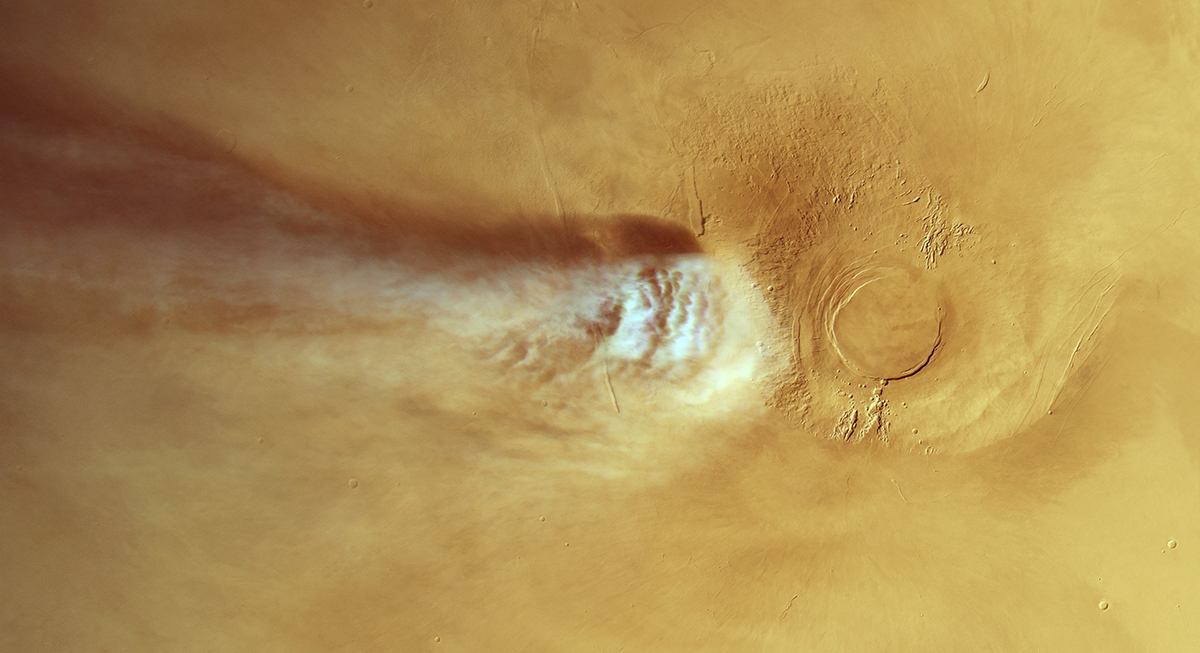
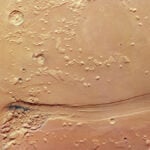
Although the image was released earlier this week. the spacecraft captured the image on June 24, 2024. It covers a region of Mars almost 1,250 kilometers across, while the cloud itself extends about 980 kilometers in that observation. The difference between this measurement and the reported maximum of 1,800 kilometers reflects the cloud’s changing size throughout the day.

Clear skies!
See more from DIYPhotography.net on Google
Add DIYPhotography.net as a trusted source. This makes
our stories more likely to appear in your Google Search results.
 Add as a preferred source on Google

Soumyadeep Mukherjee
Soumyadeep Mukherjee is an award-winning astrophotographer from India. He has a doctorate degree in Linguistics. His work extends to the sub-genres of nightscape, deep sky, solar, lunar and optical phenomenon photography. He is also a photography educator and has conducted numerous workshops. His works have appeared in over 40 books & magazines including Astronomy, BBC Sky at Night, Sky & Telescope among others, and in various websites including National Geographic, NASA, Forbes. He was the first Indian to win “Astronomy Photographer of the Year” award in a major category.


Join the Discussion
DIYP Comment Policy
Be nice, be on-topic, no personal information or flames.