























This is the Clearest View of a Supernova Remnant Near the Milky Way’s Black Hole
Oct 3, 2026
Soumyadeep Mukherjee
Soumyadeep Mukherjee is an award-winning astrophotographer from India. He has a doctorate degree in Linguistics. His work extends to the sub-genres of nightscape, deep sky, solar, lunar and optical phenomenon photography. He is also a photography educator and has conducted numerous workshops. His works have appeared in over 40 books & magazines including Astronomy, BBC Sky at Night, Sky & Telescope among others, and in various websites including National Geographic, NASA, Forbes. He was the first Indian to win “Astronomy Photographer of the Year” award in a major category.
Share:
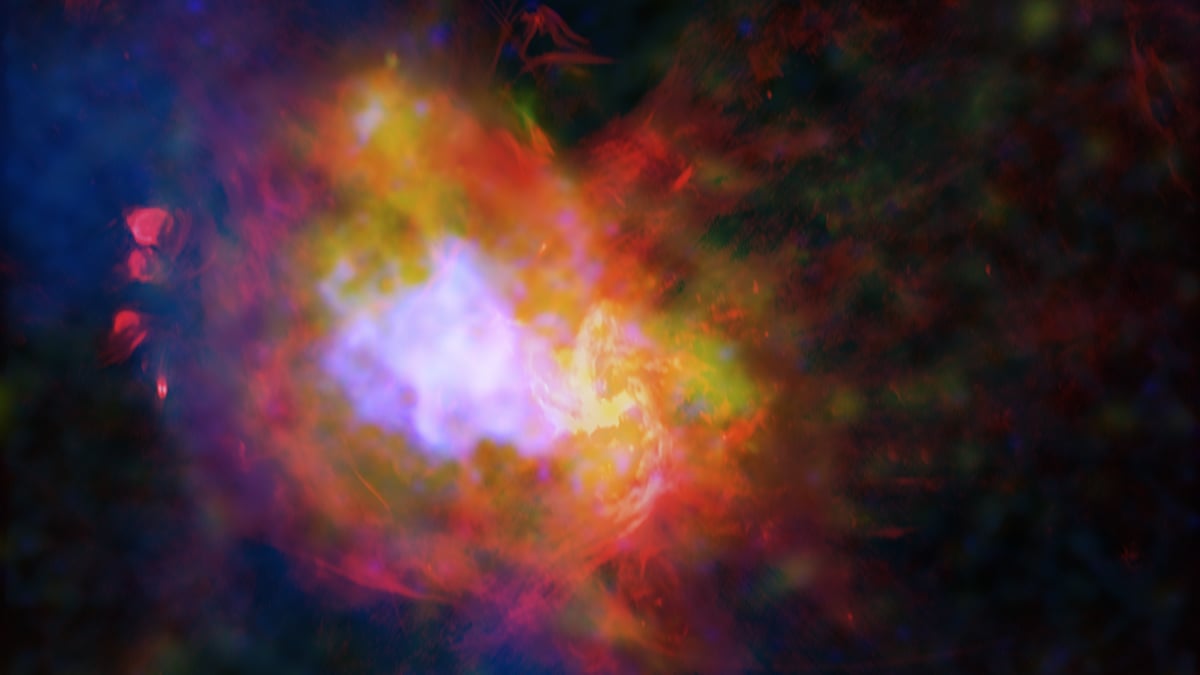
There is a supernova remnant only a short distance from the Milky Way’s central black hole. Astronomers have continued to struggle to study it because several different sources produce X-rays in the same region of the sky. A new analysis of NASA’s Chandra observations has separated those sources and revealed the clearest view yet of the remnant.
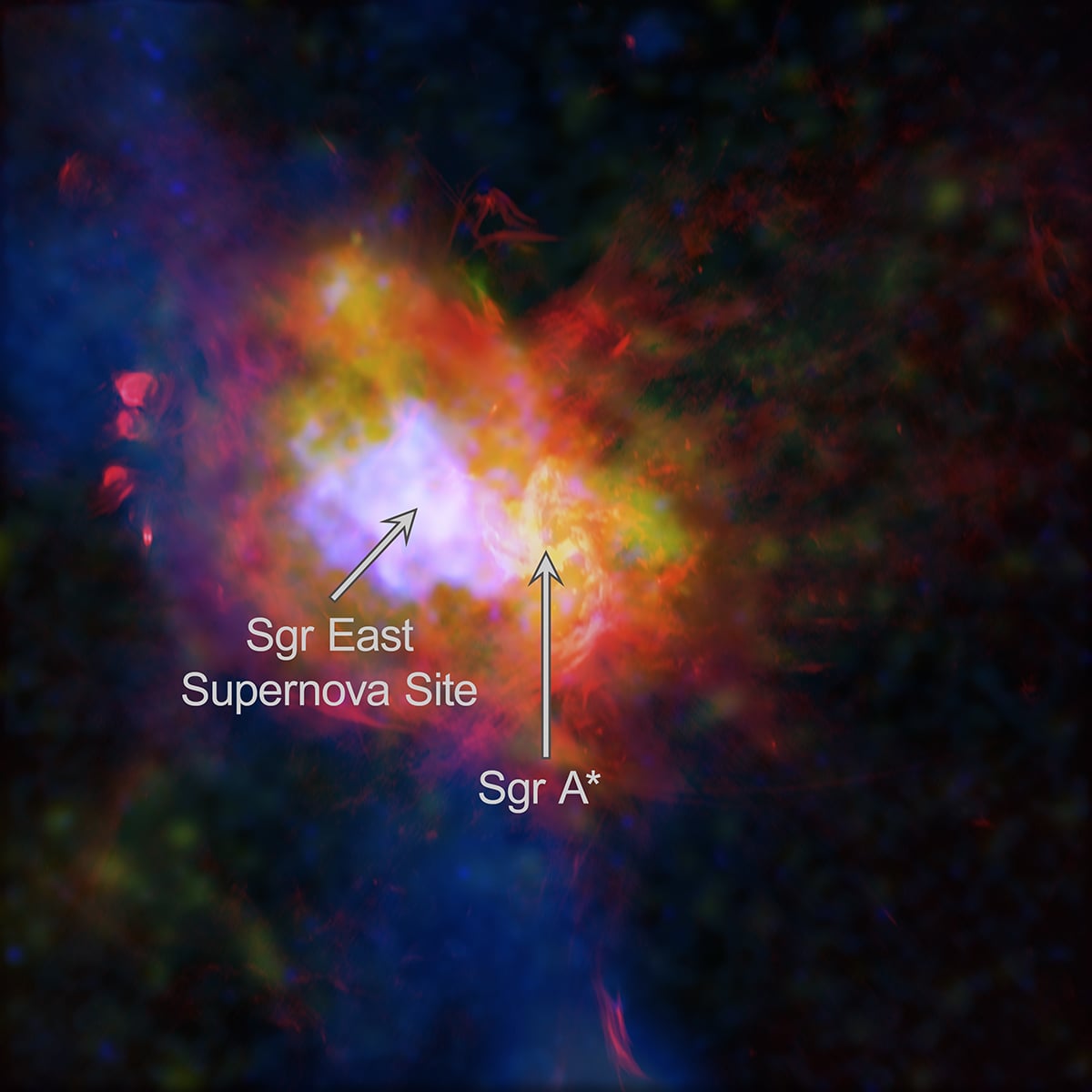
The object is called Sagittarius A East, or Sgr A East. It sits near Sagittarius A*, the roughly four-million-solar-mass black hole at the center of our galaxy. The region around both objects contains dense gas, dust, magnetic fields, and a large population of stars. Several of those stars also produce X-rays, adding to the confusion around the supernova remnant.
A supernova remnant beside Sagittarius A*
The center of the Milky Way is an awkward place for X-ray astronomy. Sagittarius A* sits there, but it is not alone. Hot young stars surround it, clouds of gas pass through the region, and countless fainter objects contribute to the X-ray glow.
Sgr A East adds another source to the mix. The object is a supernova remnant, so its X-ray emission comes from extremely hot gas and the shock waves created as the explosion expands into its surroundings. Those shock waves heat material to millions of degrees.
The problem starts when all of these emissions reach Chandra at the same time. The telescope can record the X-rays, but the detector does not label each photon with the name of the object that produced it. Several sources can occupy the same area of an image.
Chandra separates the tangled X-ray
To untangle the x-ray signals, the researchers used Poissonian Generalized Morphological Component Analysis, known as pGMCA. The technique looks at the spatial and spectral properties of the X-ray emission and separates components that have different characteristics.
The team applied it to deep, stacked observations from Chandra’s Advanced CCD Imaging Spectrometer, or ACIS-I. The dataset combines observations taken over many years. Chandra observed the Galactic Center 35 times between September 1999 and August 2020, accumulating 422 hours and 51 minutes of observing time.
The researchers first removed point-like X-ray sources. They then worked with the remaining diffuse emission and separated the major components.
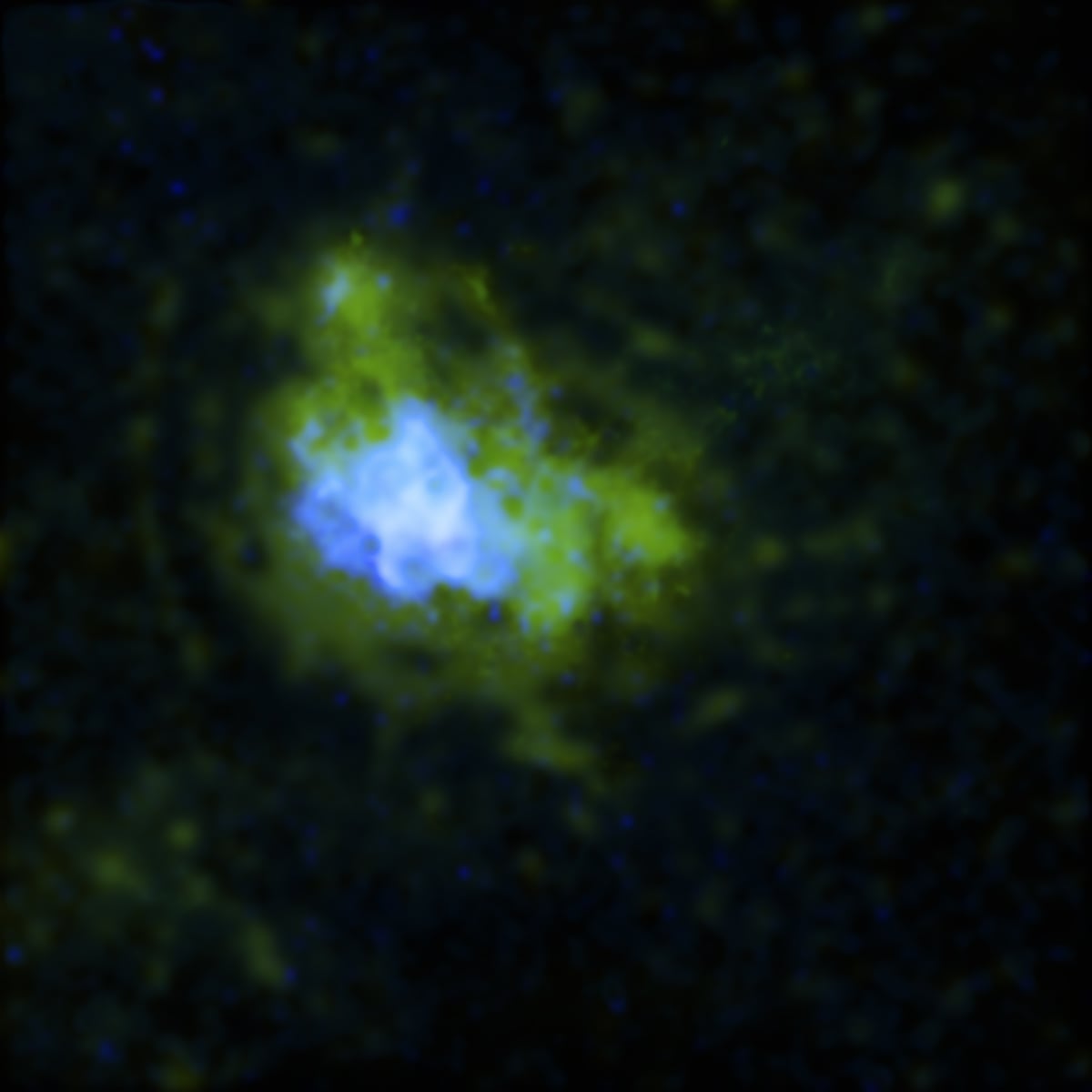
This produced a much cleaner map of Sgr A East. The isolated emission reveals the familiar shell and a central region rich in iron. It also shows how the emission from the remnant differs from the plasma associated with the black hole’s surroundings.
Three telescopes reveal the complete picture
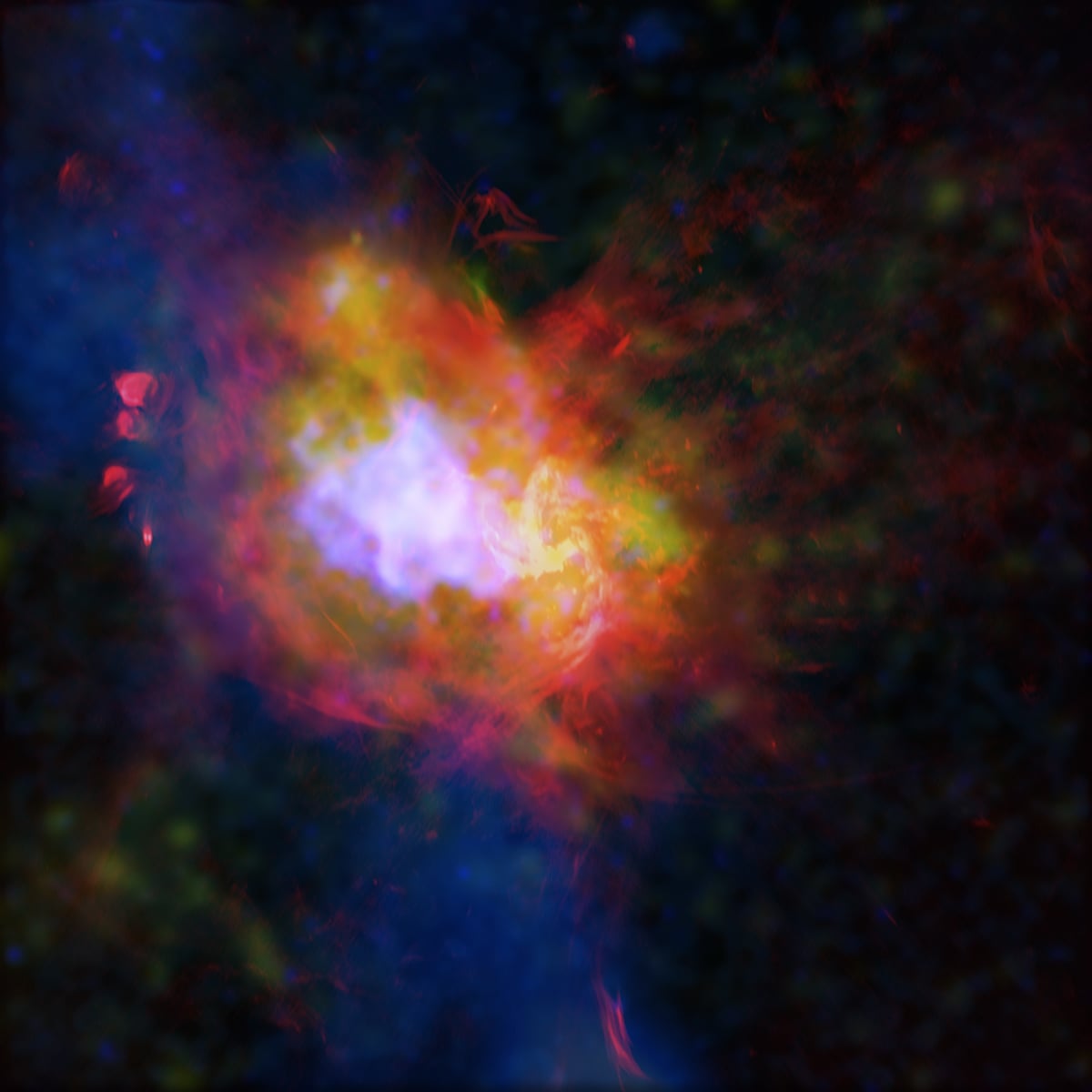
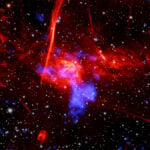
The composite image adds radio and submillimeter observations to the Chandra data. Each dataset traces a different part of the region.
The green and cyan emission comes from Chandra. Green represents lower-energy X-rays, while light blue represents higher-energy X-rays. Where they overlap in the remnant, the emission appears purple.
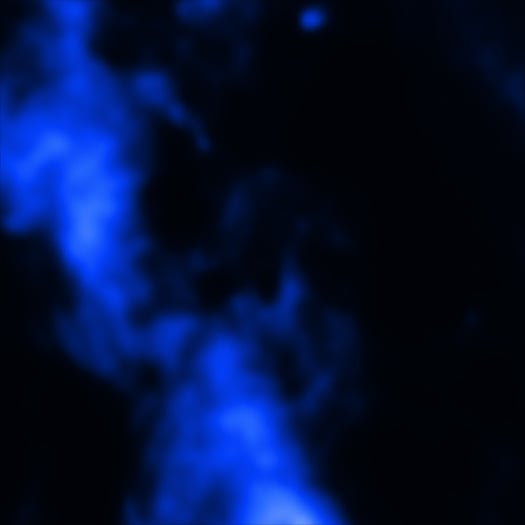
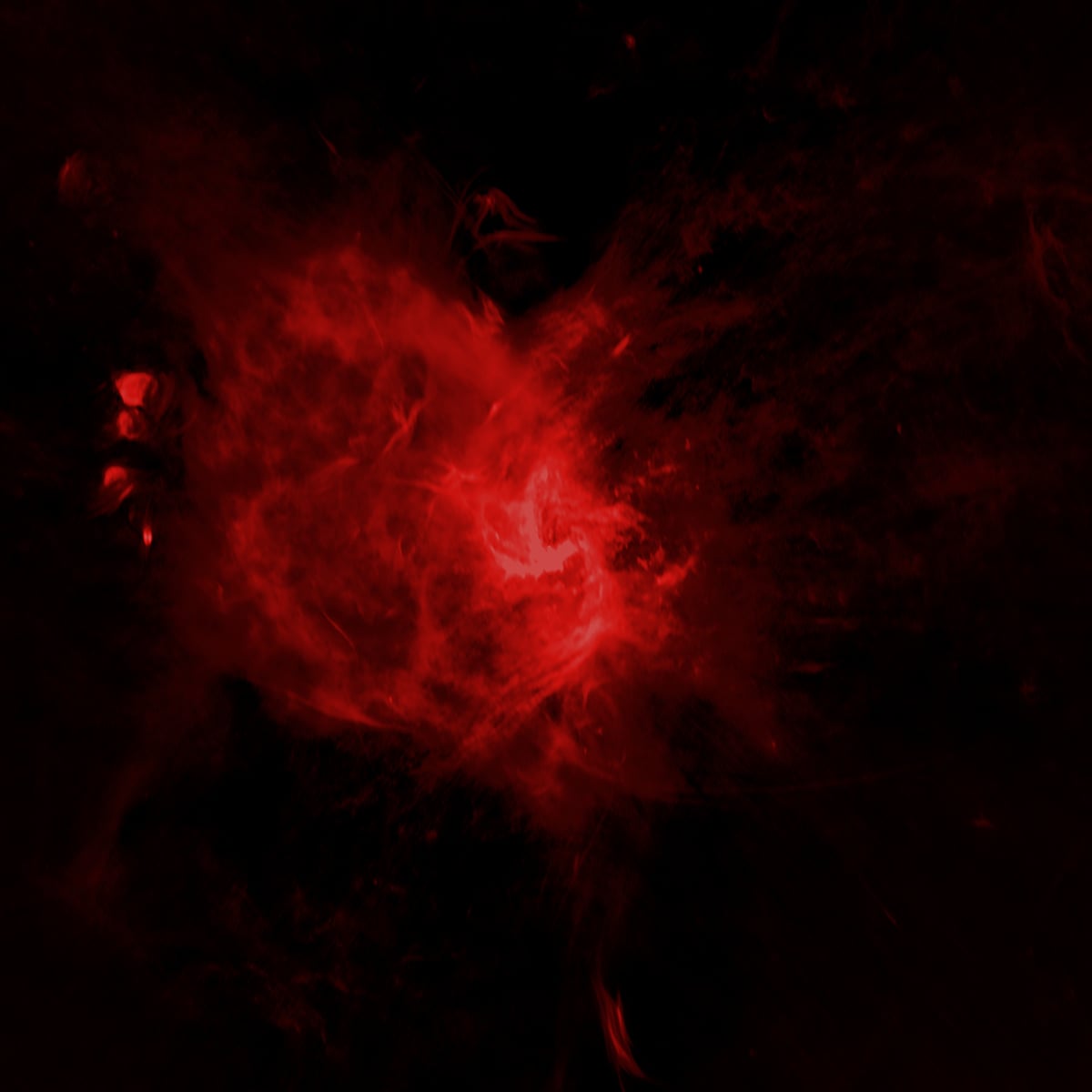
The radio data (in red) comes from the National Science Foundation’s Very Large Array. Radio emission outlines structures around Sgr A East and the region surrounding Sagittarius A*. The dark blue color comes from the James Clerk Maxwell Telescope. Its submillimeter observations trace colder material in the Galactic Centre.
The different colors, however, do not represent what human eyes would see. They translate measurements from different parts of the electromagnetic spectrum into a single image.
Clear skies!
See more from DIYPhotography.net on Google
Add DIYPhotography.net as a trusted source. This makes
our stories more likely to appear in your Google Search results.
 Add as a preferred source on Google

Soumyadeep Mukherjee
Soumyadeep Mukherjee is an award-winning astrophotographer from India. He has a doctorate degree in Linguistics. His work extends to the sub-genres of nightscape, deep sky, solar, lunar and optical phenomenon photography. He is also a photography educator and has conducted numerous workshops. His works have appeared in over 40 books & magazines including Astronomy, BBC Sky at Night, Sky & Telescope among others, and in various websites including National Geographic, NASA, Forbes. He was the first Indian to win “Astronomy Photographer of the Year” award in a major category.

Join the Discussion
DIYP Comment Policy
Be nice, be on-topic, no personal information or flames.