

























Chandra Image Reveals the Violent Merger History of the Abell 2029
May 12, 2026
Soumyadeep Mukherjee
Soumyadeep Mukherjee is an award-winning astrophotographer from India. He has a doctorate degree in Linguistics. His work extends to the sub-genres of nightscape, deep sky, solar, lunar and optical phenomenon photography. He is also a photography educator and has conducted numerous workshops. His works have appeared in over 40 books & magazines including Astronomy, BBC Sky at Night, Sky & Telescope among others, and in various websites including National Geographic, NASA, Forbes. He was the first Indian to win “Astronomy Photographer of the Year” award in a major category.
Share:
Galaxy clusters evolve through repeated mergers that redistribute gas, dark matter, and galaxies across megaparsec scales. These interactions leave behind long-lived signatures in the intracluster medium, including shock fronts, cold fronts, turbulent flows, and large-scale sloshing structures. X-ray observations provide one of the best ways to study these processes because the hot plasma filling galaxy clusters radiates strongly at X-ray wavelengths.
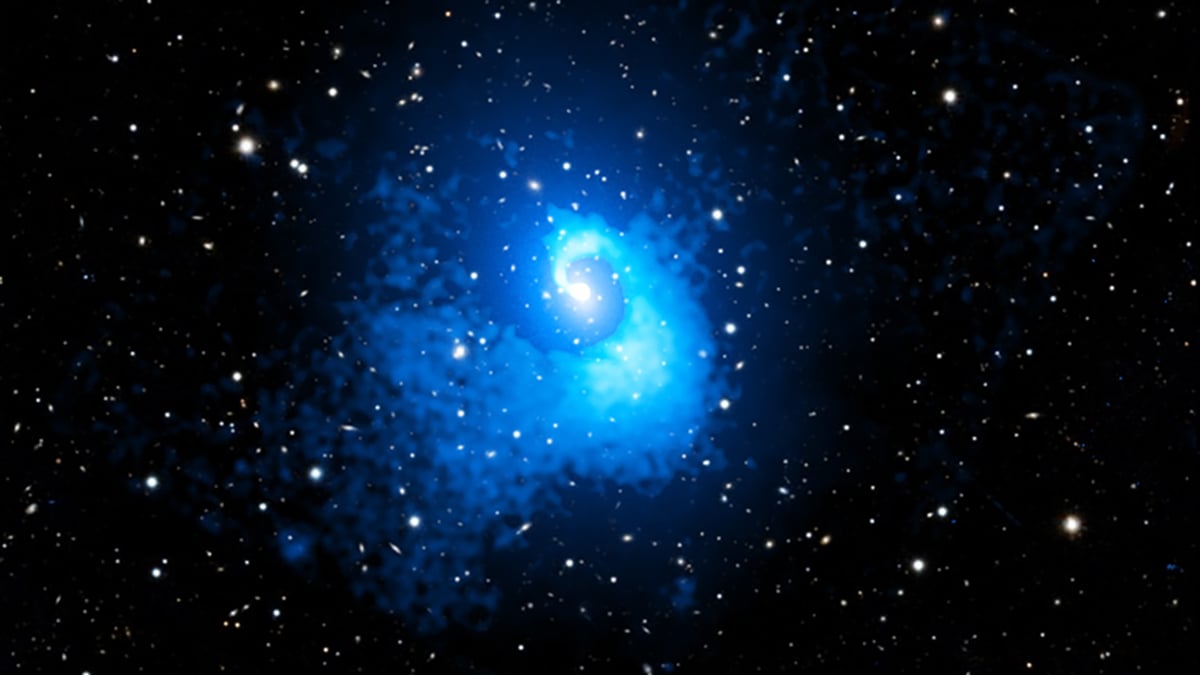
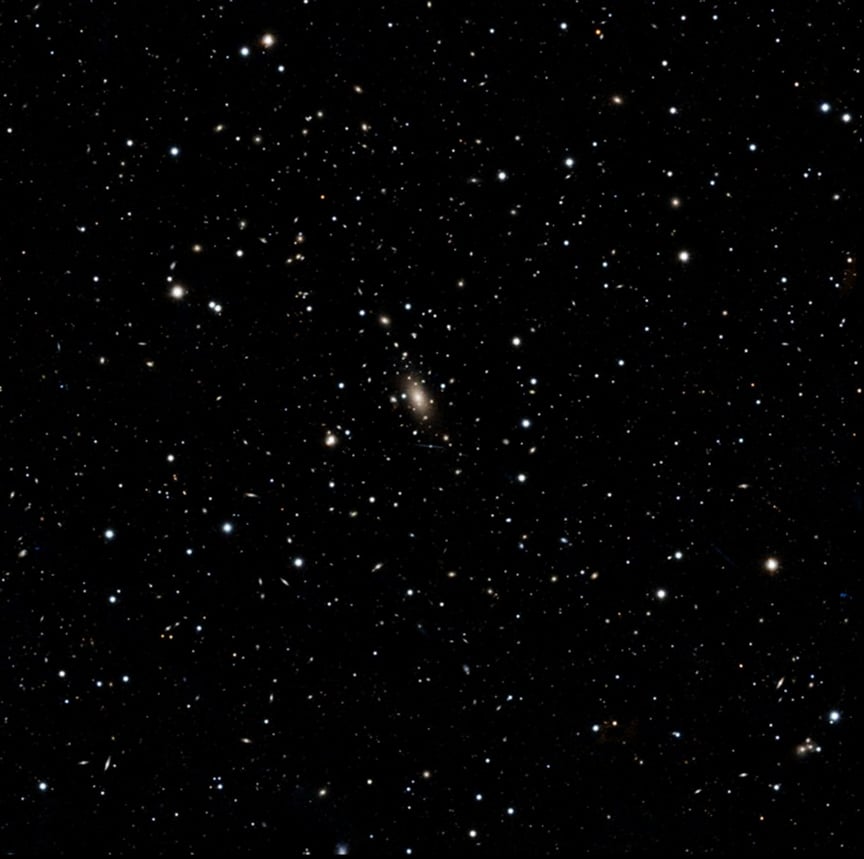
Deep observations from NASA’s Chandra X-ray Observatory have revealed that the massive galaxy cluster Abell 2029 contains one of the most extensive sloshing structures ever detected. The findings show that the cluster, once considered highly relaxed, still carries the imprint of a major gravitational disturbance that began billions of years ago.
Abell 2029: A massive reservoir of hot plasma
Located roughly one billion light-years away in the constellation Virgo, Abell 2029 ranks among the brightest and most massive nearby galaxy clusters in the X-ray sky. The intracluster medium in Abell 2029 extends across millions of light-years and contains an enormous amount of mass. Chandra’s observations show that this gas does not remain static. Gravity, mergers, black hole activity, and turbulent flows continuously reshape the cluster interior.
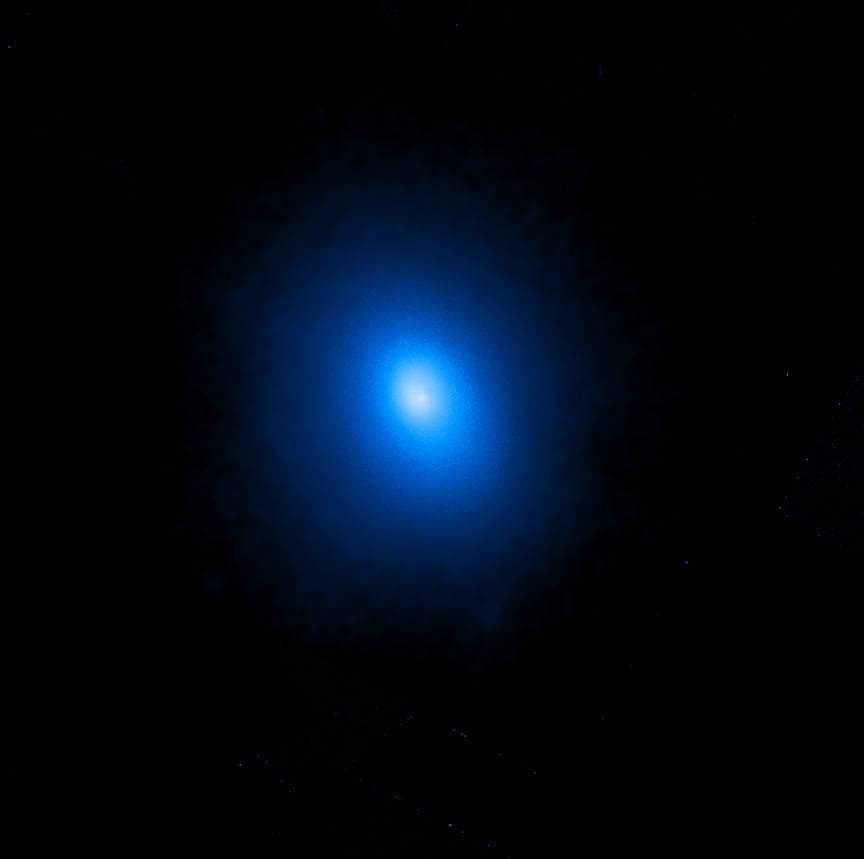
At the center of Abell 2029 sits IC 1101, one of the largest known elliptical galaxies in the nearby universe. The galaxy dominates the cluster core and hosts a supermassive black hole that powers large radio-emitting jets. Earlier studies focused heavily on this central region because the cluster appeared smooth and symmetric at large scales. Researchers classified it as a strong cool-core cluster, meaning the gas near the center cools more efficiently than gas farther outward.
Cool-core clusters usually indicate a relatively undisturbed evolutionary history. Violent mergers often disrupt these cores and erase temperature gradients. Abell 2029 seemed to avoid that fate. Its X-ray brightness peaked sharply toward the center, and its outer structure appeared regular and relaxed.
One of the largest sloshing spirals ever seen
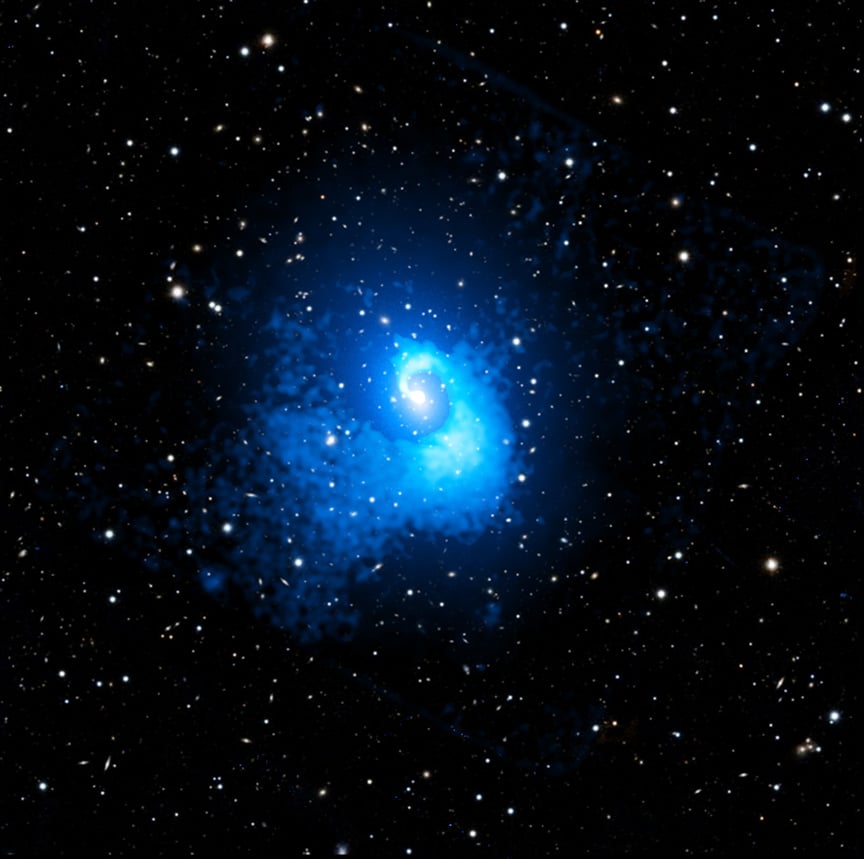
The most striking feature in the new data appears as a gigantic spiral structure winding outward from the cluster core. Astronomers refer to this phenomenon as gas sloshing. The process begins when a smaller cluster or galaxy group passes near a larger cluster without colliding head-on. Gravity shifts the dense gas near the center away from equilibrium. The displaced gas then oscillates around the gravitational center for billions of years.
The resulting motion creates spiral-shaped cold fronts and extended arcs of cooler gas. Simulations have reproduced these structures in many merging clusters, but Abell 2029 now stands out because of the scale and continuity of its spiral.
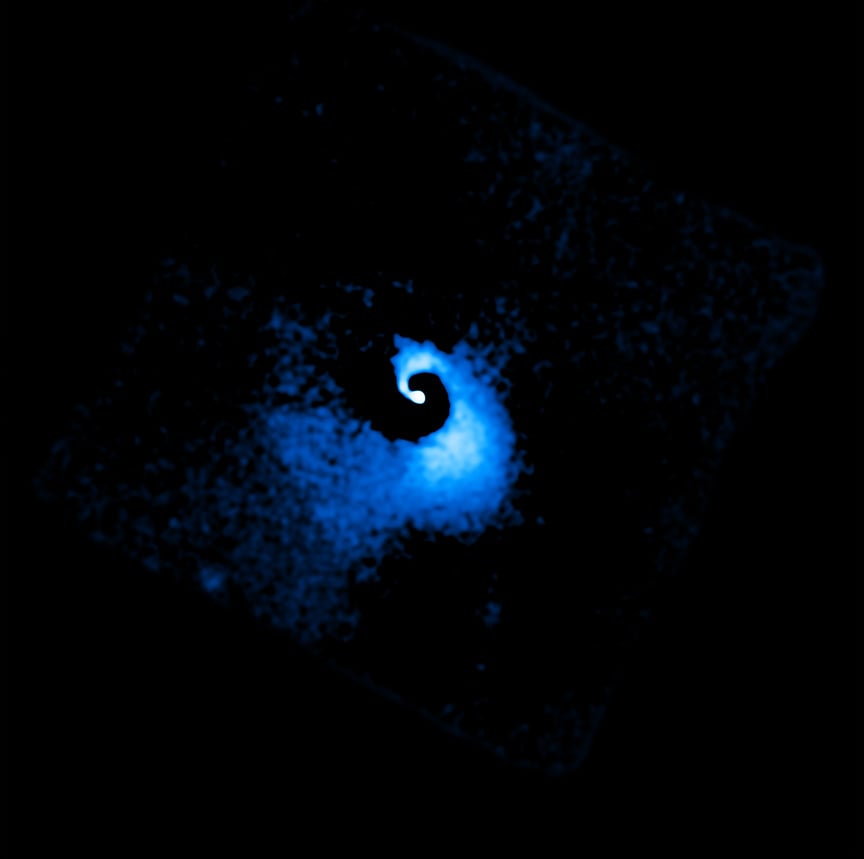
The newly mapped structure extends nearly 600 kiloparsecs from the center. That distance corresponds to almost two million light-years. Few clusters show such a large and coherent sloshing feature.
Temperature maps reveal that the spiral contains cooler and denser gas than the surrounding intracluster medium. Researchers also identified changes in metallicity along the structure. The metallicity pattern suggests that the merger displaced core material and carried it outward through the cluster.
Hidden shock structures reveal a more violent past
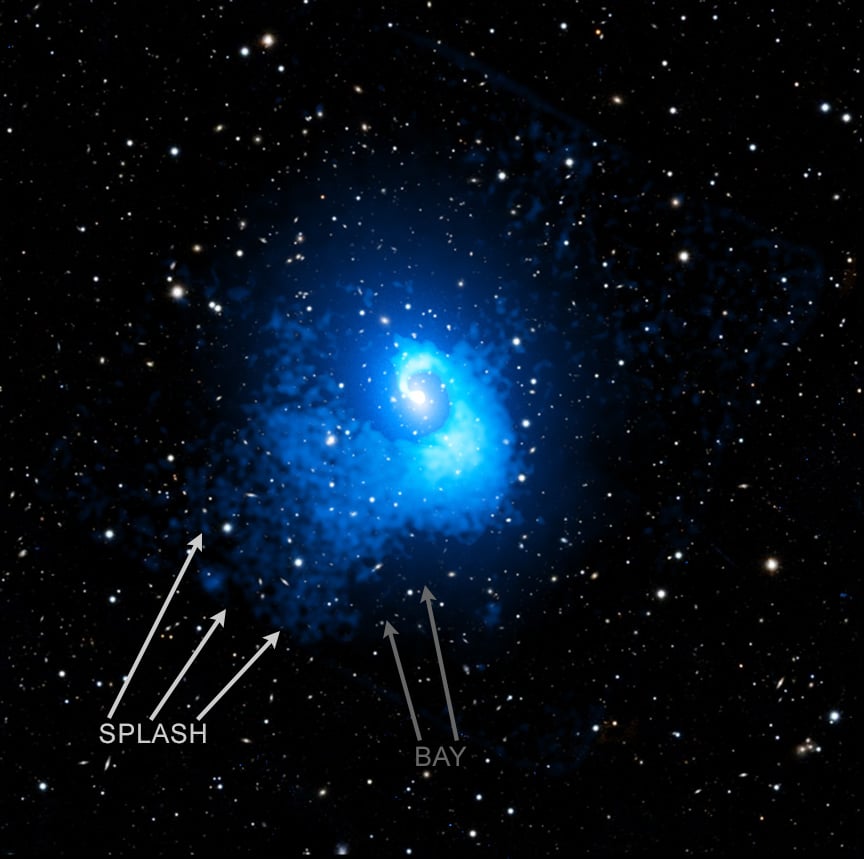
Researchers also identified several asymmetric structures embedded within the cluster gas. These include broad splash-like features, compressed gas regions, and possible shock fronts. Shock fronts form when gas travels faster than the local sound speed inside the intracluster medium. During cluster mergers, gravitational energy converts into kinetic energy and eventually into heat. That process drives enormous shock waves through the plasma.
In Abell 2029, the evidence for shocks appears subtler than in violently disturbed systems such as the Bullet Cluster. Still, the temperature and surface brightness variations suggest that remnants of merger-driven compression remain present in the gas.
The cluster also contains broad regions of displaced cooler plasma that appear detached from the core. Researchers interpret some of these structures as the lingering wake of the infalling subcluster. As the smaller system moved through the cluster environment, it likely dragged cooler gas outward and distorted the surrounding plasma distribution.
Gas motions shape the central radio galaxy
The new study also sheds light on the relationship between the intracluster medium and the supermassive black hole inside IC 1101. Radio observations reveal large jets and lobes emerging from the galaxy’s nucleus. However, the radio structure appears bent and distorted rather than straight.
The connection between the black hole and the intracluster medium extends beyond jet bending. Galaxy clusters face a long-standing cooling problem. Gas near the cluster center radiates energy in X-rays and should cool over time. If cooling proceeded unchecked, large quantities of gas would condense and trigger rapid star formation.
Black hole feedback plays a major role in that balance. Jets inject energy into the surrounding gas and inflate cavities within the intracluster medium. At the same time, sloshing motions may redistribute heat across the cluster core.
Clear skies!
See more from DIYPhotography.net on Google
Add DIYPhotography.net as a trusted source. This makes
our stories more likely to appear in your Google Search results.
 Add as a preferred source on Google

Soumyadeep Mukherjee
Soumyadeep Mukherjee is an award-winning astrophotographer from India. He has a doctorate degree in Linguistics. His work extends to the sub-genres of nightscape, deep sky, solar, lunar and optical phenomenon photography. He is also a photography educator and has conducted numerous workshops. His works have appeared in over 40 books & magazines including Astronomy, BBC Sky at Night, Sky & Telescope among others, and in various websites including National Geographic, NASA, Forbes. He was the first Indian to win “Astronomy Photographer of the Year” award in a major category.
Related Posts
 NASA’s Chandra Reveals a Hidden Neutron Star Merger
 History.JPG: The American Museum of Natural History Digitizes its Photography Collection for Online Public Access
 Russia bans Facebook and Instagram after Meta allows violent posts against Russians
 A Cosmic Bridge Lights up the Night: DECam’s Portrait of Abell 3667
Join the Discussion
DIYP Comment Policy
Be nice, be on-topic, no personal information or flames.