























NASA Releases 12,000 Photos from Artemis II Mission: Top Picks
May 6, 2026
Soumyadeep Mukherjee
Soumyadeep Mukherjee is an award-winning astrophotographer from India. He has a doctorate degree in Linguistics. His work extends to the sub-genres of nightscape, deep sky, solar, lunar and optical phenomenon photography. He is also a photography educator and has conducted numerous workshops. His works have appeared in over 40 books & magazines including Astronomy, BBC Sky at Night, Sky & Telescope among others, and in various websites including National Geographic, NASA, Forbes. He was the first Indian to win “Astronomy Photographer of the Year” award in a major category.
Share:
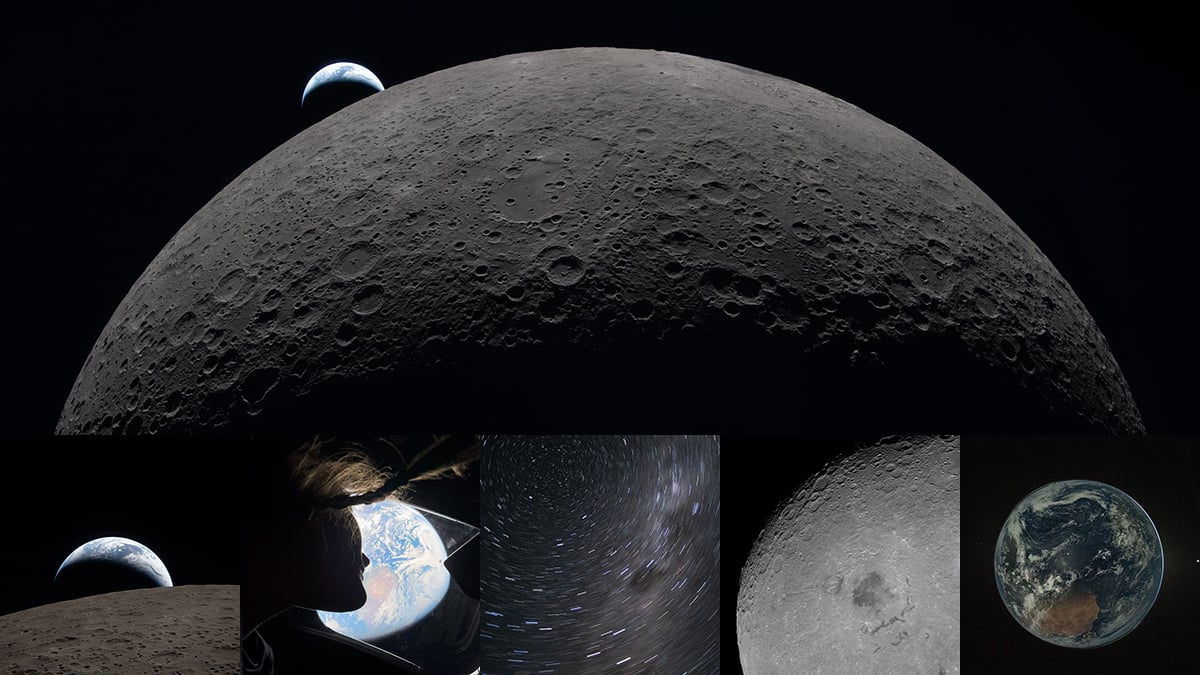
NASA’s Artemis II mission generated one of the largest crew-operated deep-space photography archives ever released to the public. During the ten-day mission around the Moon in April 2026, the Orion spacecraft traveled more than 250,000 miles from Earth and carried four astronauts beyond low Earth orbit for the first time since the Apollo 17 mission. Alongside navigation tests, life-support validation, and spacecraft operations, the crew documented the journey through thousands of photographs captured from inside Orion.
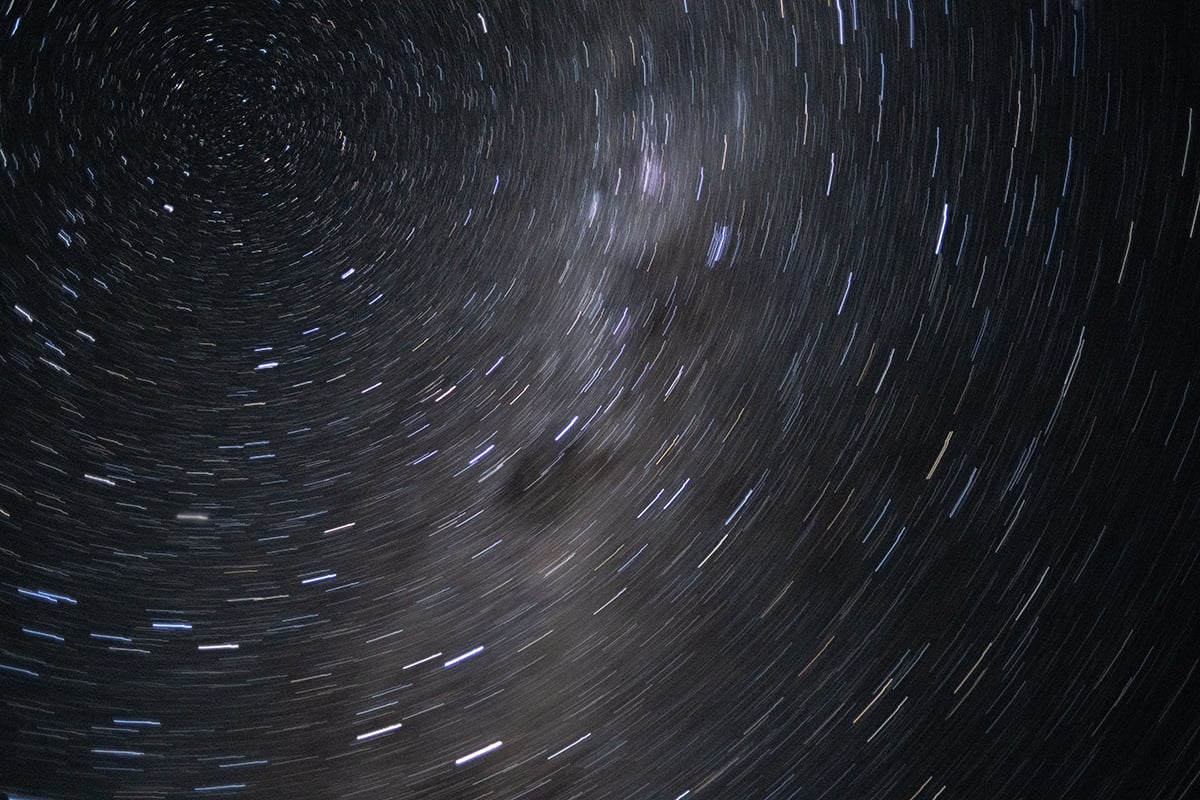
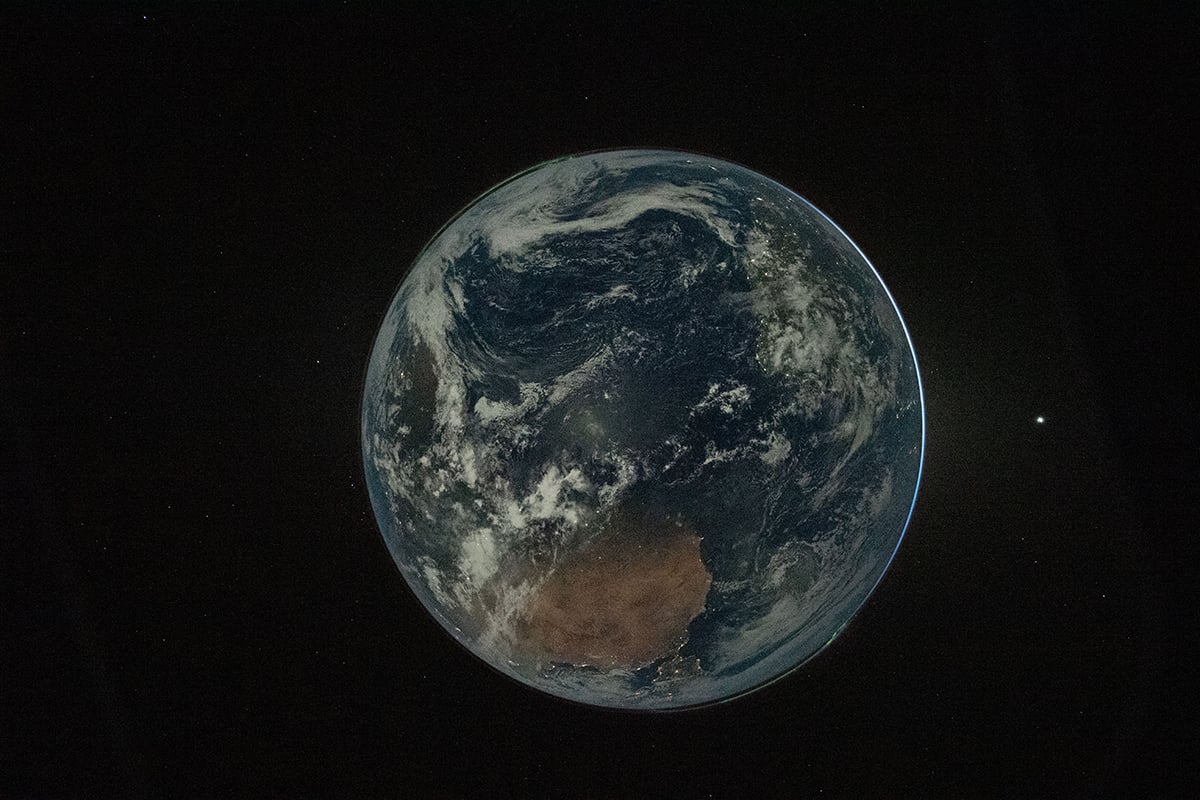
NASA has recently released more than 12,000 images, 12217 to be exact, from the mission. The archive contains lunar surface photography, Earth observations, interior spacecraft documentation, eclipse imagery, and experimental long-exposure shots captured during transit. While NASA transmitted a limited number of compressed images during the flight, most of the full-resolution files remained stored onboard Orion until splashdown recovery operations concluded in the Pacific Ocean.
Human photography back to deep space
For decades, most space imagery came from robotic missions or astronauts working in low Earth orbit. Spacecraft orbiting Mars, Jupiter, and Saturn produced technically extraordinary photographs; yet, those images often carried a detached, scientific quality. Even photography from the International Space Station developed a familiar visual style.
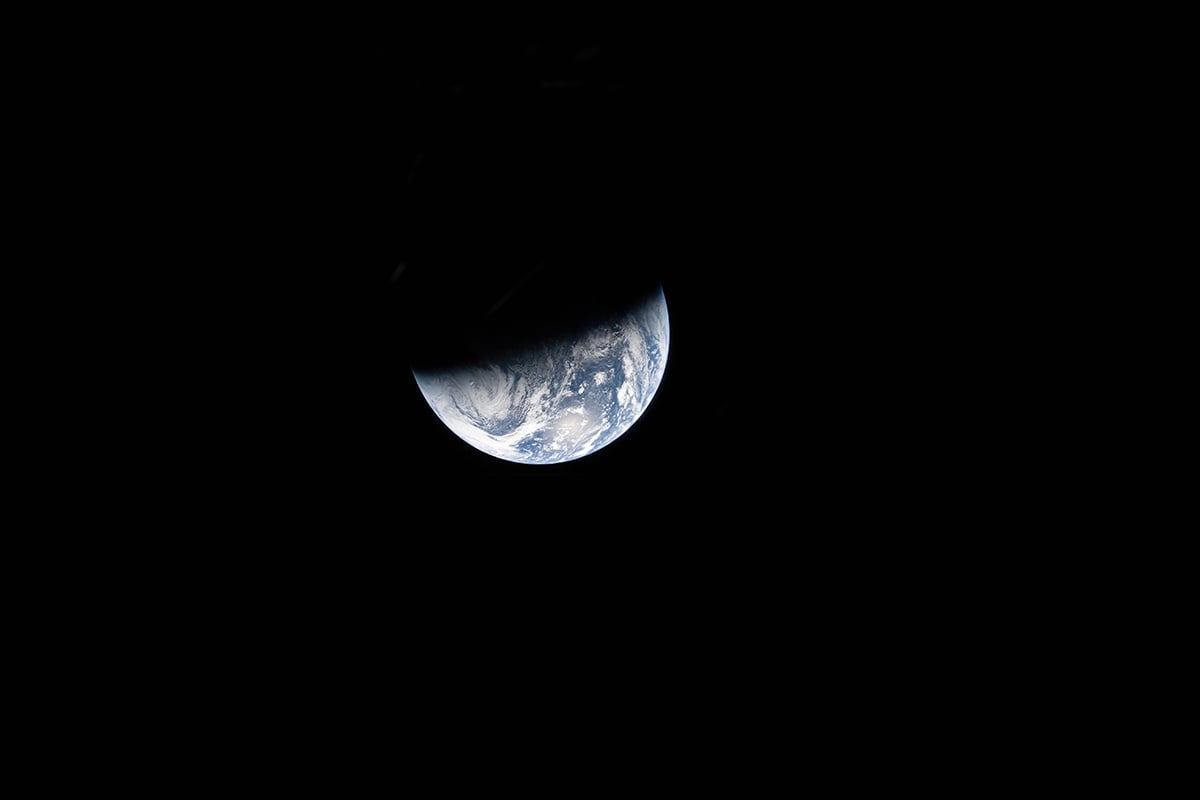
Once Orion moved away from Earth, the crew entered an environment visually different from anything seen during modern human spaceflight missions. Earth no longer filled the spacecraft windows.
The astronauts seemed aware of that change throughout the mission. Many compositions emphasize separation and scale. Earth often appears small within the frame. Orion’s windows, structural edges, and cabin interiors remain visible in several photographs. These details create spatial context and remind viewers that human observers captured the scenes while traveling through deep space.
The Earthset photographs: Defining images of the mission
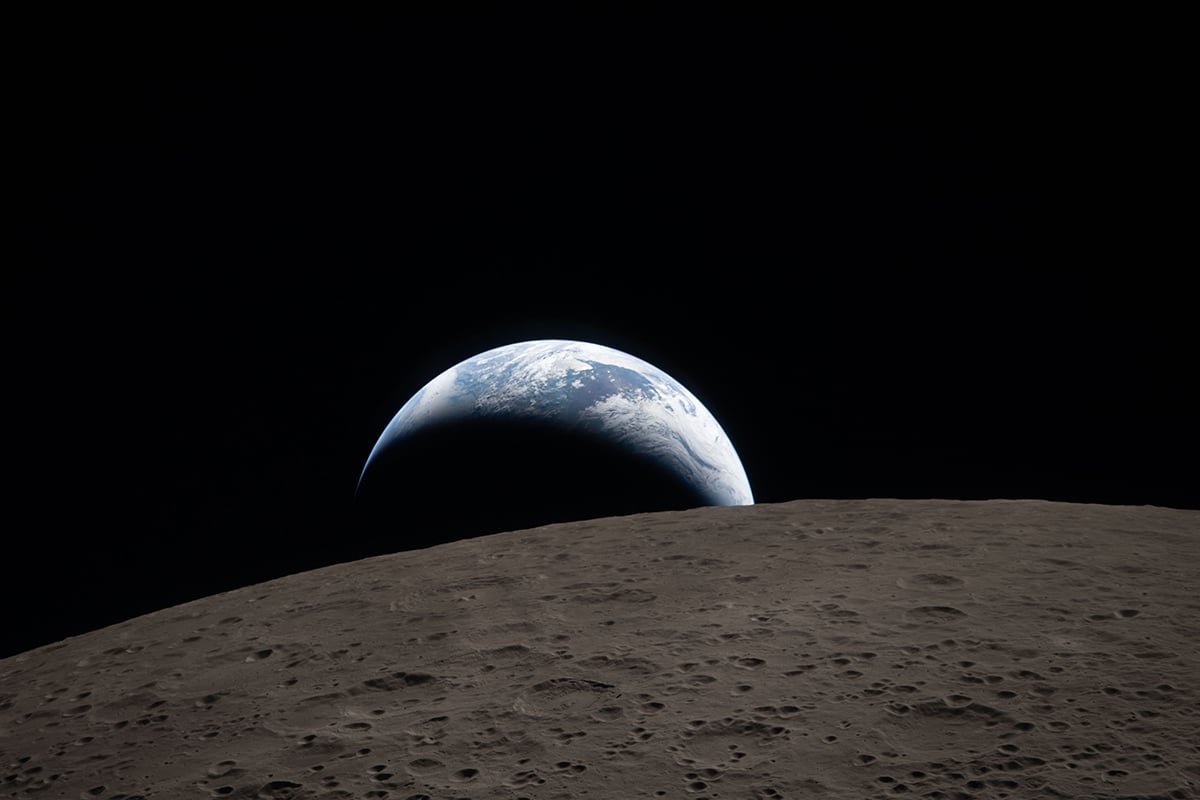
Among thousands of released photographs, the Earthset images emerged as the most recognizable scenes from Artemis II. These photographs show Earth descending behind the lunar horizon as Orion moved around the Moon during the flyby phase.
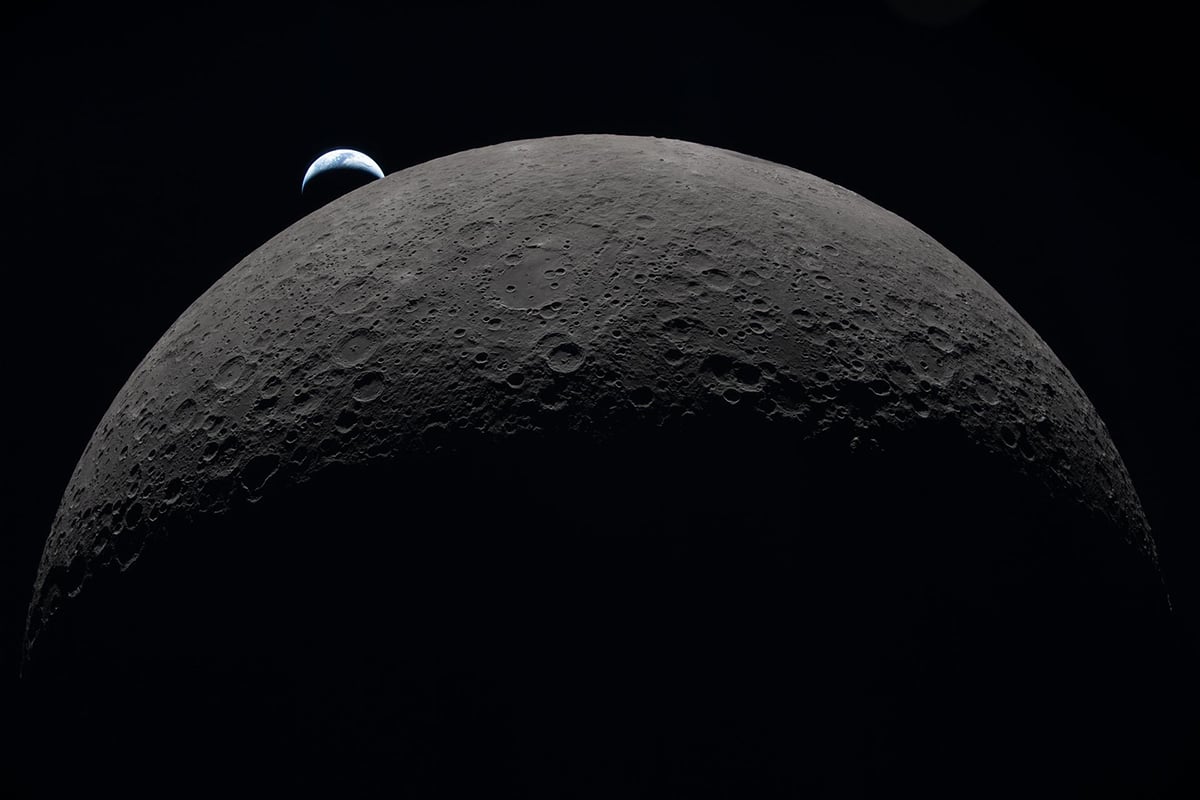
The imagery immediately drew comparisons with Apollo 8’s Earthrise photograph from 1968. During Apollo 8, astronauts watched Earth rise above the Moon’s surface. Artemis II reversed that geometry. Instead of Earth appearing above the horizon, the planet seemed to sink into darkness behind the Moon.
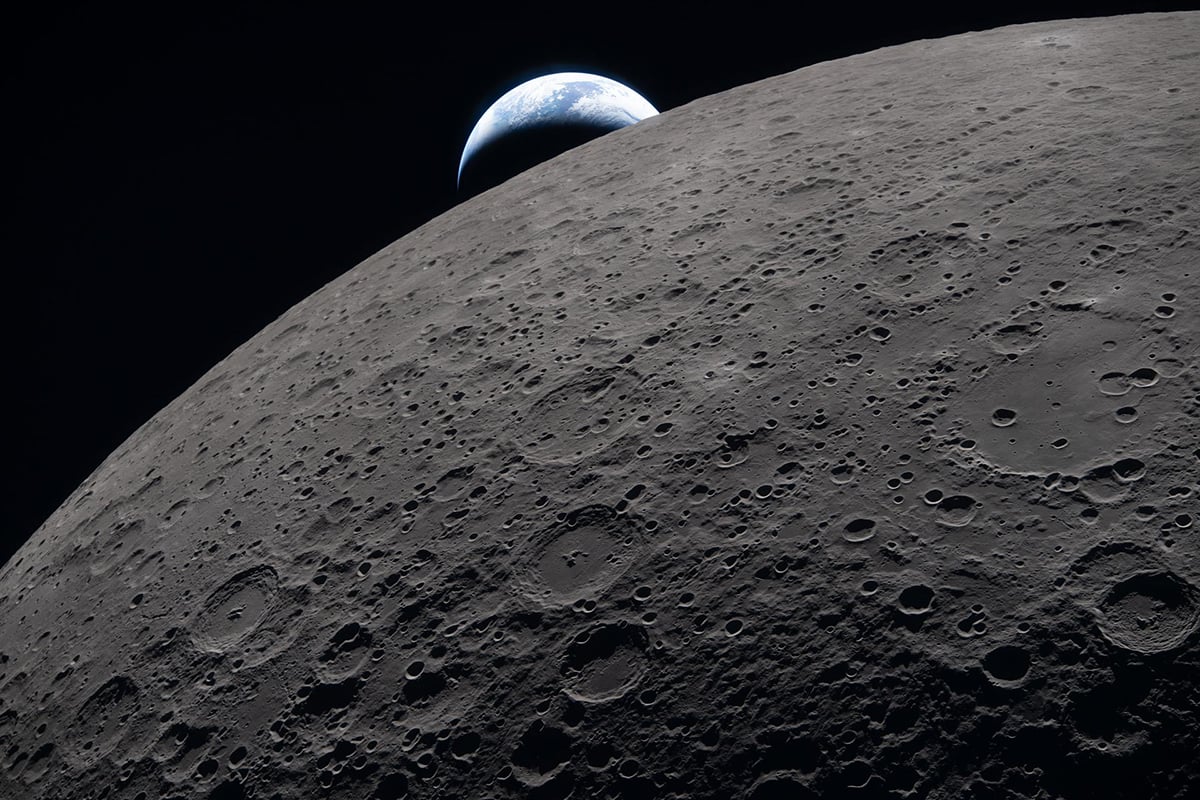
Several Earthset photographs show Earth as a partially illuminated disk above rugged lunar terrain. Earth glows softly against the darkness of space while the Moon remains textured and shadowed beneath it. The photographs generated strong reactions across astronomy and photography communities because they revived a perspective largely absent from human spaceflight since Apollo.
Lunar photography: A new level of detail
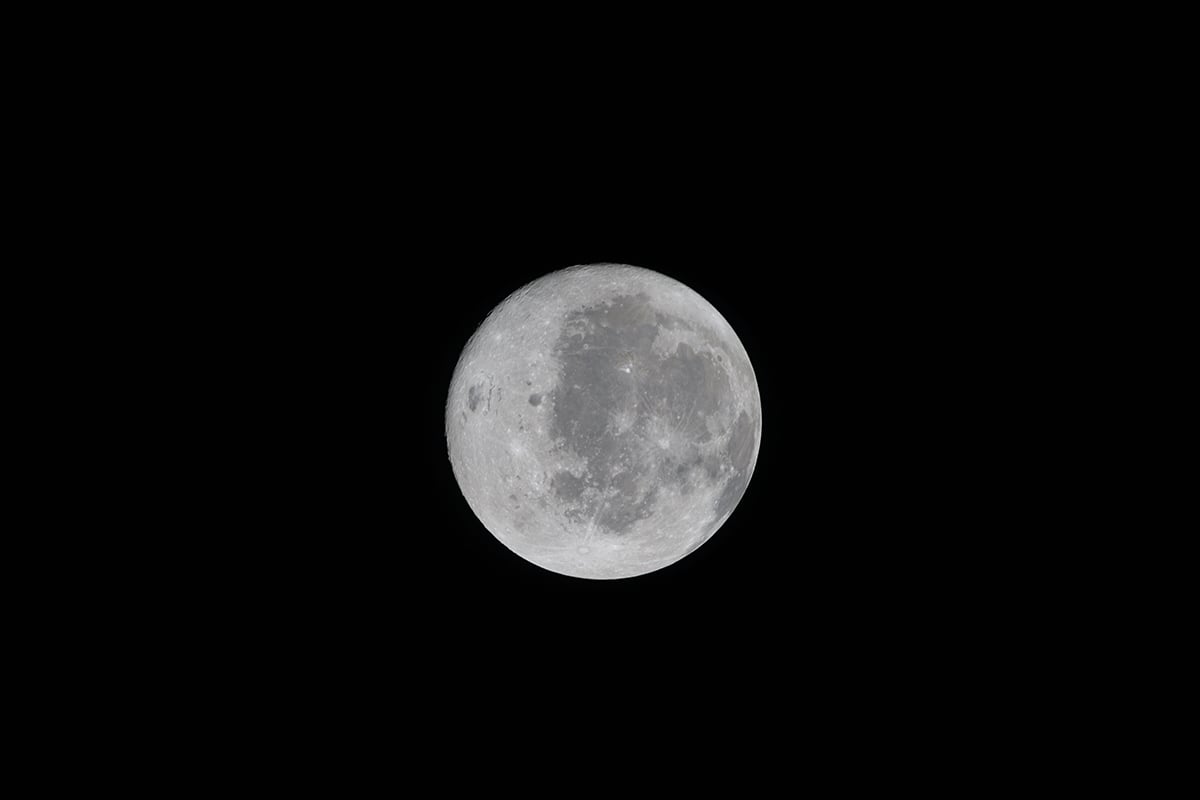
Although Earthset images dominated headlines, the lunar surface photography may represent the archive’s greatest technical achievement.
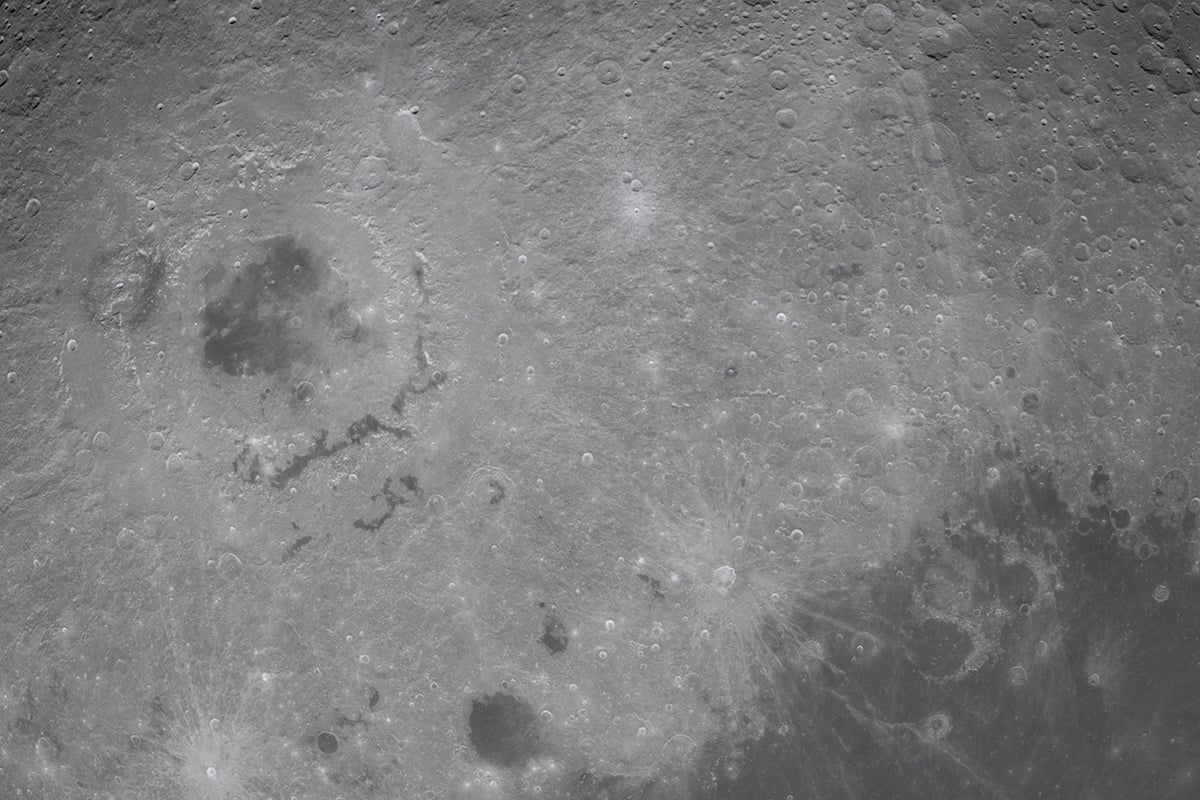
During the flyby, Orion passed close enough for astronauts to capture enormous sections of lunar terrain in exceptional detail. Unlike Earth-based telescopic imaging, the Artemis II photographs avoided atmospheric distortion entirely. Consequently, surface textures, crater walls, ejecta fields, and ridge systems appeared remarkably sharp throughout the archive.
The astronauts extensively photographed the lunar terminator region, where sunlight strikes the surface at shallow angles. Near the terminator, craters cast elongated shadows across the landscape while mountains and ridges gain strong visual contrast. These conditions reveal topographic detail often hidden under direct overhead illumination.
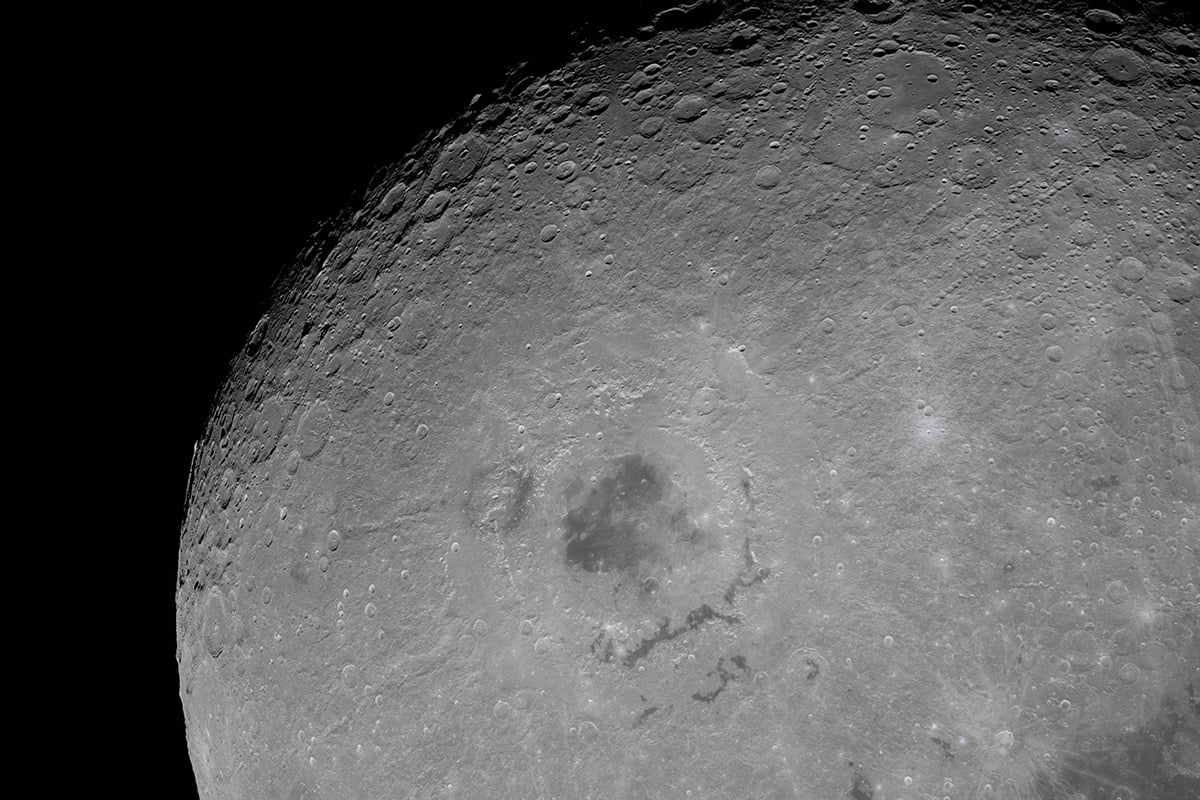
The photographs also revealed subtle lunar color variation that casual observers rarely notice through amateur telescopes. Certain mare regions displayed faint bluish tones caused by titanium-rich basalt deposits. Other areas showed slightly brown or gray coloration linked to differing mineral concentrations.
Orion’s cabin photography
Perhaps the most unexpected strength of the archive lies inside the Orion spacecraft itself. The interior photography transformed Artemis II into a lived human experience. Many photographs show ordinary moments unfolding inside the spacecraft during long-duration transit.
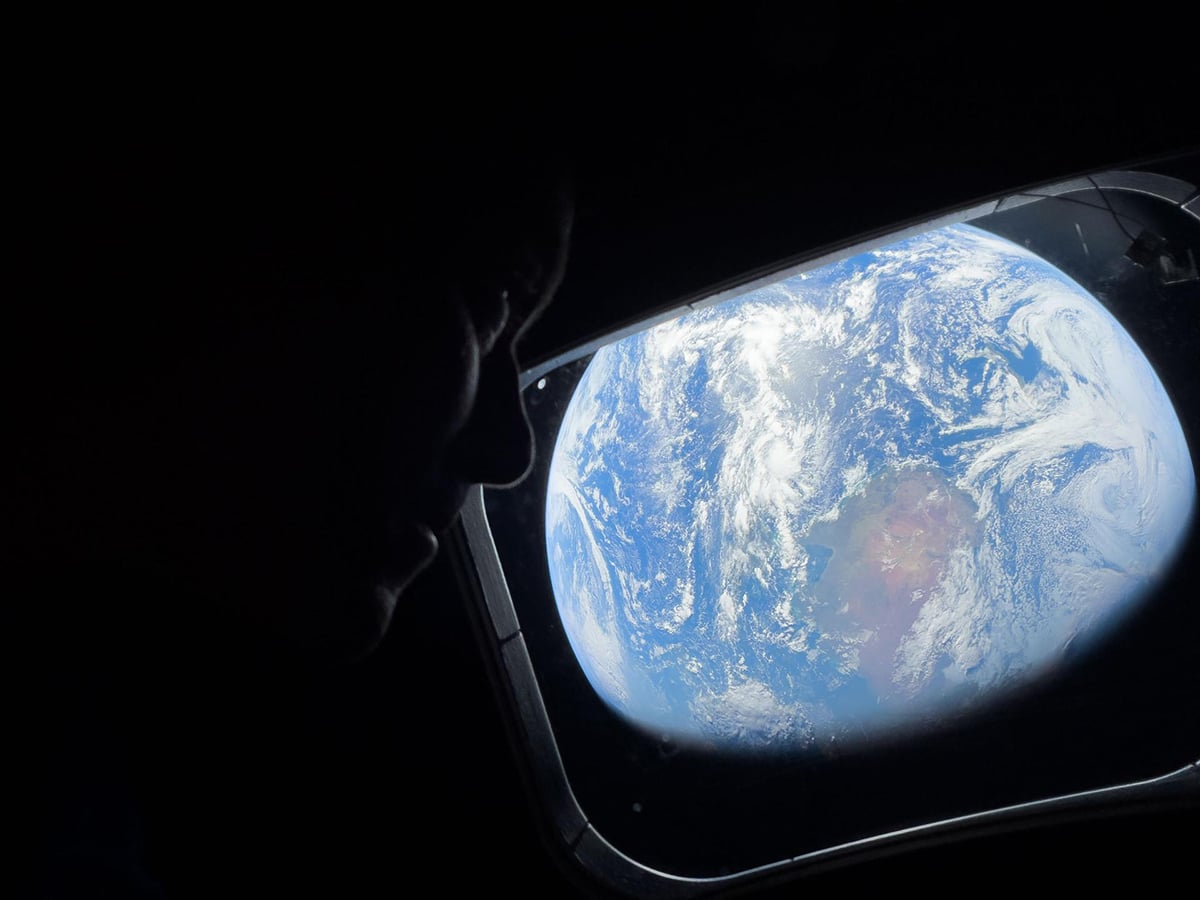
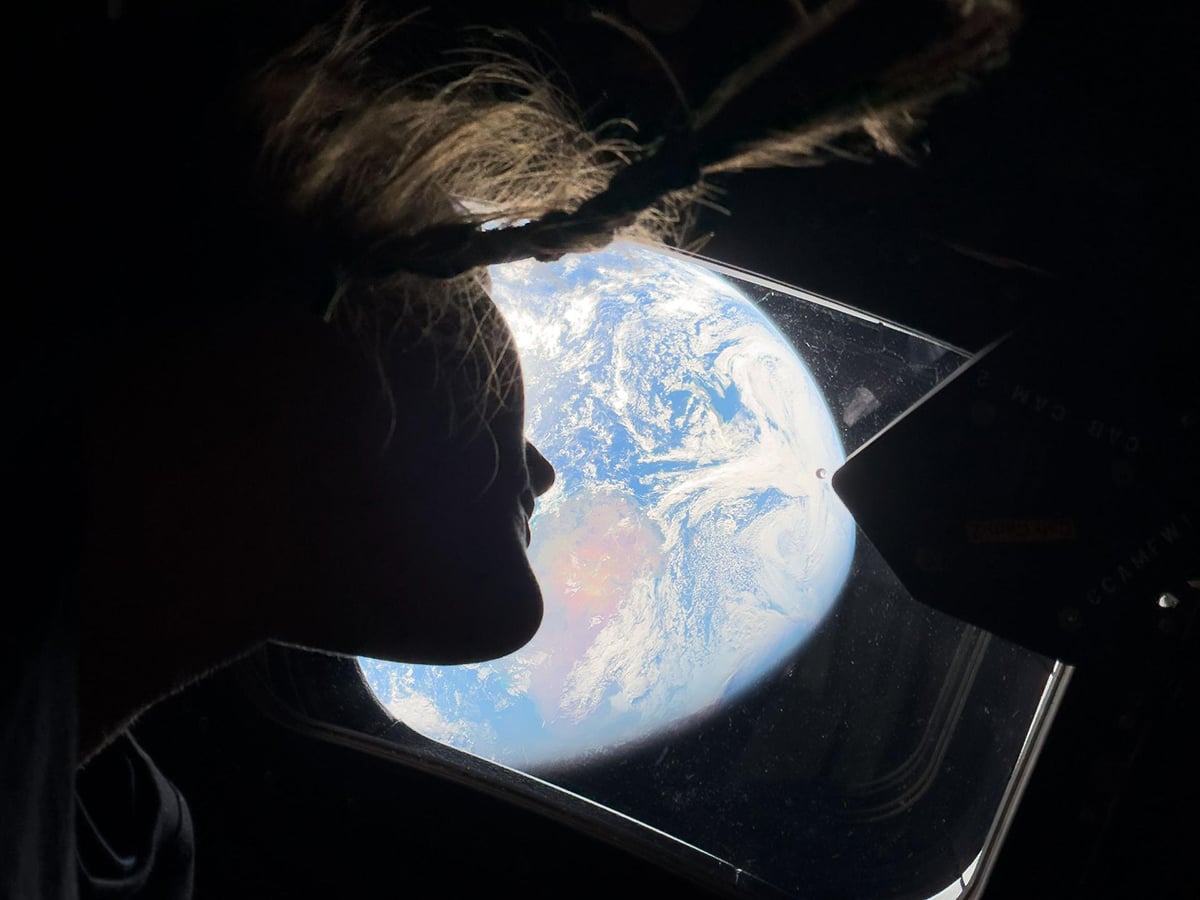
Several images capture astronauts floating near Orion’s windows while observing Earth or the Moon. Others show crew members reviewing procedures under dim instrument lighting. Shadows dominate many cabin scenes because Orion’s interior lighting remained relatively subdued throughout the mission.
Unlike the brightly illuminated modules aboard the International Space Station, Orion’s confined interior produced high-contrast scenes with strong shadow regions. Window light often became the primary illumination source.
The Archive and More from the Artemis II Mission
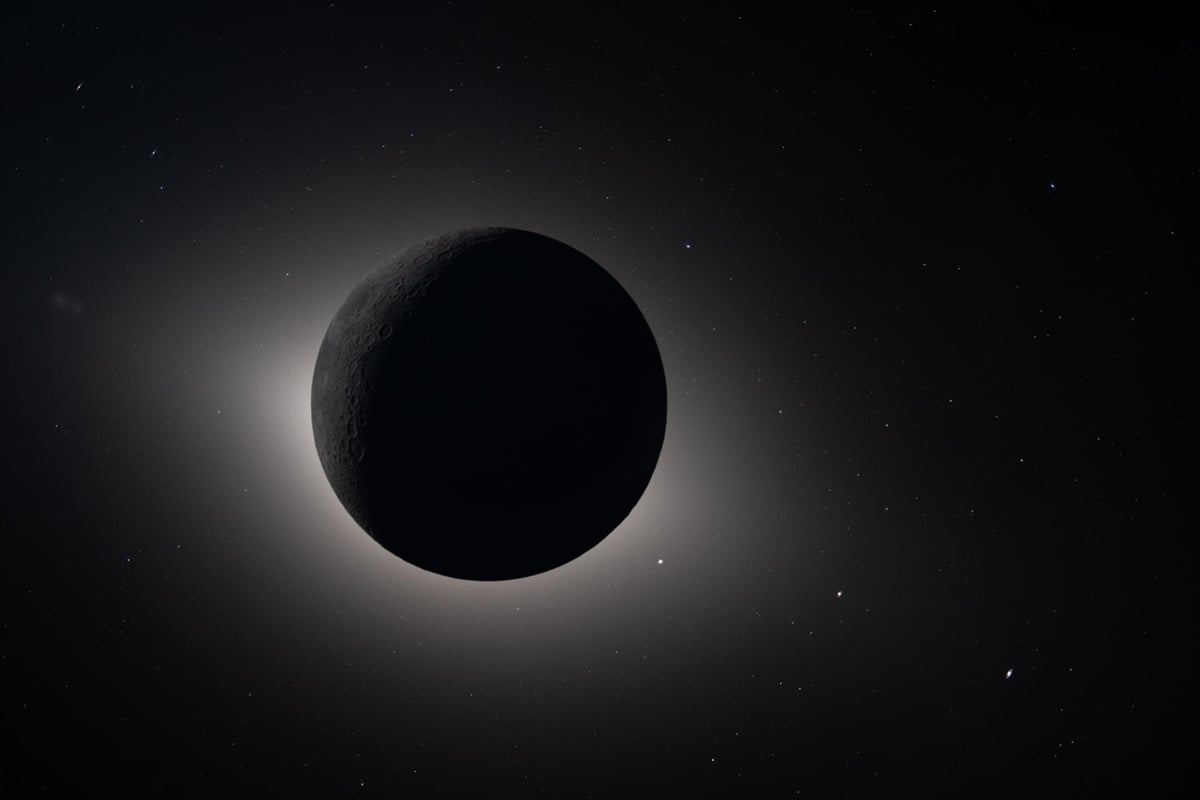
You can access the complete archive here. But note that browsing the archive could be slow. Many of the images are blurry (test shots) and repeated (burst shots).
You can also go through our coverage of the Artemis II mission with the articles below:
More from the Artemis II Mission
- NASA Chooses Sony as Official Camera on Artemis Lunar Missions
- NASA’s Artemis II Lifts Off for the Moon: Images of the Launch
- Artemis II Astronauts Capture Historic Earth Images from Space
- Crew Portraits with Earth, and Moon Photos from Artemis II
- Artemis II Completes Historic Lunar Flyby: New Images of the Moon
- Artemis II Lunar Close-Up Images: NASA’s Lunar Science Goals
- Earthset, Earthrise, and Eclipse: Photos from Artemis II Lunar Flyby
- Artemis II Begins Final Return to Earth After Historic Lunar Flyby
- To the Moon and Back: NASA’s Artemis II Returns Safely to Earth
- NASA Releases 12,000 Photos from Artemis II Mission: Top Picks
Clear skies!
See more from DIYPhotography.net on Google
Add DIYPhotography.net as a trusted source. This makes
our stories more likely to appear in your Google Search results.
 Add as a preferred source on Google

Soumyadeep Mukherjee
Soumyadeep Mukherjee is an award-winning astrophotographer from India. He has a doctorate degree in Linguistics. His work extends to the sub-genres of nightscape, deep sky, solar, lunar and optical phenomenon photography. He is also a photography educator and has conducted numerous workshops. His works have appeared in over 40 books & magazines including Astronomy, BBC Sky at Night, Sky & Telescope among others, and in various websites including National Geographic, NASA, Forbes. He was the first Indian to win “Astronomy Photographer of the Year” award in a major category.




Join the Discussion
DIYP Comment Policy
Be nice, be on-topic, no personal information or flames.