
























Kodak Keeps the New/Old Film Hits Rolling Along in Time for the Holidays
Nov 5, 2025
David Prochnow
Our resident “how-to” project editor, David Prochnow, lives on the Gulf Coast of the United States in Ocean Springs, Mississippi. He brings his expertise at making our photography projects accessible to everyone, from a lengthy stint acting as the Contributing How-To Editor with Popular Science magazine. While you don’t have to actually build each of his projects, reading about these adventures will contribute to your continued overall appreciation of do-it-yourself photography. A collection of David’s best Popular Science projects can be found in the book, “The Big Book of Hacks,” Edited by Doug Cantor.
Share:
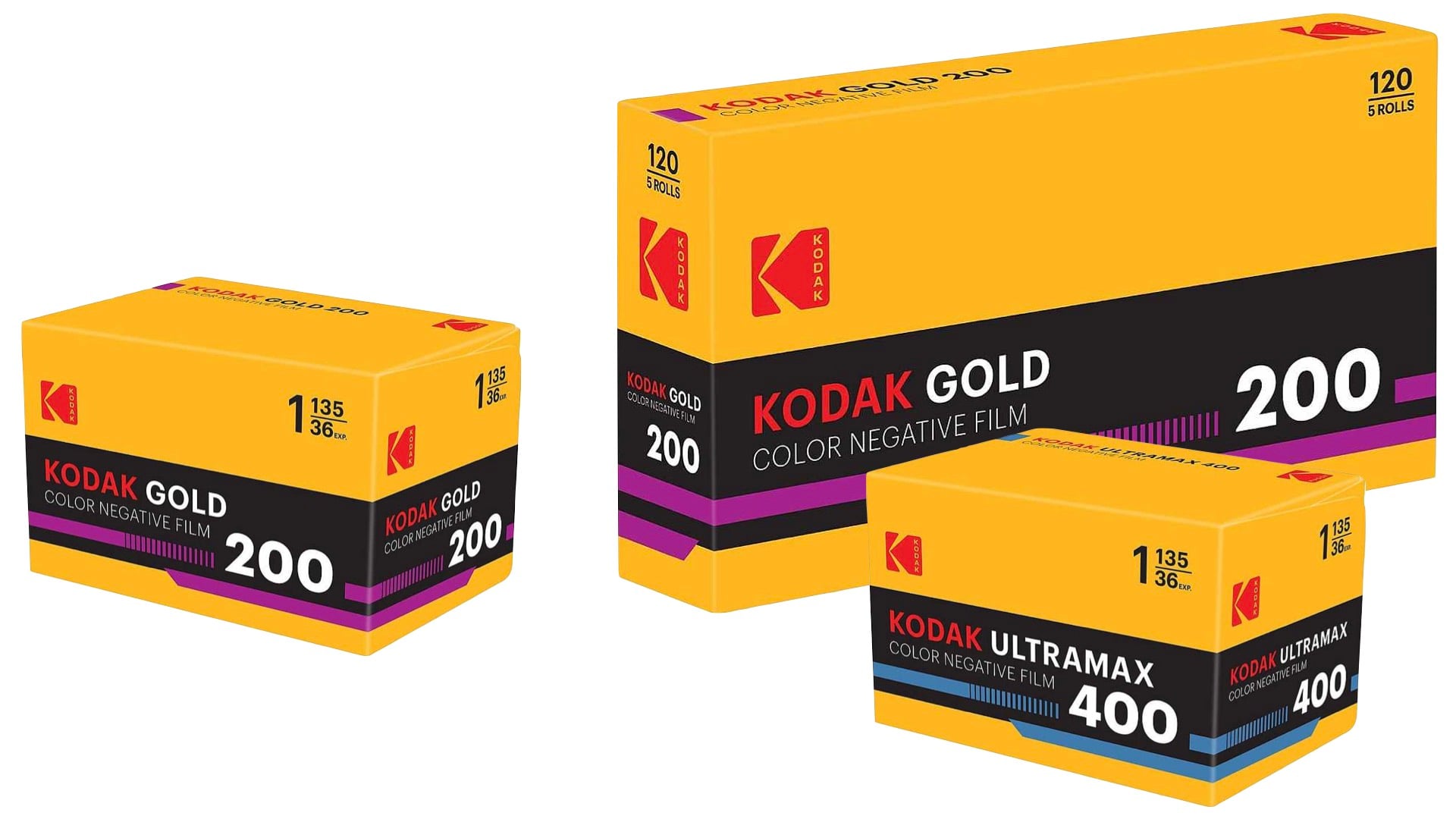
Fresh on the heels of the newly (re)named KODACOLOR 100 and KODACOLOR 200 films that we recently highlighted, comes word that Kodak is at it again…the film repackaging business. Here are the two films that are getting the new look.
You Won’t Believe What This $10 Roll of Film Can Do—Your Instagram Will Cry!
Meet Kodak GOLD 200: the film that says “everyday” but delivers “legendary.” With its medium-speed ISO 200, daylight-balanced color, and a grain so fine you’ll think you’re cheating reality—this roll is for anyone wielding a 35mm or medium format camera and craving vibrancy. Did we mention it’s forgiving? Yes—up to TWO stops underexposed and THREE stops overexposed before it flinches. Available in both 135 and 120 formats, it’s your trusty sidekick for snapshots, vacations, and that random cat on the street. Affordable? Check. Reliable? Double check. Glamorous? You bet.

This Film Could Save Your Blurry Vacation Pics—Seriously!
Kodak ULTRAMAX 400 is the film that turns your “OOPS, I forgot my flash” moments into “WOW, I nailed it” masterpieces. With a high-speed ISO 400, daylight-balanced color, sharp detail and surprisingly fine grain, it’s basically the superhero of spontaneous photography. Whether you’re chasing kids, candids, or low-light selfies, ULTRAMAX 400 plays along. It enhances low-light performance, extends your flash’s reach, improves action-shots, and helps you dodge camera-shake catastrophes. Designed for the 135 format (yes, the classic 35 mm roll), it’s the “grab-and-shoot” companion you’ve been missing. So next time you’re about to settle for mediocre, slide in this roll instead and watch your everyday moments level up. Your camera will thank you—and maybe your friends, too.

Enjoy.
See more from DIYPhotography.net on Google
Add DIYPhotography.net as a trusted source. This makes
our stories more likely to appear in your Google Search results.
 Add as a preferred source on Google

David Prochnow
Our resident “how-to” project editor, David Prochnow, lives on the Gulf Coast of the United States in Ocean Springs, Mississippi. He brings his expertise at making our photography projects accessible to everyone, from a lengthy stint acting as the Contributing How-To Editor with Popular Science magazine. While you don’t have to actually build each of his projects, reading about these adventures will contribute to your continued overall appreciation of do-it-yourself photography. A collection of David’s best Popular Science projects can be found in the book, “The Big Book of Hacks,” Edited by Doug Cantor.
Related Posts
 Kodak Continues its Film Clawback: Kodak’s EKTAR 100 and TRI-X 400 Leave Kodak Alaris
 Negative Supply’s Basic Film Carrier 35 MK2 keeps your film flatter for better scans
 Another new black & white film from Europe hits the online shelves in 35mm, 120 and large formats
 Sorry film shooters, Kodak film is set to price jump by up to 40%
Join the Discussion
DIYP Comment Policy
Be nice, be on-topic, no personal information or flames.