




















The Importance of a Digital Archive for Your Analog Photography – Interview with Frames App Founder, Vincent Tantardini
Jan 24, 2026

Share:

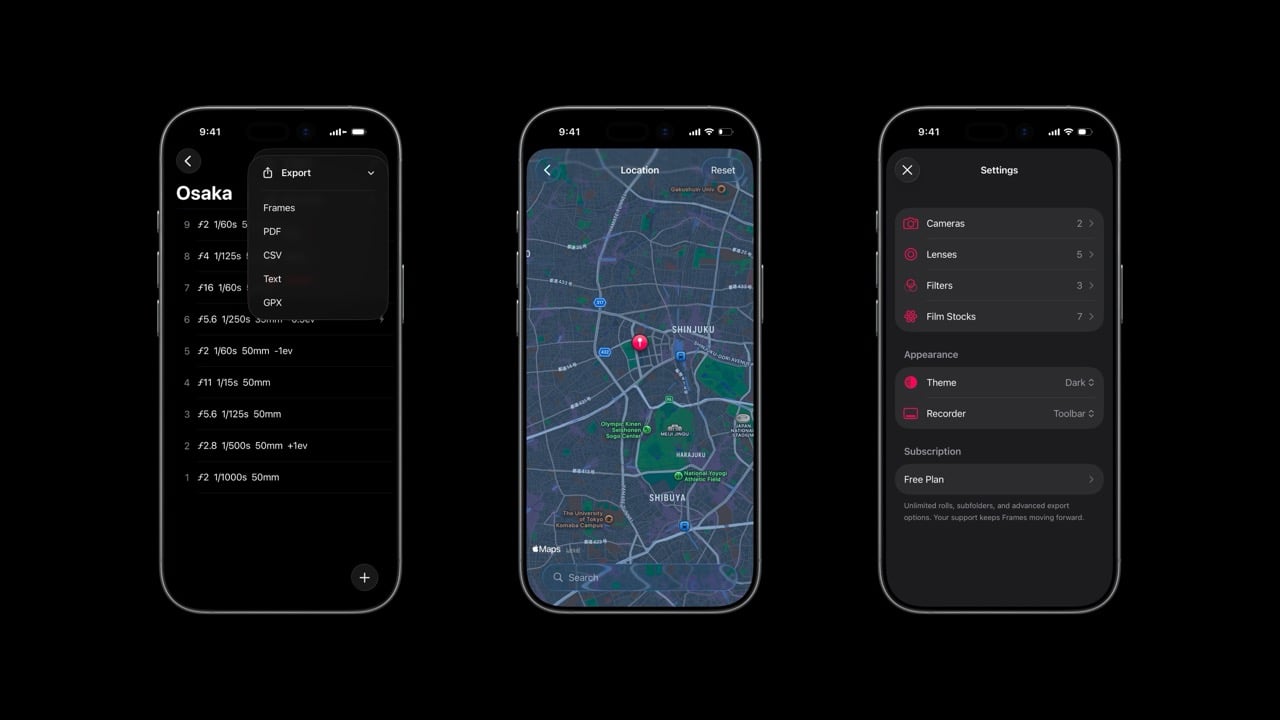
Film photography is one of my personal escapes. Unlike digital photography, it allows me to slow down the pace of making photographs. It’s intentional; it’s a process that rewards patience and thought in a way that digital photography does not. However, it can also be very challenging to catalog and manage, especially as we transition many of our archives and storage into digital media. That’s where the Frames App comes in – a digital notebook that helps you build out your analog archive, complete with a journal to capture time, location, and mood when shooting. We had the opportunity to chat with Vincent Tantardini, founder and developer of the Frames App, to discuss why Frames is a must-have app for both seasoned and novice analog photographers.
Who is Frames App Developer, Vincent Tantardini
The following interview with Frames App founder and developer, Vincent Tantardini, has been edited for clarity and length.
DIY Photography (DIYP): Tell me a little bit about yourself – as a developer and as a photographer.
Vincent Tantardini (VT): I am a designer and developer by background and throughout my career I have been drawn to minimalism and simplicity. I have always believed that the best products are the ones that feel almost invisible where the interface gets out of the way and lets people focus on the task itself. Rather than piling on features I prefer working on the core problem and addressing it in the most intuitive way possible with a lot of attention to detail and consistency. Quality over quantity has always guided my work.
As a photographer my interest in analog photography began at a young age following in the footsteps of my father who shot extensively with a Canon AE-1. Watching him work taught me patience attention to detail and a deep appreciation for the craft. Building on that foundation I have been especially inspired by fine art photographers often working in large format shooting Portra 400 and using shallow depth of field in a very intentional way. What draws me to that work is the balance between documenting something real while still bringing a strong visual and emotional presence to the image. That way of working has deeply influenced how I think about photography patience and craft.
DIYP: Did you start off with analog photography or digital?
VT: I started with digital, like many people of my generation. The transition to film happened about ten years ago, when I moved to Southeast Asia and was living in Bangkok. At the time, I was growing increasingly uncomfortable with the constant upgrade cycle in digital photography. Every year brought new sensors, new features, and a quiet pressure to feel like your gear was already outdated, or that it somehow limited your images.
Film felt like a healthy counterweight to that. The cameras were already “finished,” wear was part of their story, and the focus shifted back to seeing and decision-making rather than specs. Once I made that switch, it changed not just how I photographed, but how I related to the medium as a whole.
DIYP: What was it about analog photography that made you not just fall in love with the medium but build an entire company around it?
VT: We live in an era focused on instant results, quantity, and removing friction wherever possible. In photography, that often means endless shots, constant feedback, and very few limits. I have come to believe that constraints are actually what make us creative. Without them, it is easy to lose direction and intention.
The film introduces clear boundaries. The cost of each frame, the characteristics of a specific stock, and the latitude of the medium force you to think more carefully about what you are trying to achieve before pressing the shutter. That pause matters.
Designing digital products that feel good to use has always been important to me. Pairing that with film photography, something deeply physical and authentic, felt meaningful in a time where so much of what we interact with feels artificial. That combination is what made me want to commit fully and build something around it.
Frames App: More Than Just an Archival Tool
DIYP: What was the biggest problem Frames was looking to solve?
VT: Because of the cost and limitations of film, we are more exposed to mistakes. That is true for beginners, but also for experienced photographers, especially when using unfamiliar cameras, lenses, or shooting in challenging light. For decades, photography notebooks were encouraged as a way to learn from those mistakes, improve over time, and get the most out of every roll. That practice has slowly faded, even though it is still incredibly effective.
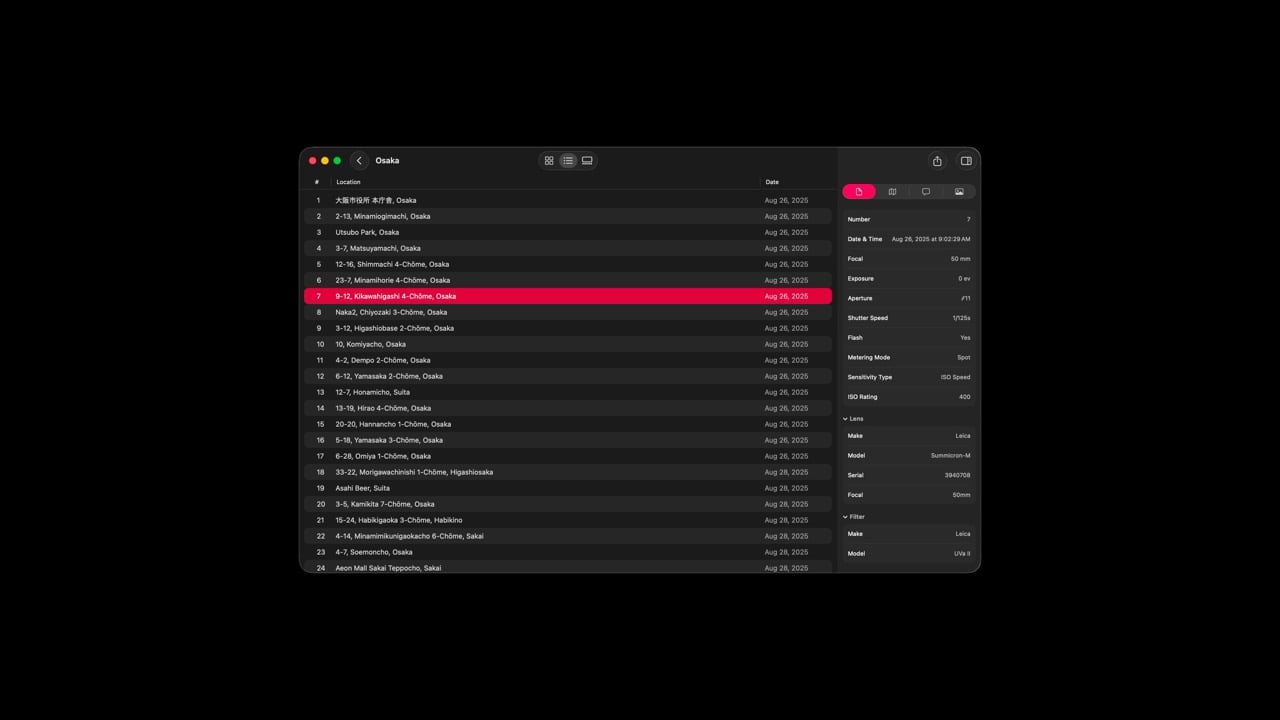
At the same time, we live in a digital world. While the shooting process is analog, viewing, sharing, and organizing images almost always happens digitally. Unlike digital cameras, film scans arrive with almost no information attached. There is no record of aperture, shutter speed, location, or even proper dates. This makes it hard to learn from past work and limits how images can be browsed or displayed on platforms and in photo software.
Frames was built to connect these two worlds. It brings back the notebook as a learning tool, while also restoring that missing information (EXIF) by reintegrating it directly into the final images, so film photographs can live properly in a digital library without losing their story.
DIYP: Who is the ideal photographer who might benefit from the app?
VT: The app is really aimed at photographers who care about their process as much as the final image. That could be a hobbyist, a student, or a professional, but the common thread is intentionality. If you enjoy understanding how you work, learning from past rolls, and keeping a clear record of your cameras, lenses, and settings, Frames makes that much easier. It’s less about obsessing over details and more about giving structure to your practice so you can focus on being creative.
DIPY: The archival of negatives has been part and parcel of the analog photography process. Wouldn’t a notebook app take some of that away from the experience?
VT: Not at all. Analog photography already involves keeping notes, organizing negatives, and handling prints carefully. Frames is not a replacement for that physical practice; it exists to support it. One practical advantage today is that almost everyone carries a phone at all times, making it much easier to quickly jot down notes as you shoot. A notebook and pen are still valid, but they require carrying extra items and remembering to bring them along.
Frames helps capture the context you might otherwise lose once images are scanned, while allowing you to revisit that process digitally without replacing the tactile experience. In other words, it preserves the story behind each roll. You still work with negatives, handle your camera, and make creative choices in the moment. The app simply makes it easier to connect those experiences to the final images and to your digital library, so nothing from the analog process is lost.
DIYP: For someone who hasn’t yet considered meticulously cataloging their analog photography experience, why should they start in 2026?
VT: Because time moves faster than we often realize, and without a record, the lessons from each roll can easily vanish. Even small notes about camera, film, settings, and lighting build up over months and years, helping you understand your process, notice patterns, and improve your craft. Cataloging your work doesn’t have to be a chore, it’s a way to stay connected to your decisions, to the story behind each image, and to make your photography more intentional.
Starting now also means your analog images can live fully in the digital world, keeping context intact and making it easy to revisit, share, or reflect on your growth. Ultimately, keeping a careful record turns every roll into more than just photographs: it becomes a personal archive of your exploration, creativity, and progress. Your future self will thank you, and the joy of seeing how far you’ve come is worth every minute spent documenting today.
You can learn more about the With Frames project on their website (WithFrames.com), or you can try out the Frames App today on the Apple App Store.
See more from DIYPhotography.net on Google
Add DIYPhotography.net as a trusted source. This makes
our stories more likely to appear in your Google Search results.
 Add as a preferred source on Google



Join the Discussion
DIYP Comment Policy
Be nice, be on-topic, no personal information or flames.