























Don’t miss these space photo opportunities in October 2024
Sep 29, 2024
Soumyadeep Mukherjee
Soumyadeep Mukherjee is an award-winning astrophotographer from India. He has a doctorate degree in Linguistics. His work extends to the sub-genres of nightscape, deep sky, solar, lunar and optical phenomenon photography. He is also a photography educator and has conducted numerous workshops. His works have appeared in over 40 books & magazines including Astronomy, BBC Sky at Night, Sky & Telescope among others, and in various websites including National Geographic, NASA, Forbes. He was the first Indian to win “Astronomy Photographer of the Year” award in a major category.
Share:

Every month brings some unique astronomical events which can be seen with the naked eye and can be photographed. In this article, let us take a look at the astrophotography opportunities in October 2024.
Table of contents
October 2: Annular solar eclipse
On this day, the “ring of fire” will be visible when the new moon obstructs the sun, also known as an annular solar eclipse. However, this event will only be visible from the southern hemisphere, from parts of Argentina and Chile.

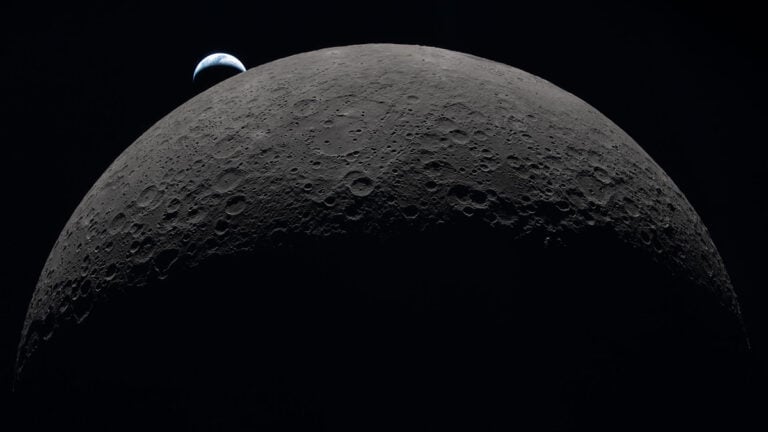
October 3-6: Earthshine moon
The best time to capture the Earthshine moon is on the days following the new moon. You will be able to see the thin crescent moon and the Earthshine part of the moon. Just after sunset, the thin moon will appear in the western sky.

October 5-6: Venus and crescent moon
The “evening star” Venus will be joined by the crescent moon on these couple of days. This provides a great opportunity to capture them together in the same frame even with a mid-telephoto lens. Venus shines bright at magnitude -4 in the western sky and is hard to miss.

October 7-10: Draconid meteor shower
Draconids is a minor meteor shower and may not produce a spectacle. You may see up to ten meteors per hour, that too if you are seeing it from a dark location. It is created by the dust grains that comet 21P Giacobini-Zinner, which was initially identified in 1900. The radiant point of the meteor shower is the constellation Draco. The good news is, these days, the moon is not going to interfere much with the view of the meteors.
October 17: Hunter’s supermoon
Catch the largest supermoon of the year as the hunter’s moon rises on 17th October. This will be the third supermoon of the year and it will also be the closest one.

October 20-21: Orionid meteor shower
The Orionid meteor shower will be visible on the nights of October 20 and 21. This meteor shower is predicted to produce 20-25 meteors per hour, and some of them will be very bright. The radiant point of this meteor shower will be the Orion constellation, near the bright star Betelgeuse. However, there is a bad news. A bright gibbous moon will be present near the radiant point and will wash away most of the meteors.

Other opportunities throughout the month
Along with the celestial events mentioned above, the sky will present more opportunities to catch a few more objects. And some will be better than before.
Milky Way season is ending
October will be your last opportunity to grab an image of the Milky Way core region, the Sagittarius arm. As the month progresses, the core area will set right after sunset. Towards the beginning of the month, you will still have an hour or so, to catch the Milky Way.

Orion is back
The Orion constellation will start rising before midnight. This will give you ample opportunity to photograph the beautiful nebulae of this region, including the Great Orion Nebula, Horsehead Nebula, and many more. From a wide-field perspective, the Orion arm is a wonderful thing to photograph with a lot of Hydrogen Alpha nebulosity.

Sun and sunspots
The sun has been on a roll for the last few months. October is not supposed to be an exception. It will be a great time to do solar photography, where you can photograph multiple sunspot regions on the solar disk.

Aurora season has began
As the sun approaches solar maximum, the frequency and intensity of geomagnetic storms are on the rise. October will be a great month to catch a glimpse of the dazzling northern lights (there is an Aurora photography guide for you here). The nights will become longer in the Arctic region, and you will get ample opportunities.

Comet Tsuchinshan-Atlas
This highly anticipated comet will reach its perihelion on September 27 and perigee on October 12. It is expected to shine bright during this period. However, it is hard to predict what exactly will happen, and we will have to wait and hope for the best. It will still be difficult to capture the comet as it remains close to the horizon. A dark sky location with a clear horizon view will give you the best chance.

Hope you have a great month with lots of astrophotography opportunities ahead. Clear skies!
See more from DIYPhotography.net on Google
Add DIYPhotography.net as a trusted source. This makes
our stories more likely to appear in your Google Search results.
 Add as a preferred source on Google

Soumyadeep Mukherjee
Soumyadeep Mukherjee is an award-winning astrophotographer from India. He has a doctorate degree in Linguistics. His work extends to the sub-genres of nightscape, deep sky, solar, lunar and optical phenomenon photography. He is also a photography educator and has conducted numerous workshops. His works have appeared in over 40 books & magazines including Astronomy, BBC Sky at Night, Sky & Telescope among others, and in various websites including National Geographic, NASA, Forbes. He was the first Indian to win “Astronomy Photographer of the Year” award in a major category.


Join the Discussion
DIYP Comment Policy
Be nice, be on-topic, no personal information or flames.