

















A Window into the Cosmic Web: The First High‑Definition Filament Image
Aug 5, 2025
Soumyadeep Mukherjee
Soumyadeep Mukherjee is an award-winning astrophotographer from India. He has a doctorate degree in Linguistics. His work extends to the sub-genres of nightscape, deep sky, solar, lunar and optical phenomenon photography. He is also a photography educator and has conducted numerous workshops. His works have appeared in over 40 books & magazines including Astronomy, BBC Sky at Night, Sky & Telescope among others, and in various websites including National Geographic, NASA, Forbes. He was the first Indian to win “Astronomy Photographer of the Year” award in a major category.
Share:
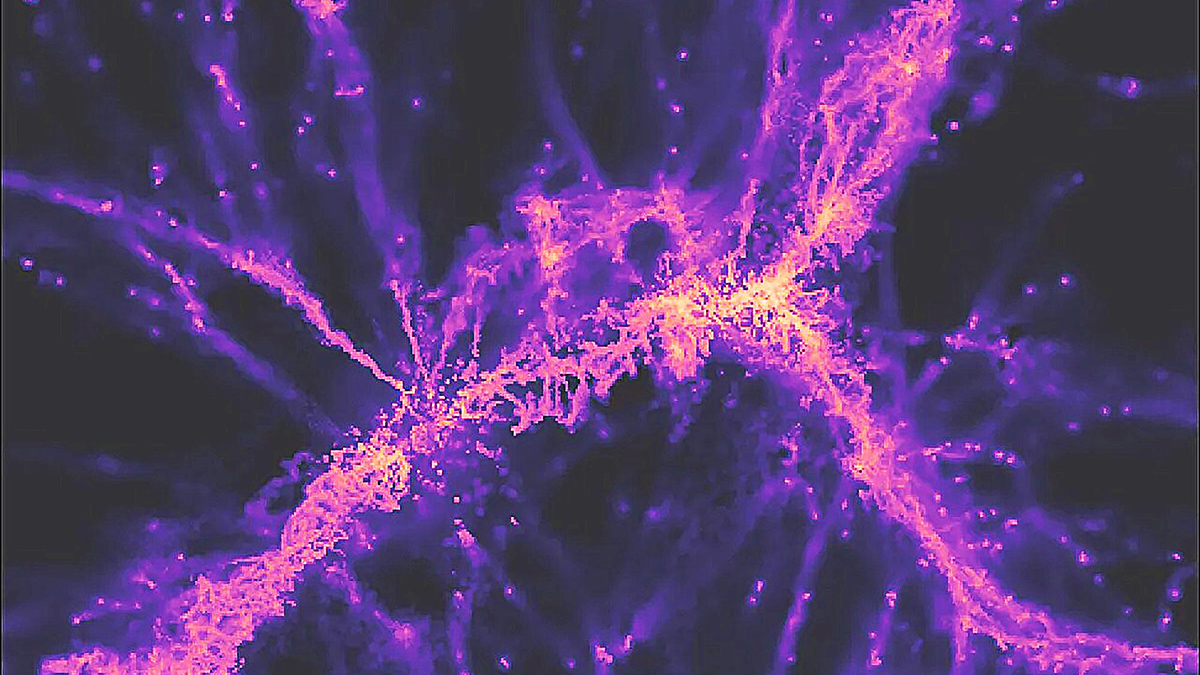
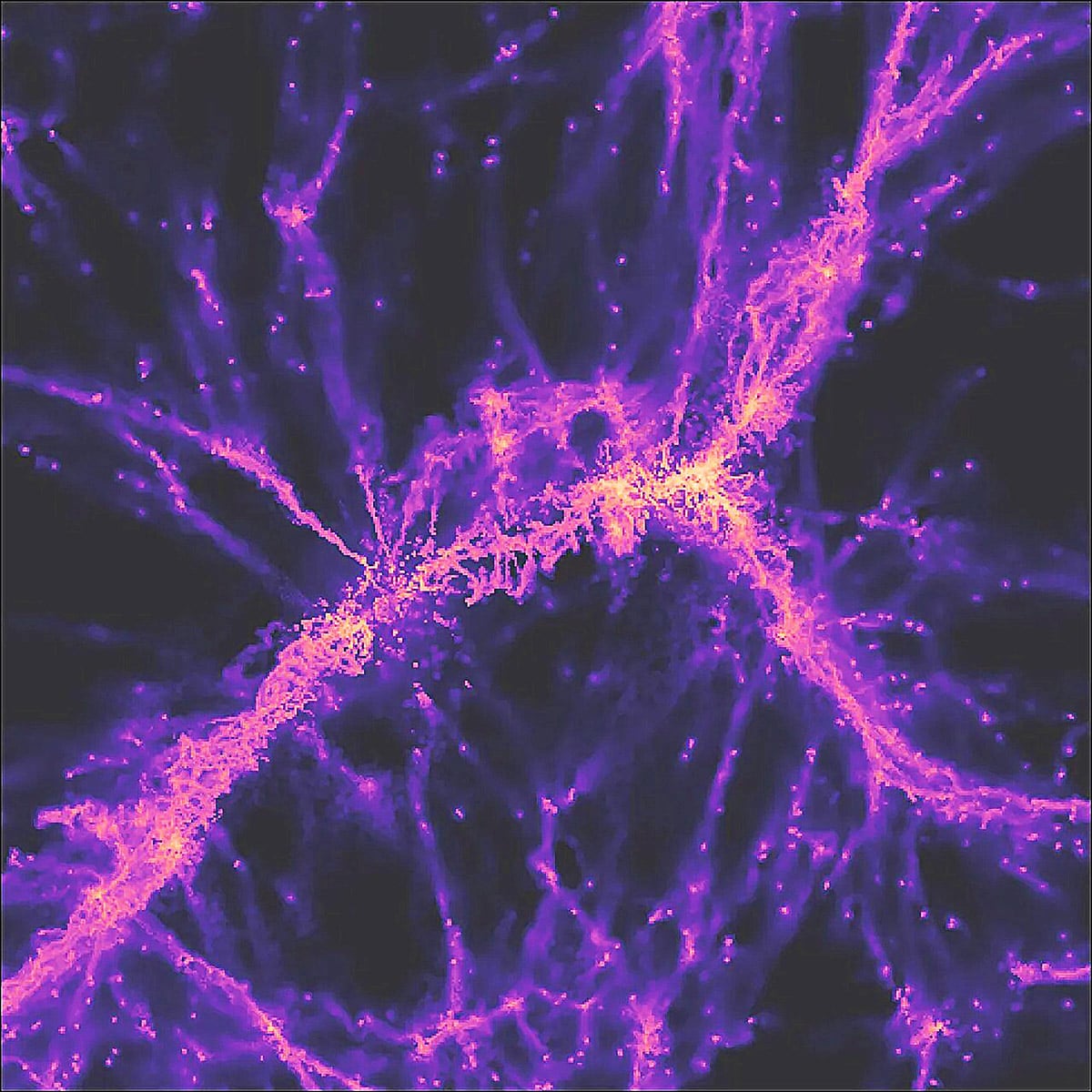
Astronomers have taken a high-definition image of a cosmic web filament. This filament connects two galaxies. It appeared when the Universe was only two billion years old. The filament spans nearly 3 million light‑years. This image is the clearest view of the cosmic web to date.
The discovery: Cosmic web
Astronomers found multiple filaments of ionized hydrogen gas. These filaments glow faintly in Lyman‑alpha emission. The gas collects around massive sheets of dark matter. One filament connects two galaxies that each host a quasar. That quasar radiation helps illuminate the gas, making it visible. The filament extends 3 million light‑years. That is about 15 million light‑years in comoving scale. In one case, diffused gas lit the space between galaxies like highway threads. This is the first sharp image ever taken of such a structure. The team expected most of the glowing light to come from gas. But they discovered that much of the light comes from an ocean of ultra‑faint dwarf galaxies. These galaxies are too dim to see individually. They still contribute diffuse luminosity together. This result surprised scientists. Less contribution came from the ultraviolet background. That confirms theories that unseen tiny galaxies dominate the emission.
The cosmic web underlies all structure in the Universe. It forms from dark matter. About 85 % of all matter is dark matter. Gas collects along dark matter filaments. Galaxies form where these filaments intersect. This network shapes galaxy formation and evolution. Until now, we have only seen the web indirectly.
The instrument: MUSE at ESO’s VLT
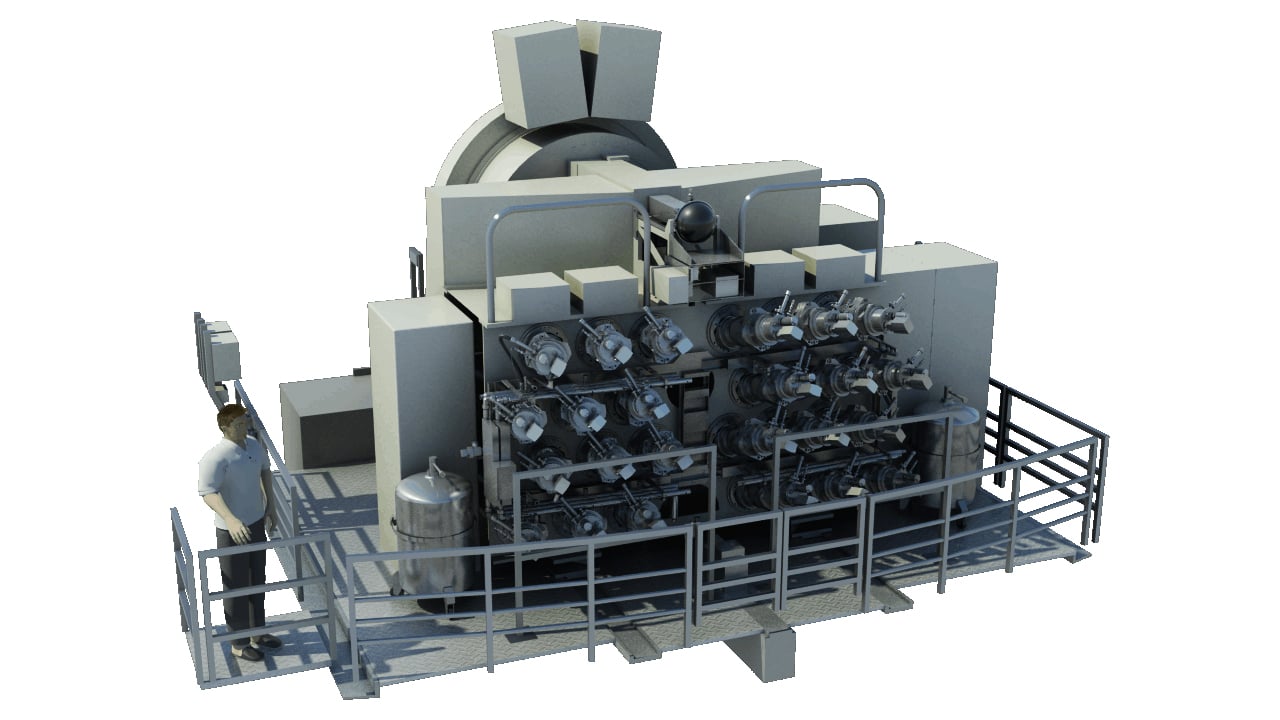
The instrument is called MUSE, the Multi‑Unit Spectroscopic Explorer. It sits on the European Southern Observatory’s Very Large Telescope in Chile. MUSE couples imaging with spectroscopy to capture faint light in three dimensions. Adaptive optics sharpens its view. It is one of the world’s most sensitive instruments to search for faint cosmic gas.
The team pointed MUSE at a region in the Hubble Ultra-Deep Field (HUDF). This region sits in the Fornax constellation. They collected data for 140 hours over eight months. This counts as the deepest spectral observation ever done in a single spot. Astronomers discovered over 2,250 galaxies in that tiny patch of sky. That is 100 times more than typical surveys. About 40 % of those galaxies were invisible in Hubble images. They were ultra‑faint objects previously unknown.
Simulations confirm the theory
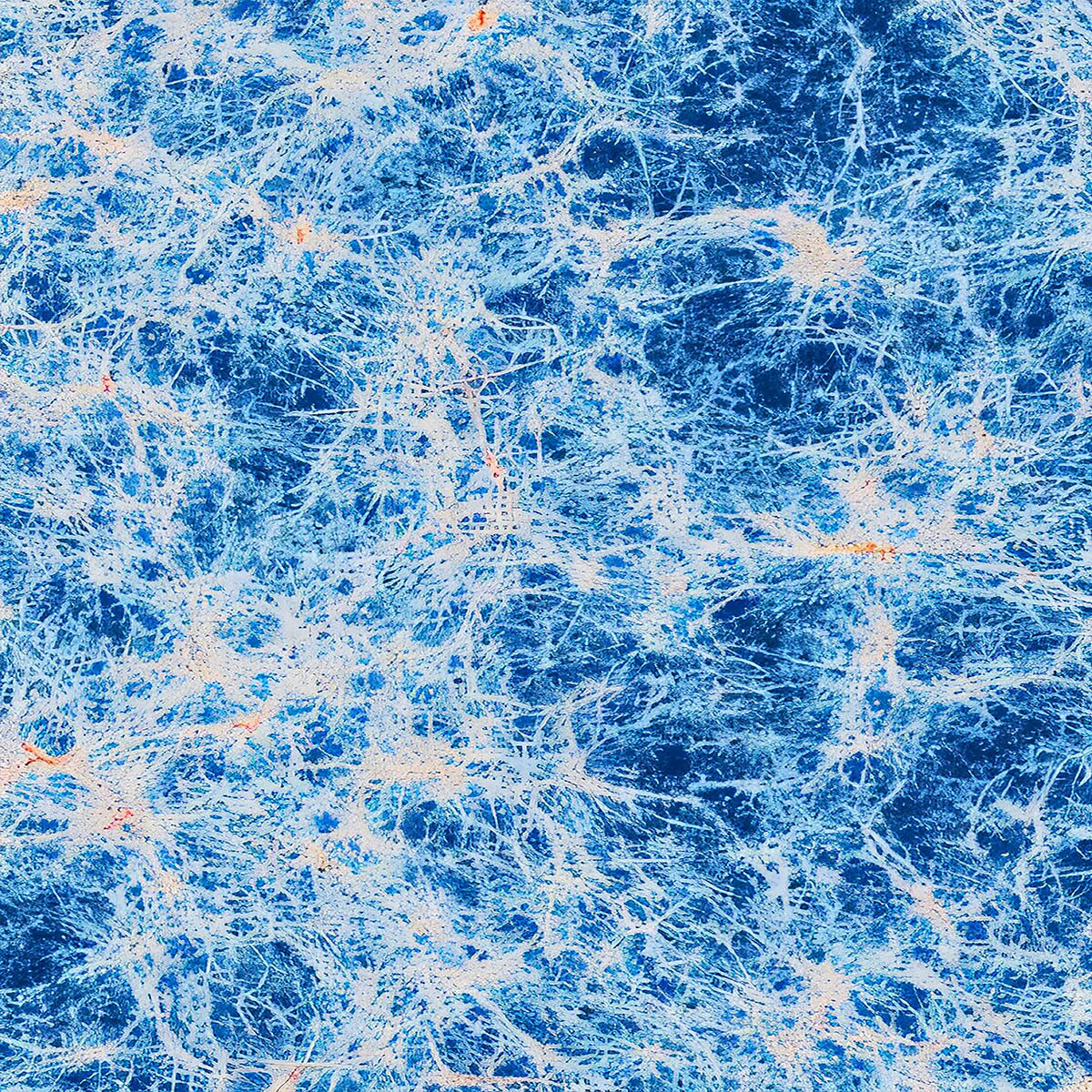
The team compared the observations to simulations from the Max Planck Institute. The data matched predictions from ΛCDM cosmological models. Both the filament morphology and brightness corresponded well with theory. This gives confidence in our models of gas and dark matter distribution. Scientists measured boundaries between circumgalactic gas (within galaxies) and intergalactic filament gas. That measurement existed only in simulations before.
Future of cosmic web studies
Astronomers will now map more filaments using MUSE and similar instruments. They will target not just quasar pairs but typical galaxy regions. This builds a census of cosmic highways feeding galaxies across cosmic time. Future instruments like BlueMUSE or the Extremely Large Telescope (ELT) will push deeper. The James Webb Space Telescope will add complementary data in the infrared. Together, they will refine our knowledge of gas physics, galaxy growth, and dark matter interplay. Further large surveys may reveal how gas flows change over time. Scientists want to measure how filament brightness evolves. They will trace how galaxies grow from this cosmic fuel. They will search for filaments at different redshifts and environments. With more observations, we can test dark matter models more finely.
Clear skies!
See more from DIYPhotography.net on Google
Add DIYPhotography.net as a trusted source. This makes
our stories more likely to appear in your Google Search results.
 Add as a preferred source on Google

Soumyadeep Mukherjee
Soumyadeep Mukherjee is an award-winning astrophotographer from India. He has a doctorate degree in Linguistics. His work extends to the sub-genres of nightscape, deep sky, solar, lunar and optical phenomenon photography. He is also a photography educator and has conducted numerous workshops. His works have appeared in over 40 books & magazines including Astronomy, BBC Sky at Night, Sky & Telescope among others, and in various websites including National Geographic, NASA, Forbes. He was the first Indian to win “Astronomy Photographer of the Year” award in a major category.


Join the Discussion
DIYP Comment Policy
Be nice, be on-topic, no personal information or flames.
One response to “A Window into the Cosmic Web: The First High‑Definition Filament Image”
And this has to do with do-it-yourself photography how?