














Euclid Telescope Reveals 900 Million Galaxies in a 500-Gigapixel Mosaic
Nov 13, 2026
Soumyadeep Mukherjee
Soumyadeep Mukherjee is an award-winning astrophotographer from India. He has a doctorate degree in Linguistics. His work extends to the sub-genres of nightscape, deep sky, solar, lunar and optical phenomenon photography. He is also a photography educator and has conducted numerous workshops. His works have appeared in over 40 books & magazines including Astronomy, BBC Sky at Night, Sky & Telescope among others, and in various websites including National Geographic, NASA, Forbes. He was the first Indian to win “Astronomy Photographer of the Year” award in a major category.
Share:
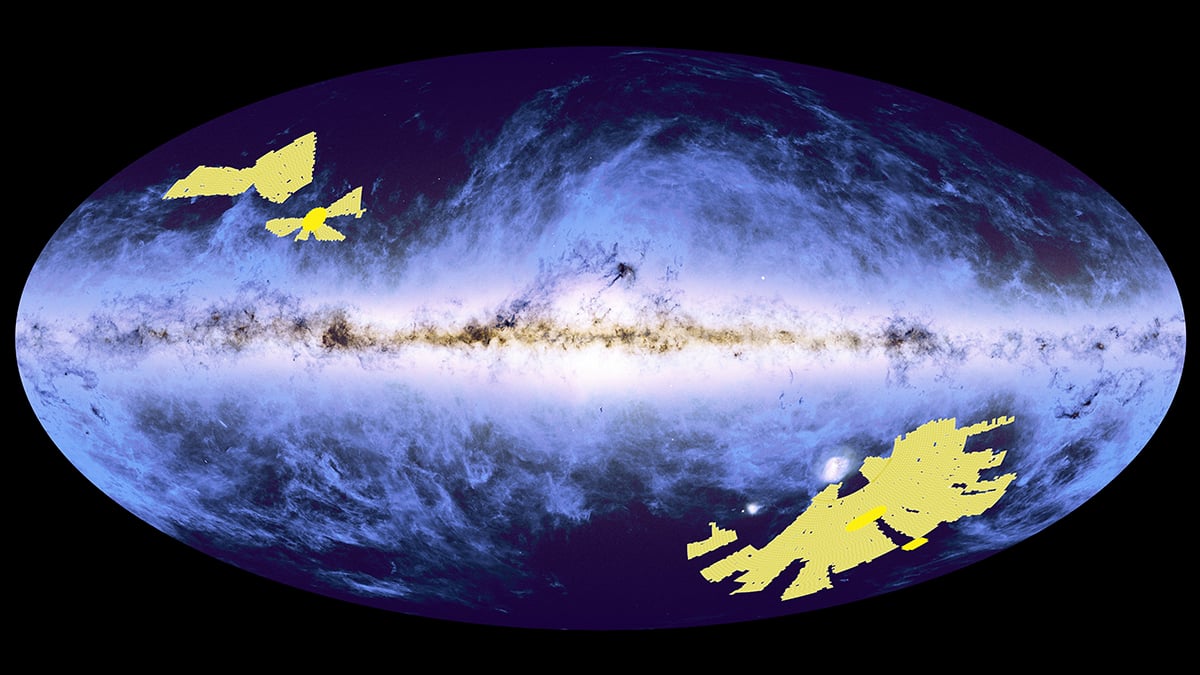
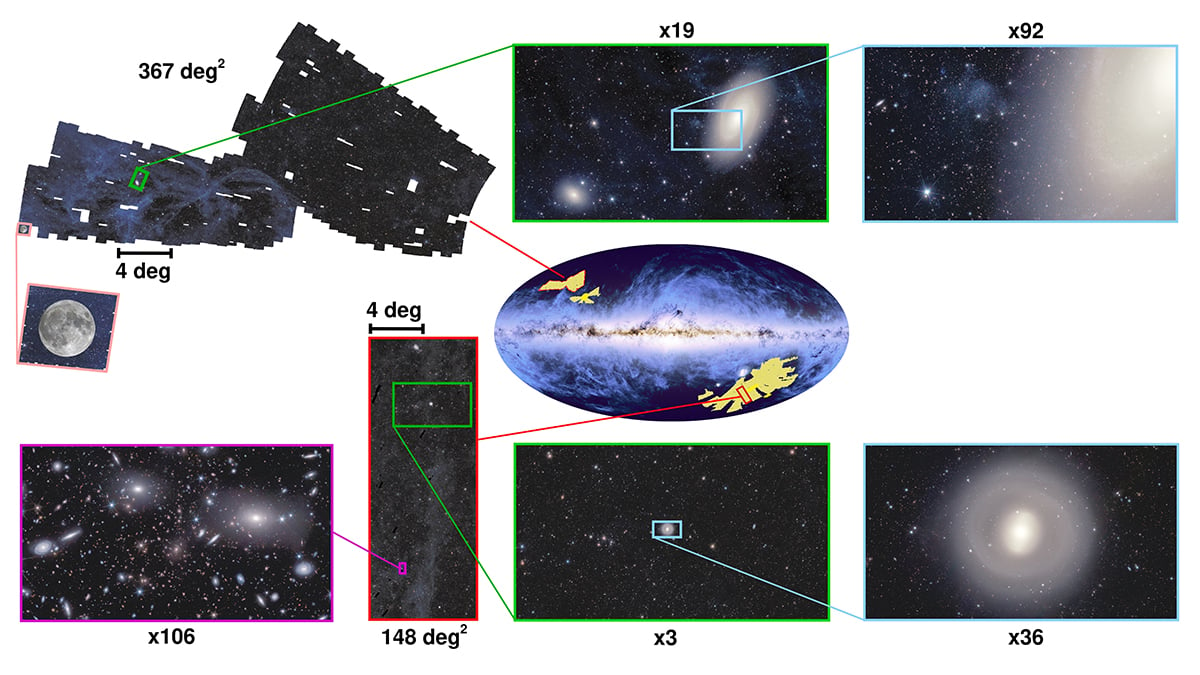
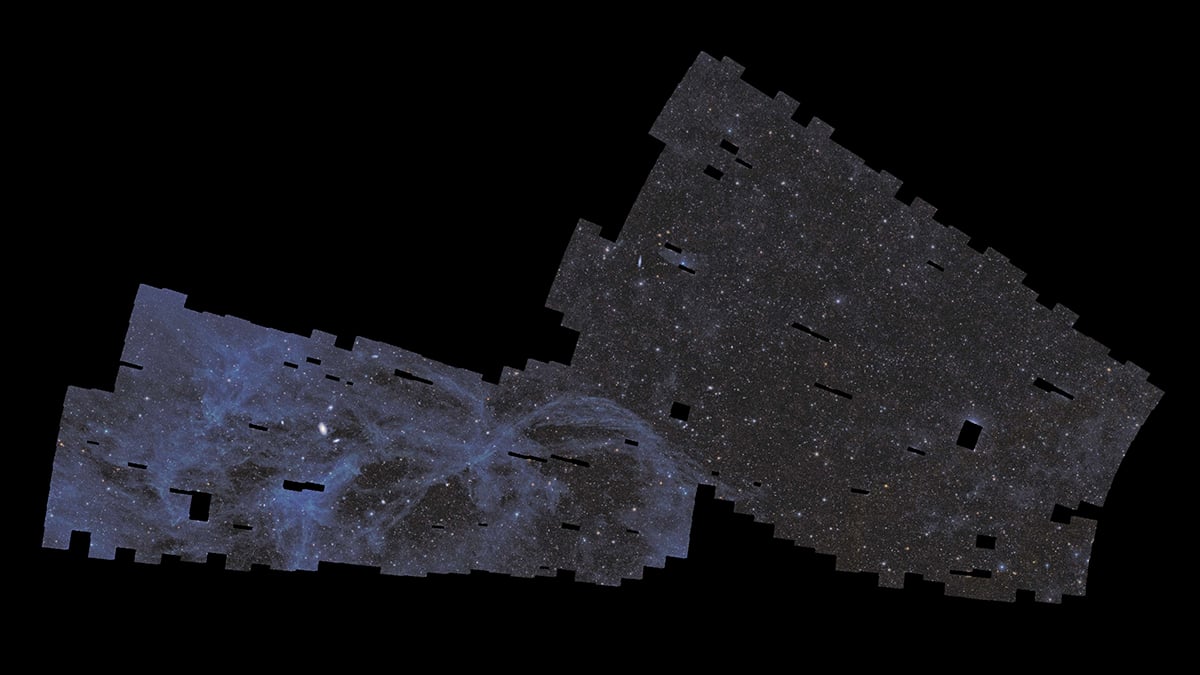
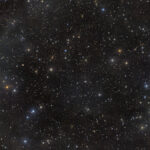
The European Space Agency’s Euclid space telescope has captured an enormous collection of images showing galaxies across distant regions of the Universe. Among them is a mosaic containing nearly 500 billion pixels, assembled from 740 individual observations. It covers 367 square degrees of the northern sky, with countless galaxies visible across the image. Zooming in reveals structures ranging from individual galaxies to large galaxy groups.
This is part of Euclid’s first major scientific data release, named DR1-Foundation, which contains observations of more than a billion astronomical objects. Astronomers have identified over 900 million galaxies and around 15,000 strong gravitational lens candidates. The collection also includes more than 60 million quasar candidates and spectra from over 160 million sources.
A closer look at Euclid’s enormous cosmic mosaic
The northern-sky mosaic is one of the most impressive visual results from the new release. Its 740 individual observations cover an area of 367 square degrees. The image combines these exposures into a single enormous view, allowing astronomers to examine a large section of the sky at different levels of detail. The full mosaic contains nearly 500 gigapixels.
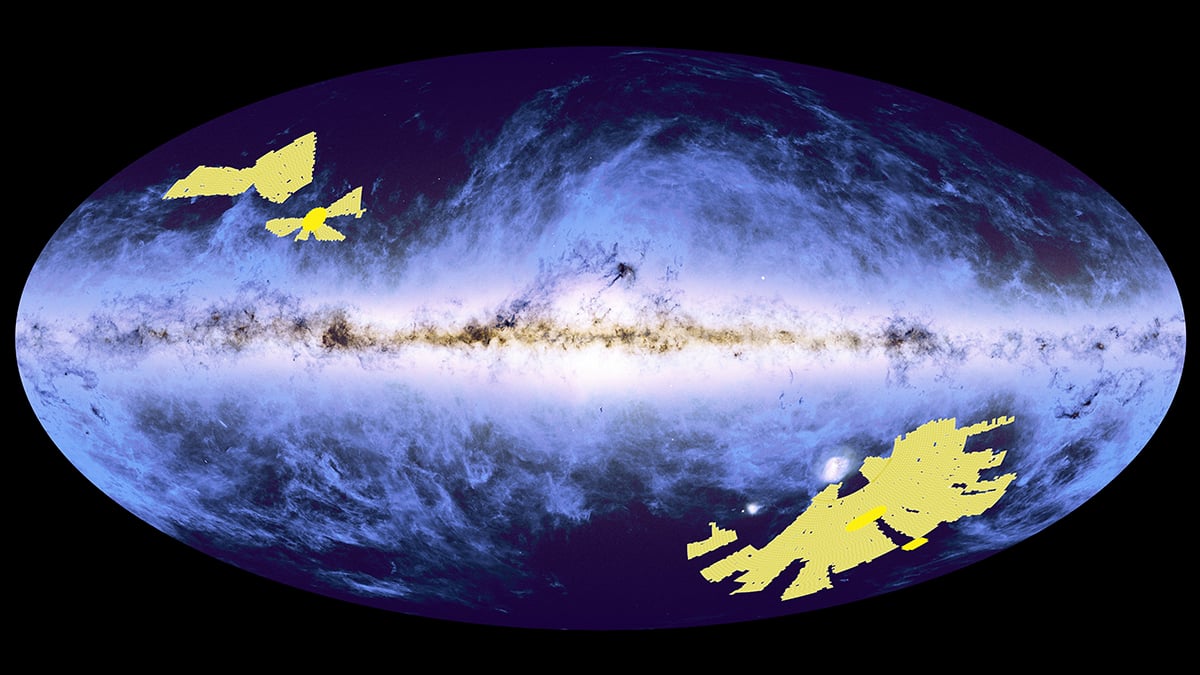
The image shows thousands of galaxies, from relatively nearby systems to objects whose light began travelling towards Earth billions of years ago. Many appear as tiny smudges in the wider view. Zooming in reveals their shapes, central regions, and surrounding structures. The background also contains numerous faint galaxies that would be difficult to examine in a smaller field of view.
Euclid’s survey also includes a separate collection covering 148 square degrees of the southern sky. These two large image regions form part of a wider survey covering approximately 1,900 square degrees. ESA compares this area with 9,500 full Moons. The comparison gives an idea of how much sky the spacecraft has examined during its first year of survey observations.
Euclid finds 15,000 gravitational lens candidates
The images have also revealed something that astronomers have spent decades searching for: large numbers of strong gravitational lenses. Euclid‘s first major dataset contains approximately 15,000 candidates, making it the largest catalogue of its kind. Earlier searches had identified only a few hundred such systems over several decades.
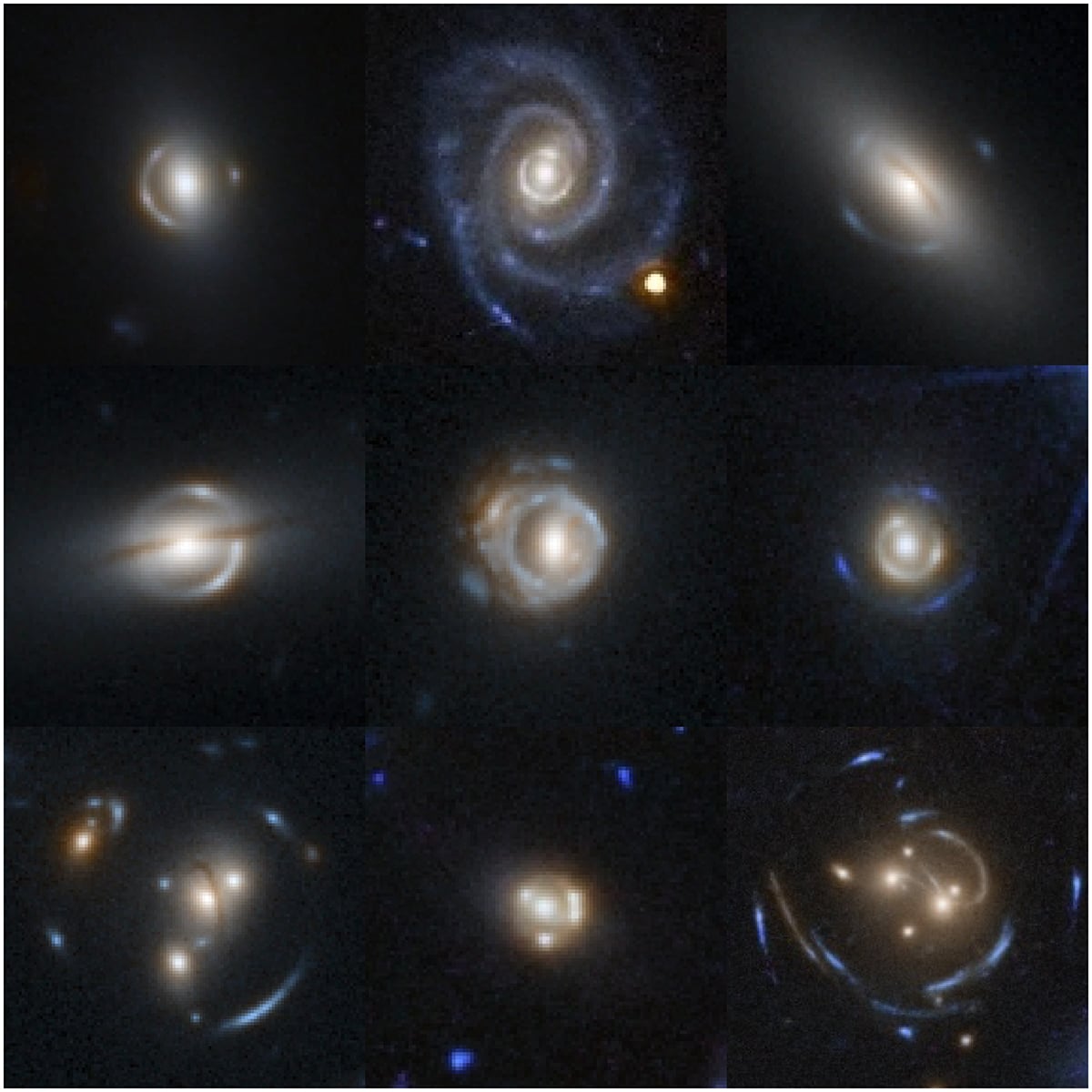
A gravitational lens forms when a massive object bends light from something farther away. For example, a foreground galaxy can distort the light from a background galaxy as it travels towards Earth. The background object may appear as curved arcs, multiple images, or a nearly complete ring around the foreground galaxy. The exact appearance depends on the alignment of the two galaxies and the distribution of mass in the foreground object.
These distorted images give astronomers a way to measure the mass of galaxies. The gravity responsible for bending the light comes from everything within the foreground system, including its stars and dark matter. Scientists can study the resulting distortions to estimate how much mass the galaxy contains. This makes gravitational lenses particularly useful when investigating dark matter, which does not emit light.
Distant quasars and galaxy clusters
Gravitational lenses are not the only objects attracting attention in the new dataset. Euclid has identified more than 60 million quasar candidates. These extremely bright objects occupy the centers of distant galaxies, where supermassive black holes pull in surrounding gas and dust. The material forms a hot accretion disc and releases enormous amounts of radiation as it spirals towards the black hole.
Some quasars shine so brightly that astronomers can detect them across billions of light-years. Their light provides a way to study galaxies during much earlier stages of cosmic history. Euclid has identified candidates from an era when the Universe was only five percent of its present age. Studying these objects could help researchers understand how black holes and their host galaxies developed.
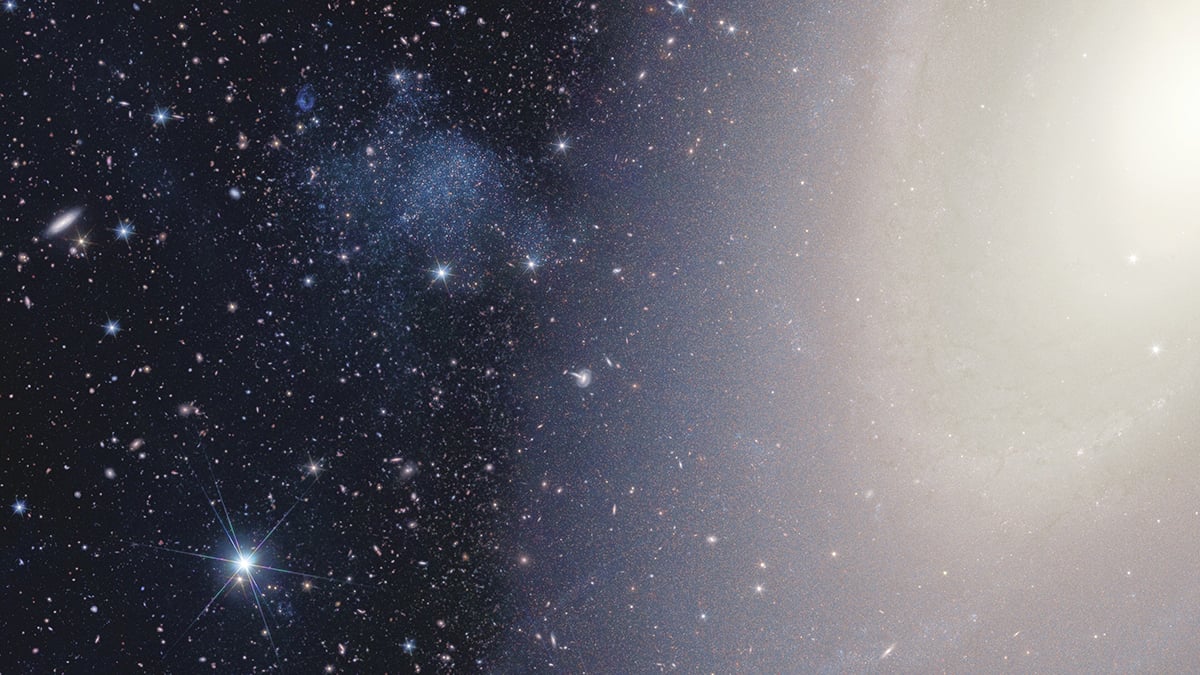
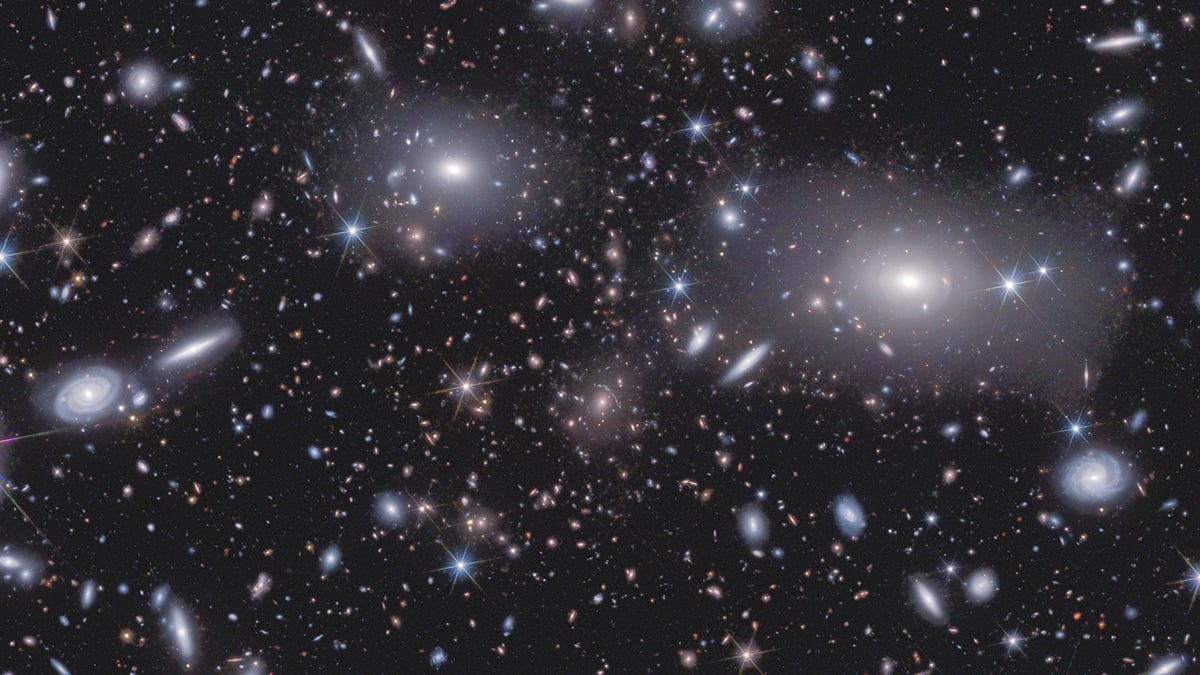
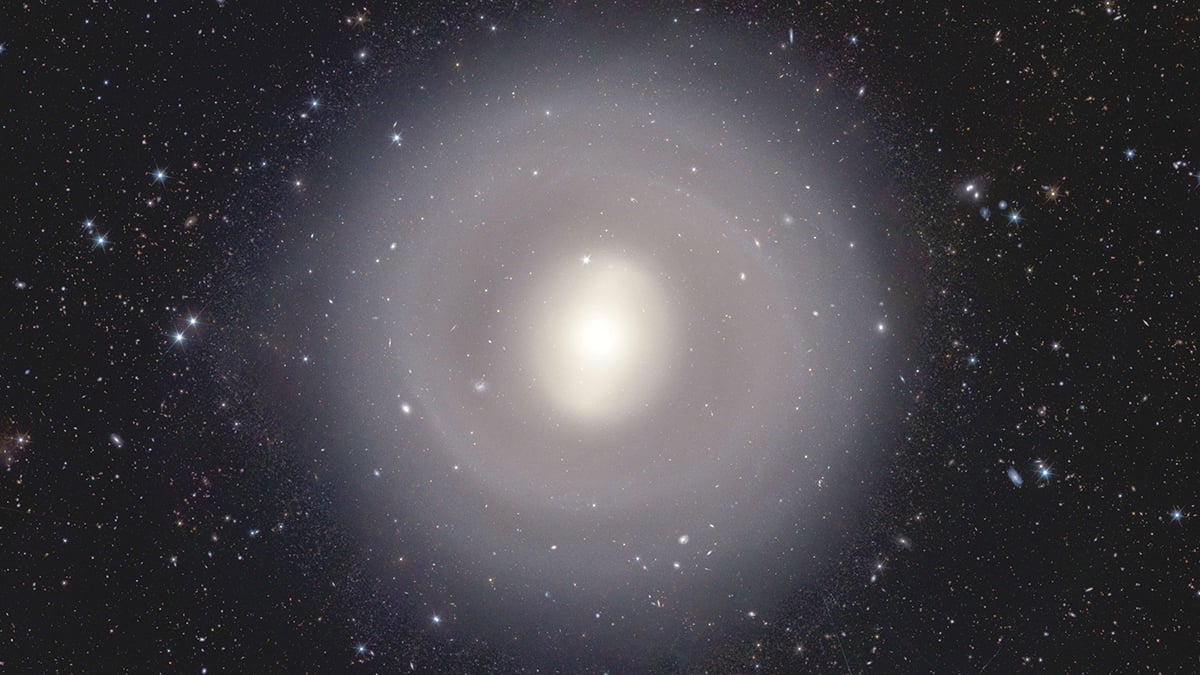
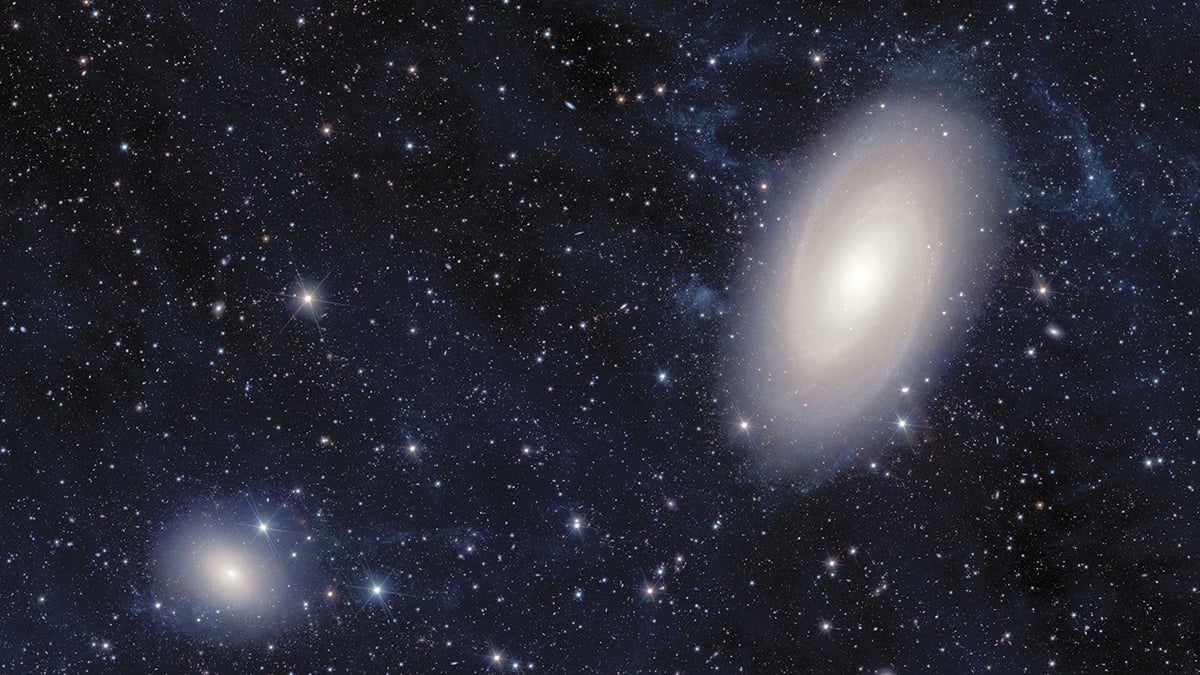
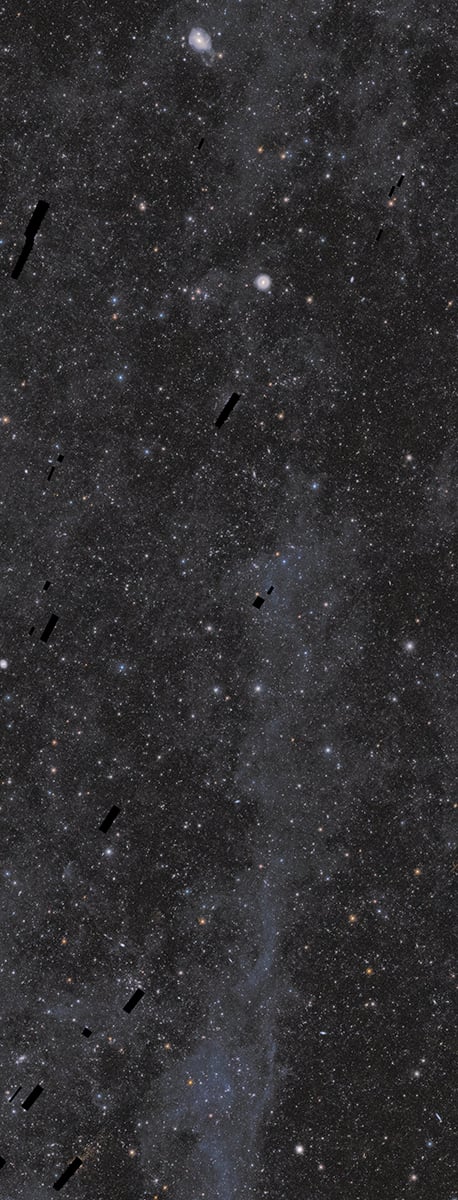
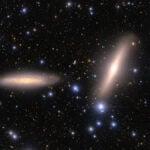
The survey also includes detailed observations of galaxy clusters. These enormous groups contain hundreds or thousands of galaxies held together by gravity. Euclid’s images show several interesting regions, including the Horologium Supercluster, the Messier 81 galaxy group, and the cluster Abell 3128. The ring galaxy NGC 1291 also features among the prominent targets.
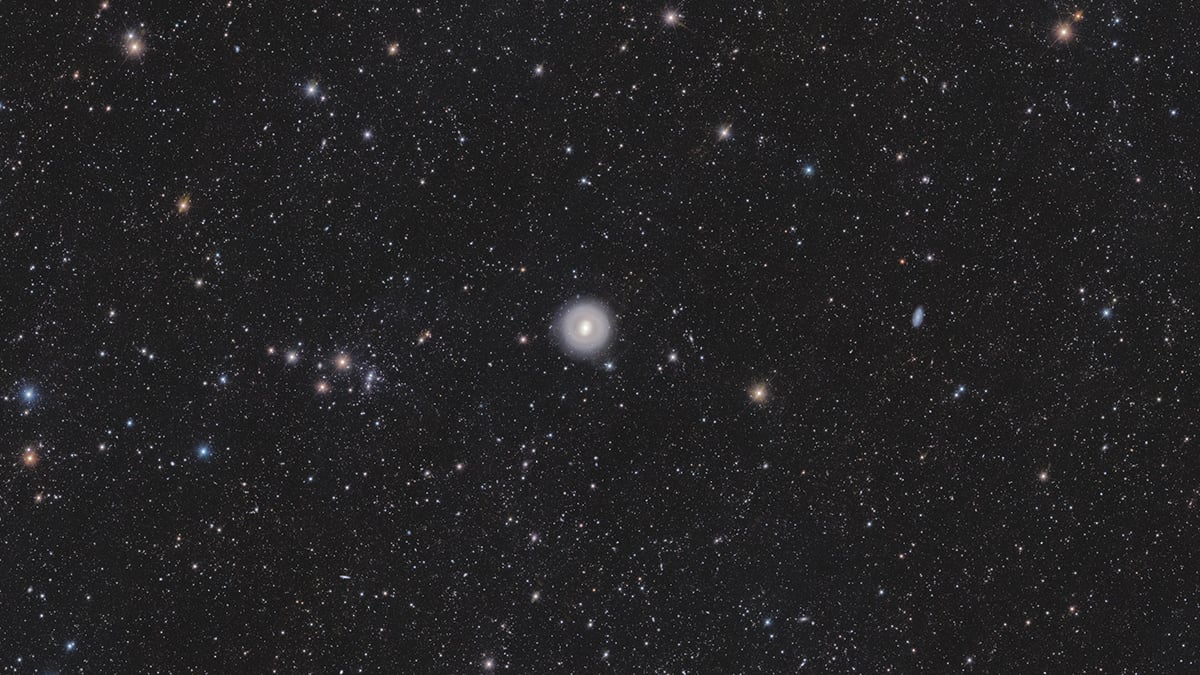
Another interesting feature appears in the faint light surrounding galaxies within clusters. Astronomers call this intracluster light. It comes from stars that gravitational interactions have stripped from individual galaxies. These stars spread throughout the cluster and produce a diffuse glow between its brighter members. Euclid has detected this faint emission in hundreds of clusters, giving researchers more material to study how galaxies interact and evolve.
How Euclid measures distances to millions of galaxies
The photographs reveal what distant galaxies look like, but astronomers also need to know how far away they are. This is where Euclid’s spectroscopic observations become important. The spacecraft collects spectra from astronomical objects and examines the features within their light. These measurements help researchers estimate distances and investigate the physical properties of galaxies.
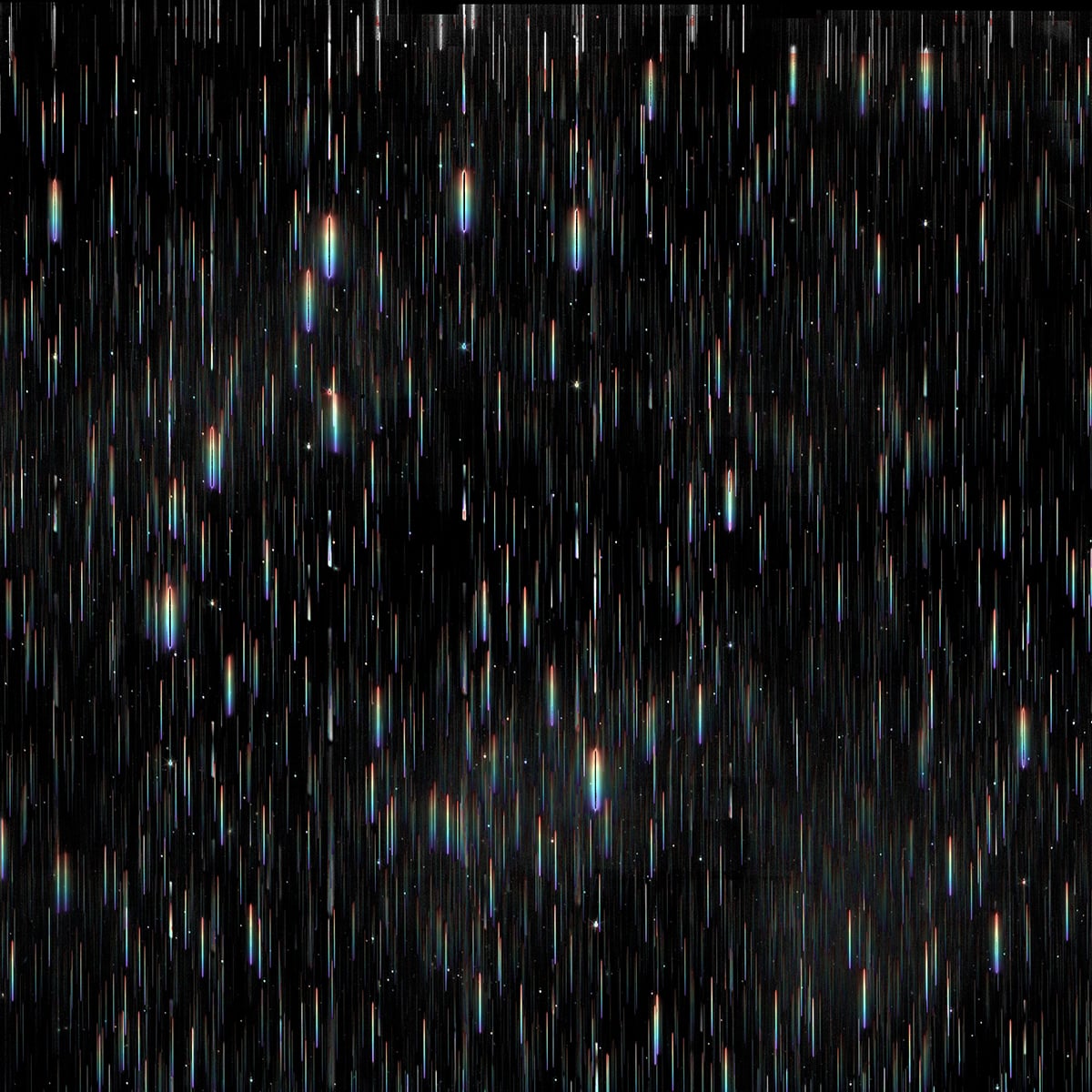
Euclid carries a 1.2-metre telescope and two scientific instruments. Its Visible Instrument, or VIS, captures images in visible light using 36 CCD detectors. The detectors work together to produce images with approximately 600 megapixels. Its second instrument, the Near-Infrared Spectrometer and Photometer (NISP), observes near-infrared light and collects additional information about astronomical sources.
When astronomers split light into its component wavelengths, they obtain a spectrum. Different gases produce characteristic features within this spectrum. Researchers can identify these features and measure how their wavelengths have changed during the light’s journey through space. Euclid‘s DR1-Foundation release includes spectra from more than 160 million sources.
Euclid’s larger goal is to understand dark matter and dark energy
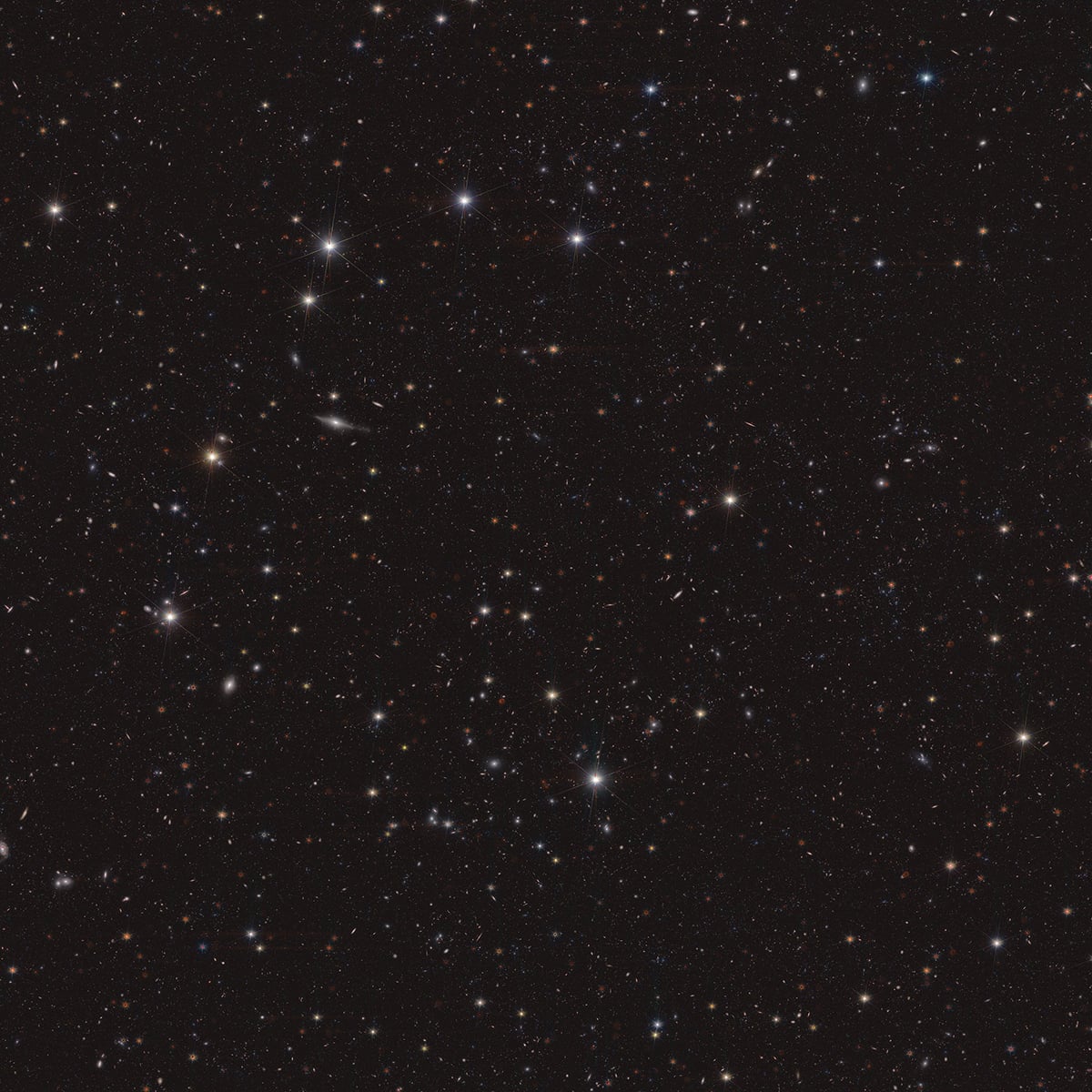
Euclid’s survey will eventually show how galaxies occupy the large-scale structure of the Universe. Astronomers call this structure the cosmic web. It consists of long filaments containing galaxies and galaxy clusters, separated by enormous regions with relatively little matter. Mapping these structures across different distances will help researchers understand how the Universe developed over billions of years.
Dark matter plays a major role in this process. Although it does not produce detectable light, its gravitational influence affects how galaxies form and gather into larger structures. Euclid will trace its distribution through gravitational lensing and measurements of galaxy positions. These observations will help scientists examine how dark matter shapes individual galaxies and the cosmic web.
Dark energy raises a different question. Astronomers use this term to describe the unknown influence associated with the accelerating expansion of the Universe. They want to understand how this expansion has changed throughout cosmic history. By measuring galaxy distances and examining the growth of cosmic structures, Euclid will provide important evidence for testing different explanations.
The current release covers approximately 14 percent of the sky area planned for Euclid’s six-year survey. The spacecraft will eventually examine more than one-third of the extragalactic sky and observe billions of galaxies. ESA expects the complete Data Release 1 in mid-2027. That release will add further observations, including weak gravitational lensing measurements and additional information about galaxy clusters.
Clear skies!
See more from DIYPhotography.net on Google
Add DIYPhotography.net as a trusted source. This makes
our stories more likely to appear in your Google Search results.
 Add as a preferred source on Google

Soumyadeep Mukherjee
Soumyadeep Mukherjee is an award-winning astrophotographer from India. He has a doctorate degree in Linguistics. His work extends to the sub-genres of nightscape, deep sky, solar, lunar and optical phenomenon photography. He is also a photography educator and has conducted numerous workshops. His works have appeared in over 40 books & magazines including Astronomy, BBC Sky at Night, Sky & Telescope among others, and in various websites including National Geographic, NASA, Forbes. He was the first Indian to win “Astronomy Photographer of the Year” award in a major category.
Join the Discussion
DIYP Comment Policy
Be nice, be on-topic, no personal information or flames.