

























Chandra Spots a Hidden Black Hole Behind a Star’s Mysterious Eruptions
Nov 10, 2026
Soumyadeep Mukherjee
Soumyadeep Mukherjee is an award-winning astrophotographer from India. He has a doctorate degree in Linguistics. His work extends to the sub-genres of nightscape, deep sky, solar, lunar and optical phenomenon photography. He is also a photography educator and has conducted numerous workshops. His works have appeared in over 40 books & magazines including Astronomy, BBC Sky at Night, Sky & Telescope among others, and in various websites including National Geographic, NASA, Forbes. He was the first Indian to win “Astronomy Photographer of the Year” award in a major category.
Share:
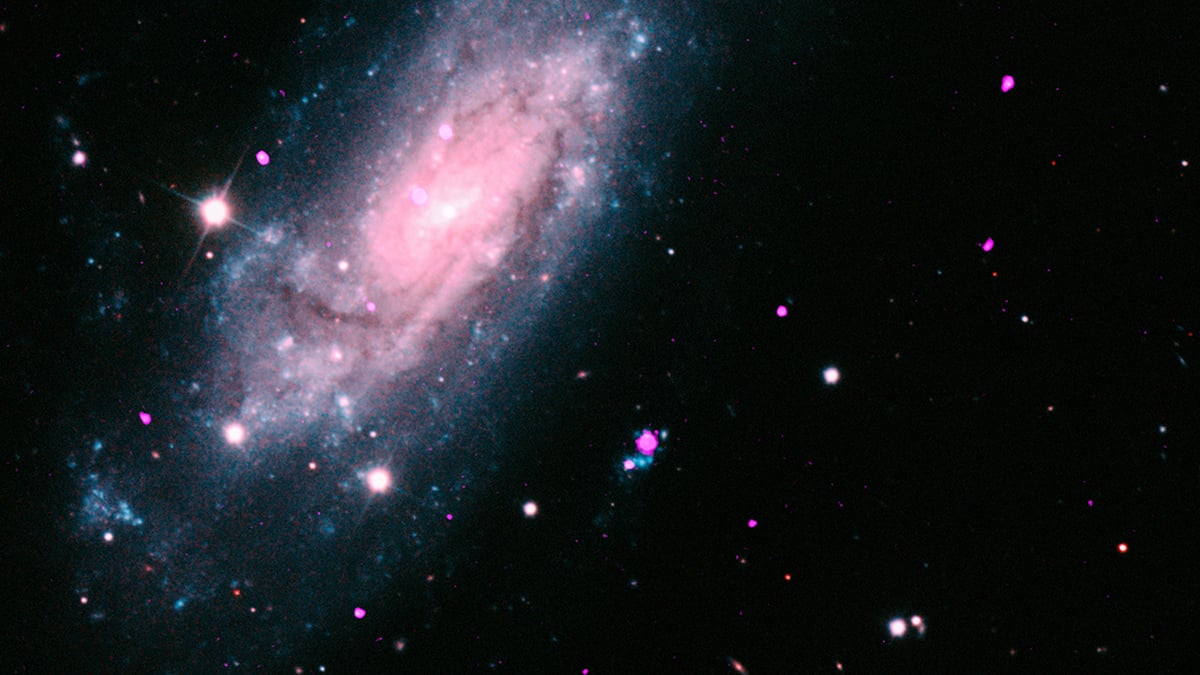
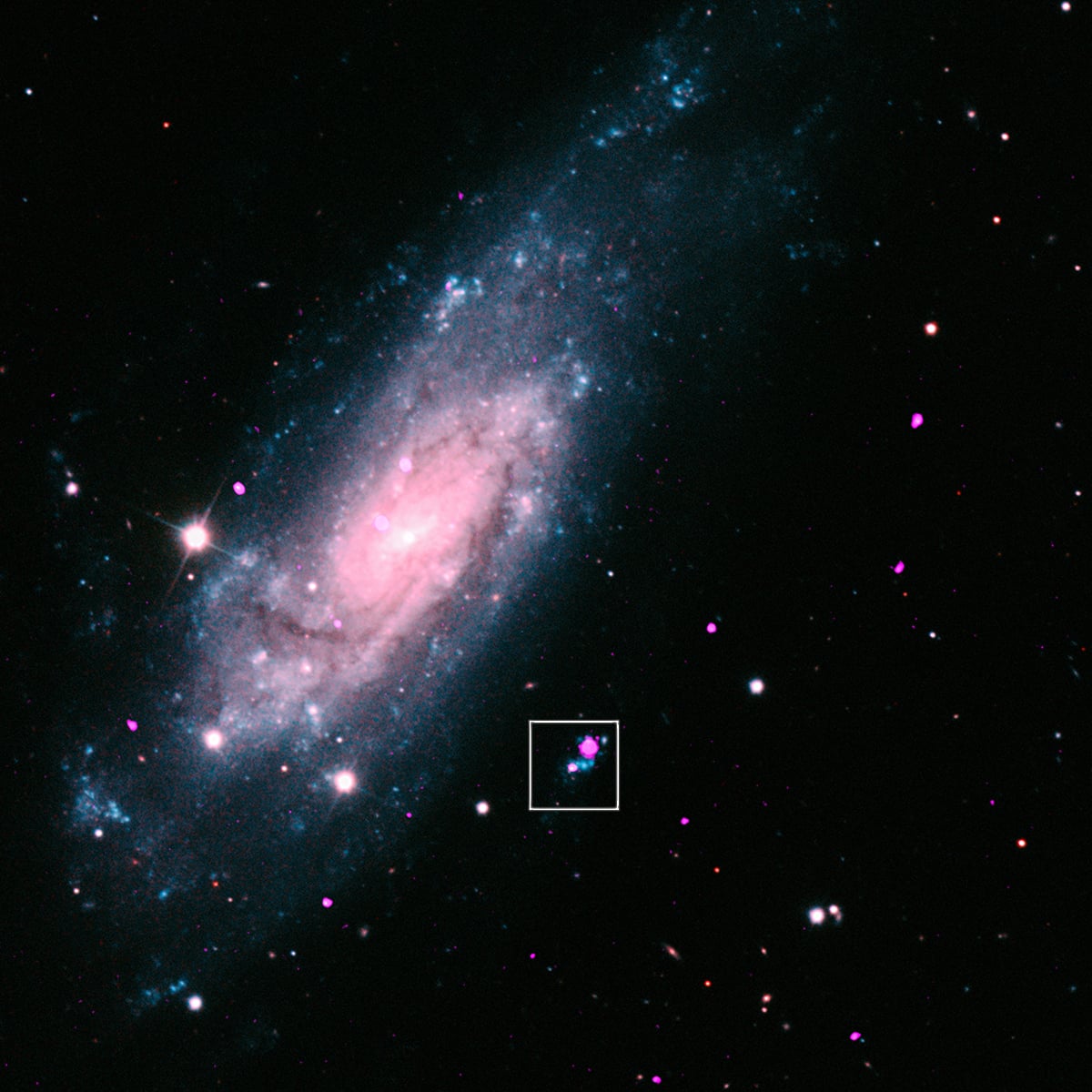
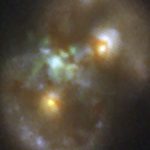
Astronomers have spent 15 years watching a massive star brighten and fade repeatedly. Its unusual behavior has made AT 2016blu a long-term target. NASA‘s Chandra X-ray Observatory has helped researchers find an explanation. The star appears to have an unseen companion that pulls material away during regular encounters. Astronomers believe this companion is either a black hole or a neutron star.
AT 2016blu lies in the spiral galaxy NGC 4559, approximately 30 million light-years from Earth. Astronomers estimate that the star has at least 33 times the mass of the Sun. Its repeated eruptions have made it an unusual member of a group known as luminous blue variables. The latest observations suggest that its companion plays a major role in producing these outbursts.
A star that keeps erupting without exploding
The first challenge in understanding AT 2016blu was explaining why it kept brightening. Its eruptions were powerful enough to resemble supernova explosions. In a genuine supernova, a massive star undergoes a catastrophic event that destroys it or leaves behind a compact remnant. AT 2016blu, however, repeatedly returned to its earlier brightness. Astronomers began referring to it as a supernova impostor.
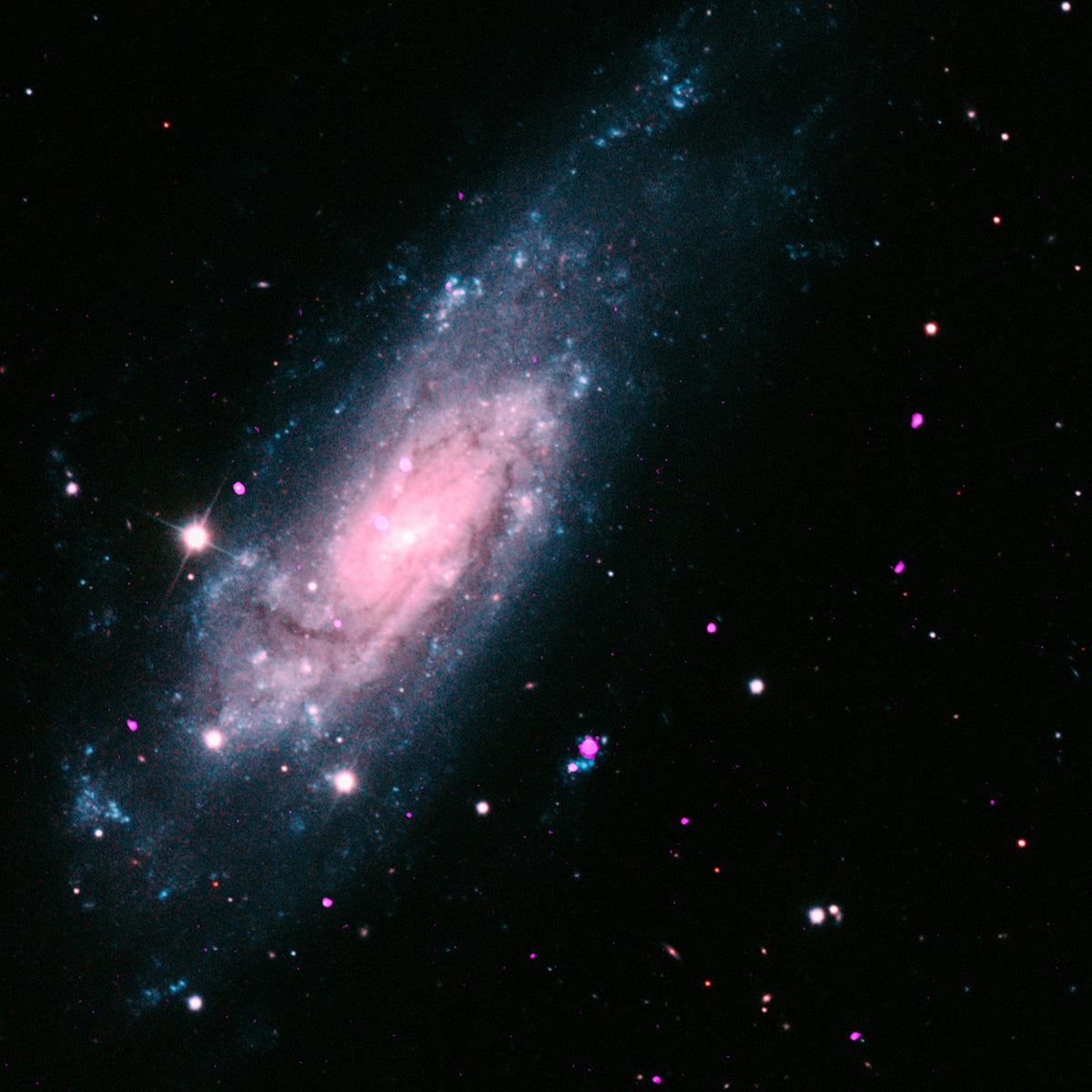
The star belongs to a group called luminous blue variables, or LBVs. These are extremely hot and massive stars that can undergo substantial changes in brightness. They also lose large amounts of material during periods of intense activity.
AT 2016blu displays a particularly unusual pattern. Between 2012 and 2026, astronomers recorded at least 27 major increases in its optical brightness. The intervals averaged approximately 113 days. The regular timing caught researchers’ attention because it suggested that something might be controlling the eruptions.
The search for a hidden companion
A companion could explain why AT 2016blu brightens on such a regular schedule. The researchers suspected that the star belongs to a binary system containing a compact object. Such systems consist of two bodies orbiting a common center of mass. Their gravitational interaction can cause one object to pull material away from the other.
The proposed companion is either a stellar-mass black hole or a neutron star. Both objects can capture surrounding gas through their powerful gravitational fields. A neutron star is the collapsed core of a massive star, compressed into a sphere roughly the size of a city.
The researchers believe the two objects follow an elongated, oval-shaped orbit. Their separation changes throughout each revolution. When the companion reaches its closest approach to AT 2016blu, it encounters material released by the massive star. Some of this gas gets captured and begins moving around the compact object.
Chandra catches the star during an outburst
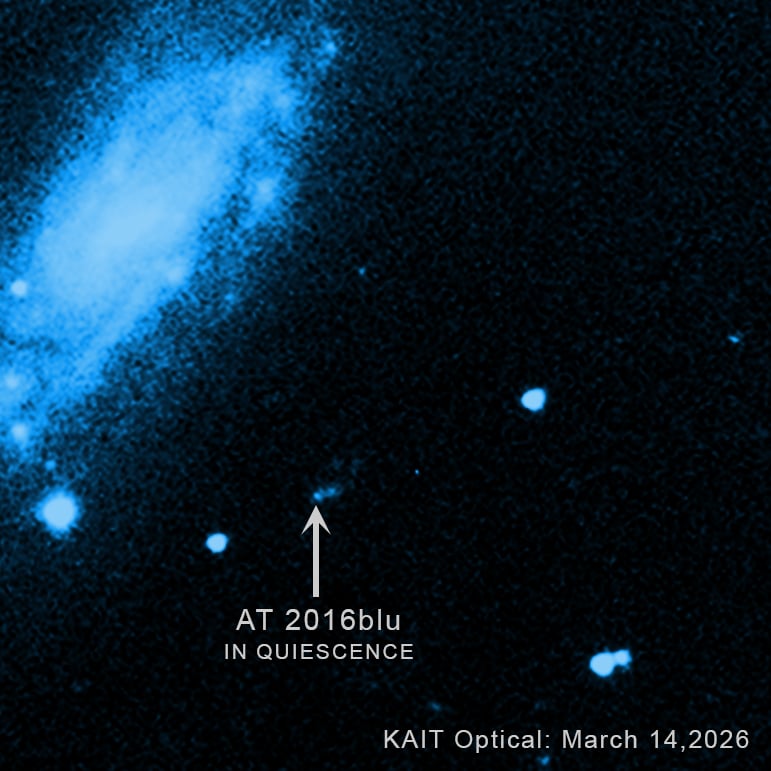
The researchers had to catch AT 2016blu during one of its brief periods of activity. They used observations from several facilities to monitor its optical brightness. These included the Katzman Automatic Imaging Telescope (KAIT) and the Las Cumbres Observatory Global Supernova Project. The American Association of Variable Star Observers (AAVSO) also contributed observations.
This long-running monitoring helped the team predict when another outburst would occur. Once observations showed that the star had entered an active phase in early 2026, researchers requested time with Chandra.
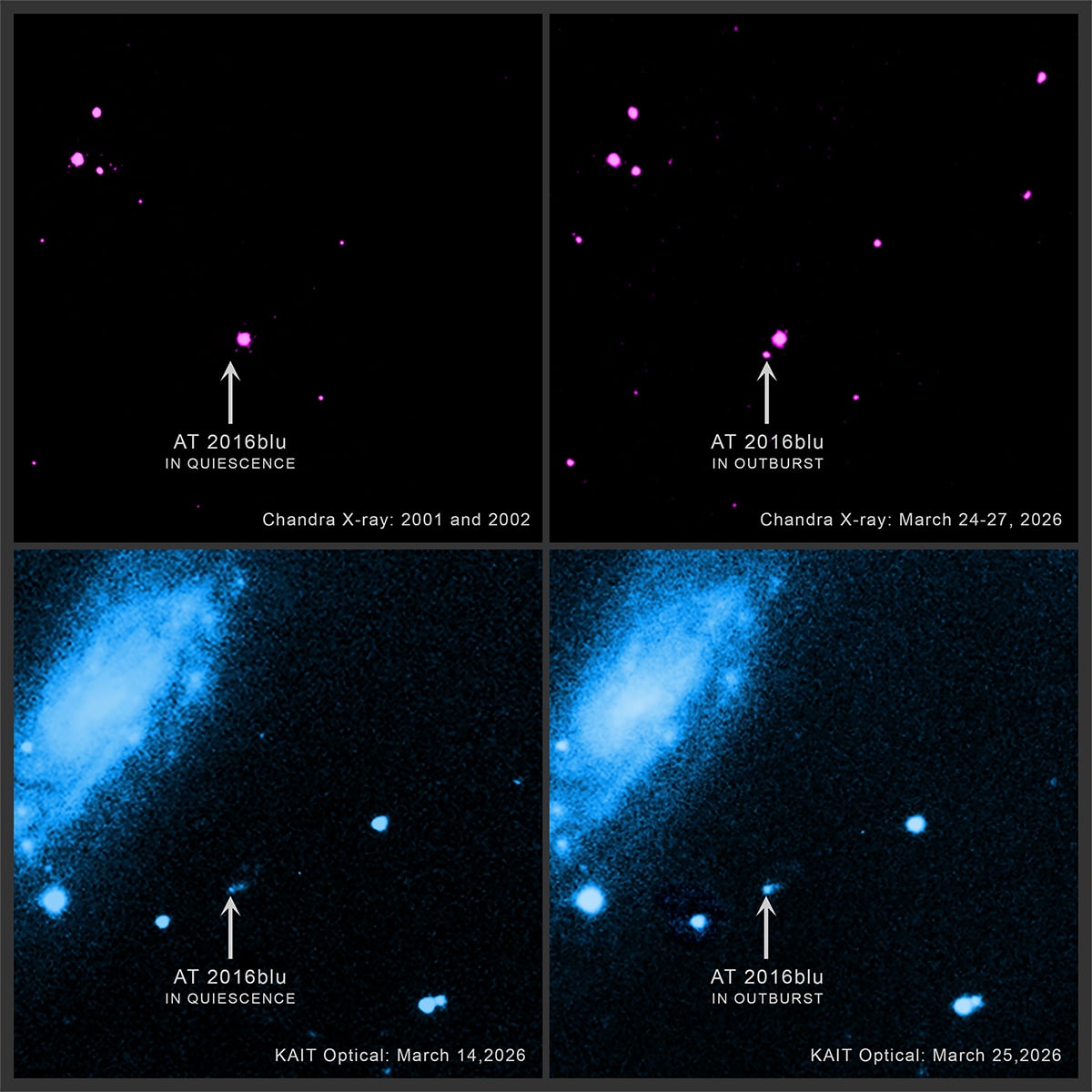
Chandra collected five observations during March 2026, providing a combined exposure of 26 hours and 30 minutes. Its Advanced CCD Imaging Spectrometer (ACIS) recorded the X-ray emission. Chandra has sufficiently sharp X-ray vision to distinguish AT 2016blu from another bright X-ray source nearby. This separation allowed the team to investigate the emission associated with the star itself.
The measurements revealed a substantial increase in X-ray brightness. AT 2016blu was at least 100 times brighter in the March 2026 observations than in Chandra data from 2001 and 2002. Those earlier observations came before astronomers first recorded the recurring optical eruptions in 2012.
Clear skies!
See more from DIYPhotography.net on Google
Add DIYPhotography.net as a trusted source. This makes
our stories more likely to appear in your Google Search results.
 Add as a preferred source on Google

Soumyadeep Mukherjee
Soumyadeep Mukherjee is an award-winning astrophotographer from India. He has a doctorate degree in Linguistics. His work extends to the sub-genres of nightscape, deep sky, solar, lunar and optical phenomenon photography. He is also a photography educator and has conducted numerous workshops. His works have appeared in over 40 books & magazines including Astronomy, BBC Sky at Night, Sky & Telescope among others, and in various websites including National Geographic, NASA, Forbes. He was the first Indian to win “Astronomy Photographer of the Year” award in a major category.
Join the Discussion
DIYP Comment Policy
Be nice, be on-topic, no personal information or flames.