


























James Webb Reveals Dust and Water Around a Star Near Milky Way’s Central Black Hole
Aug 12, 2026
Soumyadeep Mukherjee
Soumyadeep Mukherjee is an award-winning astrophotographer from India. He has a doctorate degree in Linguistics. His work extends to the sub-genres of nightscape, deep sky, solar, lunar and optical phenomenon photography. He is also a photography educator and has conducted numerous workshops. His works have appeared in over 40 books & magazines including Astronomy, BBC Sky at Night, Sky & Telescope among others, and in various websites including National Geographic, NASA, Forbes. He was the first Indian to win “Astronomy Photographer of the Year” award in a major category.
Share:
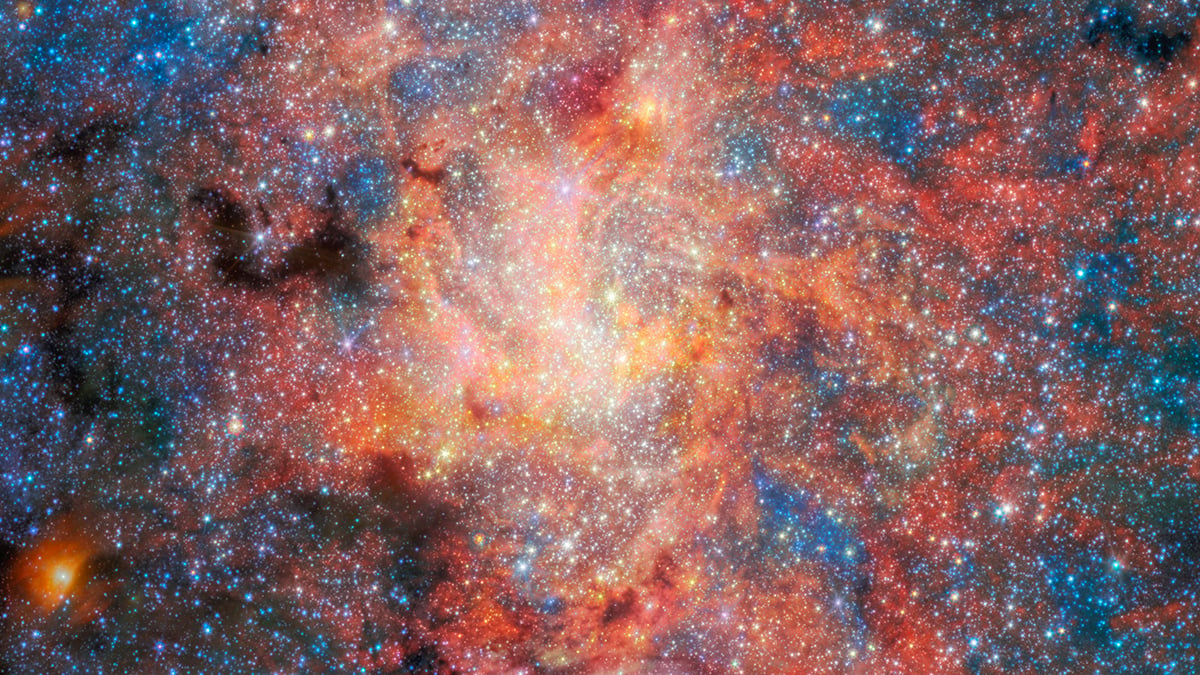
The central region of the Milky Way contains one of the most extreme stellar environments in our galaxy. At its center lies Sagittarius A*, a supermassive black hole with a mass of about 4.3 million Suns. Thousands of stars orbit within a few light-years of it, along with dense clouds of gas and dust exposed to strong radiation and powerful gravitational forces.
One of those stars is IRS 3, an evolved star located only 0.55 light-years from Sagittarius A*. New observations from the James Webb Space Telescope show that an extensive envelope of material surrounds IRS 3. And here is the most exciting news: the observations provide evidence for oxygen-rich dust and water within this envelope. In the words of ESA‘s Macarena Garcia Marin:
“The detection of water is especially exciting because it shows that molecular material can survive in an environment dominated by intense radiation.”
A detailed view of IRS 3
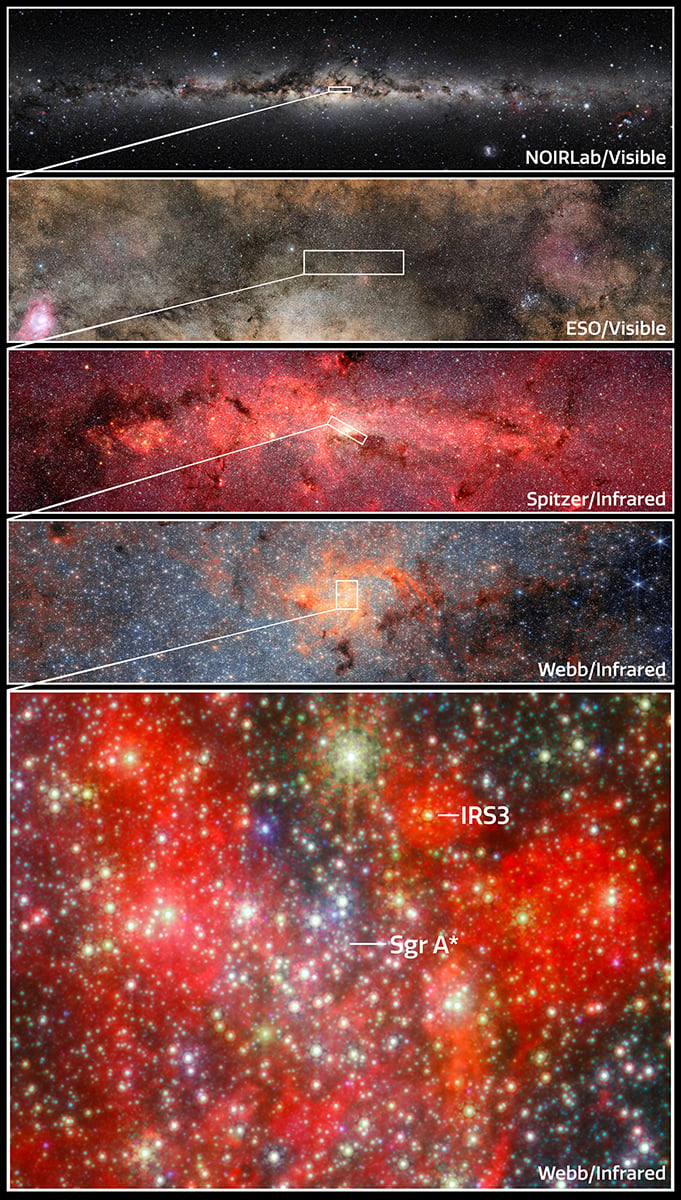
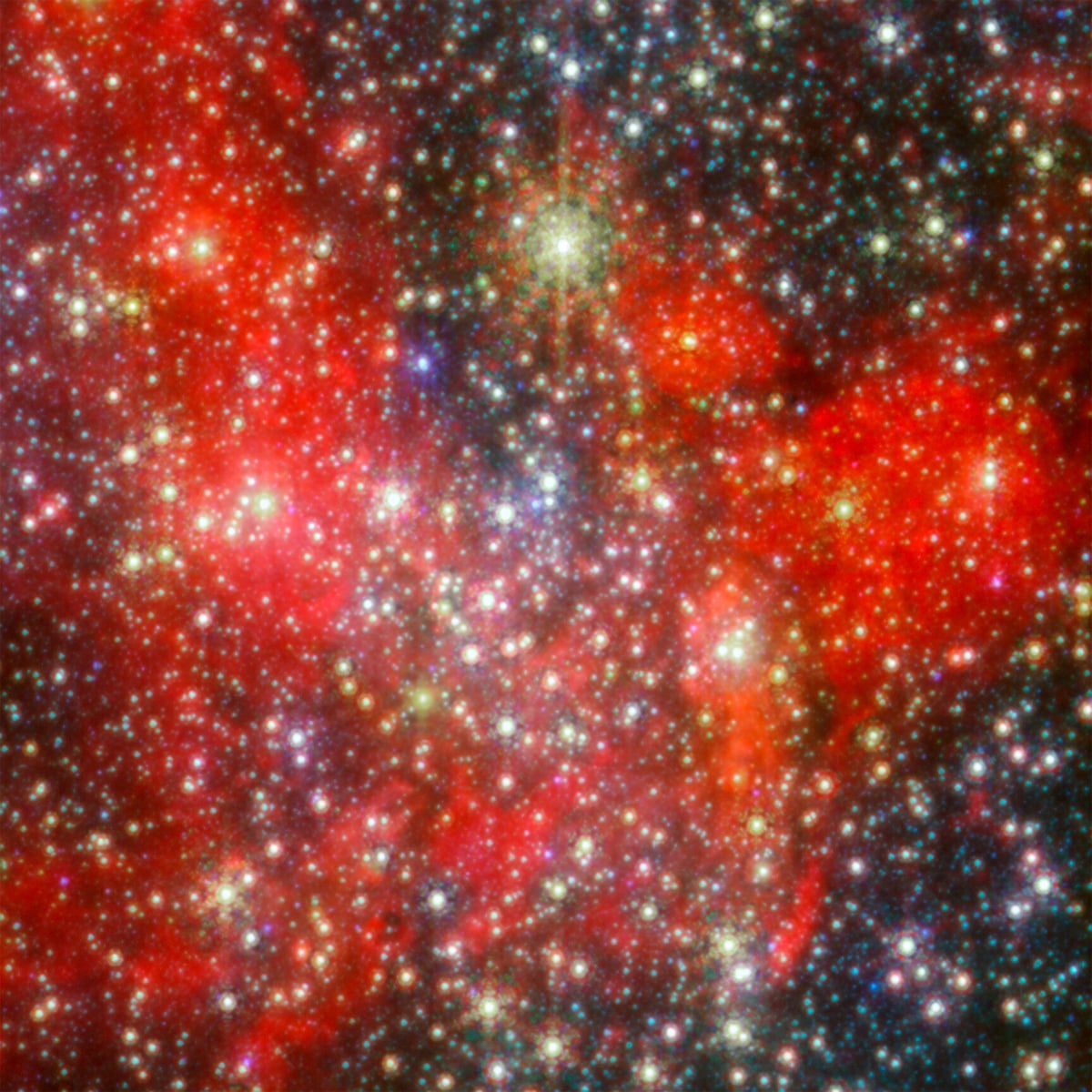
IRS 3 lies within an exceptionally crowded part of the sky. The Galactic Center contains a large concentration of stars, while foreground dust obscures much of the region at visible wavelengths. Infrared observations allow astronomers to study sources that are difficult or impossible to observe in visible light.
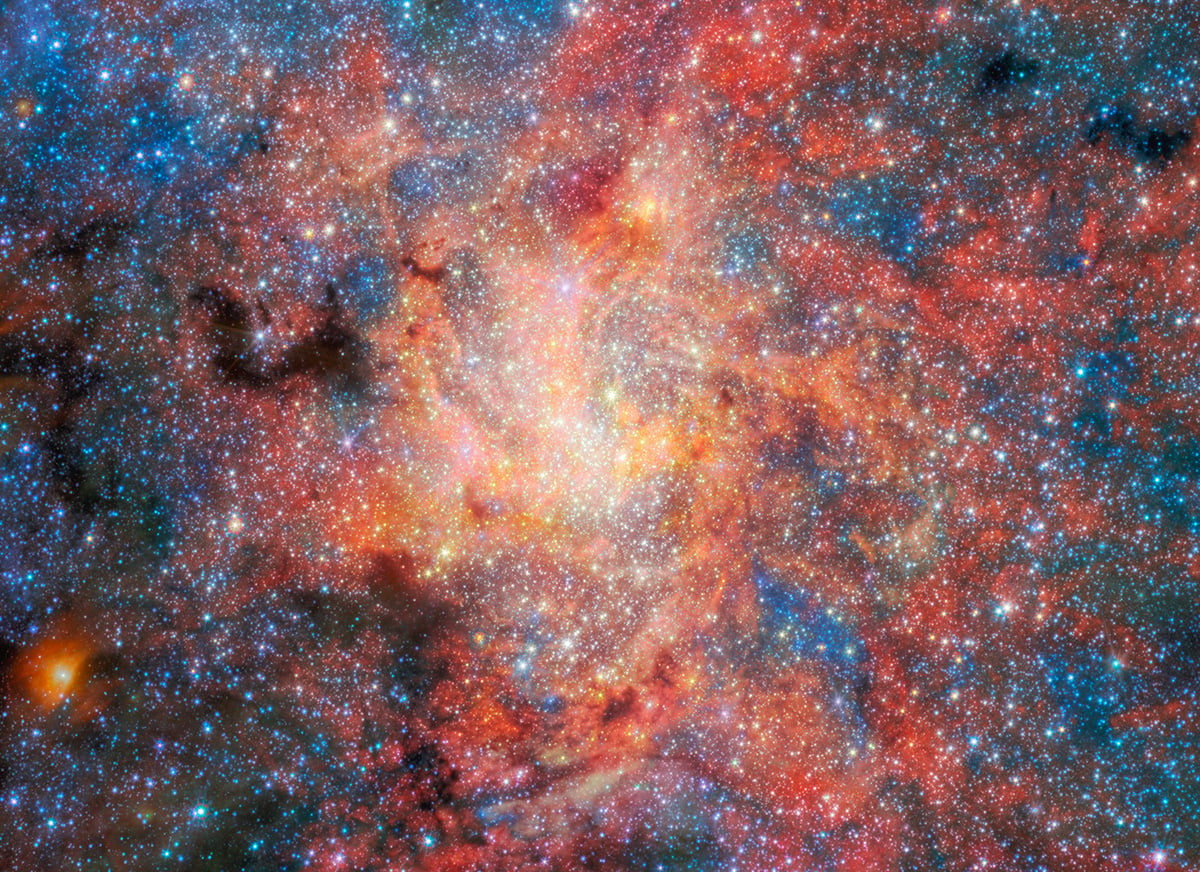
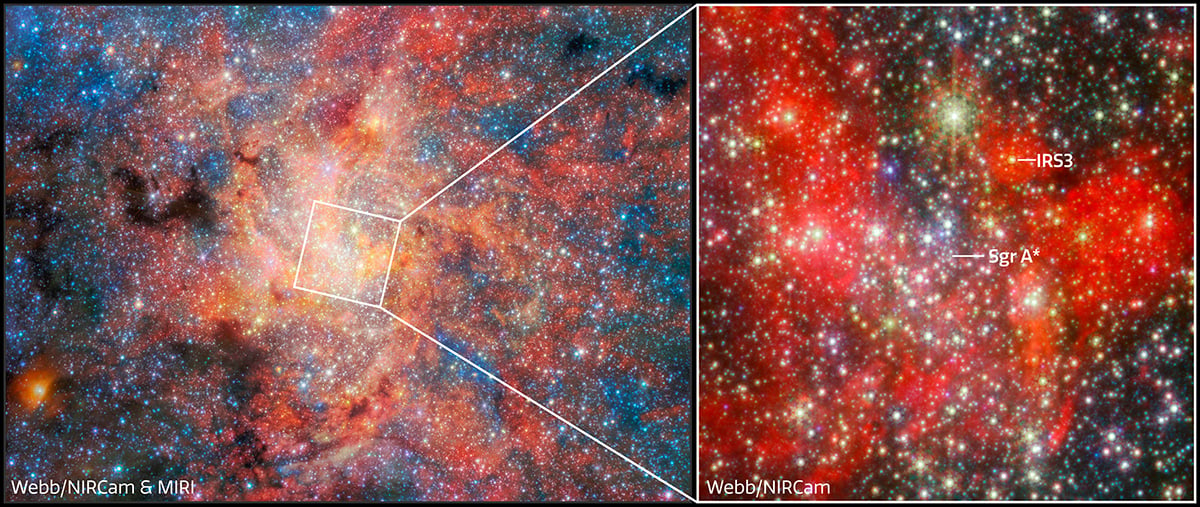
The wide-field JWST image shows IRS 3 within this dense stellar population. Numerous stars are visible across the field, while diffuse emission from gas and dust occupies parts of the background. In the combined NIRCam and MIRI image, the mid-infrared contribution becomes particularly important. It reveals emission from material surrounding IRS 3 that is much less apparent in the near-infrared view.
The close-up image provides a clearer look at the star itself. IRS 3 appears as a bright source surrounded by extended emission. This emission is associated with its circumstellar material, which the star has been losing during its advanced stage of stellar evolution. Earlier observations had already identified IRS 3 as an unusually strong infrared source. James Webb provides a much more detailed view of the material responsible for that emission.
A large envelope surrounds the evolved star
IRS 3 has reached the asymptotic giant branch (AGB) phase of stellar evolution. Stars at this stage have exhausted much of the hydrogen and helium fuel used during their earlier evolution. They expand, become cooler at their surfaces, and lose material through strong stellar winds.
The material expelled by IRS 3 has produced a large circumstellar envelope. Models based on the new observations indicate a layered structure extending to roughly 10,000 astronomical units. The temperature varies substantially across this region. Dust close to the star can reach approximately 1,200 kelvins, while material in the outer parts of the envelope can be as cool as about 100 kelvins.
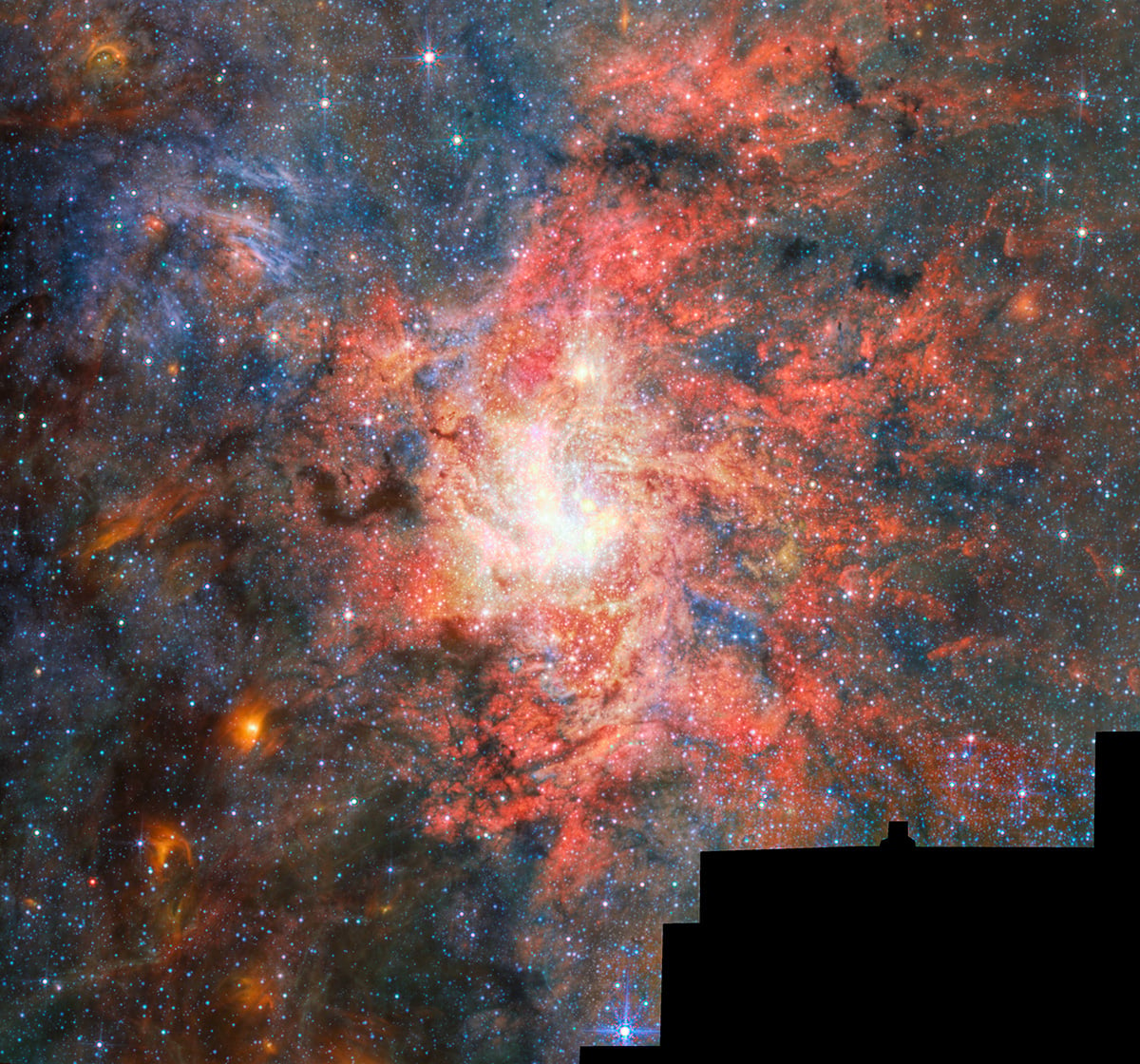
The envelope is a record of the star’s mass-loss history. Material released during different periods of stellar activity can produce layers with different densities and temperatures. Studying those layers gives astronomers information about how the star has evolved and how rapidly it has been losing mass.
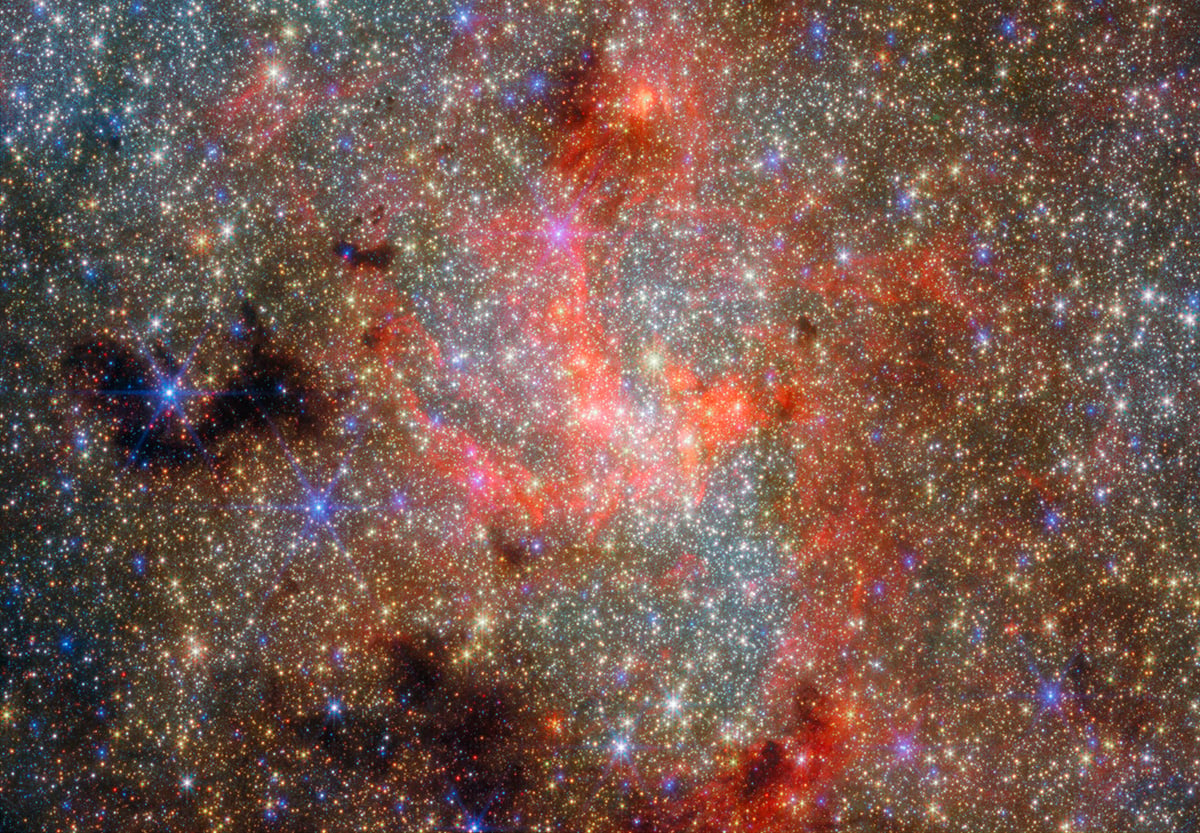
Water has been detected around IRS 3
The MIRI spectrum contains another important signature. Researchers detected water in the envelope surrounding IRS 3. This is the first clear detection of water around the star.
The detection does not mean JWST photographed liquid water. The water is identified through its interaction with infrared radiation at specific wavelengths. Spectroscopy allows astronomers to distinguish this signature from the emission produced by dust and other material.
The result is particularly exciting as well as interesting. IRS 3 is so close to Sagittarius A*, and we least expect water to be present in such regions. The Galactic Center contains strong sources of radiation and a dense stellar population. Such conditions can affect molecules and dust grains, making the survival of molecular material more difficult.
The observations show that water can persist within the material surrounding IRS 3. The star’s own mass loss provides a continuous supply of gas and dust. As that material moves away from the stellar surface, its temperature falls, and its physical and chemical properties change.
Clear skies!
See more from DIYPhotography.net on Google
Add DIYPhotography.net as a trusted source. This makes
our stories more likely to appear in your Google Search results.
 Add as a preferred source on Google

Soumyadeep Mukherjee
Soumyadeep Mukherjee is an award-winning astrophotographer from India. He has a doctorate degree in Linguistics. His work extends to the sub-genres of nightscape, deep sky, solar, lunar and optical phenomenon photography. He is also a photography educator and has conducted numerous workshops. His works have appeared in over 40 books & magazines including Astronomy, BBC Sky at Night, Sky & Telescope among others, and in various websites including National Geographic, NASA, Forbes. He was the first Indian to win “Astronomy Photographer of the Year” award in a major category.

Join the Discussion
DIYP Comment Policy
Be nice, be on-topic, no personal information or flames.