
















Hera Spacecraft Captures Its First Close-Up of Didymos Asteroid
Nov 11, 2026
Soumyadeep Mukherjee
Soumyadeep Mukherjee is an award-winning astrophotographer from India. He has a doctorate degree in Linguistics. His work extends to the sub-genres of nightscape, deep sky, solar, lunar and optical phenomenon photography. He is also a photography educator and has conducted numerous workshops. His works have appeared in over 40 books & magazines including Astronomy, BBC Sky at Night, Sky & Telescope among others, and in various websites including National Geographic, NASA, Forbes. He was the first Indian to win “Astronomy Photographer of the Year” award in a major category.
Share:
In September 2022, NASA deliberately crashed a spacecraft into an asteroid. The collision changed the orbit of Dimorphos, a small body circling the larger asteroid Didymos. It was the first time a human-made object had measurably changed the motion of a celestial body.
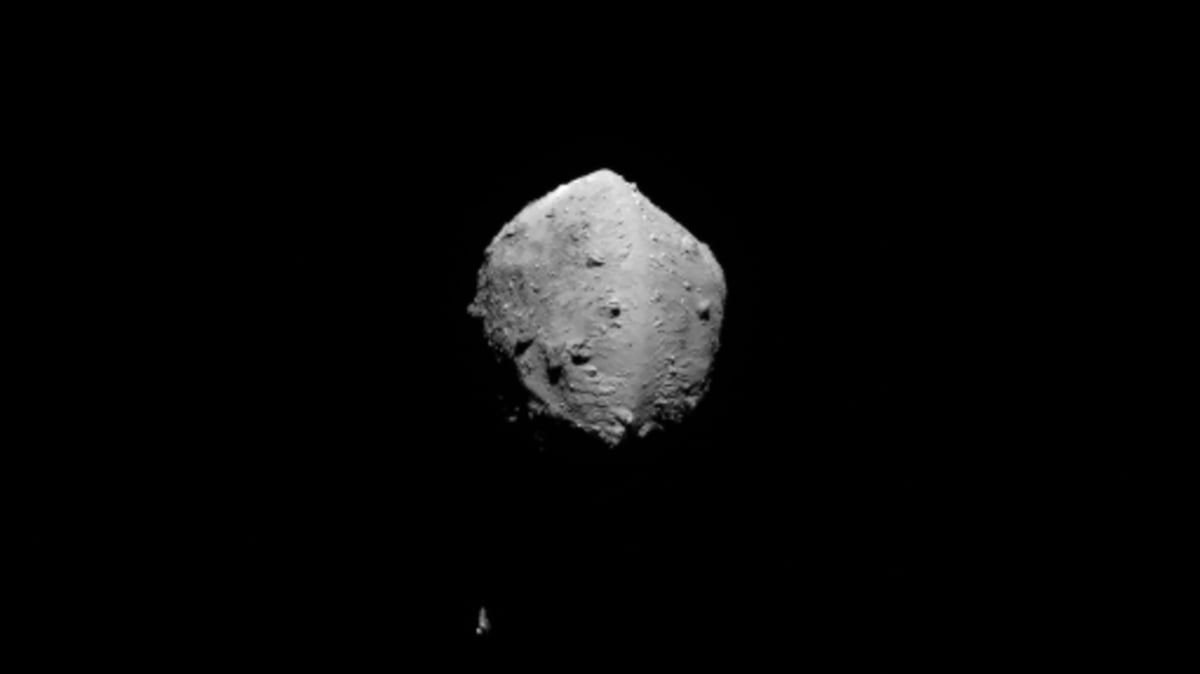
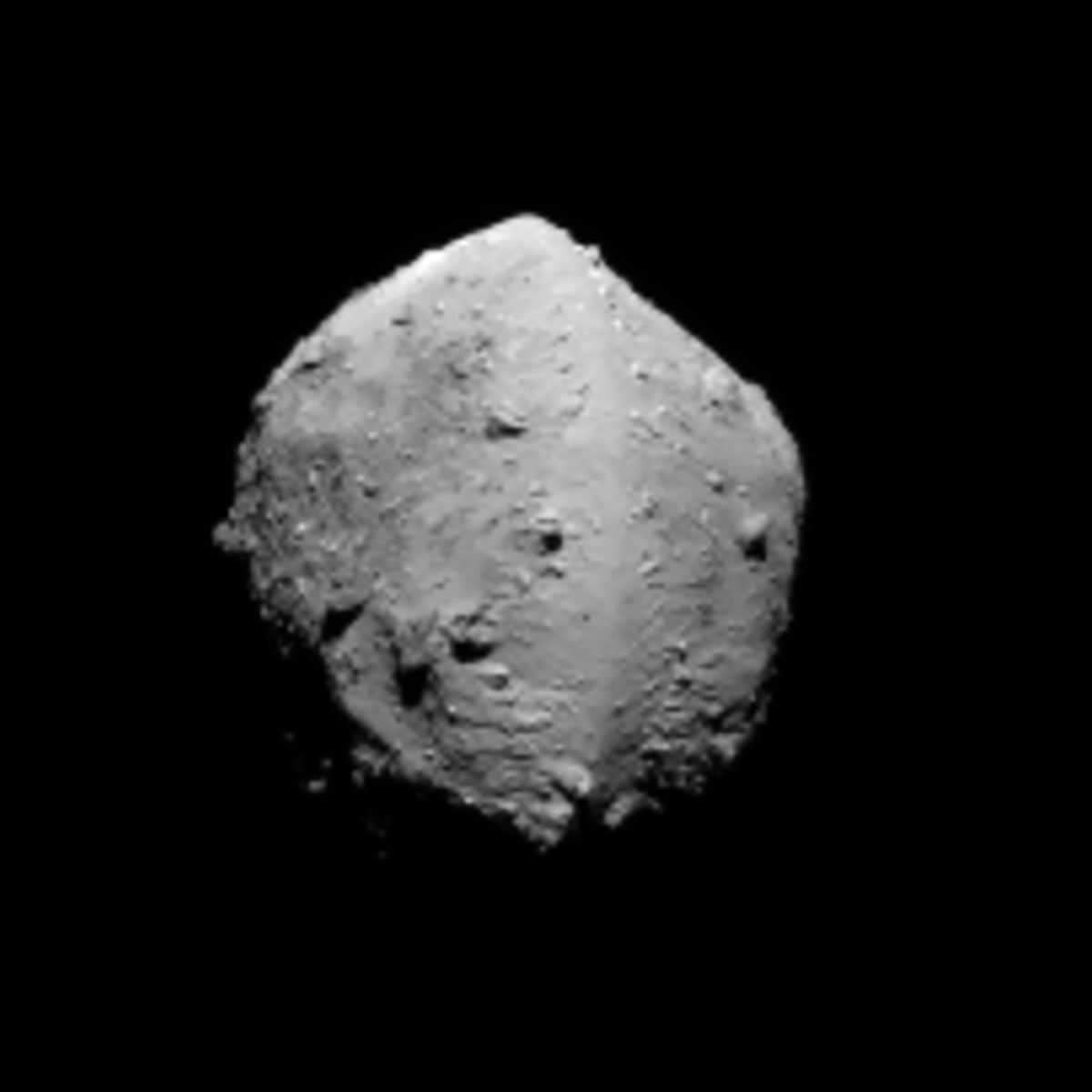
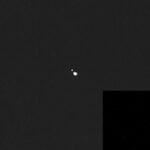
ESA’s Hera spacecraft is now approaching the same asteroid system to investigate. On November 5, 2026, the European Space Agency released Hera’s first close-up view of Didymos. The spacecraft took the photograph from about 600 kilometers away using its Asteroid Framing Camera. It shows a side of the larger asteroid that NASA’s DART spacecraft had not seen during its final approach.
Hera photographs a previously unseen side of Didymos
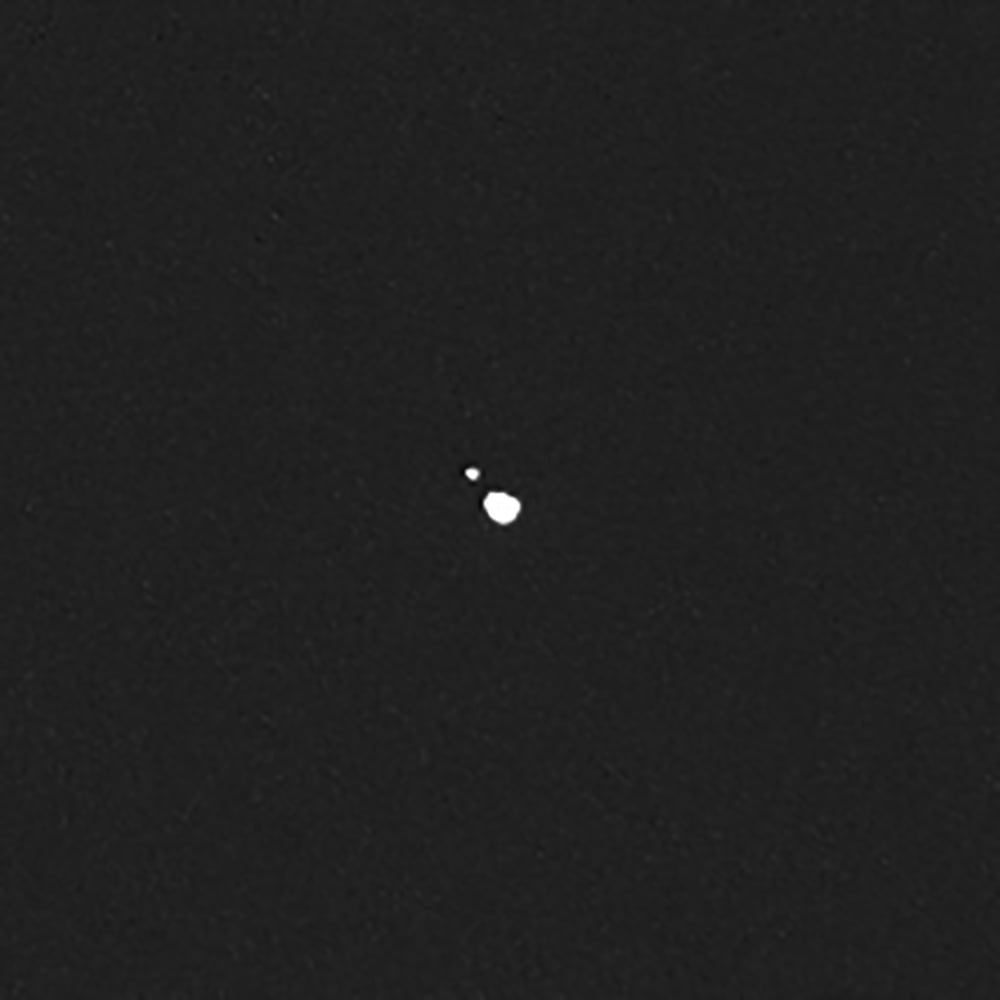
Didymos is the larger member of a binary asteroid system. It measures about 780 meters across, while its companion, Dimorphos, is approximately 151 meters wide. The smaller asteroid orbits Didymos at an average distance of about 1.15 kilometers. Although the pair are close together, they are separate bodies with their own surface features and physical properties.
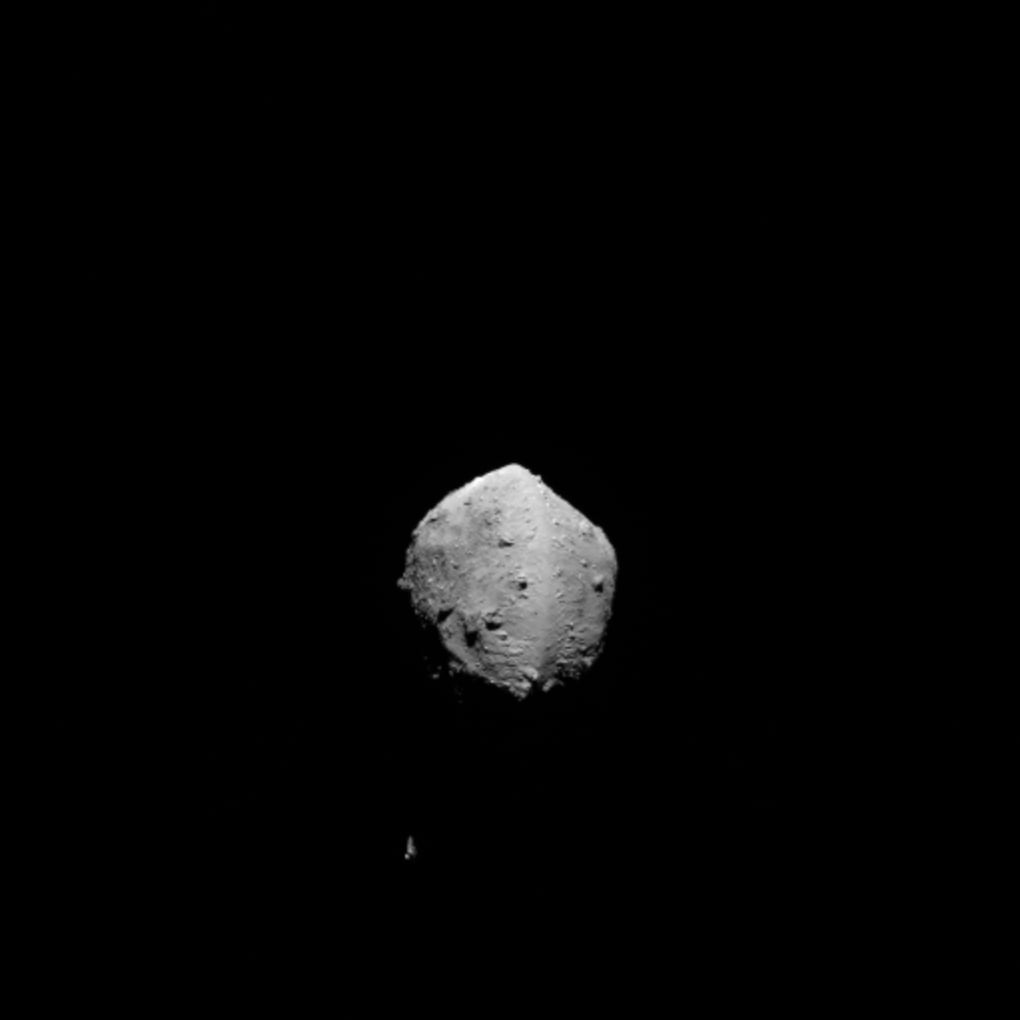
Hera’s new photograph shows Didymos from a viewing angle that differs from the one captured by DART shortly before its collision with Dimorphos. DART’s camera recorded the asteroid system during the spacecraft’s final approach, but its view covered only part of the larger asteroid.
The newly released image shows a prominent ridge running around Didymos’s equatorial region. Scientists had already identified this feature in earlier observations. However, the newly visible hemisphere has a different appearance, with several boulders and craters spread across its surface. Some areas also show patterns that look like grooves or ridges.
What happened when NASA’s DART spacecraft hit Dimorphos?
NASA launched the Double Asteroid Redirection Test, or DART, on November 24, 2021. The mission had a specific goal: to test whether a spacecraft could change an asteroid’s motion by hitting it at high speed. Scientists selected Dimorphos because it orbits Didymos. That arrangement allowed telescopes on Earth to measure changes in the smaller asteroid’s orbital period.
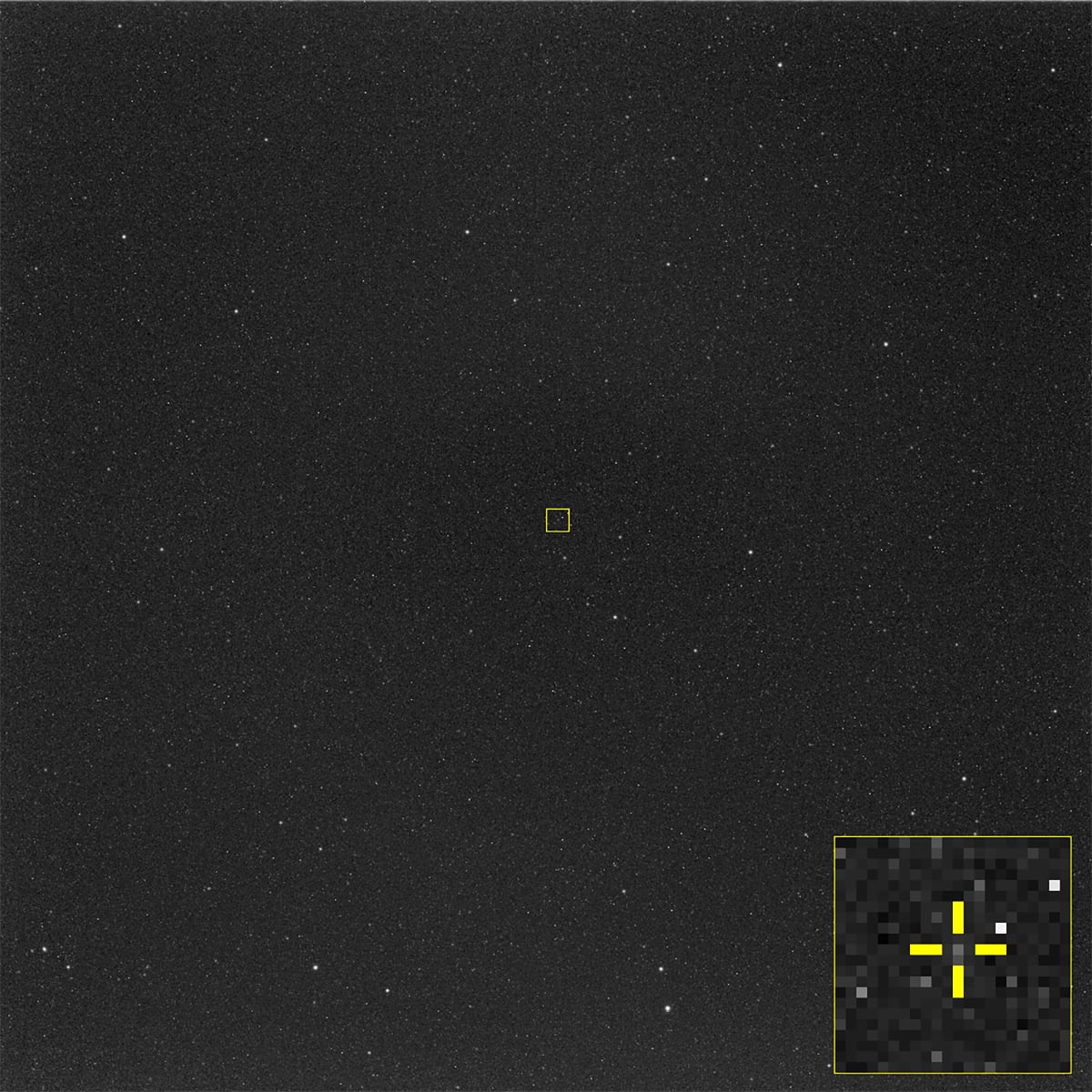
DART struck Dimorphos on September 26, 2022, travelling at approximately 6.1 kilometers per second. The spacecraft weighed about 580 kilograms. The collision released a large plume of dust and rocky material, which spread far beyond the asteroid. Telescopes around the world followed the debris as it expanded into space.
The impact also changed Dimorphos’s orbit around Didymos. Before the collision, the smaller asteroid took about 11 hours and 55 minutes to complete one orbit. Afterward, that period became roughly 33 minutes shorter. The change exceeded the mission’s expectations and demonstrated that a kinetic impact could alter an asteroid’s orbital motion.
Cameras will investigate the asteroid system
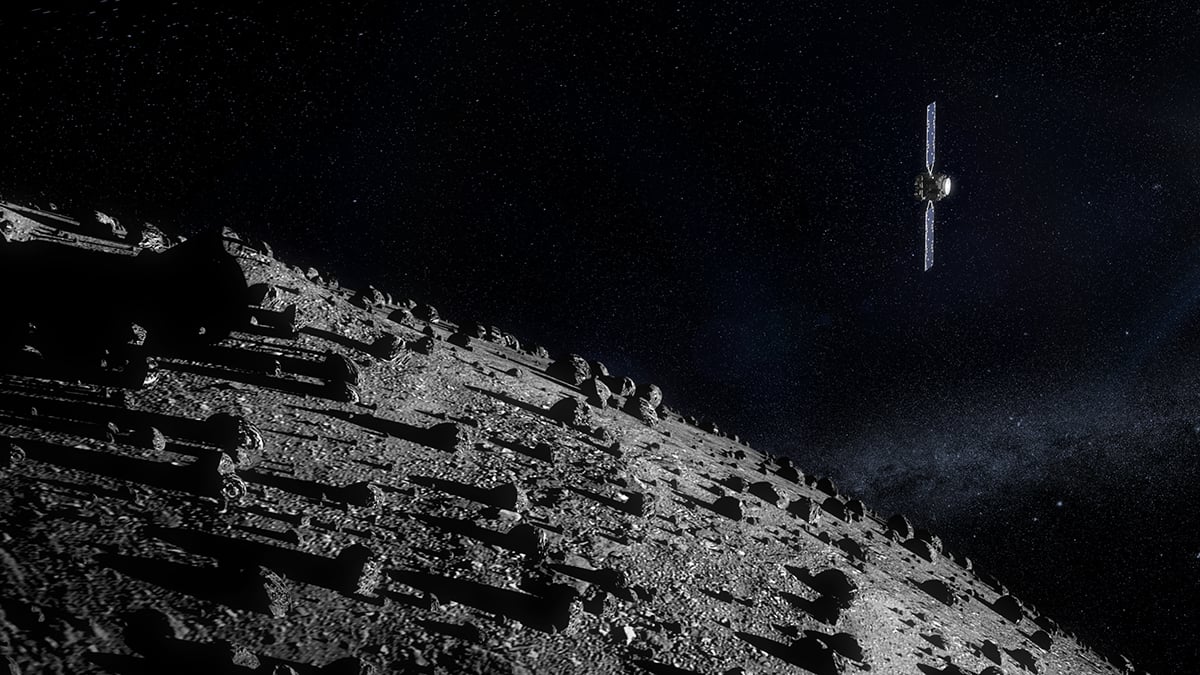
Hera carries a suite of instruments designed to examine the asteroids from different distances and angles. Its Asteroid Framing Camera (AFC) will play a central role. The camera supports spacecraft navigation while also collecting images for scientific analysis. The mission team will use its photographs to map the surfaces, identify geological features, and document the DART impact region.
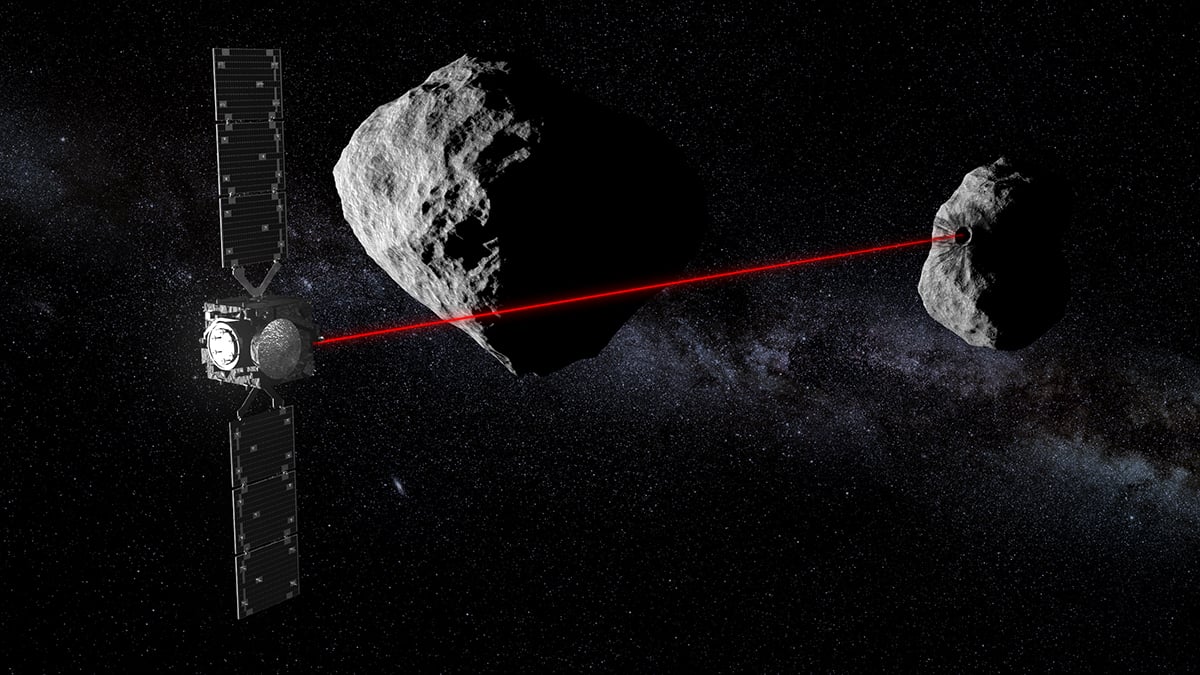
The spacecraft also carries the Thermal Infrared Imager, or TIRI. It will measure temperature differences across the asteroid surfaces. A laser rangefinder will measure distances between Hera and the asteroid surface. These measurements will support navigation and help build accurate maps.
Hera’s next observations will provide increasingly detailed views of Didymos and Dimorphos. The November 25 image release is expected to offer a closer look at both asteroids.
Clear skies!
See more from DIYPhotography.net on Google
Add DIYPhotography.net as a trusted source. This makes
our stories more likely to appear in your Google Search results.
 Add as a preferred source on Google

Soumyadeep Mukherjee
Soumyadeep Mukherjee is an award-winning astrophotographer from India. He has a doctorate degree in Linguistics. His work extends to the sub-genres of nightscape, deep sky, solar, lunar and optical phenomenon photography. He is also a photography educator and has conducted numerous workshops. His works have appeared in over 40 books & magazines including Astronomy, BBC Sky at Night, Sky & Telescope among others, and in various websites including National Geographic, NASA, Forbes. He was the first Indian to win “Astronomy Photographer of the Year” award in a major category.

Join the Discussion
DIYP Comment Policy
Be nice, be on-topic, no personal information or flames.