



















NASA’s Psyche Meets ESA’s Mars Express at Mars for a Photoshoot
Jul 27, 2026
Soumyadeep Mukherjee
Soumyadeep Mukherjee is an award-winning astrophotographer from India. He has a doctorate degree in Linguistics. His work extends to the sub-genres of nightscape, deep sky, solar, lunar and optical phenomenon photography. He is also a photography educator and has conducted numerous workshops. His works have appeared in over 40 books & magazines including Astronomy, BBC Sky at Night, Sky & Telescope among others, and in various websites including National Geographic, NASA, Forbes. He was the first Indian to win “Astronomy Photographer of the Year” award in a major category.
Share:
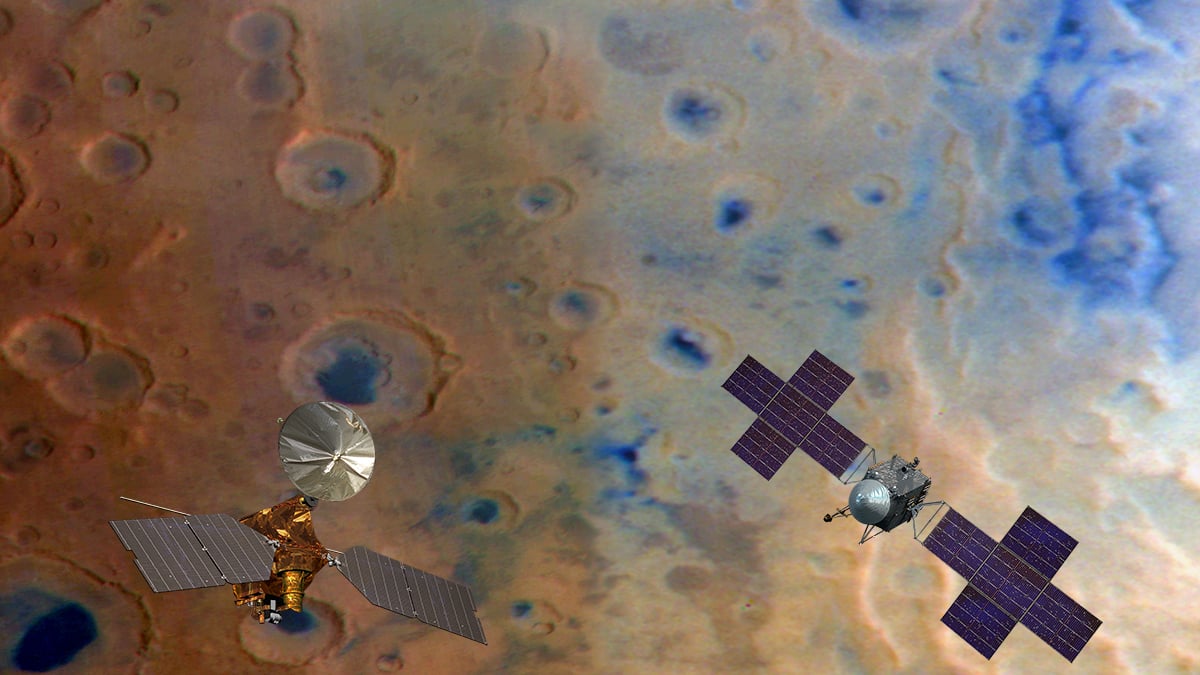
For a few hours, Mars became the stage for an unusual event. Two robotic explorers, launched decades apart and built for completely different missions, observed the same planet from different corners of space. One had spent more than twenty years orbiting Mars. The other was only passing through, using the planet’s gravity to continue its journey toward one of the Solar System‘s most mysterious asteroids.
The encounter, however, did not involve a close meeting between the two spacecraft. It was a case of orbital timing. As NASA‘s Psyche spacecraft swept past Mars during a gravity-assist maneuver, the European Space Agency‘s Mars Express watched from its established orbit around the planet. Each spacecraft recorded Mars from a different position, creating an unusual opportunity to compare two perspectives of the same world at nearly the same time.
A gravity assist for the Psyche mission
NASA launched the Psyche spacecraft in October 2023 with a destination unlike any previous planetary mission. Psyche is heading toward asteroid 16 Psyche, a giant metallic world orbiting between Mars and Jupiter. Scientists believe the asteroid could preserve clues about the earliest stages of planetary formation, making it one of the most intriguing objects in the Solar System.
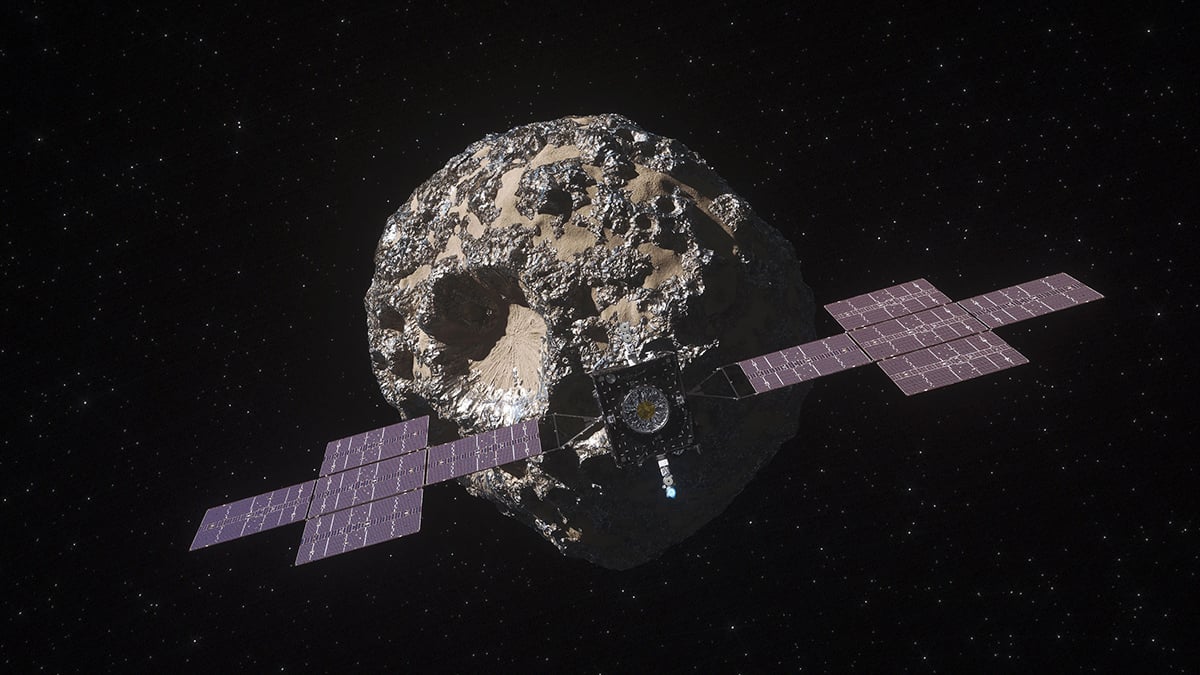
Reaching it, however, requires an enormous amount of energy. The mission relies on celestial mechanics. This is where gravity assists become essential. During a flyby, a spacecraft enters a planet’s gravitational field and exchanges momentum with the planet. The spacecraft leaves on a new trajectory with a different speed and direction, while the planet experiences an immeasurably tiny change in its own motion.
On 15 May 2026, Psyche passed roughly 4,500 kilometers above the Martian surface. Although the spacecraft briefly fell under Mars’ gravitational influence, it never entered orbit. Instead, the encounter bent its trajectory and increased its heliocentric velocity, setting it on course for its arrival at asteroid Psyche in 2029.
Mars Express: Watching from above
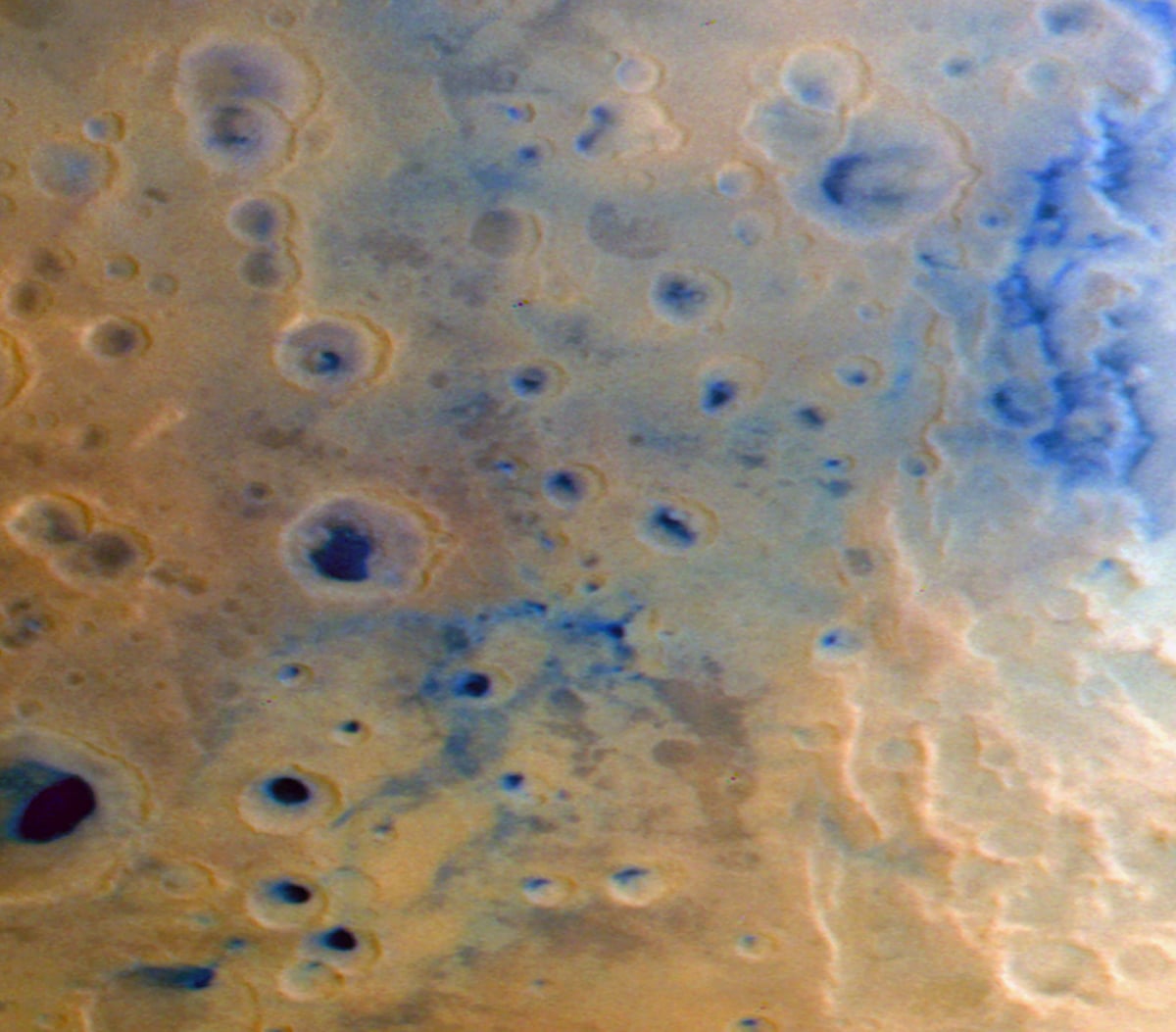
ESA launched Mars Express in June 2003, and the spacecraft entered Martian orbit six months later. More than two decades on, it remains one of the agency’s most successful planetary missions. Very few spacecraft continue producing frontline science after such a long time, and Mars Express has consistently exceeded expectations.
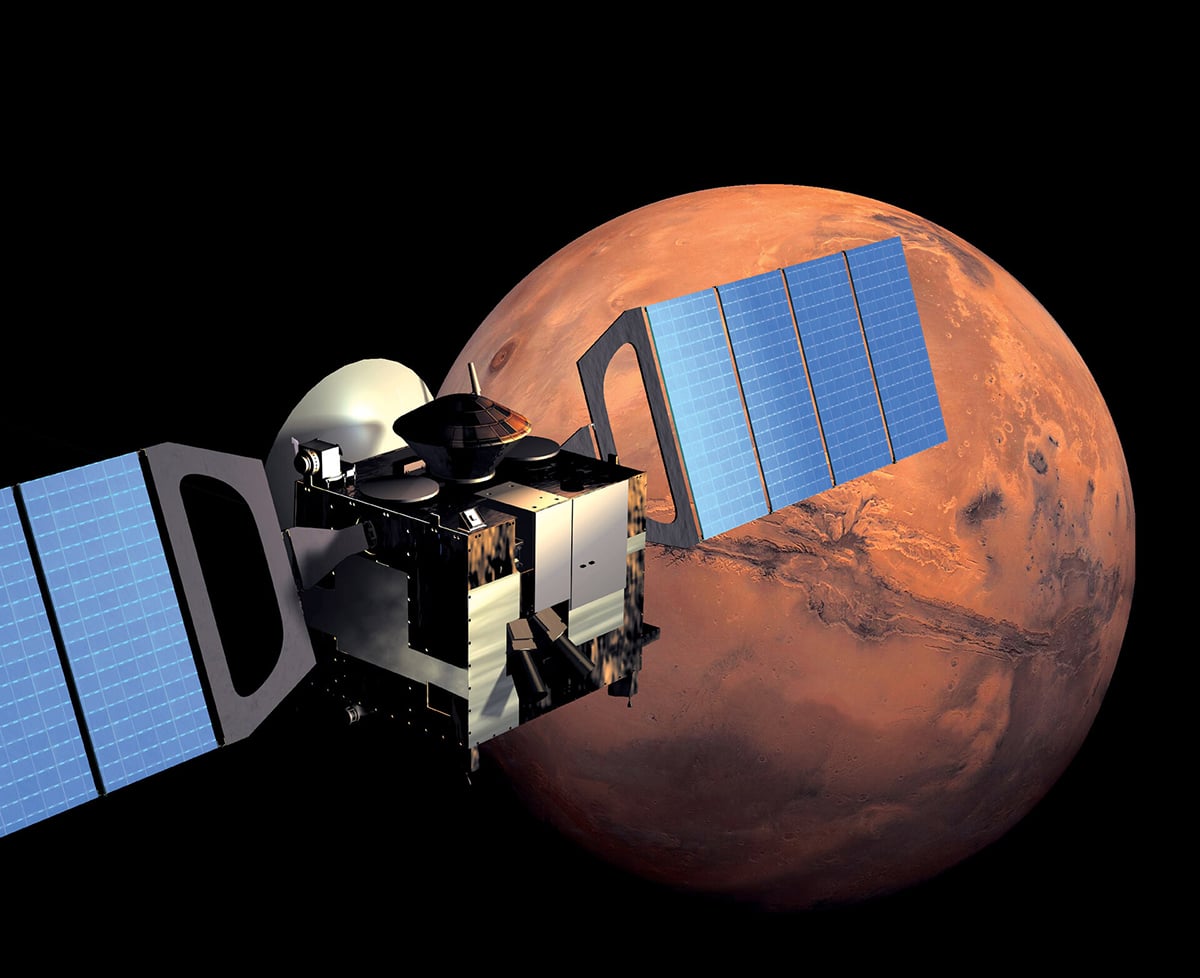
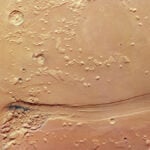
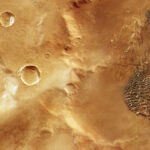
Over the years, it has changed scientists’ understanding of the Red Planet. Its instruments have mapped ancient river valleys, towering volcanoes, vast canyon systems, and impact basins in exceptional detail. They have monitored seasonal dust storms, measured atmospheric escape, studied the surface composition, and discovered extensive deposits of water ice beneath the ground.
Its High Resolution Stereo Camera has become one of the defining instruments of the mission. It has produced three-dimensional maps of Mars and some of the most detailed global images ever captured from orbit. Those observations continue to support research into the planet’s geological history and climate evolution.
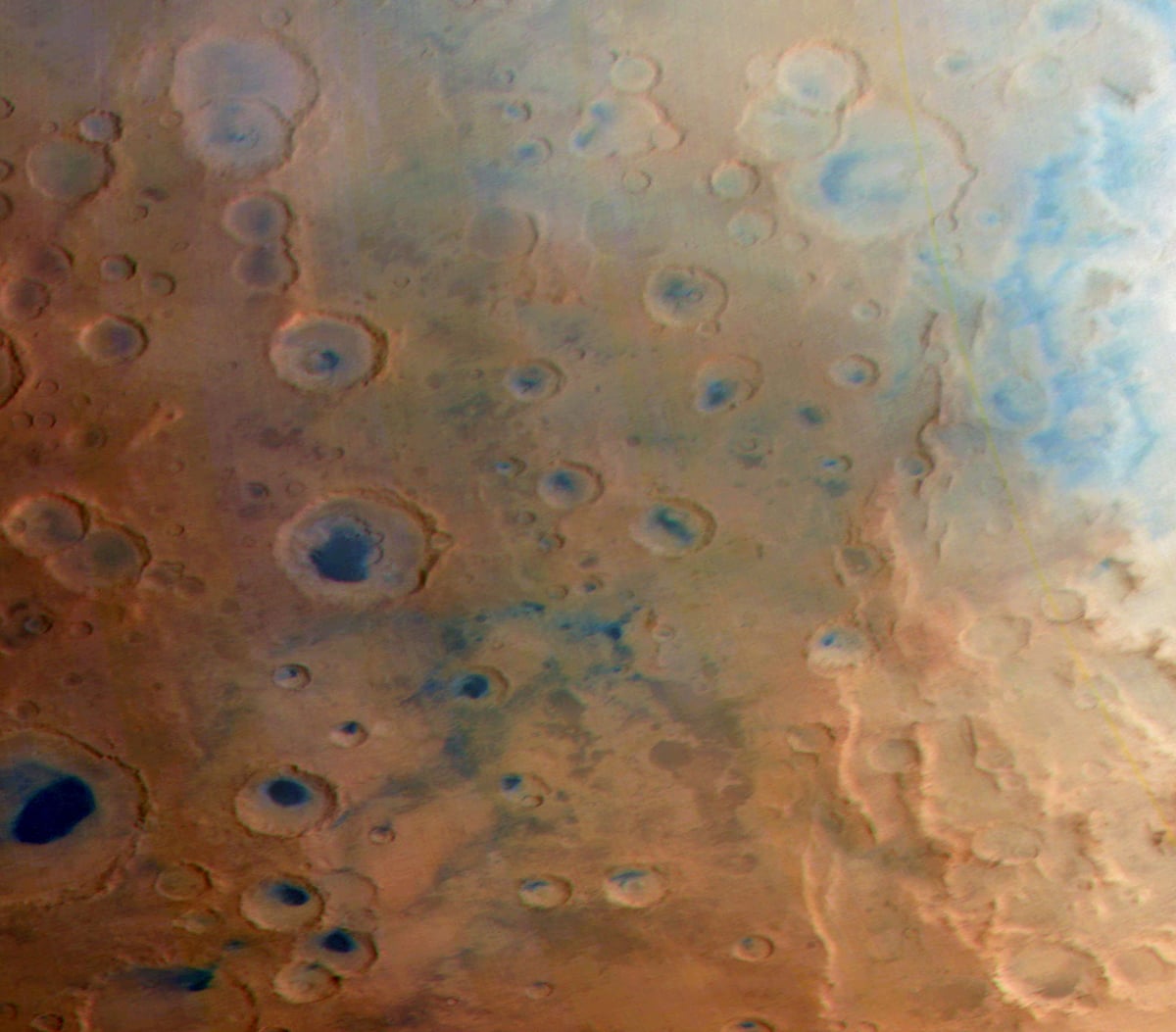
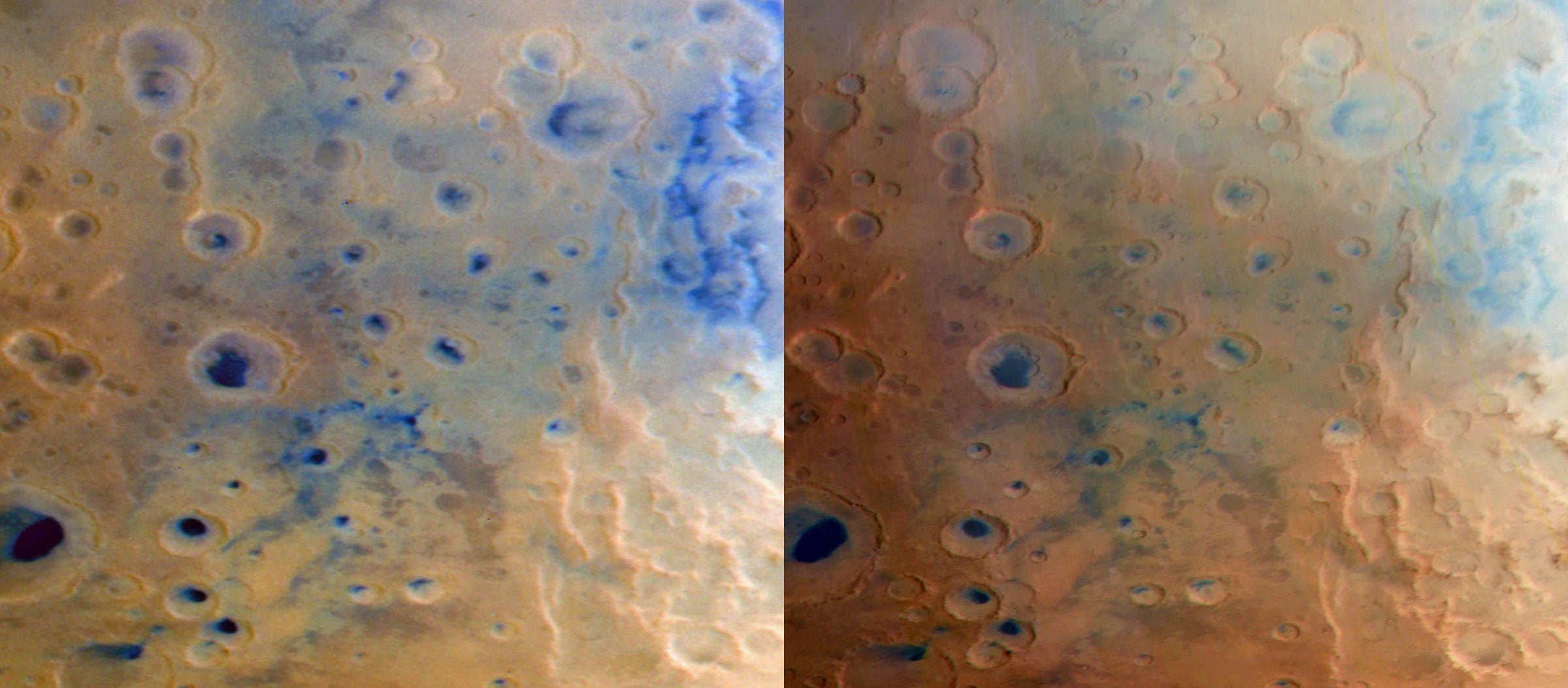
One planet, two different views
Mars Express viewed the planet from an orbital platform moving around Mars itself. The spacecraft maintained a relatively constant distance from the surface, allowing it to observe familiar landscapes under predictable viewing conditions.
Psyche’s path did not provide it with the same advantage. As it approached Mars, the planet appeared as a growing disk suspended against the blackness of space. Surface features became clearer with every passing minute. And the process reversed after the closest approach. Mars rapidly shrank until it became another distant world behind the spacecraft.
Scientists refer to this as observing under different viewing geometries. The angle between the Sun, the target, and the observer affects shadows, brightness, color, and the visibility of surface features. Comparing observations taken from different positions helps researchers better understand those effects and improves the interpretation of scientific data.
Clear skies!
See more from DIYPhotography.net on Google
Add DIYPhotography.net as a trusted source. This makes
our stories more likely to appear in your Google Search results.
 Add as a preferred source on Google

Soumyadeep Mukherjee
Soumyadeep Mukherjee is an award-winning astrophotographer from India. He has a doctorate degree in Linguistics. His work extends to the sub-genres of nightscape, deep sky, solar, lunar and optical phenomenon photography. He is also a photography educator and has conducted numerous workshops. His works have appeared in over 40 books & magazines including Astronomy, BBC Sky at Night, Sky & Telescope among others, and in various websites including National Geographic, NASA, Forbes. He was the first Indian to win “Astronomy Photographer of the Year” award in a major category.
Join the Discussion
DIYP Comment Policy
Be nice, be on-topic, no personal information or flames.