




















NASA’s Psyche Mission Captures a Timelapse of the Crescent Mars
May 26, 2026
Soumyadeep Mukherjee
Soumyadeep Mukherjee is an award-winning astrophotographer from India. He has a doctorate degree in Linguistics. His work extends to the sub-genres of nightscape, deep sky, solar, lunar and optical phenomenon photography. He is also a photography educator and has conducted numerous workshops. His works have appeared in over 40 books & magazines including Astronomy, BBC Sky at Night, Sky & Telescope among others, and in various websites including National Geographic, NASA, Forbes. He was the first Indian to win “Astronomy Photographer of the Year” award in a major category.
Share:
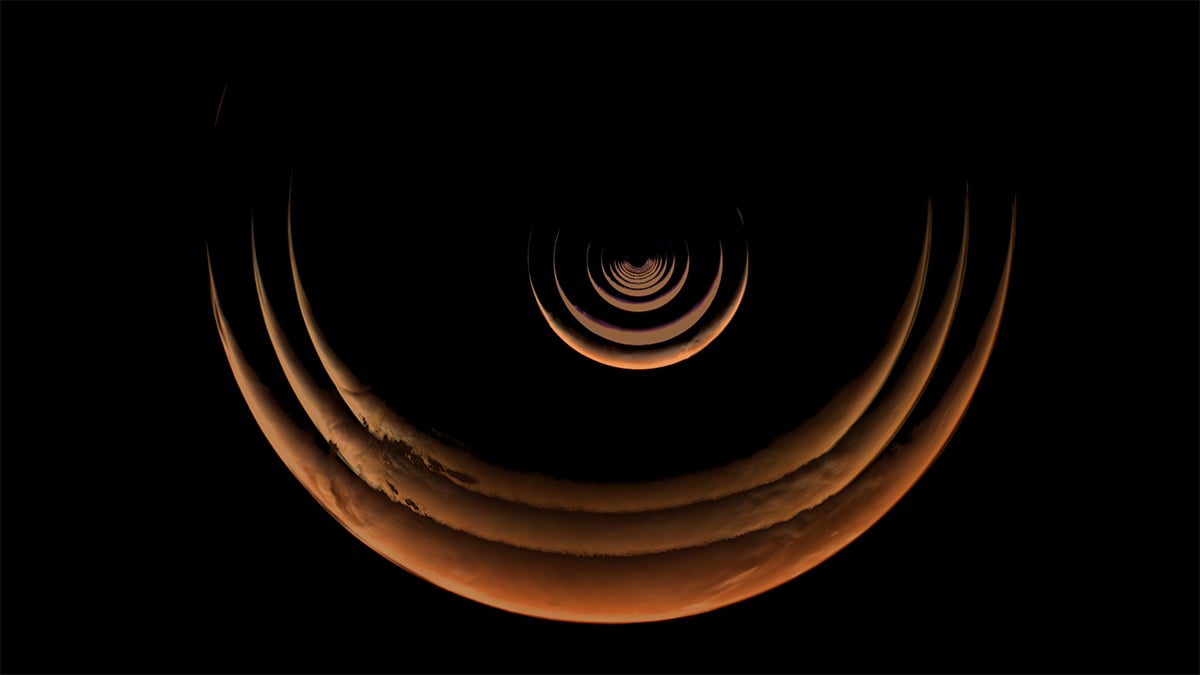
Remember NASA’s Psyche mission and the images of Mars it captured? Now, NASA has released a timelapse image showing the spacecraft’s approach towards Mars. The newly released timelapse combines observations acquired over nearly two weeks as Psyche approached Mars ahead of its flyby.
The sequence captures the changing appearance of the planet as the spacecraft closed the distance. Mars begins as a small crescent suspended against the darkness of space. Then, frame by frame, the planet expands across the field of view. The illuminated arc grows broader, atmospheric effects become more apparent, and surface markings slowly emerge from what initially appears to be a featureless disk.
Familiar planet, not so familiar views
Mars is one of the most heavily studied worlds in the Solar System. Orbiters have mapped its surface in extraordinary detail. Landers and rovers have examined its geology from the ground. Meanwhile, amateur and professional astronomers continue to monitor the planet from Earth during every favorable apparition.
The Psyche spacecraft, however, provided us with a perspective that is not readily available. As the spacecraft approached the planet, it occupied a position where much of the sunlit hemisphere pointed away from the camera. Consequently, Mars appeared as a crescent. While planetary crescents are common among the inner planets, Mars never displays such a dramatic phase from Earth. The orbital arrangement between Earth and Mars limits those viewing opportunities.
Those same geometries do not restrict a spacecraft travelling through interplanetary space. Psyche approached Mars from an entirely different direction and recorded a view that few missions have captured in such a continuous manner. The sequence documents motion. The relationship between the spacecraft and the planet evolved from day to day.
The transformation of the Martian crescent
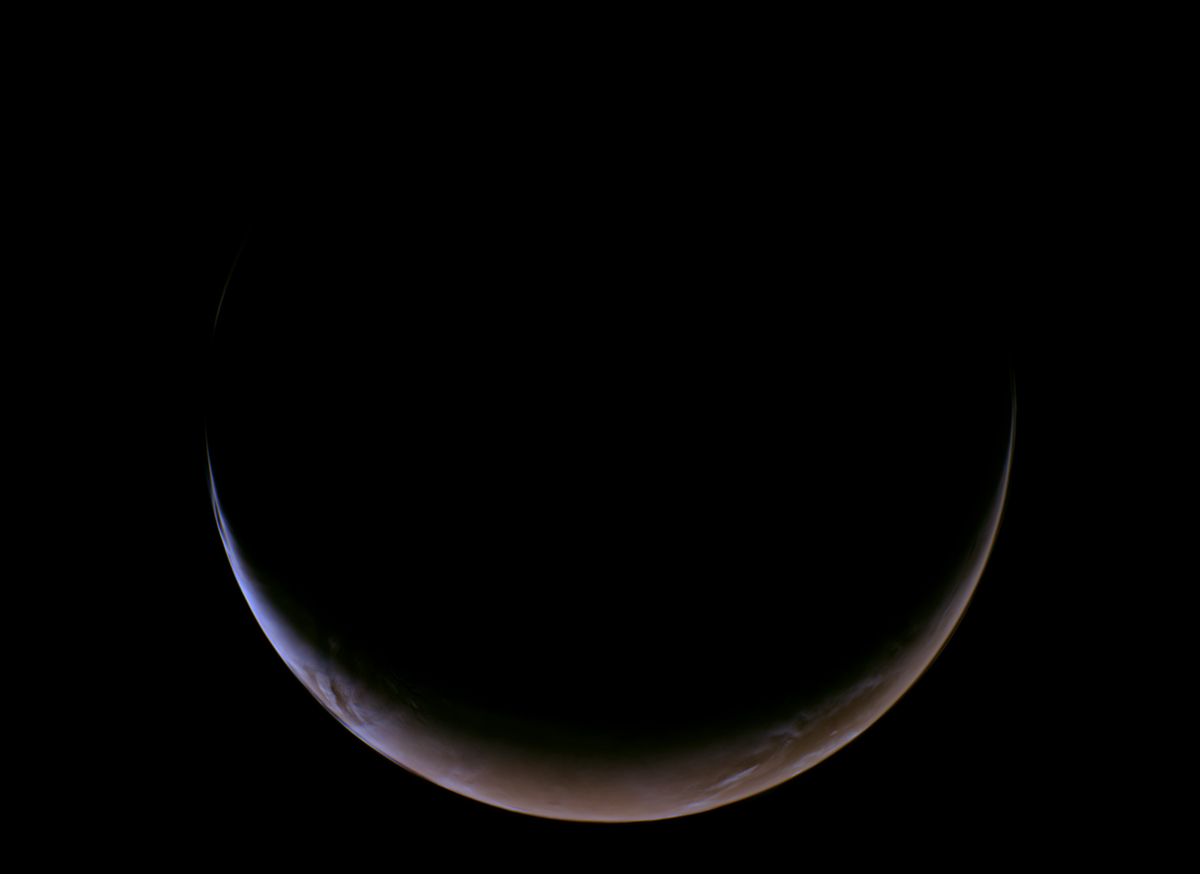
One reason the image feels so engaging is its gradual progression. At the beginning, the planet appears distant and delicate. Only a narrow slice of the illuminated hemisphere catches sunlight. The remainder blends into the darkness of space. The image resembles a planetary crescent seen through a telescope, although viewed from a location impossible for observers on Earth.
As Psyche advances along its trajectory, Mars occupies a larger portion of the camera’s field of view. This growth is entirely physical as the spacecraft is moving closer to the planet. The apparent diameter increases with each observation. The widening crescent reflects the evolving angle between Mars, the spacecraft, and the Sun.
These changes illustrate planetary phases. Most people encounter phases through observations of the Moon. Venus also displays dramatic phase changes when viewed through a telescope. Mars experiences similar effects, although they are usually less obvious from Earth.
Surface features of Mars
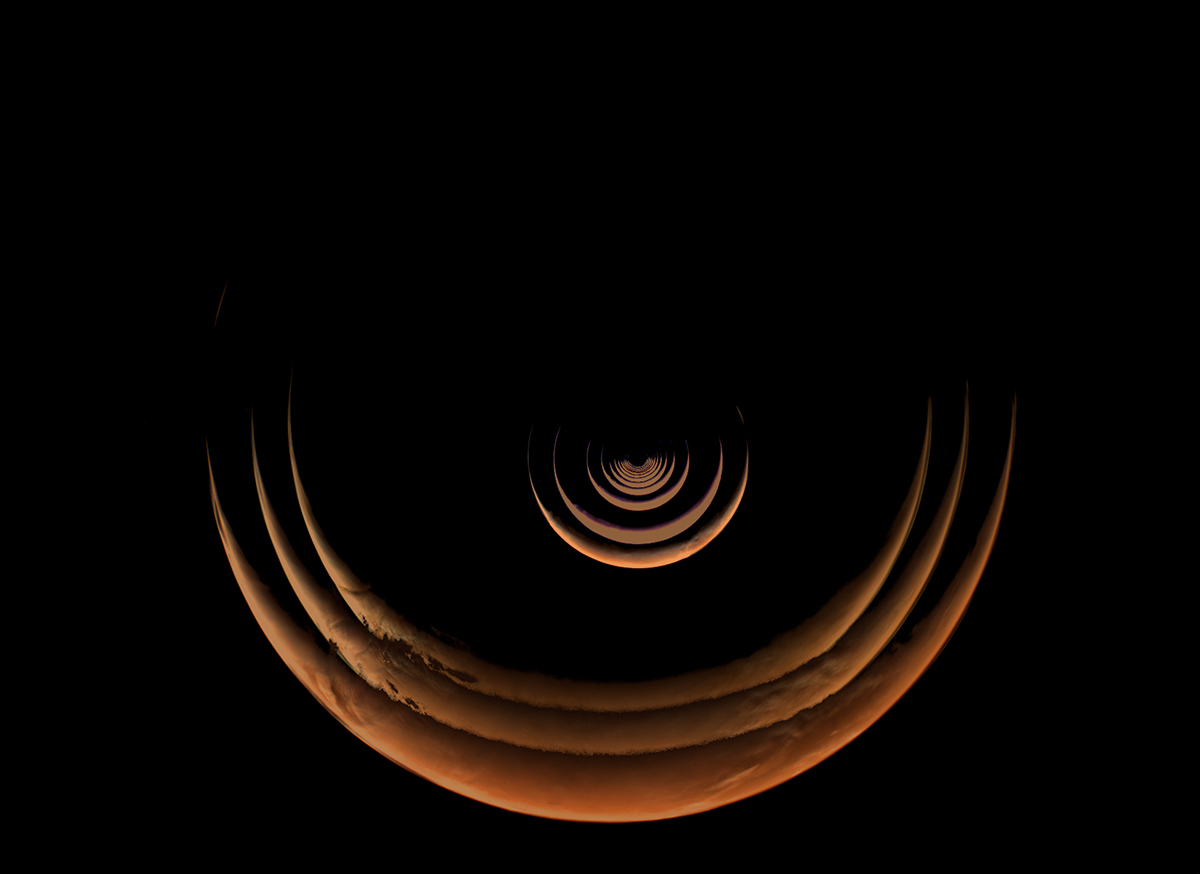
As the spacecraft moved closer, the increasing image scale revealed details that remained hidden during the early stages of the approach. Initially, Mars appeared largely uniform apart from its crescent shape. Gradually, variations in brightness emerged across the visible hemisphere. Darker regions contrasted with brighter terrain and created recognizable patterns across the planetary disk.
These differences show the variations on the Martian surface. Certain regions contain darker volcanic materials and exposed basaltic deposits. Other areas are covered by dust that reflects sunlight more efficiently. These features produce the familiar albedo patterns visible in telescopic observations.
With the continued approach, additional structures became visible. The south polar region emerged more clearly. Impact features and wind-shaped landscapes began to reveal themselves. NASA highlighted views containing the south polar cap, Huygens crater, and extensive wind streaks etched across the surface.
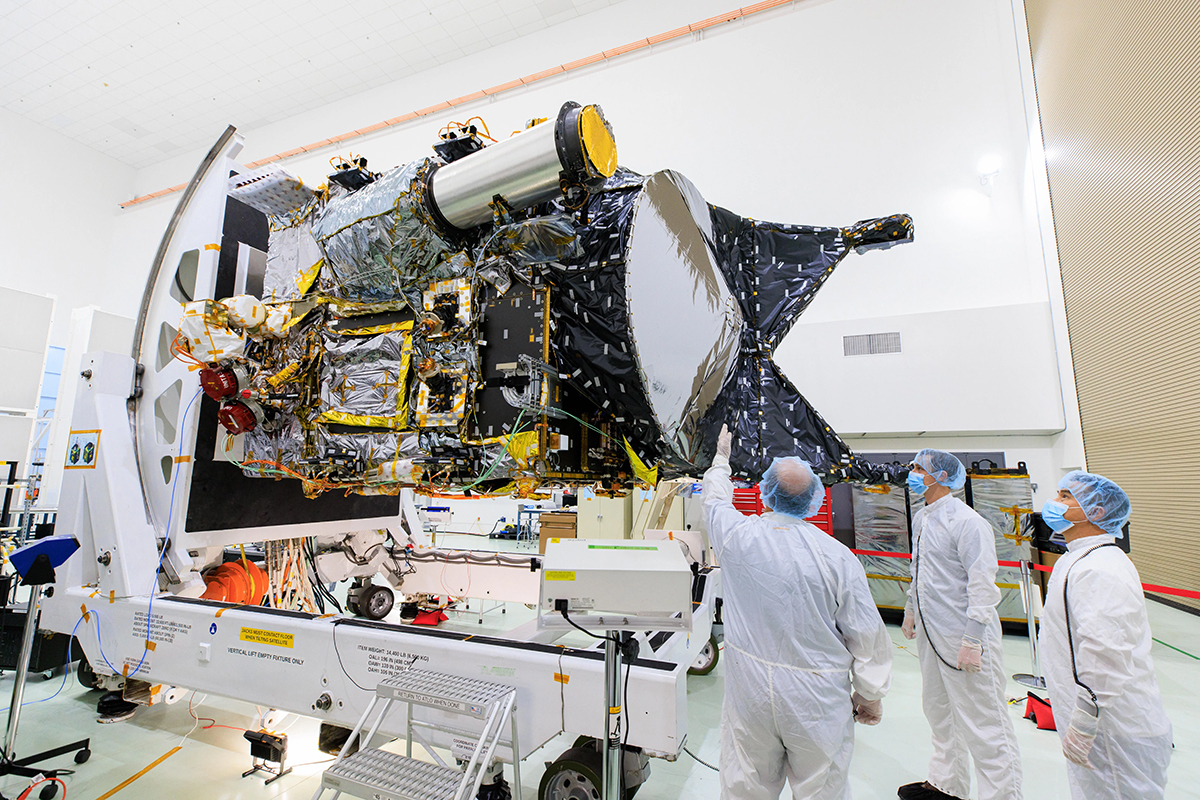
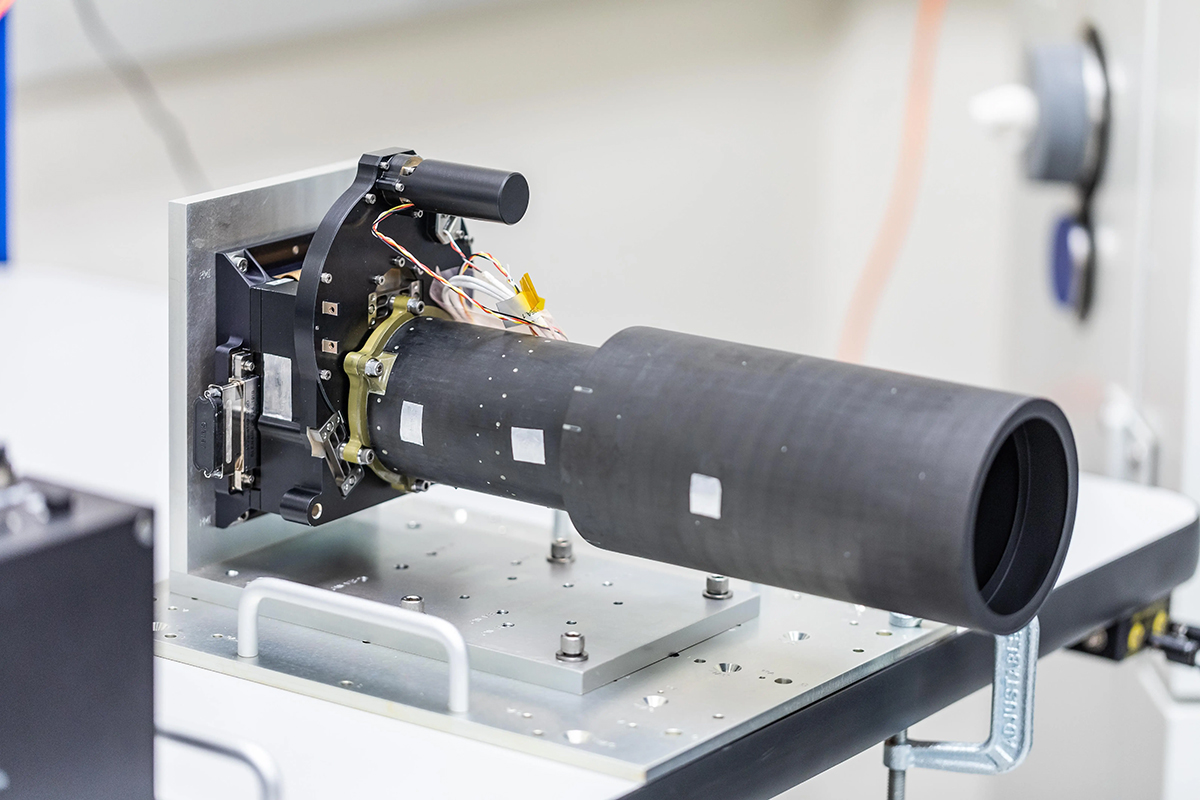
Equally important, the observations showcase the capabilities of Psyche’s multispectral imaging system. The spacecraft carries two identical cameras that support both navigation and scientific investigations. Throughout the Mars encounter, these instruments performed exactly the type of work they will later conduct around asteroid Psyche.
More from NASA’s Psyche Mission
- This Image of Mars was Captured from a Distance of 5 million Kms
- Psyche Mission Captures a Crescent Red Planet During Mars Flyby
Clear skies!
See more from DIYPhotography.net on Google
Add DIYPhotography.net as a trusted source. This makes
our stories more likely to appear in your Google Search results.
 Add as a preferred source on Google

Soumyadeep Mukherjee
Soumyadeep Mukherjee is an award-winning astrophotographer from India. He has a doctorate degree in Linguistics. His work extends to the sub-genres of nightscape, deep sky, solar, lunar and optical phenomenon photography. He is also a photography educator and has conducted numerous workshops. His works have appeared in over 40 books & magazines including Astronomy, BBC Sky at Night, Sky & Telescope among others, and in various websites including National Geographic, NASA, Forbes. He was the first Indian to win “Astronomy Photographer of the Year” award in a major category.
Join the Discussion
DIYP Comment Policy
Be nice, be on-topic, no personal information or flames.