























NASA’s James Webb Telescope Reveals the Dramatic Birth of Stars
Jul 5, 2026
Soumyadeep Mukherjee
Soumyadeep Mukherjee is an award-winning astrophotographer from India. He has a doctorate degree in Linguistics. His work extends to the sub-genres of nightscape, deep sky, solar, lunar and optical phenomenon photography. He is also a photography educator and has conducted numerous workshops. His works have appeared in over 40 books & magazines including Astronomy, BBC Sky at Night, Sky & Telescope among others, and in various websites including National Geographic, NASA, Forbes. He was the first Indian to win “Astronomy Photographer of the Year” award in a major category.
Share:
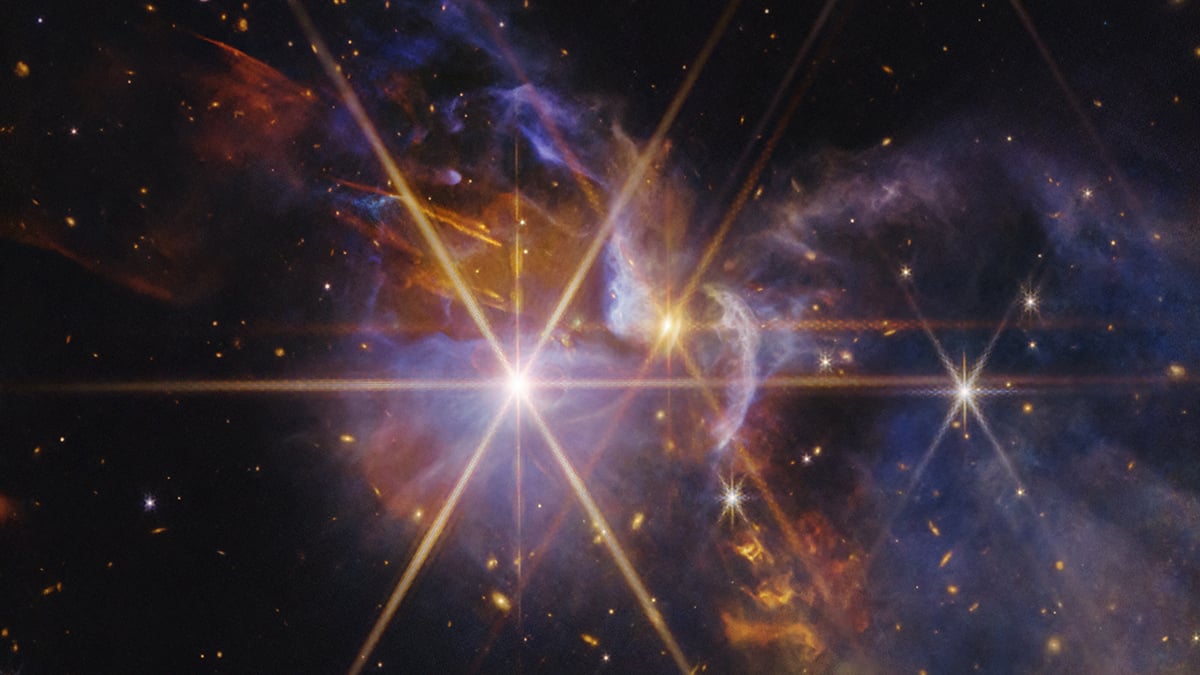
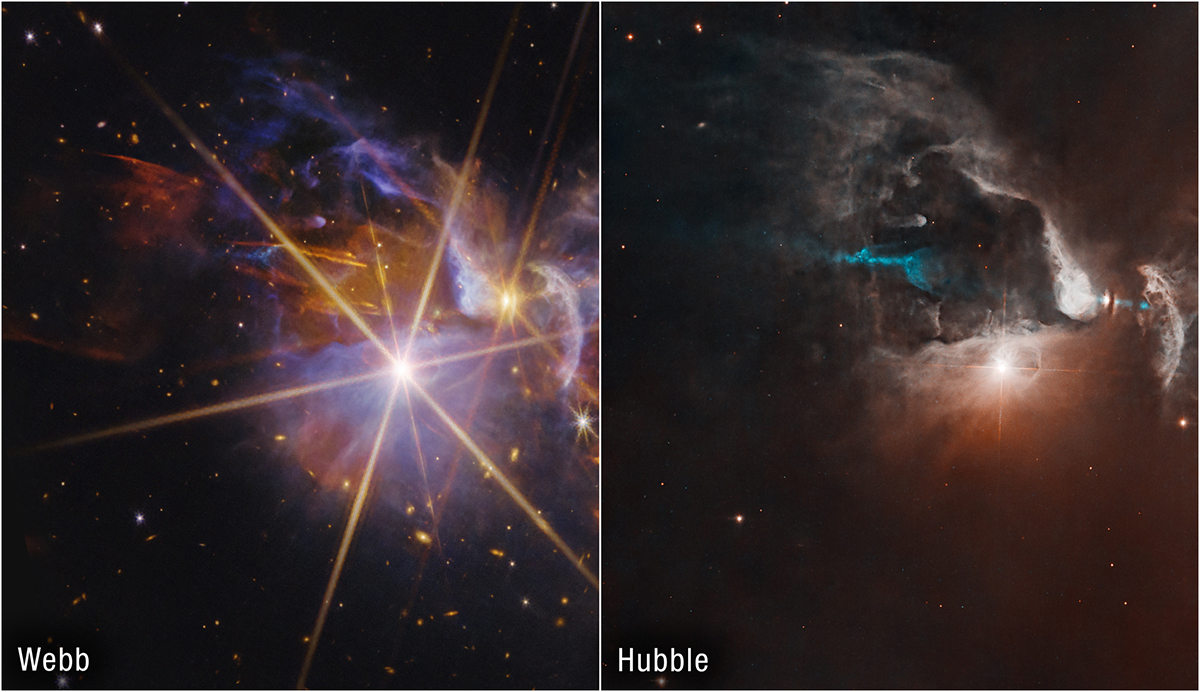
NASA‘s latest James Webb Space Telescope image turns its attention to FS Tau, a remarkably young stellar system about 450 light-years away in the Taurus Molecular Cloud. Streams of gas race through space at enormous speeds, shock waves ripple through the surrounding cloud, and dense dust continues to feed a growing protostar. Every feature captured by JWST represents a different stage in the life of a newborn star.
The observation becomes even more valuable because it builds upon years of earlier work. Astronomers have studied FS Tau for decades with ground-based observatories and the Hubble Space Telescope. JWST now captures the clearest infrared view of the system, enabling researchers to investigate structures that were previously hidden.
FS Tau: A front-row seat to stellar birth
The Taurus Molecular Cloud is one of the nearest active star-forming regions to Earth. It stretches across hundreds of light-years and contains countless pockets of cold gas where new stars continue to emerge. Because of its relatively small distance, astronomers have used this region as a natural laboratory for understanding stellar evolution.
Among the many young systems scattered across the cloud, FS Tau has attracted particular attention. It is still in the earliest stages of development, making it an ideal target for studying how stars accumulate mass and interact with their surroundings.
The system itself is more complex than its name suggests. FS Tau A consists of two young stars orbiting one another in a close binary system. Nearby lies FS Tau B, a protostar that remains deeply embedded inside gas and dust. Unlike mature stars, a protostar has not yet completed its formation. It continues to gather material from a rotating disk that surrounds it, slowly increasing its mass as gravity pulls gas inward.
JWST uncovers details hidden behind thick cosmic dust
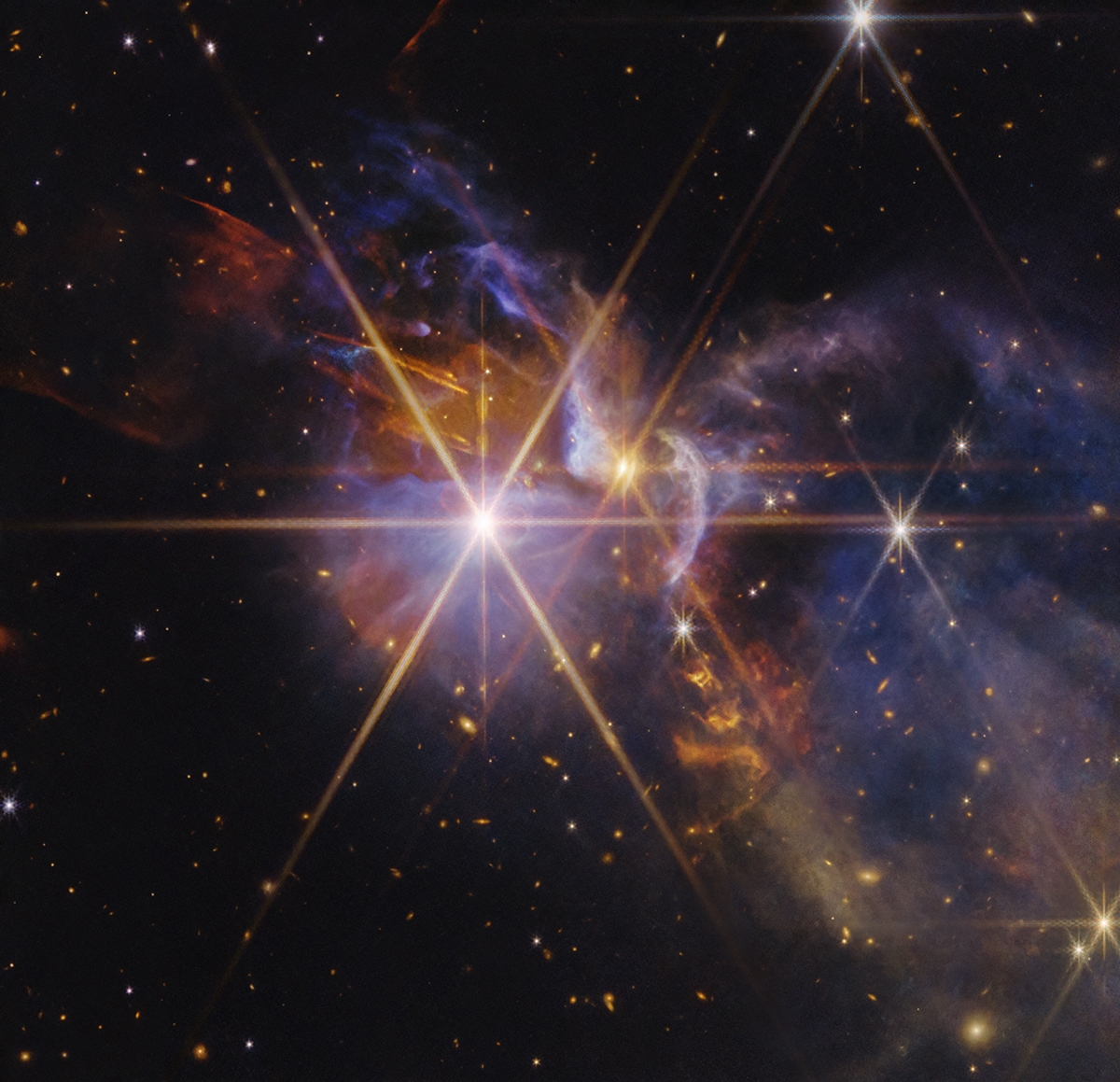
The latest observation was made using JWST‘s Near-Infrared Camera, or NIRCam. This instrument detects infrared wavelengths that easily penetrate much of the dust surrounding young stars. As a result, JWST reveals structures that remained hidden in earlier visible-light observations.
The colors seen in the final image do not represent natural human vision. Scientists assign visible colours to different infrared wavelengths after processing the data. This approach allows subtle physical structures to stand out more clearly. Cooler dust, warmer gas, and embedded stars each become easier to distinguish, helping researchers interpret the complex environment.
One of the most striking features is the pair of narrow jets emerging from FS Tau B. These jets extend in opposite directions from the protostar and slice through the surrounding cloud. As the fast-moving gas collides with slower material, it generates powerful shock waves that heat the gas and cause it to glow. Astronomers refer to these glowing regions as Herbig-Haro objects.
James Webb and Hubble together: A changing stellar nursery
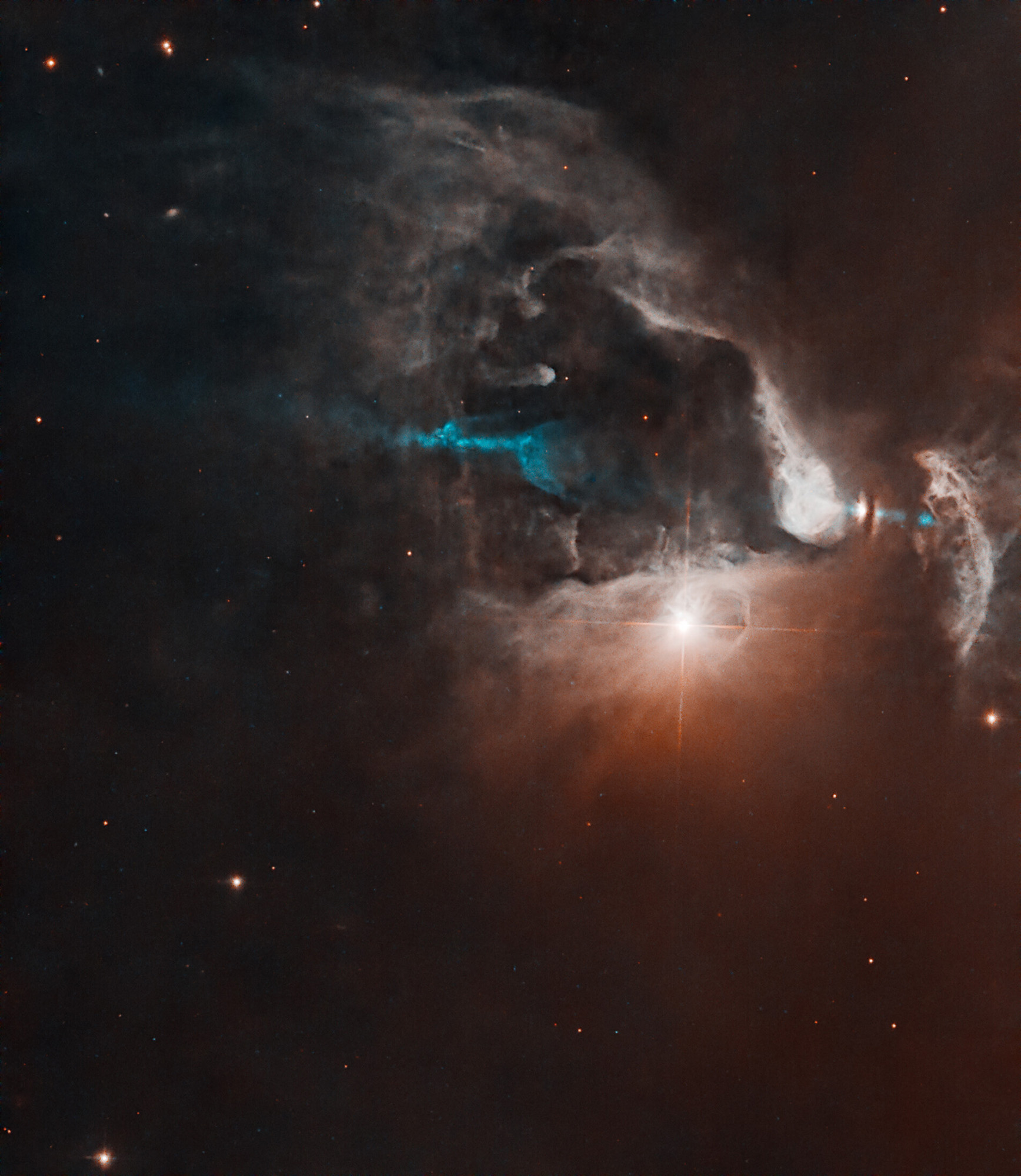
FS Tau is not a new target for astronomers. The Hubble Space Telescope observed the system years ago and produced detailed visible-light images of its young stars and outflows. Those observations established FS Tau as an important laboratory for studying stellar birth. JWST has now revisited the same region with far greater infrared sensitivity, opening a new window into its hidden structure.
The two telescopes complement each other. Hubble records light that highlights hot gas and sharply defined structures visible at optical wavelengths. JWST detects infrared radiation emitted by cooler dust and gas, revealing regions that visible light cannot penetrate. Together, they provide a much more complete picture of the environment surrounding the young stars.
Comparing the two sets of observations also allows astronomers to study motion rather than simply appearance. The years separating the observations create a valuable time baseline. Small knots embedded within the jets have shifted measurably since Hubble first recorded them. By tracking these changes, researchers can estimate how fast the material is travelling and examine how it interacts with the surrounding cloud.
The comparison also offers new clues about the way young stars grow. If material flowed continuously from the protostar, the jets would appear relatively smooth. Instead, both Hubble and JWST show a chain of bright knots separated by darker gaps. This pattern suggests that the outflows are produced in bursts rather than at a steady rate.
Clear skies!
See more from DIYPhotography.net on Google
Add DIYPhotography.net as a trusted source. This makes
our stories more likely to appear in your Google Search results.
 Add as a preferred source on Google

Soumyadeep Mukherjee
Soumyadeep Mukherjee is an award-winning astrophotographer from India. He has a doctorate degree in Linguistics. His work extends to the sub-genres of nightscape, deep sky, solar, lunar and optical phenomenon photography. He is also a photography educator and has conducted numerous workshops. His works have appeared in over 40 books & magazines including Astronomy, BBC Sky at Night, Sky & Telescope among others, and in various websites including National Geographic, NASA, Forbes. He was the first Indian to win “Astronomy Photographer of the Year” award in a major category.

Join the Discussion
DIYP Comment Policy
Be nice, be on-topic, no personal information or flames.