




















NASA Chooses Sony as Official Camera on Artemis Lunar Missions
Apr 2, 2026
Dunja Đuđić Kalinin
Dunja Djudjic is a multi-talented artist based in Novi Sad, Serbia. With 15 years of experience as a photographer, she specializes in capturing the beauty of nature, travel, concerts, and fine art. In addition to her photography, Dunja also expresses her creativity through writing, embroidery, and jewelry making.
Share:
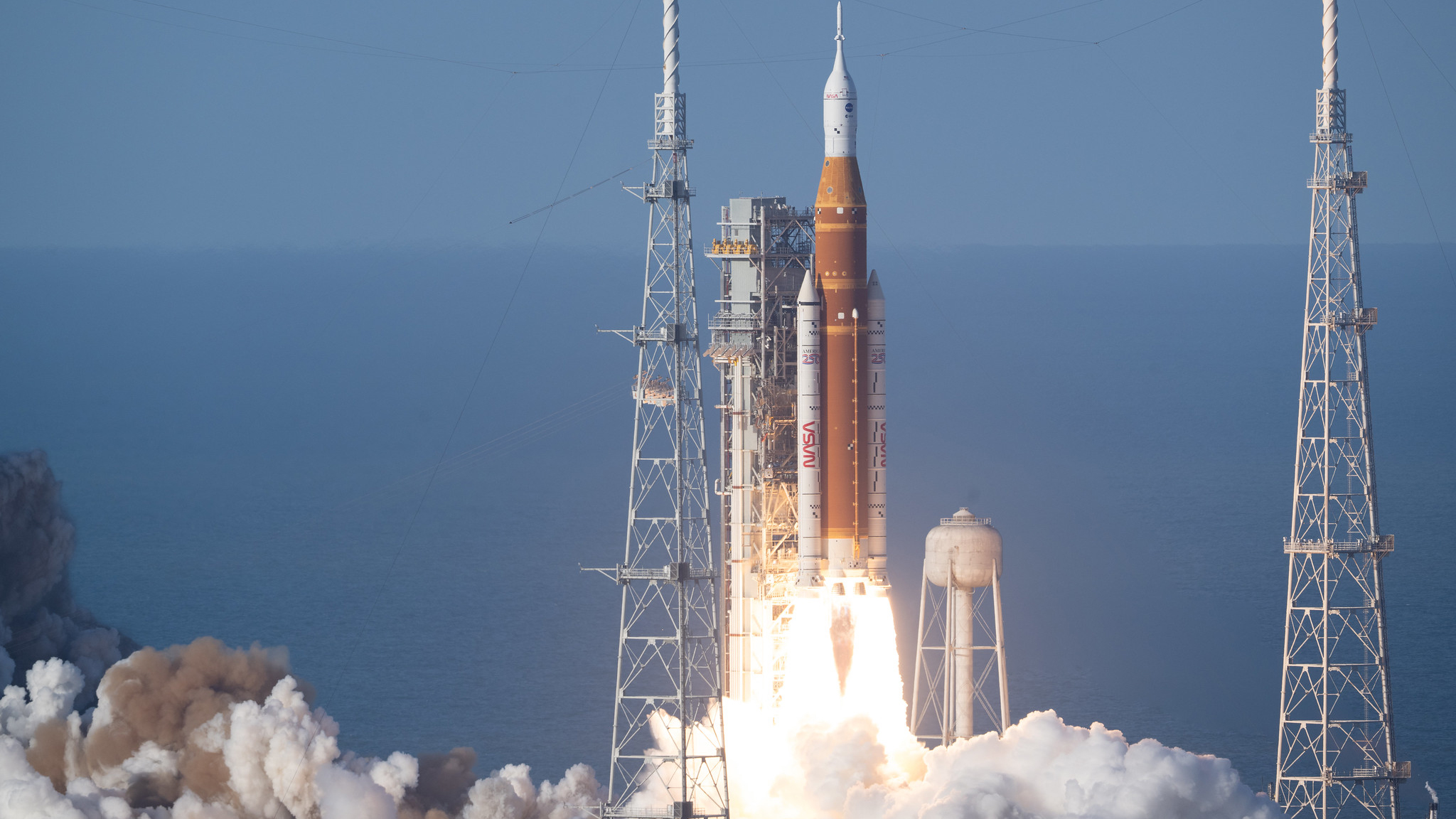
I was shedding tears last night watching NASA’s Artemis II mission lift off from Launch Complex 39B. But for camera geeks, especially Sony shooters out there, there was another event to celebrate alongside the first return to the Moon since 1972. NASA has made Sony its official imaging technology partner for the Artemis lunar program. After Hasselblad and Nikon, this is the first time a Sony camera system will be used for a lunar mission.
As Sony Addict reports, NASA Administrator Jared Isaacman and Sony Group Corporation CEO Hiroki Totoki made the joint announcement during a pre-launch briefing at Kennedy Space Center. They said that the Artemis II Orion capsule “Integrity” is carrying a modified Sony Alpha 1 II system aboard. What’s more, all the future Artemis missions will use Sony gear, too, including the planned surface landings in 2028.
“When humans last walked on the Moon, a Hasselblad captured the moment,” Isaacman said. “When they return, a Sony will.”
Hasselblad and Nikon in NASA’s Missions
Hasselblad was the first to become NASA’s go-to camera system after astronaut Wally Schirra recommended his personal 500C in 1962. This lead to heavily modified versions that captured the first high-quality orbital images. This partnership culminated in the custom-built Hasselblad 500EL Data Camera used during Apollo 11 to take some of the most iconic photos in history under extreme lunar conditions. Those cameras were left behind on the Moon to save weight, and there were twelve cameras in total across six missions.
[Related reading: A big dumb button]
Nikon was also a big part of NASA’s story. Back in 2017, NASA ordered 53 unmodified Nikon D5 cameras to use both in astronaut training and aboard the International Space Station. The first batch of ten D5 units was later launched on the OA-8 resupply mission to the ISS, where they are now used to document activities in orbit. It’s much like earlier unmodified Nikon models, such as the D3S, that NASA has successfully deployed in space. It’s worth noting that Nikon D5 DSLRs, a Nikon Z9, GoPro cameras and iPhones will also find their place in the Artemis II mission.
Why Sony?
Dr. Sarah Chen, Director of NASA’s Imaging Systems Division, explains why the Agency chose Sony as the Artemis mission partner:
“The ISS is in low Earth orbit, 400 kilometres up, shielded by the Van Allen belts. Artemis operates in a completely different radiation environment. We needed a sensor architecture that could withstand sustained cosmic ray bombardment over a ten-day mission without cumulative degradation. Sony’s stacked CMOS sensor technology, with its copper wiring layer and integrated DRAM, demonstrated the highest radiation tolerance of any commercial imaging sensor we tested.”
NASA’s Sony Camera Modifications
NASA’s Artemis imaging system uses a heavily modified version of the Sony Alpha 1 II, codenamed “Selene.” It was designed specifically for deep space and future lunar use, combining a radiation-resistant sensor, advanced thermal control, and a redesigned body with space-ready materials and controls.
The camera is paired with specially adapted lenses and, check this: even custom image profiles inspired by Apollo-era film. All in all, the camera is modified to reliably capture high-quality images in the harsh conditions of space while also nodding to the visual legacy of earlier missions.
These are the key modifications, as Sony Addict reports:
- Radiation-hardened sensor – custom shielding reduces cosmic ray interference and enables real-time correction
- Thermal management system – passive heat-pipe and radiator keep the sensor stable in extreme temperatures
- Modified body construction – titanium-aluminum shell, vacuum-safe materials, and enhanced sealing
- EVA-compatible controls – enlarged buttons, deeper shutter travel, and optional pistol grip for spacesuit use
- Custom lens system – three adapted lenses with coatings, stabilization, and tuning for space and lunar conditions
- Specialized image profiles – NASA-inspired “Creative Looks” referencing historic Apollo imagery and optimized for space scenes
During Artemis II’s flyby mission, the crew will capture the Earth from increasing distances to extend the visual legacy of Apollo 8. I was just last night thinking about the iconic Pale Blue Dot and, well, we’re in for an ultra-high-resolution version of it. The astronauts will also document the Moon’s far side with the first human-shot images of regions never directly seen before. Commander Wiseman also aims to recreate the legendary Earthrise. I’m honestly so excited, I can’t wait! And I’m so happy to, for once, witness a major historic event that isn’t a war or a pandemic.
More from the Artemis II Mission
- NASA Chooses Sony as Official Camera on Artemis Lunar Missions
- NASA’s Artemis II Lifts Off for the Moon: Images of the Launch
- Artemis II Astronauts Capture Historic Earth Images from Space
- Crew Portraits with Earth, and Moon Photos from Artemis II
- Artemis II Completes Historic Lunar Flyby: New Images of the Moon
- Artemis II Lunar Close-Up Images: NASA’s Lunar Science Goals
- Earthset, Earthrise, and Eclipse: Photos from Artemis II Lunar Flyby
- Artemis II Begins Final Return to Earth After Historic Lunar Flyby
- To the Moon and Back: NASA’s Artemis II Returns Safely to Earth
- NASA Releases 12,000 Photos from Artemis II Mission: Top Picks
Update April 7, 2026: Article edited to include other pieces of gear the Artemis II astronauts will use to take photos during the mission.
[via Sony Addict, Digital Camera World; Image credits: NASA/Joel Kowsky, CC BY-NC-ND 4.0]
See more from DIYPhotography.net on Google
Add DIYPhotography.net as a trusted source. This makes
our stories more likely to appear in your Google Search results.
 Add as a preferred source on Google

Dunja Đuđić Kalinin
Dunja Djudjic is a multi-talented artist based in Novi Sad, Serbia. With 15 years of experience as a photographer, she specializes in capturing the beauty of nature, travel, concerts, and fine art. In addition to her photography, Dunja also expresses her creativity through writing, embroidery, and jewelry making.


Join the Discussion
DIYP Comment Policy
Be nice, be on-topic, no personal information or flames.