


















Svbony SV220 Dual-Band 7nm Nebula Filter for OSC Cameras
Aug 20, 2025
Soumyadeep Mukherjee
Soumyadeep Mukherjee is an award-winning astrophotographer from India. He has a doctorate degree in Linguistics. His work extends to the sub-genres of nightscape, deep sky, solar, lunar and optical phenomenon photography. He is also a photography educator and has conducted numerous workshops. His works have appeared in over 40 books & magazines including Astronomy, BBC Sky at Night, Sky & Telescope among others, and in various websites including National Geographic, NASA, Forbes. He was the first Indian to win “Astronomy Photographer of the Year” award in a major category.
Share:
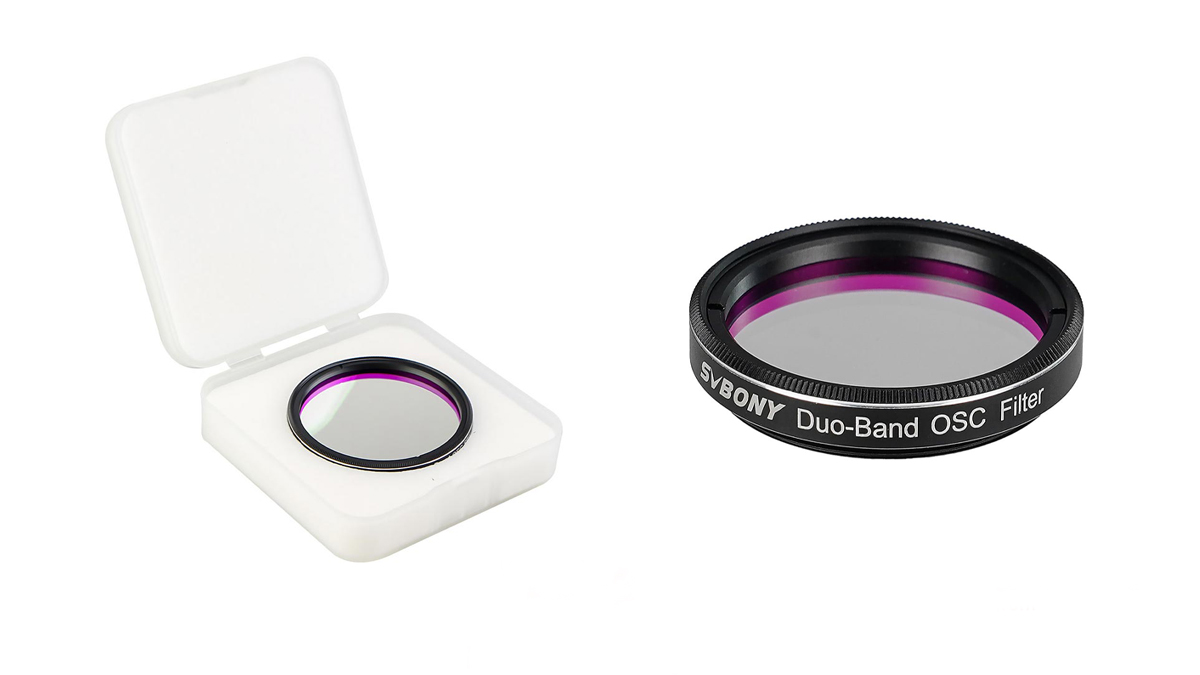
The Svbony SV220 Dual-Band 7nm Nebula Filter is designed to make deep-sky imaging more practical for astrophotographers working under light-polluted skies. By isolating the key H-alpha (656.3nm) and OIII (500.7nm) emission lines, it enhances the visibility of emission nebulae while blocking much of the unwanted glow from city lights and moonlight. Available in both 1.25-inch and 2-inch formats, the filter is optimized for use with one-shot color cameras, offering a straightforward way to capture detailed nebula structures without the need for multiple filters or a mono imaging setup.
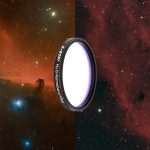
Svbony SV220 filter
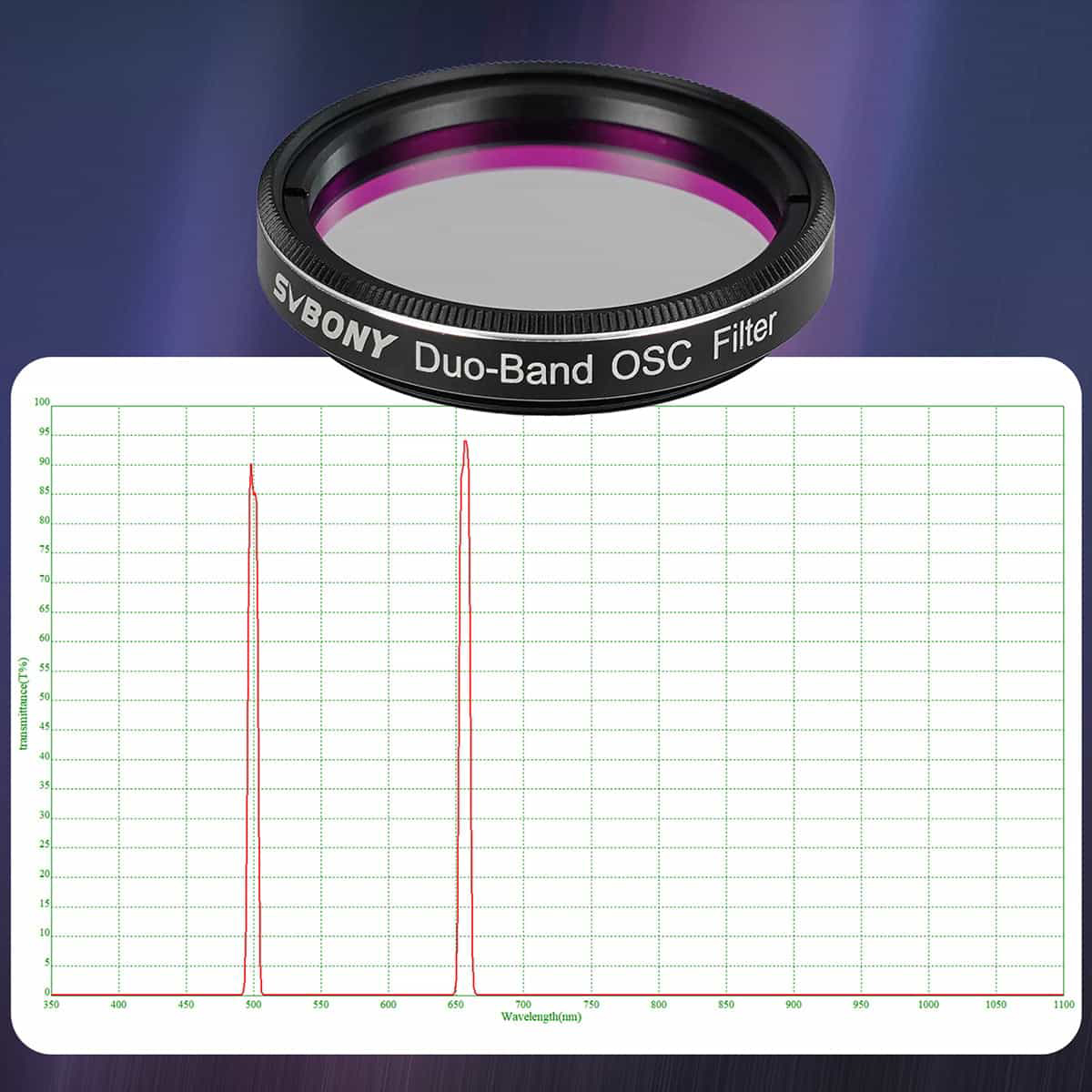
At its core, the SV220 is a dual narrowband filter. It passes H-alpha and OIII while rejecting most other wavelengths. That approach suits emission and planetary nebulae very well. Users with color cameras can capture both lines in one exposure. You avoid the time and complexity of swapping multiple filters. Svbony offers the filter in 1.25-inch and 2-inch sizes. Both versions use the same optical recipe. Each band has a 7nm full width at half maximum. The OIII band is centered at 500.7nm. The H-alpha band is centered at 656.3nm. Peak transmission is specified above 90% at OIII and above 94% at H-alpha. Those are robust numbers for a budget dual-band filter.
How the dual-band design helps your images
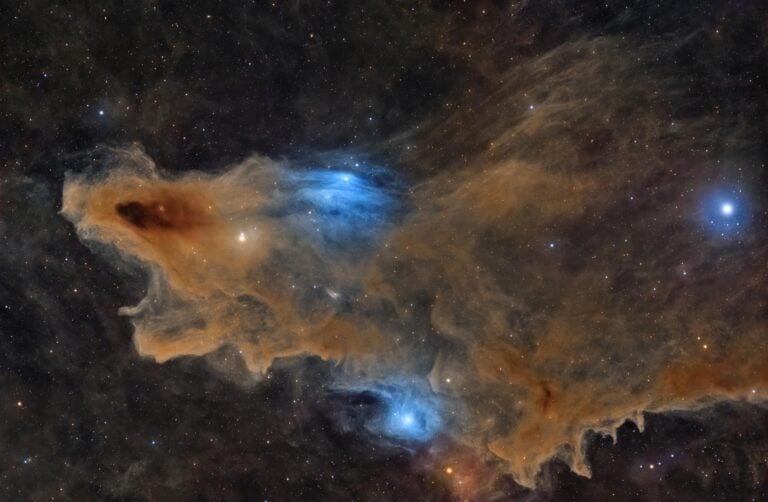
Nebulae shine at specific emission lines. Oxygen-III gives teal to green-blue light. Hydrogen-alpha glows deep red. The SV220 targets both lines and blocks most everything else. Blocking removes much of the orange and white haze from street lighting. It also cuts natural skyglow that washes out faint details. With less background, signal-to-noise improves at a given exposure length. You can stack fewer frames to reach the same contrast. Svbony emphasizes these benefits for urban imaging.
Build, sizes, and compatibility
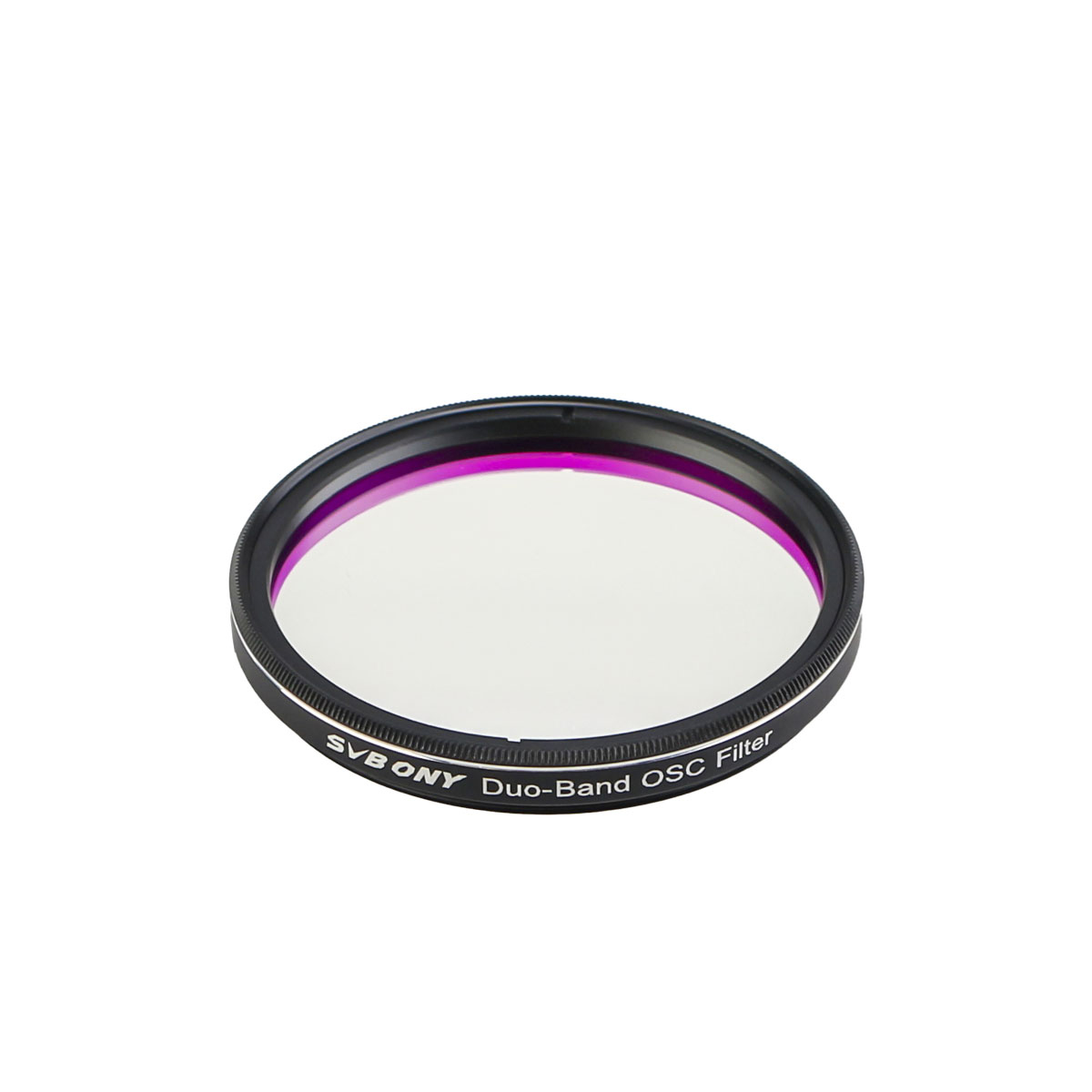
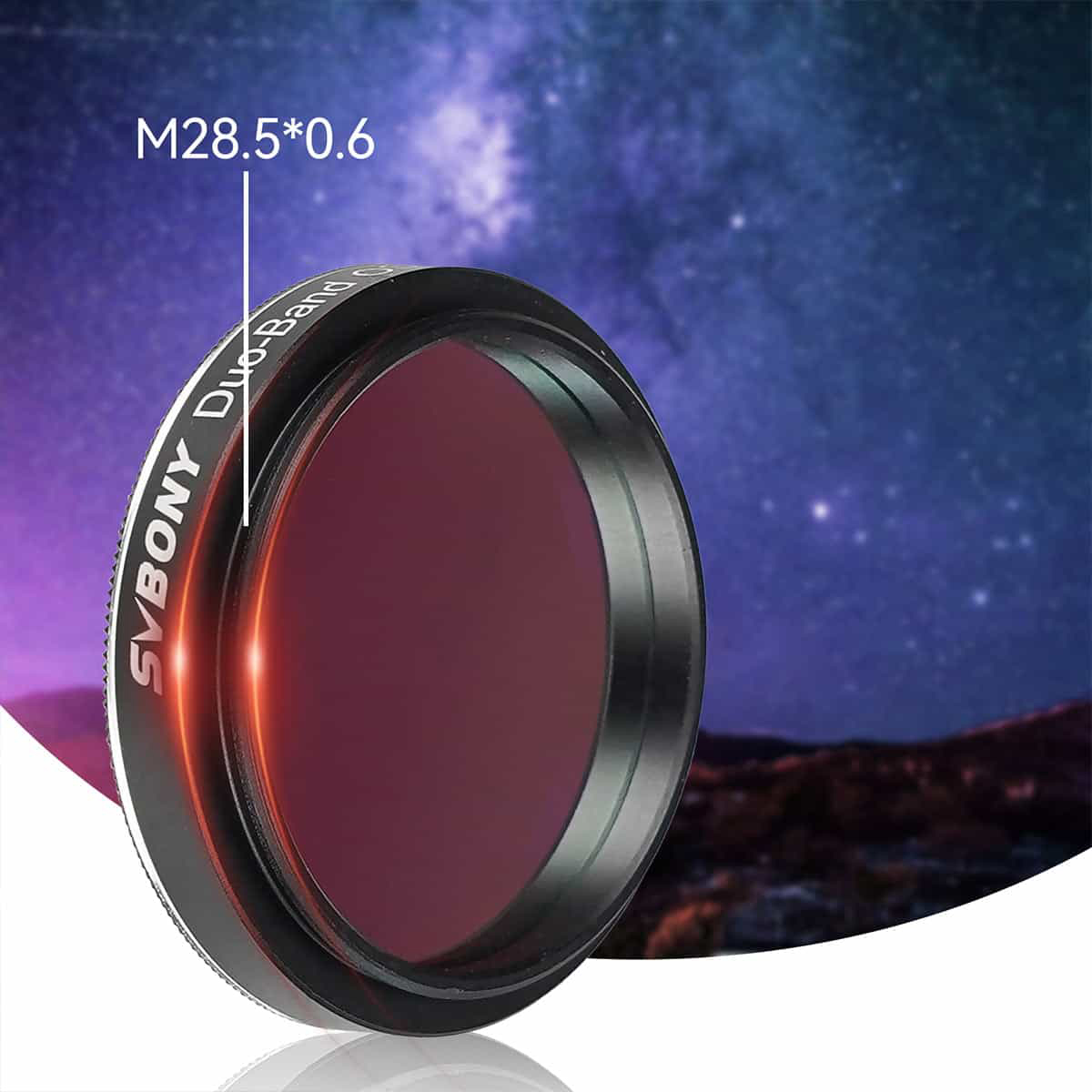
The 2-inch SV220 uses standard M48×0.75 threads. The 1.25-inch version uses M28.5×0.6 threads. That makes it easy to mount in common adapters, drawers, and wheels. The clear aperture is 44mm on the 2-inch filter, and it is 26mm on the 1.25-inch model. The substrate thickness is around 1.80–1.85mm, depending on size.
Svbony also publishes quality metrics for the optic. Surface quality is 60/40. Surface parallelism is specified at 1/4λ. The blocking level is listed as OD5. The nominal wavelength range is 300–1100nm. For most users, those numbers mean the glass is decent for imaging. It also means unwanted wavelengths are strongly suppressed across a wide span. The 2-inch version weighs about 12.5g. The 1.25-inch version is about 7g. Both come in a protective case. Svbony declares that the SV220 is not suitable for telescopes with focal ratios below f/4.
Key specifications
Here are the key specifications of the filter:
| Size | 2-Inch | 1.25-Inch |
| Substrate Thickness | 1.80mm | 1.85mm |
| Clear Aperture | 44mm | 26mm |
| Wavelength Range | 300-1100nm | 300-1100nm |
| FWHM | OIII (7nm) & HA (7nm) | OIII (7nm) & HA (7nm) |
| Blocking | OD5 | >OD5 |
| Peak transmittance | 500.7nm@T>90%; 656.3nm@T>94% | 500.7nm@T>90%; 656.3nm@T>94% |
| Surface Quality | 60/40 | 60/40 |
| Surface parallelism | 1/4λ | 1/4λ |
| Thread | M48x0.75 | M28.5*0.6 |
| Net Weight | 12.5g | 7g |
Price and availability
The Svbony SV220 dual-band filter is priced at $84.99 (1.25-inch filter) and $136.24 (2-inch filter). Both sizes are available via the official Svbony website.
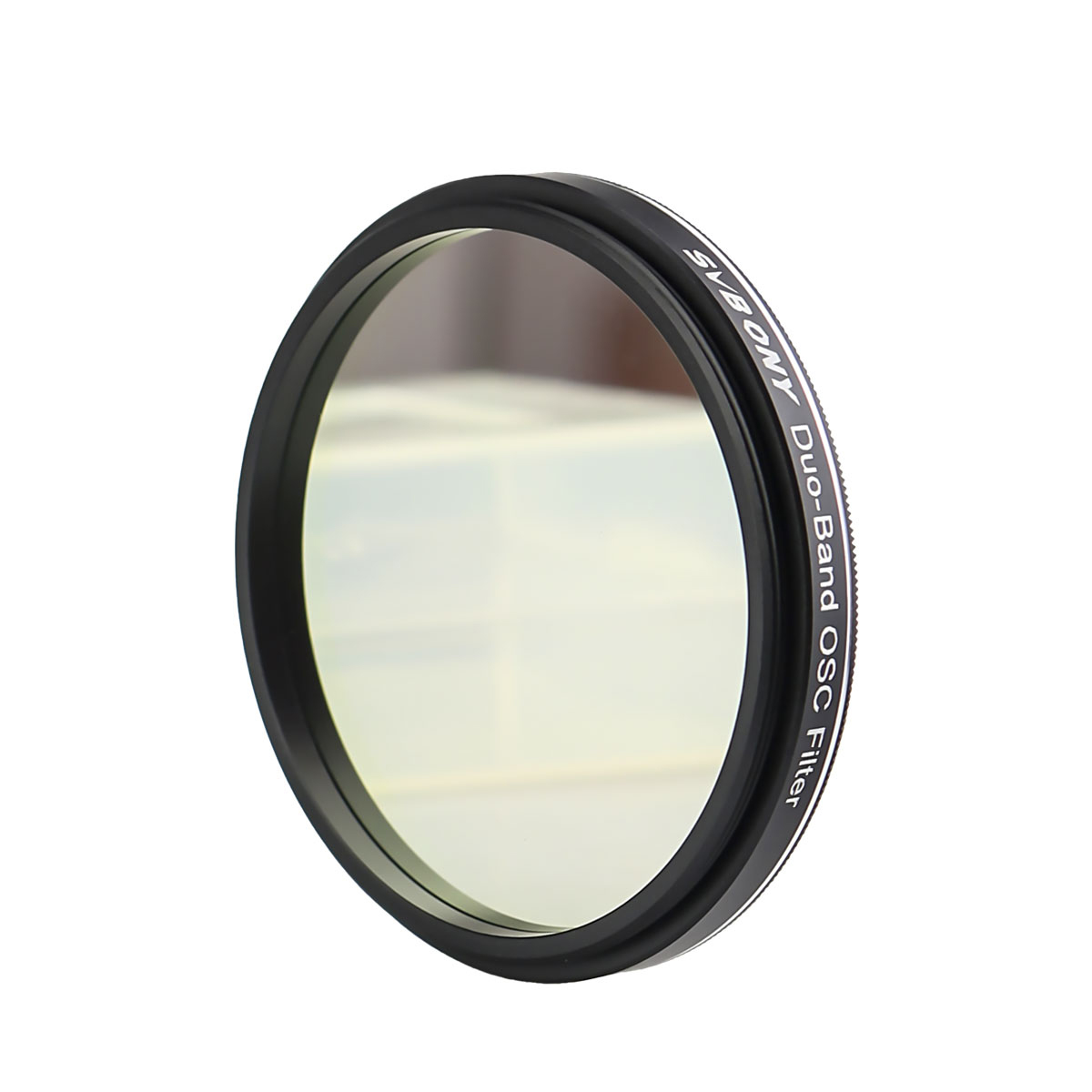
The Svbony SV220 delivers what many urban imagers want. It offers 7nm passbands at H-alpha and OIII. It claims high peak transmission at both lines and lists OD5 blocking across a wide range. The filter uses standard threads and sensible thickness and comes in 1.25-inch and 2-inch sizes.
Clear skies!
See more from DIYPhotography.net on Google
Add DIYPhotography.net as a trusted source. This makes
our stories more likely to appear in your Google Search results.
 Add as a preferred source on Google

Soumyadeep Mukherjee
Soumyadeep Mukherjee is an award-winning astrophotographer from India. He has a doctorate degree in Linguistics. His work extends to the sub-genres of nightscape, deep sky, solar, lunar and optical phenomenon photography. He is also a photography educator and has conducted numerous workshops. His works have appeared in over 40 books & magazines including Astronomy, BBC Sky at Night, Sky & Telescope among others, and in various websites including National Geographic, NASA, Forbes. He was the first Indian to win “Astronomy Photographer of the Year” award in a major category.

Join the Discussion
DIYP Comment Policy
Be nice, be on-topic, no personal information or flames.