




















William Optics UltraCat 56 Refractor Telescope: A New Cat is here
Dec 25, 2025
Soumyadeep Mukherjee
Soumyadeep Mukherjee is an award-winning astrophotographer from India. He has a doctorate degree in Linguistics. His work extends to the sub-genres of nightscape, deep sky, solar, lunar and optical phenomenon photography. He is also a photography educator and has conducted numerous workshops. His works have appeared in over 40 books & magazines including Astronomy, BBC Sky at Night, Sky & Telescope among others, and in various websites including National Geographic, NASA, Forbes. He was the first Indian to win “Astronomy Photographer of the Year” award in a major category.
Share:

Field curvature remains one of the most persistent optical challenges in wide-field astrophotography. As sensor sizes increased, this limitation became harder to ignore. Full-frame cameras now expose edge distortions that once stayed hidden. Traditional small refractors often require external correctors to compensate. These additions introduce spacing sensitivity and mechanical complexity. The William Optics UltraCat 56 approaches the problem differently. It integrates field correction into the optical system itself.
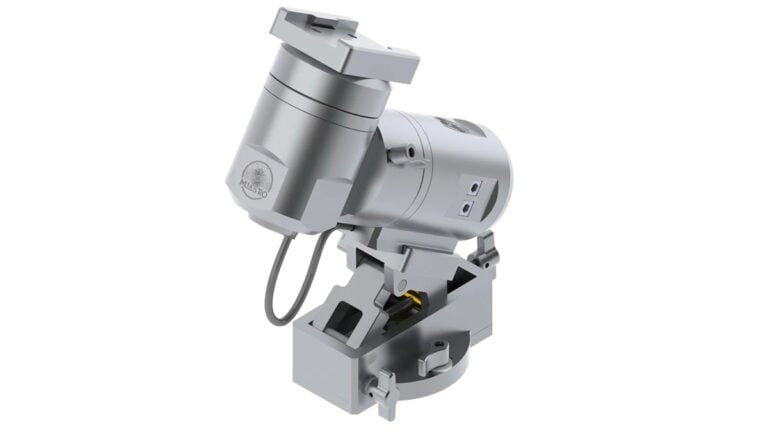
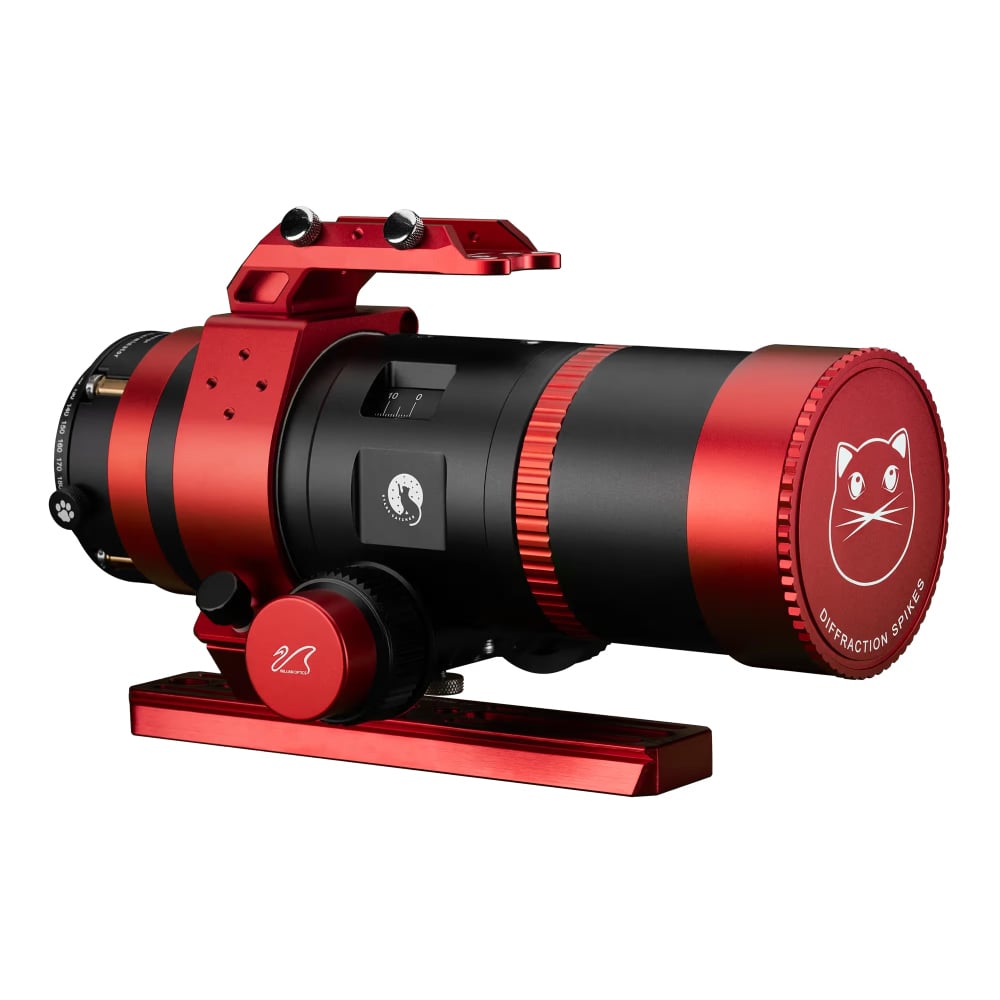
The UltraCat 56 is a compact astrograph built around a five-element Petzval design. It delivers a flat imaging field directly at the focal plane. The telescope does not rely on external flatteners or reducers. William Optics designed it specifically for imaging with modern sensors. Visual performance plays little role here. And this focus defines the instrument.
Optical architecture and design
The UltraCat 56 uses a 56 mm aperture with a focal length of 269 mm. This results in a focal ratio of f/4.8. The system sits firmly in the wide-field imaging category. The aperture size does not target resolution. It targets coverage and speed. That choice aligns with its intended use.
The defining feature is the Petzval optical configuration. Unlike doublets or triplets, this system features a rear lens group specifically designed to flatten the field. The focal plane emerges corrected by design. The telescope does not require back-focus tuning to achieve field flatness. This removes one of the most common failure points in small imaging refractors.
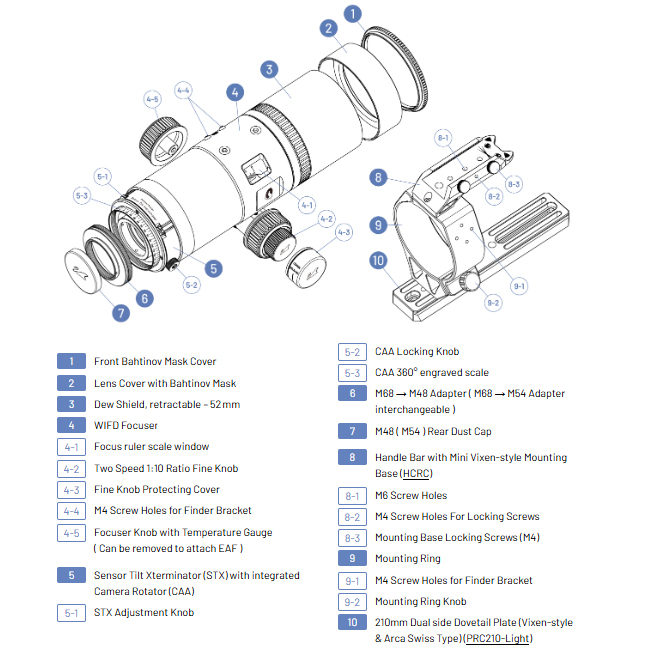
William Optics specifies a 50 mm image circle. This comfortably supports full-frame sensors. The design also works well with APS-C and Micro Four Thirds cameras. The flat field remains consistent across these formats. Vignetting stays controlled within expected limits for a fast optical system.
The optical layout favors predictability. Once focus and tilt are set, the system remains stable. This matters for repeat imaging sessions and long projects. It also reduces the time spent troubleshooting optical alignment in the field.
Field performance and image geometry
Wide-field astrographs often struggle at the edges. Star shapes degrade first. Elongation and curvature follow. The UltraCat 56 addresses this at the optical level rather than through accessories. The Petzval system maintains star geometry across the frame. When the sensor tilt is properly adjusted, stars remain round from center to corner. This holds even on full-frame sensors. The flat field simplifies calibration during post-processing. Flats behave predictably. Gradient correction becomes easier.
The fast focal ratio improves signal acquisition. Exposure times shorten. Narrowband imaging benefits from the increased photon flux. This allows smaller mounts to perform effectively without long sub-exposures.
The telescope does not chase extreme color correction for visual use. Instead, it delivers controlled chromatic behavior for imaging sensors. Broadband filters perform well, and narrowband filters show clean separation. The system pairs naturally with modern CMOS cameras.
Mechanical structure and focusing
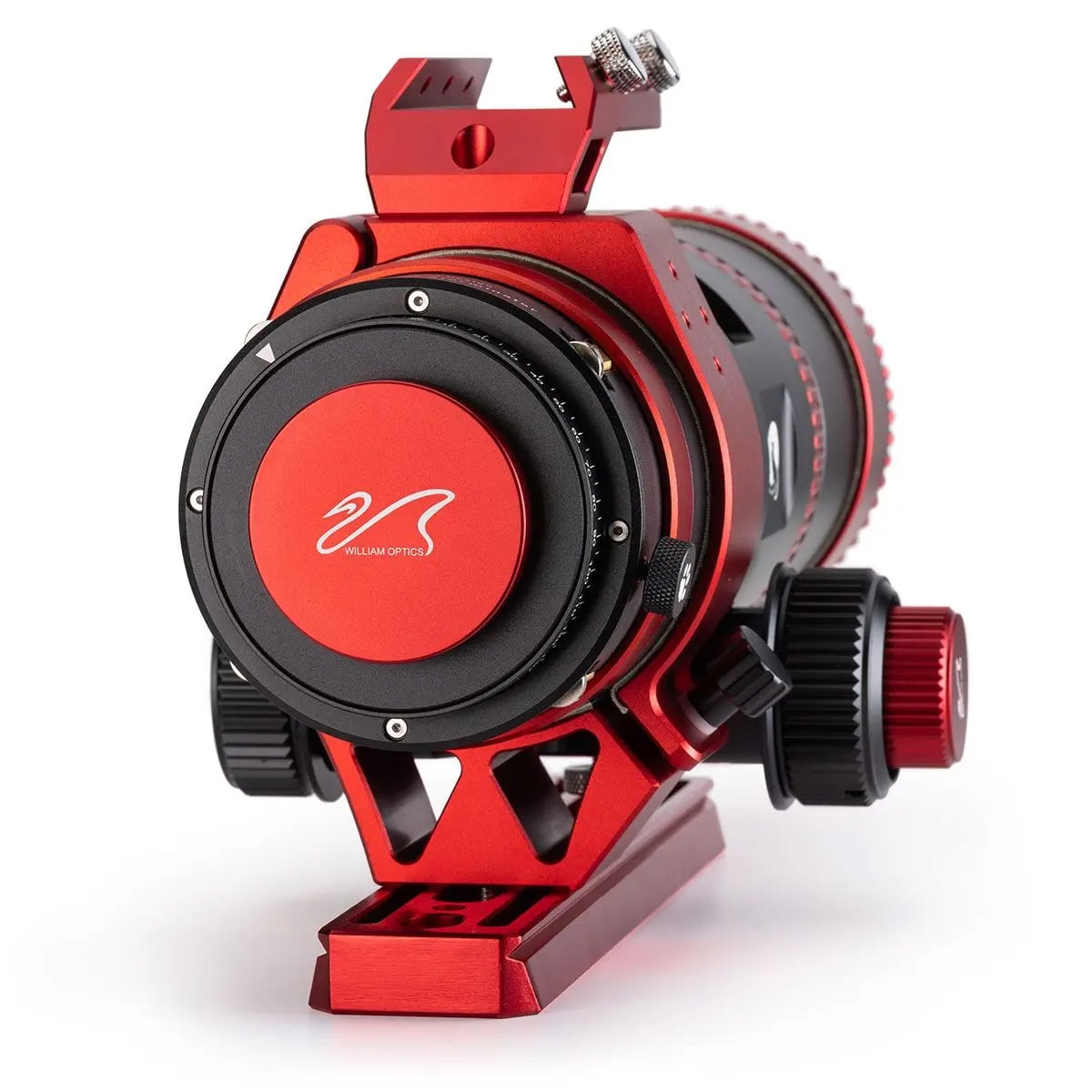
Mechanical stability plays a central role in imaging performance. Flexure, sag, and focus shift all degrade results. William Optics uses its WIFD, or William Internal Focuser Design. The camera and imaging train remain fixed in position. Focusing occurs by moving internal optical elements. This prevents drawtube extension and eliminates load-induced sag.
The focusing mechanism uses a rack-and-pinion system. The motion remains smooth and controlled. Critical focus is easy to achieve despite the fast focal ratio. Focus remains stable during long imaging sessions. Internal focusing also improves balance. The telescope’s center of gravity does not shift as focus changes. This benefits tracking accuracy on lightweight mounts. Cable management becomes simpler. Nothing moves externally during focus adjustments.
For imagers using motorized focusers, this design reduces repeatability errors. Autofocus routines remain consistent. Focus curves stay predictable.
Integrated tilt control and size
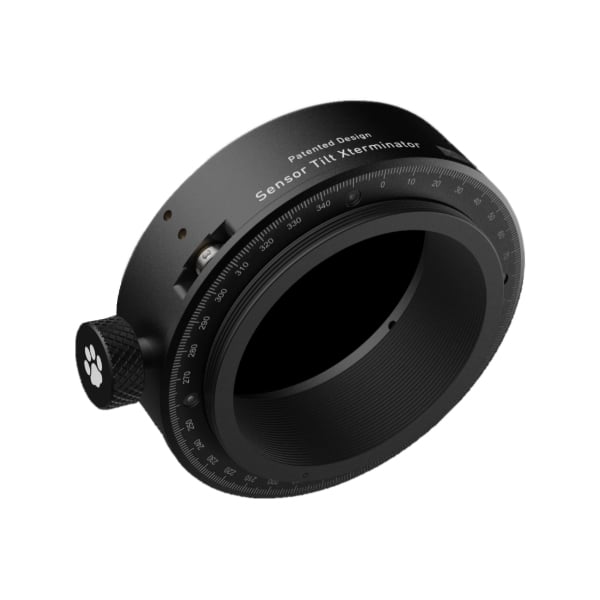
Sensor tilt has become increasingly visible as sensor sizes grow. Minor misalignment now shows clearly in star shapes. William Optics addresses this directly through the integrated Sensor Tilt Xterminator. The STX allows fine tilt adjustment at the rear of the telescope. The camera stays mounted during adjustment. This preserves optical spacing and alignment. Tilt correction becomes a controlled process rather than trial and error.
The telescope also includes an integrated camera rotator. This allows precise framing without loosening compression fittings. Rotation remains smooth and secure. Framing adjustments do not disturb focus or tilt.
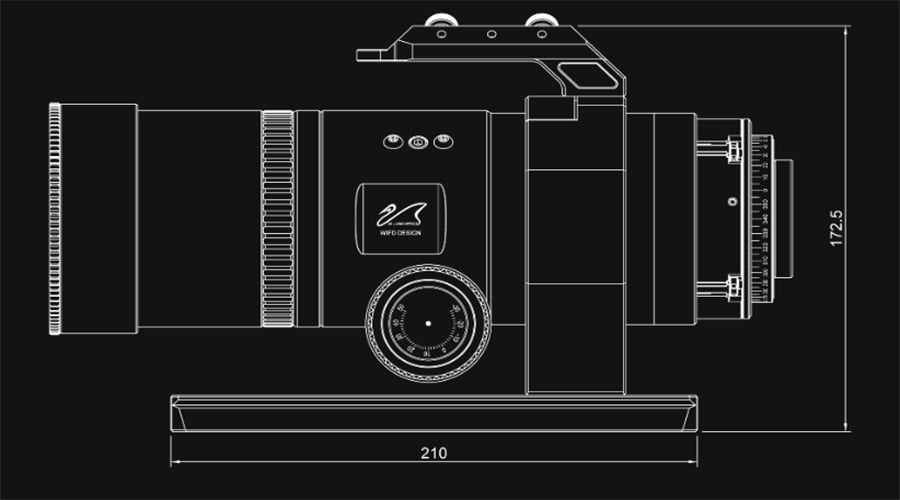
The UltraCat 56 remains compact despite its integrated features. The optical tube length ranges from approximately 296 mm to 348 mm, depending on focus position. This makes transport simple and storage easy. The optical tube weighs around 2.56 kg. With accessories attached, the system reaches roughly 3.2 kg. This weight suits small equatorial mounts and harmonic drives. Counterweight requirements remain modest. The telescope pairs well with mounts commonly used by wide-field imagers. It does not demand heavy infrastructure. This supports its role as a field-friendly astrograph.
Price and availability
The William Optics UltraCat 56 is priced at $1,398. It is available for order via online retailers.
This telescope targets astrophotographers. Visual observers will find little appeal here. The UltraCat 56 exists for imaging alone. Its strengths emerge only when paired with a camera and proper calibration.
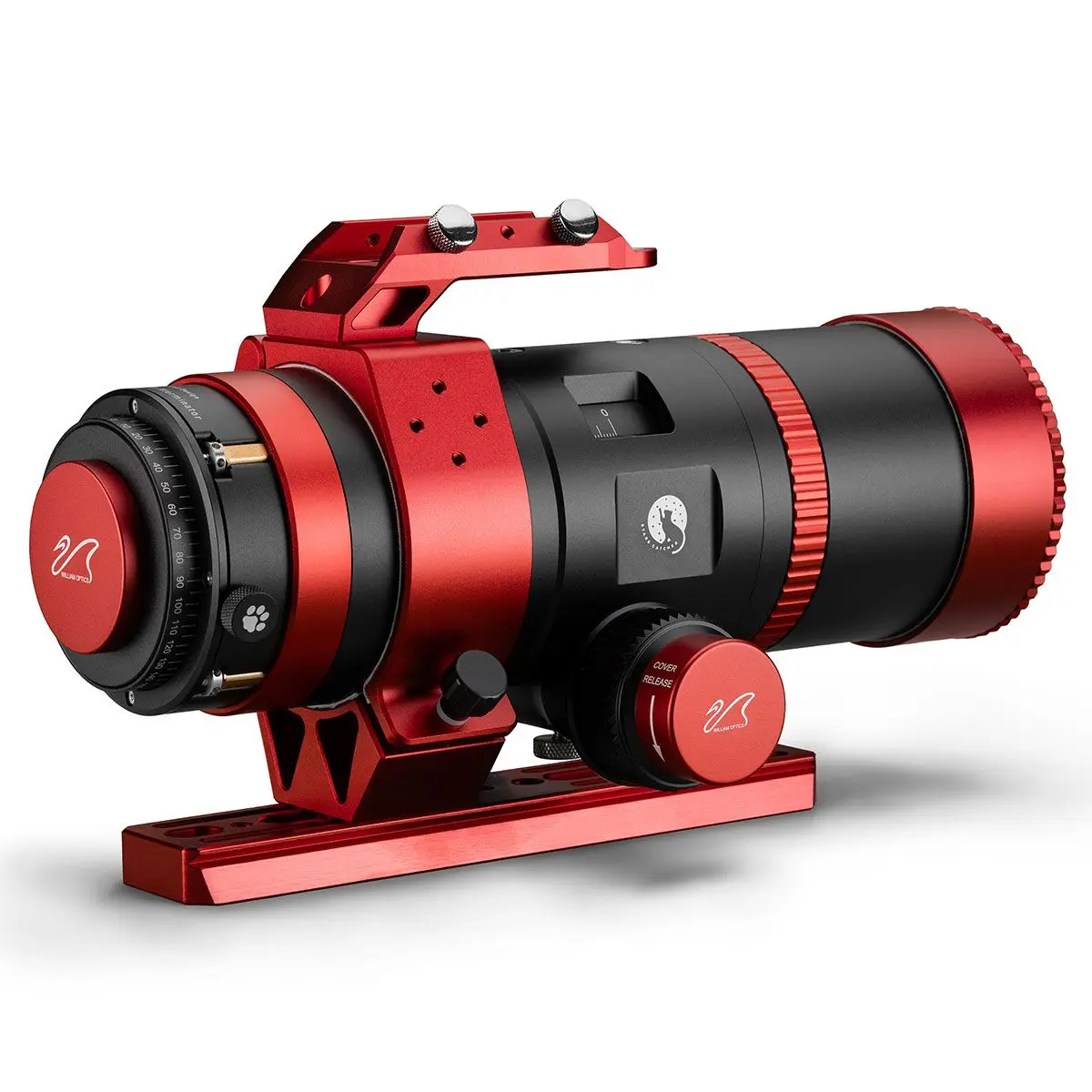
The William Optics UltraCat 56 solves known astrophotography problems through design. Its Petzval optical system delivers a flat field without external correction. Its internal focusing improves mechanical stability, and the integrated tilt and rotation controls address the demands of the modern sensor. This telescope does not attempt to cover every use case. It focuses on wide-field imaging and executes that goal well. For astrophotographers seeking a compact, full-frame-capable astrograph with minimal complexity, the UltraCat 56 presents a coherent solution.
Clear skies!
See more from DIYPhotography.net on Google
Add DIYPhotography.net as a trusted source. This makes
our stories more likely to appear in your Google Search results.
 Add as a preferred source on Google

Soumyadeep Mukherjee
Soumyadeep Mukherjee is an award-winning astrophotographer from India. He has a doctorate degree in Linguistics. His work extends to the sub-genres of nightscape, deep sky, solar, lunar and optical phenomenon photography. He is also a photography educator and has conducted numerous workshops. His works have appeared in over 40 books & magazines including Astronomy, BBC Sky at Night, Sky & Telescope among others, and in various websites including National Geographic, NASA, Forbes. He was the first Indian to win “Astronomy Photographer of the Year” award in a major category.


Join the Discussion
DIYP Comment Policy
Be nice, be on-topic, no personal information or flames.