




















What Is Autofocus? How Camera Focus Technology Works
Aug 23, 2025
Darlene Lleno
Darlene Lleno brings a unique perspective to DIY Photography as someone who grew up surrounded by camera gear but chose words over lenses. With five years of writing experience, she specializes in photography content that’s both technically informed and genuinely passionate. Growing up with a photographer twin brother meant camera talk was everyday conversation in her household. While he mastered capturing moments, Darlene discovered she preferred being the subject and the storyteller behind the scenes. As a travel enthusiast and mother of two, she understands the importance of preserving life’s precious moments. When not exploring new destinations or writing for DIY Photography, you’ll find her reading or tending to her garden. Her approach to photography writing is refreshingly authentic, she may not be behind the camera, but she knows exactly what it takes to help others capture the shots that matter most.
Share:

Autofocus is the technology that automatically adjusts your camera lens to make your subject appear sharp and clear in photos. Instead of manually turning focus rings like photographers did decades ago, your camera’s autofocus system uses sensors and motors to do the focusing work for you.
This smart technology has completely changed how we take pictures. Before autofocus came along, photographers had to manually focus every single shot, which took time and skill. Now your camera can lock onto a subject in milliseconds, making photography way more accessible for everyone.
Understanding How Autofocus Technology Works
Your camera’s autofocus system works by measuring contrast in the scene. It looks for edges, lines, and areas where light and dark meet because these spots are easiest to focus on. When the contrast is at its highest, that means your subject is perfectly sharp.
Phase detection autofocus is what most DSLR cameras use. It splits incoming light into two images and compares them. When these two images line up perfectly, your subject is in focus. This method is super fast, which is why DSLRs can focus so quickly.
Contrast detection autofocus is more common in mirrorless cameras and smartphones. It continuously adjusts focus while measuring contrast until it finds the sharpest point. This method is more accurate but usually slower than phase detection.
Modern cameras often combine both systems to get the best of both worlds. They use phase detection for speed and contrast detection for precision.
Types of Autofocus Systems Available
Not all autofocus systems work the same way. Some cameras have different focusing modes that work better for different situations.
Active autofocus sends out infrared light or uses sound waves to figure out how far away your subject is. You’ll find this in some compact cameras and smartphones, especially when there’s not much light around.
Passive autofocus doesn’t send out anything. It just uses the light that’s already coming through your lens to figure out where to focus. Most cameras work this way because it’s more accurate and works in more situations.
Your camera probably has tons of individual focus points spread across the sensor. Each one can detect contrast and help the camera decide where to focus. Some cameras have hundreds of these points now.
The Development and Evolution of Autofocus
Autofocus is actually pretty new in photography terms. The first camera with autofocus was the Konica C35 AF back in 1977. Before that, every single photographer had to focus everything manually.
Canon and Nikon started putting autofocus in their SLR cameras during the 1980s. A lot of professional photographers weren’t sure about it at first because those early systems were slow and made mistakes pretty often. The technology got way better through the 1990s and 2000s.
Today’s autofocus is incredibly smart compared to those old systems. Modern cameras can track moving subjects, find people’s faces and eyes automatically, and even guess where something will be a split second later.
Advanced Autofocus Features in Modern Cameras
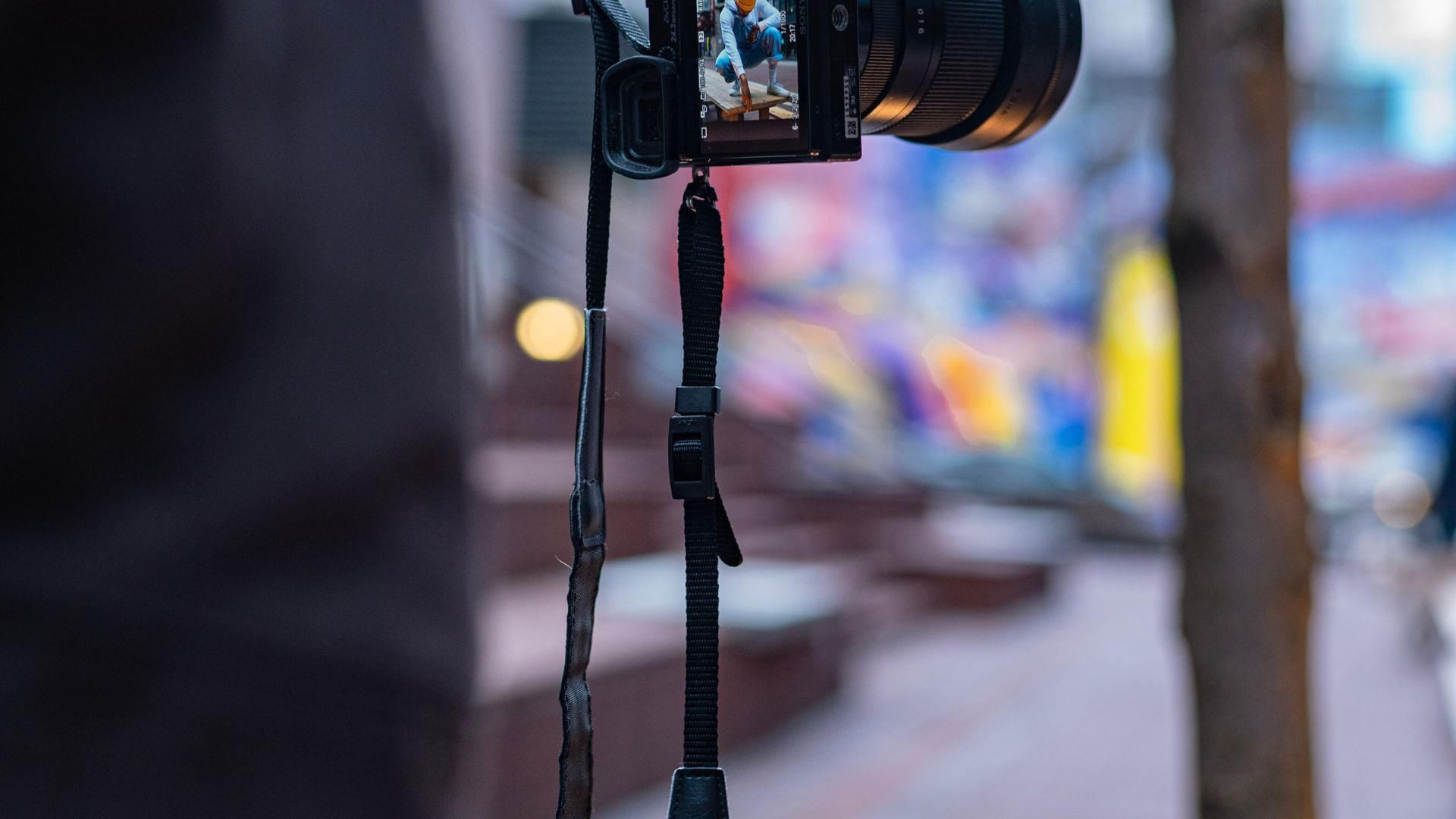
Eye detection is one of the coolest new features. Your camera can automatically find and focus on someone’s eyes, which is perfect for taking portraits. Some cameras can even spot animal eyes for wildlife photos.
Artificial intelligence helps cameras recognize different types of subjects now. Your camera might automatically change how it focuses when it sees you’re photographing a person versus a landscape versus something moving fast.
Focus tracking has gotten really good at following subjects as they move around. Sports and wildlife photographers love this because they can follow fast action without constantly messing with focus.
Factors That Affect Autofocus Performance
Several things affect how quickly your camera can focus. Light makes a huge difference. When there’s not much light around, autofocus slows down because there’s less contrast for the system to work with.
Your lens matters too. Lenses that open up really wide let in more light, which helps autofocus work faster. The motor inside your lens also affects speed. Some lenses have super fast, quiet motors while others are slower and make more noise.
What you’re photographing plays a role as well. Stuff with lots of contrast and clear edges is easy for autofocus to grab onto. Things like white walls or gray skies don’t give the system much to work with, so it might hunt around trying to find focus.
Common Autofocus Limitations and Challenges
Even the best autofocus systems have their limits. Knowing these helps you figure out when to switch to manual focus or try different tricks.
Low contrast scenes are autofocus’s worst enemy. Really dark situations cause problems because autofocus needs light to do its job. Many cameras have little lights that shine on your subject to help, but these only work when you’re pretty close.
Subjects behind glass or chain-link fences can trick autofocus into focusing on the wrong thing. Fast-moving subjects can be tricky, especially if they’re coming toward you or moving away.
Autofocus Across Different Camera Types

The type of camera you use changes how autofocus works. DSLR cameras are typically really fast at focusing on still subjects because of their phase detection systems. They’re especially good for action photography.
Mirrorless cameras have caught up and often beat DSLRs when it comes to autofocus. They can use their entire sensor for focus detection, giving them way more focus points than DSLRs.
Smartphone cameras use contrast detection and computer processing to get surprisingly good autofocus. They can even fake that blurry background effect that used to need expensive lenses.
Future Developments in Autofocus Technology
Autofocus keeps getting better every year. Artificial intelligence and machine learning are making cameras smarter about recognizing different subjects and predicting where they’ll move.
Computational photography is mixing hardware and software in new ways. Future cameras might use multiple photos and advanced computer processing to get perfect focus in situations where today’s systems struggle.
Some experimental systems can focus on multiple things at once or even focus after you’ve already taken the photo. These technologies are becoming more accessible as processing power increases.
Maximizing Your Autofocus System’s Potential
Understanding what autofocus can and can’t do helps you use it better. Learning about your camera’s focus modes and when to use them makes a huge difference.
You can also calibrate your lens focus to make sure it’s as accurate as possible. This is especially important if you shoot with wide apertures, where even tiny focus errors are really noticeable.
Autofocus has totally changed photography since those first systems in the 1970s. What started as a simple convenience feature has become one of the most sophisticated technologies in modern cameras. Understanding how it works helps you use it better and know when to work around what it can’t do.
See more from DIYPhotography.net on Google
Add DIYPhotography.net as a trusted source. This makes
our stories more likely to appear in your Google Search results.
 Add as a preferred source on Google

Darlene Lleno
Darlene Lleno brings a unique perspective to DIY Photography as someone who grew up surrounded by camera gear but chose words over lenses. With five years of writing experience, she specializes in photography content that’s both technically informed and genuinely passionate. Growing up with a photographer twin brother meant camera talk was everyday conversation in her household. While he mastered capturing moments, Darlene discovered she preferred being the subject and the storyteller behind the scenes. As a travel enthusiast and mother of two, she understands the importance of preserving life’s precious moments. When not exploring new destinations or writing for DIY Photography, you’ll find her reading or tending to her garden. Her approach to photography writing is refreshingly authentic, she may not be behind the camera, but she knows exactly what it takes to help others capture the shots that matter most.
Related Posts
 This is how Canon shooters got autofocus 40 years ago and it still works today
 How DSLR autofocus works and why cross type points are important
 DJI’s new follow focus lets you remotely focus your drone’s camera lens from 3 miles away
 DJI’s LiDAR module gives you autofocus even with f/0.95 manual focus lenses
Join the Discussion
DIYP Comment Policy
Be nice, be on-topic, no personal information or flames.