



















This Photographer Turned His Doorstep into a Wildlife Project. Here’s How to Capture Neighborhood Wildlife
Dec 15, 2025
Alex Baker
Alex Baker is a portrait and lifestyle driven photographer based in Valencia, Spain. She works on a range of projects from commercial to fine art and has had work featured in publications such as The Daily Mail, Conde Nast Traveller and El Mundo, and has exhibited work across Europe
Share:
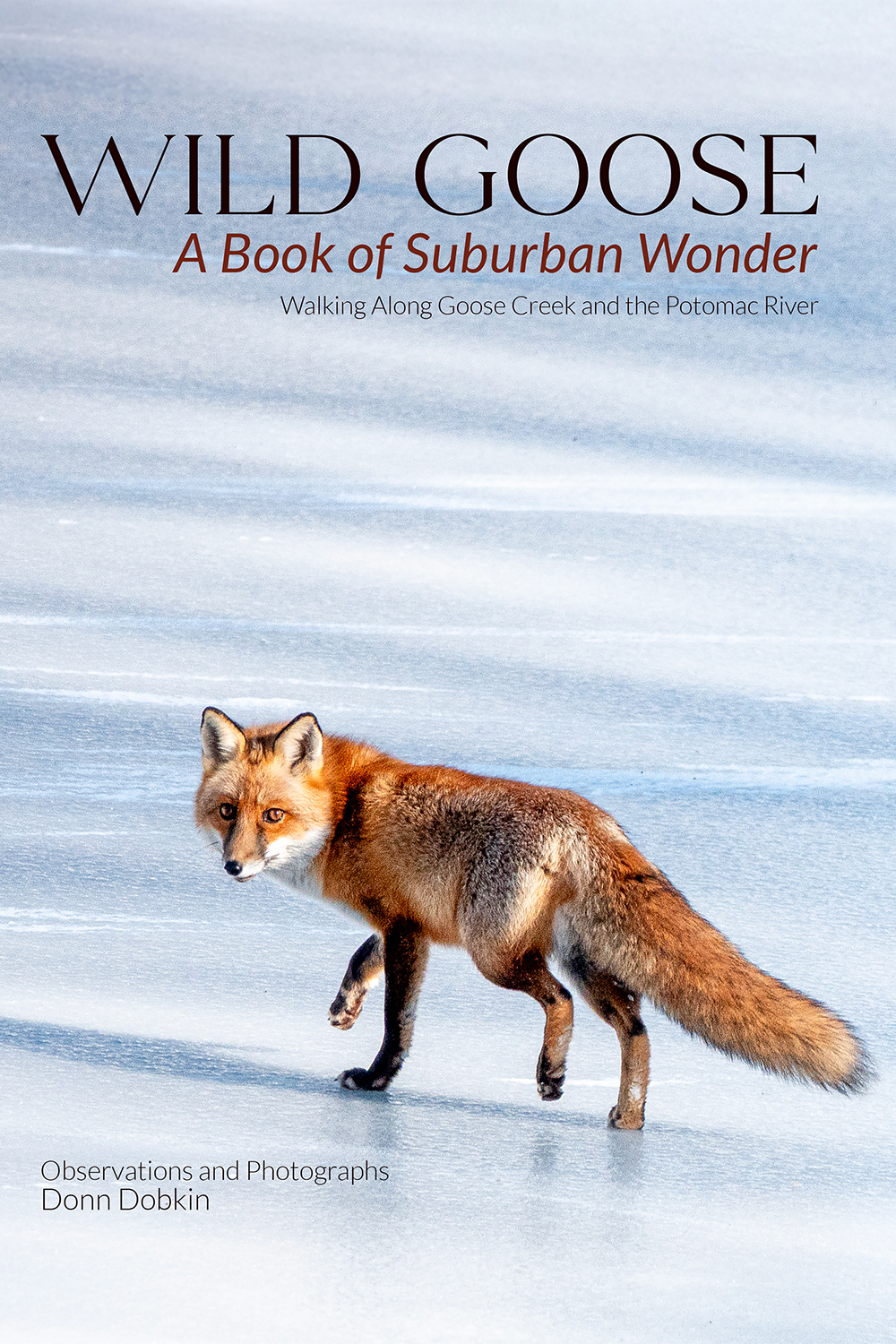
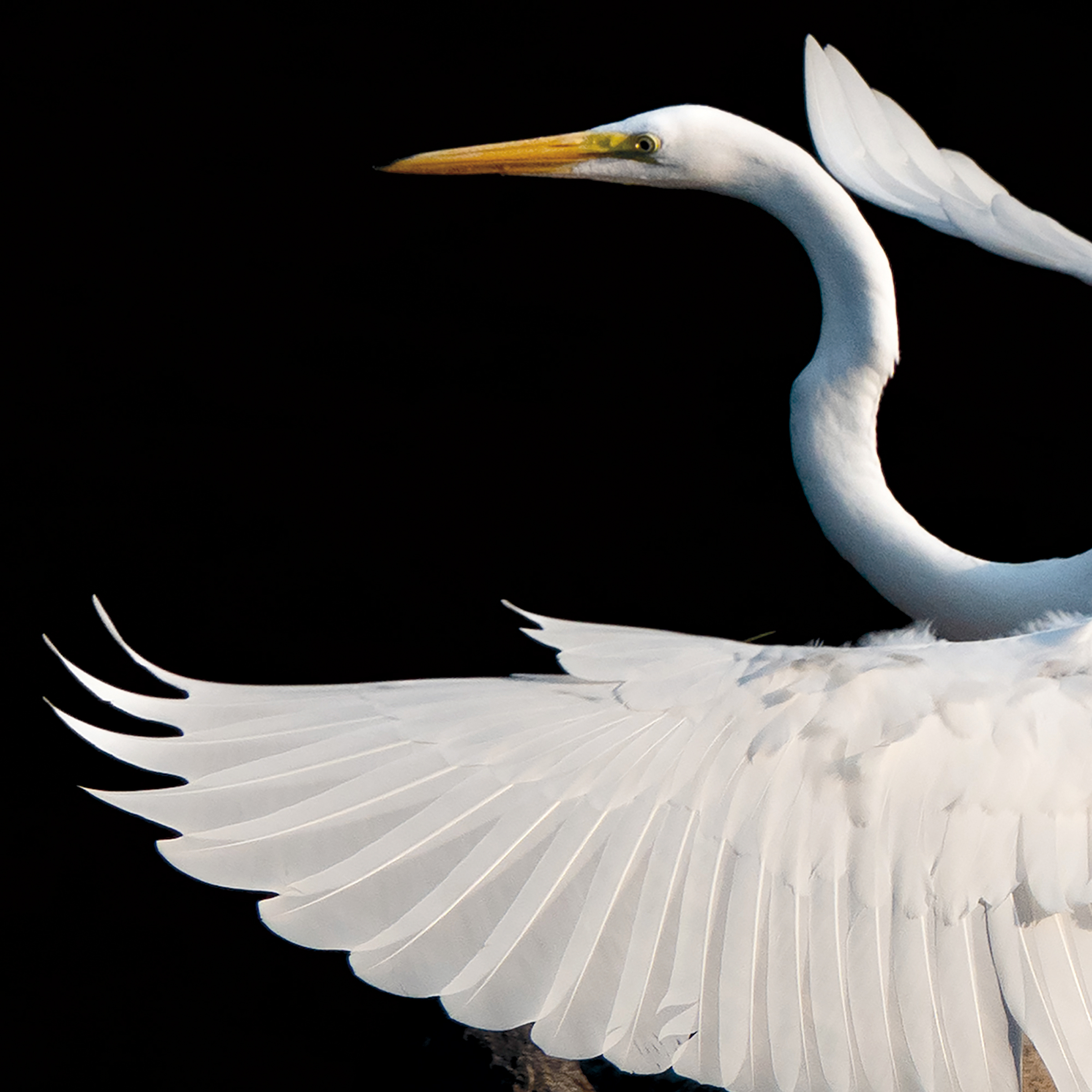
Walking through a neighbourhood you’ve seen a thousand times, it’s easy to miss the little dramas of wildlife happening right under our noses. That’s what photographer Donn Dobkin has done in his book Wild Goose: A Book of Suburban Wonder. He turned his lens on the animals living just steps from his home capturing animals such as foxes, herons and raccoons. It’s a healthy reminder that you don’t have to far trek into the wilderness to find incredible photography subjects; sometimes, the magic is right in your own backyard.
In this interview, DIYP chatted with Donn about what drew him to document suburban wildlife, how Wild Goose changes the way we see our local surroundings, and what it takes to stay patient, observant, and creative when your subject is as unpredictable as nature itself. If you’ve ever wanted a fresh perspective on photographing wildlife without leaving your neighbourhood, Donn’s work is full of inspiration.
DIYP: You turned a three-mile stretch of trail from your front door into an entire book. Can you tell us how the idea for Wild Goose came about?
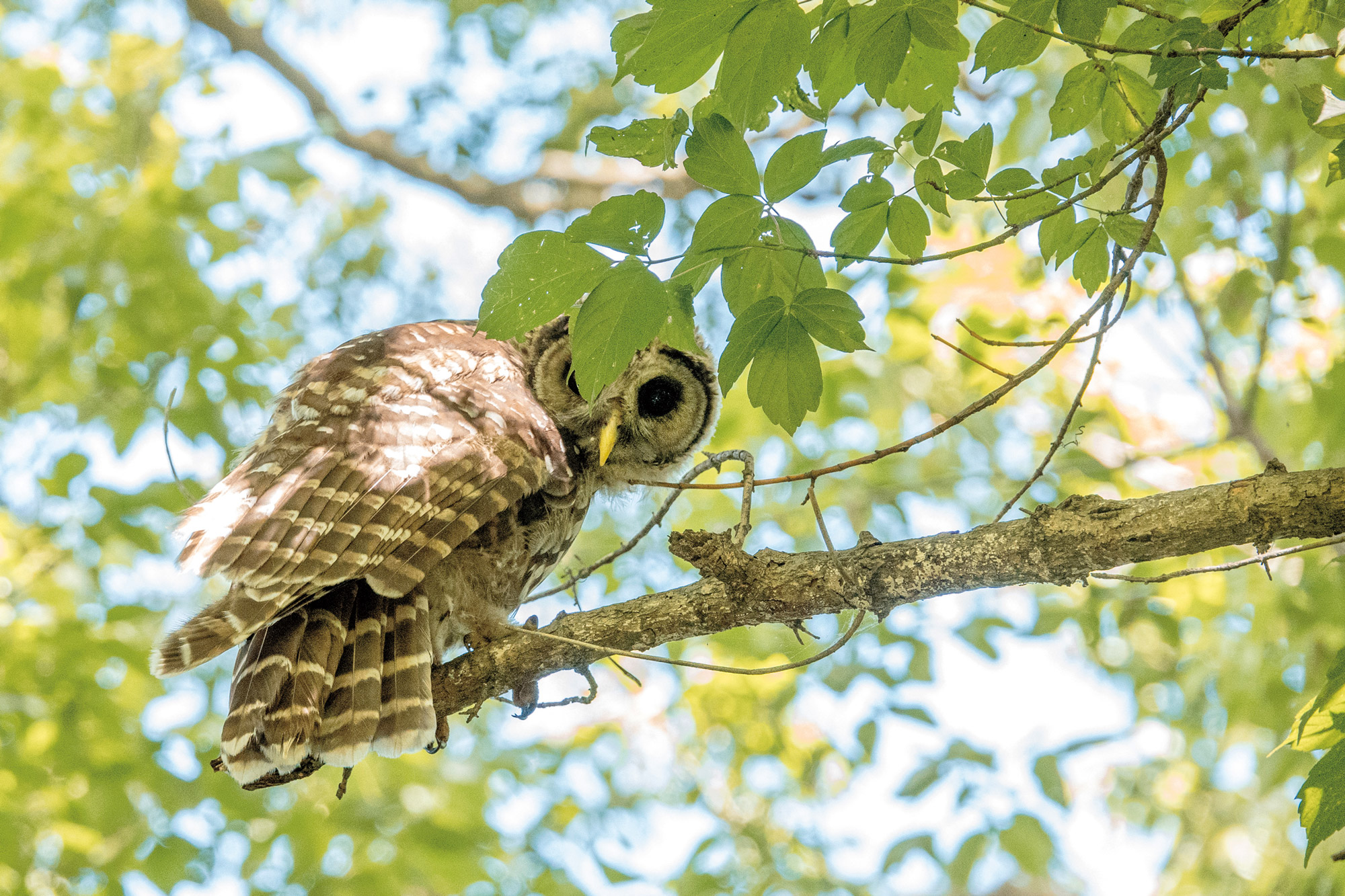
Donn: It really started with a joyous accident. I had just moved to the area and was walking for exercise along ordinary suburban sidewalks when I turned down a street, saw a trail entrance, and within 20 or 30 steps found myself face‑to‑face with a barred owl. At eye level, 10 steps away at most.
It was gorgeous, and we held eye contact for what felt like forever. It was probably half a minute at most, but that’s still a really long time to be so close, so intimate. That encounter sent me back with a camera, and I began noticing all kinds of animals and behaviors, both “serious” behaviors like hunting and the quirky, curious kind which fit my sensibilities perfectly. Animals hopping, peeking around corners, etc.
Anyway, as the images and experiences piled up over that first year, I realized I wasn’t just collecting wildlife pictures. Seeing this happen in such a heavily trafficked, tightly contained space revealed a story that wanted to be told. So I spent another year filling in the narrative, then a lot more time shaping and pairing images so the book could reveal the wonder and joy of that narrow little piece of trail.
DIYP: Was there a single moment, encounter, or image that made you realise this small, suburban area had enough depth to sustain a long-term project?
Donn: There wasn’t one lightning bolt moment, owl encounter aside. It was more like watching a day slowly brighten: the light creeps in, shapes appear, and eventually you realize there’s a whole landscape in front of you. I began walking there 2-3 times per week, and as I did each successive experience and each additional image filled in the larger story. A mated fox pair. Merganser ducks catching fish. Flowers blooming, animals raising young.
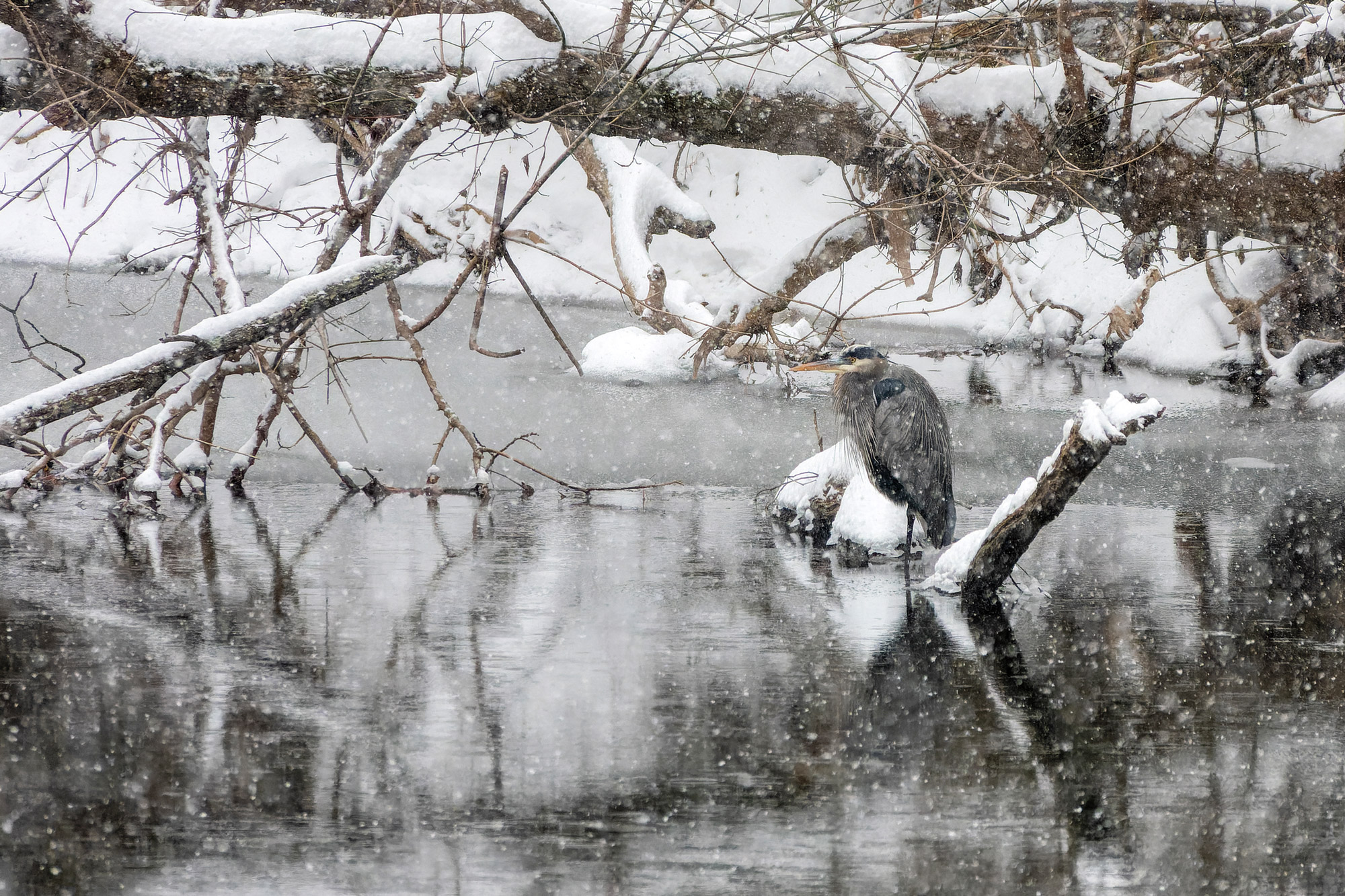
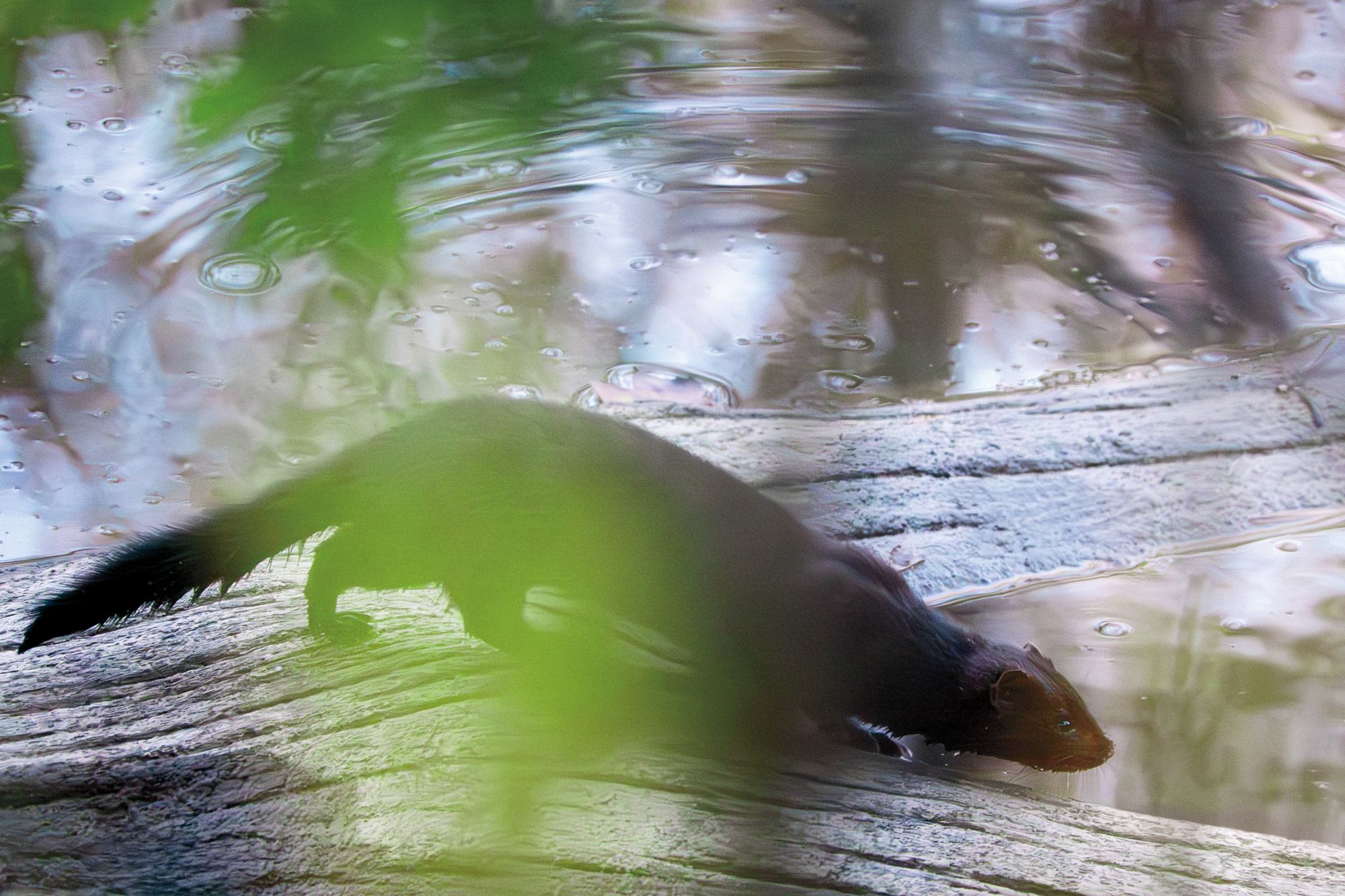
Over a full year, the place changed the way a single day does, spring as sunrise with everything sprouting and being born; summer as the busy, crowded daytime with egrets, herons, mink in shades from mocha to French roast, eagles, hawks, and songbirds; then the rich green fullness giving way to orangetinted fall and those quiet blue winter scenes.
Living in a community of roughly 13,000 people in about 3,800 homes, with dog walkers and cyclists moving along the same paths, it amazed me that all of this was happening in such a small, surrounded space. That realization made me want to tell the story in a way that might help people notice the extraordinary things in their own “ordinary” neighborhoods.
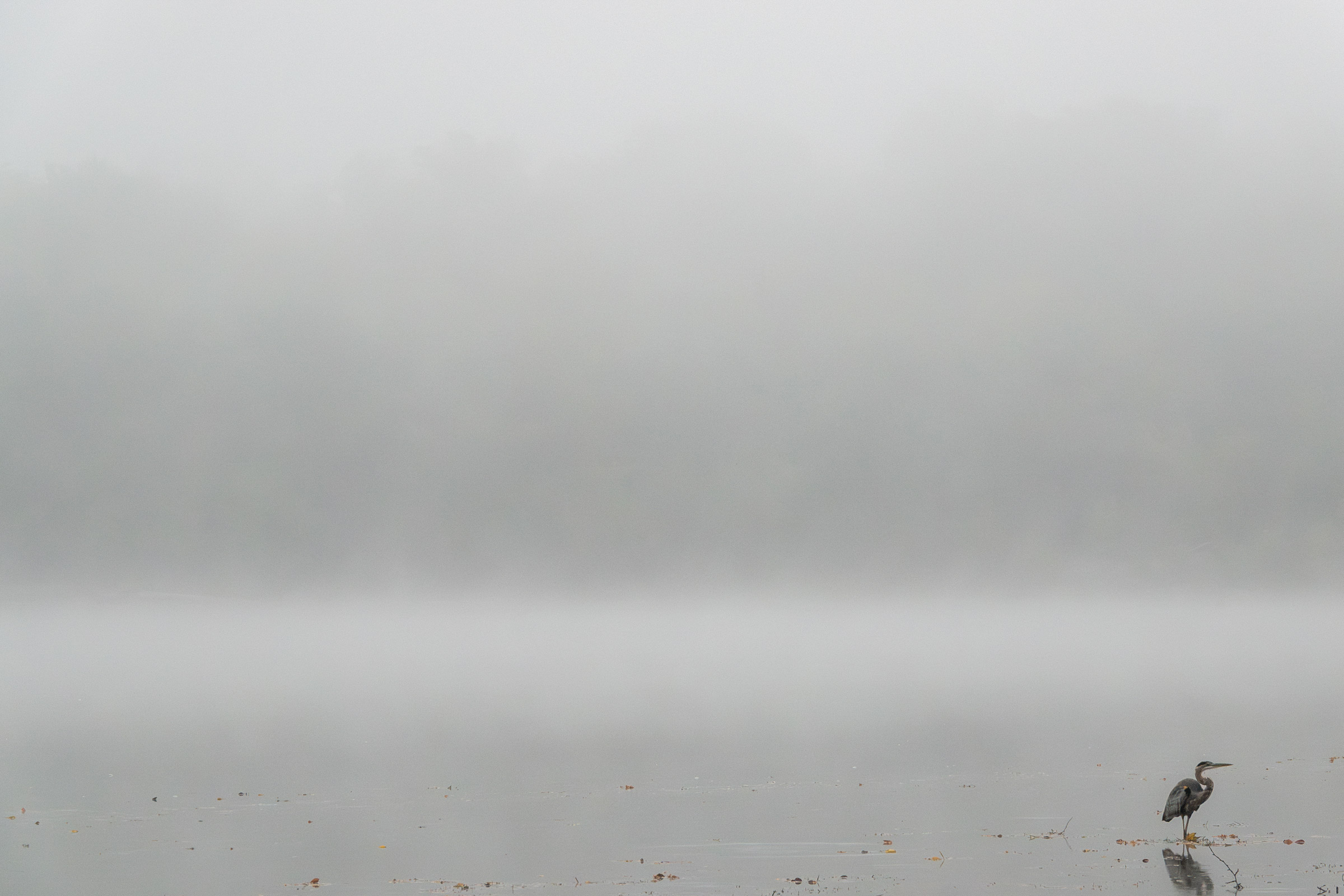
DIYP: You’ve photographed wildlife on safaris, how did that experience influence or contrast with working in a local, suburban setting?
Donn: Us suburbanites are pretty wild too! My neighbour three doors down… Ok seriously, the first learning from safaris actually applies to suburbia as well, or at least street photography, and that’s readiness. “F/8 and Be There,” per Mr. Cartier-Bresson. The best setting for wildlife is ordinarily not f/8, but pre-planning the settings I’m likely to need in a split-second, and having the camera near my eye almost continuously, allowed me to get shots that others missed, and it always has.
I’ve also learned that if I’ve never made an image of a particular animal, to get the shot now. Then get artistic. After the first shot, or the next time I see one, I can work on positioning myself for more creative, varied approaches, whether that’s a more interesting pose, background, composition, angle, or other variation on the subject.
A trip to Africa led to my first coffee table book and helped me think about storytelling and flow in assembling a book, which also influenced what I shoot and how I present my imagery. Years ago I read the Finn Beales book Photography Storytelling Workshop and that also influenced my shot making. For those who have limited experience in visual storytelling, or just want to check if they are missing anything in their approach, I highly recommend it.
DIYP: For photographers who feel their surroundings are “ordinary,” what helped you start seeing wildlife and natural stories in your own neighborhood?
Donn: The key is mindset: treat it as play. John Cleese has a wonderful talk about creativity where he emphasizes the importance of play for its own sake, and that idea really stuck with me. When you stop demanding instant masterpieces and just go out to see what you can discover, your surroundings start to feel much less ordinary.
As word of this book has spread, I’ve heard from people in places like Oklahoma, San Jose, and Fresno who, after adopting this mindset, suddenly found surprising wildlife right where they live. Walk the dog with your eyes open, sit on the back porch with a camera nearby, generally just be curious. In Wild Goose there are four squirrel photos. Each one is different; each one reveals a little character. How can they be interesting, they’re just squirrels? That’s the point: When you start paying attention, the ordinary stops being ordinary.
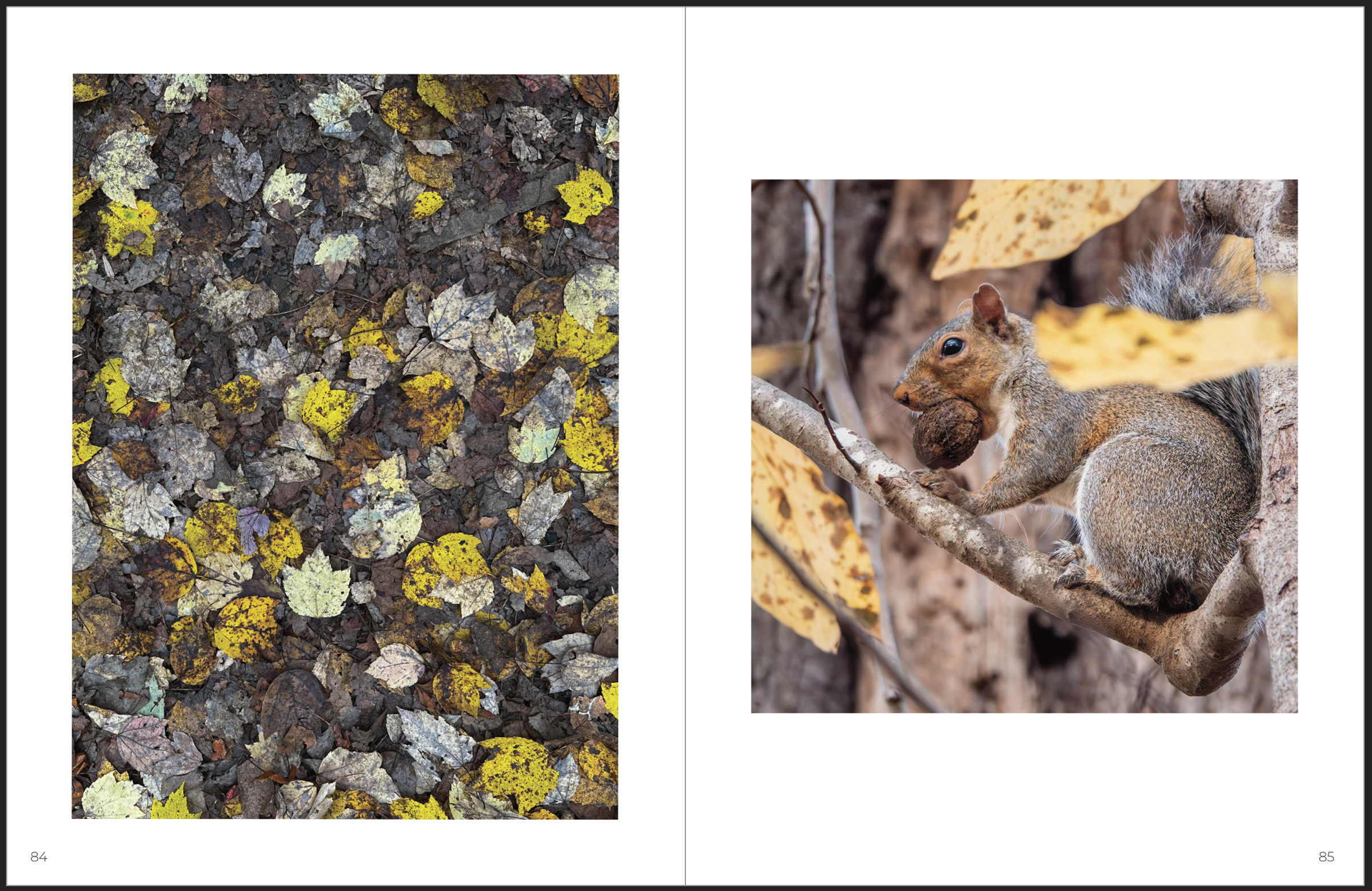
If you’re stuck, try the “10 ideas” exercise. Make a list of 10 ways to photograph that squirrel, or something unrelated like 10 ways to arrange pillows on a bed. The subject doesn’t matter. You’ll breeze through the first few ideas, then be really stuck coming up with the last few. Push through, keep going until you get to 10. James T. Kirk said: “There’s no such thing as a no-idea scenario.” OK that’s not exactly the quote, but just try 10, and try making it a practice, daily if possible. Most of the 10 ideas will be terrible; nobody cares. The goal is to stretch your imagination, not audition for the Louvre. Doing this daily has helped me seeing things I wouldn’t see, make things I wouldn’t have otherwise imagined, and in the end, am far more productive.
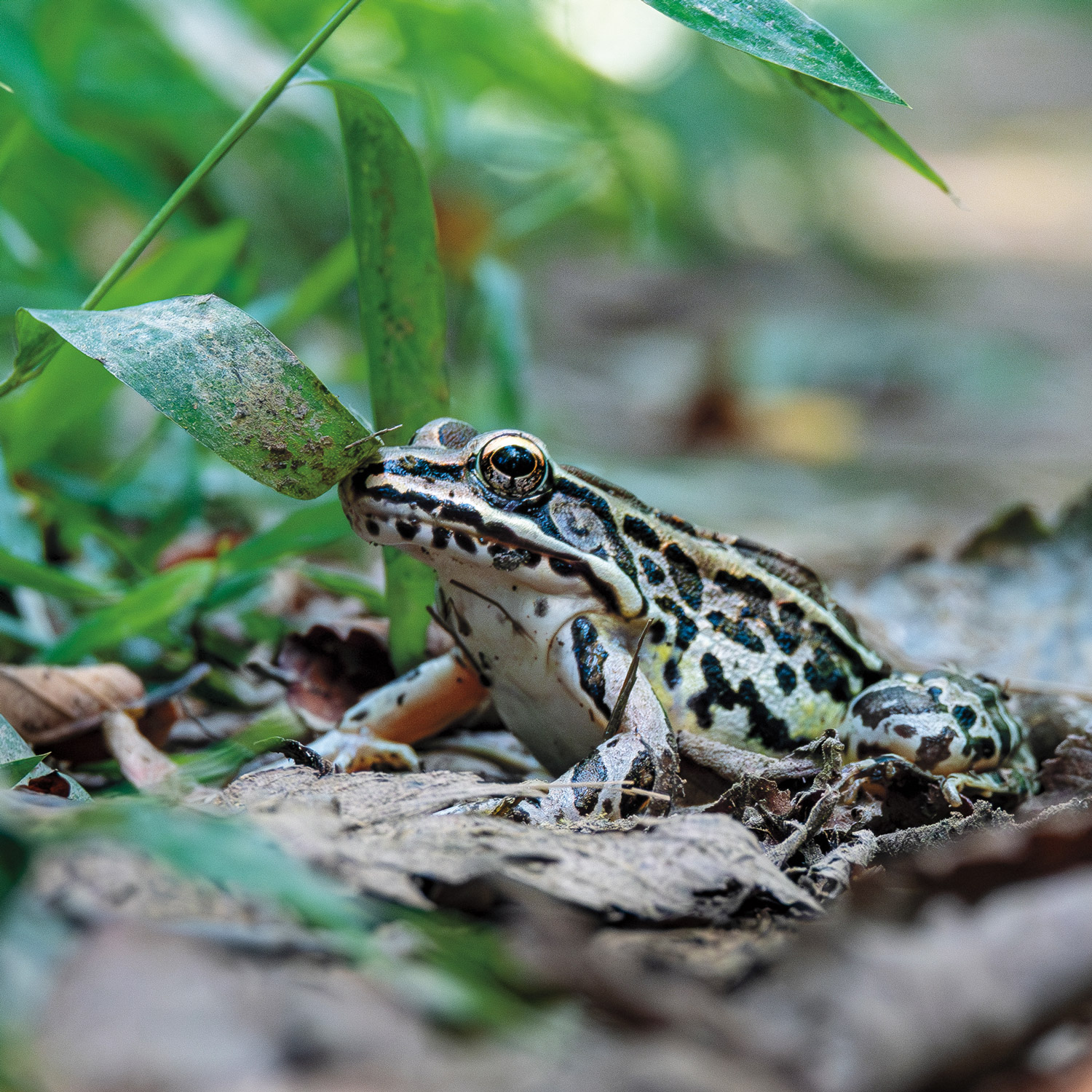
DIYP: Light in forested areas can be tricky. What technical challenges did you face shooting in dense woods, and how did you solve them?
Donn: Part of preparation, “f/8 and being there”, is having my settings match where I think things will be and then switching out of it. I set my shutter and aperture and let my ISO float. And then I use exposure compensation as needed to deal with individual subjects. If I believe I’m most likely to see light-colored subject against a dark background, I’ll walk with my exposure adjusted for that likelihood. If, in the next moment, I see something that is backlit, I’ll spin my compensation dial asap to capture the bird in the tree, or whatever it is. But I always walk around with the base settings for the place where I think the next important image is most likely to be, to improve my odds.
When it’s dense forest, a neutral setting often does the trick. When it’s mottled light in the forest, it’s trickier. Regardless of the rest, you have to make choices about how slow your shutter speed can be, or how much ISO noise you are willing to tolerate. Low light from early mornings and/or heavy shade can force a lot of tradeoffs. Bigger animals tend not to move as quickly, so you might be able to freeze action at 1/500 and protect your ISO a bit. If you just are aiming for a portrait when the animal isn’t moving you can slow the shutter way down until they move, although if they suddenly hop or fly you won’t get the action shot. If it’s a songbird in motion you probably need speeds of 1/2000+.
DIYP: What lenses or camera setups became your go-to choices for this project?
Donn: Because I find most of my subjects by walking around, I needed a camera that was light, versatile and always ready as described earlier. I do own very large gear, with big, heavy professional bodies and lenses that can withstand severe weather, tripods to match, etc. But none of those things would have allowed me to get so many quality images in this environment.
I used a Sony RX10iv. I can walk for 10 miles or more with it held in my hand ready to shoot and not get fatigued. Sadly the camera is discontinued. I might opt for an OM1 setup if I the Sony died tomorrow, in an effort to attain similar speed and agility.
DIYP: How did you approach storytelling within such a small geographic area, and how did you decide what to include or leave out in each image?
Donn: Well, the space IS the story. That made one big decision easy: everything in the book had to come from that specific three‑mile stretch, no images from anywhere else, not even my front yard half a mile away. After that, I wasn’t sure at first.
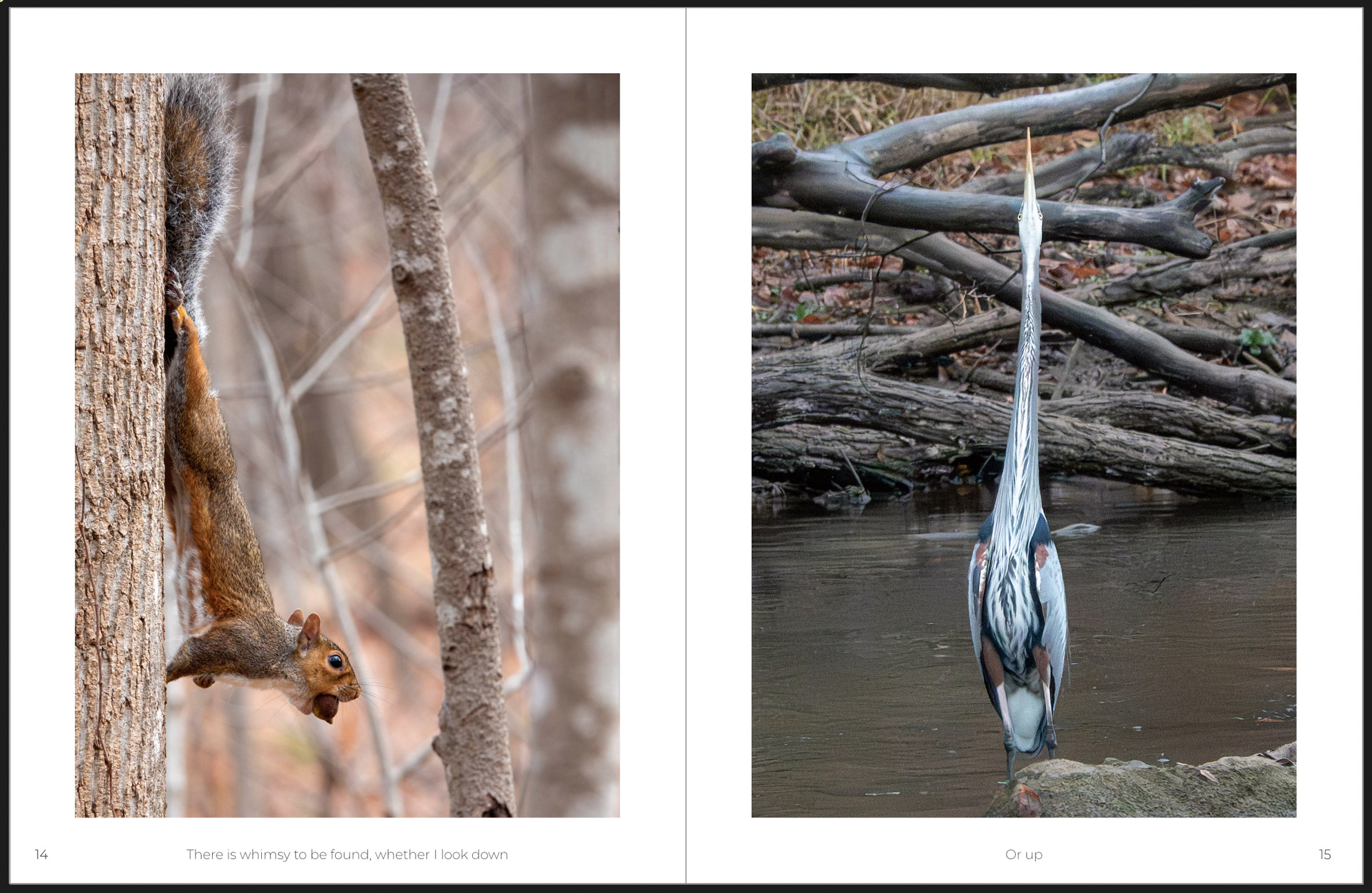
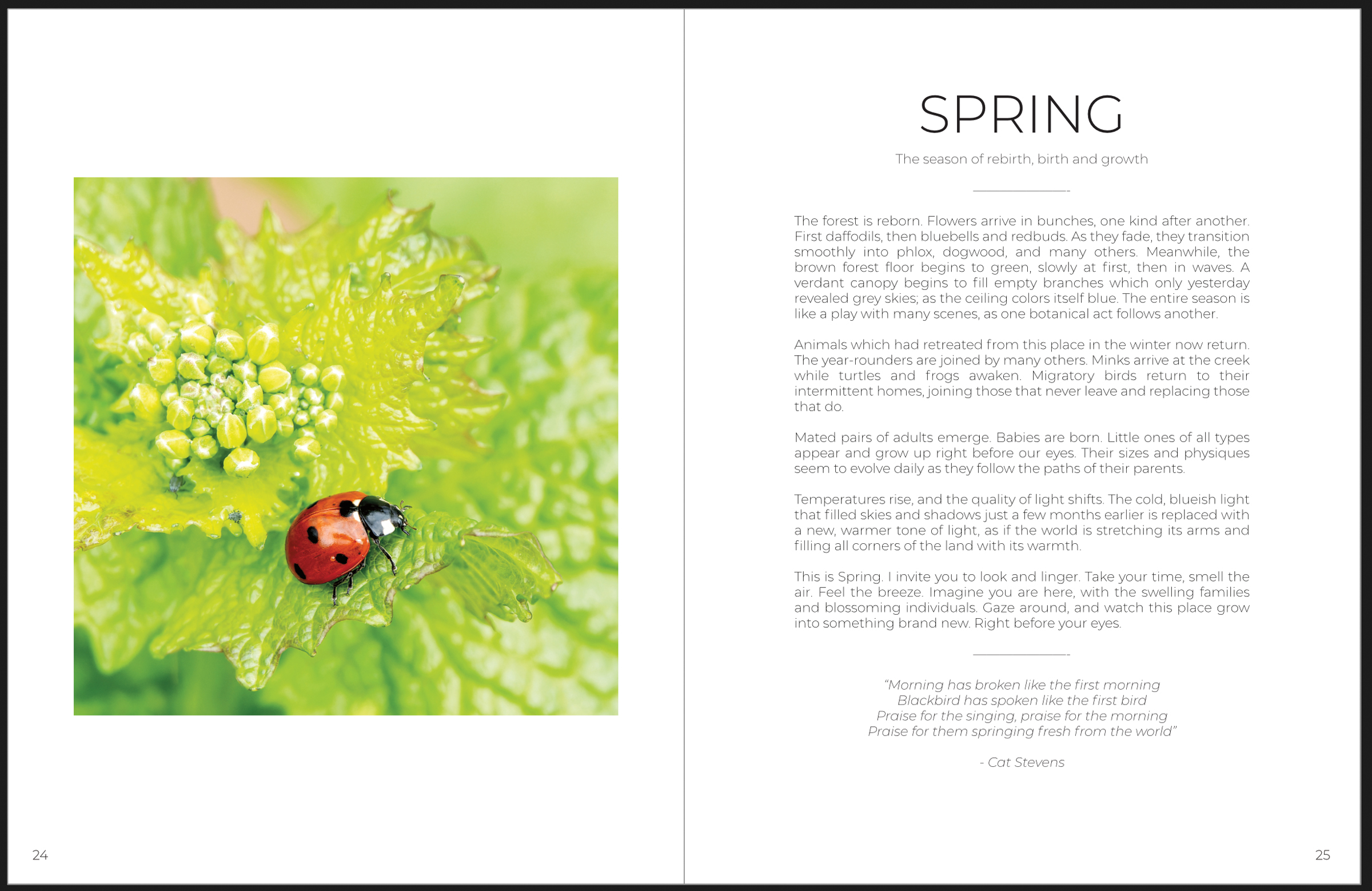
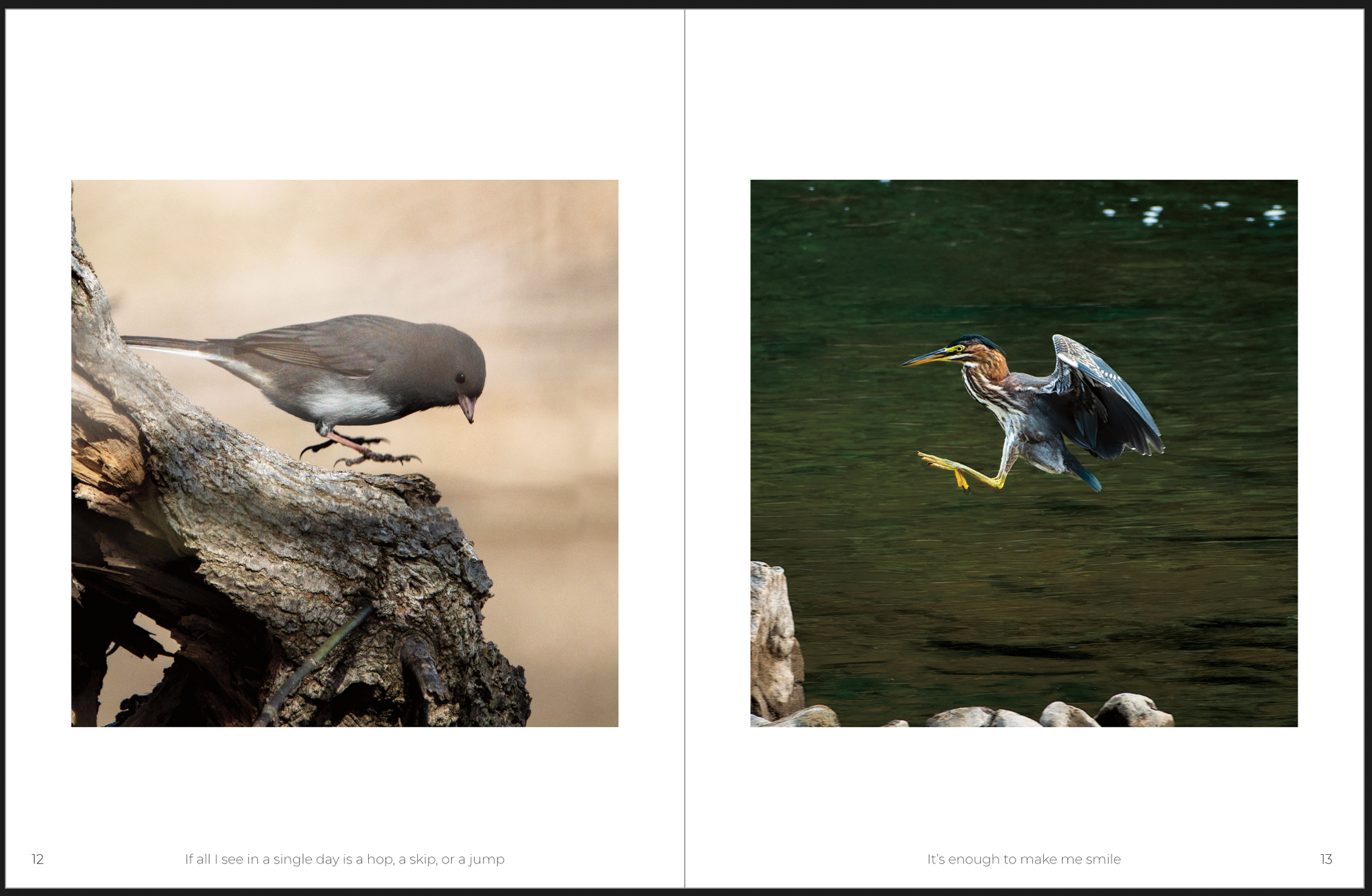
But I brainstormed several structures, using that same 10‑ideas practice, and eventually organized the book by seasons (after a short introductory section) as I alluded to earlier. That gave readers a way to feel what it’s like to be there as the year turns. Then, regarding what images get included or left out, there’s an important graphical element to my choices. Although the book is 132 pages, I think of it as 66 spreads. Each pair of facing images has to work together visually and narratively. Some favorite photos never made it in because they didn’t fit the story or couldn’t find a good partner on the opposite page, in the appropriate season, or for some other reason.
The introductory section establishes my sense of joy and wonder, and together with the seasonal approach that follows I think it worked out well. Species make repeat appearances; this is not a field guide or a catalog. With that seasonal leeway, I may or may not have included too many foxes. But each appearance serves a different seasonal moment or behavior, so it earns its place, and the various poses and behaviors prevent repetition.
DIYP: Repetition is part of any local project. How did you decide when a scene needed to be revisited, refined, or simply abandoned?
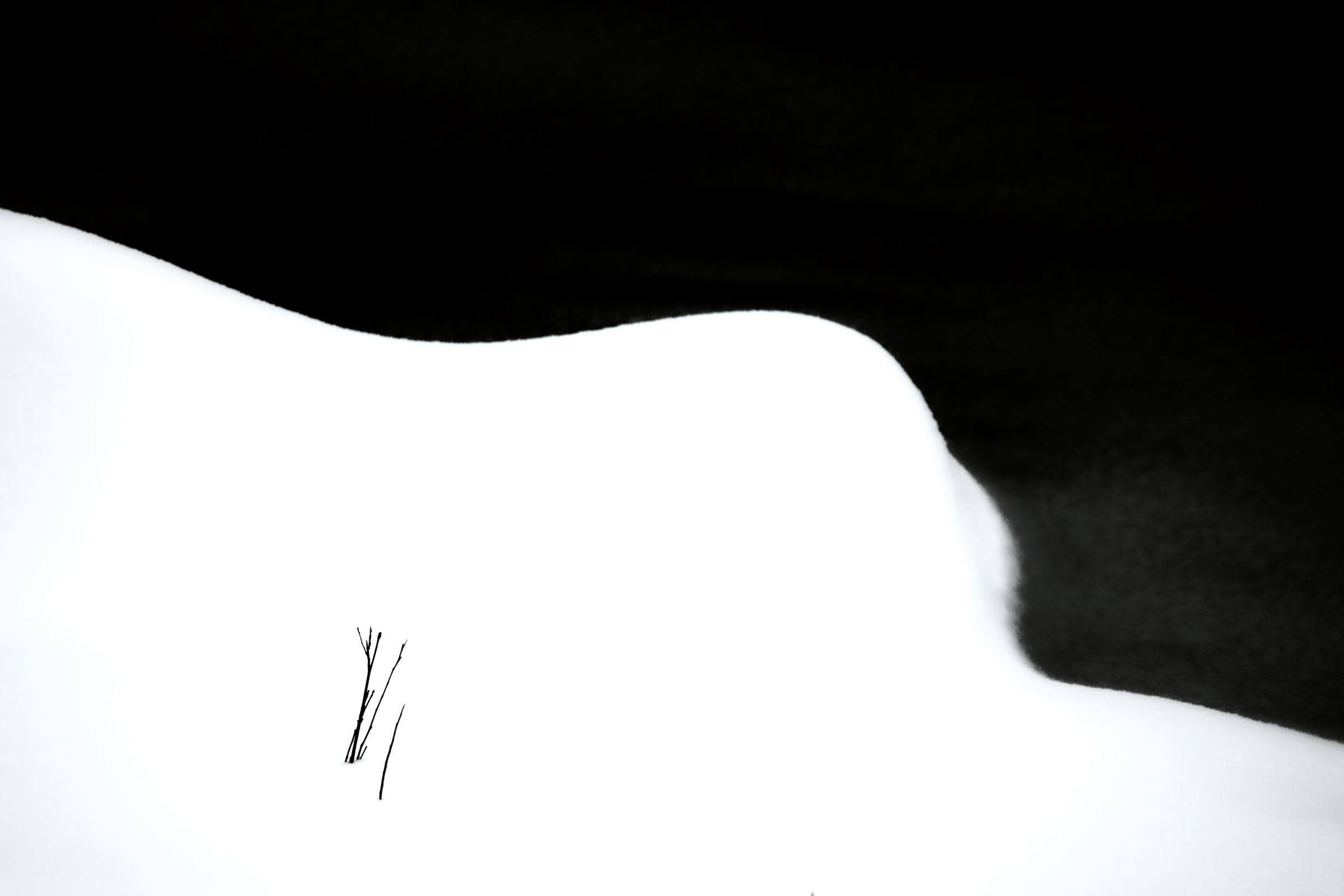
Donn: Because the core theme is the joy of discovery in one neighborhood, my first reason to revisit a spot was simple: that’s where discovery and my personal joy kept happening. The second reason was to flesh out the sense of place and season to tell stories. I made images of fallen leaves and footprints in snow specifically to help set scenes, for example.
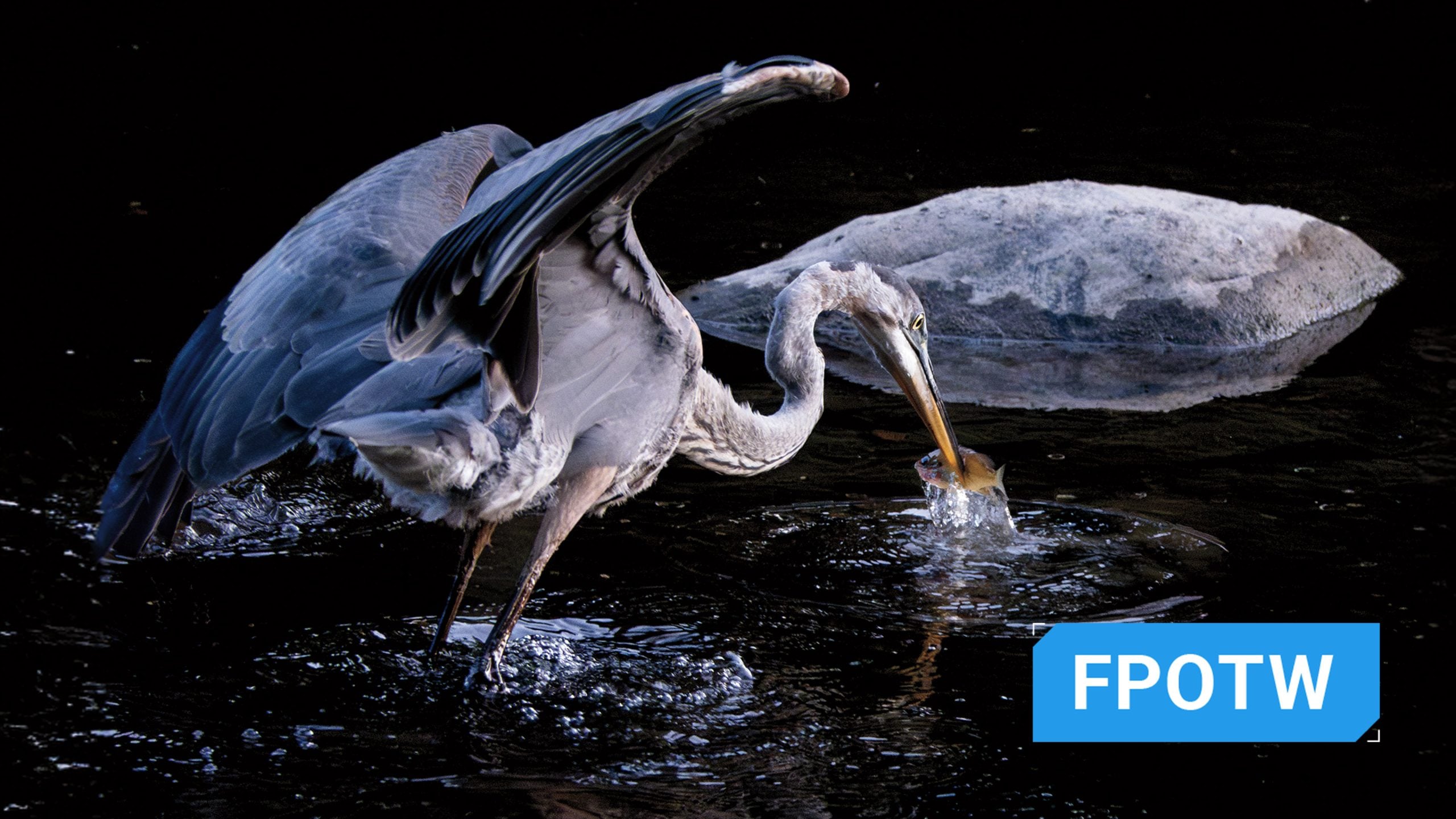
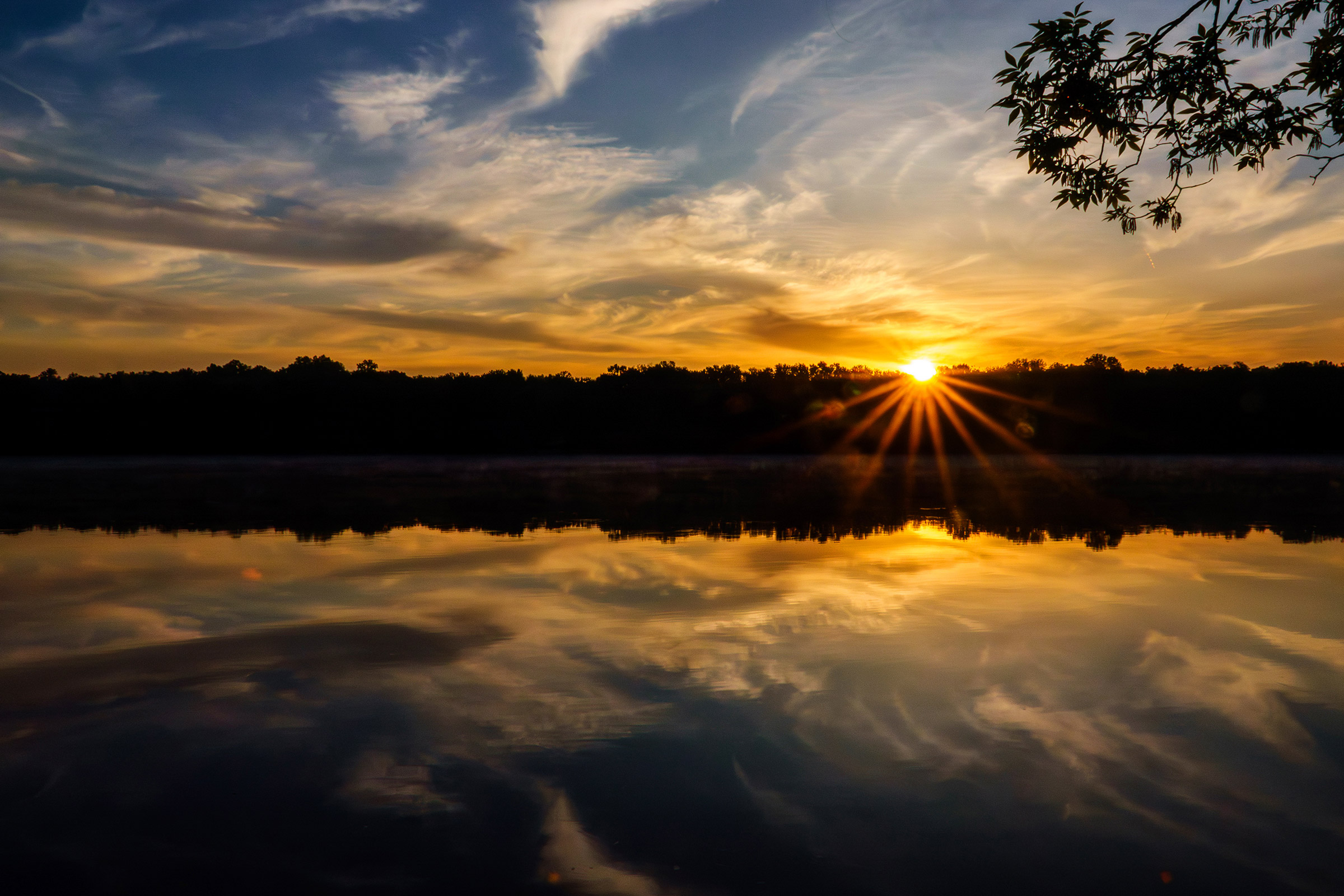
A third reason to choose a scene was to complete a specific story I’d started in writing as I developed the book. For example, in the summer chapter I talk about the way early light runs up Goose Creek and creates a spotlight effect on herons and egrets. I already had those spotlighted birds, but I realized I didn’t have a single image of the sunrise that produced that light. That realization sent me back out at dawn to capture it. Similarly, if I wanted a particular animal in a particular season to complete a spread, I set out to capture it.
I wouldn’t say I exactly abandoned scenes during that second year, but I spent less time on things that were already well represented. I tried not to completely abandon scenes though, because it’s impossible to predict exactly what an animal might do, and at any moment I just might find something wonderful. Overall there was a one-mile stretch of trail which provided probably 80% of the images included in the book. But I still explored the other areas when time permitted. Some special images still were derived from these other spaces.
DIYP: Did you face unexpected challenges in printing, sequencing images, or conveying a sense of narrative across the book?
Donn: Challenges? None at all. Things always work perfectly on the first try.
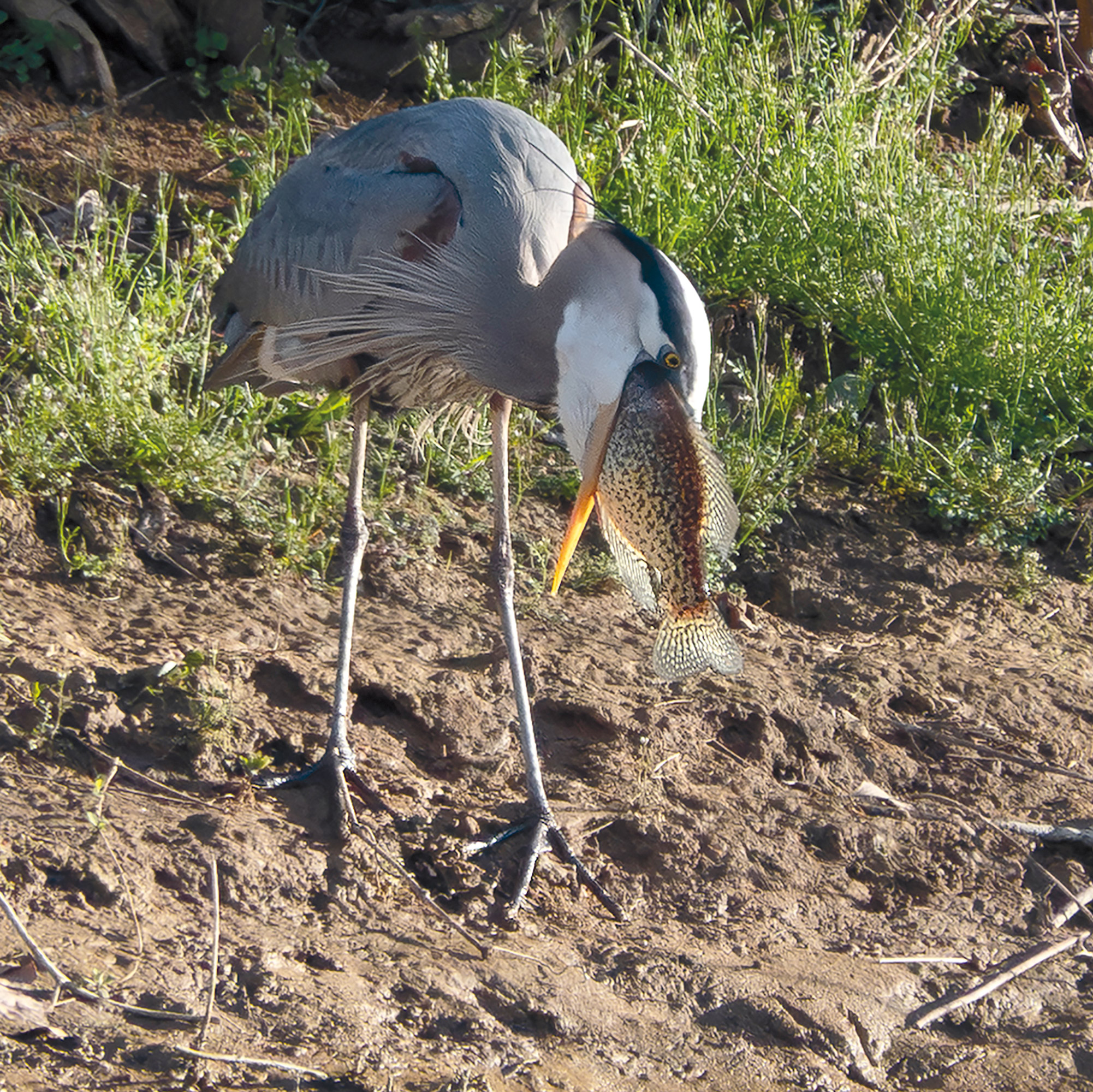
Wouldn’t that be nice! In reality, sequencing and narratives are ongoing wrestling matches. One big decision was how much to write. Beyond the seasonal introductions, I added short stories within each chapter. A concealed animal here, an over‑ambitious heron with a fish too big to swallow there, to deepen the sense of place without turning the book into a novel. I wanted readers to get a glimpse of what I was thinking while leaving plenty of room for their own interpretations.
On the printing side, I assume from the start that it will take at least three rounds to get the quality right. Even with careful calibration and profile matching, screens and paper speak to us differently. Most images translate well, but a handful always need extra tweaking. Accepting that as part of the process allows me deal with timelines better and minimize frustration.
DIYP: What’s your best advice for photographers who want to begin a meaningful wildlife or nature project steps from their home, even if they don’t think their surroundings are “special”?
Donn: Besides the ten ideas habit and playing just to play, two things. One: Wander at different times of day, and in different seasons. And Two: Do not wait for “perfect conditions”. Golden hour can actually be your arch enemy in this regard. Your subjects, whether flora or fauna, do not have 9-5 jobs, and they don’t sit in a green room waiting for your cue to step onto the stage. You may be surprised at what you find if you change things up. I’d say, you WILL be surprised if you give experimentation a chance, and venture out randomly and regularly, If that makes sense.
DIYP: What’s next? Any exciting plans for another project you can share with us?
Donn: I always have several thoughts percolating about the next project. There is a fine art project that has been calling to me even while I’ve been making this book. And a portraiture project. And an exploration of another wild space, along the lines of this one. Ask me again in a few months and I may be able to tell you exactly what’s next.
You can purchase Donn’s book from his website.
See more from DIYPhotography.net on Google
Add DIYPhotography.net as a trusted source. This makes
our stories more likely to appear in your Google Search results.
 Add as a preferred source on Google
Alex Baker
Alex Baker is a portrait and lifestyle driven photographer based in Valencia, Spain. She works on a range of projects from commercial to fine art and has had work featured in publications such as The Daily Mail, Conde Nast Traveller and El Mundo, and has exhibited work across Europe
Related Posts
 While you were playing at your beach, a photographer turned his into desert planet Jakku
 This photographer turned himself and his daughter into Wolverine’s Logan and Laura for this photo shoot
 This photography project celebrates powerful women from our neighborhood
 This dad filmed his daughter growing up for 20 years and turned it into a 5-minute timelapse
Join the Discussion
DIYP Comment Policy
Be nice, be on-topic, no personal information or flames.