





















Smartphones will overtake DSLRs within 3-5 years says Qualcomm VP
Sep 28, 2022
John Aldred
John Aldred is a photographer with over 25 years of experience in the portrait and commercial worlds. He is based in Scotland and has been an early adopter – and occasional beta tester – of almost every digital imaging technology in that time. As well as his creative visual work, John uses 3D printing, electronics and programming to create his own photography and filmmaking tools and consults for a number of brands across the industry.
Share:

Echoing the words of Sony president and CEO, Terushi Shimizu, Qualcomm’s vice president of product management and cameras, Judd Heape, believes that AI-powered smartphones are going to overtake DSLRs in terms of image quality in the next few years. His estimate is a little longer than the 2024 date mentioned by Sony, offering 3-5 years as a timeframe, but he believes the sensors area already there and that now AI capabilities will push it over the edge.
It’s a bold claim, from both individuals, but are they right? Well, I think context matters. For 99 percent of people who just want to quickly whip out a camera and take a half-decent photo on a walkabout, yes, they probably are. But can they really usurp DSLRs and mirrorless cameras for all situations? No, I don’t think so.
There is no doubt that smartphone cameras and AI technology is improving at an unprecedented rate. They’re improving far more quickly than DSLRs ever did or mirrorless cameras today. The sensors and computational photography technologies are already far beyond what anybody expected just a few short years ago. In speaking with Android Authority, Heape said that “In terms of getting towards the image quality of a DSLR, yes. I think the image sensor is there”.
He also said that “the amount of innovation that’s going into mobile image sensors is probably faster and more advanced than what’s happening in the rest of the industry”, and I don’t think there’s much doubt that that is true. And it’s not really a surprise. Everybody owns a smartphone. Not everybody owns a DSLR or mirrorless camera. The market is far larger and it makes sense to invest in those tiny smartphone sensors.
And it’s not just the sensors but the processors. Snapdragon processors, produced by Qualcomm and found in probably the majority of smartphones out there in the world, far surpass the capabilities of the processors found in most cameras. This, too, is logical, because they have to perform more demanding tasks than simply shooting photos. But when you need to shoot photos with it, all that processing power is just sitting there and available for use.
Which is exactly what the AI capabilities on the newer phones is doing, tapping into all of that processing power to ultimately produce a final result that for most people competes with images shot by a DSLR or mirrorless camera. Smartphones encroaching on DSLR and mirrorless territory wasn’t entirely unexpected. They did away with compact cameras pretty much overnight and with the power that smartphones have available to them, it’s simply a matter of time.
But will they replace DSLRs and mirrorless cameras for everybody and every situation? No, of course not. While computational photography can do a lot and although we’ve seen developments like 10x optical zooms, DSLRs and mirrorless cameras will retain their place in many photographers’ lives for a long time.
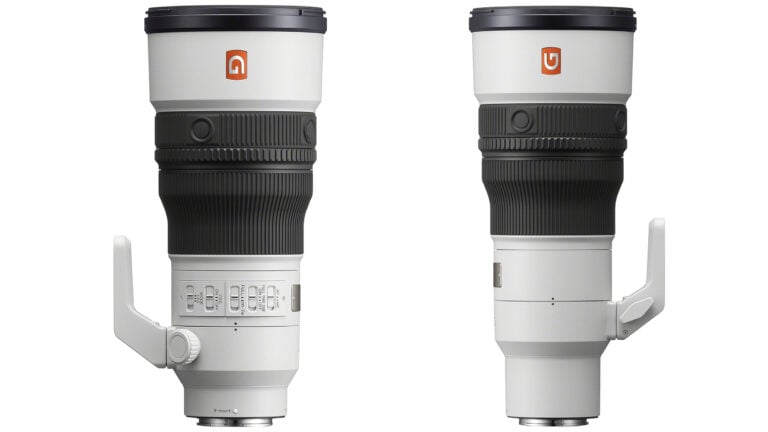
Even if smartphones manage to eventually overcome some of their limitations – like shooting fast-paced events in low-light situations, there’s still the issue of ergonomics, connectivity and technical capability for more advanced techniques. Sports and wildlife shooters, I think, would struggle to adapt a smartphone to their long lens needs. Working with flash is also another huge hurdle that I don’t think smartphones will ever be used for in a serious capacity amongst the masses. And there are plenty of other techniques and genres where I don’t think smartphones will ever give us what we need.
It’s not because I don’t think they’d never be capable of such tasks, I just don’t think the motivation is there for smartphone companies to work on them. Like with flash, for example. I think just about every smartphone on the market today is capable of working with just about any flash system from a hardware and technical standpoint, just not software. But there’s just no motivation for smartphone manufacturers to really develop it because it’s such a relatively small sector of the smartphone-owning market. Sure, Profoto has their app, but they’re not a smartphone company and it only works with their lights, iPhones and a handful of select Samsung devices, not all smartphones across the board.
Ultimately, I think it boils down to control. The more responsibility and functionality we offload to AI, the less control we ultimately have because the processor’s doing it all for us, guessing at what we want. And for the vast majority of smartphone users, that’s just fine. That is, after all, who the smartphone companies develop for. But the “niche” capabilities that only DSLRs and mirrorless cameras can provide? I don’t think that will change for a long, long time, if ever. If it does, I think it’ll only be because they need to unlock a certain capability for one thing and third-party developers take it upon themselves to exploit that capability for more niche use cases and features.
I have to admit that I do find myself using my smartphone for more and more of my general photography these days. Exploring a new city or heading out into the wilderness to go camping. It’s just more convenient and the images are already plenty good enough to document our lives. But for more creative things, where I want to have control over every aspect of the shot and possibly interface with other hardware, I’m still taking my DSLRs and mirrorless cameras and probably always will.
What do you do with your DSLR and mirrorless cameras that a smartphone could never replace?
[via Android Authority]
See more from DIYPhotography.net on Google
Add DIYPhotography.net as a trusted source. This makes
our stories more likely to appear in your Google Search results.
 Add as a preferred source on Google

John Aldred
John Aldred is a photographer with over 25 years of experience in the portrait and commercial worlds. He is based in Scotland and has been an early adopter – and occasional beta tester – of almost every digital imaging technology in that time. As well as his creative visual work, John uses 3D printing, electronics and programming to create his own photography and filmmaking tools and consults for a number of brands across the industry.
Related Posts
 Sony Aims To Turn Smartphones Into Full DSLRs with the QX1 and QX30
 DALL-E 3 now lets you edit images and find inspiration within ChatGPT
 Filmmaker shot two DSLRs side-by-side for two years to make this amazing panoramic timelapse of LA
 Photographer wins his own photo contest, causes outrage within community
Join the Discussion
DIYP Comment Policy
Be nice, be on-topic, no personal information or flames.
14 responses to “Smartphones will overtake DSLRs within 3-5 years says Qualcomm VP”
Bah, still much ado about nothing. Cellphone makers have been predicting they’re about to overtake DSLR in terms of quality for the past 10 years. They have a vested interest in selling cellphones and no prediction is too bold, Seperating rubes from their money is the quality they are most likely to hone.
So, you mean, they will get bigger and have exchangeable lenses? Cool!
I take most of my photos with a cheap smartphone. No its not the same but it suits me for what I do.
Yet… until we get proper zoom, much better dynamic range and of course bigger sensors they wont take away those that prefer a real camera.
Cameras are lacking a lot in connectivity… any new phone can do 5G now and we are still forced to use slow and awakward methods to get photos out of a camera… by the time I get one image I can edit several and post them online using only my cheap phone.
Take good pictures ?
Well since DSLR’s will be giving way to mirrorless, sure. But I’m not giving up interchangeable lenses anytime soon.
Well Kinda Figured This was gonna happen
Well Kinda Figured This was gonna happen
Take good pictures ?
Well since DSLR’s will be giving way to mirrorless, sure. But I’m not giving up interchangeable lenses anytime soon.
Smartphones are fantastic for everyday snaps but when I’m out to take serious photos the UI, flexibility, image quality and even the ritual of using a ‘proper’ camera I doubt will ever be replaced by a phone. I’d never say never though. In my lifetime I remember thinking that physical storage would never be replaced by cloud, that film would never be matched by digital and so many other advances. It is always worth embracing technology so that you don’t get left behind.
Smartphones are fantastic for everyday snaps but when I’m out to take serious photos the UI, flexibility, image quality and even the ritual of using a ‘proper’ camera I doubt will ever be replaced by a phone. I’d never say never though. In my lifetime I remember thinking that physical storage would never be replaced by cloud, that film would never be matched by digital and so many other advances. It is always worth embracing technology so that you don’t get left behind.
In many ways, yes. But the small sensor size still has serious limitations
Image quality at actual professional image sizes; try making a 24″x36″ wall print from a phone pic that uses a tiny sensor, it would look more like a Monet painting than a photo. Also 14-bit RAW data where the dynamic range can be stretched in any way you need, and information isnt lost or blown-out by extreme lighting? And most of all, near instant focus and 15-30 frames of 36MP+ shooting suitable for low light, sports, and wildlife? It aint happening unless the camera aspect becomes more important than any part of the phone itself. At that point, is it still a phone? Or would that just be a DSLR with phone aspects?
What can my SLR do that my phone can’t?
Physically change lenses.
Not ring in the middle of taking a video
Not listen to what I’m saying in order to show me ads on social media