

























JWST’s New Image Shows Different Stages of Star Formation in One Frame
Oct 7, 2026
Soumyadeep Mukherjee
Soumyadeep Mukherjee is an award-winning astrophotographer from India. He has a doctorate degree in Linguistics. His work extends to the sub-genres of nightscape, deep sky, solar, lunar and optical phenomenon photography. He is also a photography educator and has conducted numerous workshops. His works have appeared in over 40 books & magazines including Astronomy, BBC Sky at Night, Sky & Telescope among others, and in various websites including National Geographic, NASA, Forbes. He was the first Indian to win “Astronomy Photographer of the Year” award in a major category.
Share:
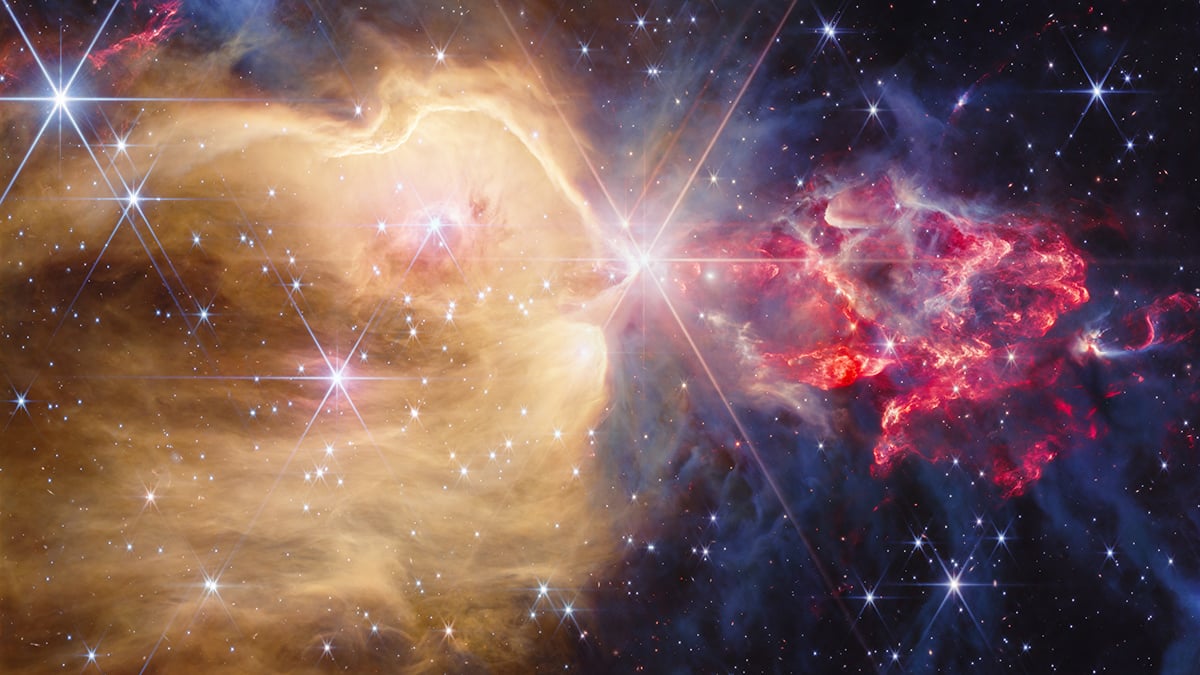
The James Webb Space Telescope has captured a detailed new view of NGC 7129, a stellar nursery about 3,300 light-years from Earth. The region contains young stars at different stages of development, along with the gas and dust from which future stars may form.
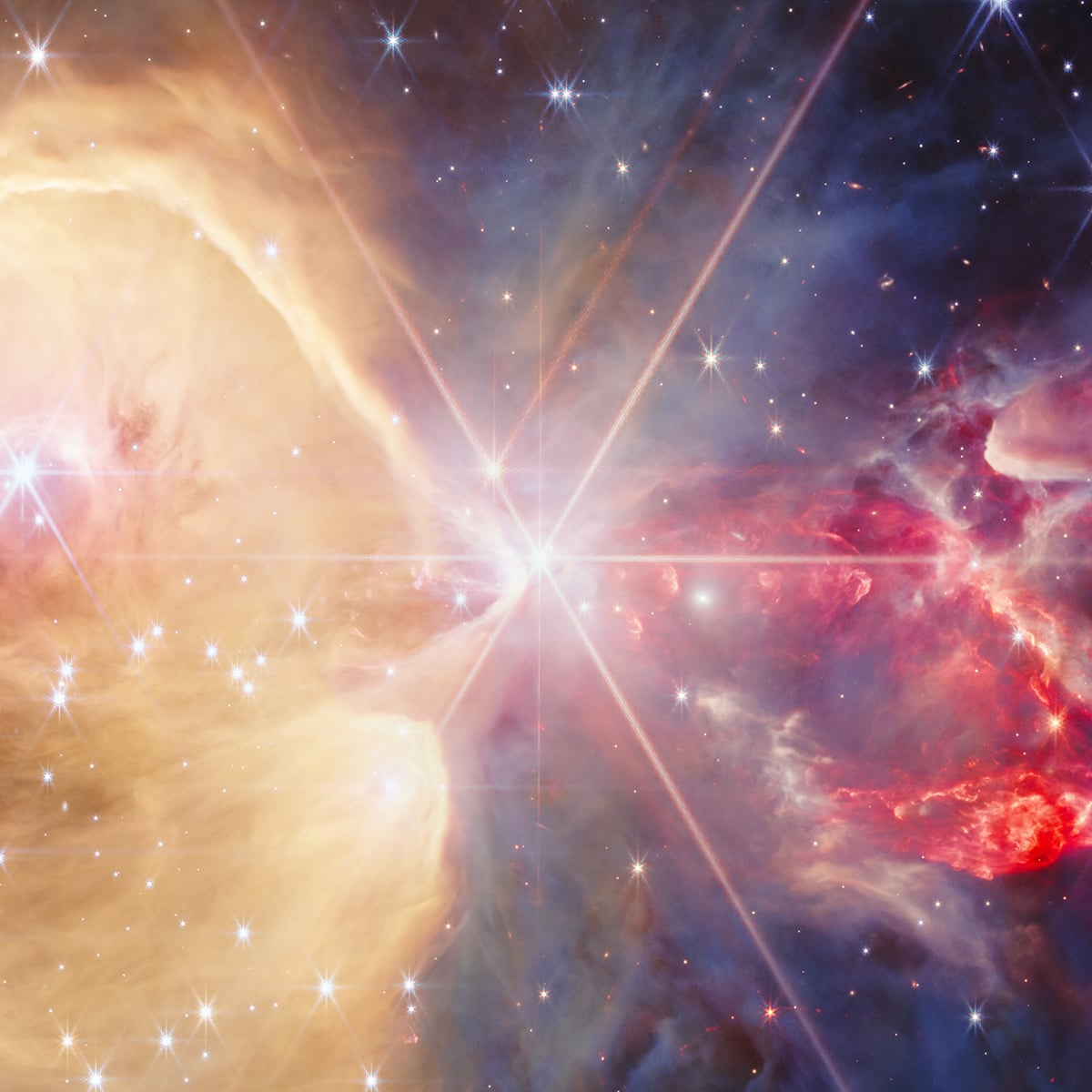
James Webb’s Near-Infrared Camera (NIRCam) revealed these objects across a field filled with dense clouds, glowing gas, and streams of material from young stars. At the center, we find LkHα 234, a young star several times more massive than the Sun. Around it, earlier outflows have created a large cavity in the surrounding cloud.
A stellar nursery: Different generations of young stars
NGC 7129 sits in a large molecular cloud in the constellation Cepheus. These clouds contain cold gas and dust that can collapse under gravity and eventually produce new stars. The process does not happen at the same rate everywhere so a single cloud can contain objects at very different stages of development.
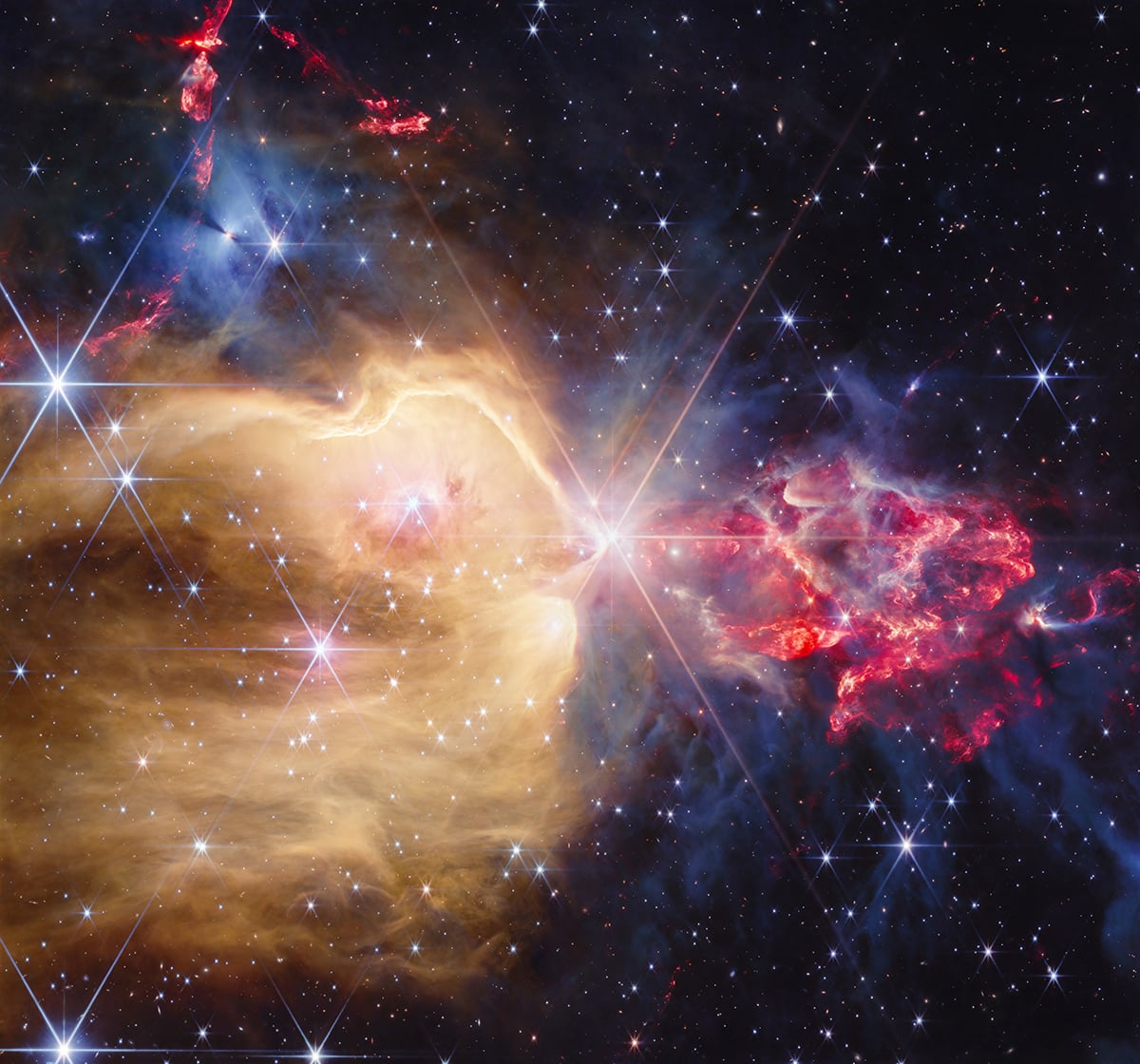
LkHα 234 is one of the more advanced young stars in this region. Astronomers estimate that it has between five and eight times the mass of the Sun. It has not yet reached the main sequence, where stars spend most of their lives producing energy through hydrogen fusion.
The star has already had a major effect on its surroundings. During its earlier development, powerful outflows pushed material away from the star and cleared a cavity through the molecular cloud. That cavity now extends for roughly 3.5 light-years.
James Webb looks through the dust
The youngest stars in a stellar nursery can be difficult to see. Dense clouds of dust often surround them and block visible light from reaching telescopes.
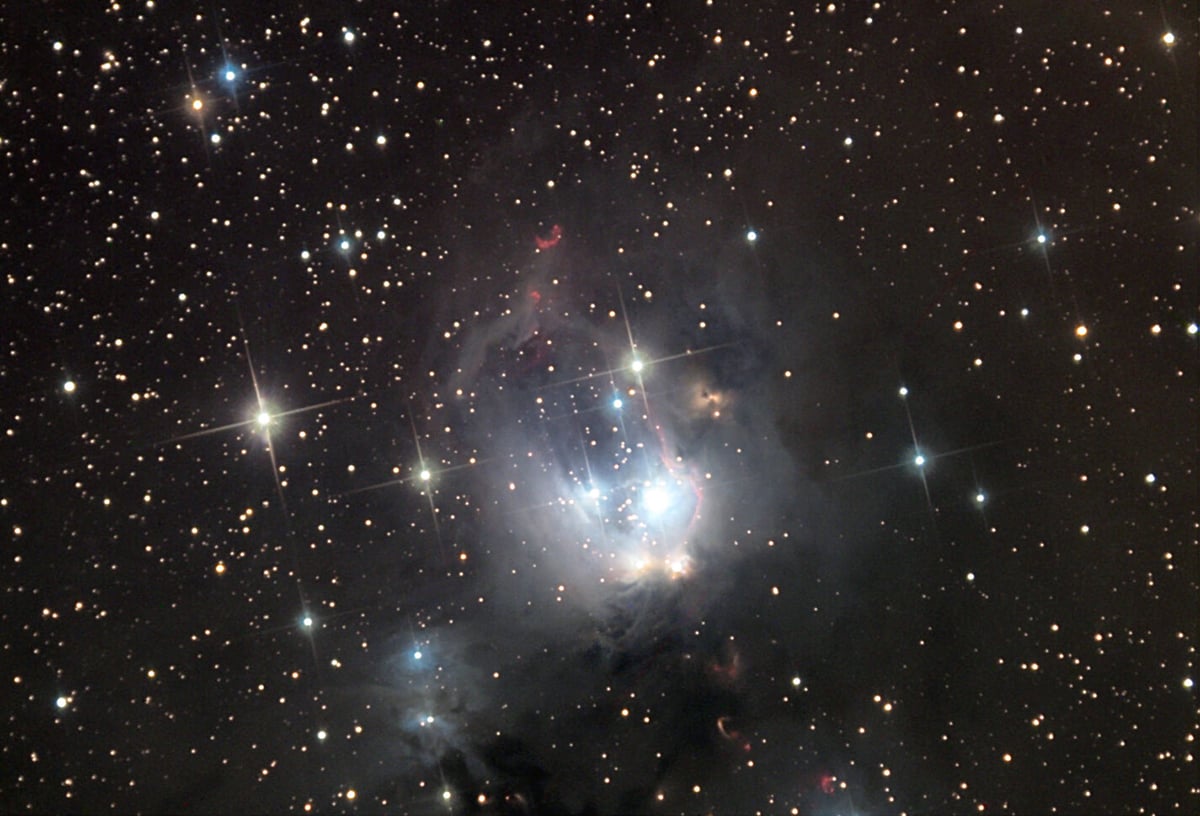
JWST observes infrared wavelengths, which give astronomers a better view through some of this obscuring material. NIRCam can detect infrared radiation from young stars, warm dust, and gas inside regions that look much darker at visible wavelengths.
A protostar forms when a dense part of a molecular cloud collapses under gravity. Material continues to fall towards the growing object, while some of it moves into a rotating disk. The young star also begins to eject material through powerful jets and winds.
These outflows collide with the surrounding cloud. The collisions heat and compress the gas and produce shocks that astronomers can detect.
The red region contains younger protostars
The red structures on the right side of the image show us a much earlier stage of stellar development. Several protostars remain deeply embedded in dense material, and some are still gaining much of their mass.
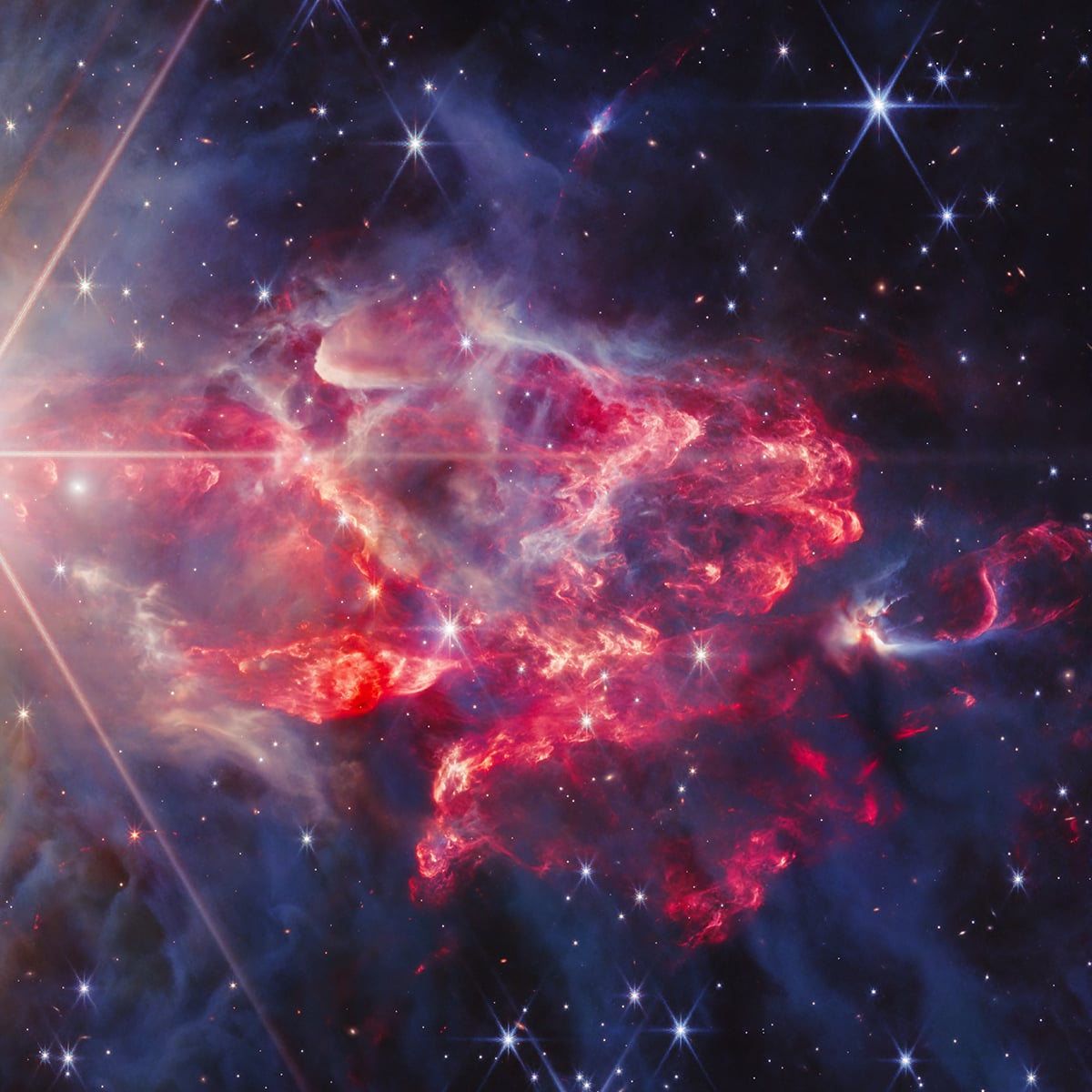
These objects have not yet settled into the stable configuration of a mature star. Their surroundings remain active as gas falls inward and jets carry some material away. The jets can travel considerable distances from their parent stars. When they strike the surrounding cloud, they produce shocks that can appear as bright, compact structures.
The young objects in NGC 7129 do not all produce identical outflows. Their jets point in different directions and interact with clouds of different densities. That creates the irregular shapes visible across the red region.
Clear skies!
See more from DIYPhotography.net on Google
Add DIYPhotography.net as a trusted source. This makes
our stories more likely to appear in your Google Search results.
 Add as a preferred source on Google

Soumyadeep Mukherjee
Soumyadeep Mukherjee is an award-winning astrophotographer from India. He has a doctorate degree in Linguistics. His work extends to the sub-genres of nightscape, deep sky, solar, lunar and optical phenomenon photography. He is also a photography educator and has conducted numerous workshops. His works have appeared in over 40 books & magazines including Astronomy, BBC Sky at Night, Sky & Telescope among others, and in various websites including National Geographic, NASA, Forbes. He was the first Indian to win “Astronomy Photographer of the Year” award in a major category.

Join the Discussion
DIYP Comment Policy
Be nice, be on-topic, no personal information or flames.