


















NASA’s Roman Space Telescope Takes Its First Look at the Stars
Sep 16, 2026
Soumyadeep Mukherjee
Soumyadeep Mukherjee is an award-winning astrophotographer from India. He has a doctorate degree in Linguistics. His work extends to the sub-genres of nightscape, deep sky, solar, lunar and optical phenomenon photography. He is also a photography educator and has conducted numerous workshops. His works have appeared in over 40 books & magazines including Astronomy, BBC Sky at Night, Sky & Telescope among others, and in various websites including National Geographic, NASA, Forbes. He was the first Indian to win “Astronomy Photographer of the Year” award in a major category.
Share:
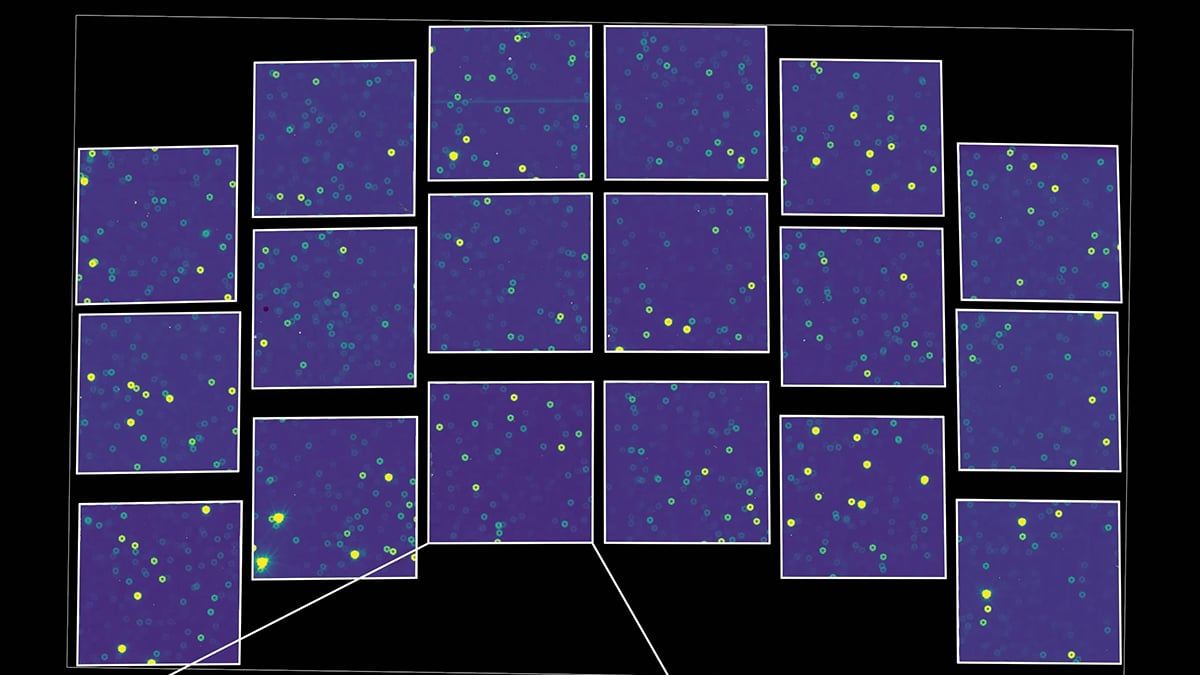
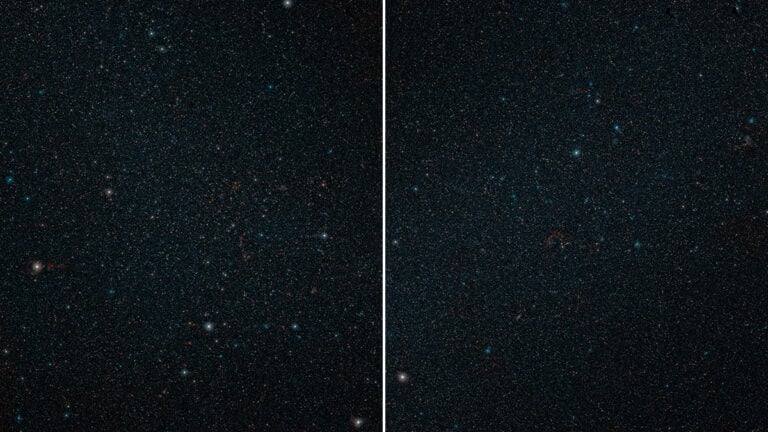
NASA’s Nancy Grace Roman Space Telescope has taken its first image of the stars. But they look nothing like the sharp points of light we expect from a space observatory. In the new test image, stars spread across the detector as broad, ring-like shapes. Some cover thousands of pixels.
Roman’s main camera was still in its launch configuration when engineers took the picture. Its detectors had not yet moved into the position needed for sharp images. NASA announced the milestone on September 15, after engineers activated Roman’s Wide Field Instrument, or WFI. The camera contains 18 infrared detectors and has 300 million pixels. It will eventually survey enormous areas of the sky at once, giving astronomers a view much wider than Hubble’s.
First starlight for Roman’s 300-megapixel camera
The Wide Field Instrument is the main camera aboard Roman. Its job will be to photograph huge sections of the sky while retaining the detail needed to study individual galaxies, stars, and planets.
The numbers will give you some idea of its scale. The WFI has 18 infrared detectors, each containing 4,096 by 4,096 pixels. These provide more than 300 million pixels across the camera. The detector array itself has a sensing area roughly comparable to a laptop screen.
Roman’s wide view makes it different from Hubble. Hubble can resolve extremely fine detail, but its cameras cover a relatively small part of the sky in one exposure. Roman will see a patch larger than the apparent size of the full Moon each time it takes an image with the WFI. NASA expects Roman’s field of view to be at least 100 times larger than Hubble’s.
The blurry stars are part of Roman’s focusing process
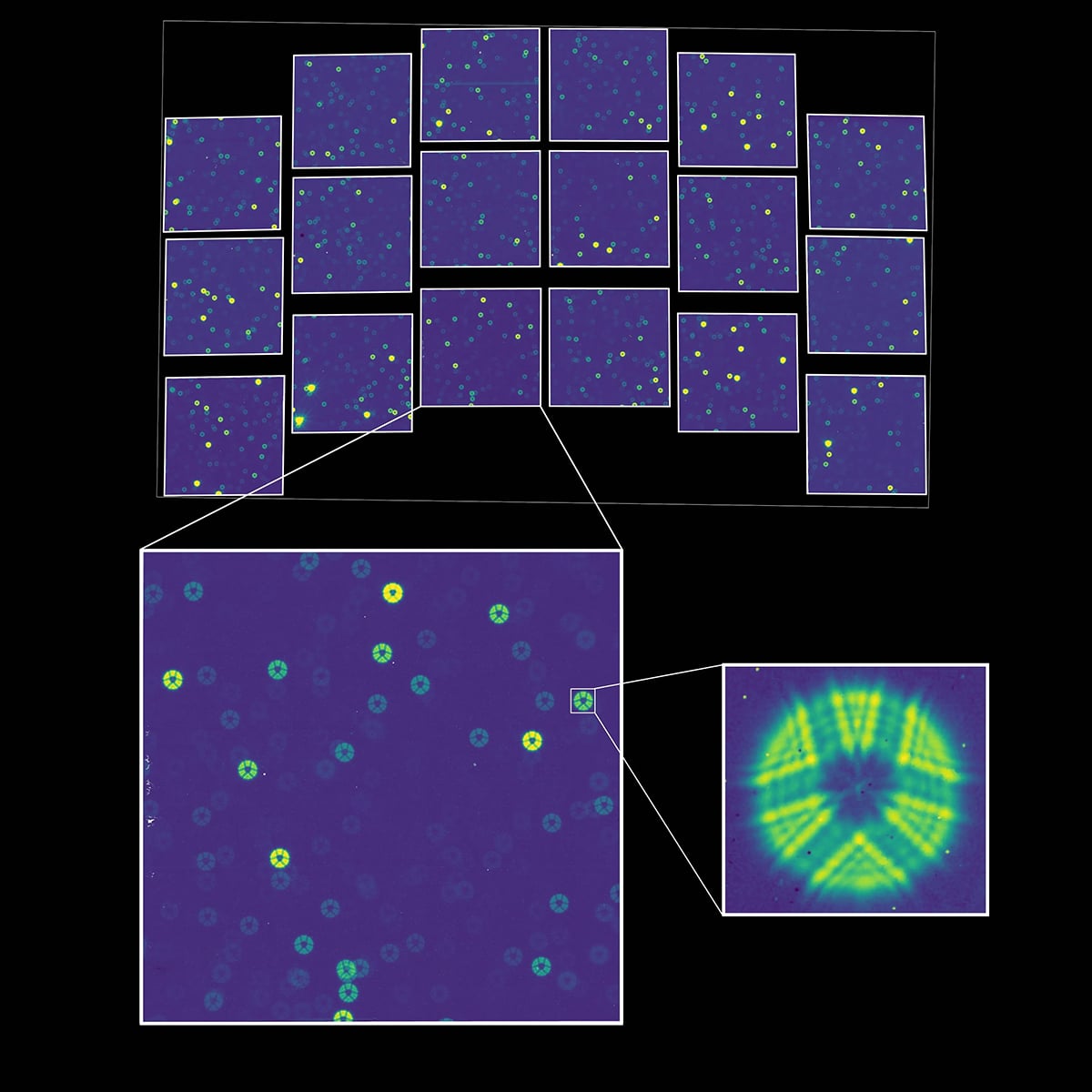
If you looked at Roman’s first WFI image without knowing what you were seeing, you might assume something had gone wrong. The stars are broad and diffuse. Many of them appear as large circular or donut-like patterns. The image does not resemble the crisp photographs normally associated with Hubble or the James Webb Space Telescope.
However, this is an expected result. During launch, engineers kept the WFI detector assembly in a stowed position. That protected the instrument during the journey into space, but it left the detectors far from their final focal position.
When Roman pointed the WFI toward stars, the camera still detected their light. The telescope simply had not reached the optical configuration needed to concentrate that light into sharp points. The engineers will adjust the telescope until the stars become much smaller and sharper.
Cooling the camera before the first image
The WFI works with infrared light, which makes temperature a major concern. Heat produces its own infrared radiation. If the detectors become too warm, the unwanted signal could interfere with observations of faint objects.
Engineers spent about 10 days drying and decontaminating the instrument while keeping the detectors at around minus 65 degrees Celsius. On September 11, they switched off the instrument heater and allowed the WFI to cool further. The temperature reached about minus 143 degrees Celsius before engineers activated the 18 detectors.
The detectors continued moving toward their final operating temperature of about minus 183 degrees Celsius. And while the detectors cooled, engineers worked through other parts of the WFI commissioning.
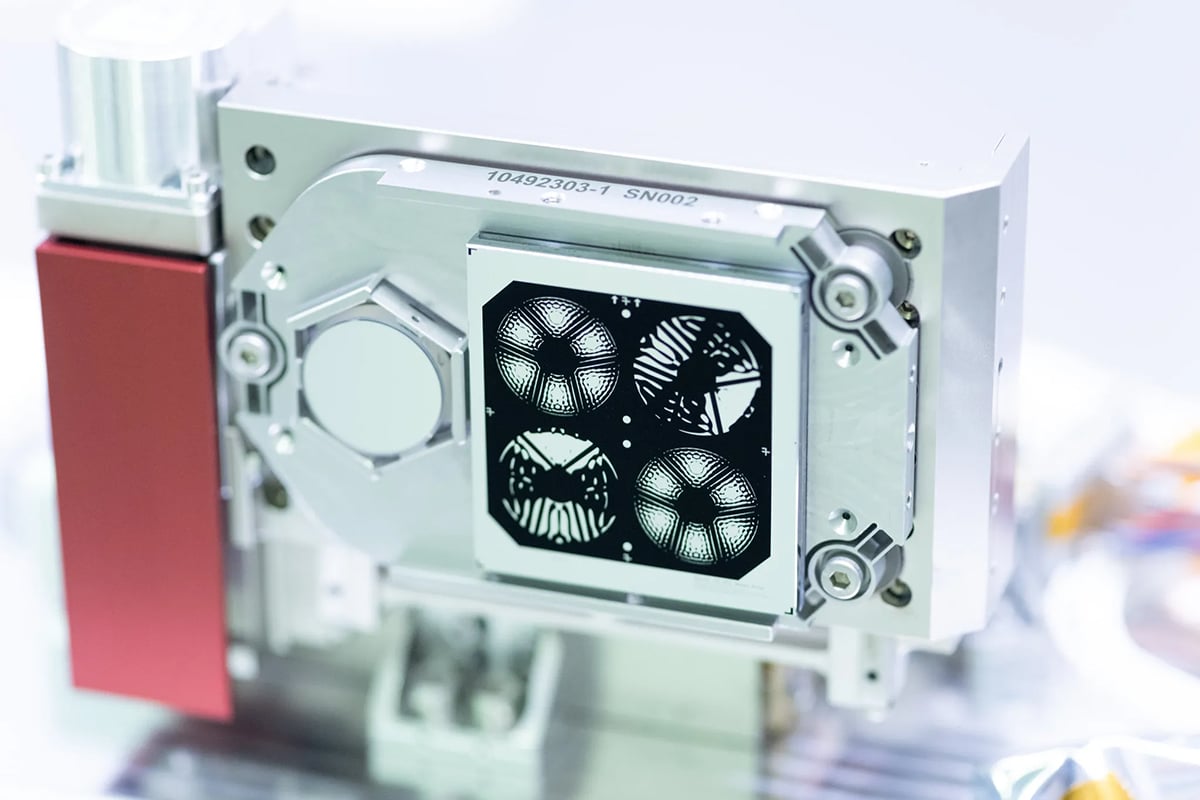
They activated its calibration system and began sending test data back to Earth. They also tested the element wheel, which carries filters, prisms, and other optical components.
Clear skies!
See more from DIYPhotography.net on Google
Add DIYPhotography.net as a trusted source. This makes
our stories more likely to appear in your Google Search results.
 Add as a preferred source on Google

Soumyadeep Mukherjee
Soumyadeep Mukherjee is an award-winning astrophotographer from India. He has a doctorate degree in Linguistics. His work extends to the sub-genres of nightscape, deep sky, solar, lunar and optical phenomenon photography. He is also a photography educator and has conducted numerous workshops. His works have appeared in over 40 books & magazines including Astronomy, BBC Sky at Night, Sky & Telescope among others, and in various websites including National Geographic, NASA, Forbes. He was the first Indian to win “Astronomy Photographer of the Year” award in a major category.
Join the Discussion
DIYP Comment Policy
Be nice, be on-topic, no personal information or flames.