



















ESA’s Euclid Telescope Captures the Oldest Quasar Ever Found
Jul 21, 2026
Soumyadeep Mukherjee
Soumyadeep Mukherjee is an award-winning astrophotographer from India. He has a doctorate degree in Linguistics. His work extends to the sub-genres of nightscape, deep sky, solar, lunar and optical phenomenon photography. He is also a photography educator and has conducted numerous workshops. His works have appeared in over 40 books & magazines including Astronomy, BBC Sky at Night, Sky & Telescope among others, and in various websites including National Geographic, NASA, Forbes. He was the first Indian to win “Astronomy Photographer of the Year” award in a major category.
Share:
For decades, astronomers have continued to push the boundaries of the observable Universe. Every new telescope has looked a little farther than its predecessor, uncovering galaxies that formed earlier and earlier after the Big Bang. With each record-breaking discovery came the hope of answering one stubborn question: how did the first supermassive black holes appear so quickly? With a set of new images, that question has become even more intriguing.
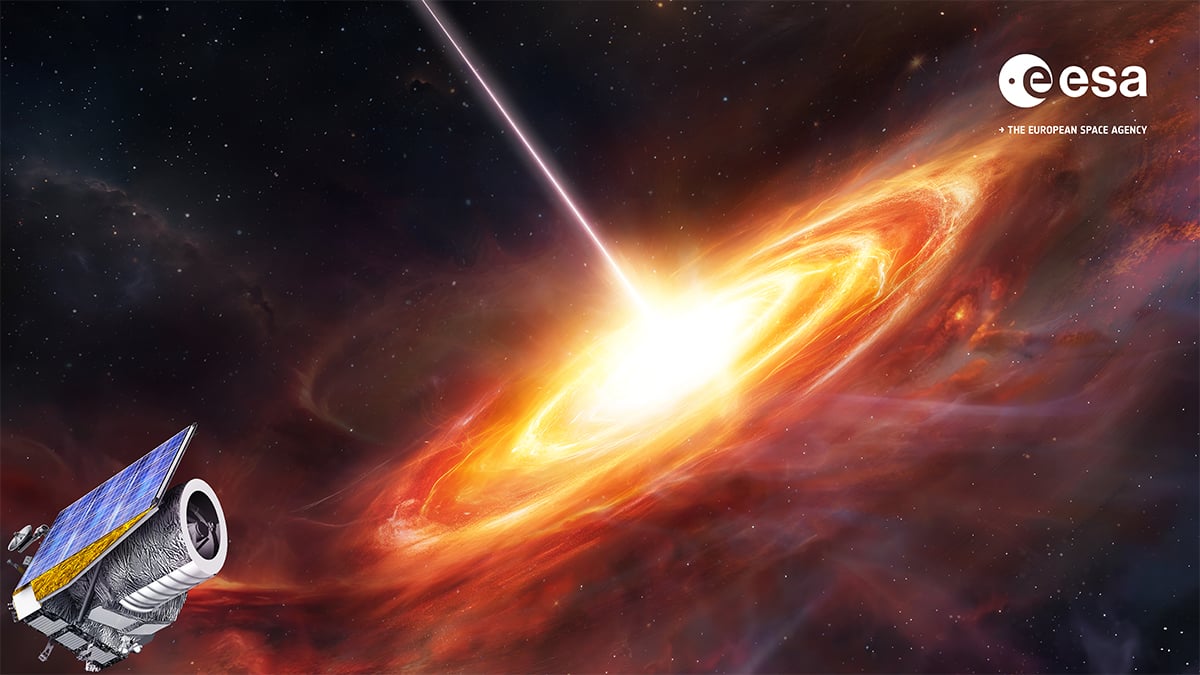
The European Space Agency‘s Euclid space telescope has discovered the most ancient quasar ever observed, along with 30 other quasars that belong to the Universe’s first billion years. The new record-holder existed when the cosmos was only about 670 million years old.
Euclid is pushing the cosmic frontier farther
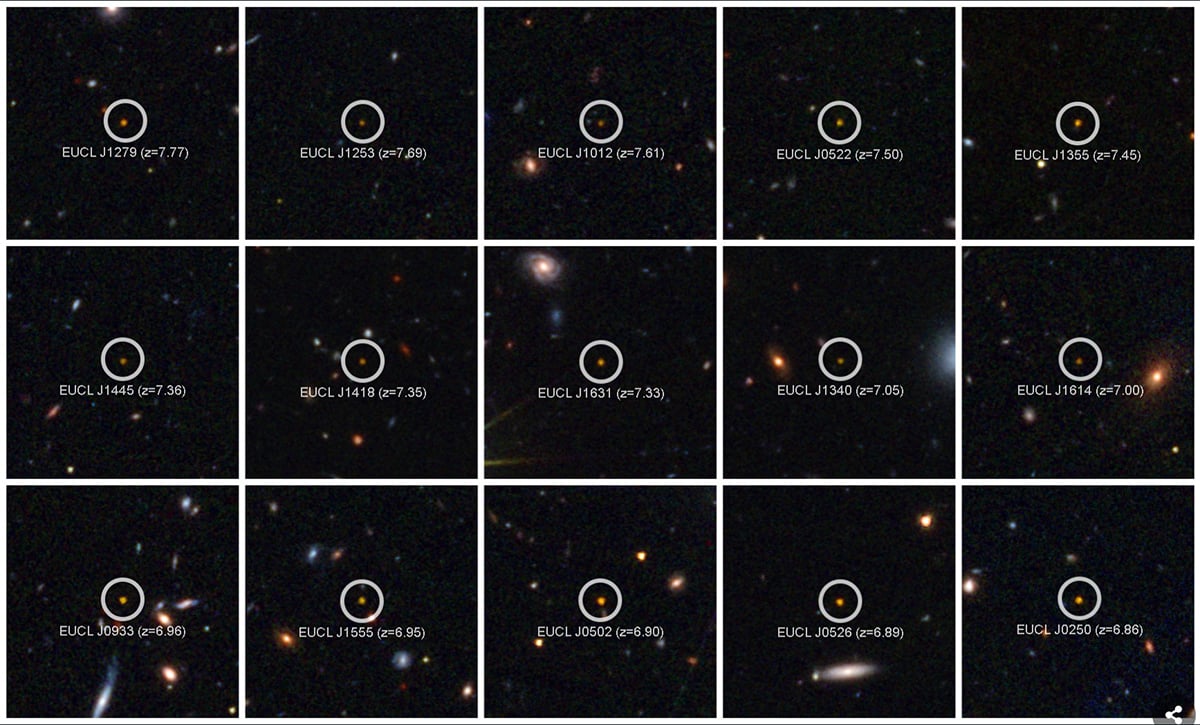
The European Space Agency announced that Euclid has identified 31 previously unknown quasars dating back to the first billion years after the Big Bang. Two of those objects have now become the most distant quasars ever discovered.
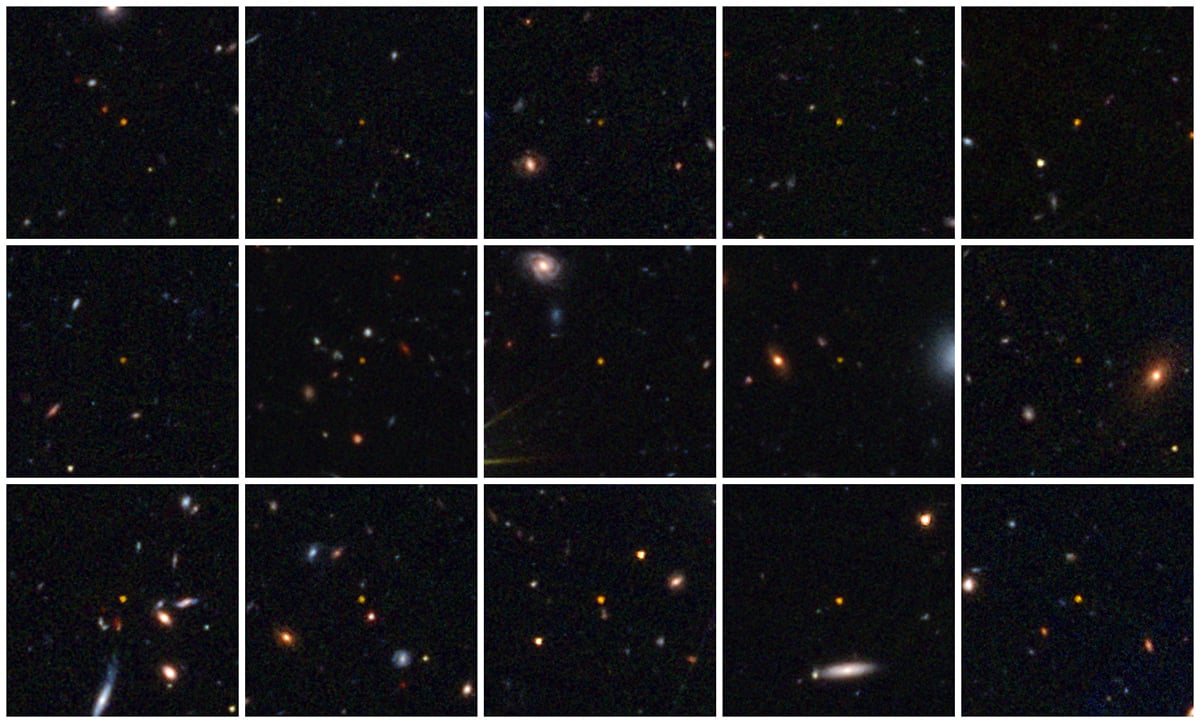
The new record-holder, EUCL J172902.75+641018.1, has a measured redshift of 7.77. Its light began travelling towards Earth when the Universe was only about 670 million years old, or roughly five percent of its current age. The second most distant object, EUCL J125308.55+705432.3, follows closely behind with a redshift of 7.69. The previous record stood at a redshift of 7.64.
When the light from Euclid’s newly discovered record-holder left its galaxy, the cosmos looked nothing like it does today. Most galaxies were still young. Many had only recently begun forming stars. The familiar spiral structure of the Milky Way had not yet emerged. Even the large-scale structure of the Universe was still evolving.
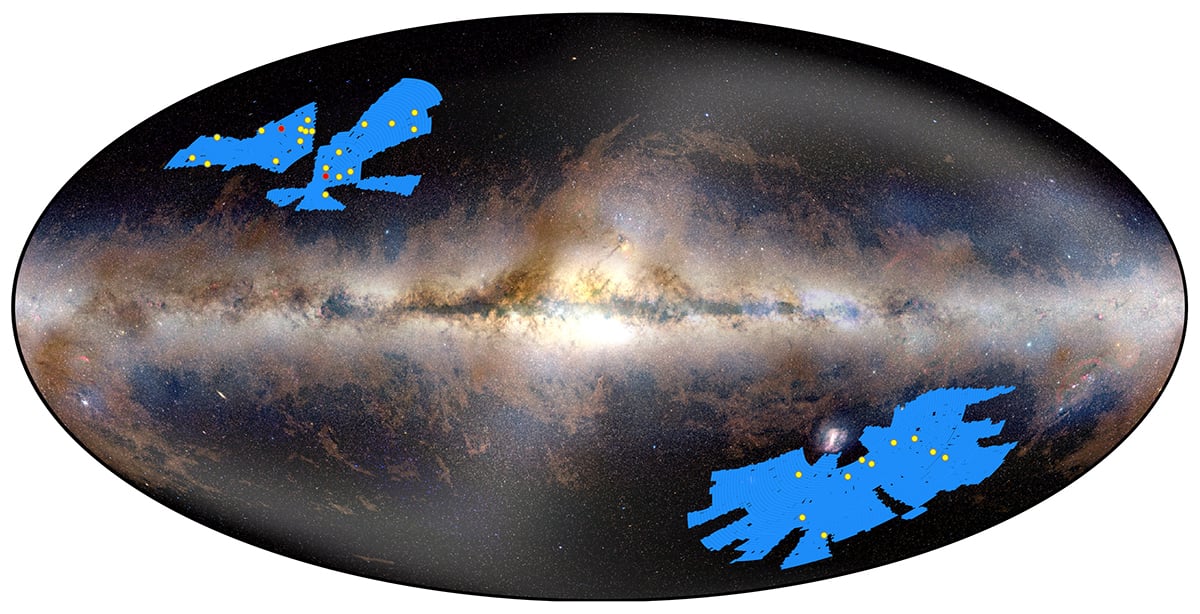
What makes the discovery even more remarkable is how quickly it arrived. Euclid identified these quasars using observations collected during only its first 18 months of science operations. Those observations covered about 3,000 square degrees of the sky, only a fraction of the telescope’s planned survey area.
The ancient Quasars
A quasar forms around a supermassive black hole sitting at the center of a galaxy. Gas and dust falling towards the black hole do not disappear immediately. Instead, they gather into a rapidly rotating disc that becomes unimaginably hot as gravity compresses the material. This glowing disc releases enormous amounts of energy across the electromagnetic spectrum.
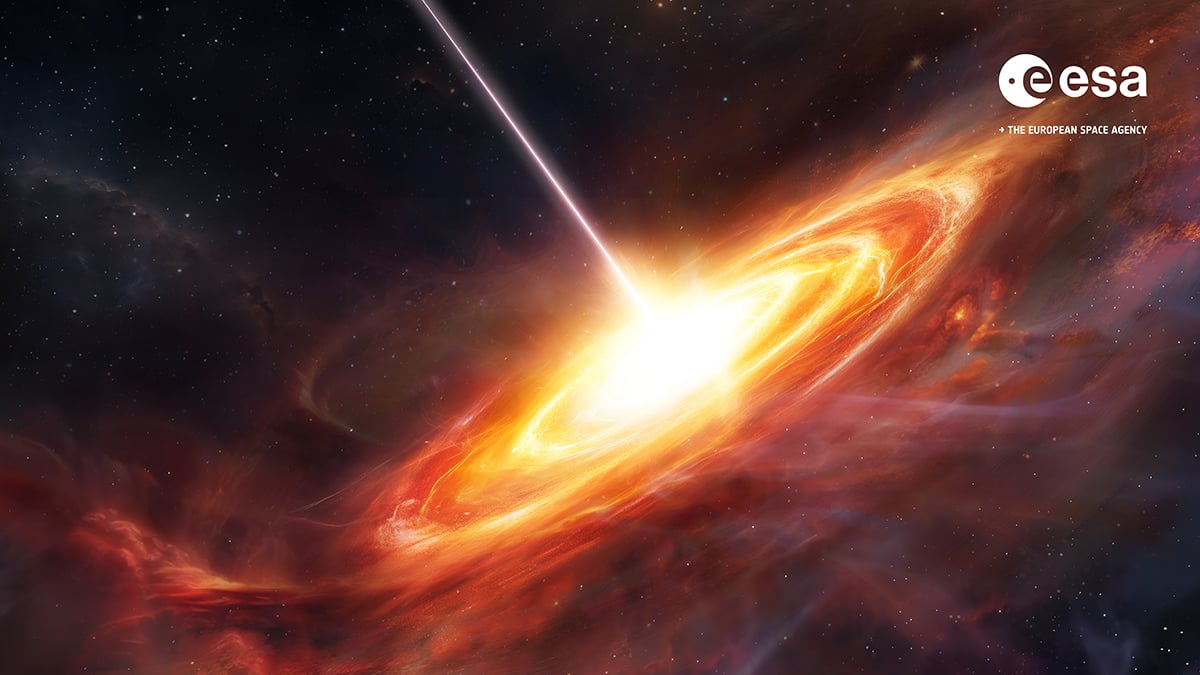
A single quasar can outshine every star in the galaxy surrounding it. Even across more than 13 billion years of space and time, astronomers can still detect its light. The newly discovered record-holder shines with the luminosity of roughly one trillion Suns. That extraordinary brightness made it possible for Euclid to spot the object despite its enormous distance.
These quasars lived during one of the least understood periods in cosmic history. The first generations of stars had already begun illuminating the Universe. Young galaxies were growing rapidly as fresh supplies of gas fuelled intense bursts of star formation. Large cosmic structures were gradually emerging from the matter left behind after the Big Bang. This period laid the foundations for everything we see in the modern Universe.
How Euclid found these objects
The Euclid telescope was not designed as a quasar hunter. ESA developed the mission to answer a different set of questions. Scientists wanted to understand how dark matter shaped the Universe and why its expansion has accelerated under the influence of dark energy. To do that, Euclid will spend six years mapping billions of galaxies across more than one-third of the sky.
The spacecraft carries two sophisticated scientific instruments. One captures highly detailed images in visible light. The other observes the sky in near-infrared wavelengths while measuring the distances to galaxies and other remote objects.
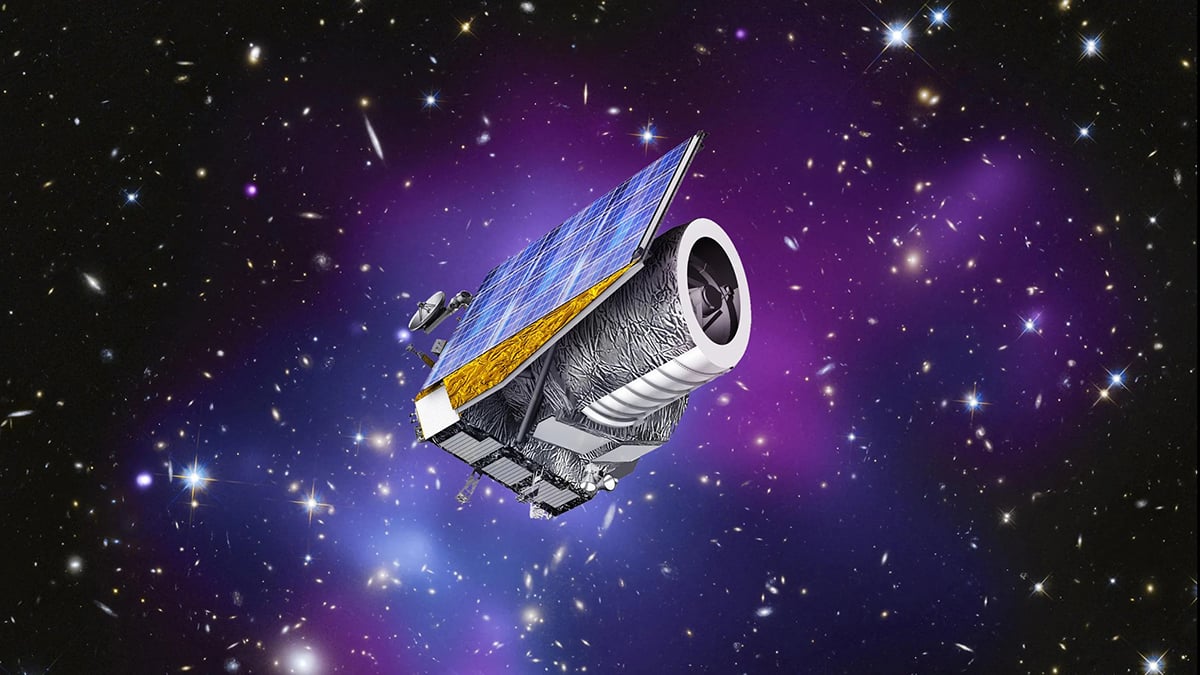
As the Universe expands, light travelling across billions of light-years becomes stretched. Astronomers call this effect redshift. Light that originally left a distant galaxy in visible wavelengths gradually shifts into the infrared before it reaches Earth. Many of the earliest galaxies and quasars are almost invisible to ordinary optical telescopes because of this stretching. Euclid’s infrared vision was capable enough to capture this ancient light.
Its wide field of view is equally important. Many powerful observatories study tiny patches of the sky with extraordinary detail. Euclid, on the other hand, scans huge areas of the sky. The newly discovered quasars emerged from observations covering about 3,000 square degrees of the sky. Although that sounds enormous, it represents only a small part of Euclid’s planned survey. The telescope still has years of observations ahead of it.
Clear skies!
See more from DIYPhotography.net on Google
Add DIYPhotography.net as a trusted source. This makes
our stories more likely to appear in your Google Search results.
 Add as a preferred source on Google

Soumyadeep Mukherjee
Soumyadeep Mukherjee is an award-winning astrophotographer from India. He has a doctorate degree in Linguistics. His work extends to the sub-genres of nightscape, deep sky, solar, lunar and optical phenomenon photography. He is also a photography educator and has conducted numerous workshops. His works have appeared in over 40 books & magazines including Astronomy, BBC Sky at Night, Sky & Telescope among others, and in various websites including National Geographic, NASA, Forbes. He was the first Indian to win “Astronomy Photographer of the Year” award in a major category.


Join the Discussion
DIYP Comment Policy
Be nice, be on-topic, no personal information or flames.