























ToupTek AstroEye AE676C: A Multi-Purpose Astronomy Camera
May 23, 2026
Soumyadeep Mukherjee
Soumyadeep Mukherjee is an award-winning astrophotographer from India. He has a doctorate degree in Linguistics. His work extends to the sub-genres of nightscape, deep sky, solar, lunar and optical phenomenon photography. He is also a photography educator and has conducted numerous workshops. His works have appeared in over 40 books & magazines including Astronomy, BBC Sky at Night, Sky & Telescope among others, and in various websites including National Geographic, NASA, Forbes. He was the first Indian to win “Astronomy Photographer of the Year” award in a major category.
Share:
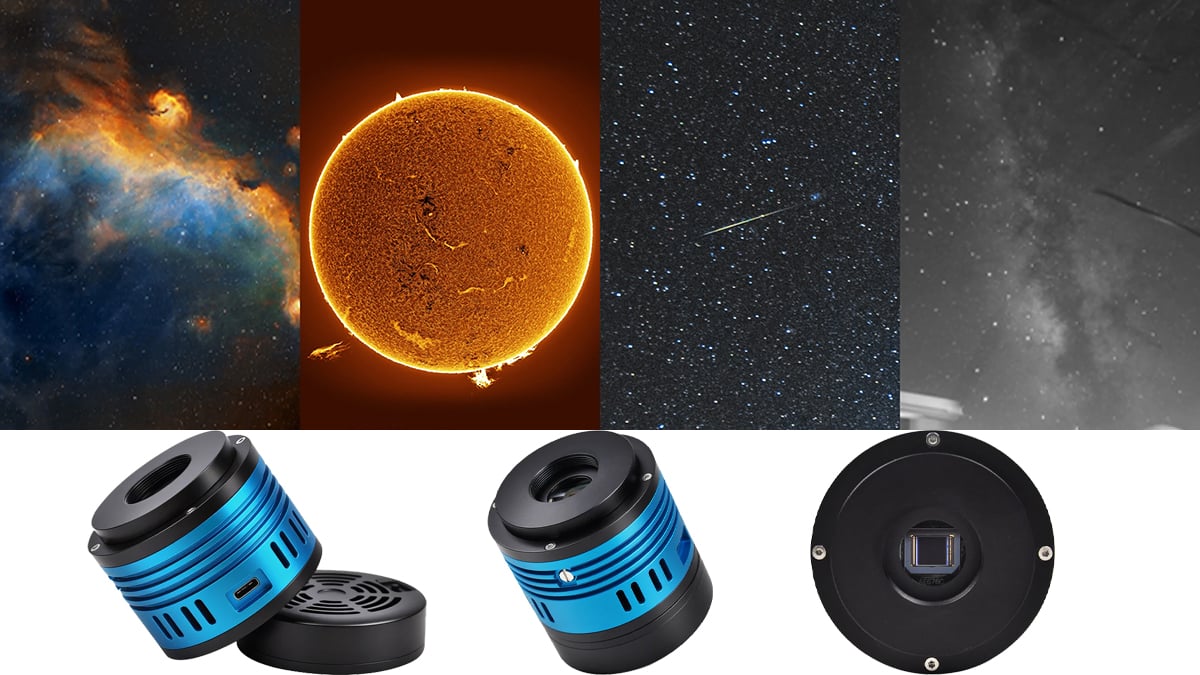
ToupTek has announced a new astronomy camera, the AstroEye AE676C. The camera is built around Sony’s IMX676 sensor, a 12.5-megapixel square-format detector from the Starvis 2 family. With this model, ToupTek has developed an astronomy camera that takes advantage of its geometry, pairing it with cooling, high-speed image acquisition, onboard memory buffering, and strong near-infrared sensitivity.
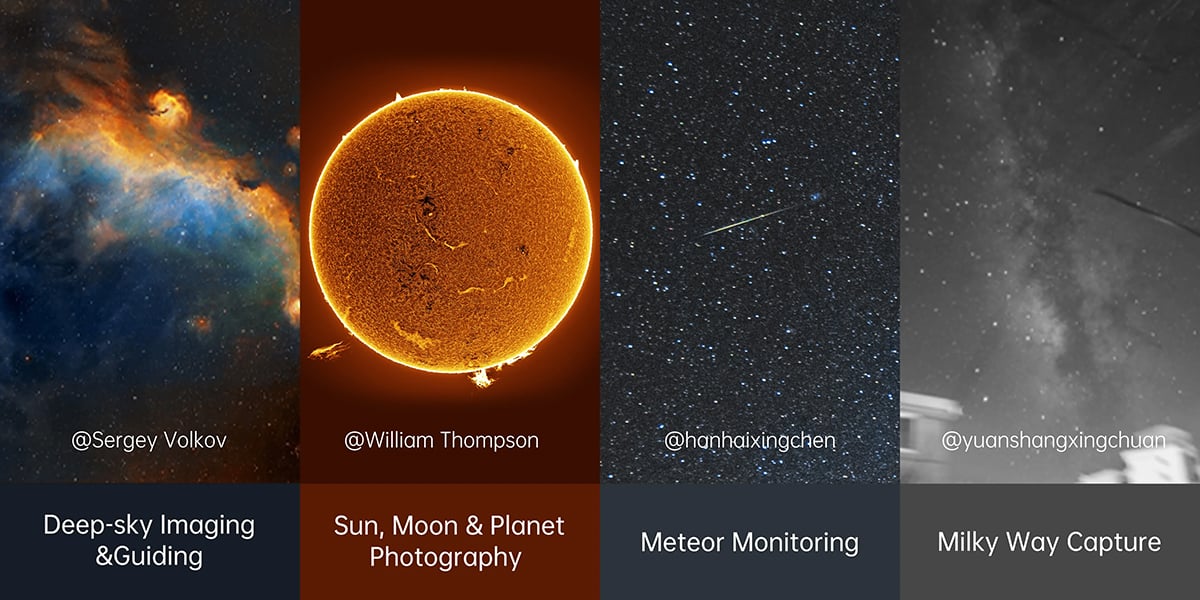
The resulting camera occupies an unusual position within the astronomy market. Its specifications appeal to planetary imagers seeking high frame rates, deep-sky observers interested in low-noise performance, and wide-field astrophotographers exploring views of the Milky Way. The AE676C is what Touptek calls a “multi-purpose astronomy camera”.
The Sony IMX676 sensor
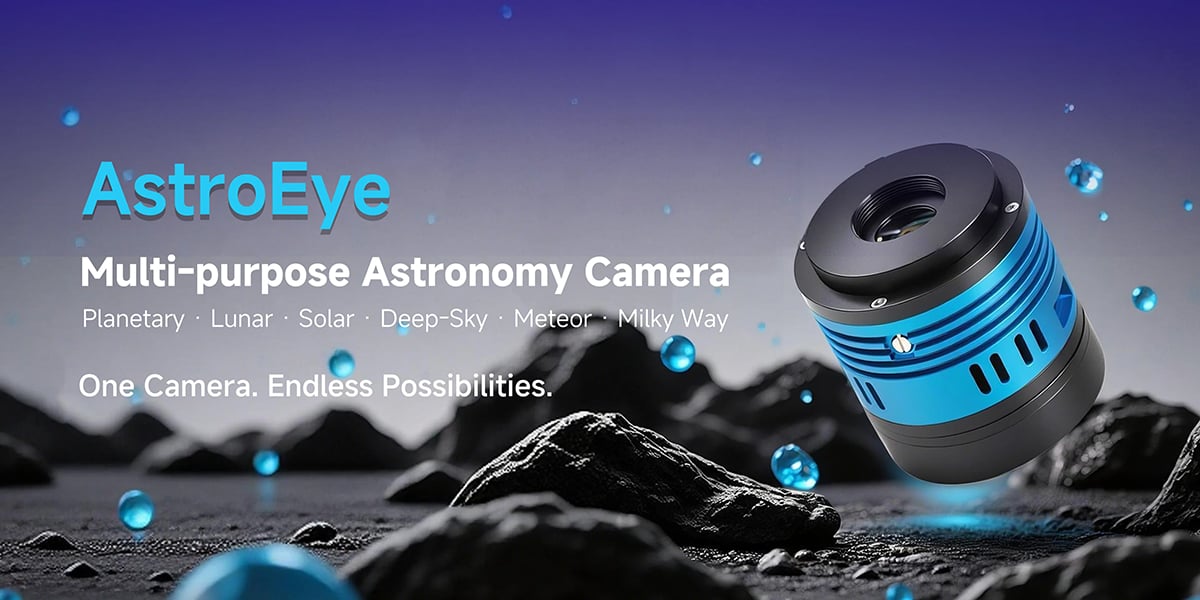
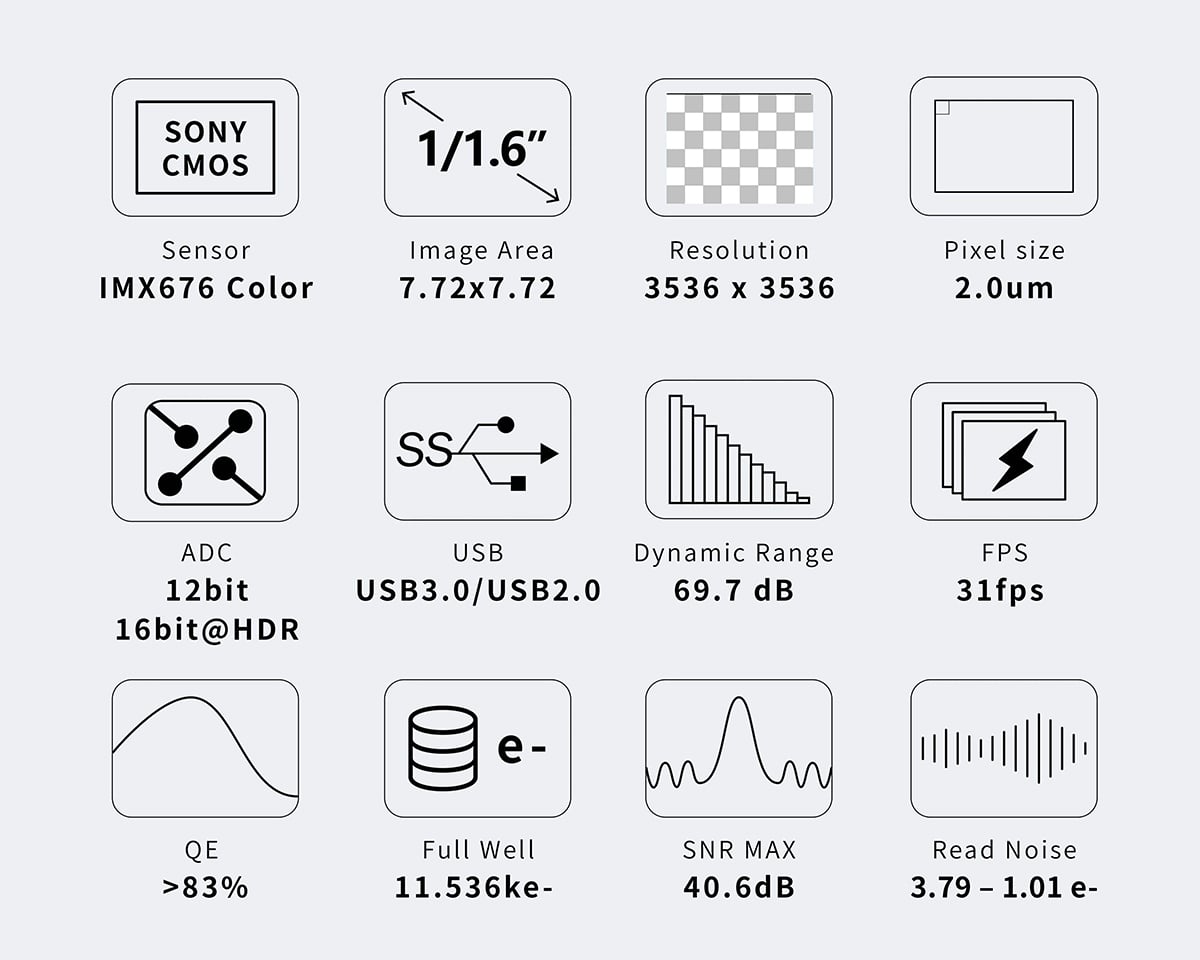
For the AE676C, ToupTek selected the Sony IMX676, one of the latest members of Sony’s Starvis 2 sensor family. The sensor delivers a native resolution of 3552 × 3552 pixels, producing images with approximately 12.5 megapixels. Individual pixels measure 2 microns. The sensor itself uses a 1/1.6-inch optical format.
The IMX676 belongs to Sony’s Starvis 2 generation, a family of backside-illuminated CMOS sensors designed for demanding low-light applications. Astrophotography benefits greatly from such developments because celestial targets often produce extremely weak signals.
Backside illumination improves the amount of light reaching each photosensitive pixel. Traditional front-illuminated sensors place electronic circuitry above the light-sensitive region. Consequently, part of the incoming light never reaches the photodiode. Backside illumination rearranges that structure and allows photons a more direct path into the pixel. For astrophotographers, this means stronger signals from faint stars, nebulae, and galaxies.
Infrared sensitivity of the camera
Infrared imaging occupies an interesting position in amateur astronomy. Although most astrophotographers work primarily in visible light, longer wavelengths reveal information that remains hidden in conventional images. Dust clouds that obscure visible wavelengths often become partially transparent in the near infrared. As a result, infrared observations can reveal stellar structures concealed behind dense regions of interstellar material.
Infrared imaging also benefits planetary observers. Atmospheric turbulence affects shorter wavelengths more strongly than longer ones. Consequently, infrared observations often produce steadier images when atmospheric seeing conditions deteriorate. Planetary imagers frequently use infrared filters to extract additional detail from Mars, Jupiter, Saturn, and the Moon.
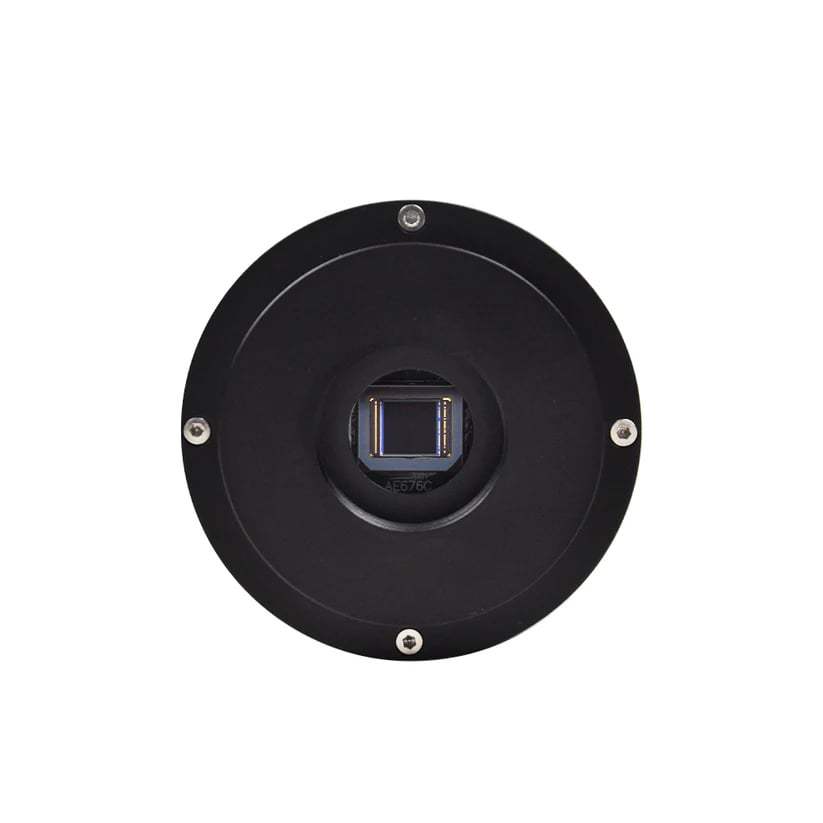
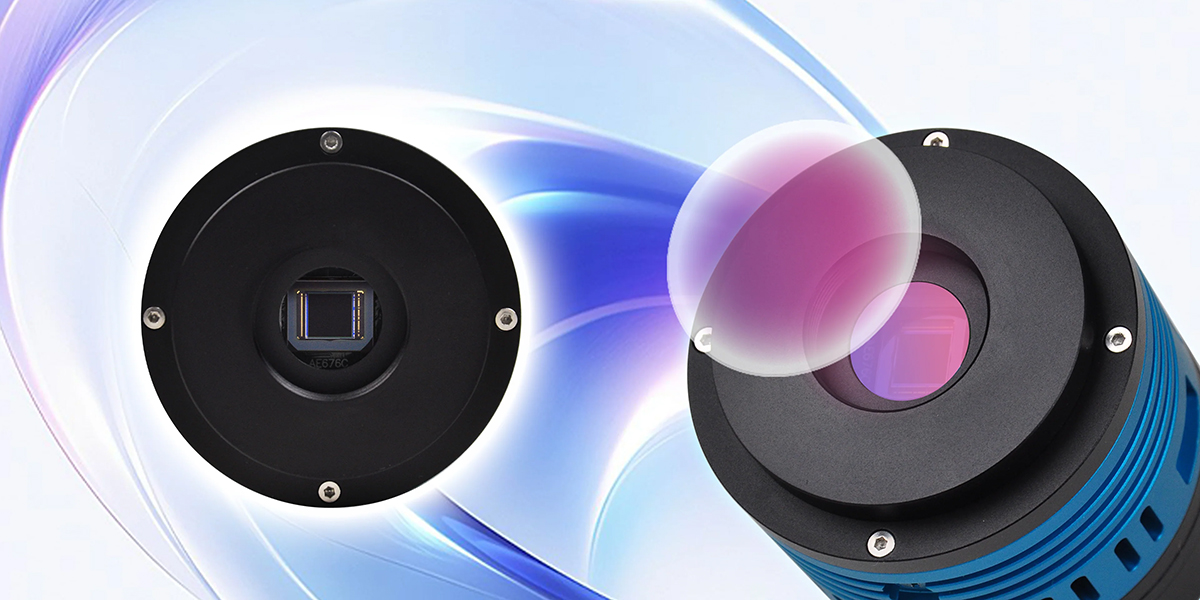
According to ToupTek, the IMX676 sensor maintains a strong response beyond 825 nanometres. The published sensitivity curve shows useful performance extending well into the near-infrared region. Such characteristics make the camera attractive for astrophotographers interested in exploring wavelengths beyond conventional RGB imaging.
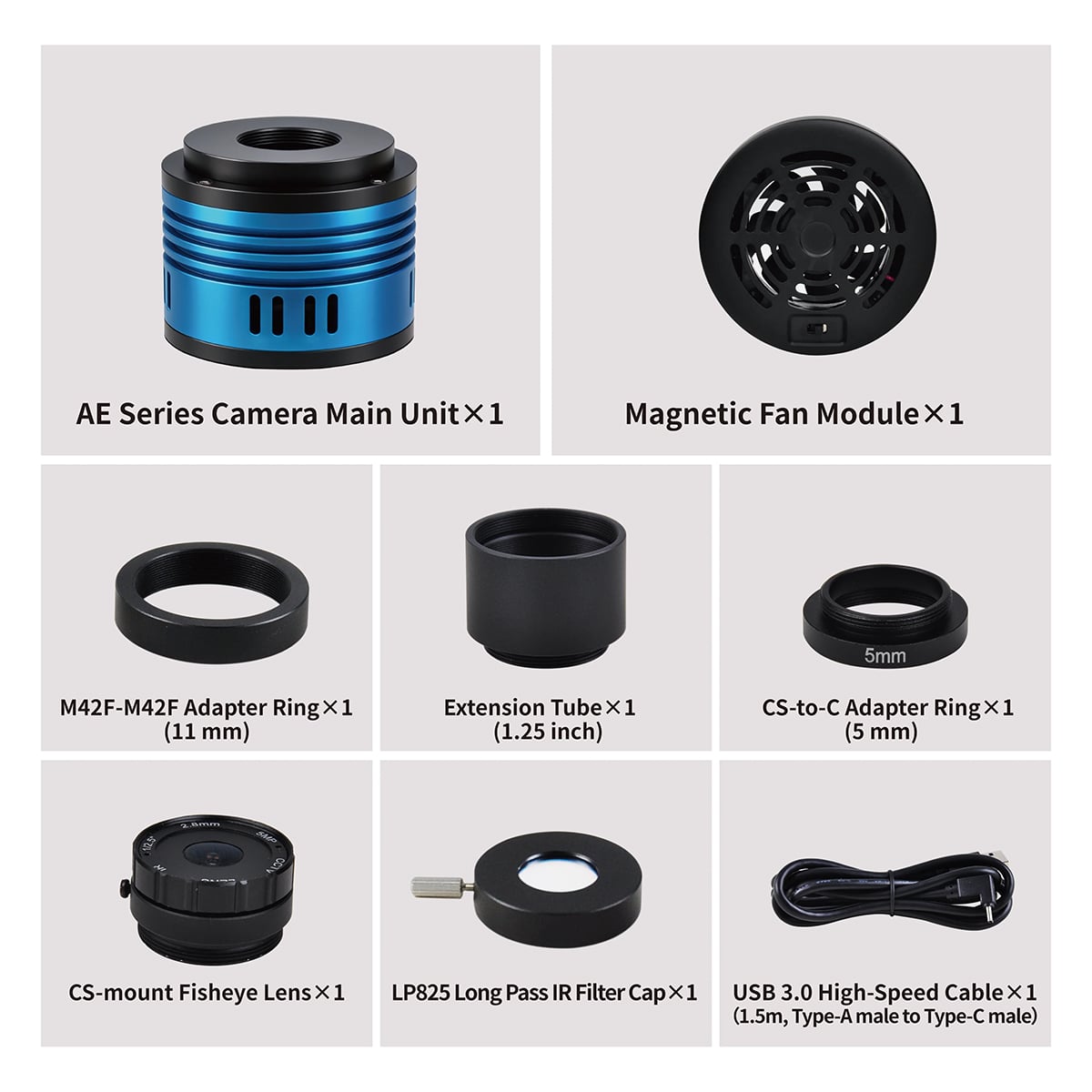
The camera incorporates a dual-sided anti-reflection-coated optical window to support this capability. This protective window transmits light across a broad spectral range extending from approximately 400 nanometres to 1100 nanometres. At the same time, it shields the sensor from dust and environmental contamination.
A modular cooling system
Thermal management remains one of the most important aspects of deep-sky imaging. As sensor temperature increases, thermal electrons accumulate within the detector. These unwanted signals appear as noise and gradually reduce image quality. Most cooled astronomy cameras employ a thermoelectric cooling system coupled to a large heat sink and cooling fan.
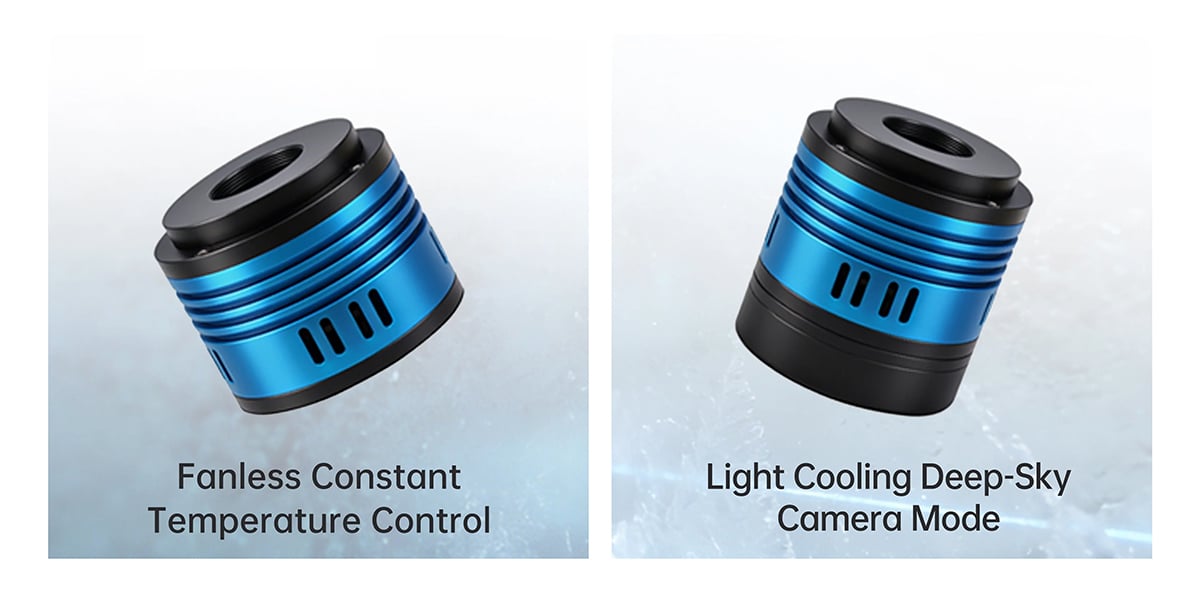
The AE676C includes an integrated thermoelectric cooling system governed by a PID temperature control algorithm. According to ToupTek, the internal system can maintain temperatures approximately five degrees Celsius below ambient conditions while regulating temperature stability to within ±0.1°C.
A more unusual feature is the detachable magnetic cooling module. Users can attach the module when additional cooling becomes necessary and remove it when portability becomes a higher priority. Under suitable environmental conditions, ToupTek reports cooling performance reaching approximately twenty degrees Celsius below ambient temperature with the external module installed.
Fast readout speeds support planetary imaging
Planetary photography relies on recording large numbers of frames within a short period. Atmospheric turbulence constantly distorts incoming light. Consequently, astronomers capture thousands of images and later select the sharpest frames through stacking software.
The AE676C employs a native 12-bit analogue-to-digital converter and supports both hardware and software binning. Users can also employ Region of Interest modes that read only a selected section of the sensor. Reducing the active imaging area increases readout speed. According to ToupTek, frame rates can reach as high as 993 frames per second in 8-bit mode when operating with a sufficiently small ROI.
The camera also incorporates a 512 MB DDR3 image buffer. This buffer helps maintain continuous data transfer during rapid acquisition sequences. A minimum read noise specification of approximately 1.01 electrons and a dynamic range approaching 69.7 dB indicate a sensor capable of handling both bright and faint astronomical targets.
Price and availability
The ToupTek AE676C astronomy camera is priced at $369. The camera is available for ordering via the official website.
Clear skies!
See more from DIYPhotography.net on Google
Add DIYPhotography.net as a trusted source. This makes
our stories more likely to appear in your Google Search results.
 Add as a preferred source on Google

Soumyadeep Mukherjee
Soumyadeep Mukherjee is an award-winning astrophotographer from India. He has a doctorate degree in Linguistics. His work extends to the sub-genres of nightscape, deep sky, solar, lunar and optical phenomenon photography. He is also a photography educator and has conducted numerous workshops. His works have appeared in over 40 books & magazines including Astronomy, BBC Sky at Night, Sky & Telescope among others, and in various websites including National Geographic, NASA, Forbes. He was the first Indian to win “Astronomy Photographer of the Year” award in a major category.



Join the Discussion
DIYP Comment Policy
Be nice, be on-topic, no personal information or flames.