






















Svbony SC571CC: A New APS-C Camera for Astrophotography
Jan 9, 2026
Soumyadeep Mukherjee
Soumyadeep Mukherjee is an award-winning astrophotographer from India. He has a doctorate degree in Linguistics. His work extends to the sub-genres of nightscape, deep sky, solar, lunar and optical phenomenon photography. He is also a photography educator and has conducted numerous workshops. His works have appeared in over 40 books & magazines including Astronomy, BBC Sky at Night, Sky & Telescope among others, and in various websites including National Geographic, NASA, Forbes. He was the first Indian to win “Astronomy Photographer of the Year” award in a major category.
Share:
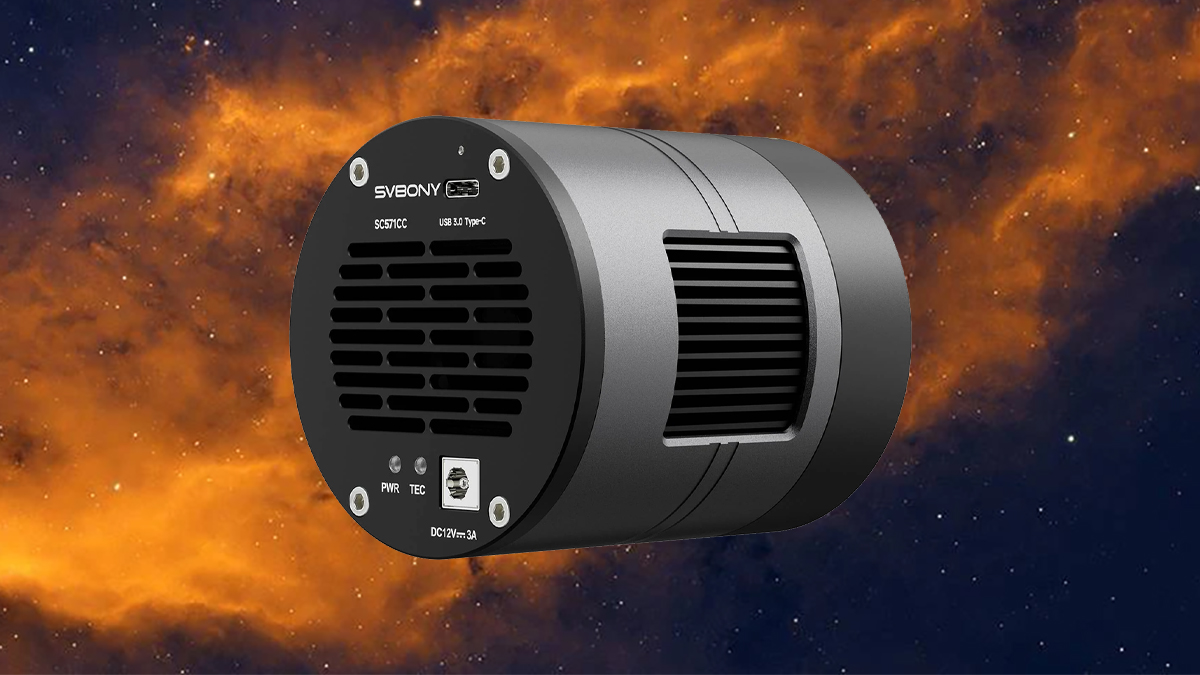
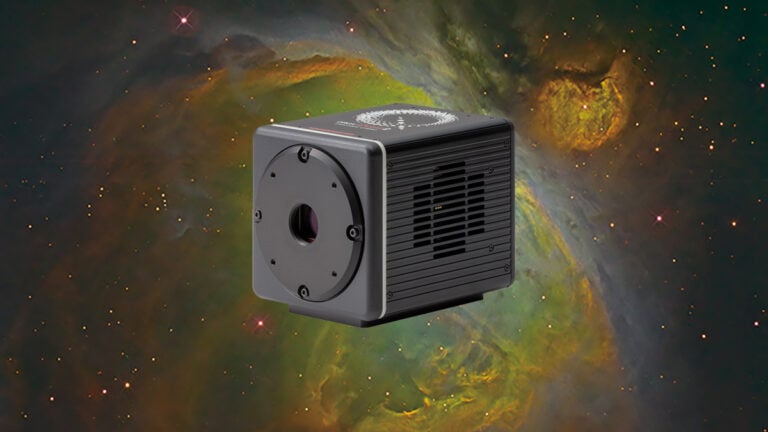
The steady shift from modified consumer cameras to dedicated cooled astronomy cameras has reshaped modern deep-sky imaging. Sensor efficiency has improved. Cooling systems have become more reliable. At the same time, large-format sensors are no longer restricted to premium price brackets. Against this backdrop, Svbony has introduced the SC571CC Astro Color Cooled Camera, a new APS-C format imaging camera aimed squarely at serious deep-sky astrophotography.
Sensor architecture and imaging philosophy
At the core of the SC571CC lies a large APS-C back-illuminated CMOS sensor. Svbony has deliberately chosen this sensor size. APS-C occupies a useful middle ground between smaller one-inch sensors and full-frame devices. It offers a wide imaging area without imposing extreme demands on telescope optics or mount precision.
The sensor delivers a resolution of 6244 × 4168 pixels, paired with a pixel size of 3.76 microns. This combination supports both wide-field imaging and moderately long focal length systems. Smaller pixels preserve fine structural detail, while the large sensor area enables generous framing of extended objects. As a result, targets such as emission nebulae, large molecular clouds, and galaxy groups fit naturally within a single frame.
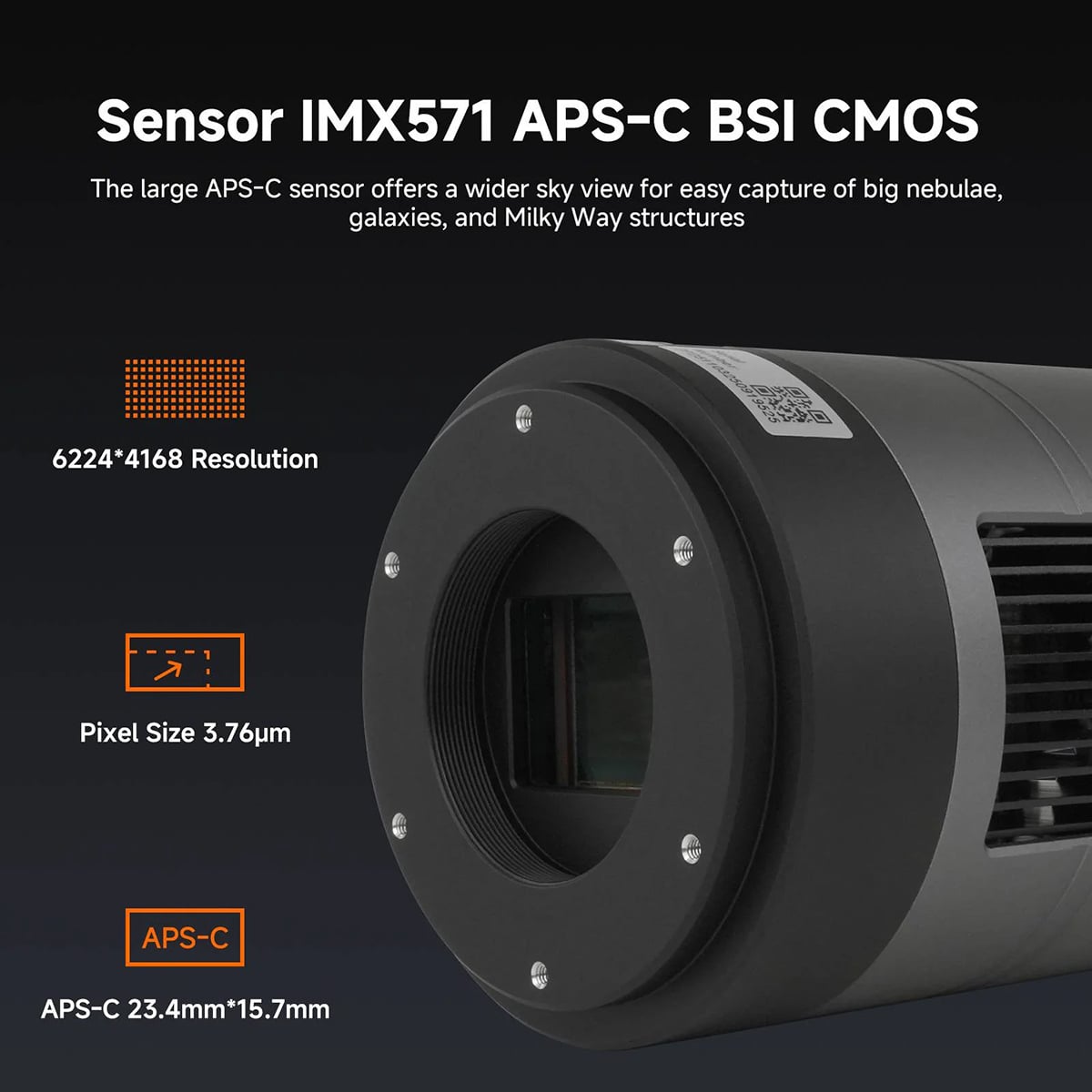
The back-illuminated architecture further improves sensitivity. By relocating circuitry behind the photosensitive layer, the sensor allows more incoming photons to reach each pixel. This design choice directly benefits deep-sky imaging, where signal levels are inherently low and photon efficiency matters.
Svbony states a quantum efficiency exceeding 80 percent, reinforcing the camera’s emphasis on efficient light capture. High quantum efficiency translates into better signal-to-noise performance, especially when imaging faint nebular structures or low-surface-brightness galaxies.

Cooling design and noise control
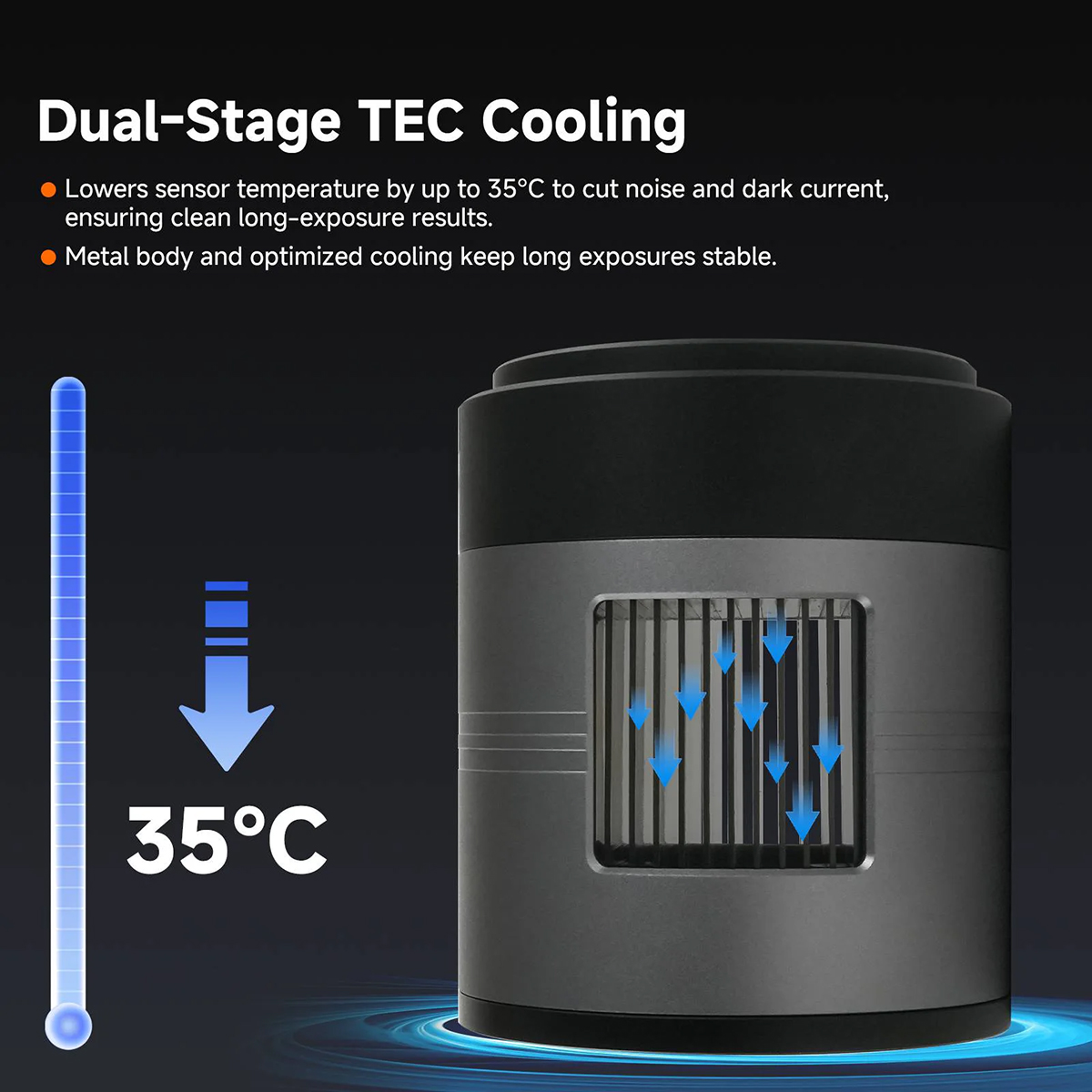
Thermal noise remains one of the primary limitations in long-exposure astrophotography. As exposure time increases, sensor temperature becomes a dominant noise source. For this reason, the SC571CC incorporates a dual-stage thermoelectric cooling system.
This cooling system can reduce the sensor temperature by up to 35 degrees Celsius below ambient conditions. Such temperature control stabilizes dark current and improves frame consistency across long imaging sessions. In practical terms, this allows astrophotographers to acquire calibration frames more reliably and stack data with fewer residual artifacts.
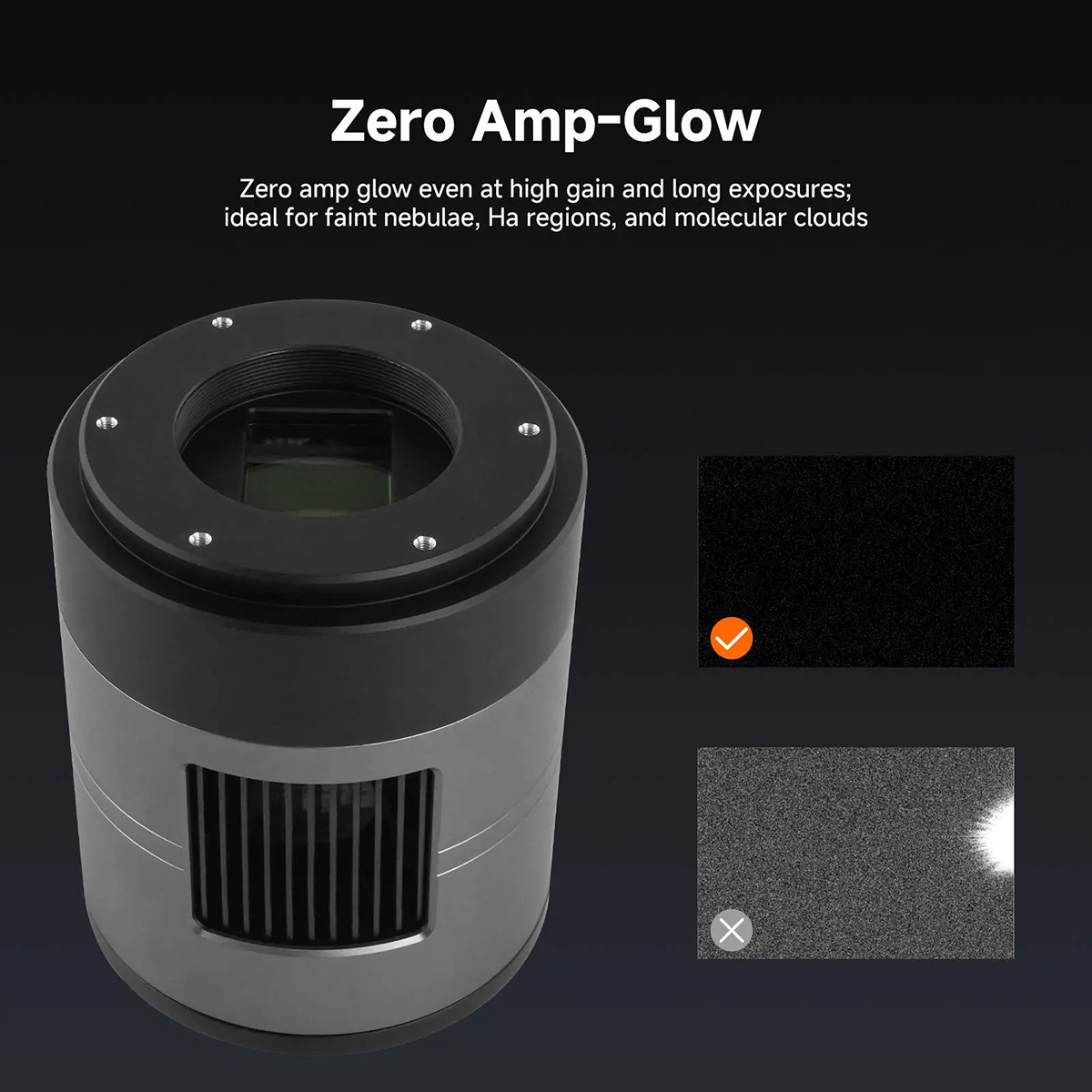
In parallel, the camera adopts a zero amp-glow design. Amp glow has historically affected CMOS sensors during extended exposures, appearing as localized brightness gradients near readout electronics. By addressing this at the hardware level, the SC571CC minimizes the need for aggressive post-processing correction. Cleaner raw frames preserve faint signal and simplify downstream data processing.
Together, controlled cooling and low-noise electronics position the SC571CC as a camera built for sustained deep-sky imaging rather than short-exposure or planetary use.
Dynamic range and data depth
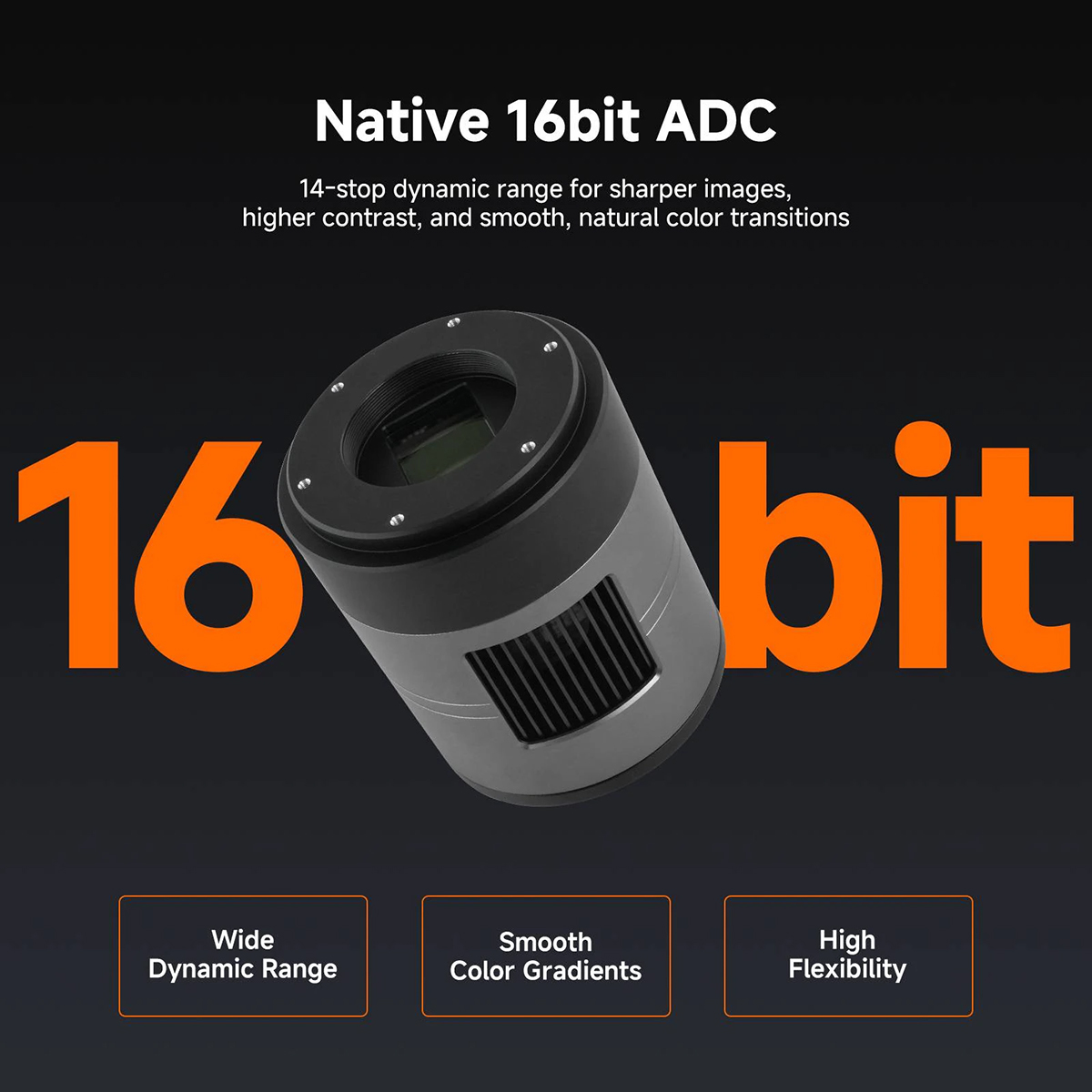
The SC571CC uses a 16-bit analog-to-digital converter, enabling it to record subtle brightness differences across a wide tonal range. Higher bit depth plays a critical role in astrophotography, where scenes often contain both extremely faint nebulosity and bright stellar cores.
With 16-bit data, the camera captures smoother gradients and reduces quantization artifacts. This proves especially useful during post-processing stages such as stretching, color calibration, and background extraction. The increased data depth allows astrophotographers to push faint details without prematurely clipping highlights.
This design choice reflects the camera’s orientation toward deep-sky imaging workflows, where data integrity and flexibility in processing are as important as raw sensitivity.
Optical path and color capture
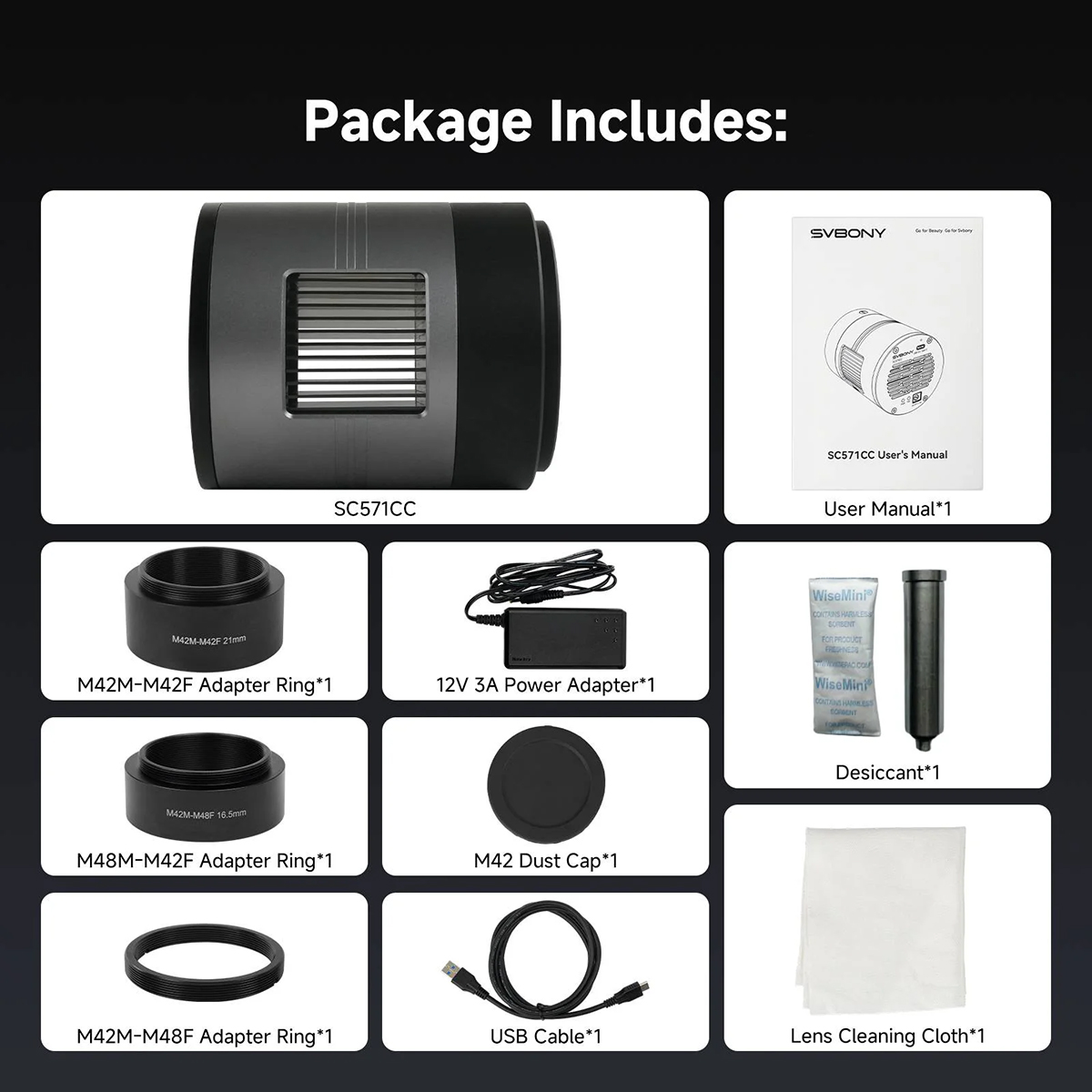
As a one-shot color camera, the SC571CC integrates a color filter array directly over the sensor. This simplifies imaging workflows by removing the need for filter wheels and multi-filter sequencing. For many users, this results in faster setup times and more efficient data acquisition, particularly under limited clear-sky windows.
Svbony pairs the sensor with a carefully specified protective window to preserve optical clarity and color accuracy. Maintaining a clean optical path is essential when working with fast optical systems or wide fields, where even small imperfections can introduce gradients or reflections.
The camera’s color response is optimized for astronomical targets, supporting accurate rendering of emission lines and broadband features. When combined with narrowband or dual-band filters, the SC571CC can also serve users working under light-polluted skies.
Mechanical design, connectivity, and software integration
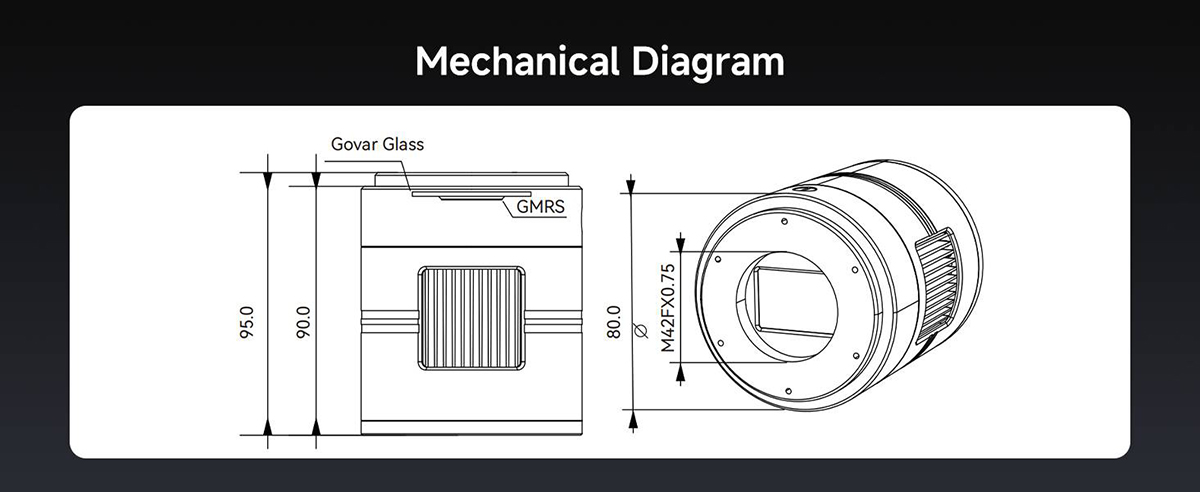
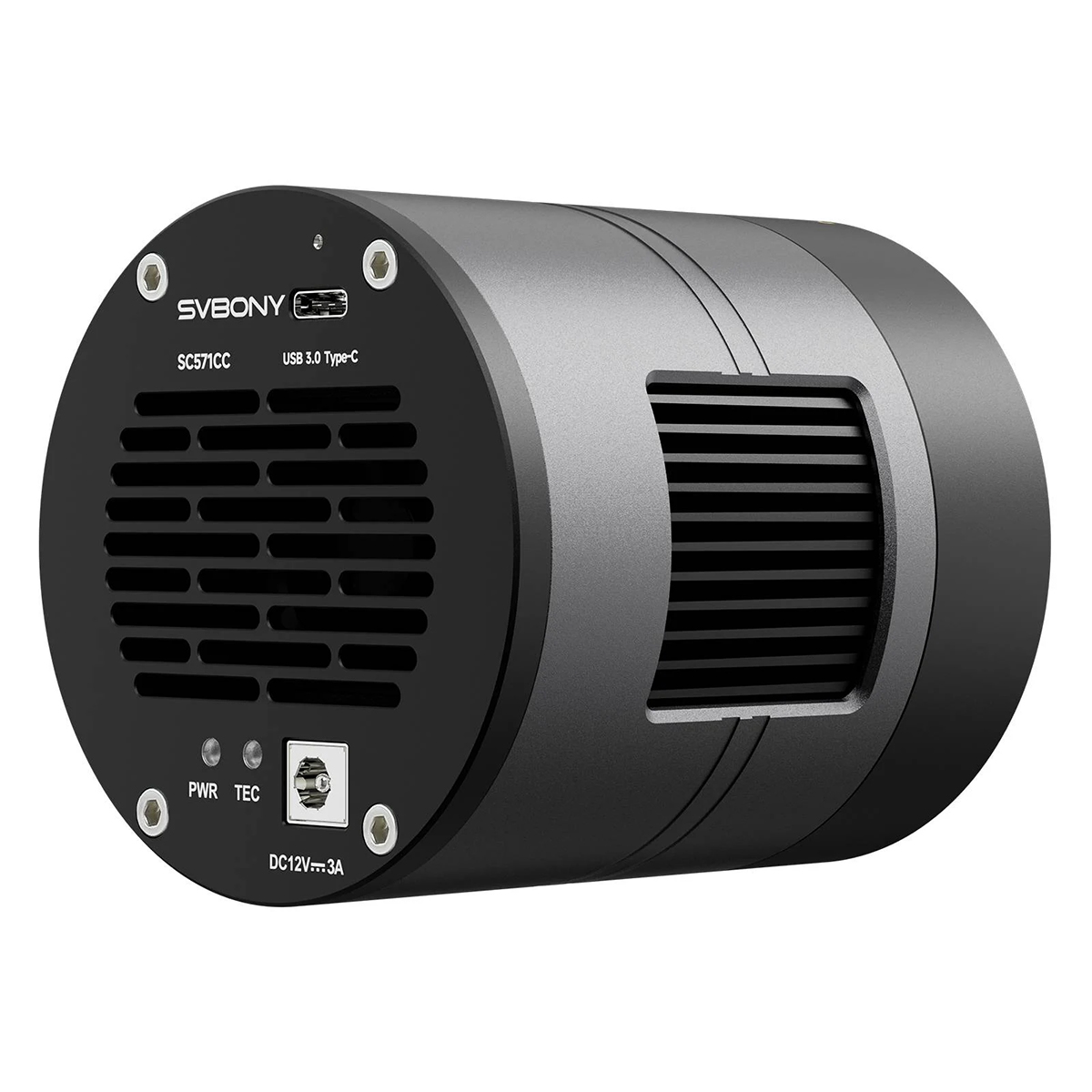
From a mechanical perspective, the SC571CC follows the established design language of modern cooled astronomy cameras. The housing accommodates the cooling assembly, electronics, and sensor while maintaining a compact profile suitable for refractors and Newtonian systems.
The camera connects via USB-C, ensuring stable high-speed data transfer during extended imaging sessions. Reliable connectivity becomes increasingly important as sensor resolution grows and file sizes increase. USB-C also simplifies cable management and improves compatibility with newer control computers. Power delivery supports the cooling system without excessive external requirements. This design consideration benefits portable imaging setups and remote observatory installations alike.
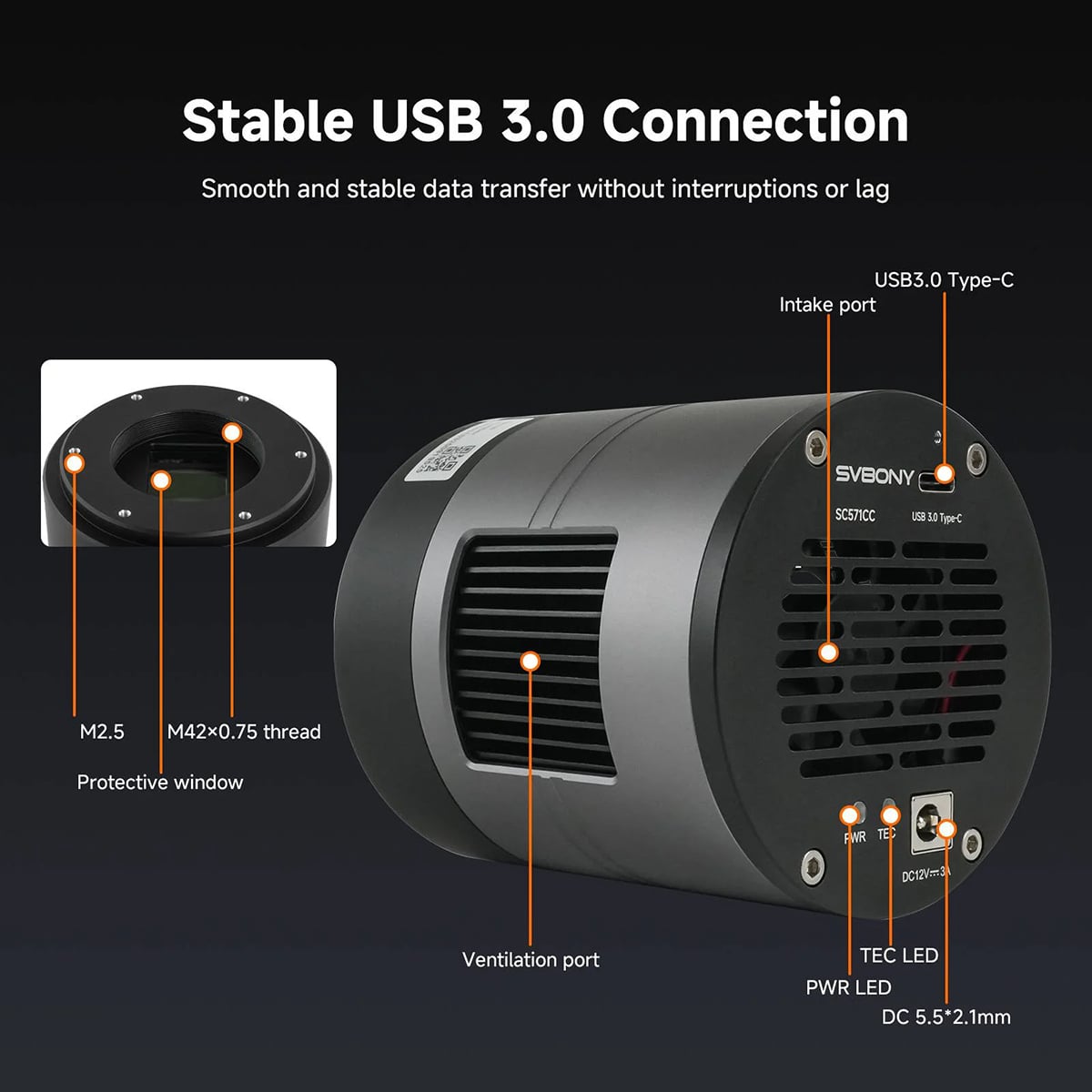
The SC571CC is designed to integrate seamlessly with commonly used astrophotography software platforms. It supports control through applications such as N.I.N.A., APT, and Sequence Generator Pro, which are widely adopted for automated deep-sky imaging.
Through these platforms, users can manage exposure sequences, temperature regulation, dithering, and guiding coordination. The camera’s cooling system and sensor settings integrate into these workflows without requiring proprietary software environments.
Price and availability
Svbony has yet to disclose the price of the product. The camera is yet to be available for ordering. We expect the pricing and ordering to be made available by the end of January 2026.
The design choices behind the SC571CC align closely with the needs of deep-sky astrophotographers. Large nebulae benefit from the sensor’s expansive field. Galaxy imaging gains from the balance between pixel size and resolution. Long integration projects take advantage of stable cooling and low noise behavior.
Because the camera emphasizes data quality and sensor efficiency, it supports a wide range of imaging styles. These include broadband RGB imaging, narrowband workflows with dual-band filters, and mosaic projects requiring consistent frame characteristics.
Clear skies!
See more from DIYPhotography.net on Google
Add DIYPhotography.net as a trusted source. This makes
our stories more likely to appear in your Google Search results.
 Add as a preferred source on Google

Soumyadeep Mukherjee
Soumyadeep Mukherjee is an award-winning astrophotographer from India. He has a doctorate degree in Linguistics. His work extends to the sub-genres of nightscape, deep sky, solar, lunar and optical phenomenon photography. He is also a photography educator and has conducted numerous workshops. His works have appeared in over 40 books & magazines including Astronomy, BBC Sky at Night, Sky & Telescope among others, and in various websites including National Geographic, NASA, Forbes. He was the first Indian to win “Astronomy Photographer of the Year” award in a major category.

Join the Discussion
DIYP Comment Policy
Be nice, be on-topic, no personal information or flames.
One response to “Svbony SC571CC: A New APS-C Camera for Astrophotography”
In New Zealand Son Recently watched Number 23 come out Woman and kid to play Cricket with Red bin on the middle road Silverbirch Grove on Wednesday 07 January 2026.
And So DIYPhotography, Canada, Mexico, Central America, Caribbean, South America, Polynesia, Greenland, Europe, United States, Japan, New Zealand, Africa, West Asia, Philippines, Vietnam, Laos, Cambodia, Thailand, Myanmar, Micronesia, Melanesia, Singapore, Central Asia, South Asia, North Korea, South Korea, Malaysia, Indonesia, Brunei, East Timor, Bermuda, Saint Pierre and Miquelon and Everyone, now all go have a best upgraded realest strongest extremely biggest fighting and moreover to get all the money, everything, whatever and many more out from 3 Sextuple Country List: List 1 China/Mongolia/Taiwan/Macau/Hong Kong/Australia, List 2 North Korea/South Korea/Central Asia/South Asia/Myanmar/Vietnam and List 3 Laos/Thailand/Cambodia/Philippines/Micronesia/Melanesia into 1 Quadruple Country List: List 1 New Zealand/United States/Europe/Singapore for every time.