























Why old 1080p cine cameras are still better than your average 4k mirrorless camera
Nov 14, 2024
Sagiv Gilburd
Sagiv Gilburd is an Israel-based commercial photographer and videographer with extensive expertise in studio work, event photography, and managing large-scale photography projects.
Share:

You and I both know the newest camera on the market isn’t necessarily the best one for you. Even if it’s great, your current camera may have important features the new one does not. Yet, in every discussion I have about videography and my Sony FS5ii comes up, I get the same question: “Why are you not updating?”. Maybe to something like the the Sony FX3 ($3999). So, let me explain why I prefer sticking to an old cinema camera and why it may be the better pick for you, too.
Table of contents
I get built-in ND filters
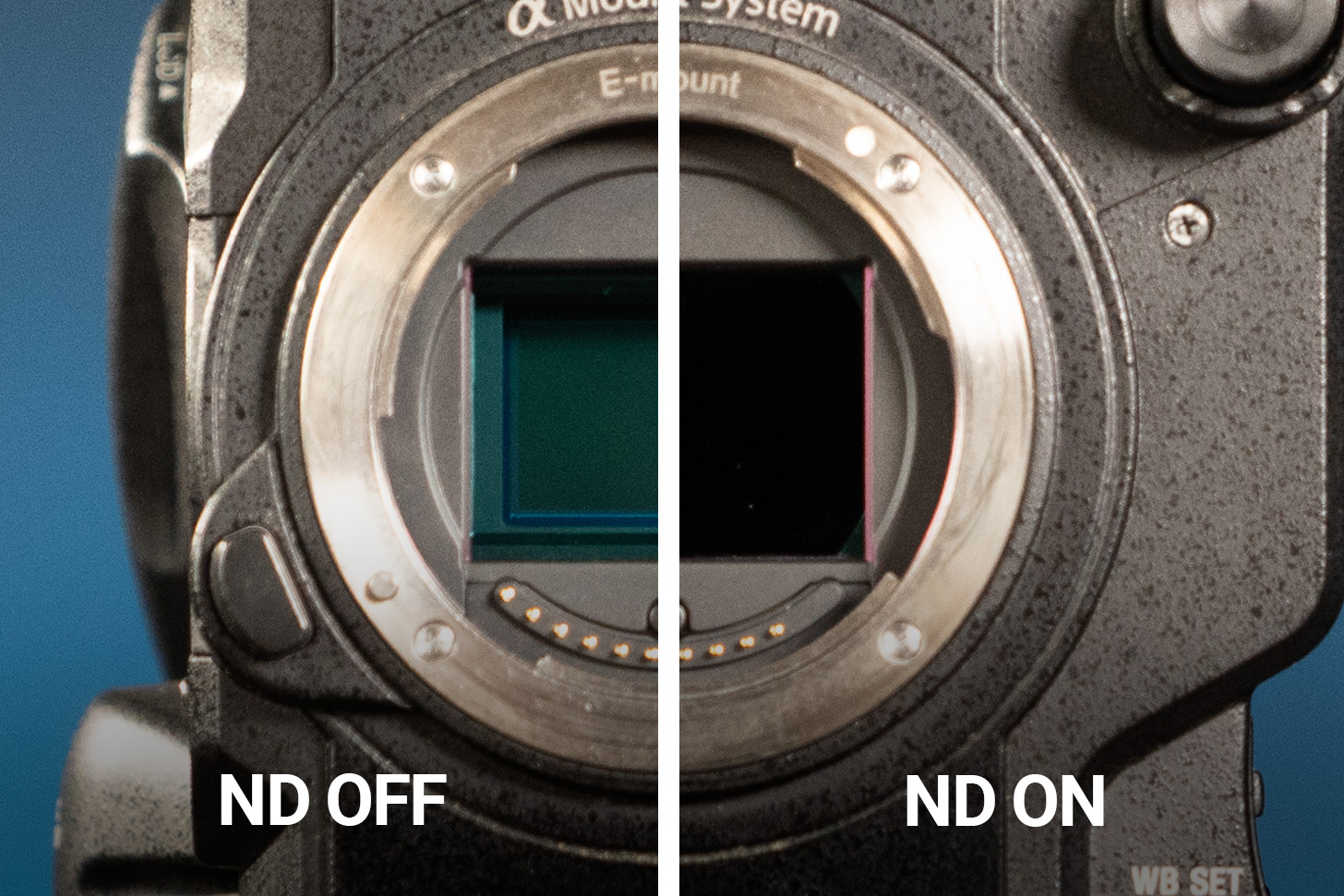
One of the biggest advantages cinema cameras offer is built-in ND filters. Unlike traditional front ND filters, they are ready for action anytime you use the camera. You don’t need to remember to pack them in your bag, and there is no need to deal with step-up or step-down rings either. The built-in NDs end up saving you a lot of time and headaches.
But what about rear ND filters?
Rear ND filters skip some of the disadvantages of front ND filters and lessen the advantage gap between cameras that have internal NDs and cameras that don’t. There are lenses like the Sigma 14-24mm f/2.8 that allow you to insert ND filters in their rear, but they are rather rare. Most lenses on the market give you no such option, but there is an alternative. With the move from DSLR to mirrorless cameras, you can now get lens adapters with ND filters built-in. They perform really well, but they lock you out of your system’s native lenses and some other adapters.
Cine cameras have ND filter control on the camera itself

Some Sony Cine cameras have a special feature for the ND filters that makes it easier to do run-and-gun shooting. This feature lets you set the ND filters to auto, just like you would set the aperture or ISO to auto. Because the ND filters are variable, any automatic change will be smooth. You can even use this feature to compensate for a changing exposure. Currently, there are no external ND filters that can do that, and I’m not sure there ever will be.
SDI and full-sized HDMI ports
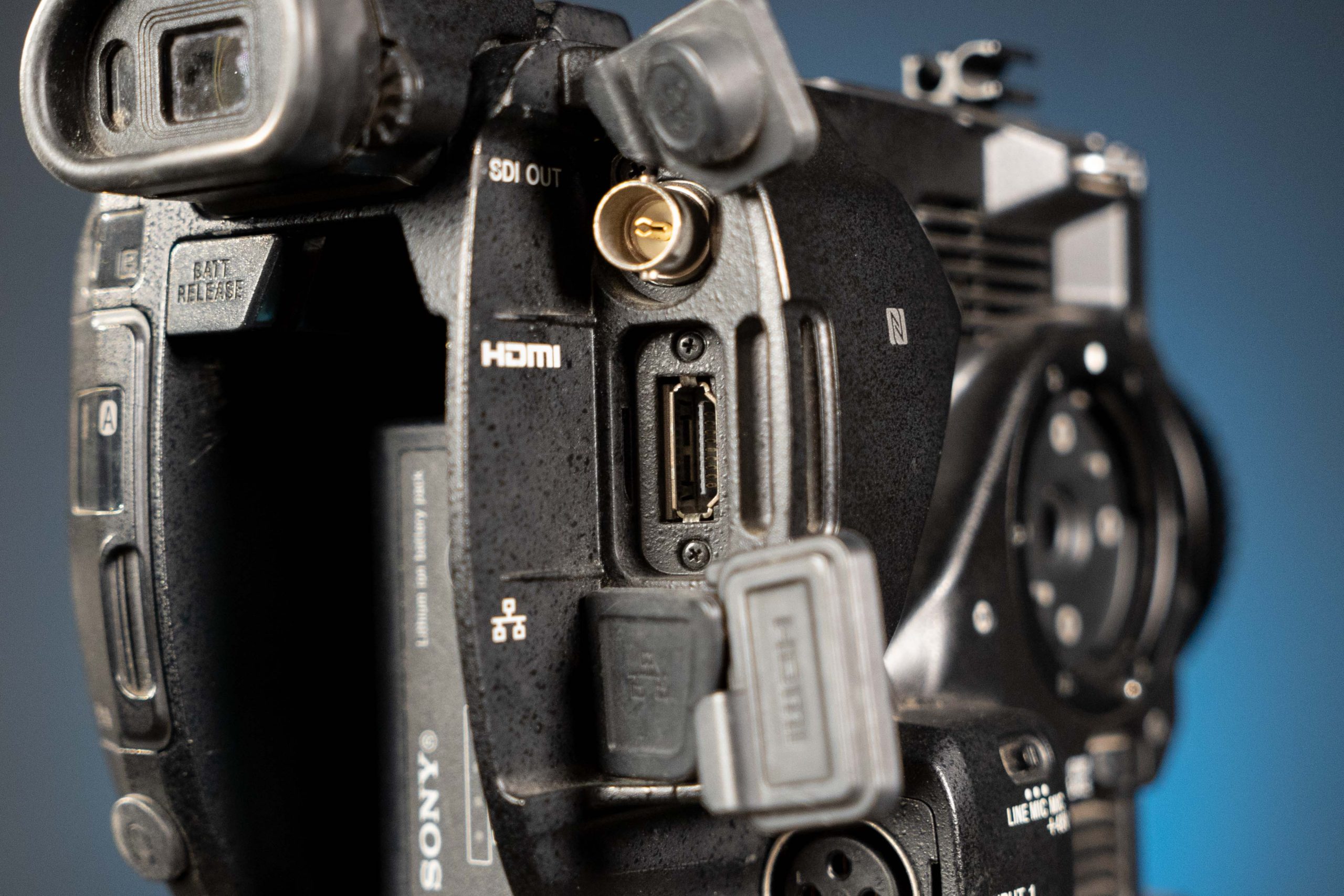
If you’re lucky, your mirrorless camera may come with a full-sized HDMI port. If it doesn’t, you are stuck with either mini or even micro HDMI, both of which I loathe for their fragility. Especially the micro-HDMI. But on a cinema camera? You will never find such terrible HDMI ports on a cinema camera.
You also get a built-in SDI port. You might be wondering, “Can’t you just use an HDMI to SDI adapter?” Technically, yes. But adapters add lag to your camera feed. If you are doing a live show, maybe it’s better to cut off lag anywhere you can. Besides, It’s an extra failure point. When you only have ten minutes until you go live, and something isn’t working, you wish you had fewer devices you need to check.
The difference in image quality
A lot can affect your video’s image quality -bitrate, encoding, image processing, and more. Newer cameras may give you an edge in these fields, but it’s not always as simple as you would guess. A 4k video clip from your phone might seem worse than a 1080p clip from a Canon C100.
And when you’re using social media sites, it may be even harder to tell the difference. The compression levels on sites like YouTube are massive, and other platforms like Instagram and TikTok hinder you further by limiting your resolution to 1080p. If you have trained eyes, you may be able to tell which camera is using a more advanced format. But will your viewers be able to tell?
Batteries and power options

Initially, I wasn’t going to cover this segment. Small mirrorless camera batteries have gone a long, long way. My original Sony A7 wouldn’t get through a wedding shoot without chewing about ten batteries. However, a modern camera like the FX3 can carry me through the entire event with five or fewer batteries, or even a single V-Mount.

But there are some annoyances I forgot about when I started using consumer cameras again. For example, Accessing the battery bay can prove challenging if the camera isn’t hand-held. Let’s say you were filming on a tripod for a while, and you need to switch to another battery. The door to the battery tray might be blocked as it’s placed on the bottom. On the other hand, on a cinema camera like the FS5ii, the battery is placed on the back, not the bottom. This allows you to switch batteries without first dismounting the camera.
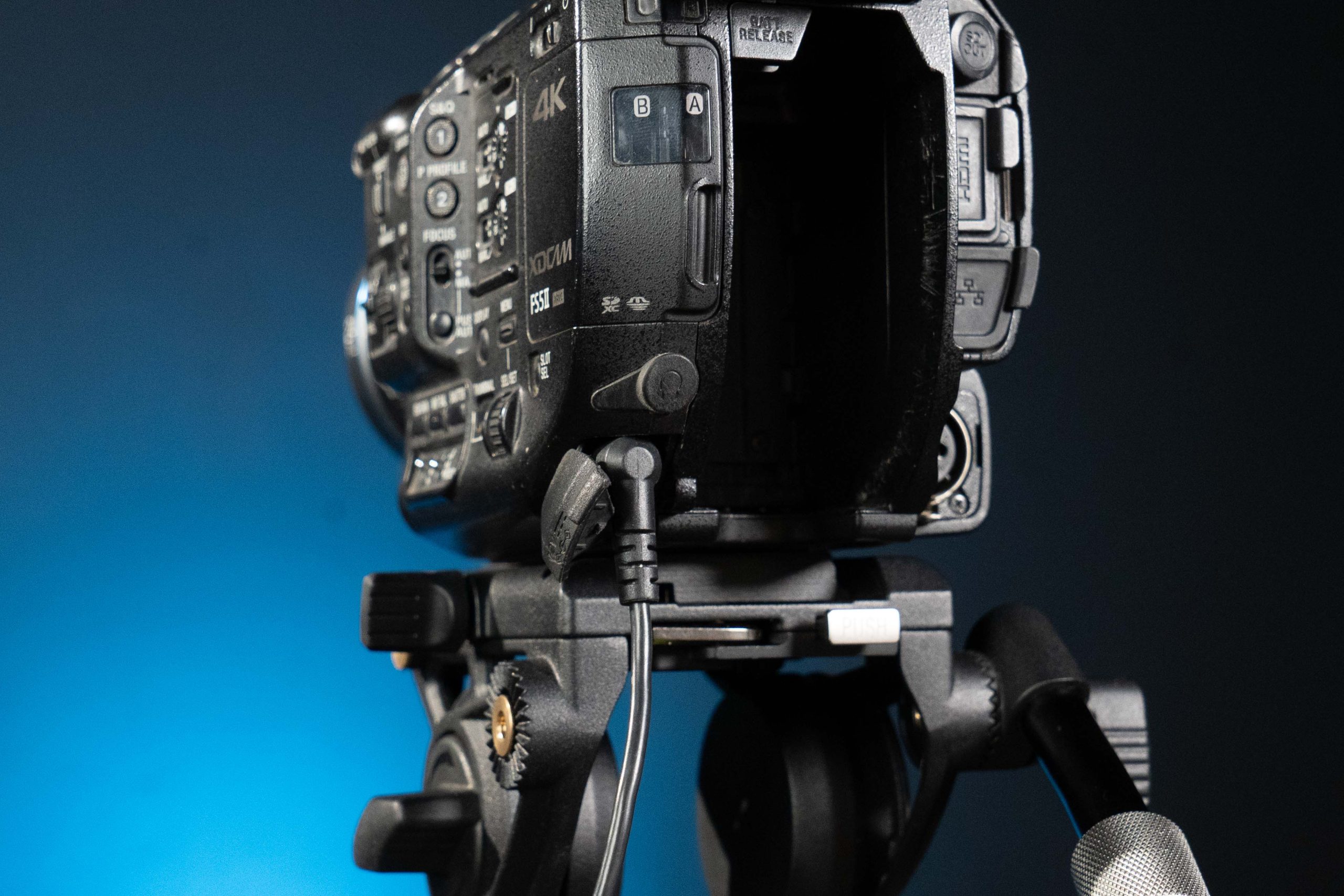
An added bonus is the ability to connect the camera to DC directly. Modern consumer cameras can receive power via a USB-C port, but it’s just not as good. You still need a battery inside the camera to run it, and USB-C cables are more prone to disconnect by accident.
No 30-minute time limits
While it differs from one camera to another, cinema cameras tend to support longer recording sessions than consumer cameras. There are two reasons for that. The first is that cinema cameras are designed to handle heat better. The large bodies of cinema cameras aren’t just for show. The extra room allows the inclusion of fans and better cooling systems that keep the camera from overheating. To get the same cooling on a consumer camera, you’ll need to jump through hoops.
The other reason isn’t related to hardware at all. You won’t hear any company confirm this, but there is a suspicion that many cameras have a 30-minute time limit to avoid taxes. See, the European Union has special import fees that are higher on cameras classified as video cameras. As you would’ve guessed, to prevent a camera from being registered as a video camera, a 30-minute time limit will work well.
RAW recording
It’s still rare to see a consumer camera that can record RAW internally. There are some, like the Canon R5C and Nikon Z8, that can do RAW, but these are exceptions, not the norm. You usually require an external recorder like the Blackmagic Assist 7 12G or Atomos Ninja to record RAW. While these are superb external recorders, they aren’t cheap. External recorders are a hefty additional purchase to your already expensive new camera.
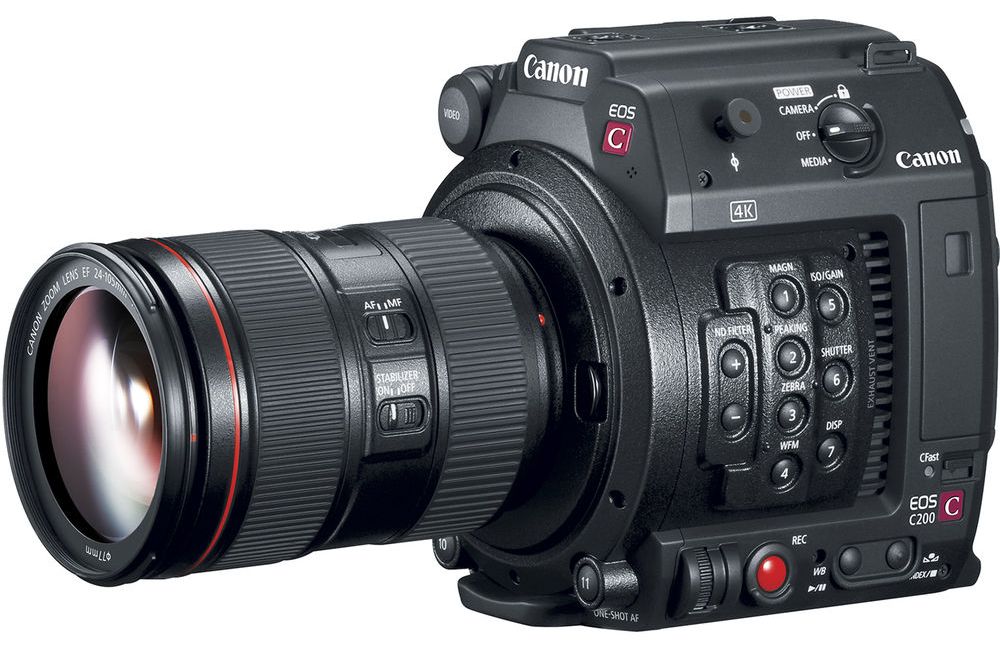
Meanwhile, many cinema cameras can record RAW internally. And you can get them for much cheaper than you think. For example, I occasionally see a Canon C200 pop up in the second-hand market for $1200, just $200 more than a Blackmagic Assist 7 12G.
In conclusion
Old cinema cameras aren’t perfect. For many, it is better to buy a typical modern camera instead of an older cinema camera. New consumer cameras are just more accessible, and they give you features that weren’t available in the past.
If you are new to filmmaking, you may want to take a modern consumer camera. They are more accessible and easy to get. If you aren’t new, but you want modern features like UVC protocols or smart autofocus systems, you may still wanna go for the modern choice. These features can be as important as anything else I mentioned in this article, if not more, depending on your use case.
For everyone else, I would recommend checking out the used market. Open up eBay or Facebook Marketplace and look for seller profiles that belong to filmmakers. There, you may come across some wonderful old cinema cameras, which may cost much less than you think. So, what would you prefer? An old cinema camera or a modern consumer one? Let me know in the comments.
See more from DIYPhotography.net on Google
Add DIYPhotography.net as a trusted source. This makes
our stories more likely to appear in your Google Search results.
 Add as a preferred source on Google

Sagiv Gilburd
Sagiv Gilburd is an Israel-based commercial photographer and videographer with extensive expertise in studio work, event photography, and managing large-scale photography projects.
Related Posts
 Sony’s new RX0 action camera shoots 1080p up to 1,000fps and outputs uncompressed 4K video
 AltCineCam Eclipse is another modded Blackmagic Cinema Camera, but it’s only 1080p
 Canon’s ML-100 only shoots 1080p but it does it at 73fps 12-Bit RAW and ISO 4.5 million
 Cooke launches SP3 range of low-budget full-frame cine lenses for mirrorless cameras
Join the Discussion
DIYP Comment Policy
Be nice, be on-topic, no personal information or flames.
4 responses to “Why old 1080p cine cameras are still better than your average 4k mirrorless camera”
Excellent article. The point about batteries seems very simple but you’ll realize its importance when you run out of juice in the middle of a scene. Especially in cold weather, where, unless you’ve taken steps to insulate the battery area to some degree, can drain very quickly.
– At least some cine-cameras have 3-CCD or 3-CMOS configurations (starting with the vintage Sony DCR-VX1000) which means a true FHD resolution, not some product of debayering. OTOH the “average 4k mirrorless camera” probably has 20-something MP internal and can afford the waste.
– With any decent cine camera, I’d expect at least two symmetric mic inputs (XLR) capable of providing phantom power with manual level controls and attenuation switches. Plus an output for professional headphones – often having quite a low impedance. Mirrorless systems? Nope.
– Ergonomics. Without extensive rigging, a bare mirrorless camera is essentially useless for videography. All the extra cables get in the way and pose a threat in non-ideal weather conditions. How does a mirrorless camera deal with handling noises? Any power zoom option? Having to wade through deep menu systems is no fun either if all you want is to just get the job done. Quickly.
– Price. A used Sony PWX-X70 in pretty decent condition can be had for a couple more than 1000 bucks, with 4K upgrade most of the time. We can argue if the X70 qualifies as “cine” but you definitely won’t get the resolution in a mirrorless camera that cheap.
– Batteries: Ontop of what @Libby already mentioned: How long does it take until the average mirrorless runs out of juice? And how far does a – say – NP-FV100 get you? Not to mention the typical V-mount battery.
– I hope that the “average 4K mirrorless camera” ingests picture profiles, so you can tweak the material to match other cameras’. Fiddling with S-LOG in post is not for everyone.
Not sure, if I would want a variable ND filter (essentially a fader) in a cine cam, since it has a couple shortcomings, mainly quality wise. Normally the ND1-2-3 filter wheel should do the trick (reducing brightness by 1/4, 1/16, 1/64) which almost any camcorder has.
Verdict: Those devices still have their reason to exist and using old stuff helps prevent e-waste.
Faltaron algunas bondades de usar una cámara de cine o vídeo de verdad. Cuando empezó la moda de usar cámaras DSLR, inicie con una Canon M5, era espectacular la imagen. Pero, había un gran pero, si estabas acostumbrado a que una cámara de vídeo profesional tuviera todo resuelto. Entonces para lograr tener la comodidad que te daba una cámara de vídeo profesional, tenias que comprar muchos accesorios, que finalmente hacían que la cámara DSLR, terminara costando lo mismo que una cámara de vídeo profesional. Y sigue sucediendo. La Sony FS5M2 y otras de la familia FX, no necesitan de un rig, para que puedas llevarla cómodamente. Ya viene con un mango. No necesitas adaptar un sistema de grabación de audio profesional, pues las entradas XLR y grabación en 4 canales es suficiente para una entrevista o grabación de un pequeño sketch. 2 tarjetas SD para grabación. Y en fin, podría seguir enumerando los beneficios frente a usar una cámara destinada a fotografía versus una cámara de vídeo o cine profesional. Y lo peor es que muchos no se dan cuenta que te dicen: Ah si, esta cámara de fotos solo cuesta 2k, pero puedes grabar vídeo. Obvio que tienes que comprar muchos accesorios para que te sientas cómodo, si estas acostumbrado a una cámara de vídeo profesional. Mi recomendación es siempre la misma. Elije la cámara que quieras comprar, dependiendo el uso que le vayas a dar. A las finales hasta grabar vídeo con un smartphone puede ser lo que necesitas y no una cámara de cine profesional. Y mi último consejo es que la cámara no hace al artista sino el artista a la cámara. Saludos y buen post.
I use a Panasonic S1H, great picture quality. but recently worked with someone who was using a Canon C200. Another two issues with mirrorless, is having to dig into a menu, whenever you need to change something, I know the monitor screen allows you to tap on it, with aperture, Iso, white balance etc, but it is about 3 inches and you can’t fit everything on screen. the other though mentioned as a cost, is recording RAW through a monitor, if you buy an Atomos Ninja, it records Prores RAW which, if, like me you use Davinci Resolve due to business politics doesn’t work with Prores RAW. So I have to use Assimilate Scratch to transpose to CinemaDNG to get into Resolve. so if the Cinema Camera you use has internal RAW recording you know there is no roundtripping and increasing in file size to get it into your editing program.
Next time I purchase a camera, it will be a cinema camera.