

















World Press Photo Contest updates rules to exclude AI-generated imagery
Nov 23, 2023
Alex Baker
Alex Baker is a portrait and lifestyle driven photographer based in Valencia, Spain. She works on a range of projects from commercial to fine art and has had work featured in publications such as The Daily Mail, Conde Nast Traveller and El Mundo, and has exhibited work across Europe
Share:

The World Press Photo Contest has revised its entry guidelines to clarify what makes a real photograph. Photojournalists complained just days after the contest announced that AI-generated images could be submitted to the Open Format competition category.
Photographers argued that allowing AI images in a contest focused on documenting real-world events contradicted their core principles.
Responding to the criticism, the World Press Photo Foundation reversed its stance on AI imagery. “Thanks to the honest and thoughtful feedback over the past days, we have decided to change the rules for the Open Format category in our contest to exclude AI-generated images,” the foundation stated.
New guidelines
The updated guidelines now prohibit generative fill and fully generated images in the Open Format category. This follows with restrictions in other categories, such as Singles, Stories, and Long-Term Projects.
AI-generated images have never been eligible for submission to the prestigious World Press Photo of the Year contest, a separate award.
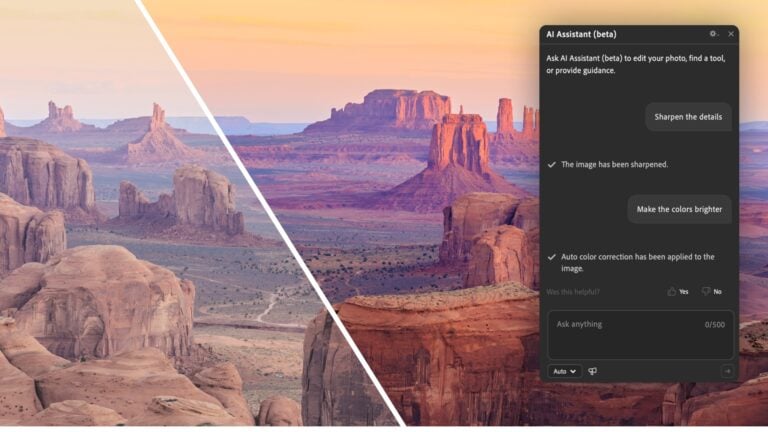
The new rules on photo manipulation offer greater clarity on what qualifies as an AI-generated image. AI editing tools used to make light changes, denoising, and automatic adjustments on levels, colours, and contrast are accepted.
However, tools based on generative AI models that introduce new information to enlarge and sharpen images, such as Adobe Super Resolution and Topaz Photo AI, are not allowed.
Content Authenticity
Camera brands and editing programs are increasingly integrating AI features into their software. The World Press Photo Foundation collaborated with industry experts to develop clear ethical standards. These standards aim to ensure that photographs are “fair and accurate representations of what the photographer witnessed” and prevent the creation of misleading images.
Manufacturers such as Leica have even taken the step to create a sort of digital fingerprint that confirms that an image is real. This Content Authenticity Initiative will become more commonplace in the next few years.
The World Press Photo Foundation is clearly defining what makes an authentic photograph. Like digital composites, AI-generated images are conceptual art, not photojournalism.
[via The Verge]
See more from DIYPhotography.net on Google
Add DIYPhotography.net as a trusted source. This makes
our stories more likely to appear in your Google Search results.
 Add as a preferred source on Google
Alex Baker
Alex Baker is a portrait and lifestyle driven photographer based in Valencia, Spain. She works on a range of projects from commercial to fine art and has had work featured in publications such as The Daily Mail, Conde Nast Traveller and El Mundo, and has exhibited work across Europe
Related Posts
 Moving scene from Kamloops Indian Residential School wins 2022 World Press Photo Contest
 2018 World Press Photo of the Year announces the contest finalists [NSFW]
 World Press Photo contest reveals the stunning 2021 winners
 World Press Photo announces stunning Regional contest winners from across the globe
Join the Discussion
DIYP Comment Policy
Be nice, be on-topic, no personal information or flames.
4 responses to “World Press Photo Contest updates rules to exclude AI-generated imagery”
There’s so much cheating going on with the contests though they should start demanding raw files.
Photo sharing sites are full of AI. Its getting stupid!
Don’t care. More than half of these contests aren’t on the level sports prize packages are. And the other half is scamming people with entry fees and bogus press.
Appreciating the World Press Photo Contest’s commitment to upholding the authenticity of captured moments. In a world increasingly shaped by technology, it’s crucial to delineate between AI-generated art and the genuine documentation of real-world events. This move not only preserves the integrity of photojournalism but also sets a precedent for ethical standards in image creation. Drawing parallels, the stringent rules mirror the precision needed in crafting top-notch applications, such as in the realm of fantasy sports app development. Authenticity matters in every visual narrative.