























Tokina’s new SZ Pro 300mm, 600mm and 900mm lenses are now available to back on Indiegogo
Nov 7, 2022
John Aldred
John Aldred is a photographer with over 25 years of experience in the portrait and commercial worlds. He is based in Scotland and has been an early adopter – and occasional beta tester – of almost every digital imaging technology in that time. As well as his creative visual work, John uses 3D printing, electronics and programming to create his own photography and filmmaking tools and consults for a number of brands across the industry.
Share:

Tokina has now fully unveiled the new 300mm f/7.1, 600mm f/8 and 900mm f/11 lenses announced a couple of weeks ago. The trio of lenses is now available to back on Indiegogo and the specs and prices don’t look too bad. The lenses are a somewhat new take on the old mirror reflex lens format, designed specifically for APS-C mirrorless allowing them to be extremely small for their long focal lengths.
They’re not available in a wide range of mounts, and I hope more will be coming in the future, but for now, it’s Sony E, Fuji X and Canon EF-M. That last one is an odd choice given that EF-M is essentially a dead system now. Given that they’re manual focus lenses, hopefully, we’ll see it coming for Canon RF and Nikon Z at some point (and maybe even Micro Four Thirds).
The key selling points of these lenses are the fact that they’re so small and lightweight. And, well, given their focal lengths, even when compared to previous generations of mirror reflex lenses, they certainly are. Tokina says they have great suppression of chromatic aberration with low levels of flare and ghosting. And while they’re not going to replace long, fast and expensive glass for many sports and wildlife shooters, they present a decently priced option for the rest of us.
The lenses feature integrated mounts, so you can’t swap them from one camera system to another. And as they’re already mirrorless mounts, adapting them to other systems – as you could with DSLR lenses with longer flanger distances – isn’t really possible. They offer a focus ring throw of 270°, meaning they should offer some pretty precise focus control for both stills and video and they naturally offer the typical “donut bokeh” associated with mirror reflex lenses.
| SZ 300mm Pro Reflex F7.1 MF CF | SZ 600mm Pro Reflex F8 MF CF | SZ 900mm Pro Reflex F11 MF CF | |
|---|---|---|---|
| Focal length | 300mm | 600mm | 900mm |
| Aperture | f/7.1 (fixed) | f/8 (fixed) | f/11 (fixed) |
| Image circle | APS-C | APS-C | APS-C |
| Optics | 8 Elements in 8 groups | 8 elements in 8 groups | 7 elements in 7 groups |
| Filter size (front) | 46mm | 77mm | 86mm |
| Filter size (rear) | 34mm | 34mm | 34mm |
| Angle of view | 5.4° Fuji/Sony, 5.1° Canon | 2.7° Fuji/Sony, 2.6° Canon | 1.8° Fuji/Sony, 1.7° Canon |
| Minimum focus distance | 0.92m | 1.77m | 2.61m |
| Macro ratio | 1/2.5 | 1/2.5 | 1/2.5 |
| Focus Type | Manual focus | Manual focus | Manual focus |
| Dimensions | 61 x 74.5mm | 88.6 x 125mm | 96.1 x 168mm |
| Weight | 235g | 545g | 725g |
Tokina says they specifically went with mirror lenses due to the fact that most existing mirror reflex lenses on the market were designed for DSLRs. They were designed for the resolution of film and early DSLRs. But they say that technology has come a long way since then and that mirror lenses needed to evolve to take advantage of the quality cameras offer today. The lens technology itself, they said, needed to be renewed.

The reduced number of elements in these lenses compared to the often high quantity found in more traditional super telephoto lenses, Tokina says, means that mirror lenses have better control over things like chromatic aberration. The disadvantage of mirror lenses, of course, is that they typically have slow, fixed apertures and these are no exception. The 300mm, 600mm and 900mm lenses have apertures of f/7.1, f/8 and f/11 respectively and you can’t adjust them. You can’t stop down. Of course, they’re pretty slow apertures anyway, so you likely wouldn’t need to.
The donut bokeh inherent in mirror reflex lenses, due to the covered mirror in the centre of the front of the lens, is a desirable quality in these types of lenses to many. But for others, it’s a very undesirable and distracting trait, especially if you shoot sports or wildlife. Which is better or worse really is subjective and depends entirely on what you shot and your intended final use of the images.

Tokina’s latest offerings do look to be among the better mirror reflex lenses available today when it comes to image quality. They still wouldn’t compete with something like the Canon RF 800mm f/5.6L IS USM, but that’s why these lenses don’t cost $17,000. They’re not competition. They’re to let those who’d never otherwise be able to afford a super long lens get their hands on one.
At the moment, the Tokina SZ Pro 300mm f/7.1, 600mm f/8 and 900mm f/11 lenses are available to back on Indiegogo for $322, $484 and $565 respectively. All three lenses are available in Sony E, Fuji Z and Canon EF-M Mounts. See the campaign page for more information.

John Aldred
John Aldred is a photographer with over 25 years of experience in the portrait and commercial worlds. He is based in Scotland and has been an early adopter – and occasional beta tester – of almost every digital imaging technology in that time. As well as his creative visual work, John uses 3D printing, electronics and programming to create his own photography and filmmaking tools and consults for a number of brands across the industry.
Related Posts
 Tokina’s SZ Pro 300mm, 600mm and 900mm reflex lenses finally coming to stores in February
 Kenko Tokina has announced three weird looking 300mm, 600mm and 900mm super telephoto lenses are on the way
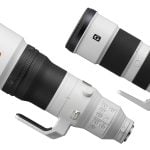 Sony announces the 600mm f/4 GM OSS and 200-600mm f/5.6-6.3 G OSS lenses
 Laowa’s 65mm and 80mm Nanomorph are now available to buy through Indiegogo
Join the Discussion
DIYP Comment Policy
Be nice, be on-topic, no personal information or flames.
3 responses to “Tokina’s new SZ Pro 300mm, 600mm and 900mm lenses are now available to back on Indiegogo”
Is there if they don’t have optics in the narrow rear part, they could be used on dslr systems too…
Whether there are optics back there or not, the flange distance would be too short to use these on DSLRs as they’re designed specifically for the short flange distances of mirrorless systems. You *could* hypothetically adapt them, but you’d never be able to get infinity focus without some corrective optics in there (which would degrade the image quality). Trying to mount these on a DSLR would be like putting extension tubes on them and turning them into macro lenses.
I have the 900mm f/11. It shows gross astigmatism at any other temperature than room temperature.
Details at:
https://universeodon.com/@KrajciTom/109911126015692565