





















Ten breathtaking astrophotography images you should see (June 2025)
Jul 11, 2025
Soumyadeep Mukherjee
Soumyadeep Mukherjee is an award-winning astrophotographer from India. He has a doctorate degree in Linguistics. His work extends to the sub-genres of nightscape, deep sky, solar, lunar and optical phenomenon photography. He is also a photography educator and has conducted numerous workshops. His works have appeared in over 40 books & magazines including Astronomy, BBC Sky at Night, Sky & Telescope among others, and in various websites including National Geographic, NASA, Forbes. He was the first Indian to win “Astronomy Photographer of the Year” award in a major category.
Share:

NASA Astronomy Picture of the Day is a huge collection of astronomical images, both amateur and professional. It celebrates our amazing universe every day.
Since its inception in 1995, NASA APOD has been selecting and publishing some of the best images of space. Its two editors, Robert Nemiroff and Jerry Bonnell, are the people behind it. Here, you can view images captured by space telescopes such as Hubble and JWST. But it also includes amateur images taken with regular DSLR cameras.
Here are some of the best images from June 2025.
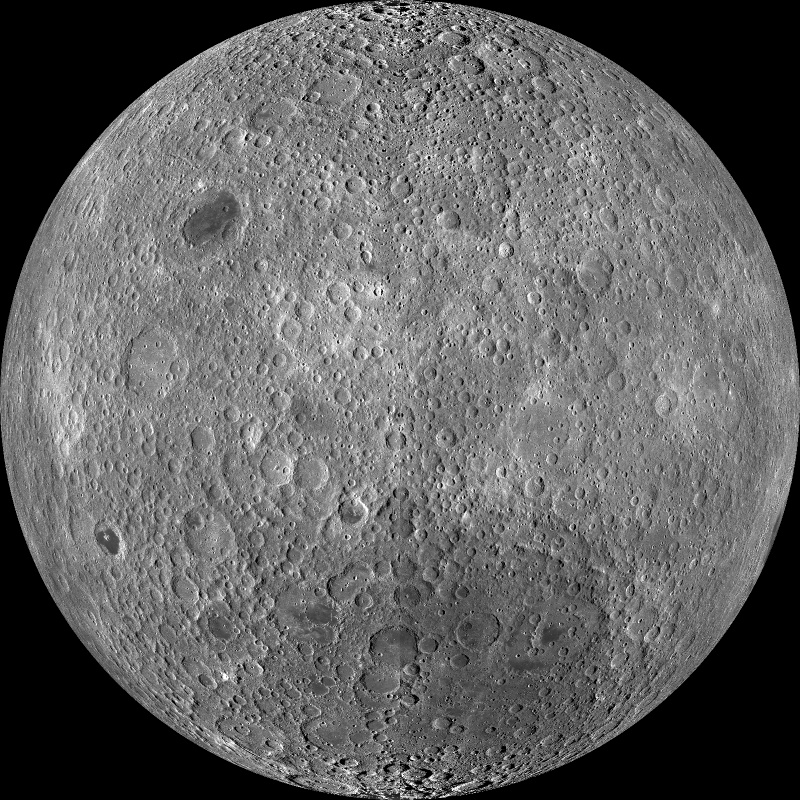
Lunar Farside
The Moon is tidally locked in synchronous rotation, so it constantly exhibits its familiar nearside to Earthlings. However, from lunar orbit, the far side of the Moon might become familiar. In actuality, this clear image, a mosaic from the Lunar Reconnaissance Orbiter’s wide-angle camera, is centred on the lunar far side. The highest quality version, which is part of a global mosaic of over 15,000 photos captured between November 2009 and February 2011, depicts features at a scale of 100 meters per pixel. Surprisingly, the farside’s rough and battered surface contrasts sharply with the nearside’s silky, dark lunar maria. The thicker crust on the far side probably makes it more difficult for molten material from the interior to flow to the surface and form smooth, dark maria.
Rubin’s First Look: A Sagittarius Skyscape
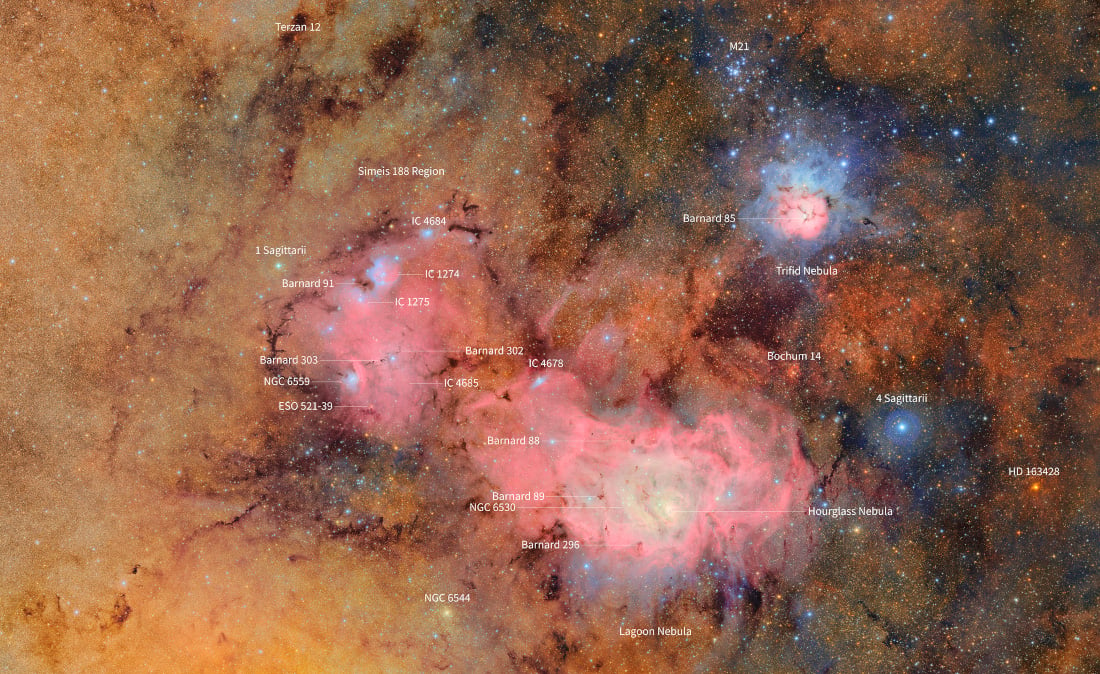
In the direction of the central Milky Way and the constellation Sagittarius, this cosmic skyscape extends over 4 degrees over dense star fields. Famous sites on telescopic tours of the universe, Messier 8 and Messier 20, are among the brilliant nebulae and star clusters visible in this First Look image taken at the new NSF–DOE Vera C. Rubin Observatory. The Lagoon Nebula, another name for Messier 8, is a vast star-forming area that spans more than 100 light-years. A spectacular cluster of young, massive stars may be seen in the Lagoon Nebula, which is located around 4,000 light-years away. The turbulent depths of this cosmic lagoon are energised and stirred by their star winds and strong radiation. The Trifid is the popular nickname for Messier 20. The Trifid Nebula’s strong red colour is produced by the blazing hydrogen gas that separates its three halves by dark interstellar dust lanes. However, dust-reflected starlight is what gives the vibrant Trifid its contrasting blue tones. To collect all of the imaging data, the Rubin Observatory spent portions of four nights (May 1-4) at the Trifid-Lagoon area. Rubin’s stunning Sagittarius skyscape is 84,000 pixels in width and 51,500 pixels in height at full resolution.
In the Center of Spiral Galaxy M61
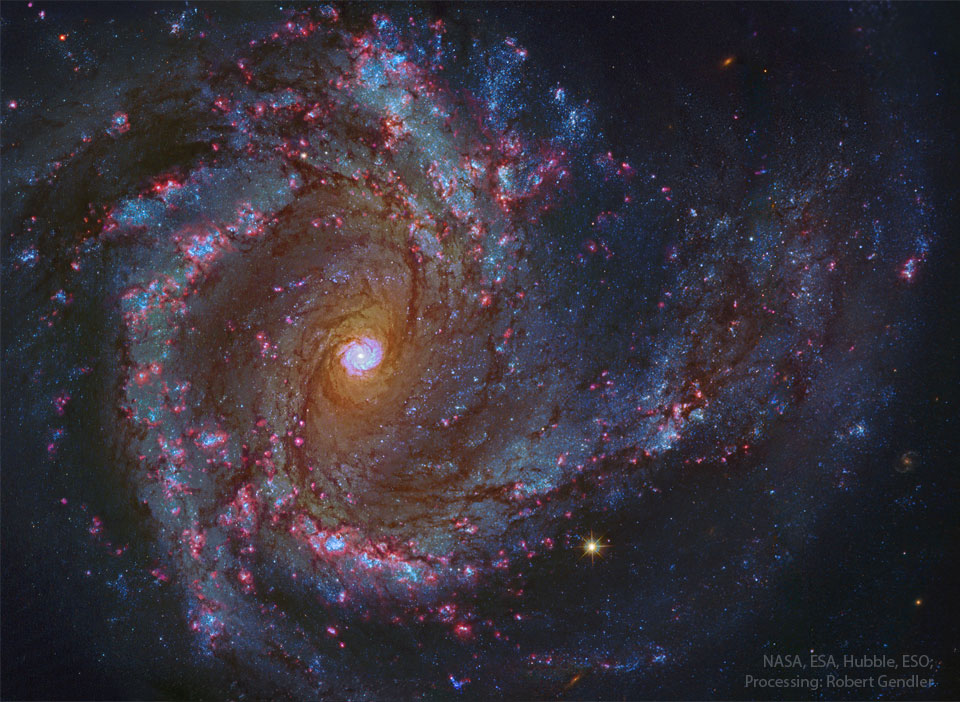
Does this spiral galaxy have a spiral galaxy at its core? In a way. This precise view of the face-on spiral galaxy Messier 61 (M61) and its luminous centre combines image data from the European Southern Observatory, the Hubble Space Telescope, and smaller telescopes on Earth. M61, also called NGC 4303, is located in the Virgo Cluster of Galaxies, only 55 million light-years away. It is regarded as an illustration of a barred spiral galaxy, much like the Milky Way. M61 has sweeping spiral arms, cosmic dust lanes, pinkish star-forming regions, and clusters of young blue stars, just like other spiral galaxies. A brilliant nuclear spiral encircles an active supermassive black hole at its heart.
W5: Pillars of Star Formation
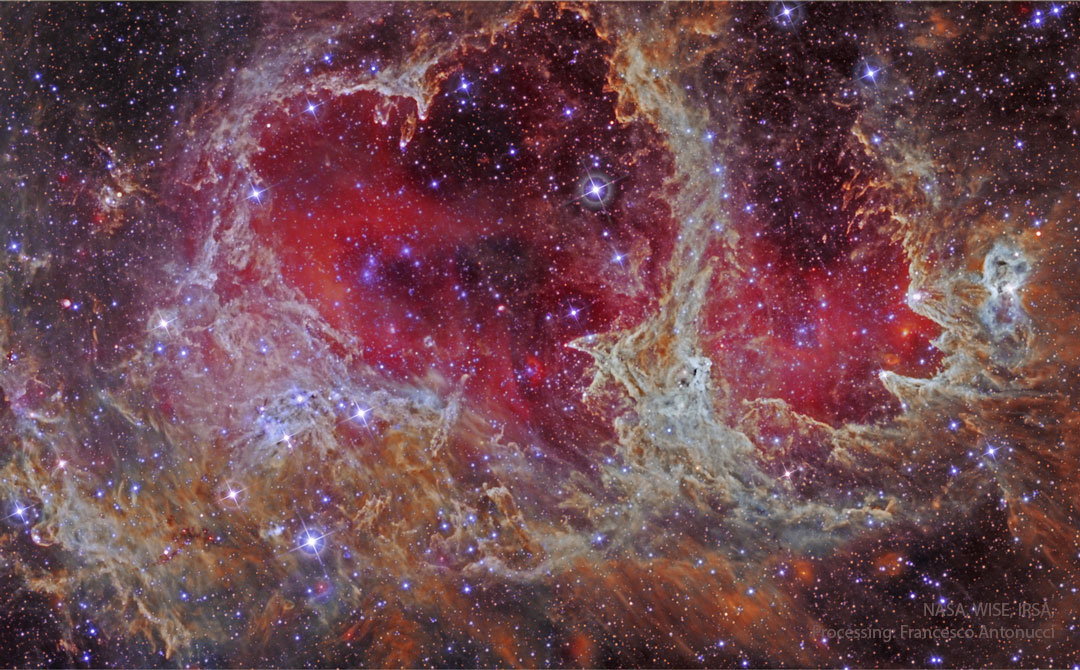
What is the formation process for stars? Massive stars towards the centre of empty cavities are older than stars on the borders, according to infrared images of the star-forming area W5 taken by NASA’s Wide Field Infrared Survey Explorer (WISE, later NEOWISE) satellite. This is probably because the younger edge stars are being formed by the older stars in the centre. When cooler gas is compressed into knots tight enough to gravitationally collapse into stars by hot outflowing gas, star formation is triggered. Additional visual cues are provided by the amazing pillars that are left to slowly evaporate from the hot outflowing gas in the highlighted, scientifically coloured infrared image. Other names for W5 include IC 1848 and Westerhout 5 (W5). Together with IC 1805, the nebulae make up the Heart and Soul Nebulae, a complicated star-formation zone. A region of W5 that spans over 2,000 light years and is abundant in star-forming pillars is highlighted in the featured image. W5 is located near the Cassiopeia constellation, some 6,500 light years away.
Rubin’s Galaxy
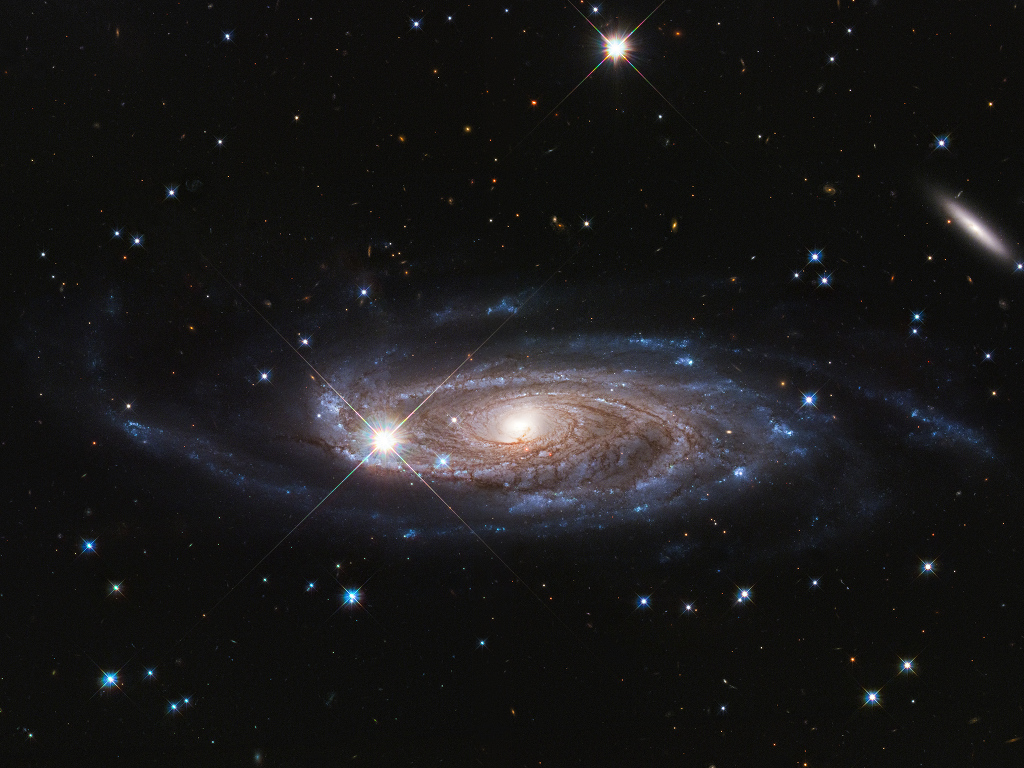
The bright, spiky stars in the foreground of this Hubble Space Telescope view are located well within our own Milky Way galaxy and face the valiant northern constellation Perseus. Beyond UGC 2885, a massive spiral galaxy located roughly 232 million light-years away, is visible. It has over 1 trillion stars and is about 800,000 light-years across, compared to the Milky Way’s roughly 100,000 light-years in diameter. Compared to the Milky Way, it is roughly ten times as many stars. UGC 2885 was also a part of An Interesting Voyage and American astronomer Vera Rubin’s groundbreaking research on the rotation of spiral galaxies, which aimed to explain how galaxies can expand to such large sizes.
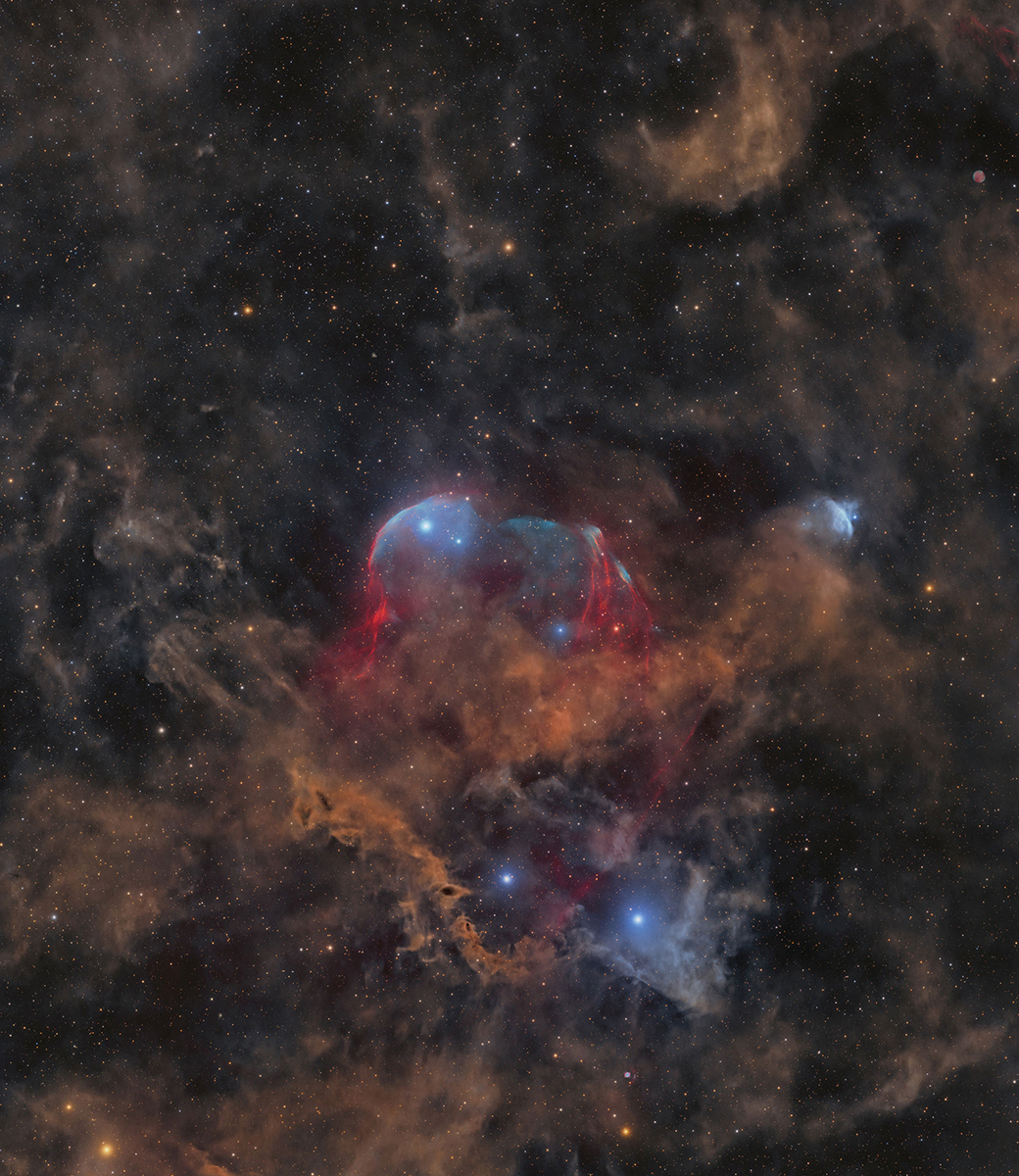
Between Scylla and Charybdis: A Double Cosmic Discovery
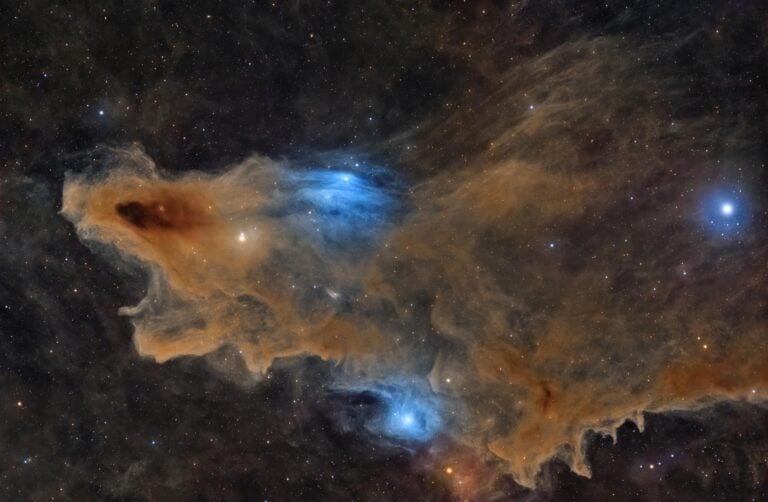
Do you know what this celestial object is? Since this is a discovery image, probably not. After a few million years, massive stars die in violent supernova explosions after creating heavy metals in their cores. These residues are hard to find because they dissipate and cool down rapidly. A committed team of amateur astrophotographers combed sky surveys for potential supernova remnant candidates to find such faint, unidentified supernova remnants. The outcome was the first-ever picture of supernova remnant G115.5+9.1, which its discoverers named Scylla, shining dimly in the constellation of Cepheus, the legendary King of Aethiopia. The remnant’s feeble oxygen emission is displayed in blue tones, while the hydrogen atoms’ emission is displayed in red. Surprisingly, a weak, unidentified planetary nebula candidate was discovered to the upper right. The ancient Greek phrase “caught between Scylla and Charybdis” from Homer’s Odyssey was referenced in its name, Charybdis (Sai 2), following mythological tradition.
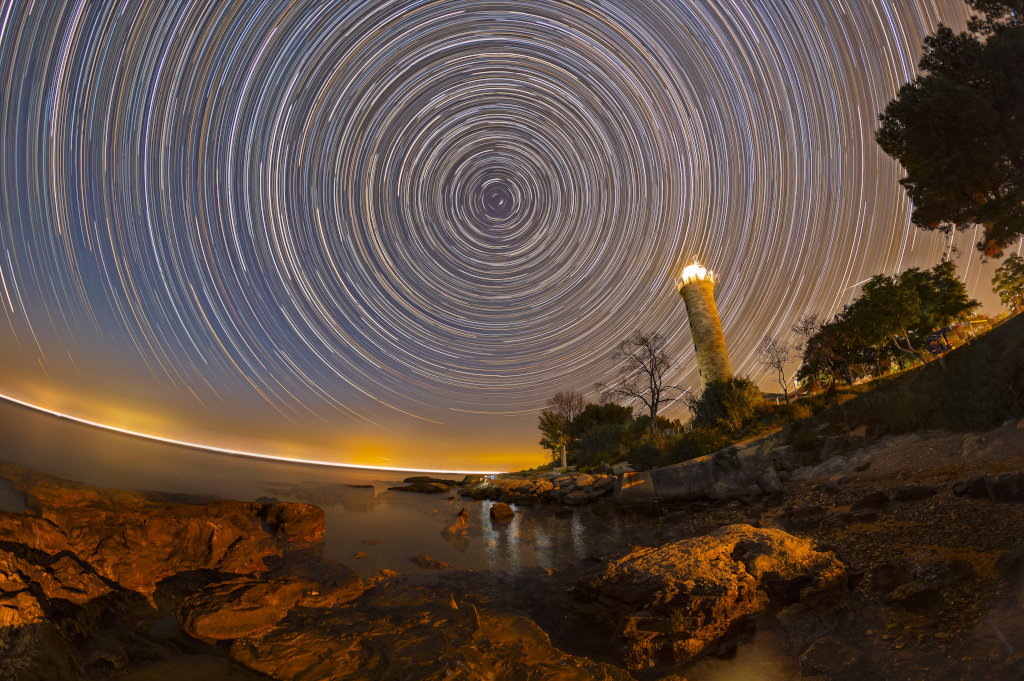
Savudrija Star Trails
This well-composed night skyscape shows the Savudrija lighthouse shining along the coast close to the northern extremity of the Istrian peninsula. Built in the early 19th century, the ancient lighthouse served as a navigational aid for sailors on the Adriatic Sea. In the sky above, however, is Polaris, an even older navigational aid. Polaris, sometimes referred to as the North Star, is the alpha star of Ursa Minor. The North Celestial Pole, which extends Earth’s axis of rotation into space, is where Polaris produces the shortest luminous arc in this image. Naturally, all of the concentric star trails are located precisely at the North Celestial Pole. A digital stack of 400 exposures, each lasting 30 seconds, makes up the composite image.
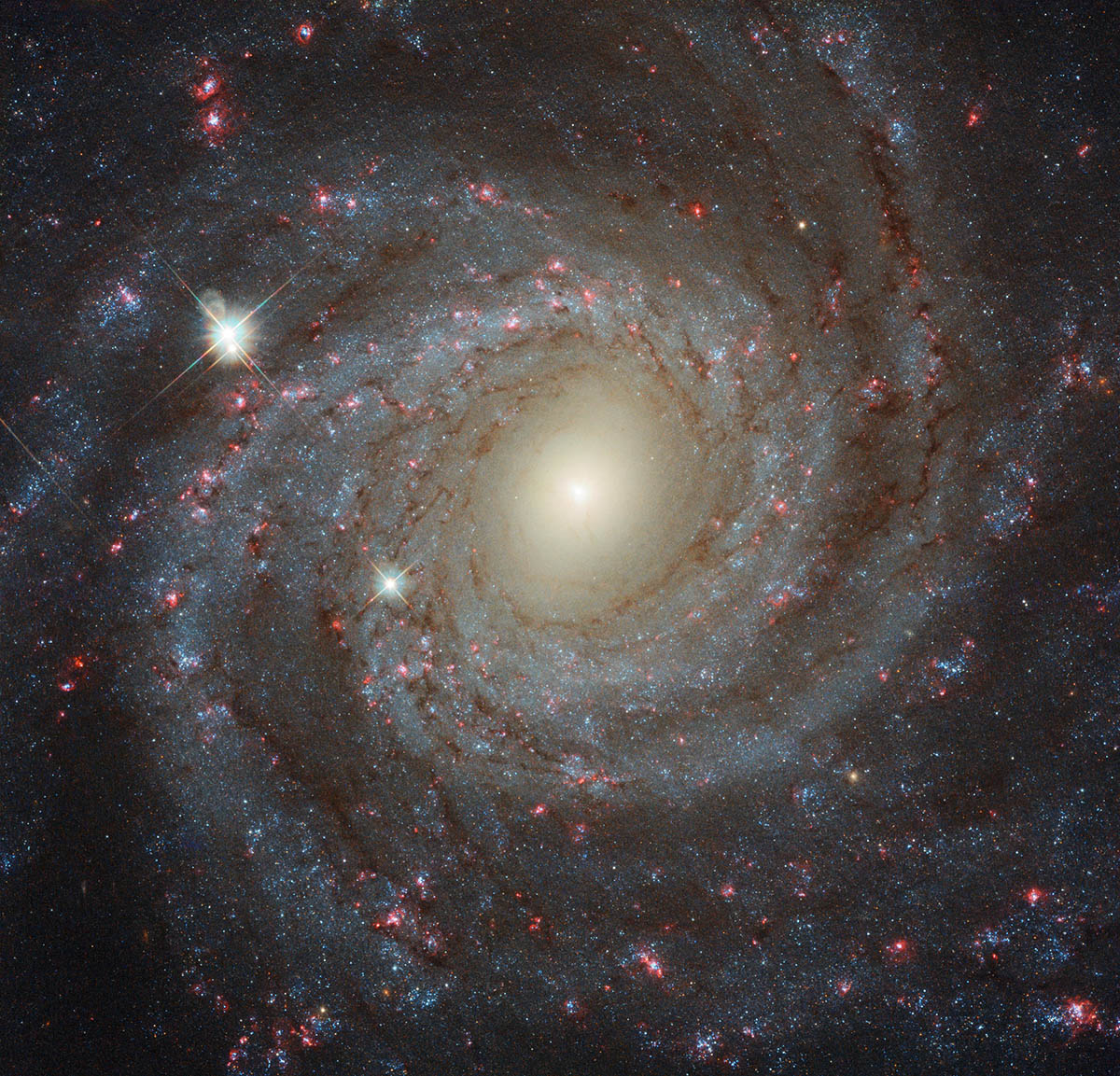
Facing NGC 3344
NGC 3344 appears face-on from where we are in the Milky Way Galaxy. The large, stunning spiral galaxy is situated in the constellation of Leo Minor, only 20 million light-years away, and spans nearly 40,000 light-years. From near-infrared to ultraviolet wavelengths, this multi-color Hubble Space Telescope close-up of NGC 3344 displays amazing intricacies. The frame spans the centre portions of the spiral by about 15,000 light-years. Young blue star clusters and reddish star-forming regions along the loose, broken spiral arms replace the yellowish light of the galaxy’s ancient stars in the core. The bright, spiky stars are, of course, located well within our own Milky Way and in front of NGC 3344.
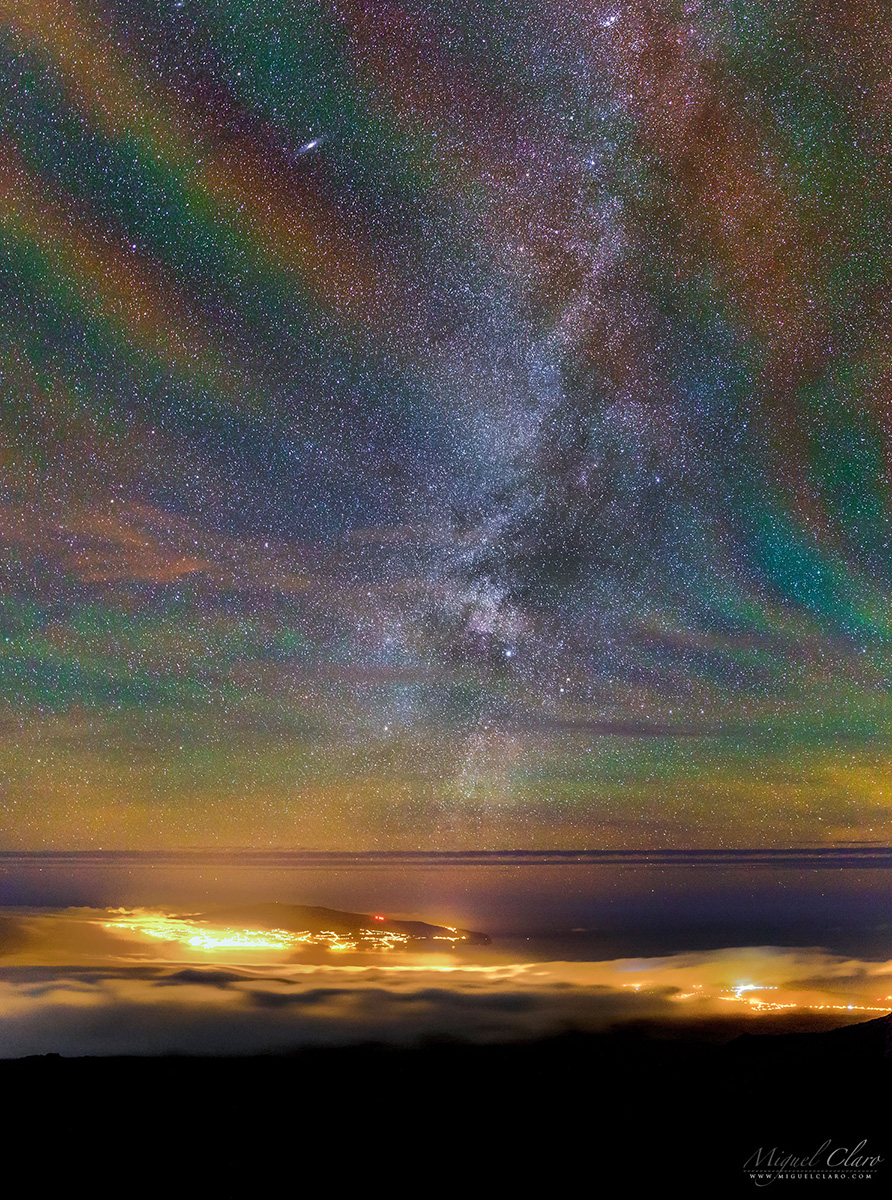
Rainbow Airglow over the Azores
Why would the sky look like a huge, repeating rainbow? Airglow. Now, air glows all the time, but it is often difficult to perceive. A disturbance, such as an oncoming storm, can generate perceptible rippling in the Earth’s atmosphere. These gravity waves are oscillations in the air similar to those produced when a rock is dropped into calm water. The long-duration exposure near the vertical walls of airglow most likely made the undulating structure more noticeable. OK, but where do the colours come from? The bright red glow is most likely caused by OH molecules around 87 kilometres aloft that were ignited by UV light from the Sun. The oxygen and sodium atoms a little higher up are probably what are causing the orange and green glow in the air. The accompanying photo was taken while climbing Mount Pico in Portugal’s Azores. The island of Faial in the Atlantic Ocean is the source of ground lights. This banded airglow shows a stunning sky, with M31, the Andromeda Galaxy, visible near the top left and the central band of our Milky Way Galaxy running up the image centre.
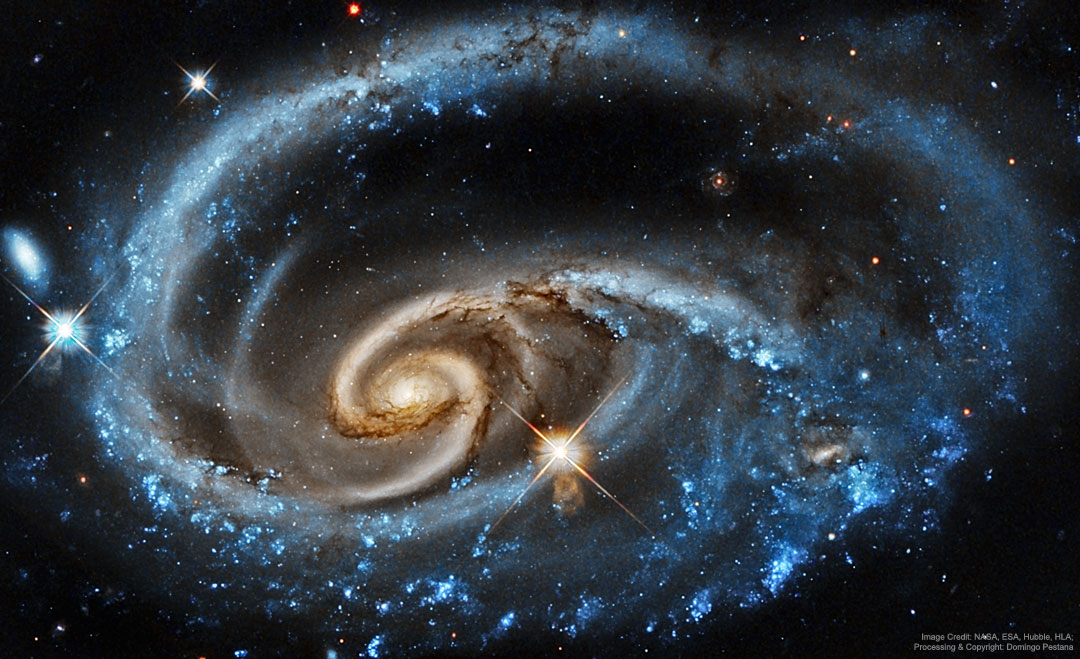
UGC 1810: Wildly Interacting Galaxy from Hubble
By alone, the highlighted galaxy is known as UGC 1810, but when combined with its collisional partner, it is referred to as Arp 273. Wild and furious gravitational interactions are probably what gave UGC 1810 its general structure, especially its blue outer ring. Massive, blue-hot stars that created only a few million years ago are responsible for the blue hue of this ring. The inner galaxy is laced with chilly filamentary material and seems older and redder. Numerous galaxies can be seen in the far background, while a few brilliant stars that are unrelated to UGC 1810 can be seen in the foreground. Arp 273 is located in the direction of the Andromeda constellation, some 300 million light years away.
If you have a space image, you can submit it to NASA APOD, too.
For more incredible astrophotography photos, check our previous Breathtaking Astronomy Photos articles:
- Breathtaking astrophotography Images – May 2025
- Breathtaking Astrophotography Images – April 2025
- Breathtaking Astrophotography Images – March 2025
- Breathtaking Astrophotography Images – February 2025
- Breathtaking Astrophotography Images – January 2025
- Breathtaking Astrophotography Images – December 2024
- Breathtaking Astrophotography Images – November 2024
- Breathtaking Astrophotography Images – October 2024
- Breathtaking Astrophotography Images – September 2024
- Breathtaking Astrophotography Images – August 2024
Clear skies!
See more from DIYPhotography.net on Google
Add DIYPhotography.net as a trusted source. This makes
our stories more likely to appear in your Google Search results.
 Add as a preferred source on Google

Soumyadeep Mukherjee
Soumyadeep Mukherjee is an award-winning astrophotographer from India. He has a doctorate degree in Linguistics. His work extends to the sub-genres of nightscape, deep sky, solar, lunar and optical phenomenon photography. He is also a photography educator and has conducted numerous workshops. His works have appeared in over 40 books & magazines including Astronomy, BBC Sky at Night, Sky & Telescope among others, and in various websites including National Geographic, NASA, Forbes. He was the first Indian to win “Astronomy Photographer of the Year” award in a major category.
Related Posts
 Ten breathtaking astrophotography images you should see right now (January 2025)
 Ten breathtaking astrophotography images you should see right now (February 2025)
 Ten breathtaking astrophotography images you should see (March 2025)
 Ten breathtaking astrophotography images you should see (April 2025)
Join the Discussion
DIYP Comment Policy
Be nice, be on-topic, no personal information or flames.