




















Ten breathtaking Astrophotography photos you should see right now (September 2024)
Oct 31, 2024
Soumyadeep Mukherjee
Soumyadeep Mukherjee is an award-winning astrophotographer from India. He has a doctorate degree in Linguistics. His work extends to the sub-genres of nightscape, deep sky, solar, lunar and optical phenomenon photography. He is also a photography educator and has conducted numerous workshops. His works have appeared in over 40 books & magazines including Astronomy, BBC Sky at Night, Sky & Telescope among others, and in various websites including National Geographic, NASA, Forbes. He was the first Indian to win “Astronomy Photographer of the Year” award in a major category.
Share:

NASA Astronomy Picture of the Day is a huge collection of astronomical images, both amateur and professional. It celebrates our amazing universe every day.
Since its inception in 1995, NASA APOD has been selecting and publishing some of the best images of the space. Its two editors, Robert Nemiroff and Jerry Bonnell, are the people behind it. Here, you can come across images taken with space telescopes like Hubble, JWST etc. But it also includes amateur images taken with regular DSLR cameras.
Here are some of the best images from September 2024.
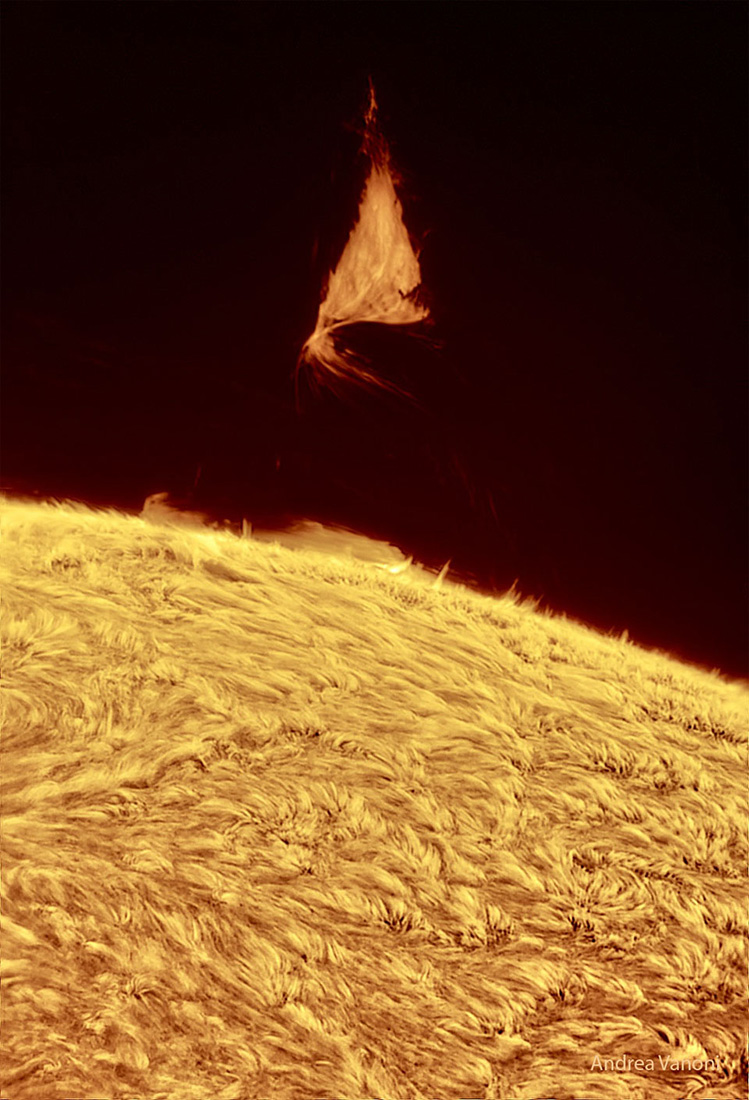
A Triangular Prominence Hovers Over the Sun
Notice the triangle just above the sun. The structure is part of an evolving solar prominence, which makes it distinctive in shape but not in kind. The Sun’s looping magnetic fields direct the flow of energetic particles, occasionally keeping luminous gaseous formations in the air for months at a time. Because a prominence includes especially hot, thick, or opaque solar plasma, it flashes brightly. The unexpected triangular structure appeared earlier in August 2024. Several solar photographers captured images of the legendary prominence, which is larger than our Earth, and NASA’s Solar Dynamic Observatory chronicled how it formed and violently dissipated in around one day. The highlighted photograph was taken in a red light that hydrogen powerfully emits. The Sun’s chromosphere is covered in solar fibrils, and the background sky is so dim that no stars can be seen. This year, the surface of our Sun has been very busy.
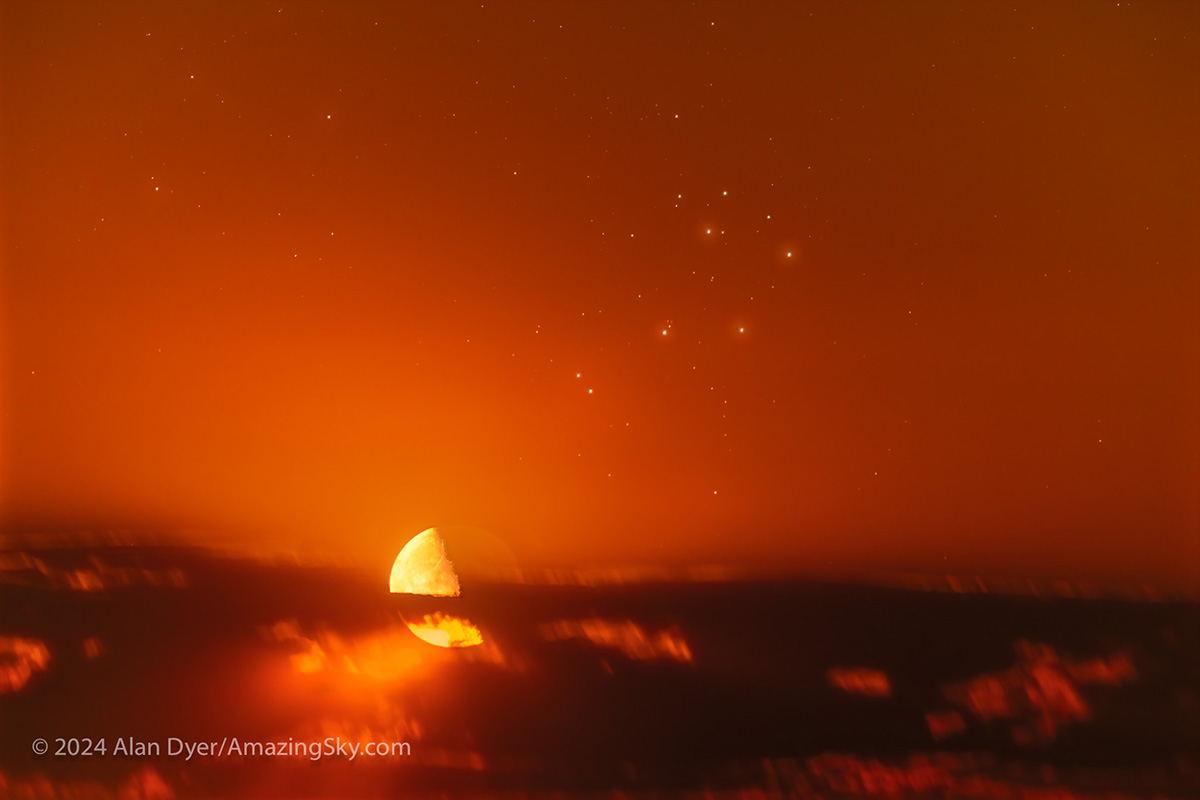
Quarter Moon and Sister Stars
Two very different sky symbols were seen rising simultaneously towards the end of August. In particular, as seen from Alberta, Canada, Earth’s Moon shared the eastern sky with the Pleiades cluster’s sister stars. Here, the orange moonrise sky obscures the star cluster’s enticing blue reflection nebulas, which are frequently seen in astronomical photographs of the well-known Pleiades. Although the contour of the dark lunar night side can be seen by illuminating earthshine, which is light that is initially reflected from the Earth, the half-lit Moon, sometimes referred to as a quarter moon, is overexposed. Eight consecutive exposures were captured with brightness adjustments to mimic what the human eye would see. Once a month, the Moon passes almost in front of the Pleiades.
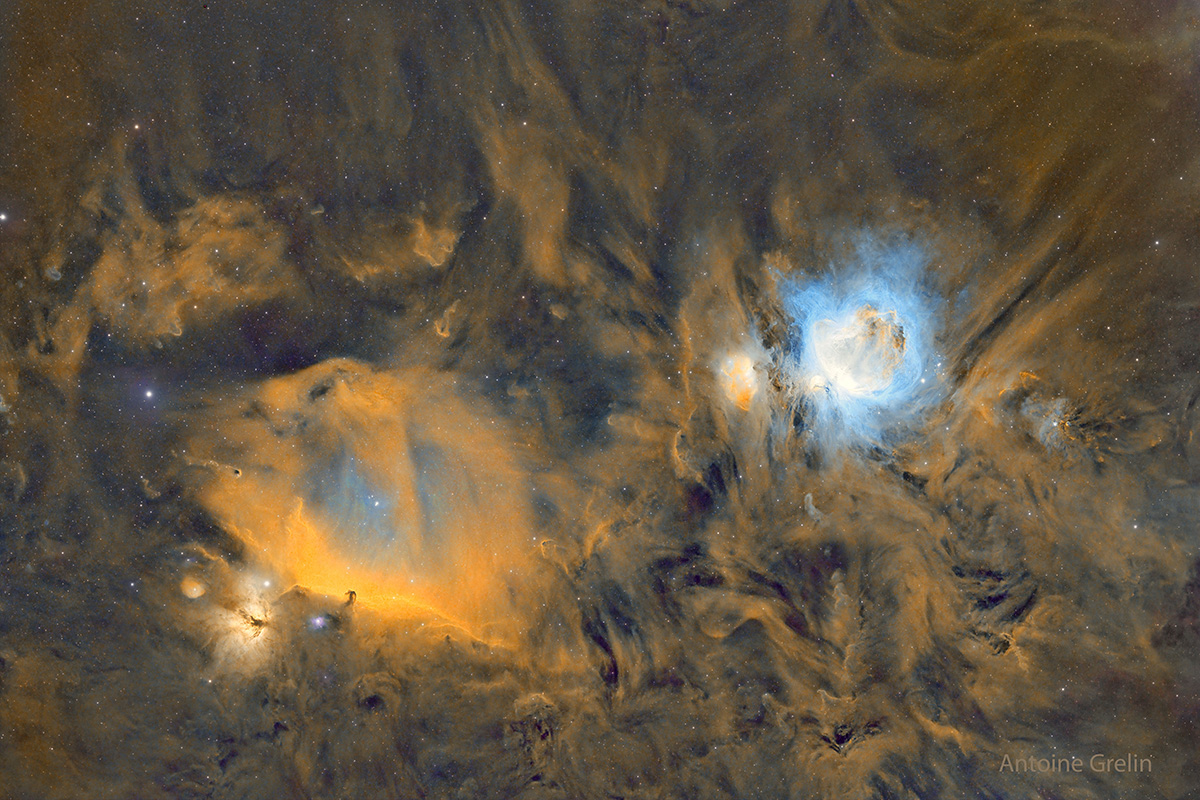
Horsehead and Orion Nebulas
Cosmic panoramas that contrast include the luminous Orion Nebula and the gloomy Horsehead Nebula. They appear in opposing corners of the above gorgeous mosaic, drifting 1,500 light-years away in one of the most familiar constellations in the night sky. The well-known Horsehead nebula may be seen at the lower left as a dark cloud with a tiny silhouette set against the long, gold-hued glow of hydrogen. The brilliant star to the left of the Horsehead is Alnitak, the easternmost star in Orion’s belt. The Flame Nebula, with its stunning dark dust lanes and clouds of light emission, is located just below Alnitak. At the upper right is the Orion Nebula, often known as M42, a beautiful emission zone.
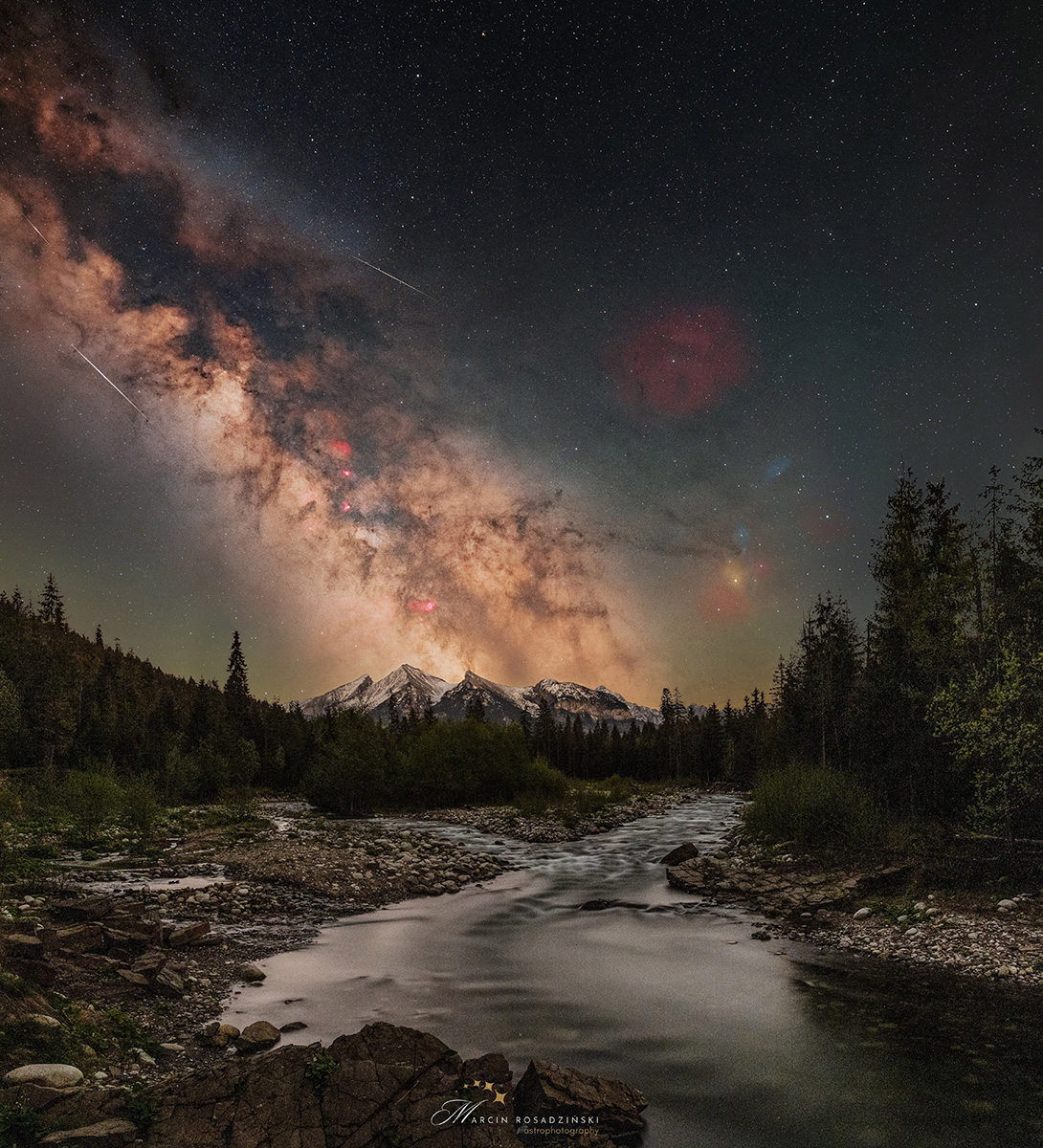
A Night Sky over the Tatra Mountains
The Tatra Mountains serve as a natural boundary between Slovakia and Poland. The Tatras are the tallest mountain range in the Carpathians and a popular astrophotography destination. Just above the Tatras, the featured image from May shows the centre of our Milky Way galaxy with two of its well-known star nurseries, the Lagoon and Omega Nebula. Ionised hydrogen, a key element in the production of Earth-abundant water, is abundant in stellar nurseries. Water is an essential component of the universe and a basic component of all known life forms. This type of water is visible in the foreground as the Bialka River.
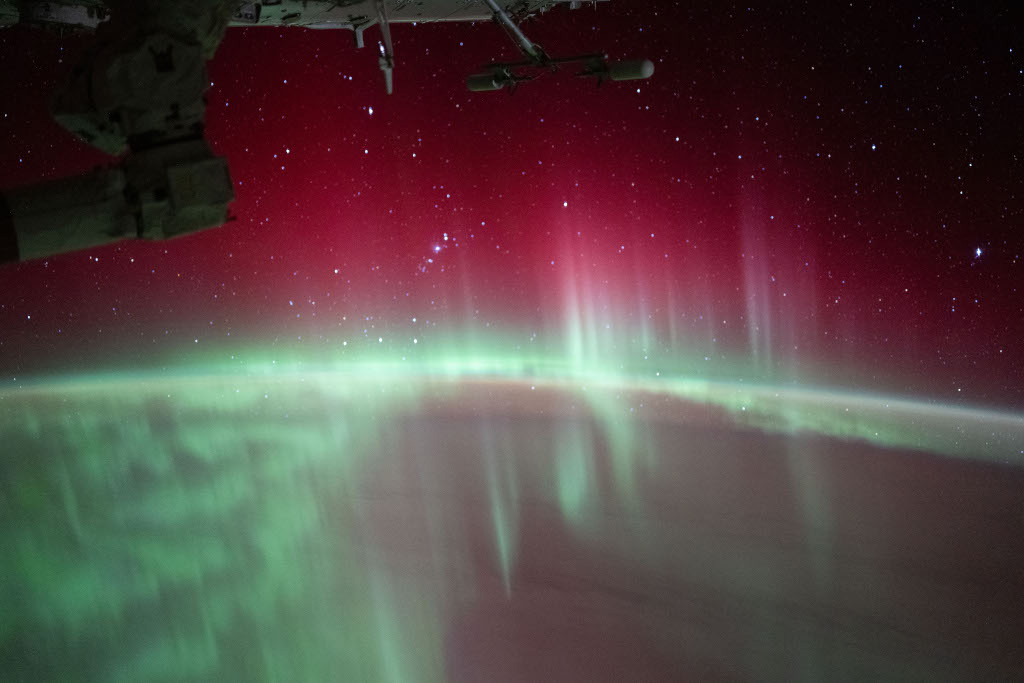
Aurora Australis and the International Space Station
This image was captured from the International Space Station on August 11 while circling about 430 km above the Indian Ocean in the Southern Hemisphere of planet Earth. The breathtaking view extends south and east, down to the planet’s horizon, and through red and green curtains of Aurora Australis. The auroral glow is created by the emission of excited oxygen atoms in the extremely rarefied upper atmosphere that remains at the level of the orbiting outpost. Green emission from atomic oxygen dominates this image at altitudes ranging from 100 to 250 kilometres, while red emission can reach 500 kilometres. Beyond the brightness of the southern lights, this picture from low Earth orbit shows the starry sky from the southern hemisphere.
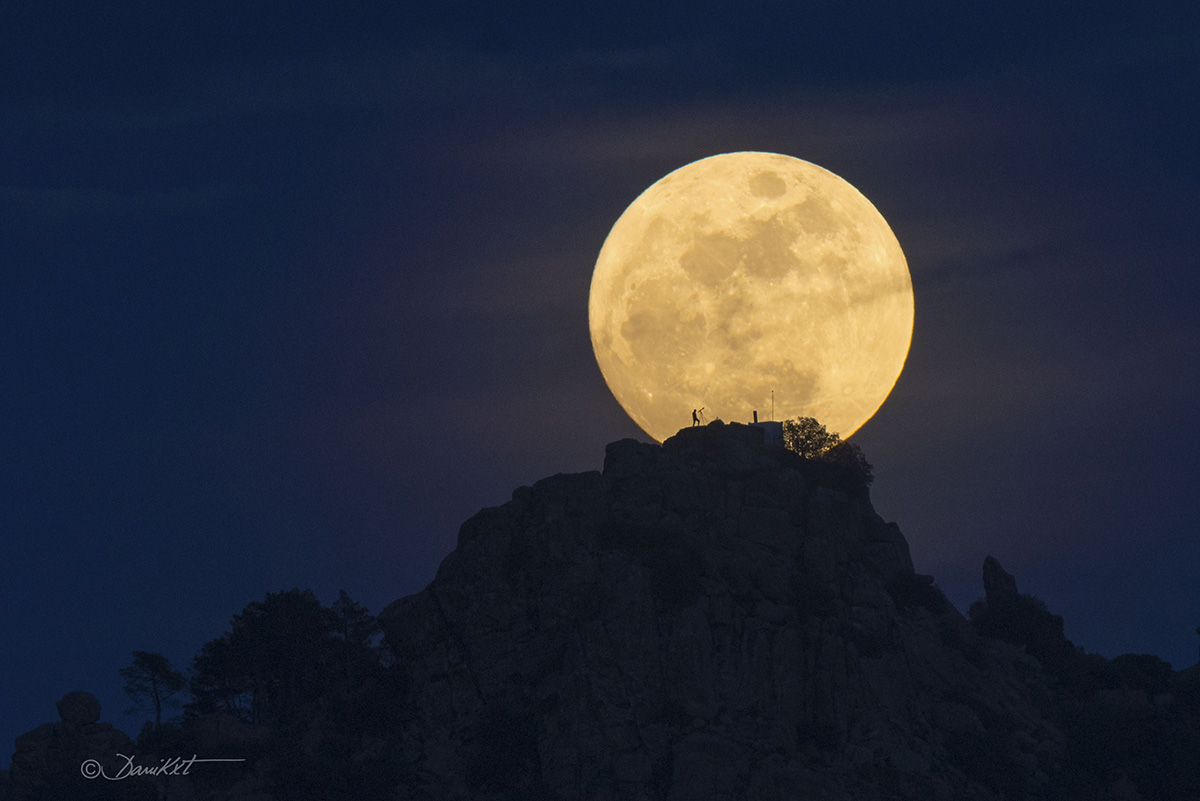
Find the Man in the Moon
Have you ever noticed the “Man in the Moon”? This typical inquiry capitalises on humans’ ability to see pareidolia or perceive familiar icons where they do not exist. The textured surface of Earth’s full Moon has been used to identify various iconic items, not only in current Western culture but also in world folklore throughout history. Examples, usually based on the Moon’s perceived orientation, include the Woman in the Moon and the Rabbit in the Moon. The two dark circular regions, known as lunar maria, located slightly above the Moon’s centre, are thought to be the eyes in one facial outline that is frequently recognised as the Man in the Moon. Looking closely, you can see that this Moon photograph shows a guy with a telescope silhouetted against the Moon. This carefully thought-out photograph was captured in Madrid, Spain’s Cadalso de los Vidrios, in 2016.
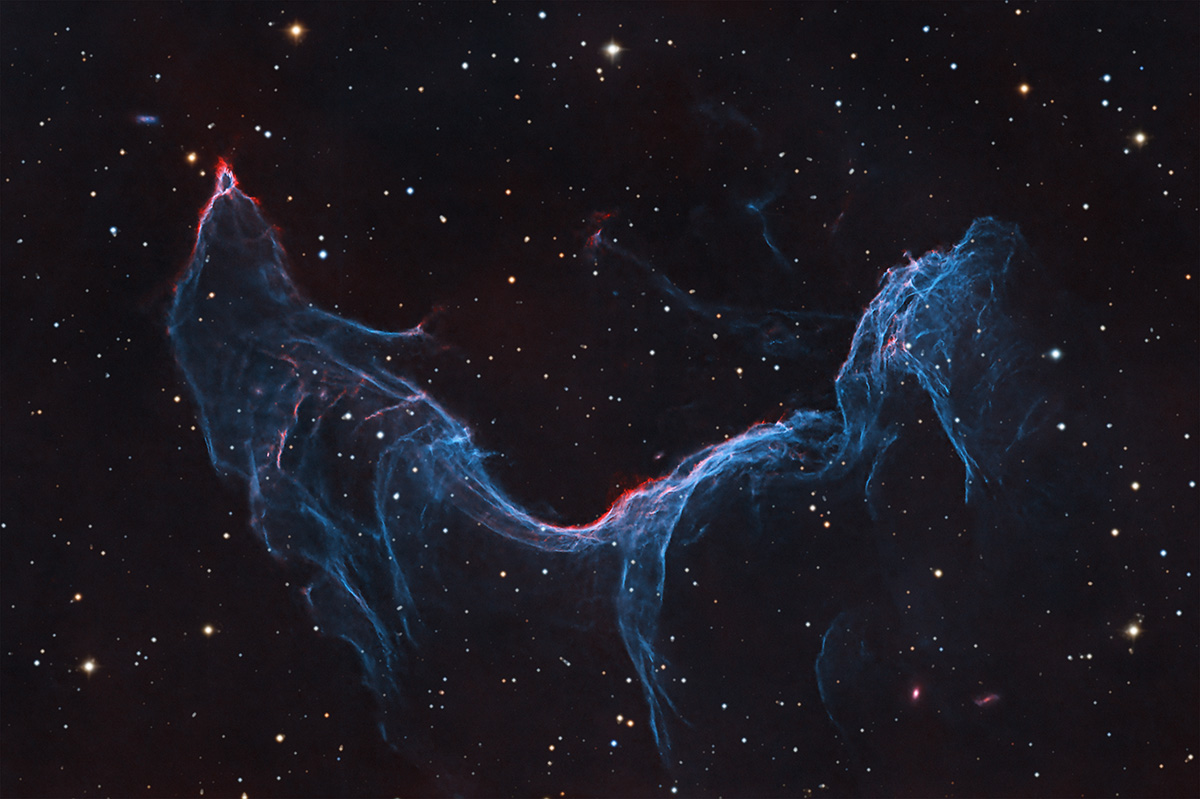
The Mermaid Nebula Supernova Remnant
The remains of dead stars give birth to new stars. The highlighted Mermaid Nebula is part of the G296.5+10.0 supernova remnant, which was formed by the gaseous residue of the gravitational collapse and subsequent death of a very massive star in our Milky Way. The Mermaid Nebula, also called the Betta Fish Nebula, is a member of a rare two-sided, nearly circular subclass of supernova remnants. The filamentary nebula, which was first identified in X-rays, is a source of radio and gamma-ray light that is regularly examined. Double-ionized oxygen (OIII) is the source of the blue hue seen here, whereas hydrogen gas is responsible for the deep red. The mermaid-like shape of the nebula has been valuable for interstellar magnetic field studies.
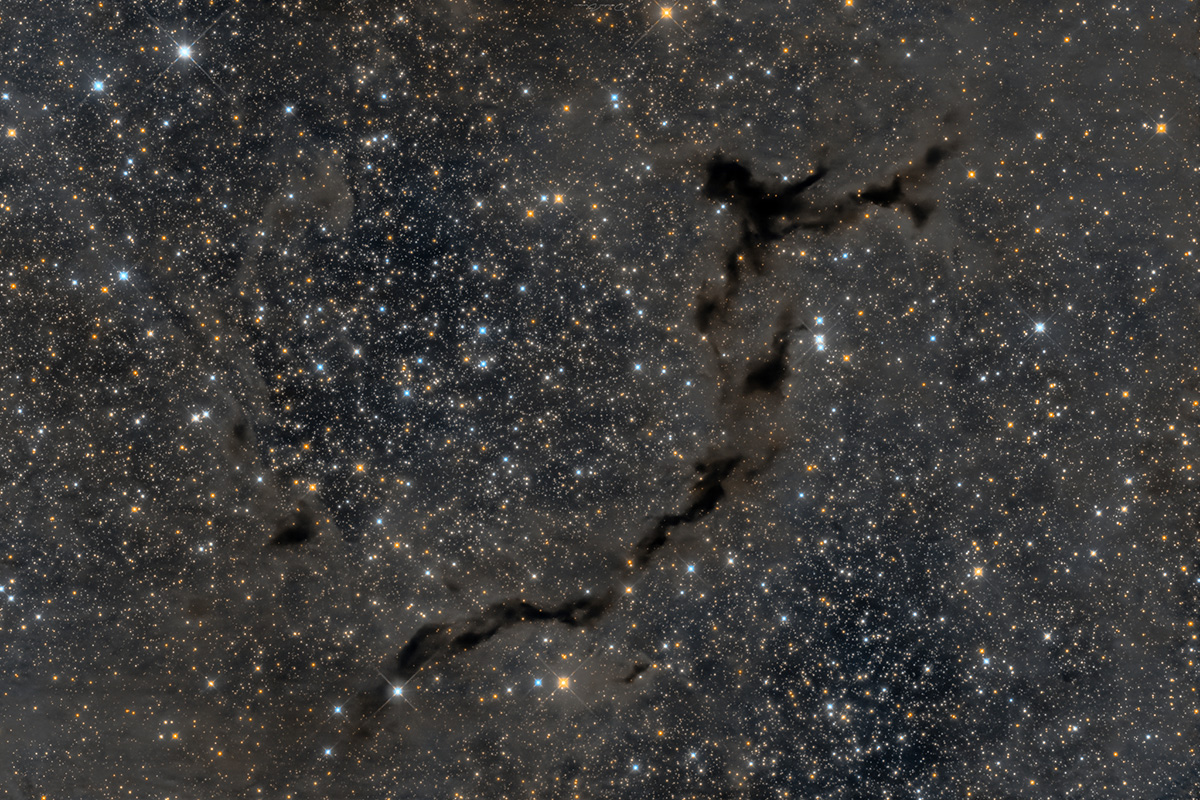
The Dark Seahorse of Cepheus
This evocative figure called the Seahorse Nebula, hovers in silhouette against a rich, bright background of stars over light-years. The dusty, dark nebula is located around 1,200 light-years away from the regal northern constellation of Cepheus and is a component of a Milky Way molecular cloud. Additionally, it is identified as Barnard 150 (B150), one of 182 black sky marks that astronomer E. E. Barnard catalogued at the beginning of the 20th century. Only at far-infrared wavelengths can one see the collapsing cores of the packs of low-mass stars that are developing within. Nevertheless, this magnificent galactic skyscape is enhanced by the vibrant Milky Way stars of Cepheus.
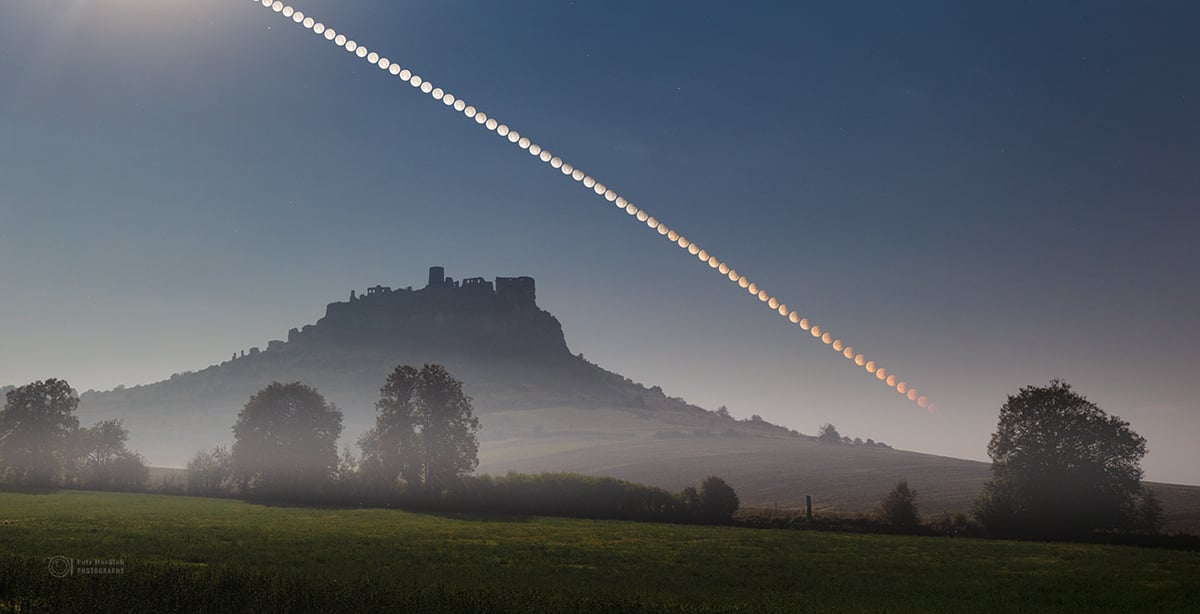
A Hazy Harvest Moon
The Harvest Moon was the Full Moon in September for people who lived in the northern hemisphere. In a partial lunar eclipse on September 17/18, the sunlit lunar nearside briefly touched Earth’s umbra, the planet’s dark, central shadow cone, before passing into shadow. As the eclipsed Harvest Moon sank behind Spiš Castle in the foggy morning sky above eastern Slovakia, a camera mounted on a tripod was used to capture this series of exposures throughout the two and a half hours before dawn. Harvest Moon is simply the traditional name for the full moon closest to the autumnal equinox, and it is celebrated in festivals, stories, and songs. Legend has it that the name is appropriate. Farmers could harvest crops by the light of a full moon shining from twilight to morning, even if the number of daylight hours were decreasing as the growing season came to an end. September’s Harvest Moon was also referred to as a supermoon, which is a word that is used for a full moon that is close to perigee.
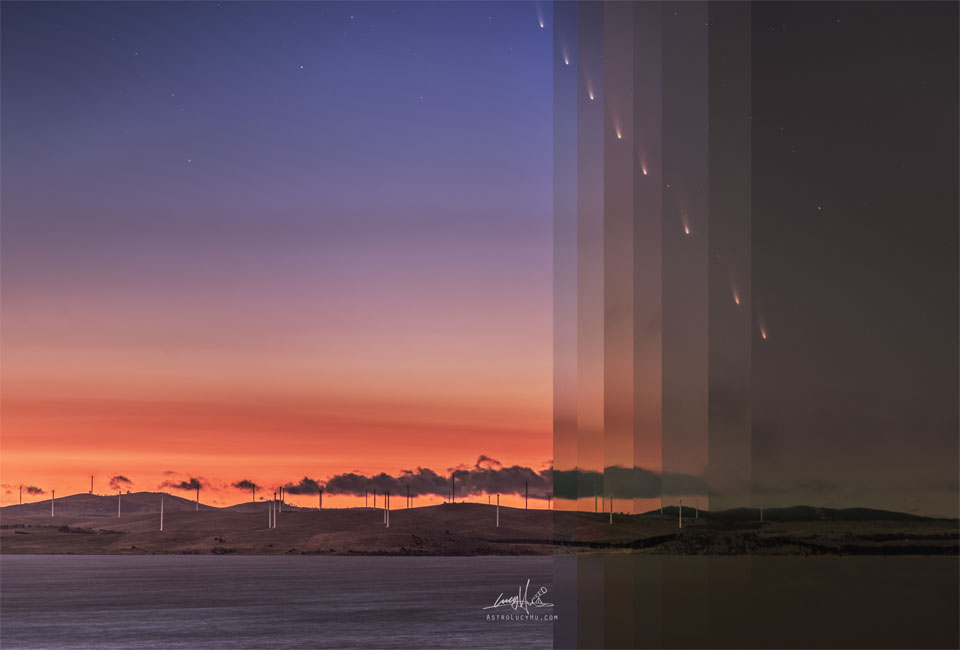
Comet A3 Through an Australian Sunrise
Currently visible in the evening western sky is Comet Tsuchinshan-ATLAS. Last month, this massive, filthy iceberg passed its closest point to the Sun, which is between the orbits of Mercury and Venus, as it plunges into the inner Solar System at an awkward angle. C/2023 A3 (Tsuchinshan–ATLAS), frequently shortened to just A3, and its dust tail late Septemberwas captured by long camera exposures both before and at sunrise. In late-September, the comet rose above Lake George, NSW, Australia, and was captured in the featured image composite. The comet may be seen in the vertical bars farther to the left, where the predawn sky became more vibrant and colourful as the Sun rose.
If you have a space image, you can submit it to NASA APOD too.
For more incredible astrophotography photos, check our previous Breathtaking Astronomy Photos articles:
See more from DIYPhotography.net on Google
Add DIYPhotography.net as a trusted source. This makes
our stories more likely to appear in your Google Search results.
 Add as a preferred source on Google

Soumyadeep Mukherjee
Soumyadeep Mukherjee is an award-winning astrophotographer from India. He has a doctorate degree in Linguistics. His work extends to the sub-genres of nightscape, deep sky, solar, lunar and optical phenomenon photography. He is also a photography educator and has conducted numerous workshops. His works have appeared in over 40 books & magazines including Astronomy, BBC Sky at Night, Sky & Telescope among others, and in various websites including National Geographic, NASA, Forbes. He was the first Indian to win “Astronomy Photographer of the Year” award in a major category.
Related Posts
 Top ten breathtaking Astrophotography images from August 2024 you should see
 Ten breathtaking Astrophotography images you should see right now (October 2024)
 Ten breathtaking astrophotography images you should see right now (December 2024)
 Ten breathtaking Astronomy photos you should see right now (November 2024)
Join the Discussion
DIYP Comment Policy
Be nice, be on-topic, no personal information or flames.