





















Ten breathtaking Astrophotography images you should see right now (October 2024)
Nov 17, 2024
Soumyadeep Mukherjee
Soumyadeep Mukherjee is an award-winning astrophotographer from India. He has a doctorate degree in Linguistics. His work extends to the sub-genres of nightscape, deep sky, solar, lunar and optical phenomenon photography. He is also a photography educator and has conducted numerous workshops. His works have appeared in over 40 books & magazines including Astronomy, BBC Sky at Night, Sky & Telescope among others, and in various websites including National Geographic, NASA, Forbes. He was the first Indian to win “Astronomy Photographer of the Year” award in a major category.
Share:

NASA Astronomy Picture of the Day is a huge collection of astronomical images, both amateur and professional. It celebrates our amazing universe every day.
Since its inception in 1995, NASA APOD has been selecting and publishing some of the best images of space. Its two editors, Robert Nemiroff and Jerry Bonnell, are the people behind it. Here, you can see images taken with space telescopes like Hubble, JWST etc. But it also includes amateur images taken with regular DSLR cameras.
Here are some of the best images from October 2024.
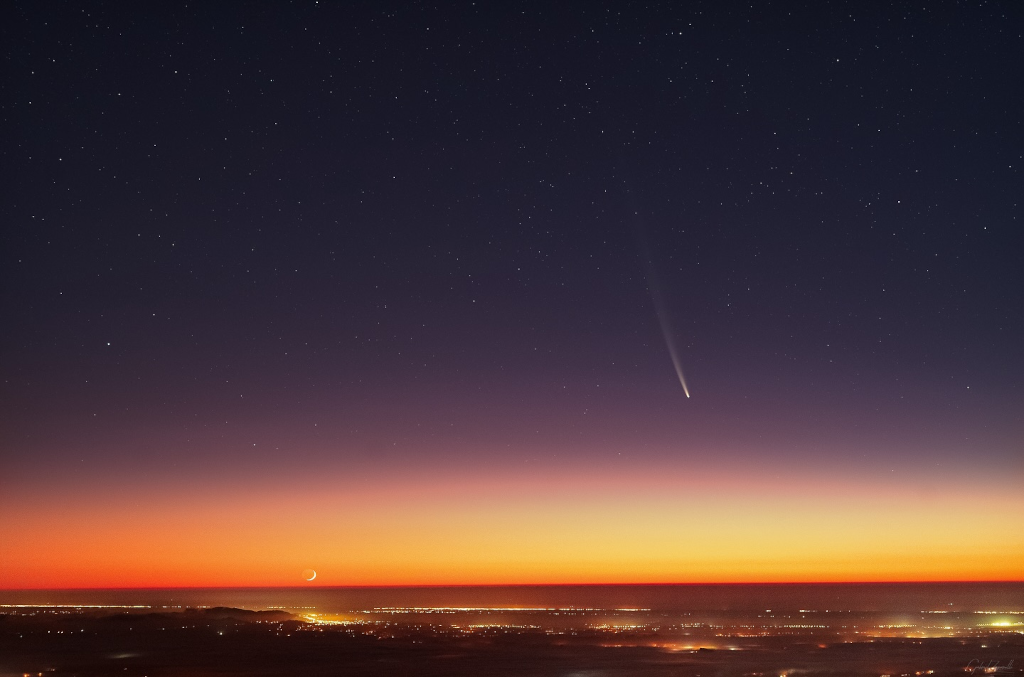
Comet at Moonrise
The comet C/2023 A3 (Tsuchinshan–ATLAS) became more visible in the sky of Earth during the last week of September. This latest visitor to the inner Solar System, affectionately called comet A3, came from the far-off Oort cloud. And it became an evening sky apparition on October 12. Perigee, or its closest approach to our lovely planet, occurred on October 12. However, when this photograph was taken on September 30, comet A3 was an early morning riser. The fading crescent Moon is just above the eastern horizon in this pre-dawn skyscape from Praia Grande, Santa Catarina, southern Brazil, which shows its vivid coma and its lengthy tail.
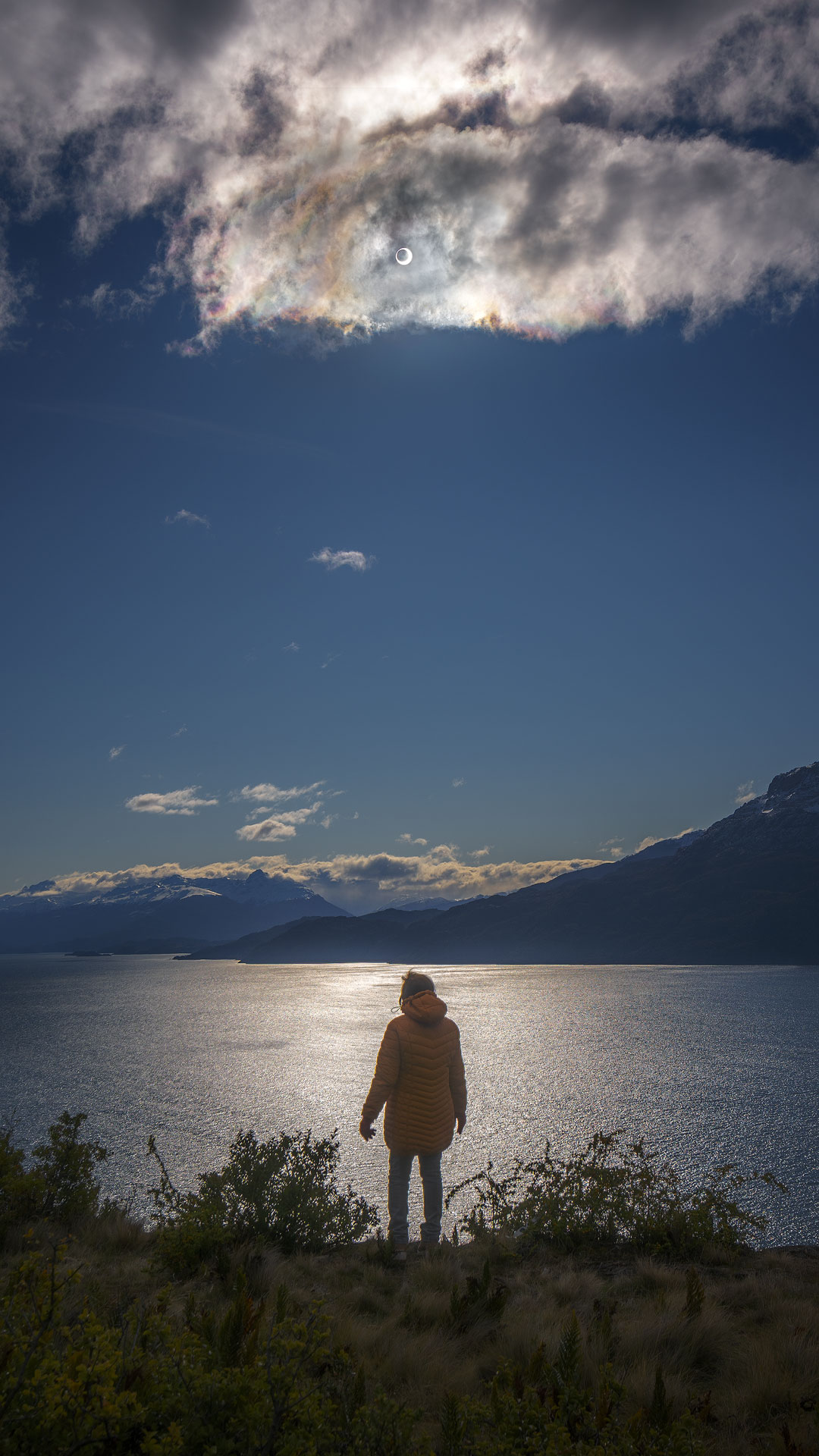
Annular Eclipse over Patagonia
Can you locate the Sun? Could you tell us why the centre has a large black patch? An annular solar eclipse is the name given to the spectacular alignment in which the Moon aligns itself with the Sun. Just last week, a narrow band of the Earth’s southern hemisphere was able to see such an eclipse. The highlighted photo was taken in Chile’s Patagonia. A total solar eclipse can be seen from some locations on Earth when the Moon is much closer to the planet and coincides with the Sun. After a billion years, the Moon’s orbit will no longer bring it close enough for a total solar eclipse to be visible from anyone on Earth. However, annular eclipses are a little more frequent than total eclipses.
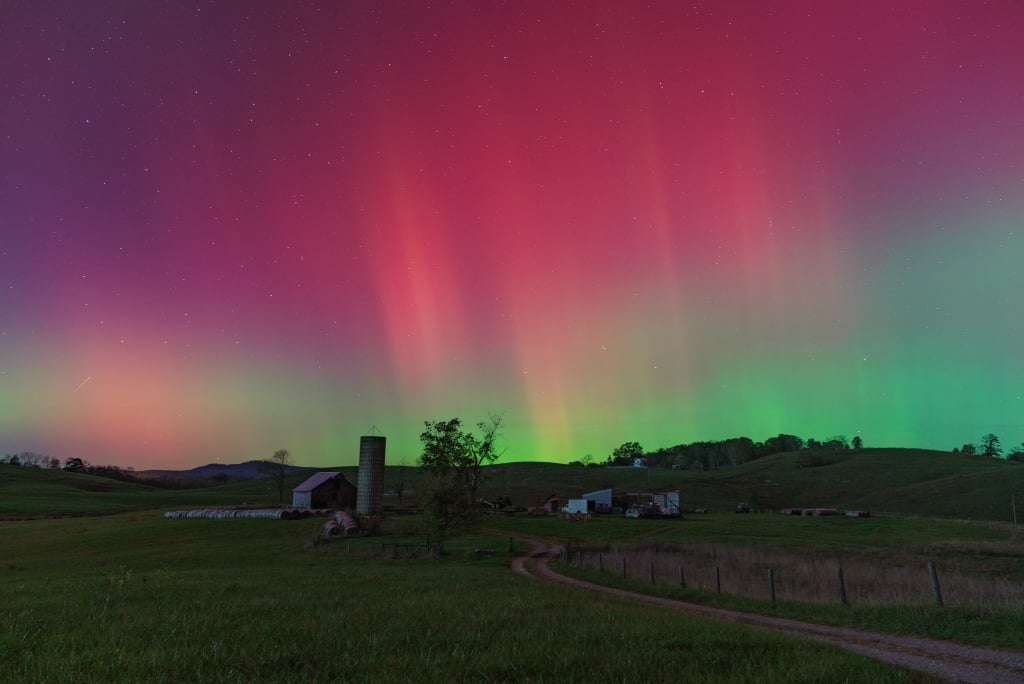
Northern Lights, West Virginia
A gravel country drive softly traverses this vibrant rural nighttime scene. The starry sky above was captured on the evening of October 10 from Monroe County in southern West Virginia. However, you won’t often see shimmering curtains of the northern lights or aurora borealis here. On that night, auroral displays were found in relatively low latitudes worldwide, which is rather different from their typical realms in the north and south at high latitudes. The widespread auroral activity was proof of a powerful geomagnetic storm caused by a coronal mass ejection (CME), which is a massive cloud of energetic plasma that is magnetised. After a strong X-class solar flare, the active Sun sent the CME in Earth’s direction.
Comet Tsuchinshan-ATLAS Over the Lincoln Memorial
In northern regions, C/2023 A3 (Tsuchinshan–ATLAS) was visible to the unassisted eye in the early evening skies of mid-October. You wouldn’t even require binoculars if the sky was sufficiently dark; for almost an hour, the comet’s faint tail was visible just above the horizon. The image was taken above the Lincoln Memorial monument in Washington, DC, USA, and shows Comet Tsuchinshan-ATLAS.

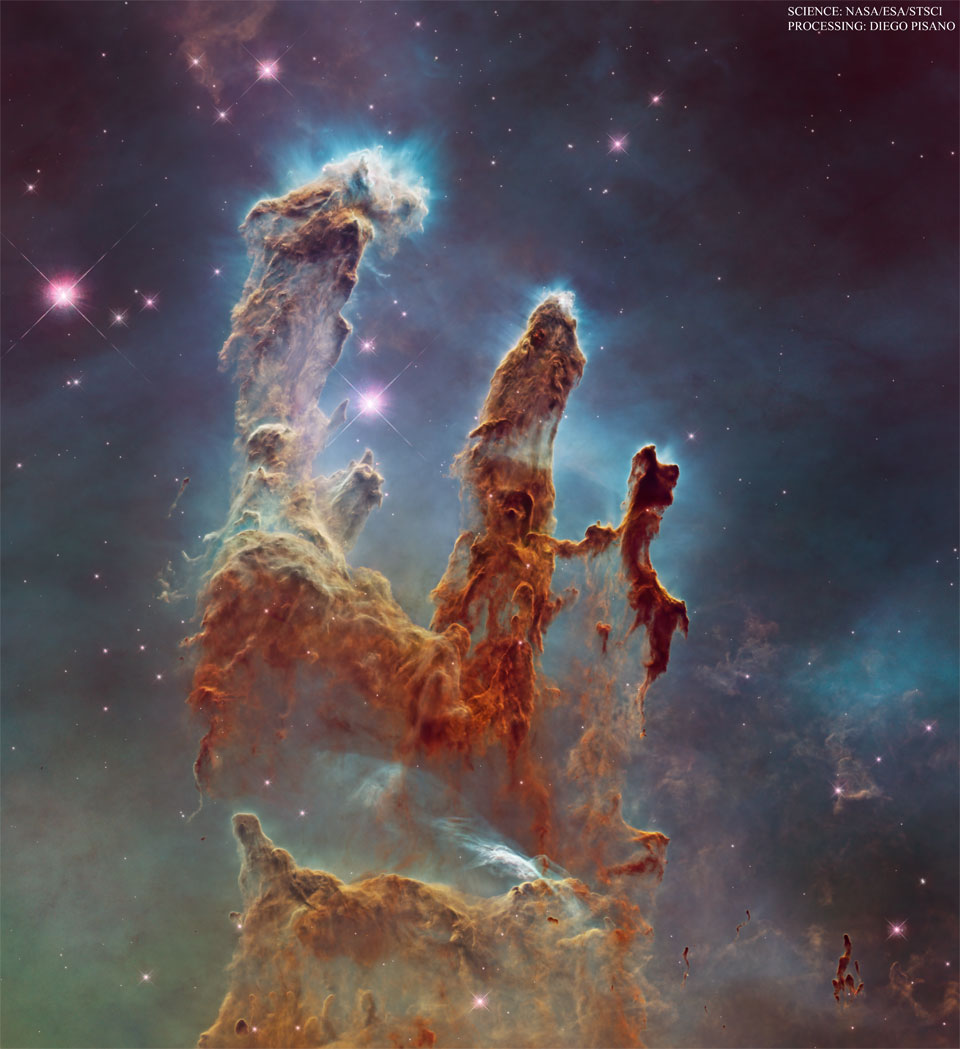
M16: Pillars of Star Creation
Despite their terrible appearance, these black pillars are producing stars. This pillar-capturing image of the Eagle Nebula highlights evaporating gaseous globules (EGGs) arising from pillars of molecular hydrogen gas and dust by combining visible-light exposures captured with the Hubble Space Telescope with infrared photos captured with the James Webb Space Telescope. The massive, light-year-long pillars are so dense that the gravitational contraction of inside gas forms stars. Low-density material boils away at the end of each pillar due to the strong radiation of brilliant newborn stars, exposing the stellar nurseries of dense EGGs. The Eagle Nebula is located at 7000 light-years distant and is connected to the open star cluster M16.
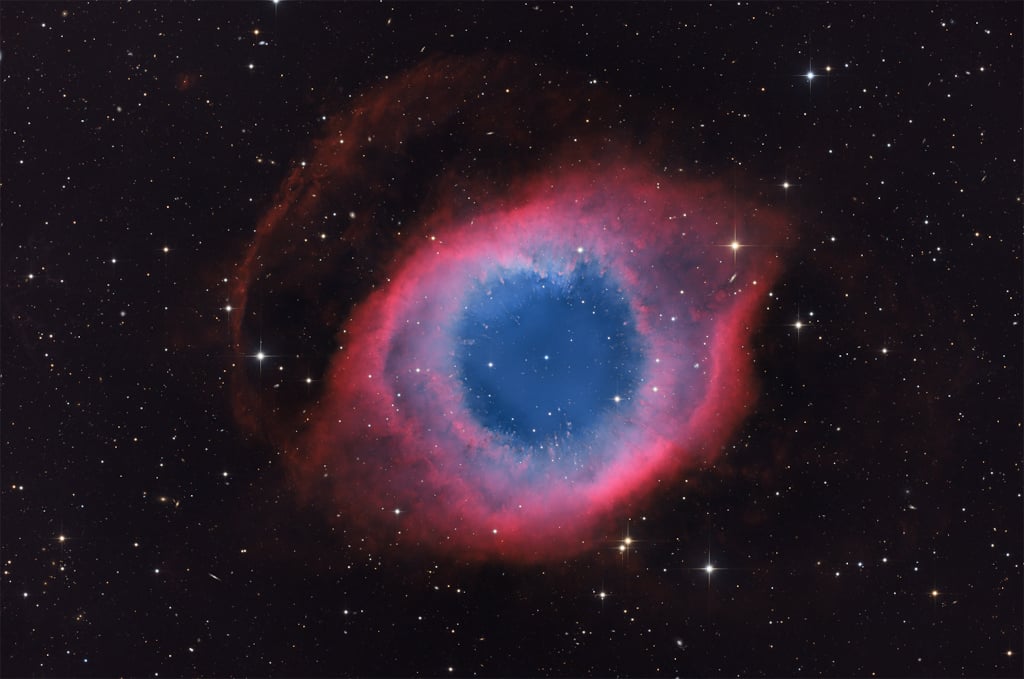
NGC 7293: The Helix Nebula
A star is dying in Aquarius’s constellation, about seven hundred light years from Earth. The Helix Nebula results from the last few thousand years of the formerly sun-like star. The cosmic helix, also known as NGC 7293, is a close and extensively researched example of a planetary nebula which is a characteristic of this last stage of star evolution. This deep image displays intriguing aspects of the Helix, particularly its luminous core area, which is almost three light-years wide. It combines narrow band data from emission lines of hydrogen atoms in red and oxygen atoms in blue-green colours. The white dot in the centre of the Helix shows the bright, dying core star of this Planetary Nebula. At first glance, the Helix appears to be a straightforward nebula, yet its geometry is now known to be extremely intricate.
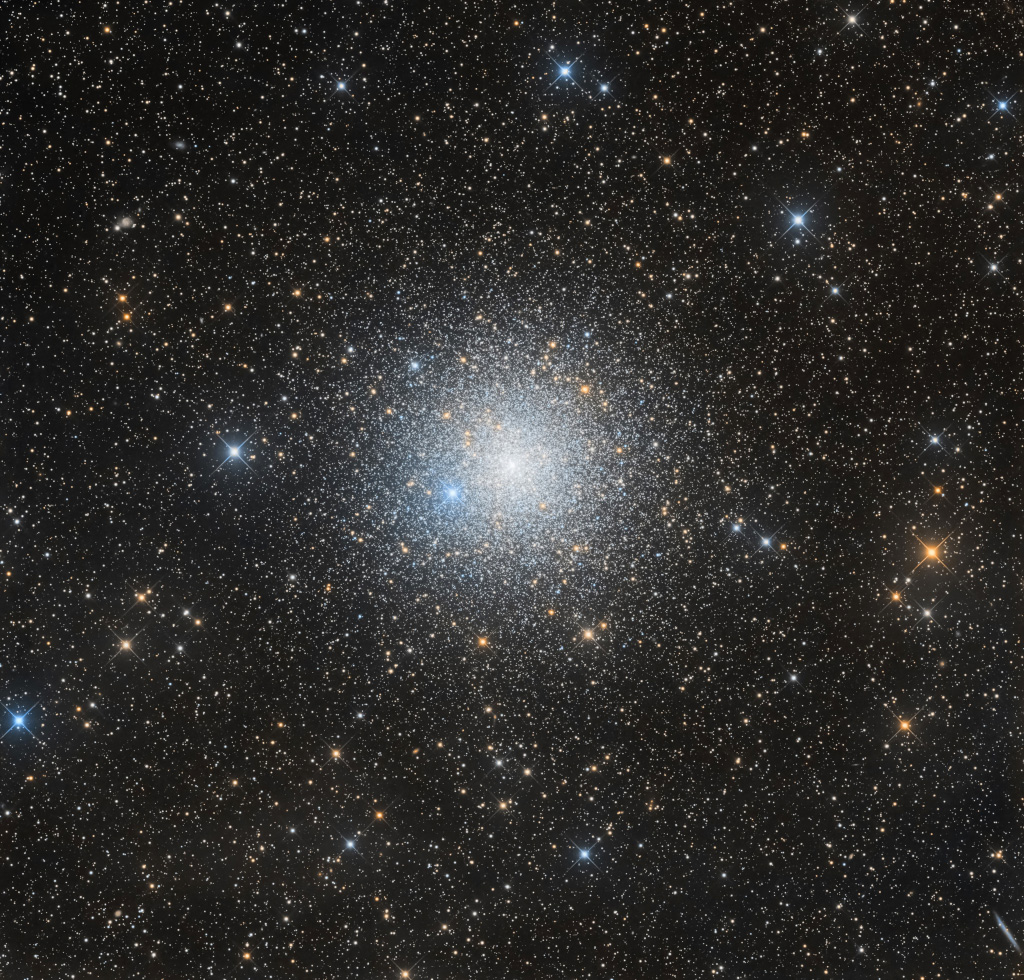
Globular Star Cluster NGC 6752
Our Milky Way galaxy’s halo is home to the globular star cluster NGC 6752, located around 13,000 light-years distant towards the southern constellation Pavo. NGC 6752, which is more than 10 billion years old, is the fourth brightest globular in the night sky of the planet Earth, behind the clusters Omega Centauri, 47 Tucanae, and Messier 22. It contains more than 100,000 stars in a sphere around 100 light-years across. A significant portion of the stars close to the cluster’s nucleus are multiple star systems, according to telescopic investigations of NGC 6752. They also show the existence of blue straggle stars, which seem too large and young to be part of a cluster of stars that should all be at least twice as old as the Sun. It is believed that star mergers and collisions in the intense stellar environment at the cluster’s centre created the blue stragglers. The old red giant stars in the cluster are also seen in this stark colour combination in yellowish tones. (Note: A foreground star in the line-of-sight to NGC 6752 is the brilliant, spiky blue star located around 8 o’clock from the cluster centre.)
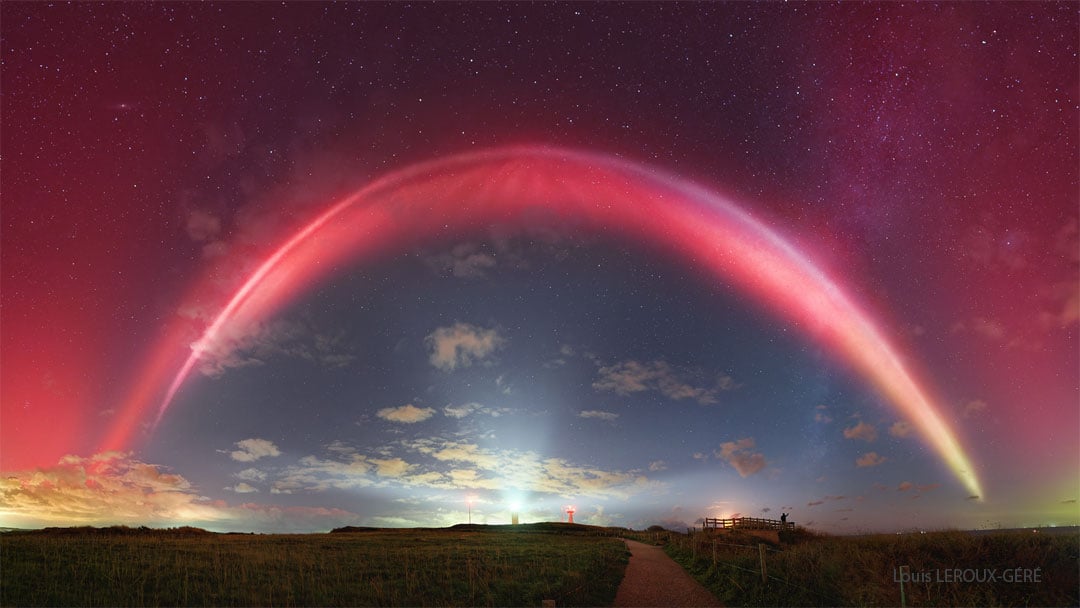
STEVE: A Glowing River over France
Over your head, a river of hot gas can occasionally pour. In this instance, the river produced a dazzling red, white, and pink light known as a Strong Thermal Emission Velocity Enhancement (STEVE). Although the exact mechanism of STEVEs’ operation is still unknown, a new study suggests that their glow is caused by the ionosphere, a swift-moving river of heated ions that flows more than 100 kilometres in the Earth’s atmosphere. A Stable Auroral Red (SAR) arc, a more widespread heat-related light, might be the source of the more widespread dull red glow, or it could be connected to the streaming STEVE. The highlighted image is a wide-angle digital composite created as the STEVE arc developed just overhead, and it was captured earlier this month at Côte d’Opale, France. Despite the brief duration of the apparition, it was sufficient for the astute astrophotographer to capture the image—can you see him?
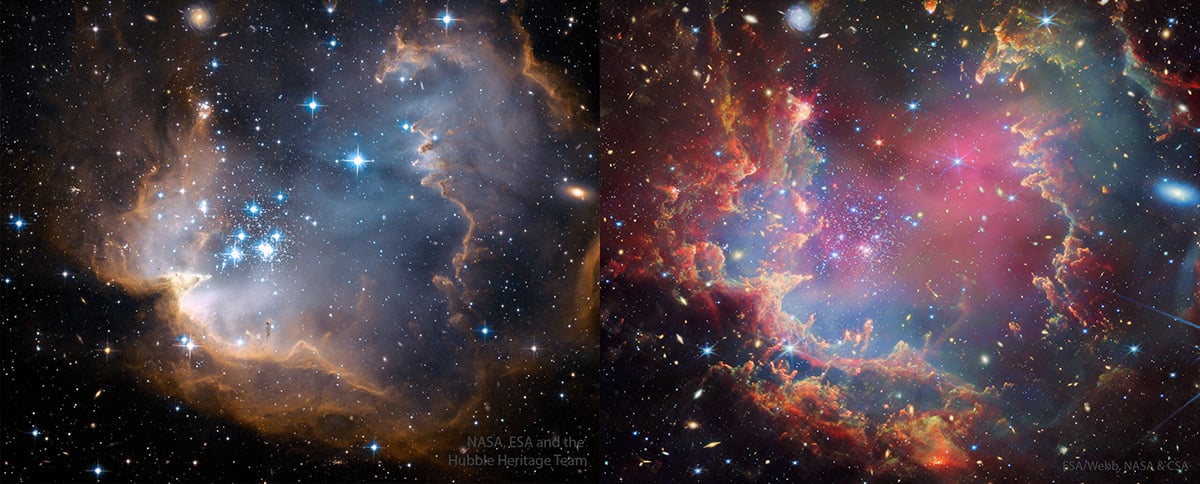
NGC 602: Stars Versus Pillars from Webb
The stars are destroying the pillars. More precisely, the light emitted by some of the recently born stars in the picture centre is so intense that it is causing the gas and dust in the nearby pillars to evaporate. The pillars themselves are still attempting to create new stars simultaneously. The entire scene is the star cluster NGC 602, and the Webb Space Telescope captured this fresh view in a variety of infrared hues. The same star cluster is seen in visible light in a roll-over image previously captured by the Hubble Space Telescope. The Small Magellanic Cloud (SMC), a tiny satellite galaxy of our Milky Way galaxy, is close to the edge of NGC 602. The exhibited image covers around 200 light-years at the SMC’s estimated distance.
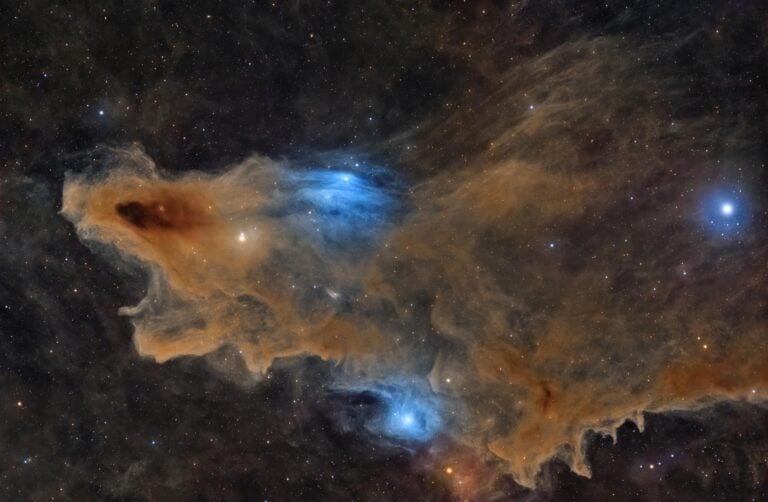
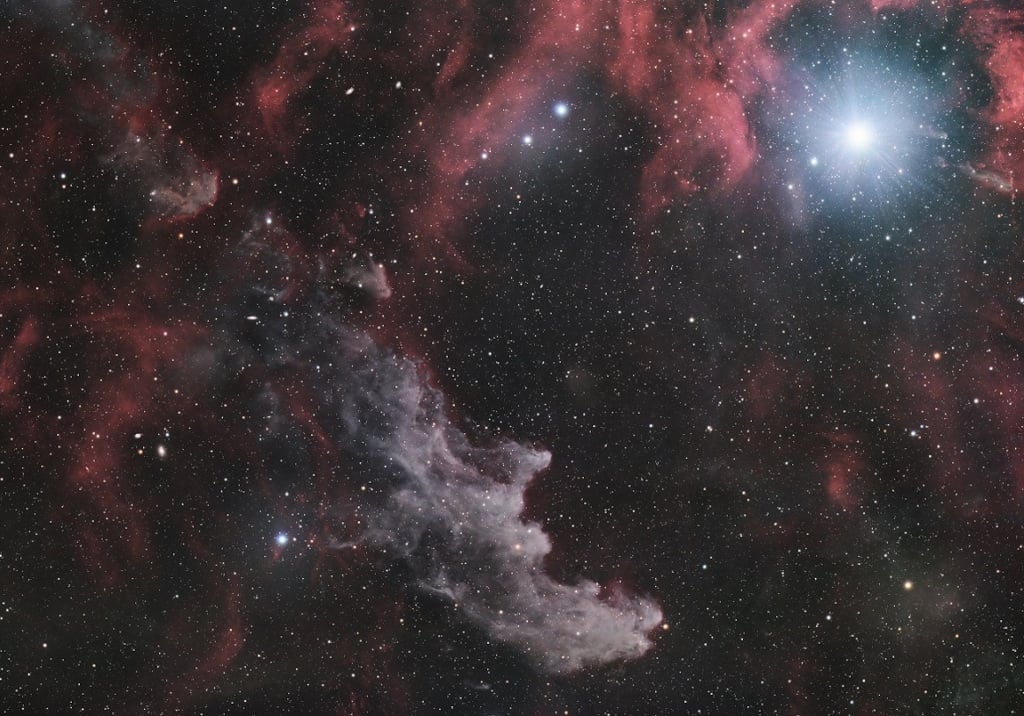
Rigel and the Witch Head Nebula
With a crooked appearance that evokes its well-known moniker, the Witch Head Nebula, this spooky face sparkles in the dark by starlight. Indeed, it appears as though a witch has her eyes focused on Rigel, the dazzling supergiant star in Orion, in this captivating telescopic photograph. The Witch Head Nebula, known as IC 2118, comprises interstellar dust grains that reflect Rigel’s brightness and extend across around 50 light-years. In addition to Rigel’s bright blue light, the Witch Head Nebula’s colour results from the dust grains’ greater ability to scatter blue light than red. Even though the scatterers in Earth’s atmosphere are nitrogen and oxygen molecules, the same physical mechanism gives the planet’s daylight sky its blue hue. The distance between Rigel and this dusty cosmic crone is around 800 light-years.
If you have a space image, you can submit it to NASA APOD too.
For more incredible astrophotography photos, check our previous Breathtaking Astronomy Photos articles:
See more from DIYPhotography.net on Google
Add DIYPhotography.net as a trusted source. This makes
our stories more likely to appear in your Google Search results.
 Add as a preferred source on Google

Soumyadeep Mukherjee
Soumyadeep Mukherjee is an award-winning astrophotographer from India. He has a doctorate degree in Linguistics. His work extends to the sub-genres of nightscape, deep sky, solar, lunar and optical phenomenon photography. He is also a photography educator and has conducted numerous workshops. His works have appeared in over 40 books & magazines including Astronomy, BBC Sky at Night, Sky & Telescope among others, and in various websites including National Geographic, NASA, Forbes. He was the first Indian to win “Astronomy Photographer of the Year” award in a major category.
Related Posts
 Top ten breathtaking Astrophotography images from August 2024 you should see
 Ten breathtaking astrophotography images you should see right now (December 2024)
 Ten breathtaking Astrophotography photos you should see right now (September 2024)
 Ten breathtaking astrophotography images you should see right now (January 2025)
Join the Discussion
DIYP Comment Policy
Be nice, be on-topic, no personal information or flames.