




















Ten breathtaking astrophotography images you should see (May 2025)
Jun 23, 2025
Soumyadeep Mukherjee
Soumyadeep Mukherjee is an award-winning astrophotographer from India. He has a doctorate degree in Linguistics. His work extends to the sub-genres of nightscape, deep sky, solar, lunar and optical phenomenon photography. He is also a photography educator and has conducted numerous workshops. His works have appeared in over 40 books & magazines including Astronomy, BBC Sky at Night, Sky & Telescope among others, and in various websites including National Geographic, NASA, Forbes. He was the first Indian to win “Astronomy Photographer of the Year” award in a major category.
Share:
NASA Astronomy Picture of the Day is a huge collection of astronomical images, both amateur and professional. It celebrates our amazing universe every day.
Since its inception in 1995, NASA APOD has been selecting and publishing some of the best images of space. Its two editors, Robert Nemiroff and Jerry Bonnell, are the people behind it. Here, you can see images taken with space telescopes like Hubble, JWST, etc. But it also includes amateur images taken with regular DSLR cameras.
Here are some of the best images from May 2025.
Young Star Cluster NGC 346
NGC 346, located about 210,000 light-years away in the greatest star-forming area of our small satellite galaxy, is the most massive young star cluster in the Small Magellanic Cloud. Naturally, NGC 346’s huge stars are short-lived but incredibly active. The dusty molecular cloud in the area is sculpted by their winds and radiation, which causes star formation inside. A sizable population of young stars also seems to be present in the star-forming zone. The young stars scattered throughout the embedded star cluster are only 3 to 5 million years old and do not yet have hydrogen burning in their cores. The NIRcam on the James Webb Space Telescope captured this amazing infrared image of NGC 346. Pink and orange highlights are used to describe emission from molecular hydrogen and dust in the star-forming molecular cloud, as well as atomic hydrogen ionised by the intense radiation of the massive stars. The Small Magellanic Cloud is located 240 light-years away from Webb’s crisp view of the nascent star-forming region.
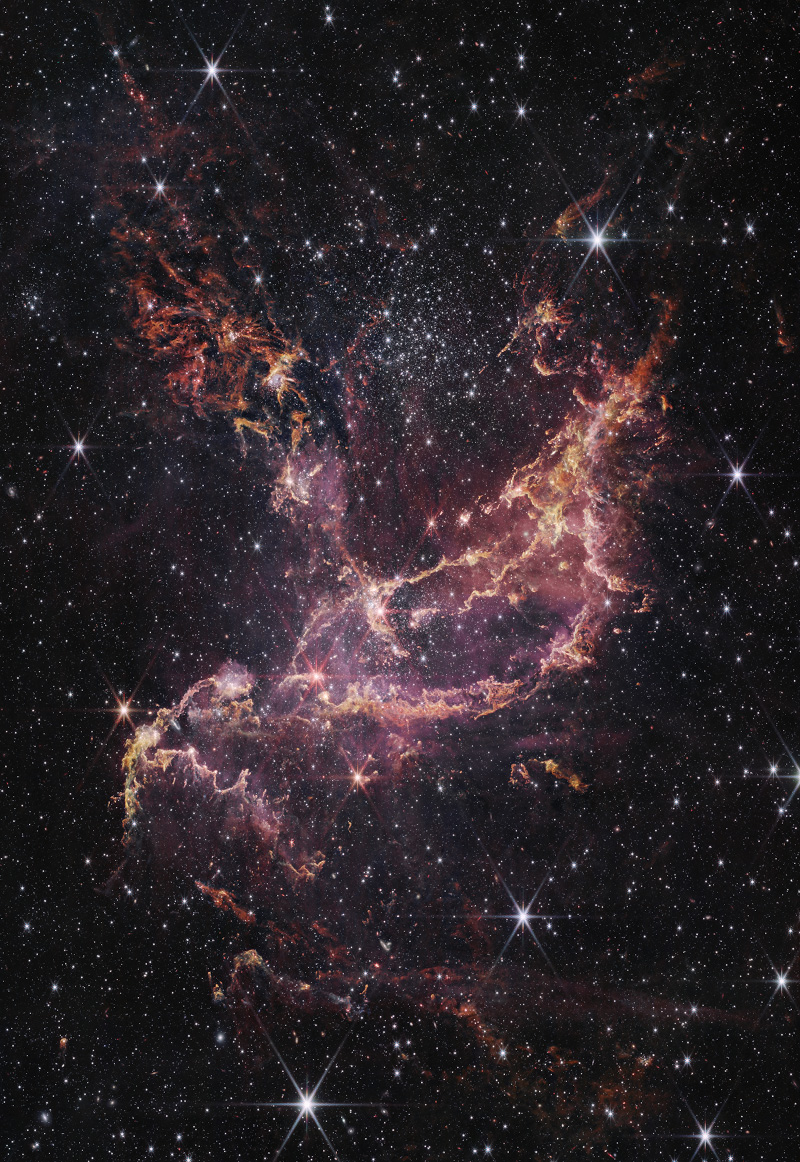
Processing – Alyssa Pagan (STScI), Nolan Habel (USRA), Laura Lenkić (USRA), Laurie E. U. Chu (NASA Ames)
Planet Lines Across Water
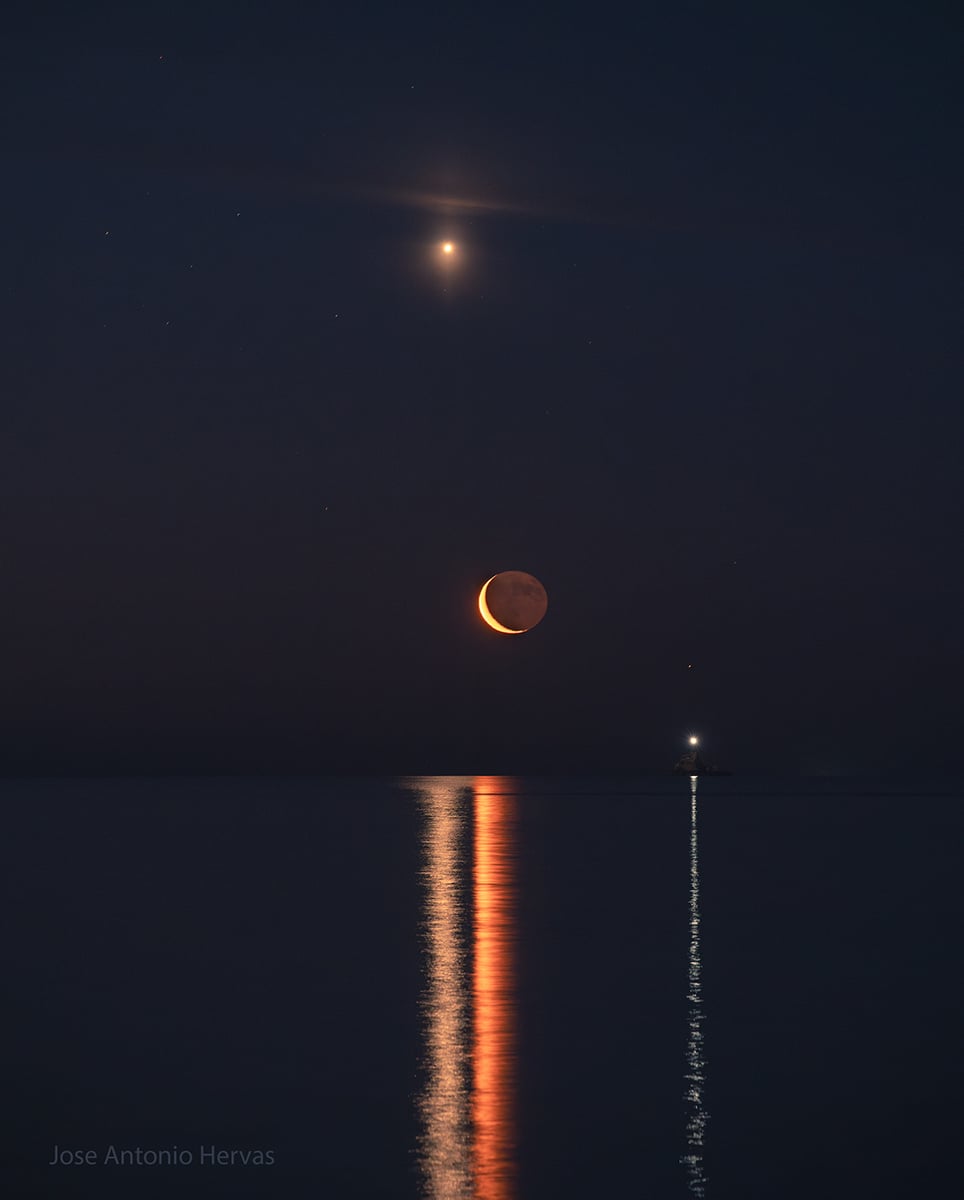
Why are those lines there? Why do celestial objects occasionally appear reflected as lines across water? Reflected objects would show up as spots if the water’s surface is smooth. However, in rough water, light from the object can reflect off the water in several different places and still reach you, forming what is usually a line. The Sun often exhibits the same effect shortly before sunset and shortly after sunrise. Photographs of the rising Moon, Venus (top), and Saturn (right, weak) were taken from the Mediterranean Sea ten days ago in Ibiza, Spain. The photographs were taken both directly and in line-reflected forms. The beacon on the rock to alert passing boats is the other bright object on the right with the water-reflected line.
M1: The Incredible Expanding Crab
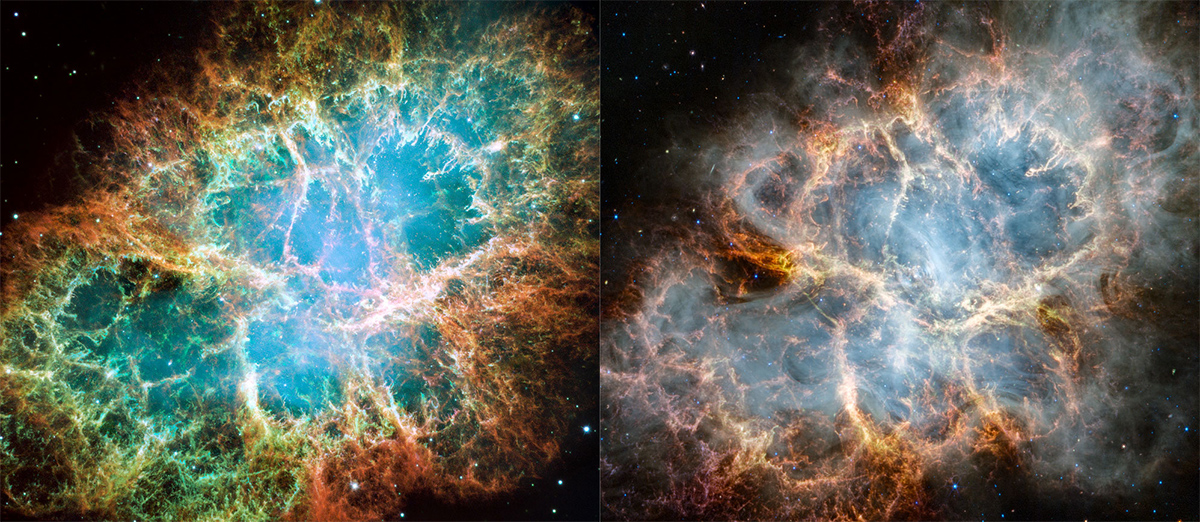
The Crab Nebula, designated M1, is the first object in Charles Messier’s well-known list of objects that are not comets. The Crab Nebula is now recognised as a supernova remnant, which is an expanding cloud of debris left over when a huge star dies. In the year 1054, astronomers observed the Crab’s terrible birth. The nebula is still growing at a rate of around 1,500 kilometres per second and is about 10 light-years wide. By comparing these crisp views from the Hubble Space Telescope and the James Webb Space Telescope, you can see the expansion. Hubble photographed the moving, broken filaments of the Crab in visible light in 2005, while Webb captured them in infrared light in 2023.
Gaia Reconstructs a Side View of our Galaxy
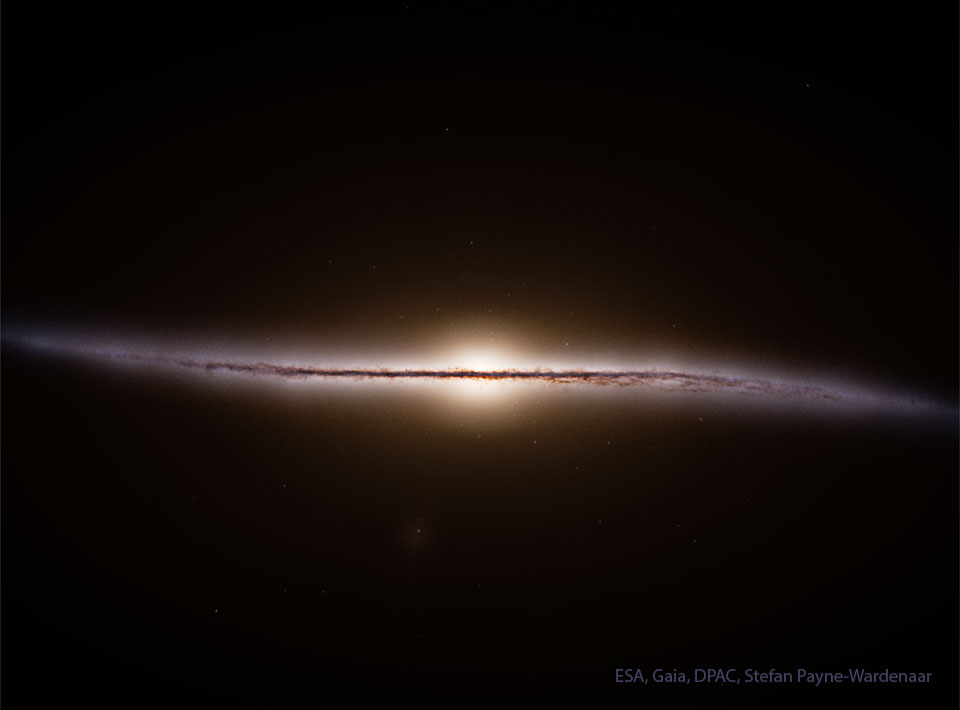
How does the side view of our Milky Way Galaxy appear? Humanity is unable to obtain a true image as we are inside. But recently, a map of that kind was created using location data from ESA’s Gaia spacecraft for more than a billion stars. The resulting featured illustration demonstrates that our Milky Way has a relatively thin core disc, similar to many other spiral galaxies. This disc contains our Sun and every star that we can see at night. The disk’s apparent curvature at the outer borders is possibly more startling, despite previous hypotheses. The twisted core region of our Galaxy is mostly coloured by red emission nebulae, bright blue stars, and dark dust.
Messier 101
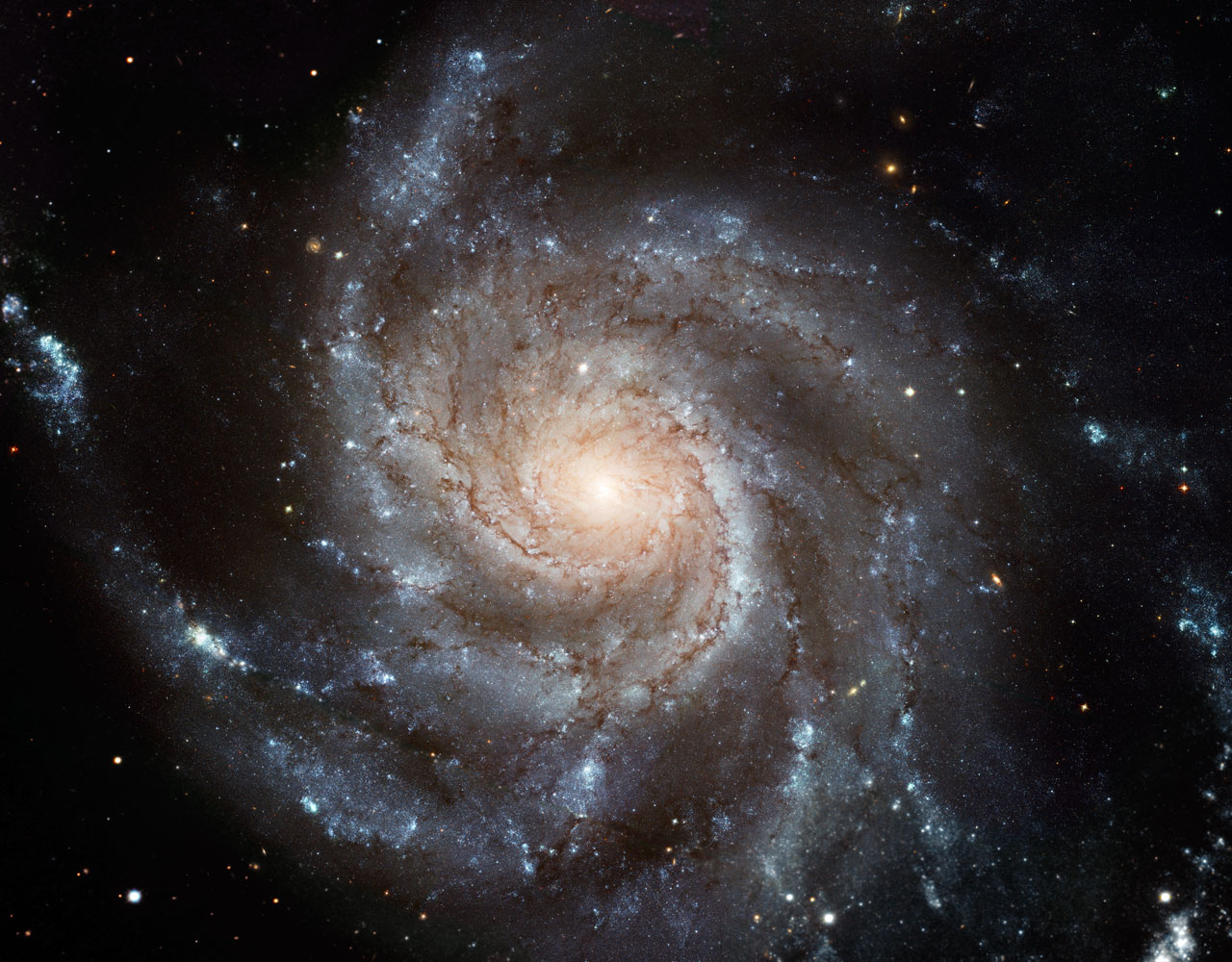
Although the large, exquisite spiral galaxy M101 is among the final items in Charles Messier’s renowned catalogue, it is by no means the least. This galaxy, which is roughly 170,000 light-years across, is massive—nearly twice as large as our own Milky Way. Additionally, M101 was among the first spiral nebulae to be seen by Lord Rosse’s massive Leviathan telescope in the 19th century. One of the highest definition spiral galaxy portraits ever published by Hubble, this mosaic covers roughly 40,000 light-years across the central region of M101 and was assembled from 51 exposures captured by the Hubble Space Telescope during the 20th and 21st centuries, along with additional data from ground-based telescopes.
Ares 3 Landing Site: The Martian Revisited
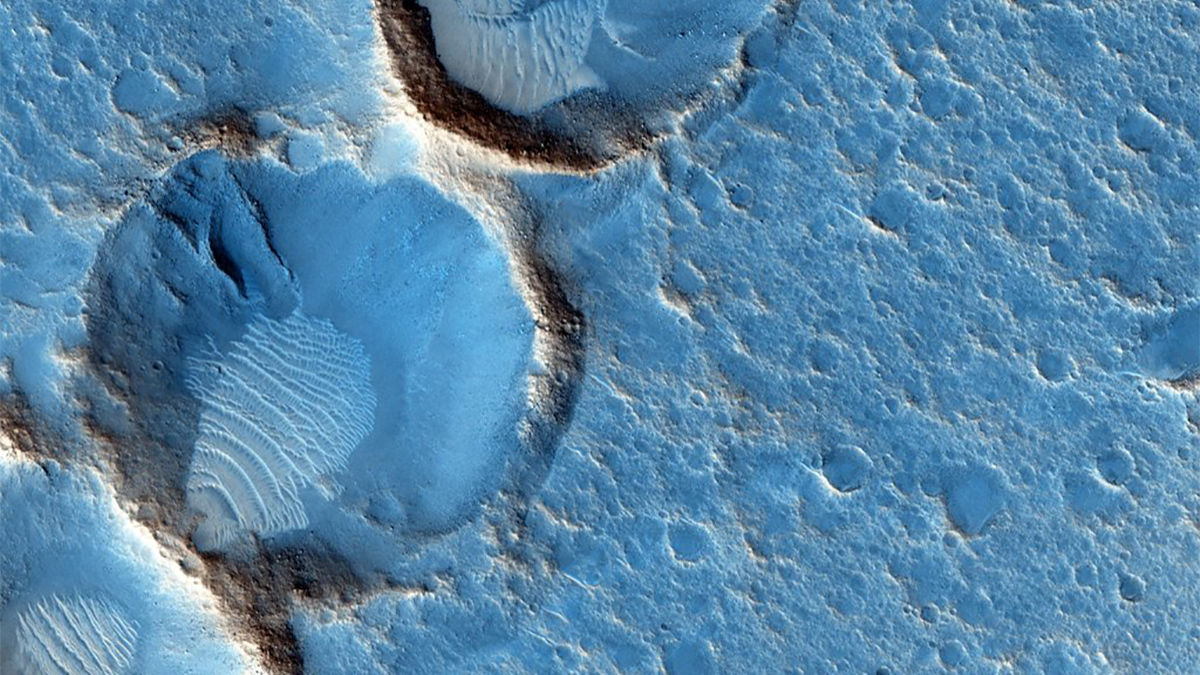
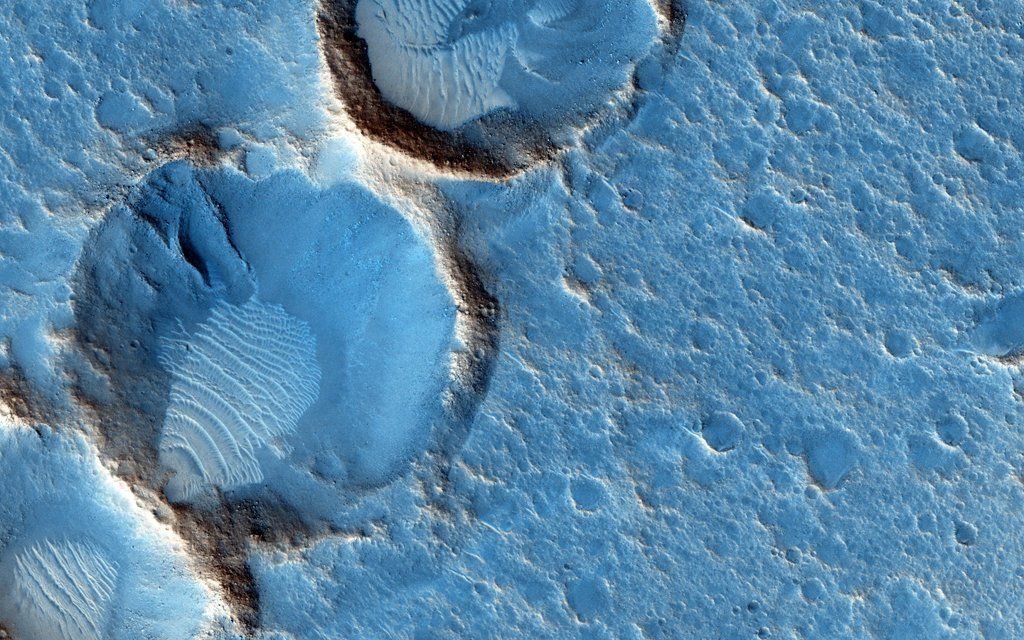
This close-up of southern Acidalia Planitia’s worn craters and wind-blown deposits was captured by the HiRISE instrument on board the Mars Reconnaissance Orbiter. The area would likely appear grey or somewhat reddish to the human eye, but in typical HiRISE image colours, it is a startling hue of blue. However, aside from the eyes of NASA astronauts in Andy Weir’s science fiction book “The Martian,” no human eyes have ever seen across this territory. The plot of the book follows the exploits of Mark Watney, an astronaut who becomes stuck at the location of this cropped HiRISE frame, which represents the landing site for the fictional Mars mission Ares 3. For comparison, the enormous crater’s diameter would be roughly one-tenth of Watney’s 6-meter-diameter habitat at the location.
Milky Way over Maunakea
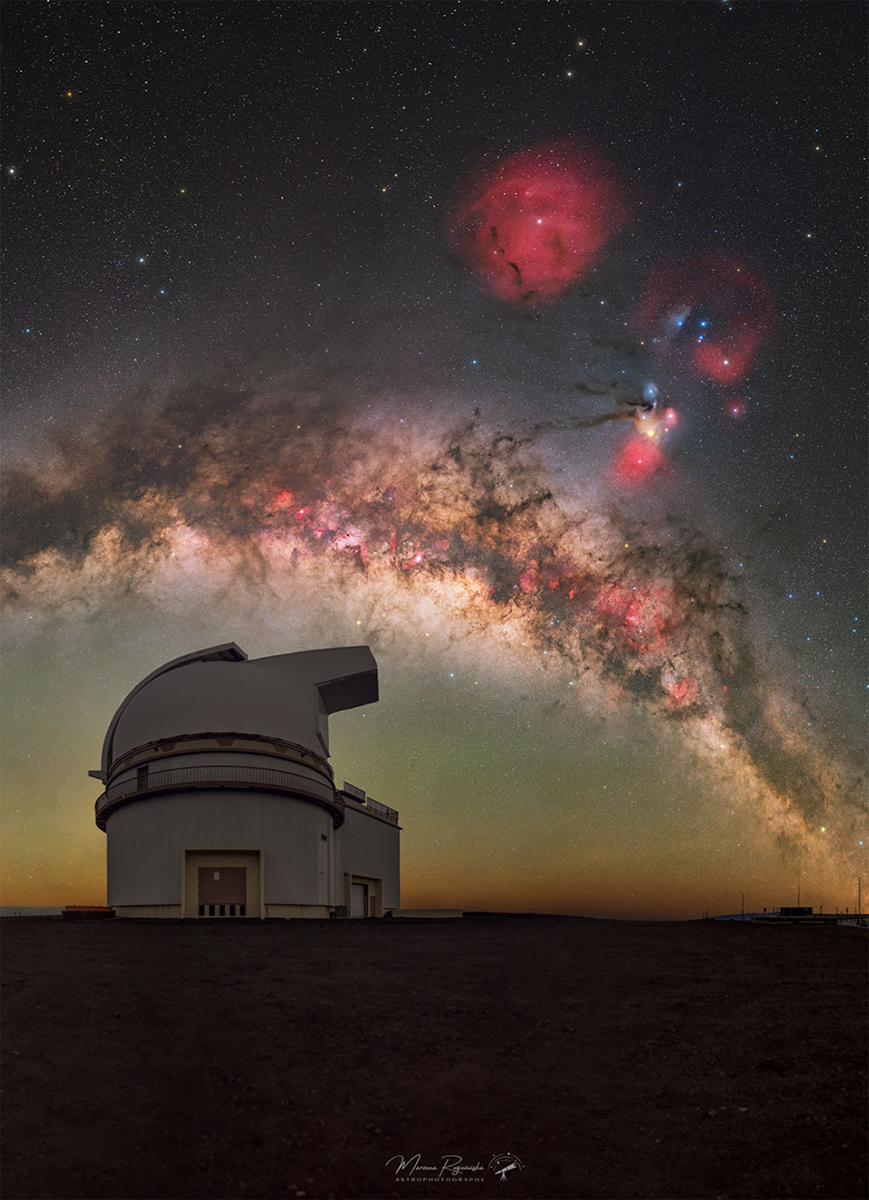
When viewed from a dark position at the appropriate moment in a clear sky, a faint strip of light appears across the sky. You may notice the band for the first time shortly after your eyes adjust to the darkness. Then it might be clear. Then, amazing. The knowledge that there are billions of stars in this hazy region, the Milky Way, may be one factor contributing to your increasing amazement. The Milky Way Galaxy’s band arcs may be seen in the featured image, high above in the night sky. The crimson and round Zeta Ophiuchi nebula, close to the top centre, and the vibrant clouds of Rho Ophiuchi on the right are also visible. The 2.2-meter telescope from the University of Hawaii appears in the foreground, taken from Maunakea, Hawaii, in late February.
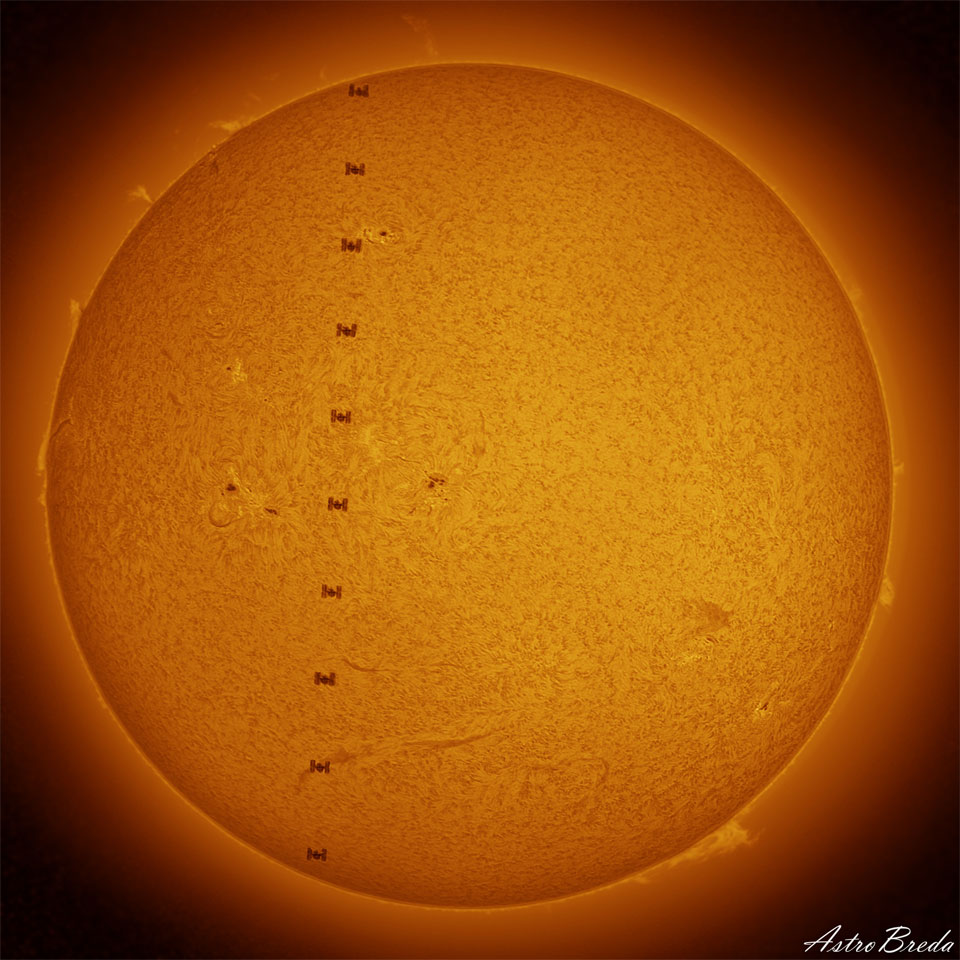
International Space Station Crosses the Sun
The International Space Station is usually only seen at night. Approximately once a month, the International Space Station (ISS) appears as a bright point in the night sky as it slowly drifts around the Earth. Because it shines from reflected sunlight, the ISS is only visible soon after sunset or just before sunrise; once it passes into the Earth’s shadow, it will disappear from view. During daylight hours, the ISS is only visible when it is directly in front of the Sun. Then, it moves so fast that the silhouette of the ISS can only be seen frozen onto the background Sun by cameras with brief exposures. The featured image accomplished just that; in fact, it is a collection of precisely timed photos from Sant Feliu de Buixalleu, Spain. Later, a different photograph that highlighted the texture of the active Sun—including several prominences around the edge—was added to this set of images.
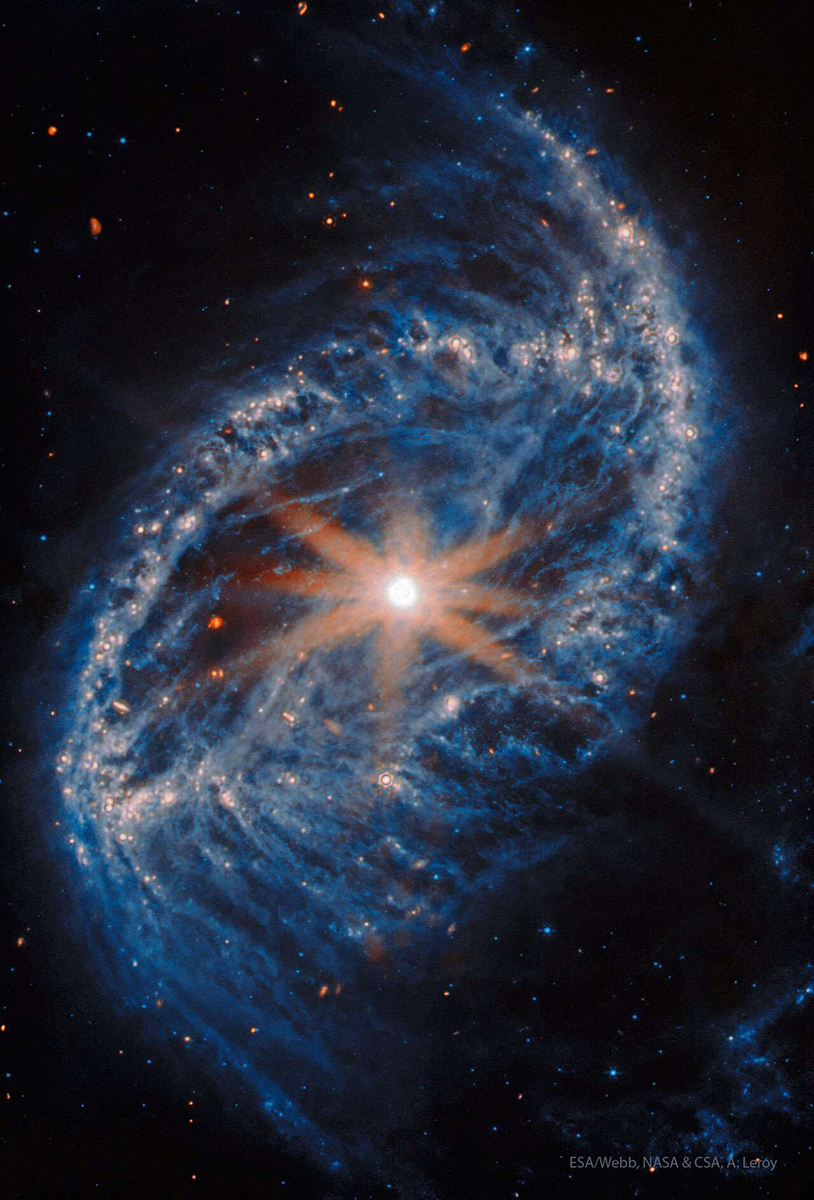
Spiral Galaxy NGC 2566 from Webb
What is going on in the spiral galaxy NGC 2566’s core? First off, the eight beams that seem to be emanating from the centre of the highlighted infrared image are diffraction spikes brought on by the Webb space telescope’s mechanical design. Since NGC 2566’s centre is luminous but not uncommon, it most certainly contains a supermassive black hole, although one that isn’t extremely active right now. Today’s light from NGC 2566 is from a time when dinosaurs walked the earth, just 76 million light years ago.
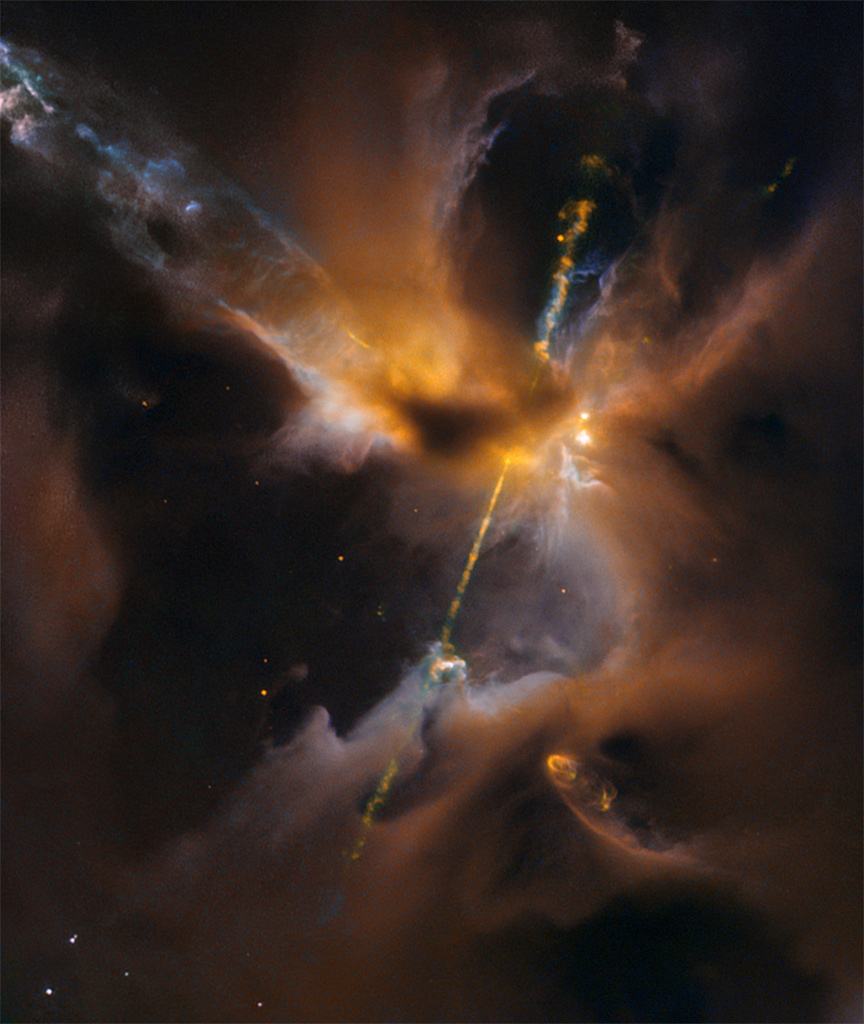
Herbig-Haro 24
These two cosmic jets, which appear to be a double-bladed lightsaber, are actually beaming outward from a newborn star in a galaxy close to you. The breathtaking view, which was created using imaging data from the Hubble Space Telescope, covers around half a light-year across Herbig-Haro 24 (HH 24), which is located in the star nurseries of the Orion B molecular cloud complex, some 1,300 light-years or 400 parsecs away. The primary protostar of HH 24 is obscured from direct observation by a spinning accretion disc of gas and frigid material. The disk’s material heats up as it falls towards the young star object. Along the rotational axis of the mechanism, opposing jets are blasted out.
If you have a space image, you can submit it to NASA APOD, too.
For more incredible astrophotography photos, check our previous Breathtaking Astronomy Photos articles:
- Breathtaking Astrophotography Images – April 2025
- Breathtaking Astrophotography Images – March 2025
- Breathtaking Astrophotography Images – February 2025
- Breathtaking Astrophotography Images – January 2025
- Breathtaking Astrophotography Images – December 2024
- Breathtaking Astrophotography Images – November 2024
- Breathtaking Astrophotography Images – October 2024
- Breathtaking Astrophotography Images – September 2024
- Breathtaking Astrophotography Images – August 2024
Clear skies!
See more from DIYPhotography.net on Google
Add DIYPhotography.net as a trusted source. This makes
our stories more likely to appear in your Google Search results.
 Add as a preferred source on Google

Soumyadeep Mukherjee
Soumyadeep Mukherjee is an award-winning astrophotographer from India. He has a doctorate degree in Linguistics. His work extends to the sub-genres of nightscape, deep sky, solar, lunar and optical phenomenon photography. He is also a photography educator and has conducted numerous workshops. His works have appeared in over 40 books & magazines including Astronomy, BBC Sky at Night, Sky & Telescope among others, and in various websites including National Geographic, NASA, Forbes. He was the first Indian to win “Astronomy Photographer of the Year” award in a major category.
Related Posts
 Ten breathtaking astrophotography images you should see right now (January 2025)
 Ten breathtaking astrophotography images you should see right now (February 2025)
 Ten breathtaking astrophotography images you should see (March 2025)
 Ten breathtaking astrophotography images you should see (April 2025)
Join the Discussion
DIYP Comment Policy
Be nice, be on-topic, no personal information or flames.